The device comes with a 400mm telephoto lens accessory
But the leaked Oppo Find X9 Ultra could soon be a strong rival
When people talk about the best camera phones, they usually have something like Apple’s iPhone 17 Pro Max or Samsung’s Galaxy S25 Ultra in mind — you know, a normal-looking phone with an advanced-yet-unobtrusive camera system on the back. Well, the Vivo X300 Ultra is about to blow all of those expectations away.
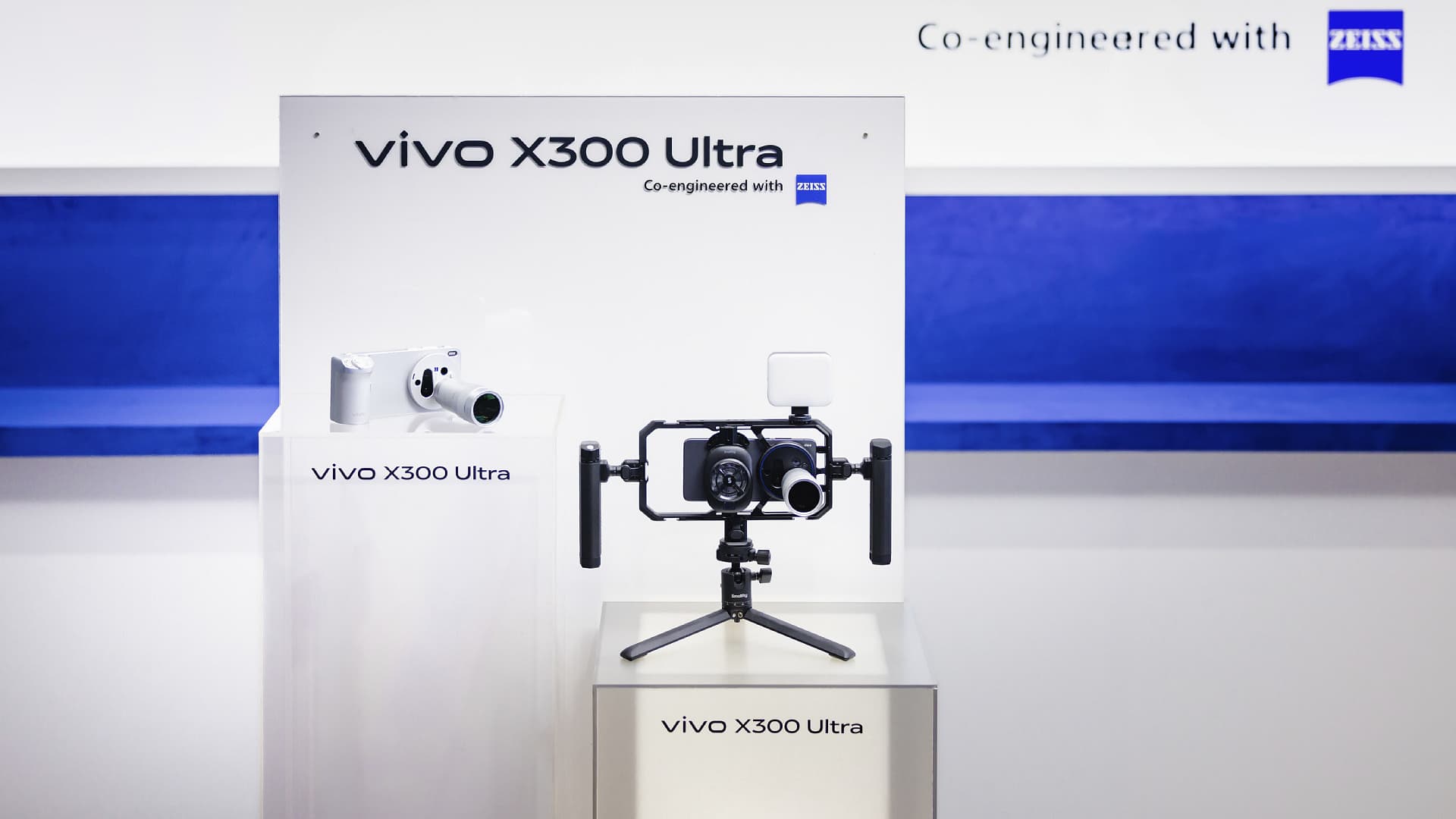
Revealed at MWC 2026, Vivo says this device is equipped with a 200-megapixel lens, matching that of last year’s X200 Ultra. But what really catches the eye is the optional 400mm-equivalent Telephoto Extender Gen2 Ultra. This is a clip-on lens made by Zeiss that adds serious zoom capabilities to the phone.
That should give you some pretty incredible power when it comes to long-range photography, especially for a smartphone. With a little digital cropping, it can even apparently act as 1600mm super-telephoto lens (albeit with some image quality compromises).
The obvious compromise is portability — it’s not exactly like you’ll be able to safely fit the phone in your pocket when the lens is attached. And the image processing is something we’ll be keen to see in action before passing judgement — this really is pushing the limits of smartphone photography.
Vivo has been reticent with the X300 Ultra’s specs, leaving us guessing at what else it might come with. But if you’re a smartphone photography buff and want high-end zoom power without resorting to one of the best DSLRs, Vivo is gunning for your attention.
As well as the Telephoto Extender Gen2 Ultra, Vivo also revealed a “pro-grade” Camera Cage to hold its new phone. This is designed to complement video recording and puts “an array of cold shoe mounts and quick-release ports” at your fingertips, Vivo says. There are two hand grips for added stability, physical buttons for shutter and zoom adjustment, and even an active cooling fan to keep your device performing optimally. The Camera Cage is compatible with Vivo’s lens extender, too.
These releases suggest that Vivo is aiming to appeal to the professional market — or is at least targeting ‘pro-adjacent’ users with lofty ambitions. This kind of setup is beyond what most casual consumers will need but could be just the ticket for photographers and videographers.
Advertisement
Sign up for breaking news, reviews, opinion, top tech deals, and more.
An unreleased accessory
(Image credit: Vivo)
While these MWC teasers are out in the open, a leak from Weibo suggests that Vivo might have something else up its sleeve.
According to leaker Digital Chat Station on the Chinese social media site (via Gizmochina), Vivo’s X300 Ultra will come with a 6.82-inch display equipped with a 2K resolution and a dynamic 120Hz refresh rate. This screen will feature very slim bezels and rounded corners, while the Ultra’s battery will be slightly larger than the one found in the X300 Pro.
Advertisement
As well as that, Digital Chat Station alluded to an unreleased “teleconverter” that hasn’t yet been revealed. Interestingly, they then followed that up with the phrase, “It’s more suitable for general photography enthusiasts.” That suggests that this accessory will have broader use cases than the Telephoto Extender Gen2 Ultra addon, which is very niche. We’ll have to wait for more information on that, though.
In the meantime, new rivals are popping up almost by the day, it seems. The Xiaomi 17 Ultra recently landed with an impressive camera setup, and now the Oppo Find X9 Ultra has entered the arena with a surprise global release and a 200MP periscope telephoto sensor that could combine a large 1/1.28-inch sensor size and f/2.2 aperture. That would be a quite a combo, and could give it strong safari credentials — if not quite on the level of Vivo’s 400mm-equivalent telephoto accessory.
Vivo says the X300 Ultra will launch later this year and will be its first Ultra phone available on a global scale outside of China. Given Vivo’s past releases, though, it’s unlikely to be sold in the US, while European availability is uncertain too. There’s also no word yet on the price or exact release date, so stay tuned for more information on that front.
Very few of us actually like doing the laundry. Nevertheless, it has to be done. It doesn’t help that there’s now a big debate about front-load efficiency vs. top-load machines. If you’re on the side of the front-loaders and are in the market for a new one, Consumer Reports has a model you might want to consider. Its testing ranks the LG Signature WM9900HSA as the best option money can buy. The machine pairs a 5.8-cubic-foot mega capacity with advanced automation features to help make everybody’s least-favorite chore a little less time-consuming.
Its AI Wash 2.0 system uses built-in sensors to automatically select the best wash settings based on fabric texture and load size. The washer’s TurboWash 360° technology uses five high-pressure jets to handle large loads in less than half an hour, as well. Beyond marketing hype, Consumer Reports has real first-hand experience to back it up. Their testing methodology looks at washer performance using stained fabric swatches and repeated cycle analysis. And in Consumer Reports’ experiments on the WM9900HSA, the LG front-load washer consistently outperformed other top washing machine brands.
Advertisement
Why not everybody loves the LG Signature front-load machine
Beyond its speed and intelligence, the LG Signature front-load washer model WM9900HSA also uses an “ezDispense” automatic detergent system. All you have to do is fill up the reservoirs, and you can enjoy up to 20 to 36 cycles before you need to refill again. The machine is smart enough to know the correct amount of detergent and softener to dispense for each load. It’ll even send you an alert to your phone when you’re running low. Like plenty of other LG smart appliances, you also get an LCD touchscreen.
Advertisement
But looking beyond what Consumer Reports says, real-world customer feedback isn’t exactly overwhelming in its praise. It’s currently at a 3.8 out of 5 on LG’s website based on 57 reviews, many of which are incentivized. Users do have nice things to say about the washer’s large capacity and reliable cleaning, but others say the “ezDispense” feature is a headache. Clearly, even though LG ranks as the best front-load washer brand based on Consumer Reports’ survey data, individual customer experiences are going to vary.
Get caught up on the latest technology and startup news from the past week. Here are the most popular stories on GeekWire for the week of April 12, 2026.
Amazon paid about $1.8 billion last year to Blue Origin, the aerospace company owned by its founder and board chair Jeff Bezos — nearly triple the amount the year before — as shareholders weigh a proposal citing his business interests outside Amazon as potential conflicts of interest. … Read More
The students in a computer science class at the Global Idea School, an independent, non-profit elementary school in Redmond, Wash., learned vibe coding through GitHub Spark and built a Braille 3D Generator, a tool that turns text into printable, tactile 3D Braille models in seconds. Read More… Read More
OpenAI’s chief revenue officer touted the AWS alliance as a key enterprise growth driver, saying that the Microsoft relationship has constrained the company’s reach into big business. … Read More
Amazon’s deal for satellite operator Globalstar doesn’t just bulk up Amazon Leo — it brings Apple along for the ride, with a long-term agreement to power iPhone and Apple Watch satellite features. … Read More
Anoop Gupta is stepping down as CEO of SeekOut, the Bellevue-based recruiting startup he co-founded in 2017, handing the reins to enterprise software veteran Sean Thompson. … Read More
Seattle customer engagement startup Ambassador has acquired the operating assets of Tacoma-based programmatic ad platform Humming, part of a roll-up strategy that anticipates a larger shakeout among startups as major AI platforms expand their capabilities. … Read More
Seattle Mayor Katie Wilson raised the possibility of a moratorium on new data centers in the city, following a report that four companies have approached Seattle City Light about building five large-scale facilities. … Read More
As someone who has worked from home for the last 15 years, there aren’t many things more frustrating than my internet connection going down in the middle of a workday. Sure, my kids act like it’s the end of the world when it happens after school, when they’re trying to unlock some forbidden fruit on Roblox or whatever, but that’s nothing compared to the internal rage I feel when I see my camera feed stuttering on a video call.
My current Internet Service Provider (ISP) has gotten more reliable, but there was a period of time when I’d complained about them so much on Twitter that I had four technicians and their boss randomly show up at my house, asking if they could run a brand new service line in a bid to fix my issues.
Those improvements aside, it’s not perfect. My connection still drops from time to time.
Advertisement
Article continues below
I’ve tinkered with backup internet solutions over the years, and even considered signing up for Starlink as a secondary provider at one point.
But most of the backup internet solutions offered by firewalls or Wi-Fi systems aren’t seamless, requiring you to connect your router to your phone’s hotspot, which then broadcasts mobile data throughout your home’s network.
Advertisement
That’s not an ideal solution when I’m on a video call, for example. My home office is nowhere near my router, so I’d have extended downtime while I move closer, connect my router to the hotspot, and by then, the call was either over or my regular connection had returned.
Then I found Eero Signal
I currently use one of Eero’s mesh Wi-Fi systems, so when Eero announced its latest product, the $99 Eero Signal, my interest was piqued.
Sign up for breaking news, reviews, opinion, top tech deals, and more.
Advertisement
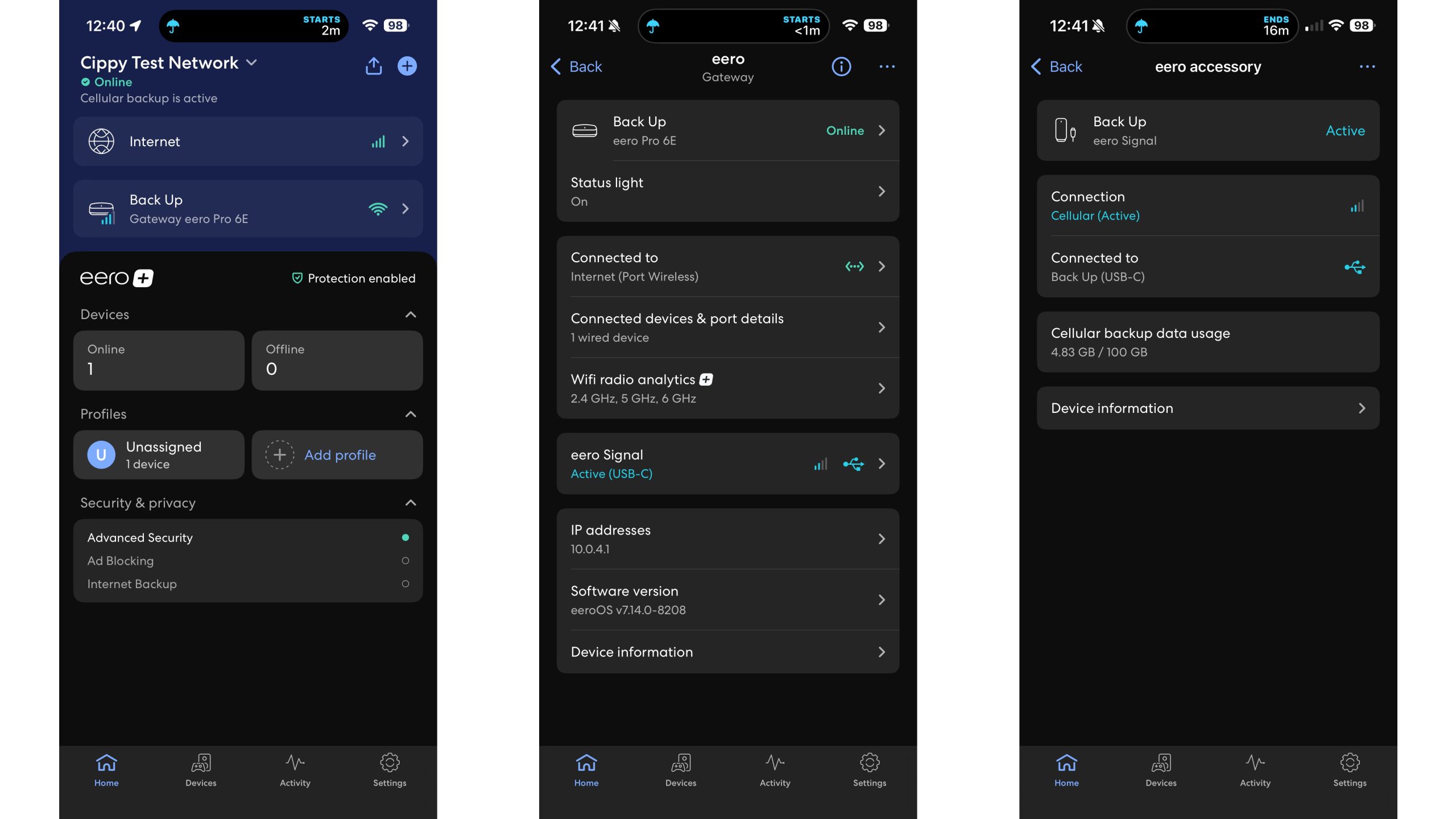
The small device that looks like a wireless charging stand for your phone connects to a compatible Eero router. When your main internet connection drops, your Eero system automatically switches to the LTE connection that Signal provides. (There’s a 5G model coming later this year that I’d instantly upgrade to.)
I’ve had Signal set up and running in my house for several weeks now, and I have to admit — I’m smitten. It’s perfectly picked up where my service provider has let me down.
Setup was easy, and it has deep controls
(Image credit: Future/Jason Cipriani)
After unboxing the Signal and a 45W power adapter, I immediately connected it to my Eero system and the included power supply. The rest of the process required a few taps on my phone, adding the device to my home system, ensuring I was on an Eero Plus plan for the cellar portion, and I was up and running.
Advertisement
Eero offers two plans. You can pay $99.99 a year for 10 GB of data per month, while $199.99 gets you 100 GB of data per month through Signal’s connection.
To test Signal, all I had to do was temporarily disconnect the wired internet connection going to my Eero system, and it switched over to Signal almost immediately.
Seamless backup internet achieved.
Advertisement
The last step to complete setup was to go through the list of devices in the Eero app, approving or forbidding access to data when Signal is active. It’s a quick and easy way to ensure that your work laptop or home alarm system and cameras stay connected to the internet during an outage, but stopping your streaming devices from eating into your data allotment.
Recent maintenance put Eero Signal to the test
(Image credit: Future/Jason Cipriani)
My home network setup is complex, and beyond the previously mentioned video calls for work being a priority, so too is all of the self-hosted websites and services I have running, including personal and business websites from my basement. When my sites go down, I get sad. I don’t like being sad.
But since installing Eero Signal, my sites have had virtually zero downtime due to a lack of internet.
Advertisement
The reliability and speed of Signal was put to the test a couple of weeks ago when my internet service provider announced routine maintenance in my area that’d take my connection offline all day.
Bring it on, I said to myself as I read the email.
The morning of the scheduled downtime, while I was out of town and away from the house, I received an alert that my connection had dropped and my network switched over to Signal and then… nothing. I didn’t get an alert that any of my sites were down, and I could pull up a live stream of my Ring security cameras.
Several hours later, I received another alert that the work was done for the day, but they were unable to finish everything, and expected a prolonged outage the next day.
Advertisement
The second day came and went much like the first — Signal kicked in and took over, providing data to my home’s network and self-hosted services, all the while I was able to call into a Teams meeting. The Signal’s LTE connection is averaging 50 Mbps down and 10 Mbps up for me, which isn’t super fast compared to my standard connection, but it’s enough for short periods..
(Image credit: Future/Jason Cipriani)
Internet outages are a thing of the past
(Image credit: Future/Jason Cipriani)
I’d become so accustomed to dealing with sporadic internet outages that I didn’t realize how much time I spent worrying about it. Then again, being connected to the internet during the day is how I do my job, and without it, I’m not very productive, so it makes sense.
It also makes sense that after setting up Signal and realizing it delivers on its promise, I’ve felt relieved. A couple of months ago, those messages alerting me of upcoming maintenance would have stressed me out for days.
Advertisement
Instead, all I did was get excited because it was going to be a stress test for Signal — and it passed, easily.
That relief alone is worth the cost. Now I can spend that energy on something productive.
Despite the months-long feud between Anthropic and the Pentagon, the National Security Agency is using the AI company’s new Mythos Preview, according to Axios, which spoke to two sources with knowledge of the matter. Anthropic announced Mythos Preview at the beginning of April, describing it as a general-purpose language model that is “strikingly capable at computer security tasks.” But back in February, Trump ordered all government agencies to stop using Anthropic’s services after the company refused to budge on certain safeguards for military uses during contract talks.
The news comes days after Anthropic CEO Dario Amodei met with White House chief of staff Susie Wiles and other officials, reportedly to discuss Mythos. The White House later said the meeting on Friday was “productive and constructive,” though President Trump said he had “no idea” about it when asked by reporters, Reuters reports. According to Axios’ sources, the NSA is one of the roughly 40 organizations Anthropic gave access to Mythos Preview, and one said it’s “being used more widely within the department” too.
Looking for the most recent Strands answer? Click here for our daily Strands hints, as well as our daily answers and hints for The New York Times Mini Crossword, Wordle, Connections and Connections: Sports Edition puzzles.
Today’s NYT Strands puzzle offers an interesting mix of words, and they all begin with the same two letters. Some of the answers are difficult to unscramble, so if you need hints and answers, read on.
If that doesn’t help you, here’s a clue: Shimmery.
Clue words to unlock in-game hints
Your goal is to find hidden words that fit the puzzle’s theme. If you’re stuck, find any words you can. Every time you find three words of four letters or more, Strands will reveal one of the theme words. These are the words I used to get those hints but any words of four or more letters that you find will work:
These are the answers that tie into the theme. The goal of the puzzle is to find them all, including the spangram, a theme word that reaches from one side of the puzzle to the other. When you have all of them (I originally thought there were always eight but learned that the number can vary), every letter on the board will be used. Here are the nonspangram answers:
GLOW, GLEAM, GLINT, GLITTER, GLISTEN, GLIMMER
Today’s Strands spangram
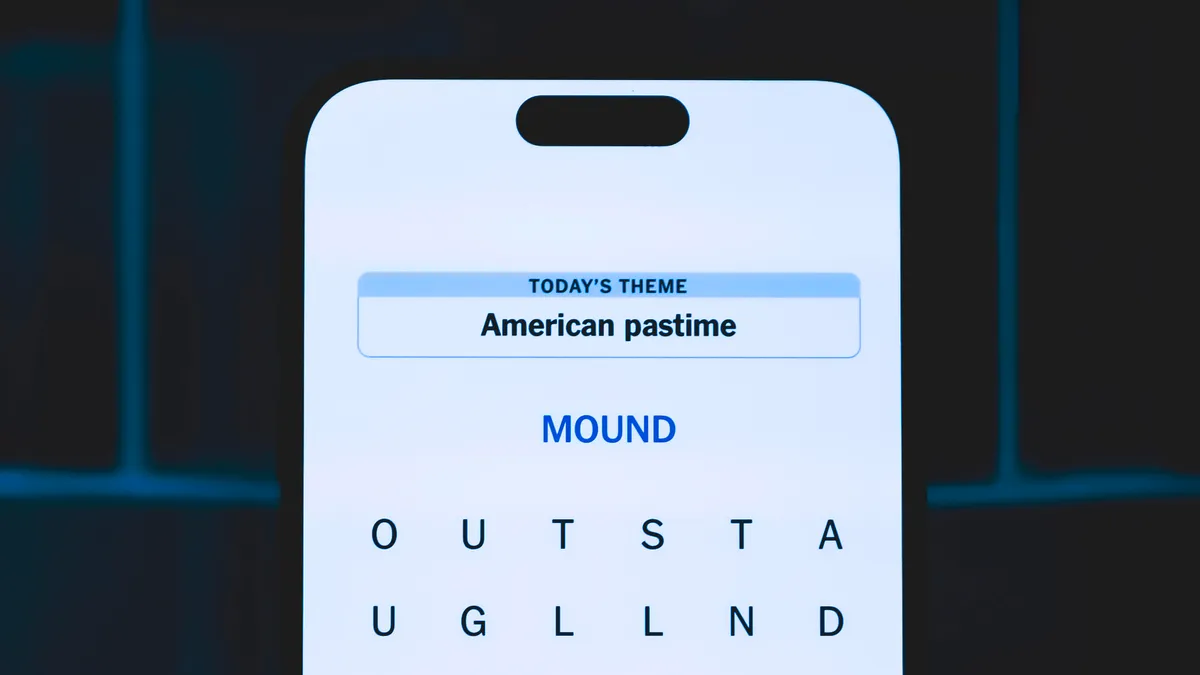
The completed NYT Strands puzzle for April 20, 2026.
NYT/Screenshot by CNET
Today’s Strands spangram is CATCHTHELIGHT. To find it, start with the C that’s three letters to the right on the bottom row, and wind up.
A growing wave of online voices warning about the dangers of artificial intelligence—often dubbed “AI doom influencers” – is reshaping how the public and policymakers view the technology. According to a report by The Washington Post, these influencers, including researchers, tech leaders, and content creators, are increasingly highlighting worst-case scenarios, from mass job loss to existential risks posed by advanced AI systems.
While critics argue that some of this messaging borders on alarmism, the conversation is no longer confined to speculation. Real-world developments in AI are beginning to mirror some of the concerns being raised, blurring the line between hype and legitimate risk.
When Warnings Meet Reality
The rise of AI-focused fear narratives comes at a time when companies are rapidly advancing the capabilities of large language models and autonomous systems. These tools are already reshaping industries, automating tasks, and influencing decision-making at scale.
Adding to the urgency is the emergence of highly advanced systems like Anthropic’s experimental model, often referred to as “Mythos.” According to industry discussions, Anthropic has reportedly deemed the system too powerful for a full public release. Instead, access is being restricted to a small group of trusted partners, including defence and financial institutions, and even then, only with prior government approval.
Advertisement
Unsplash
This cautious rollout reflects growing concern within the industry itself. In the UK, reports suggest that government bodies have held internal meetings to assess the implications of such advanced AI systems. Canada has also issued statements acknowledging the potential risks associated with increasingly capable AI technologies.
In India, companies like Paytm’s parent entity and Razorpay have echoed similar concerns, describing the current moment as a potential turning point for how AI is governed and deployed.
Why The Debate Matters
The conversation around AI safety is no longer theoretical. For years, researchers have warned about risks such as bias, misinformation, loss of human control, and unintended consequences from highly autonomous systems.
What’s changing now is the scale and immediacy of these concerns. As AI systems become more powerful, the gap between research warnings and real-world applications is shrinking. This has given more weight to voices calling for caution, even if some messaging appears exaggerated.
At the same time, the rise of “doom influencers” highlights a broader issue: how to communicate risk responsibly without causing unnecessary panic.
Advertisement
What It Means For Users And Industry
For everyday users, the growing focus on AI risks may lead to more transparency, stricter regulations, and safer products in the long run. However, it could also slow down innovation or create confusion around what AI can and cannot do.
Unsplash
For companies and governments, the challenge lies in balancing progress with precaution. The restricted rollout of systems like Mythos suggests that even leading AI developers are grappling with this balance.
What Comes Next
As AI continues to evolve, discussions around safety, regulation, and ethics are expected to intensify. Governments may introduce stricter oversight, while companies could adopt more controlled deployment strategies for advanced systems.
The rise of AI doom narratives may be partly driven by fear, but it is also being shaped by real technological breakthroughs. The question now is not whether AI poses risks, but how those risks are understood – and managed – before the technology moves even further ahead.
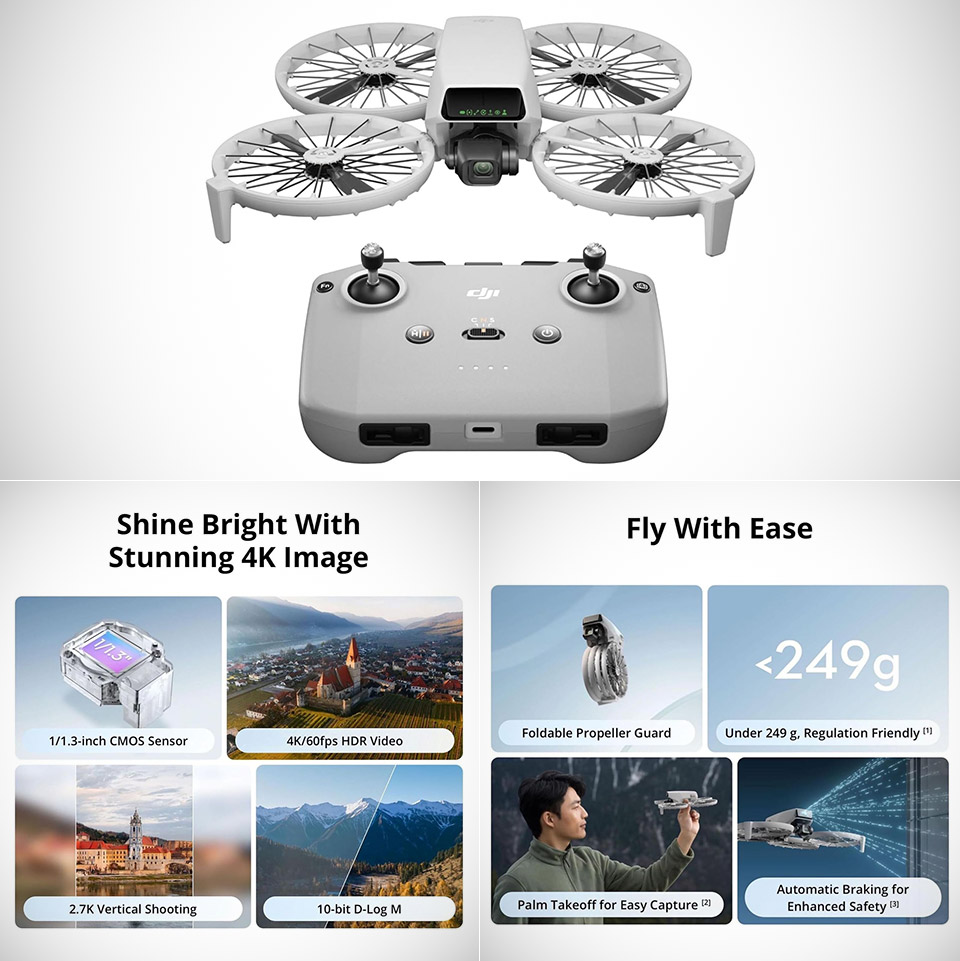
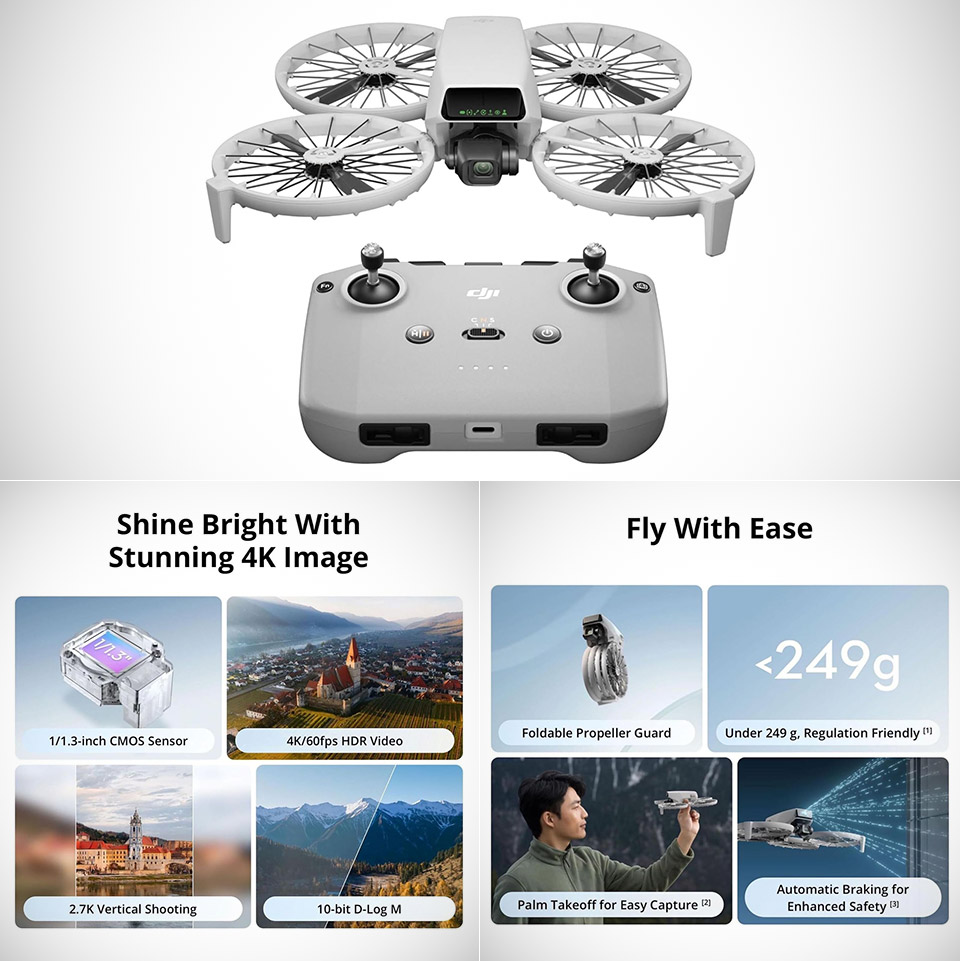
When a drone beginner picks up the DJI Flip, priced at $299 after clipping the on-page coupon (was $439), and begins to get acquainted with it, word spreads quickly. The Flip gets that reputation by doing all the clever things that serve to shorten the learning curve while still producing footage that anyone would be glad to share immediately. Size and weight make an impression the moment you pick it up, as the whole thing weighs less than 249 grams even with the battery charged, which makes a big difference when you need to get somewhere, and at roughly 136 by 62 by 165 millimeters in its folded state, it shrinks down enough to fit into a jacket pocket or a small bag without drawing attention.
Safety features step up where they’re most required, namely for those who’ve never flown one of these things before. The full-coverage propeller shields fold down to protect each individual prop blade. They allow you to safely set the drone down on a palm for takeoff and landing, without fear of the spinning parts whacking a limb or bashing into something close. The forward and downward sensors keep an eye on what’s ahead and what’s below, then apply the brakes automatically if something gets too close, and it all works even on a cloudy day or during return to home flights, so confidence grows rather than dwindles when obstacles appear.
Fly Fearlessly – This drone with camera for adults 4k features full-coverage propeller guards made from lightweight carbon fiber, providing…
Lightweight and Regulation Friendly – Weighing under 249 g, [1] this drone with camera doesn’t need FAA registration or Remote ID in America. It’s…
Your On-the-Go Director – With subject tracking, your subject stays in focus. Whether you’re hiking or having a party, this drone for adults acts like…
The flight time is long enough to get out there and explore without fear of running out of juice. Under ideal conditions, a single charge can provide up to 31 minutes of continuous flight time. That gives you plenty of time to practice some basic tricks or chase a beautiful sunset without having to run back to the car to recharge, and hovering is really precise thanks to the satellite and vision systems, which keep the device fixed in place even in a mild breeze.
Advertisement
The camera is a pleasant surprise because it outperforms what you can expect from an entry-level device, as people frequently do. A 1.3-inch sensor can shoot 48-megapixel still images with incredible quality, even when cropped or printed. Video in 4K at 60 frames per second with strong dynamic range is a given, so brilliant skies and shaded ground appear natural. Slow-motion recordings can reach up to 100 frames per second in 4K for those instances when you want to emphasize a view of a wave or bird. A three-axis mechanical stabilizer ensures that every shot is absolutely level and smooth, regardless of how the drone moves.
Controls are extremely adaptable and can be changed to fit any level of competence. You may combine the drone with the provided remote controller and a smartphone to gain full manual control and a clear live view, but for total beginners, you can just launch it from your palm and utilize voice commands or the app for basic tracking. Subject following keeps the camera focused on a person or object, while the drone manages distance and framing, allowing you to simply enjoy the ride.
Storage and power management are quite well thought out, as they make the workflow super clean . You get 2GB of built-in capacity to store a few minutes of movie or a few extra photographs in case you forget to bring a memory card. Simply insert a larger one if you need additional space; it will not slow you down. With two batteries that can be charged simultaneously via a parallel hub, you can have a backup ready to go whenever you need it.
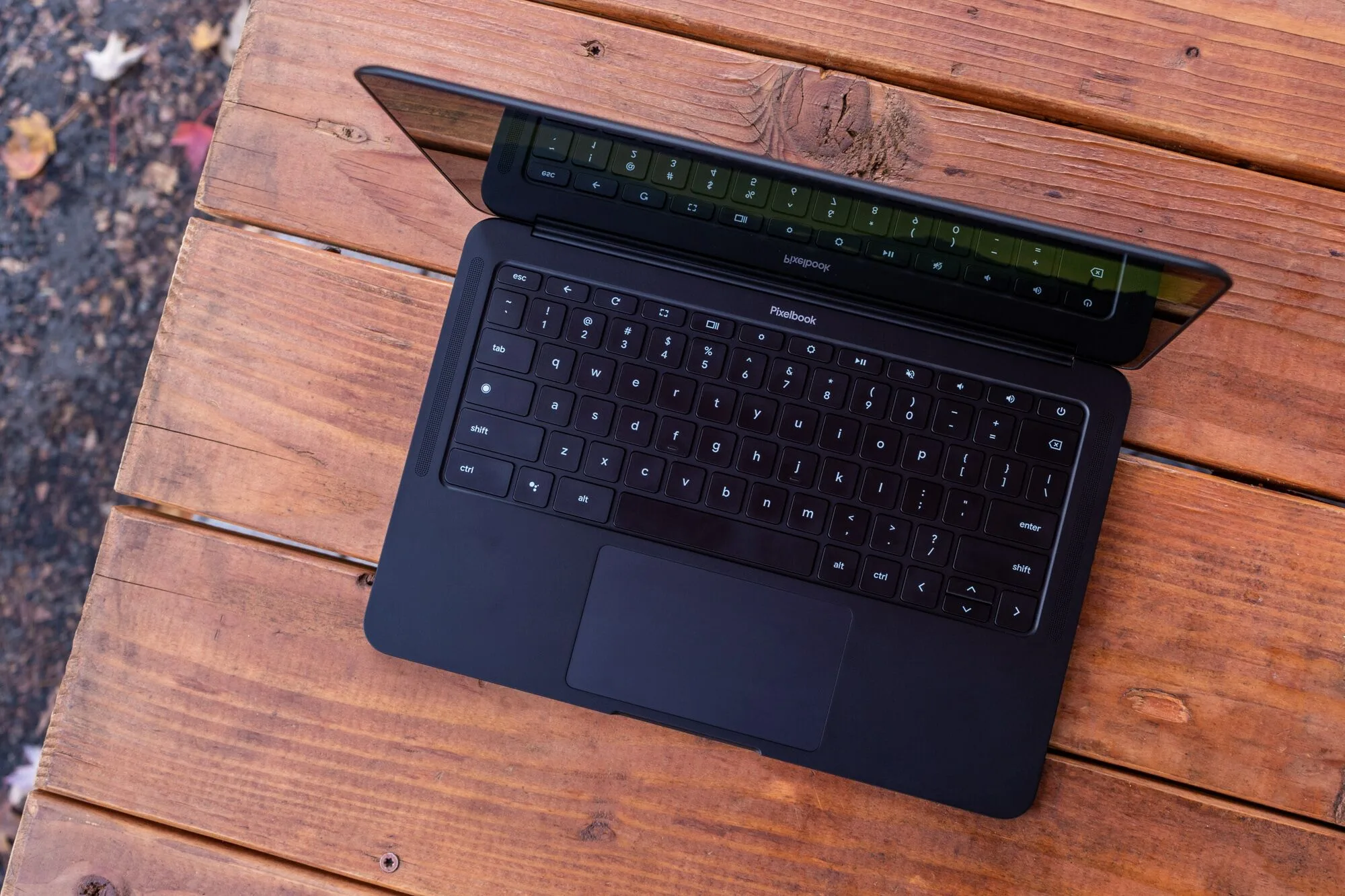
It looks like a new member is joining the Pixel family, adding to its resurgent smartphone lineup. Code analysis of the latest Android beta points toward a new Pixel laptop that Google might be planning to launch in the near future. Google last launched a laptop, the Pixelbook Go, in 2019, an affordable version of the Pixelbook it put on the shelves back in 2017.
Both the Pixelbook and Pixelbook Go, along with the earlier Chromebook Pixel models, were not what you would call a smash hit with the audience or a runaway commercial success. Ultimately, they triggered Big G’s departure from the laptop segment and a shift in focus toward Pixel smartphones.
The tides are shifting, and it seems ChromeOS is on its sunset ride.
Snippets spotted in Google’s software suggest we might finally see Google’s latest attempt at a laptop, but without the expected Chromebook foundations. Instead, it could be the showcase ride for an entirely new class of machines running Aluminium OS. That said, a Google Pixel laptop does not make much sense right now, as several factors work against it. As one charismatic wrestling star would go, “let me talk to ya” on this!.
Google’s history of failure with past laptop launches
Let’s be fair (read: historically accurate) here. Google doesn’t have a particularly enviable track record with making laptops. The company took several stabs at making a laptop in the past decade, starting with the Chromebook Pixel in 2013, an upgraded Chromebook Pixel in 2015, the Google Pixelbook in 2017, and the Pixelbook Go in 2019.
Advertisement
Digital Trends
None of these laptops could set the computing segment on fire or set any long-lasting industry trends, owing to two main factors: pricing and the underlying operating system.
A history of bad pricing at Google
Device model
Price starting at
Chromebook Pixel (2013)
$1,299
Chromebook Pixel (2015)
$999
Pixelbook
$999
Pixelbook Go
$649
As you can see from the table, all Google laptops commanded a premium, with launch prices around the $1,000 mark. At that price, you could get a powerful Windows laptop or even a MacBook Air. Why would anyone want to pay that much for a laptop running ChromeOS?
I plonked $1,649 on the top-end variant with the Core i7 variant, and it’s now eating dust in my drawer. Not because I don’t want to keep it running. The laptop is just utterly slow, and despite numerous hard resets, it won’t even handle Chrome smoothly without stuttering, running utterly hot, and the screen has lost its touch-sensitivity, too.
The state of ChromeOS in 2026
Well, that was nearly a decade ago, but what about now? Maybe ChromeOS has improved enough to go toe to toe with other desktop operating systems? Sadly, the answer is no. If anything, Google seems to have left the operating system in limbo with no drastic improvements.
Advertisement
Google
Yes, there have been pockets of updates here and there, but nothing substantial that makes it a viable competitor. It’s still a browser-based operating system with minimal support for popular creativity and productivity apps. With the scrapping of Google Stadia, gaming is also now almost defunct on ChromeOS.
On the other hand, Linux has improved by leaps and bounds, can run on similar low-powered hardware, and supports gaming and the most popular creative and productivity apps. In fact, Linux is at an all-time high among Steam gaming die-hards. Yes, ChromeOS has simplicity of use in its favor, but that’s about it.
What about the upcoming Aluminium OS?
There is, however, a glimmer of hope on the horizon. Google is working on a new operating system called Aluminium OS, with an expected launch window of 2026. It aims to merge Android and ChromeOS into a single unified platform.
Built on Android from the ground up, it promises native support for all Play Store apps with proper keyboard and mouse support, alongside desktop-grade window management features. It will even support multiple desktops.
The highlight feature of the OS will be Gemini AI, which will supposedly be baked into the core of the OS, which is a significant step up from ChromeOS. That said, Aluminium OS could push forward with its own set of problems, if ChromeOS is anything to go by.
Advertisement
Rachit Agarwal / Digital Trends
First, it would require more powerful hardware to power the AI features. Ideally, it would need a silicon with a powerful AI accelerator chip (aka NPU) to handle AI-driven tasks, especially those that are executed on-device. Imagine translation, photo editing with generative AI, scam detection, and more, without an internet connection.
Second, since it is based on Android, you will still not get support for full-fledged desktop apps. You might be able to run them using a translation layer, something Apple did with Rosetta when it switched to its own ARM-based processors for Macs, but how well it will work is a big question mark. Windows on ARM has been a mess and only recently started becoming a real possibility.
I can’t imagine Aluminium OS will fare any better in its first swing at serious computing.
Built-in Gemini AI will be the highlight of this new operating system, and hopefully, it will be better than the Windows implementation of Copilot AI and the lackluster Apple Intelligence execution in macOS. This could give Aluminium OS a leg up over the competition, but the fundamental issue, which is a lack of desktop app support, is a problem Google will have to figure out soon, or the new OS will suffer the same fate as ChromeOS.
Rising RAM and SSD prices
By now, it should be clear that the only way a next-generation Google laptop can succeed is by lowering its price. But that might be harder to achieve in today’s market, thanks in no small part to the RAMmageddon that has wreaked havoc in the PC industry and spilled over into the smartphone and gaming segments as well.
Sergei Starostin / Pexels
And these are just a few examples. Every other laptop manufacturer has climbed the price ladder, much to the obvious displeasure of buyers and even triggering a panic purchase spell, according to Counterpoint Research. Unfortunately, industry trends suggest it will only get worse before it gets better. And we’re not just talking about new products here.
Unsplash
It might be the first time in history that a gaming console, phone, or laptop costs more in 2026 than it did at launch. In such an unprecedented market, I do not see a way for Google to cut prices on its new laptops, especially with the powerful system requirements for running Aluminium OS, without significantly jeopardizing other aspects of its hardware, which was the only good thing about the older Google laptops.
The MacBook Neo exists at $599
Google’s Aluminium OS foundations sound promising, but they just got a pre-emptive reality check from Apple, in the form of MacBook Neo. If the reportedly upcoming Google laptop existed in a vacuum, there might have been a chance it could succeed.
Now, let’s do a thought experiment. If you had to choose between a Pixelbook and a MacBook Neo at $599, a price point Google has never hit before, by the way, which one would you choose?
I would argue that nearly everyone would choose the MacBook Neo. The only thing going in favor of the Pixelbook over similarly priced Windows laptops was its hardware design, and it won’t have that same advantage over the MacBook Neo.
The MacBook Neo features a full metal body, a good display, a quality keyboard, and a best-in-class touchpad. Google will be hard-pressed to build a laptop that good, with that kind of performance, and still hit the $599 price point.
Nadeem Sarwar / Digital Trends
Not to mention, you get the full desktop experience with MacBook Neo because it runs macOS. Even if the new Google laptop is powered by the upcoming Aluminium OS, it will still lack support for desktop apps. Yes, the experience might be better than ChromeOS, but there’s no chance it can compete with a mature operating system like macOS.
Chromebooks sell so well largely because they hit a sub-$300 price point for the education market. But think a year or two ahead, when the current MacBook Neo is selling for $350 or $400 in the resale or refurbished market. Who would buy a Chromebook then?
Advertisement
Does a Chromebook, let alone a Pixelbook, make sense now?
The only reason ChromeOS holds a significant share of the market is due to its education programs and strong ties with schools across the US. If Apple can crack that code and partner with school boards to offer the MacBook Neo as a replacement, the days of ChromeOS are numbered.
Even if Apple doesn’t succeed in schools, MacBook Neo has ensured that the days of premium ChromeOS laptops are over. The upcoming Aluminium OS might be the answer Google is hoping for, but I am skeptical. And that’s why I do not think a new Google laptop makes sense right now. Or ever.
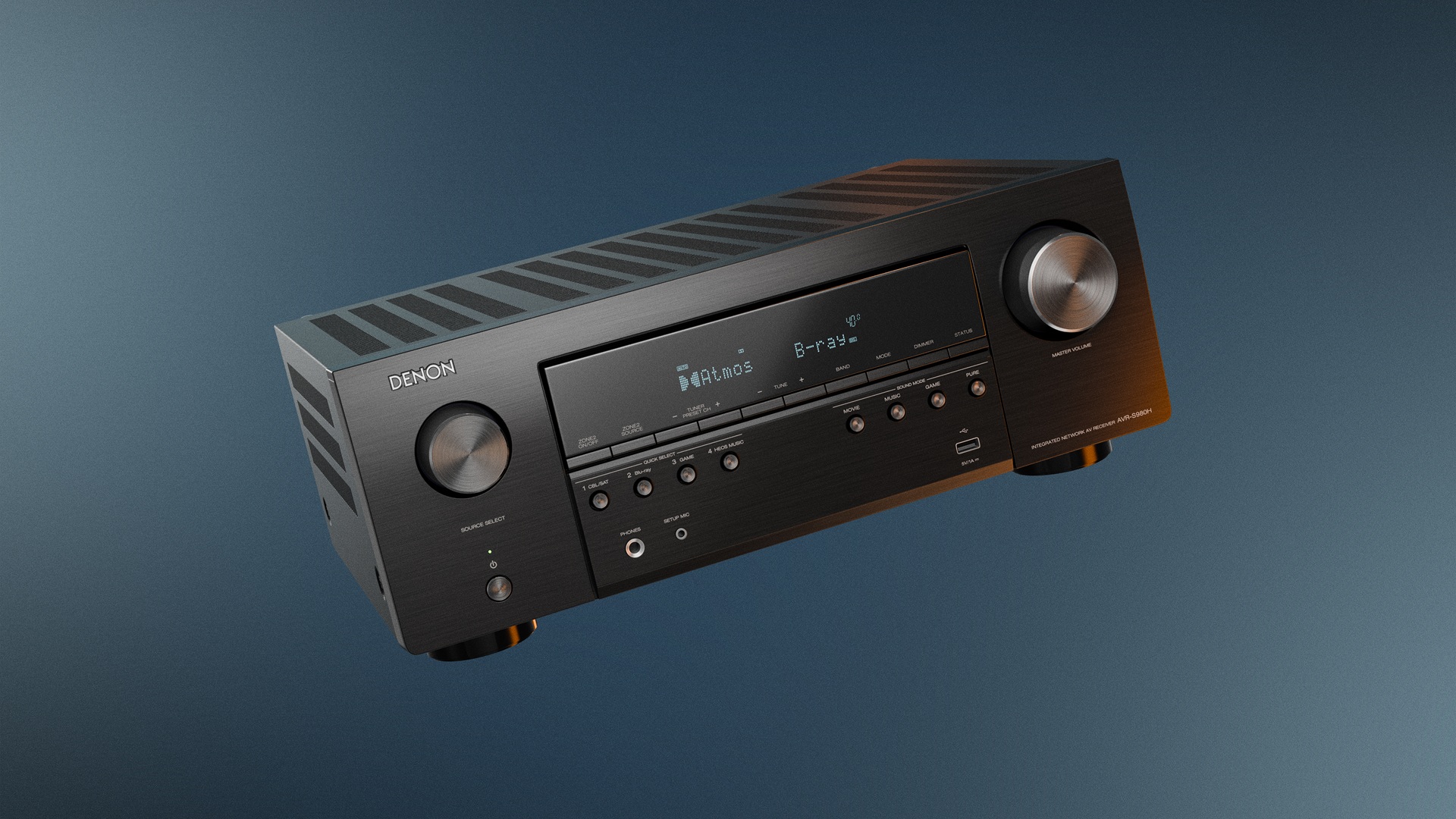
Stepping up from a soundbar has long been the natural next move for home entertainment enthusiasts. Denon’s new AVR-S980H targets precisely that audience with a 7.2-channel AV receiver that prioritises approachability alongside genuine audio performance.
Lyle Smith, President of Sound United at HARMAN, described the receiver as part of Denon’s broader mission to make high-quality audio more accessible, noting that better sound brings people closer to the stories, music and moments they love.
At the core of the AVR-S980H is a 90-watt-per-channel amplifier, a specification that gives the unit enough headroom to drive demanding speakers without distortion whether that’s during high-intensity movie scenes or particularly dynamic music. It reflects the kind of engineering heritage Denon has built over more than a century.
The receiver fits into Denon’s HEOS multiroom audio ecosystem, allowing audio to be streamed between rooms or grouped with other HEOS-compatible devices without additional hardware. A future firmware update will introduce wireless surround support using the Denon Home 200, 400, and 600 speakers, though that functionality will not be available at launch.
Advertisement
For gaming households, the AVR-S980H adds 1440p passthrough and AMD FreeSync support to smooth out fast-moving gameplay and reduce visual tearing, making the receiver a practical upgrade for players who want their audio and visual setup to work in tandem rather than separately.
Advertisement
Connectivity spans Bluetooth, AirPlay 2, Spotify Connect, and HEOS multiroom audio, covering the major wireless streaming formats. To make using the AVR-S980H easy, first-time AVR owners through setup using onscreen instructions rather than assuming prior knowledge of receiver configuration.
The AVR-S980H also scales with the owner’s setup, supporting configurations from a basic stereo pair through to a 5.1.2 Dolby Atmos system, so buyers are not locked into replacing the receiver as their speaker system grows over time.
In a recent episode of “No Priors” — the excellent podcast co-hosted by AI investors Sarah Guo and Elad Gil — Gil made a point about exit timing that’s undoubtedly familiar to founders who’ve spent time with him, but seems particularly useful in this moment of go-go dealmaking.
For most companies, Gil said, there’s roughly a 12-month period where the business is at its peak value, “and then it crashes out” and the window closes. The companies that capture generational returns are often the ones where someone spies that moment instead of assuming the good times will get even better. Lotus, AOL, and Mark Cuban’s Broadcast.com all sold at or near the top, and all are held up by Gil as examples of outfits that foresaw what was coming and smartly pulled the ripcord.
Oh great and powerful @DarioAmodei – builder of minds, father of Claude. I humbly request you leave payroll to us at Deel.
We are but simple folk who process paystubs and chase compliance deadlines. But if you do come for us, call me first 🙏
To catch that window, Gil offered a practical suggestion: pre-schedule a board meeting once or twice a year specifically to discuss exits. If it’s a standing calendar item, it drains the emotion out of the equation.
This matters more now than it might have a few years ago. A lot of AI startups exist partly because the foundation models haven’t expanded into their category … yet. As many (like Deel CEO Alex Bouaziz) jokingly acknowledge, that won’t last forever.
As Gil put it: “As you see shift[s] in differentiation and defensibility and all the rest, it’s a good time to ask, ‘Hey, is this my moment? Are these next six months when I’m going to be the most valuable I’ll ever be?’”


























































You must be logged in to post a comment Login