Tech
VMware Ready to Run CDs Packed Working Linux Virtual Machines Onto Discs Handed Out at Linux World 2000

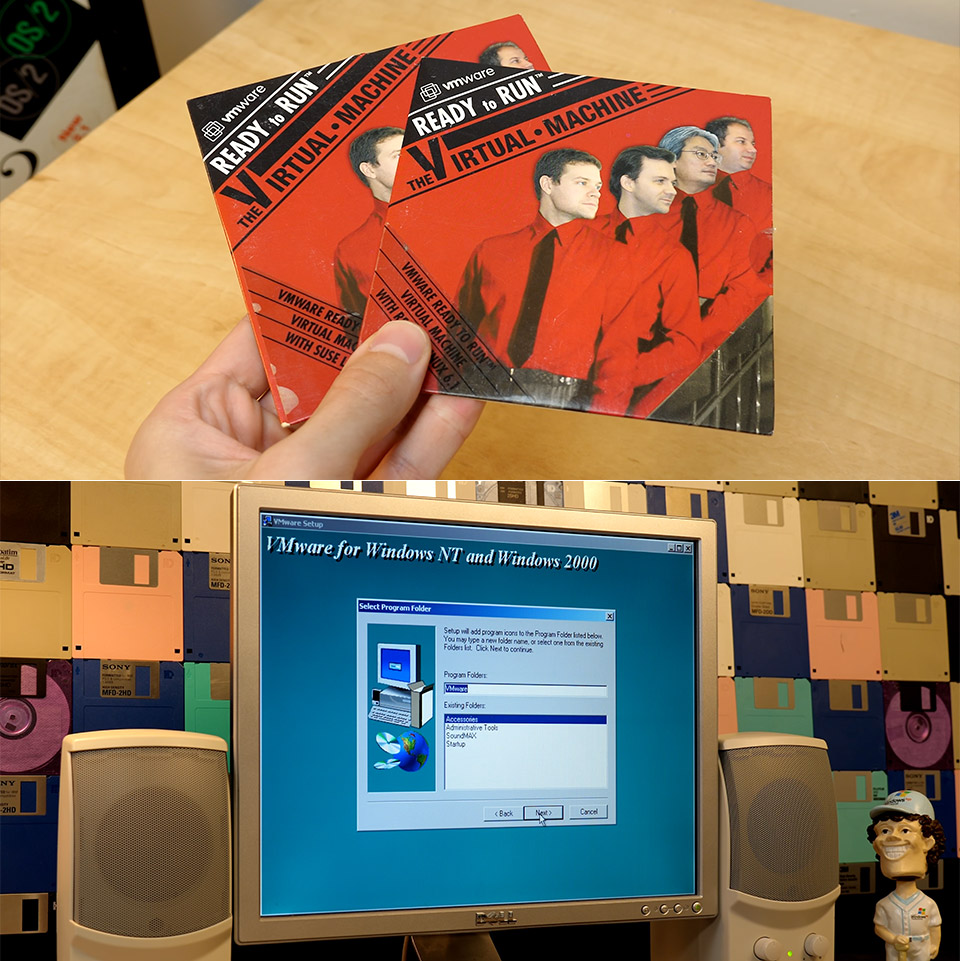
Viewer David from Virginia Beach mailed Michael MJD a pair of forgotten promotional CDs he picked up at Linux World 2000, and those discs still hold complete, ready-to-boot virtual machines of Red Hat Linux 6.1 and SuSE Linux. VMware handed them out as marketing pieces that let Windows users try popular Linux distributions without hunting down ISOs or partitioning a hard drive. Each disc carries VMware 1.0.1 for Windows NT and Windows 2000 plus the Linux host version, a short readme, and a compressed virtual disk image already configured with a working guest OS.


The artwork on the cardboard sleeves is a dead ringer for Kraftwerk’s The Man-Machine album, with the exception that the title has been changed to Virtual Machine and the band members have been Photoshopped to resemble VMware’s founders. According to the Computer History Museum’s archives, VMware donated matching copies to the museum, along with a third disk containing a copy of TurboLinux 6.0. Not much else appears to have survived online, which is why MJD finally got around to chatting with the cast more than two decades later.
Sale


ACEMAGIC V1 Mini PC, AMD Ryzen 5 3500U, 16GB RAM 256GB SSD Windows 11 Pro
- 【AMD RYZEN 5 3500U PERFORMANCE】 Powered by the AMD Ryzen 5 3500U processor with 4 cores and 8 threads, up to 3.7GHz, this mini PC delivers…
- 【16GB RAM+256GB SSD,Flexible Expansion】 This compact PC features dual DDR4 memory slots, allowing for easy upgrades to 16GB of high-speed memory…
- 【Compact and Durable】The micro PC measures only 3.94 x 3.94 x 1.3 inches, making it easy to carry and an ideal choice for working on the go. Its…
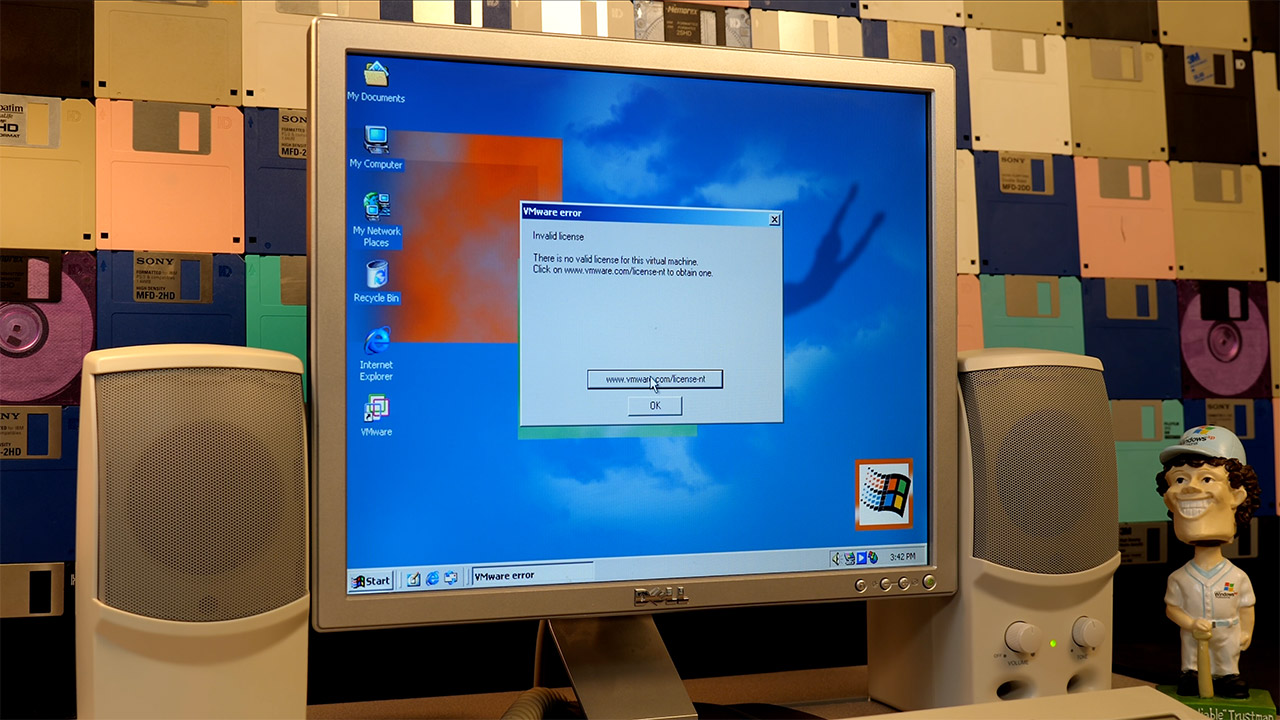
He began by inserting the Red Hat disk into a Windows 2000 PC from the time when the program was first released, as the decision was based on the original requirements listed on the package. However, when he inserted the disk, nothing happened; there was no autorun prompt. So he walked into the Windows folder, launched the 1.0.1 installer, and followed the network and desktop icon prompts as expected. After rebooting, the system failed to start, displaying a “invalid license” error message. What was supposed to happen was that you’d get a 30-day evaluation key from VMware’s long-defunct website and that’d be it, but MJD ended up needing to hack together a functioning key instead and proceeded.

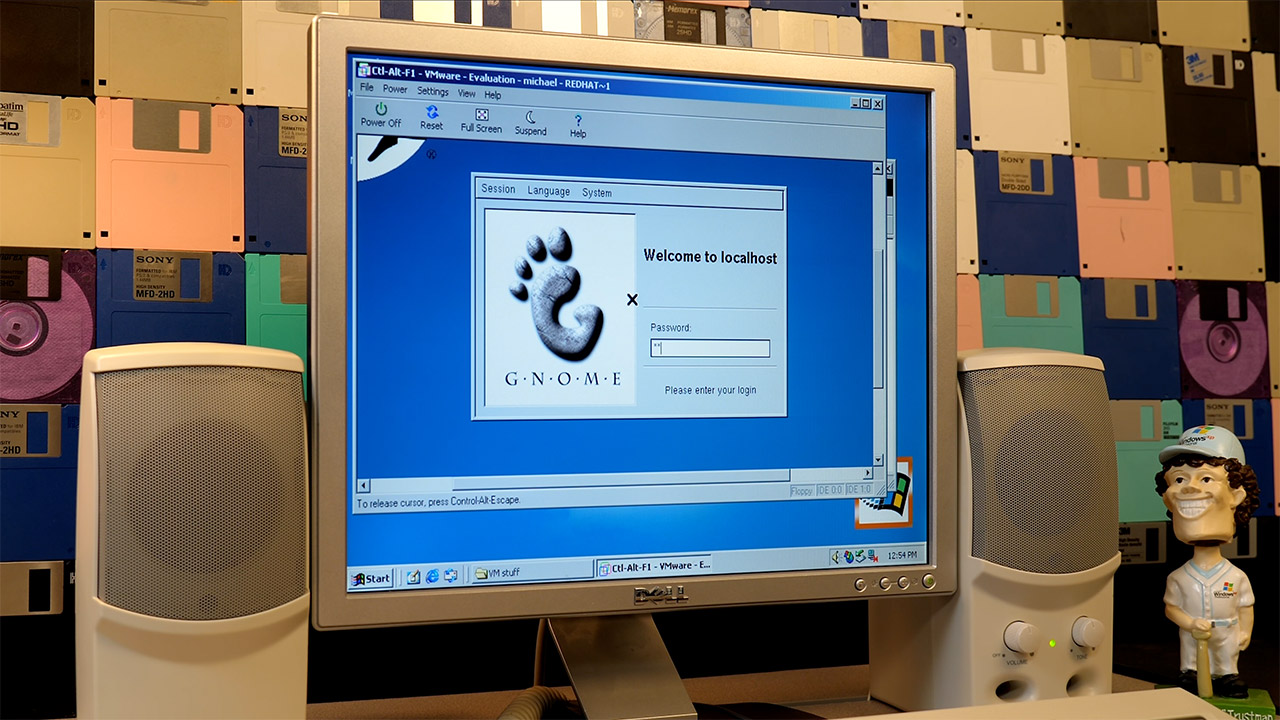
The self-extracting application inside the Ready to Run folder unwrapped a virtual disk and a configuration file, which VMware happily accepted after a minute. MJD was welcomed by a LILO screen before being prompted to log-in. The username and password both defaulted to “VMware,” and after logging in, a GNOME desktop with VMware Toolbox already installed appeared, allowing him to exit the guest window with a single key press. The resolution started off all wacky, but a quick change to the xf86 configuration file rectified it, and he was able to fit the guest onto his host desktop at 640×480. Ethernet worked perfectly, and the menus scrolled smoothly.
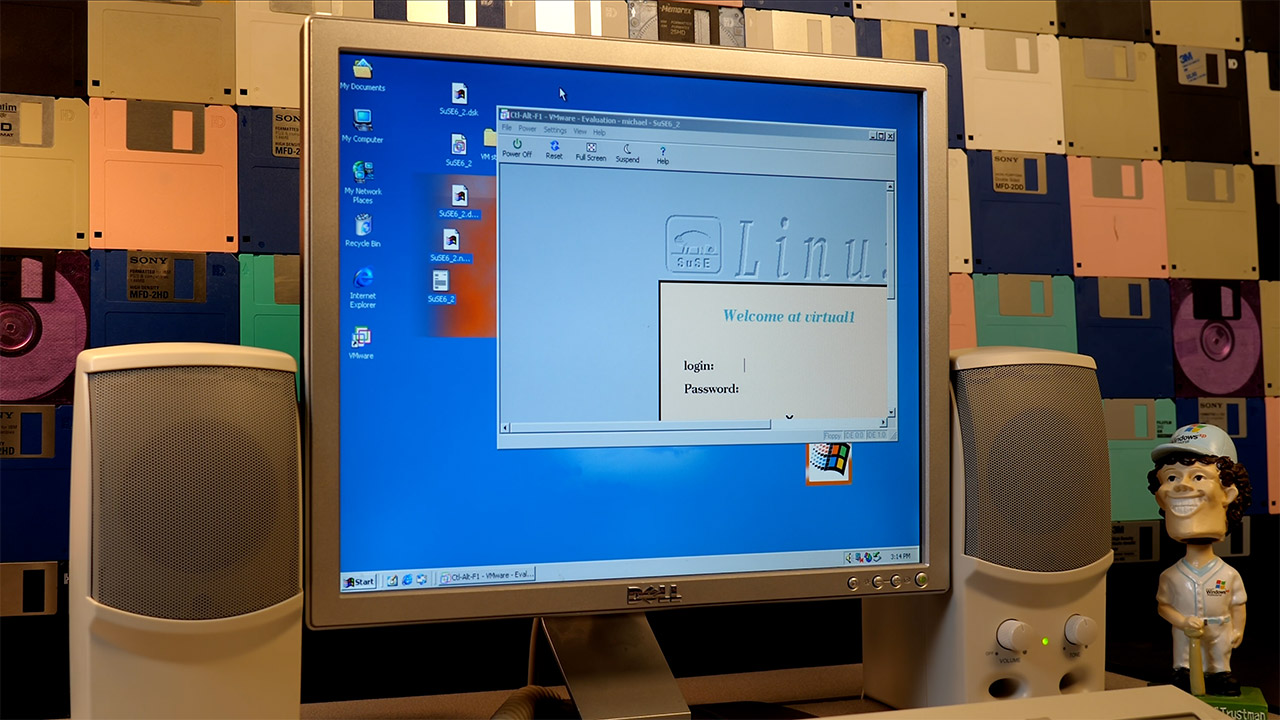
SuSE didn’t proceed as planned, as the identical self-extractor claimed to have finished on its own but ended up leaving behind a corrupted image. MJD ended up moving the raw tar gzip to a newer PC, unzipping it with 7-Zip, and renaming the configuration file to make it compatible with current VMware. Finally, the guest booted into a German-language KDE desktop with a very distinctive stone-textured wallpaper that appeared to be unique to the SuSE disk, and MJD was relieved to find that the login credentials were the same as the Red Hat workstation. Toolbox again handled mouse integration.
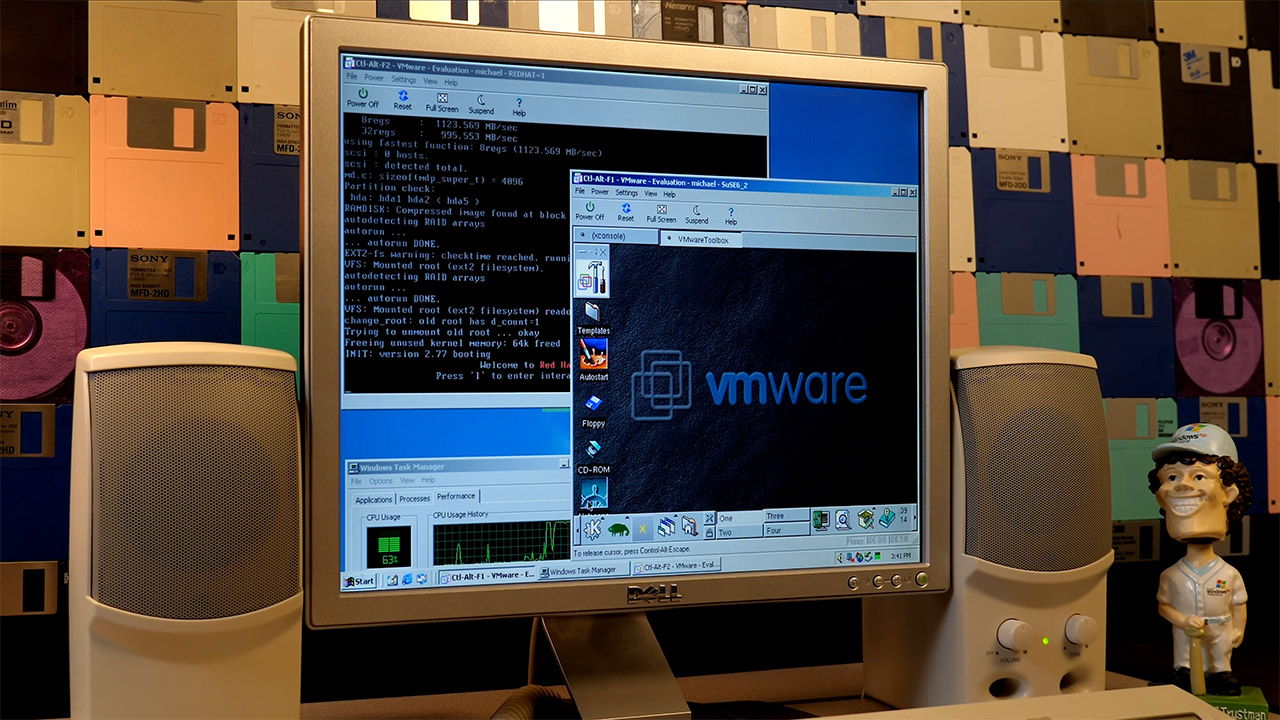
Running both guests at once on period hardware pushed the Pentium III to 100 percent CPU and introduced lag, frozen input, and occasional freezes during login. You had the best results running one at a time. Memory sat well below the 512 MB specified, implying that the old virtualization layer was RAM-bound, but it turned out to be more CPU-bound than anything else. Newer processors regularly produced kernel panics, so MJD shifted the experiment to a 733 MHz Pentium III that was downclocked to match the original requirements, which called for a Pentium II 266 MHz.
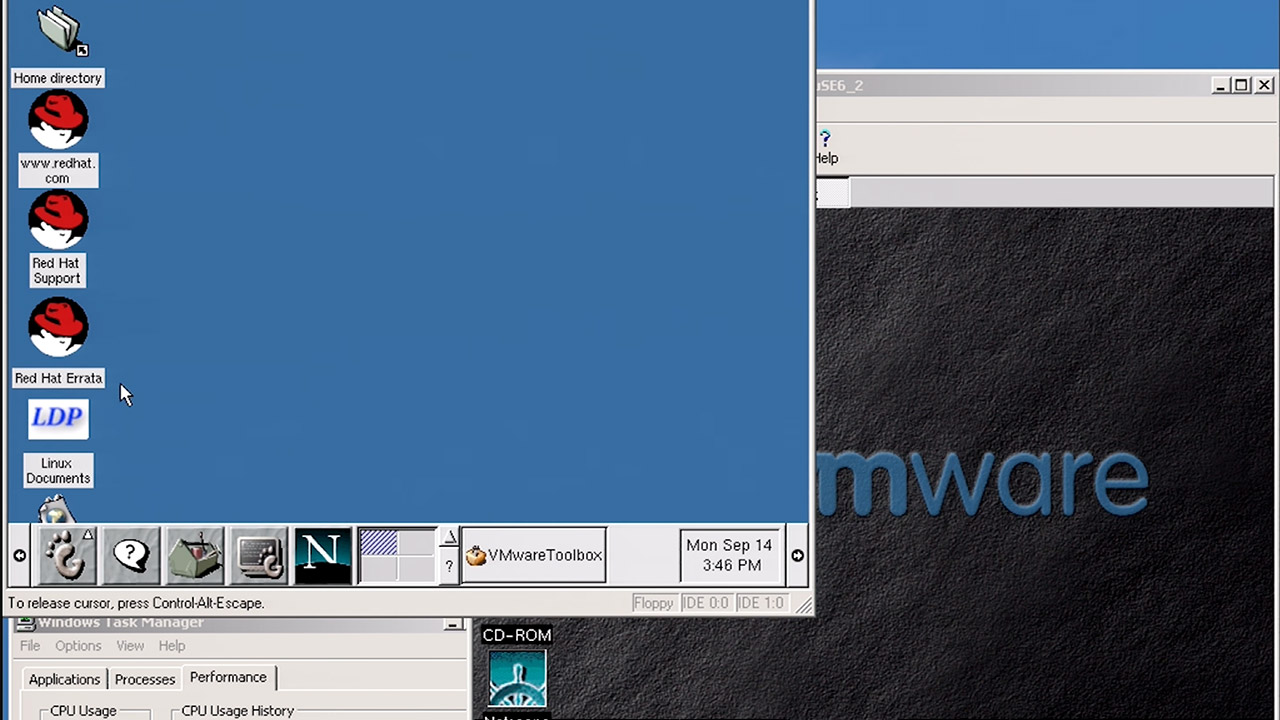
Back in 2000, these discs removed almost every barrier between a curious Windows user and a fully configured Linux desktop; simply insert the CD, install a brief trial of VMware, and a desktop appeared, all without the need for a download or partitioning. Today, the identical files are available on the Internet Archive, allowing anyone with the necessary hardware or a modern hypervisor to repeat this experiment. However, the original packaging remains a surprisingly compact time capsule of the moment when virtualization became something you could give away at a trade fair.
You must be logged in to post a comment Login