Tech
Want To Keep Bugs From Sticking To The Front Of Your Car? This May Be A Solution


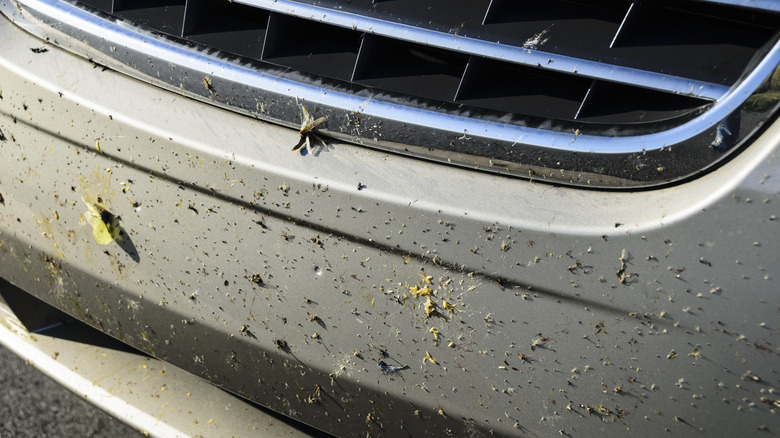
You step out of your car after a long haul in the middle of summer and realize the front end has turned into a magnet for all kinds of bugs. Everything from the bumper to the windshield is caked with bug splatter. Normally, the next course of action is to get the cleanup underway as quickly as possible. While it’s impossible to repel bugs when your car’s barreling down the highway at over 100 mph, there are ways to make dealing with them a lot easier later.
There are several techniques you can choose from, but let’s start with the cheapest: wax. Apply a layer, and the surface gets slick enough that splatters slide off instead of sticking. That’s crucial since bugs carry acidic compounds. Given enough time on hot paint, they can penetrate the clear coat, leaving behind etching, staining, and even some bubbling on the finish. Cicadas can make things even worse with their glue-like residue. Wax can help prevent these problems. And because it’s affordable and applying it is fairly straightforward, you can simply reapply it on your own every few months if it’s wearing off.
A step up from wax is ceramic coatings from reliable brands. Because they’re hydrophobic, they repel water and dirt as well, making it harder for bug juice to stick. But unlike wax, they require significantly more precision and time, which is why it’s best to leave application to a professional detailer. For even more thorough armor, paint protection film (or PPF) for cars works better still. Not only does it soak up impacts from road debris and insects alike, but some PPF products are also self-healing. The catch is that it’s significantly pricier.
Other prevention tactics
On top of all that, you can use bug repellent sprays too — although they’re not to be confused with human bug sprays. The water-based sprays leave a slippery layer, with some holding up for a week or two. They work well when you don’t want to commit to anything permanent, making them ideal for a long road trip.
Then there’s the low-tech route of preventing bugs from ever getting close to the paint: bug screens. These are essentially mesh screens that strap onto the front of your car and can snap on and off relatively easily. You can simply keep them in the car, strap them on when the season is exceptionally buggy, and wash them after a trip. As an alternative, a fabric car bra over the hood does much the same thing, just with less coverage.
Some of the prevention is behavioral, too. The slower you drive, the fewer bugs your car will pick up along the way. That’s because at lower speeds, the airflow around the car gives them a chance to get pushed around. Even if they do hit, the chances of them splattering hard drop significantly. You also save money on actual repairs, since beetles with their hard shells upon impact can quickly become one of the reasons for your car’s chipped paint. If it’s lovebugs you’re dealing with, then timing can help too. Most of them hit their daily peak around 10 a.m. and stop flying at dusk, so during lovebug season, timing drives for the evening can help reduce the problem. When bugs do inevitably hit the paint, try to get them off as soon as possible. That’s because the longer they sit in the sun, the deeper the acid works into the finish.
You must be logged in to post a comment Login