Tech
Water-Cooled MacBook Neo Equals Double the Frames from a Fanless Budget Laptop
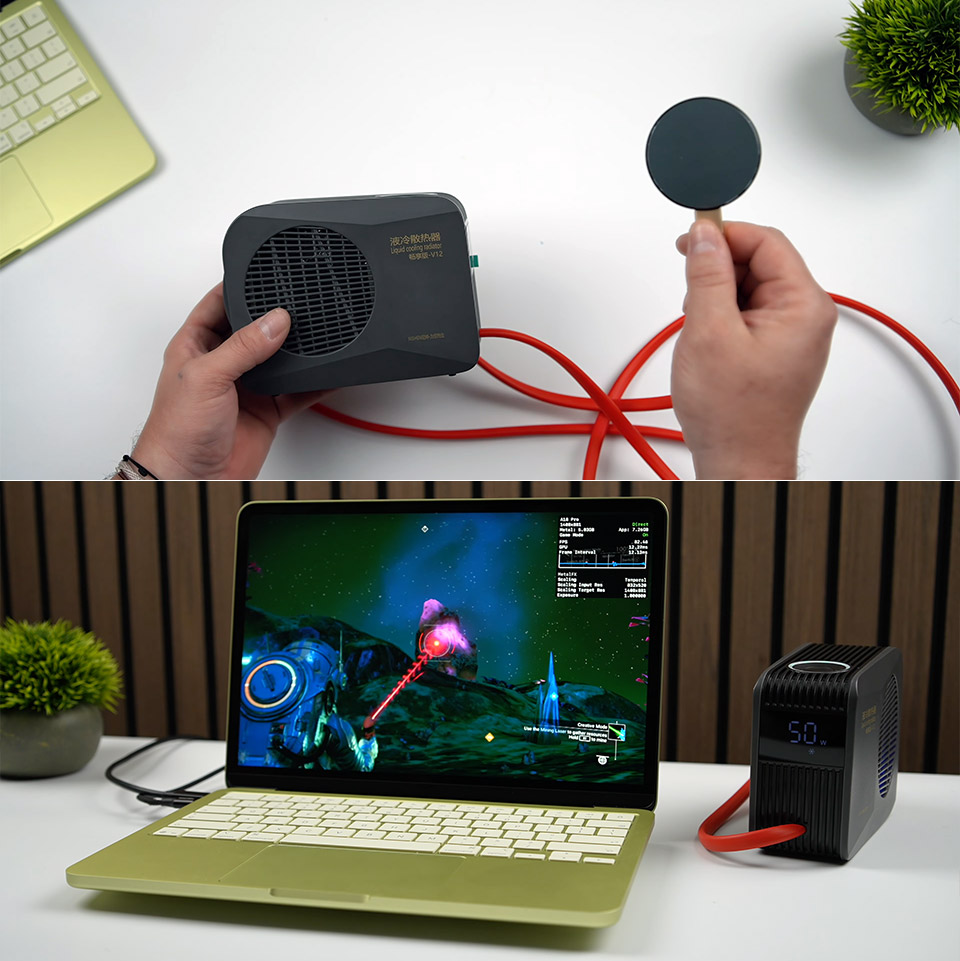
Apple’s MacBook Neo brings the A18 Pro chip from the iPhone 16 to an entry level laptop priced to compete at the accessible end of the market. To keep it slim and completely silent, Apple ditched fans entirely in favor of a graphene thermal pad sandwiched between the processor and the chassis to dissipate heat. It is an elegant solution for everyday tasks, but it puts a ceiling on how hard the chip can push when the workload gets demanding.


ETA Prime saw room for improvement and immediately took the MacBook Neo apart to find out how much. He fashioned a custom copper sheet shaped to sit around the CPU, cleaned the chip with isopropyl alcohol, applied fresh thermal paste, and topped it with a thermal pad to help the copper pull heat away from the chip and into the chassis. No permanent modifications, no adhesive, just a few screws and careful hands.


Apple 2026 MacBook Neo 13-inch Laptop with A18 Pro chip: Built for AI and Apple Intelligence, Liquid…
- HELLO, MACBOOK NEO — Ready for whatever your day brings, MacBook Neo flies through everyday tasks and apps. Choose from four stunning colors in a…
- THE MOST COLORFUL MACBOOK LINEUP EVER — Choose from Silver, Blush, Citrus, or Indigo — each with a color-coordinated keyboard to complete the…
- POWER FOR EVERYDAY TASKS — Ready the moment you open it, MacBook Neo with the A18 Pro chip delivers the performance and AI capabilities you need to…
The results were immediate, as frame rates in No Man’s Sky climbed from around 30 per second to a smooth 58, and processor temperatures dropped from 105 degrees Celsius down into the mid-eighties. Geekbench 6 scores followed suit, with multi-core performance up by around 10 percent and single-core gains exceeding 15 percent. With the chip staying cooler for longer, sustained performance improved noticeably across everyday tasks as well, and through all of it the MacBook Neo remained completely silent.
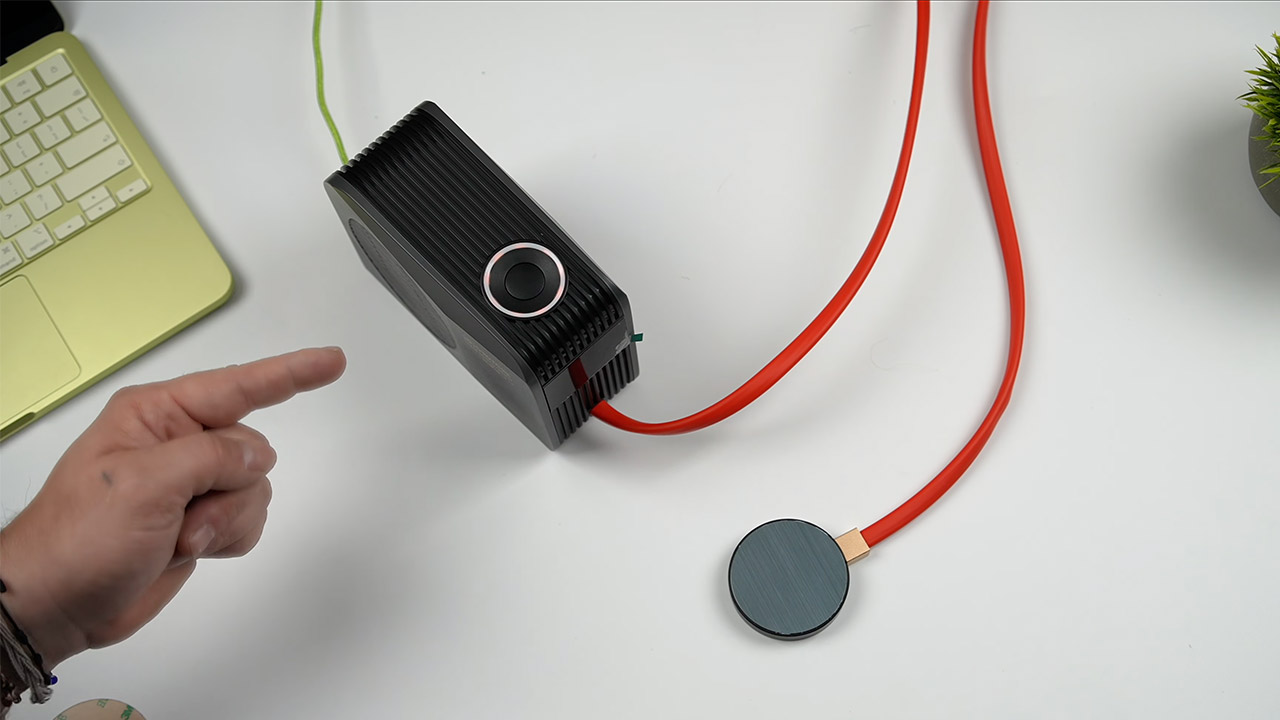
The first modification made it clear that the processor had significantly more headroom than Apple was allowing it to use. ETA Prime pushed things further by adding a small magnetic Peltier cooler powered through a USB-C cable drawing 50 watts. The device uses electricity to generate a cold side capable of dropping below freezing, cold enough to form ice on the surface during testing, while liquid channels carry the heat away on the other side. A simple adapter clamped the whole thing firmly against the copper plate already in place.

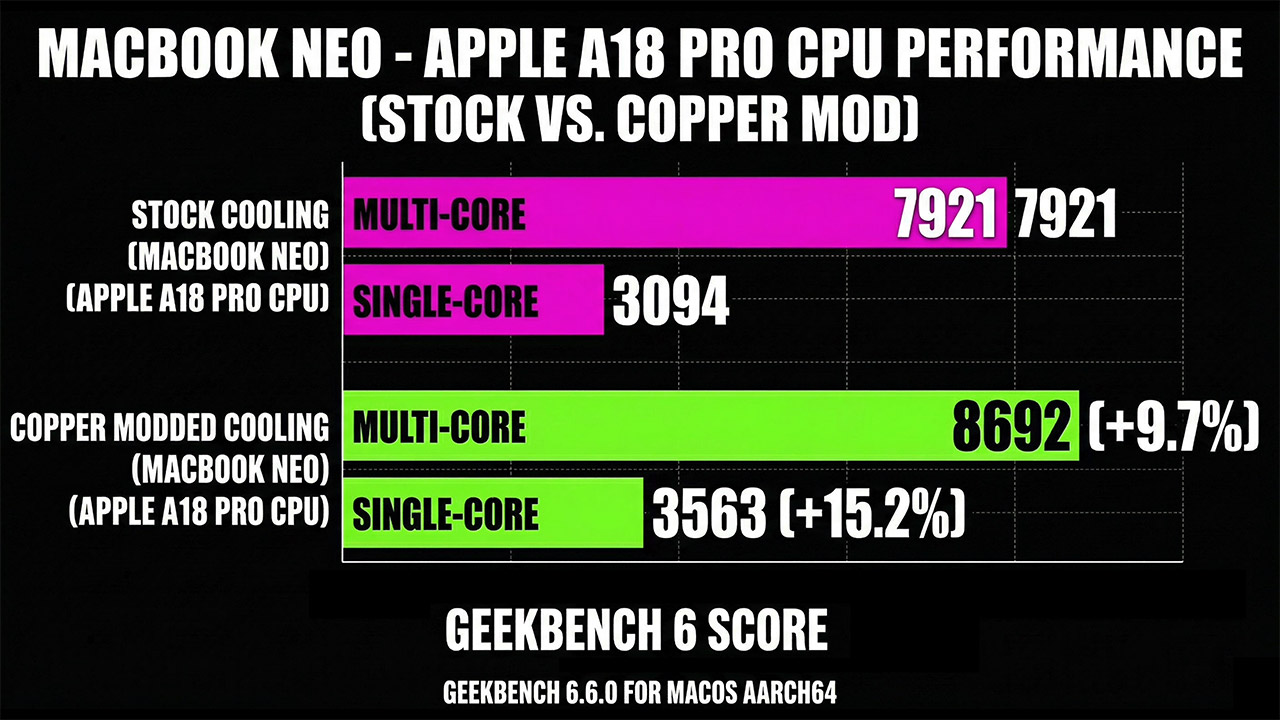
Temperatures dropped again, settling into the mid-seventies under the same gaming load and returning to just above room temperature at idle. The benchmarks told a compelling story. Geekbench 6 single core scores were up 17.5 percent over stock and multi core climbed 18.5 percent, while Cinebench showed similar gains of around 24 percent single core and 19 percent multi core. No Man’s Sky held a steady 80 frames per second over a 30 minute session, and Fallout 4 ran at a smooth 60 frames per second on just 8GB of RAM with the help of compatibility software and storage swap support.
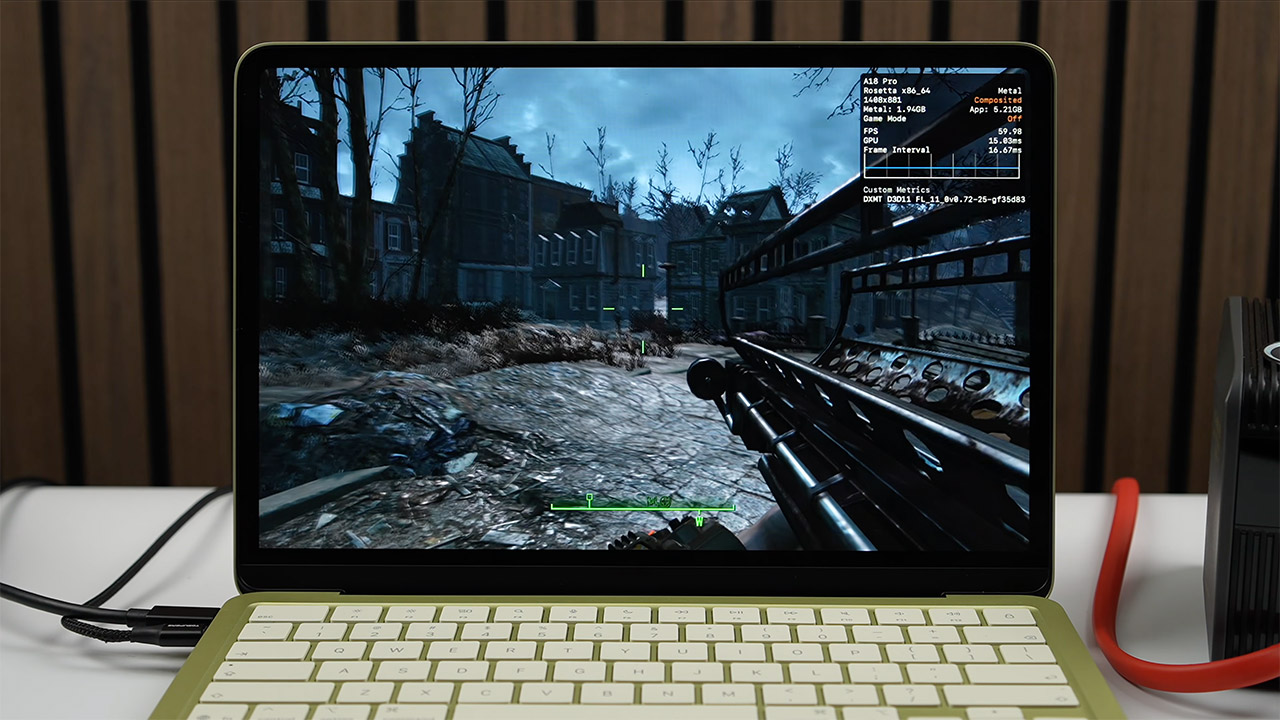
The entire project remained reversible at every stage, with the copper sheet and external cooler leaving no permanent mark on the hardware. The only real cost was the extra power draw from the Peltier unit, and the performance gains made that a very easy trade to justify. A laptop that was never intended for gaming suddenly becomes a surprisingly capable one.
[Source]
You must be logged in to post a comment Login