

Tech
Waymo is recalling almost 3,900 robotaxis for driving into freeway construction zones

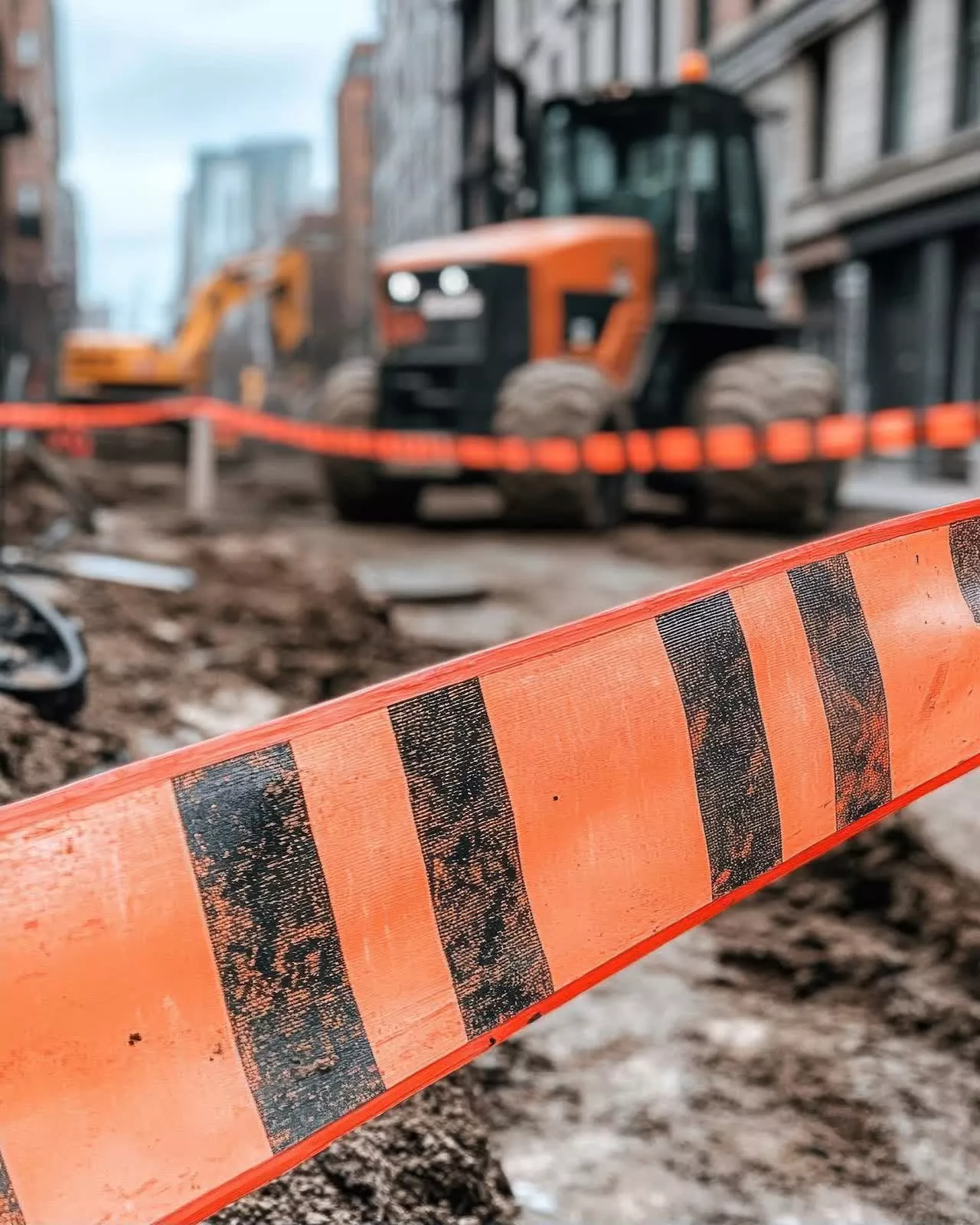
What just happened? The challenge for autonomous vehicles has never been ordinary driving – it’s the edge cases. Temporary roadwork, shifting lane lines and irregular signage can still confuse even sophisticated systems. A recent recall by Waymo shows how those gaps can surface in real-world deployments.
Waymo is recalling nearly 3,900 robotaxis following incidents in freeway construction areas. According to a safety recall report filed with the National Highway Traffic Safety Administration, the company’s fifth-generation automated driving system may enter and drive at speed in freeway construction zones under certain circumstances, either because it fails to recognize the construction zone or prioritizes other freeway hazards.
The filing identifies 3,871 vehicles as potentially affected. It states that under certain circumstances, the system “may enter and drive at speed in freeway construction zones due to inappropriately prioritizing the avoidance of other freeway hazards and/or failing to recognize the construction zone.”
The problem was not confined to a single event. On April 11, a Waymo vehicle was involved in an incident on a freeway, prompting the company to review how the system handled closures. Five similar events followed on April 19 in Phoenix. On May 18, seven vehicles in the San Francisco Bay Area drove between cones and into freeway lanes where construction was underway, a pattern that suggests difficulty reading temporary lane layouts.
Together, the incidents suggest a broader issue with how the system processes dynamic environments rather than a one-off failure. Construction zones are inherently inconsistent. Signage can vary, cones can shift, and lane configurations often change. For human drivers, those conditions demand judgment calls. Automated systems require accurate detection paired with real-time decision-making that can adapt.

Waymo responded by restricting freeway driving in affected scenarios while it worked on a fix. The company’s field safety committee put those limits in place shortly after the April incidents, and its safety board formally approved the recall on June 8 after reviewing additional data.
The remedy will focus on software updates. According to the report, Waymo plans to improve how its vehicles detect construction zones and determine when they are already inside one. The update is also expected to improve how the system behaves once a construction zone is detected and to add additional operational protocols.
The issue underscores a persistent technical challenge in autonomous driving: prioritization. These systems constantly evaluate multiple potential hazards – other vehicles, road debris, lane markings – and must decide which to respond to first. In the cases outlined by regulators, the system appears to have given higher priority to certain roadway risks while failing to fully account for construction-related restrictions such as closed ramps.
Competition in the robotaxi sector continues to intensify. Uber Technologies, Lucid Group and Nuro recently announced plans to launch a robotaxi service in Houston next year, while Mobileye has said it is targeting a 2027 rollout. As companies move toward broader deployment, the ability to handle unpredictable, temporary road conditions is becoming a critical benchmark.

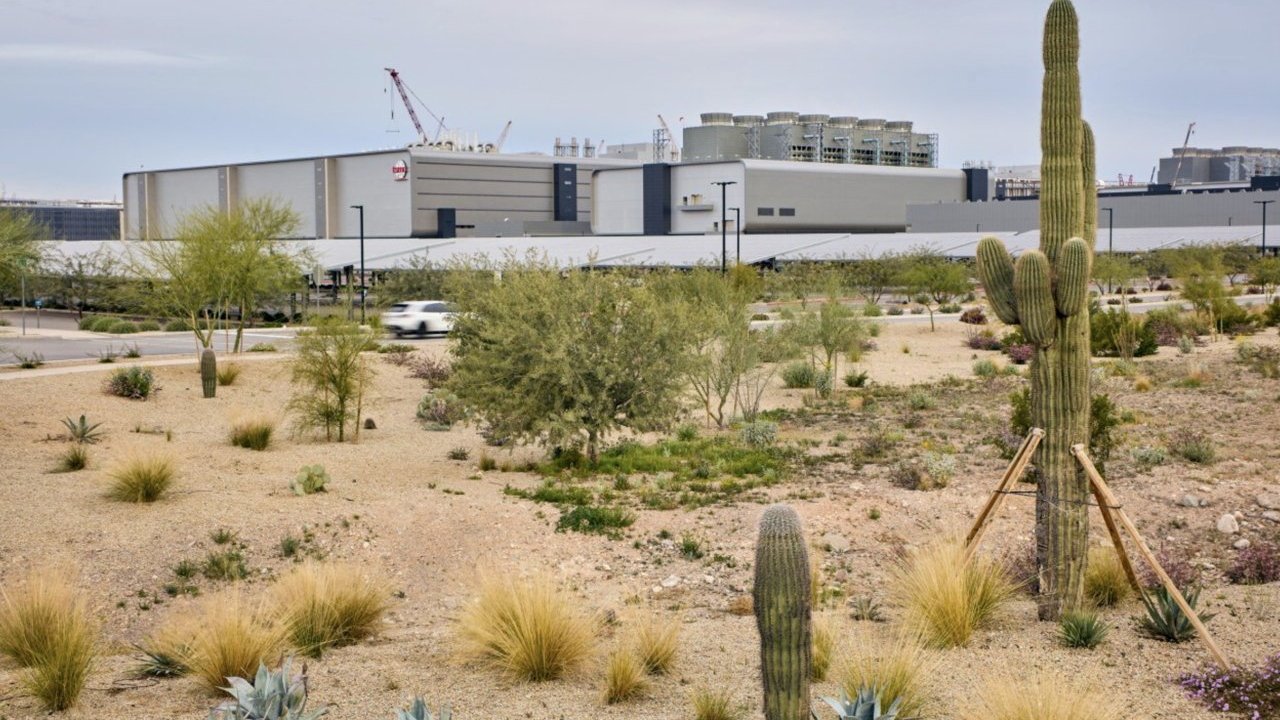
Apple’s main processor supplier TSMC has announced another increase in US investment, saying its new plants will include ones making its most advanced chips.
In May 2026, TSMC announced an additional $20 billion investment in its Arizona plants. Now according to the Financial Times, the company has revealed plans to build four more plants, costing a total of $100 billion.
Howard Lutnick, US commerce secretary, said that the extra investment would “create tens of thousands of American jobs and bring advanced semiconductor manufacturing back to America.”
The investment in new plants will reportedly include factories making “2nm and below” processors, plus advanced packaging. TSMC’s first Arizona plant is believed to be producing 4-nanometer wafers, though there were already plans for 2nm manufacturing by 2030.
In 2025, it was reported that TSMC’s Arizona plants were producing the A16 processor. That was used in the iPhone 14 and iPhone 15 ranges, which have not been in production for some time.
TSMC has not announced a schedule for the new investment. CEO CC Wei said that “we will try to speed it up as fast as possible,” but that it depends on “the market situation and customer demand.”
This announcement increases TSMC’s total US investment to $265 billion, and follows the company’s latest financial earnings report. That report says TSMC profits rose 77% and the company attributes this to the demand for AI processors.
CEO Wei said he believes that demand for AI processors will remain very strong until 2029-2030.
It is this demand that is causing the global shortage of chips, and consequently a drive to add new production facilities. There is also a political element for TSMC, which as the CIA privately briefed Tim Cook, has reasons to fear a Chinese invasion of Taiwan by 2027.
There has also been continued pressure from the Trump administration to reshore manufacturing. One of the reasons Apple secured an exemption from Trump’s tariffs is said to be a commitment to buy processors from US-based Intel.
That deal is said to be a multi-year commitment. It follows the Trump administration investing in Intel in return for shares.

from the stopping-the-stoppers dept
Florida Republicans’ bigoted little piece of speech policing — the former “Stop WOKE Act” — has already been terminated multiple times by federal courts. Two lawsuits with two sets of plaintiffs have generated the same results: a ruling declaring the law unconstitutional and an injunction blocking the state from enforcing it.
The law aims to directly regulate speech in classrooms, allowing the government to punish teachers and administrators from engaging in any speech the Florida GOP doesn’t agree with. In practice, this means eliminating discussions about racism, equitable treatment, or anything related to LGBTQ+ issues.
The two lawsuits have generated some pretty stark paragraphs from presiding judges. Both take their cues from pop culture. Noting the cognitive dissonance of state lawmaking, the court said this in 2022:
In the popular television series Stranger Things, the “upside down” describes a parallel dimension containing a distorted version of our world. See Stranger Things (Netflix 2022). Recently, Florida has seemed like a First Amendment upside down. Normally, the First Amendment bars the state from burdening speech, while private actors may burden speech freely. But in Florida, the First Amendment apparently bars private actors from burdening speech, while the state may burden speech freely.
The same court said this when the second lawsuit against the Stop WOKE law crossed its desk:
“It was a bright cold day in April, and the clocks were striking thirteen,” and the powers in charge of Florida’s public university system have declared the State has unfettered authority to muzzle its professors in the name of “freedom.” To confront certain viewpoints that offend the powers that be, the State of Florida passed the so-called “Stop W.O.K.E.” Act in 2022—redubbed (in line with the State’s doublespeak) the “Individual Freedom Act.” The law officially bans professors from expressing disfavored viewpoints in university classrooms while permitting unfettered expression of the opposite viewpoints. Defendants argue that, under this Act, professors enjoy “academic freedom” so long as they express only those viewpoints of which the State approves. This is positively dystopian.
The state appealed both decisions. The Eleventh Circuit Appeals Court upheld the injunction in March 2023. The state continued to assault the court with motions to undo this injunction, prompting the Eleventh Circuit to issue this additional order:
The Clerk is DIRECTED to treat any motion for reconsideration of this order as a non-emergency matter.
Forced to wait its turn, Ron DeSantis and his MAGA buddies have had to wait more than three years just to find out they still won’t be able to enforce this blatantly unconstitutional law. The state’s lawyers will read the whole thing looking for ways to argue this differently if (or when) the US Supreme Court decides to hear their appeal.
But anyone wanting to know how this turns out for Florida’s public service bigots won’t have to dip too far into the 85-page ruling. By the middle of the fourth page, you’ll know what you need to know. From the decision [PDF]:
When several groups of professors challenged Florida’s new restrictions, the State cast about for an existing case or doctrine that could support its speech ban in the university setting. Finding none, it tried to marry public-employee speech cases with government speech doctrine, resulting in a new rule: if the government pays a professor’s salary, it has total control over her classroom speech.
That is not a blessed union. Florida’s salary-for-speech rule is a breathtaking assertion of power to ban unpopular ideas from public discourse in the very places the State’s own statutes recognize as centers of inquiry—classrooms where students are trusted to puzzle through ideas that are good and bad, easy and hard, ideally getting ever closer to the truth. This new rule also runs headlong into the Supreme Court’s repeated, if imprecise, endorsements of academic freedom. If the First Amendment offers any boundary of protection at all for public university classrooms, this statute crosses it.
The injunction stays in place, presumably forever. While there are certainly some members of the Supreme Court who would love to tie their precedent and ethics into knots just to block speech they personally don’t like, this doesn’t appear to be the case they’d choose since it would likely generate precedent that might work against the bigots in the Supreme Court when they go to bat for bigots in the White House.
The appeals court has already blocked the other part of the law — the clauses attempting to regulate speech in private workplaces by forbidding mandatory meetings that promoted views the GOP doesn’t agree with. The last ditch attempt to claim the government can regulate speech in college classrooms doesn’t fare any better, even if it’s not quite as clear cut in terms of constitutional violations as telling private companies what they can and can’t say.
Claiming that all speech by government employees is “government speech” is a non-starter. The state couldn’t find precedent to support its novel take on the First Amendment. And the few odds and ends it threw at the judicial wall in hopes of seeing something stick failed as well.
More credibly, the State explains that it also seeks to protect its “most cherished ideals.” But that justification fails, too. Though the government has plenty of ways to promote its own viewpoint, puppeteering every university professor in the state is not one of them.
The court spends 50 pages dismantling each and every one of the state’s arguments, citation by citation. There can be no doubt the law is unconstitutional, not that it matters to the state, which has already announced it will be appealing the ruling. But this is censorship that can’t even be bothered to pretend it’s anything but the very thing it claims it is opposed to. “Individual Freedom Act” (as it was renamed), my ass.
Florida seeks to strip public university professors—and by extension their students—of the ability to fully engage with ideas that are, for better or for worse, very popular in some academic circles. The State asks us to consider its rules a means of targeting discrimination. But hearing an idea you disagree with is not discrimination; it is an opportunity to come up with a better idea, or maybe even change your mind.
There’s a dissent that runs nearly as long as the opinion. Written by Judge Barbara Lagoa (someone with a history of anti-trans rulings), it’s 30+ pages of wasted time. To paraphrase: none of these plaintiffs should have been granted standing, much less relief and also: [bunch of Justice Alito quotes].
Doesn’t really matter, since it’s the dissent but I guarantee if anyone’s going to start polling for an en banc rehearing, it’s going by Judge Lagoa.
Suck it, DeSantis. Until that happens (if it ever will), your stupid hateful law is as dead as the eyes of your sycophants.
Filed Under: 11th circuit appeals court, 1st amendment, florida, free speech, ron desantis, stop woke act, woke

While a new iPad mini is expected before the end of 2026, a new report says you’ll need to wait longer for updates to the entry-level iPad, iPad Air, and iPad Pro.
The most recent rumors of the first update to the iPad mini since October 2024 have claimed that it will be released with an OLED screen before the end of 2026. Now according to Bloomberg, this update is the first of several iPad model refreshes.
Specifically, the report claims that Apple plans to release new iPads from the fall through to spring 2027:
- iPad Mini: October 2026
- iPad: Q1 2027
- iPad Air: spring 2027
- iPad Pro: spring 2027
Back in 2024, it was reported that Apple was planning an OLED iPad mini for release in 2026. To date, the higher-quality screen has solely been used in the iPad Pro, where it doesn’t appear to have been the success that Apple hoped for.
Nonetheless, Apple is said to be intending to eventually transition the whole iPad range over to OLED. The iPad mini, codenamed J510, is to be the first.
It’s not clear what could be the second to get the technology, though, as reports of updates to the rest of the iPad range do not specify their screen type. The report does say that the base iPad will not get OLED yet, and that seems likely given that this screen type would add to cost of that entry-level model.
Instead, the claim is that the new update to the base iPad, codenamed J581, is a faster processor. Apple is not expected to give it a major redesign.
There is also no word of a significant redesign for the iPad Air, whose next 11-inch and 13-inch models are codenamed J807 and J837.
Apple is also not expected to make significant visible changes to the iPad Pro, which the new report says will launch around the same time as the iPad Air. Separately, though, other recent reports have claimed that the iPad Pro will gain vapor chamber cooling in early 2027.
New iPad and iPad Air
The new report backs up rumors from December 2025 when an iOS code leak included references to an A19 iPad and M4 iPad Air. That M4 iPad Air was then released in March 2026, but the base iPad remains on the A16 processor.
The report of an A19 processor is significant, because it means the base iPad will gain support for Apple Intelligence. At present, it’s the only iPad model that doesn’t support it.
Since that March 2026 release of an M4 iPad Air, though, there have been further rumors of what is coming next for this model. In April 2026, for instance, there was a report that the next iPad Air would indeed get an OLED display.
The report said that this iPad Air will feature a lower-cost OLED display than the one in the current iPad Pro. It was also claimed that Samsung is due to start mass production of the screen in December 2026, for a launch round March 2027.
I had to check the decimal point.
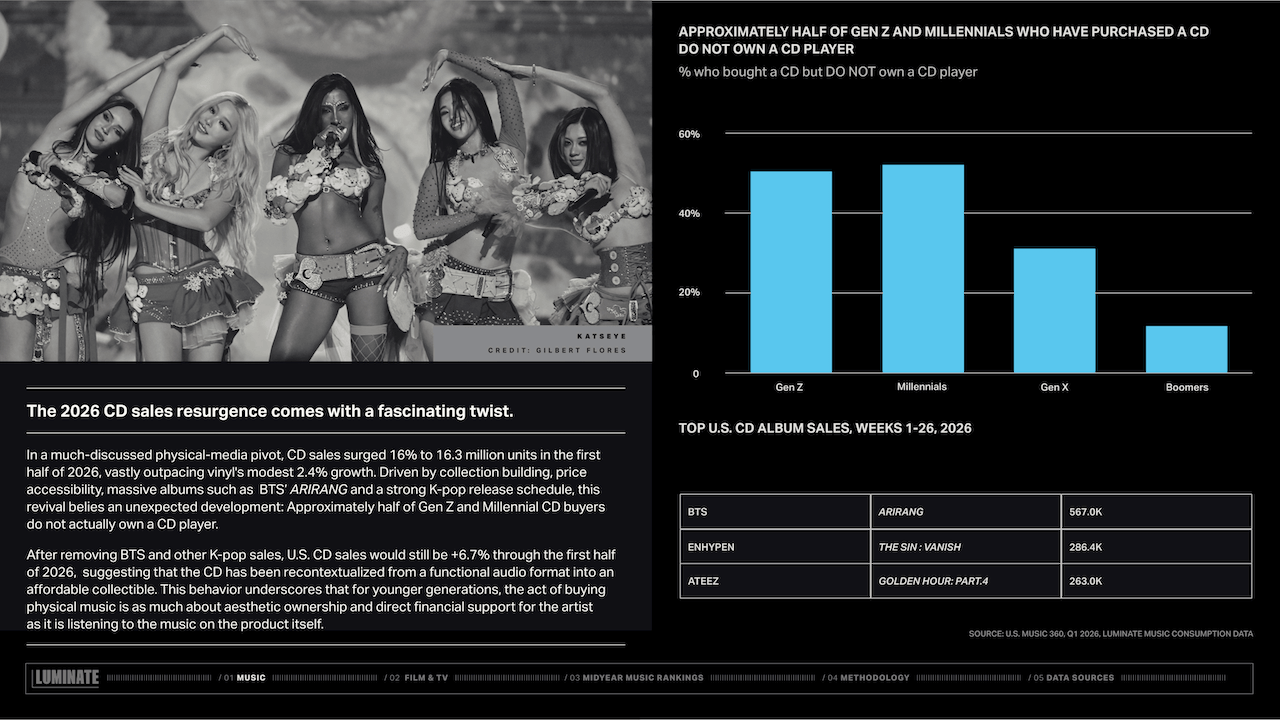
According to Luminate’s 2026 Midyear Report, U.S. CD sales increased 16% to 16.3 million units during the first half of the year. Vinyl sales also grew, but by only 2.4%, giving CDs a growth rate nearly seven times higher than records.
K-pop collectibles contributed heavily, but they do not explain the entire increase. Luminate says CD sales would still have grown 6.7% after removing K-pop releases. Mass-market retailers such as Target and Walmart now account for nearly 30% of physical music sales, aided by elaborate album packages, alternate covers, photo cards and fans willing to buy multiple editions.
That does not mean CDs have suddenly overtaken vinyl. Growing faster is not the same as being larger.
Related Reviews:
The RIAA Numbers Provide Some Necessary Context
The RIAA has not yet released its corresponding report for the first half of 2026. Its most recent midyear data covers the first six months of 2025, when the CD market looked considerably less healthy.
During that period, the RIAA reported 11.7 million CD units and $108.1 million in wholesale revenue, declines of 22% and 22.3%, respectively. Vinyl reached 22.1 million units and $456.9 million, with both measurements down 1%.
The RIAA’s complete 2025 report showed vinyl finishing the year at 46.8 million units and $1.043 billion in wholesale revenue, up 7.9% and 9.3%. CDs ended 2025 at 29.5 million units and $312.4 million, down 11.6% and 7.8%. Vinyl therefore sold substantially more copies and generated more than three times as much revenue.

The Luminate and RIAA figures should not be treated as interchangeable. Luminate tracks music consumption and retail sales, while the RIAA now reports wholesale figures net of returns. They measure different parts of the market and cover different periods.
Even with that caveat, the change is difficult to ignore. The RIAA recorded a steep CD decline in 2025. Luminate is now reporting double-digit growth during the first half of 2026.
Streaming Still Owns the Market
Nobody should mistake this for a revolt against streaming.
Global on-demand audio streams increased 9.8% to 2.8 trillion during the first half of 2026. U.S. streams rose 4.8% to 732.7 billion, while Spanish-language music represented 9.4% of combined U.S. on-demand audio and video streams.
CDs and vinyl remain relatively small parts of the overall music business. Their importance comes from ownership, collectibility and the stronger connection physical products create between artists and fans.
Why CDs Suddenly Make Sense Again
The compact disc occupies an increasingly attractive middle ground.
New CDs generally cost far less than new vinyl. They are smaller, easier to store and less vulnerable to warping, scratches, off-center pressings and the other quality-control adventures that now accompany a $40 record. They can also be played directly, ripped to local storage or used as permanent backups when a streaming service removes an album or replaces it with a different master.
The used market is even more compelling. Decades of abandoned collections have left record stores, thrift shops and online sellers with enormous quantities of inexpensive discs. Building a serious CD library can still cost less than assembling one shelf of new audiophile vinyl.
CDs also work as collectibles without requiring the manufacturing expense, shipping weight and retail price of vinyl. That is especially important for younger fans who want a tangible connection to an artist but do not necessarily have $45 available every time an album appears in four colored-vinyl variants.
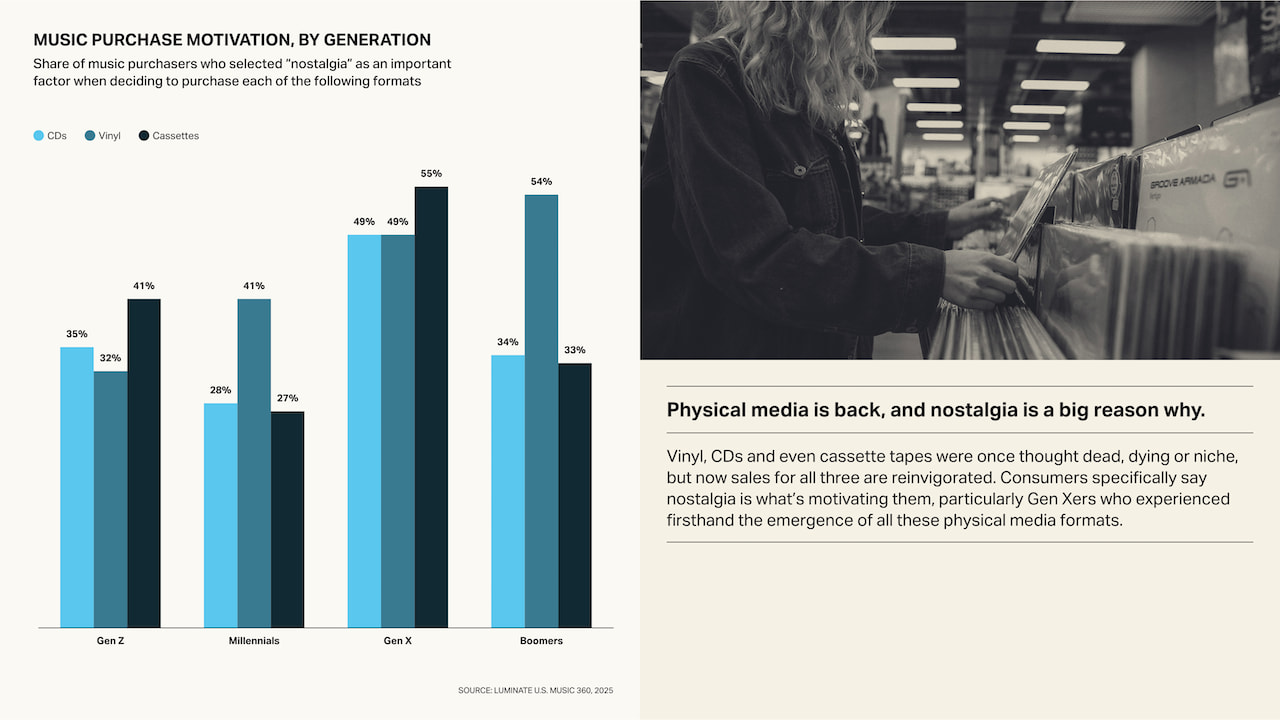
Vinyl made music ownership fashionable again. CDs may now be benefiting from the culture vinyl helped rebuild.
It also means the hardware industry may not have been indulging in collective nostalgia when it began introducing new CD players and transports at almost every price level.
Marantz has just introduced the $750 CD 70, Mission released the affordable 778CDT transport, NAD returned with the $1,399 C 589, and brands including FiiO and Shanling are producing portable CD players with Bluetooth, balanced headphone outputs, USB DAC functionality and disc-ripping capabilities.
Manufacturers do not make these products because three editors and someone’s uncle in Ohio refuse to discard their copies of Brothers in Arms. They see a market.
Record Store Day also deserves some context in vinyl’s defense. The 2026 event took place on April 18 and again delivered hundreds of limited editions through independent retailers. Its commercial impact is not trivial: during Record Store Day week in 2025, U.S. consumers bought 1.2 million albums, including just over one million vinyl records, according to Luminate.
It was the fifth consecutive Record Store Day week to surpass one million album sales. Vinyl is also coming off 19 consecutive years of U.S. revenue growth and passed $1 billion in annual wholesale revenue during 2025.
Against that mature and substantially larger base, another 2.4% increase during the first half of 2026 is hardly evidence of collapse. CDs delivered the more surprising growth rate, but vinyl remains the larger physical format and the economic foundation of the independent record-store revival.
The Bottom Line
CDs have not reclaimed the physical-media crown, and vinyl is not collapsing. The latest complete RIAA figures still show records comfortably ahead in both units and revenue.
The surprise is that the supposedly obsolete compact disc is now growing much faster.
K-pop explains part of the 16% increase, but Luminate’s 6.7% growth figure without K-pop suggests something broader is happening. Listeners are rediscovering that CDs offer inexpensive physical ownership without vinyl’s escalating prices, storage demands and quality-control roulette.
Vinyl still owns the throne. The little silver disc has simply stopped behaving like it is waiting for the undertaker.
Which one do you prefer and why?
Related Reading:
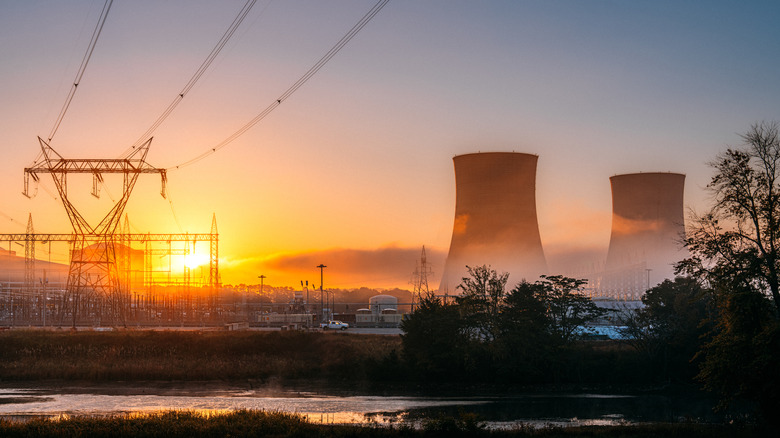
The US has the most nuclear power plants in the world. However, despite this, it remains a divisive subject that people seem to either embrace or shun in equal measure. We won’t go into this argument here, but what we will do is break down the relatively simple science behind nuclear reactors, how they work, and what they can be used for.
A good way to start this is by looking at what must be the most famous equation in the world – E=mc². This equation explains why nuclear reactors can produce so much power from relatively little fuel. In this equation, E denotes energy, m denotes mass, and c denotes the speed of light. Because the speed of light squared is an enormous number, even a tiny amount of mass contains a huge amount of energy. Nuclear reactors tap into that energy by splitting atoms and releasing the energy locked inside their mass.
That’s the simple bit of the science (relatively speaking). However, releasing all that energy in a controlled and predictable manner is where things begin to get tricky. We’ll discuss how this works and how different types of reactor harness that energy in more detail later — but basically, a nuclear reactor uses a chain-reaction process called nuclear fission. This splits the atoms in a reactor’s fuel rods and releases the energy stored within them, according to Albert Einstein’s equation. The released heat energy produces steam that spins a turbine to generate electricity and, ultimately, could charge your phone.
How nuclear reactors work
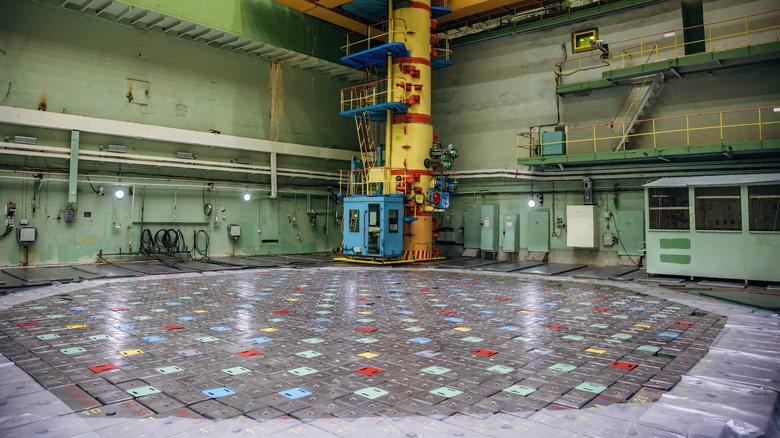
The same physics underlies every nuclear reactor. Inside the reactor core, fuel pellets (mostly uranium) are arranged in fuel rods. The key to releasing the energy is the fission chain reaction; fission happens when sub-atomic neutron particles collide with uranium atoms. When a neutron hits, it splits the atom into two smaller atoms and also releases additional neutrons. In turn, these impact other uranium atoms, creating the chain reaction. The specifics about what is produced when an atom is split can vary, but a typical reaction might split a Uranium-235 atom into a barium and krypton nucleus while releasing two or three further neutrons.
Now, what we don’t want at this stage is for this reaction to continue unchecked. There are two main ways to control this. The first is through the use of control rods. These are made with a material that absorbs excess neutrons and can be used to speed, slow, or even stop the reaction depending on how much of it is exposed to the core. Common materials used include boron and silver. Water also acts as both a moderator and a coolant by carrying away excess heat.
These fundamentals apply to all nuclear reactors; it’s how they handle the water loop that defines the two major types of commercial reactors used in the US, which we cover in detail next. However, regardless of the type, one of the contentious parts of the process is the problems associated with dealing with spent fuel rods. These remain highly radioactive, and safely storing them is one of the biggest challenges facing the sector.
The different types of nuclear reactors
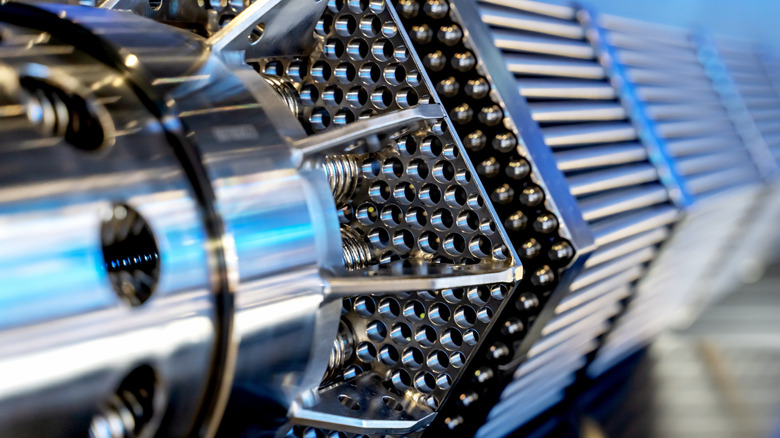
There are two main commercial reactor designs — Pressurized Water Reactors (PWRs) and Boiling Water Reactors (BWRs). The defining difference between them lies in how they handle water within the reactor and the steam loop.
The most common of these are PWRs, which account for about 65% of US commercial reactors. As the name suggests, in this type of reactor, the water is kept at high pressure within a closed loop to prevent it from boiling. The water is heated by the nuclear reaction and is then cycled through a heat exchanger. The heat exchanger transfers the heat to a secondary water loop, and the steam from this loop is what’s used to drive the turbines and generate electricity.
BWRs also use heated water to drive turbines. However, instead of two separate “water loops”, BWRs pump water directly into the reactor core and use a system of pipes to feed the steam from the water directly to the turbines. Any remaining steam is condensed and pumped back into the core.
It’s also worth looking at the differences between these and the types of reactors that power the US Navy’s nuclear ships. Ships like the USS Gerald R. Ford, the world’s largest aircraft carrier, use scaled-down PWRs for power. However, unlike commercial reactors that use low-enriched uranium (LEU), carriers and submarines use highly enriched uranium (HEU). The latter has a far higher energy density than LEU, which means US nuclear-powered ships can go for decades without refueling. So, although refueling a nuclear-powered carrier can take years, it’s a process that normally happens only once in a ship’s operational life.
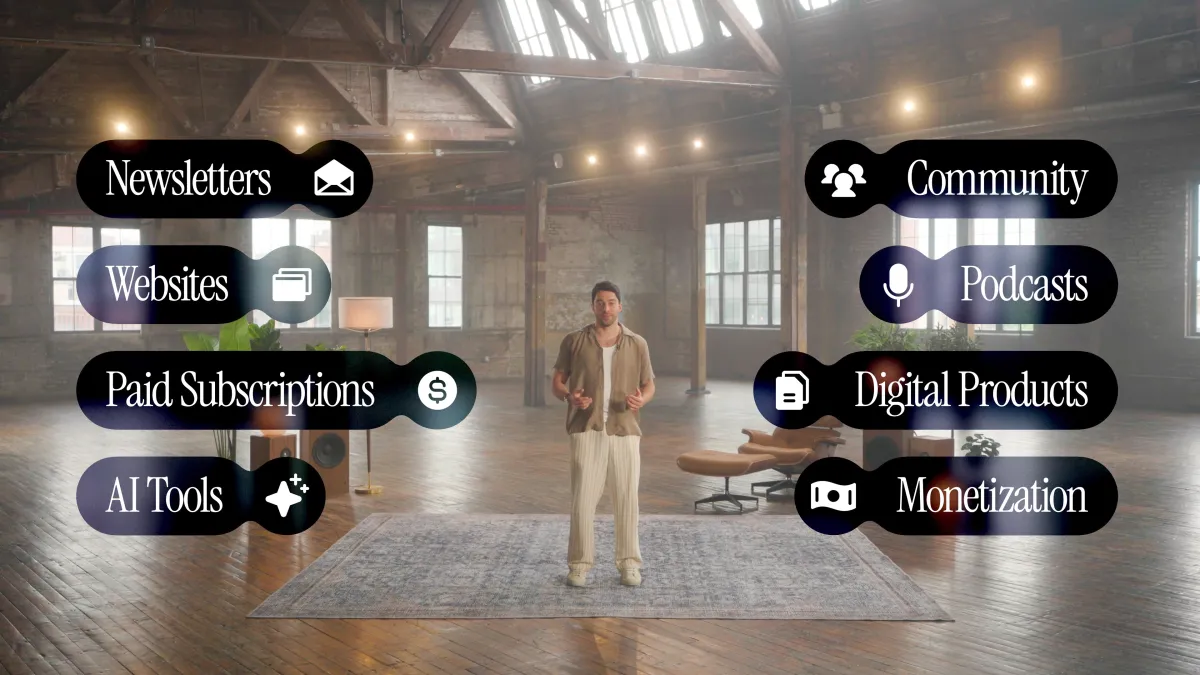
Newsletter platform Beehiiv is expanding into new avenues of engagement by launching a feature called Community, which lets subscribers of a creator chat with each other. The company also launched a new AI Copilot that helps creators manage and grow their audience.
The updates come as Beehiiv positions itself as a creator platform beyond newsletters. In the last few months, the company has launched podcasts, webinars, and customizable paywalls. Some of these moves are already showing positive results. The company said that 50% of podcast users migrated their shows from elsewhere, for instance.
Beehiiv’s new Community tool will allow users to spin up a discussion forum within the platform. Today, creators often have a chat for members on a separate Discord or Slack server or in Facebook groups, but Beehiiv wants to bring those chats back to its own platform. Here, creators can also create paid membership tiers for exclusive access to certain chatrooms and moderate conversations.
“People following your content have a shared interest in what you’re creating, but they can’t communicate with each other. Whether that interest is in sports, the World Cup, or politics, being able to have a community where your audience can actually engage with one another is super valuable,” Beehiiv CEO Tyler Denk told TechCrunch.
The platform is also introducing an additional revenue-generation opportunity with programmatic ads, which allow users to sell ad slots in their newsletters. They can earn money by choosing the ads that potentially offer the highest returns based on their audience, content, and performance.
The company already has tools like metered paywalls, paid trials, and a sponsorship storefront to sell their own slots in packages. Plus, Beehiiv said the publishers on the platform earn more than $1 million per month through their ad network.
Beehiiv is launching a new AI assistant called Copilot, as well, which can understand context like content, audience, subscribers, and performance to give users advice on how to manage their newsletter and grow their audience. The assistant can analyze the performance of various newsletters and podcasts, draft campaigns for outreach, and look for new money-making opportunities.
The assistant is one of several AI efforts underway. Earlier this year, the company launched a model context protocol (MCP) server, allowing users to connect their Beehiiv to other assistants like ChatGPT and Claude to ask questions and get insights. It’s also working on better AEO (Answer Engine Optimization), which helps a newsletter be cited in AI assistant answers more frequently.
Along with these updates, the company is shipping a redesigned editor that allows users to see editing and preview modes side by side, helping them to understand how the content they are writing would appear to readers.
Denk noted that in the coming quarter, Beehiiv wants to spend time educating users about these tools and teaching them about how top newsletters are using them to grow their publications.
The platform’s rivals are also evolving by launching new offerings. For instance, Riverside launched a newsletter publishing feature last month, and Substack launched a built-in recording studio product in March.
When you purchase through links in our articles, we may earn a small commission. This doesn’t affect our editorial independence.

Google is expected to launch the Pixel 11 series at its August 12 event. Ahead of the official unveiling, a leak has apparently exposed the prices of the new smartphones in the US, along with their storage capacity, colors, and specifications. These alleged leaks were discovered from Amazon listings that were taken down. As these details haven’t been officially verified yet, they remain just rumors.
Pixel 11 Series Expected Specifications

The leaked specifications from Android Authority indicate Google may keep several familiar hardware features in the Pixel 11 lineup. The standard Pixel 11 could offer a 6.3-inch OLED display with a 120Hz refresh rate. It could also come with a 4,985mAh battery, a 13MP front-facing camera, Bluetooth 6, and Wi-Fi 6E capability.
Pro models will also get some hardware modifications. For instance, the Pixel 11 Pro is likely to have a 4,850 mAh battery, whereas the Pro XL model can have a 5,115 mAh battery. Both devices may feature 13MP front cameras. According to rumors, the 256 GB variant will have 12 GB of RAM, while other storage options will have 16 GB of RAM. The Pixel 11 Pro Fold could feature a 6.5-inch OLED cover display, a 4,750mAh battery, and a 13MP front camera.
The leaked information further suggests Google may revise both pricing and storage with the Pixel 11 series. Every model could see a $100 price increase. However, the base Pixel 11 may compensate with 256GB of storage as standard. The Pro models could also receive a different RAM setup. The base 256GB variants may feature 12GB RAM. Higher storage options are expected to come with 16GB RAM.
Leaked Pricing, Storage Options, and Colors
The lineup is expected to include four models: Pixel 11, Pixel 11 Pro, Pixel 11 Pro XL, and Pixel 11 Pro Fold. It also hints that the base Pixel 11 may no longer offer a 128GB storage option.
| Model | Leaked Price | Storage Options | Expected Colours |
|---|---|---|---|
| Pixel 11 | $899, $1,019 | 256GB, 512GB | Frost, Hibiscus, Obsidian, Pistachio |
| Pixel 11 Pro | $1,099, $1,219, $1,449 | 256GB, 512GB, 1TB | Dune, Light Fog, Midnight, Pine |
| Pixel 11 Pro XL | $1,299, $1,419, $1,649 | 256GB, 512GB, 1TB | Dune, Light Fog, Midnight, Pine |
| Pixel 11 Pro Fold | $1,899, $2,019, $2,249 | 256GB, 512GB, 1TB | Midnight, Pine |


As wartime technology becomes more advanced, the U.S. Navy is launching the Next Generation Undersea Security Initiative (NG-USI), focused on autonomous high-tech systems designed to defend the United States’ seas against enemy AI and robotics. The key focus is detecting, tracking, and then defeating systems across land, sea, and sky, including swarms of autonomous drones and AI-driven cyberattacks on security networks.
One focus area of the NG-USI is autonomous surveillance. Leveraging commercial robotics, the Navy hopes to achieve autonomous patrolling, inspection, and response. The prototype technology is looking for solutions around the shore as well as open ocean environments. These technologies will scatter signals, jam electronic warfare, and shield infrastructure.
The Navy hasn’t specified which exact systems will be tested and implemented, but these could include sensors on land and underwater, smart cameras that can detect threats, patrolling drones, and unmanned ground vehicles. It has already implemented a solar-powered drone that can patrol the ocean for days, as an example. Companies are encouraged to submit technologies that meet these criteria and can perform autonomous tasks.
Autonomous technology is a huge focus for the U.S. Navy

The NG-USI’s autonomous technology focus is nothing new for the U.S. Navy. Autonomous vessels are the next big step in maritime warfare, according to Chief of Naval Operations Adm. Daryl Caudle. While speaking with Bloomberg, Caudle admitted the Navy is not advanced enough in the autonomous and drone fields, but is currently investing heavily in unmanned systems for air, sea, and underwater operations.
The biggest development is the deployment of a fully autonomous vessel that would locate and neutralize mines without putting sailors’ lives at risk. This is just the beginning of the Navy’s vision of having unmanned ships, unmanned underwater vehicles, and unmanned drones all working together. “We’re not just in our respective domains,” Caudle said. “We package this like we do in the joint force to solve a real mission problem.” The Navy is also looking into an autonomous submarine that can travel long distances underwater and then release autonomous drones. Other countries have been revealing autonomous military technology for a while, including China’s landing vehicle and underwater drone.


The UK looked set to crack down on VPNs as it tightens the rules for children online. Instead it has backed off, and its own research is the reason why.
Online Safety Minister Kanishka Narayan put it plainly on the BBC. “We decided not to limit VPNs,” he said. A VPN hides a user’s real location, which is one way to slip past an age check.
The decision landed alongside the UK’s new midnight social-media curfew for 16 and 17-year-olds. Technology Secretary Liz Kendall confirmed it in a written statement, saying VPNs have “legitimate privacy and security uses.”
What the research found
The government had commissioned a study of more than 2,000 children, and the numbers undercut the case for a ban. About a quarter of 11 to 17-year-olds have used a VPN. Most do so for privacy, not to break the rules, the report found.
Only around 7% of children use a VPN to reach age-restricted content. Far more simply lie. Nearly half who dodge an age check just enter a false date of birth. The VPN, in other words, is not the main loophole.
The burden shifts to platforms
Rather than police the tools, the government is pushing the job onto the platforms. They must now take “robust steps” to spot and stop under-age users getting around age checks.
Ofcom must report by October on what a robust over-16 age check looks like. The government has separately asked it, with the data regulator, to study how platforms can better detect VPN use. Ministers will also talk to VPN providers about voluntary action, and say they will “keep this area under close review.”
A win for privacy campaigners
The retreat is a clear win for digital-rights groups. A coalition of more than 20 tech firms and campaigners, including Proton and Mozilla, had urged ministers to leave VPNs alone. Mozilla warned that age-gating them would create a cybersecurity mess while failing to protect children.
Not everyone thinks the wider plan works. The curfew and the feature limits can be switched off, and critics say that leaves an obvious gap. The government is “leaving the side door open,” as one analyst put it.
The move stands out against the global mood. It sits alongside the UK’s coming under-16 social-media ban, while Australia’s teen ban has been dogged by VPN workarounds and New Zealand recently ruled out its own limits. Even the US courts are wrestling with who runs the internet’s age gate. For now, Britain has chosen evidence over a blanket ban.

GIGABYTE has officially entered India’s local manufacturing ecosystem with the launch of the GAMING A16, the company’s first Made-in-India gaming laptop. The new laptop is powered by AMD Ryzen processors and is designed for gamers, creators, students, and professionals seeking AI-ready performance. The launch also marks GIGABYTE’s first gaming laptop to be manufactured in India, with production handled in partnership with Dixon Technologies, one of the country’s largest electronics manufacturers.
According to the company, the move is part of its long-term strategy to strengthen its presence in India while supporting the country’s push toward becoming a global electronics manufacturing hub. GIGABYTE says local production will also help improve supply chain efficiency and allow it to respond more quickly to market demand.
To oversee the project, senior executives from GIGABYTE’s global headquarters—including teams from product management, procurement, materials planning, and quality assurance—visited India to work alongside Dixon during production. The company says every unit has been built to meet the same quality standards as its globally manufactured products.
Designed for Gaming and AI Workloads

While GIGABYTE hasn’t shared the complete hardware specifications in today’s announcement, it confirmed that the GAMING A16 is powered by AMD Ryzen processors and is designed to handle both modern gaming and AI-assisted workloads.
The company says the laptop targets a wide audience, including gamers, content creators, college students, and professionals who need a balance of performance and portability. The launch also reflects the growing importance of AI-ready PCs, with GIGABYTE positioning the A16 as a machine capable of handling both next-generation AI experiences and traditional gaming workloads.
Speaking on the matter, Sinclair Hsiao, Vice President of Global Sales at GIGABYTE, said,
India has become one of the most exciting technology and gaming markets in the world, and we believe Indian consumers deserve products built to the same uncompromising global standards that gamers everywhere expect from GIGABYTE
The GIGABYTE GAMING A16 is now available in India. While the company has confirmed local availability, it has yet to announce pricing or detailed hardware configurations

Lyn Alden – “Something Is VERY Wrong With Bitcoin & Nobody Is Talking About it”

OnePlus Confirms Exit From the US and Europe But Promises Continued Support for Existing Phone Owners

Is Crypto Allowed for Muslims? Pakistan Debates Bitcoin and Islamic Law


-

 Fashion6 days ago
Weekend Open Thread: Nutriplenish Leave-In Conditioner
-

 Sports6 days ago
Super Eagles star Moses Simon opens up on Liverpool transfer regret
-
 NewsBeat3 hours ago
London Mayor Sadiq Khan handed a peerage by Keir Starmer alongside 15 other Labour figures… just days before the PM leaves No10
-

 Politics1 day ago
Young campaigners urge incoming PM to act on outdoor junk food ads
-

 News Videos2 days ago
XRP BOMBSHELL… XRP OMBOARDED FOR TRANSACTIONS!!!
-

 Tech3 days ago
Get Your ESP32 Sunny Side Up With This Solar Dev Board
-

 Crypto World17 hours ago
CFTC blocks Kalshi from unwinding Michigan trades after court order
-

 Business15 hours ago
Nvidia Stock Slips After Big Tuesday Rally as Huang Confirms Vera Rubin Chip Is Now in Production Today
-

 Tech2 days ago
Dark Secrets Emerge When Jailbreaking LLMs
-
 Entertainment1 day ago
Disney’s Most Ambitious Failed Star Wars Attraction Is Coming to SDCC
-
 Sports21 hours ago
New Cornerback Enters Vikings Trade Rumor Mill
-

 News Videos3 days ago
how to make coin bank box with cardboard #scienceproject #money #diy #shorts
-
 Tech3 days ago
Cloudflare Precursor Watches Your Mouse and Keyboard To Decide If You Are Human
-
 Entertainment24 hours ago
Vicki Gunvalson Defends Discussing Heather Dubrow’s Money
-
Crypto World2 days ago
Ripple, Coinbase, Circle Join Linux x402 Foundation to Help Shape AI Payments
-

 NewsBeat21 hours ago
Watch: Is Donald Trump facing a popular backlash on immigration?
-

 Sports18 hours ago
Michigan officials not expected to discuss AD Warde Manuel at Thursday meeting
-

 Business2 days ago
ACCC warns AI could lift insurance costs in risk-prone areas
-
 NewsBeat20 hours ago
Firefighters issue update on Dovestone moorland blaze as fire enters fourth day
-

 Business2 days ago
Subaru recalls 541,000 vehicles over federal safety sticker mistake: NHTSA
You must be logged in to post a comment Login