Tech
What Could Replace America’s Ticonderoga-Class Cruisers? Not Even The Navy Knows

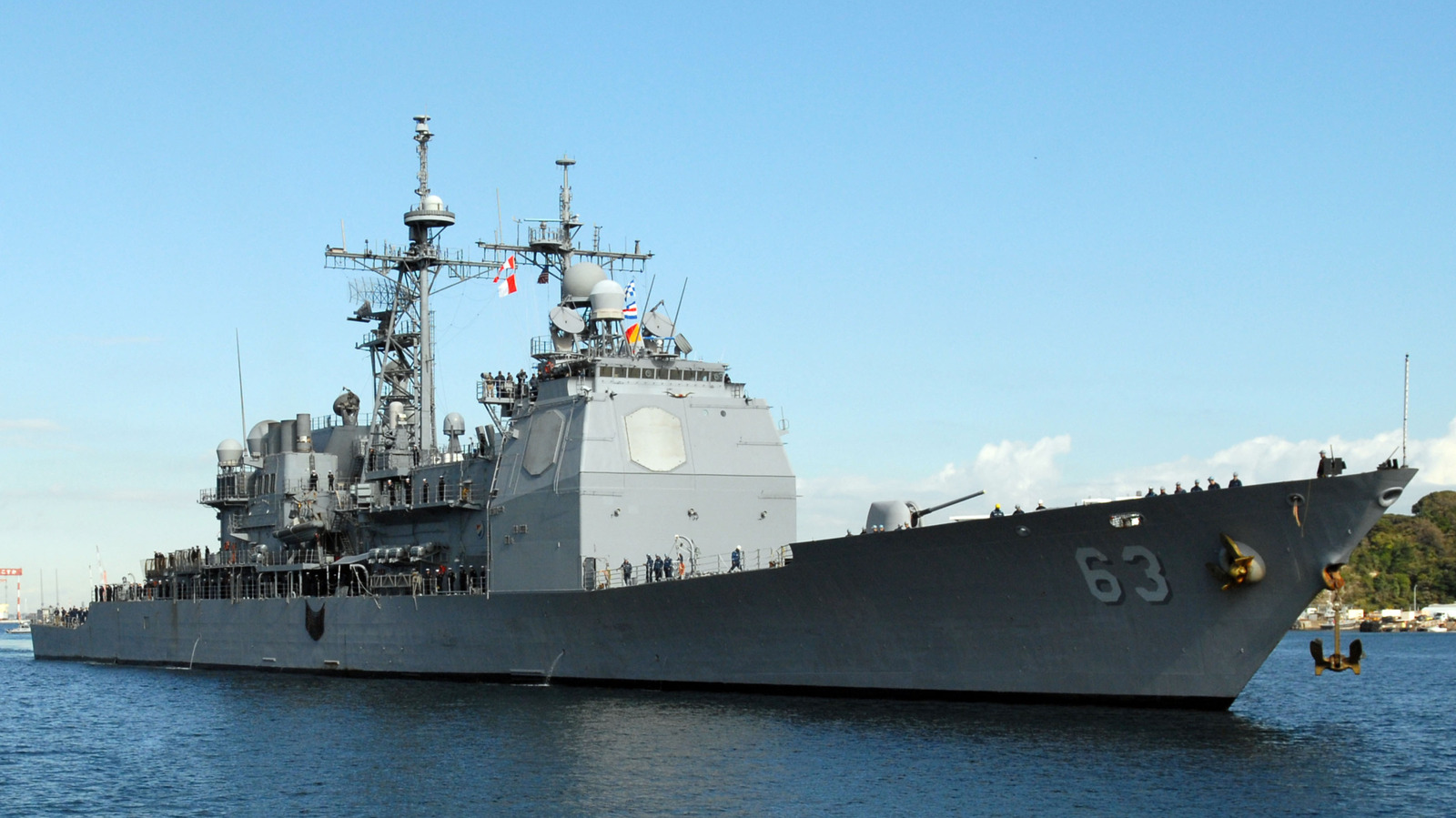

For more than four decades, the U.S. Navy’s Ticonderoga-class guided missile cruisers have served as some of the fleet’s most capable surface combatants. Designed around the powerful Aegis Combat System, they have played a central role in protecting aircraft carriers, defending against enemy aircraft and missiles, and coordinating complex naval operations around the globe. However, after years of service, the Navy has begun retiring the aging class, with more ships scheduled to leave service over the remainder of the decade.
The challenge is that the Navy has no direct replacement waiting in the wings. Unlike previous generations of warships that were succeeded by clearly defined new classes, the retirement of the Ticonderoga-class vessel leaves a capability gap the service is still working to address. While several options are being considered including relying more on destroyers, no single platform is expected to immediately assume every mission currently performed by these cruisers. That uncertainty has made the future of the Navy’s large surface combatant fleet one of the most closely watched questions in modern naval planning.
Why the Ticonderoga fleet is disappearing
The Navy originally built 27 Ticonderoga-class cruisers beginning in 1983 at a cost of roughly $1 billion each. Over time, however, age has taken its toll. 20 of these ships have already been decommissioned while the remaining seven vessels are expected to retire by 2030 as maintenance costs continue to rise and the ships become increasingly expensive to modernize. Although several cruisers have received temporary service-life extensions, Navy officials have made clear that the class is approaching the end of its operational life.
That doesn’t mean the Ticonderoga-class cruiser has become ineffective. On the contrary, they remain among the Navy’s most capable air-defense platforms. The problem is that keeping 40-year-old warships mission-ready has become increasingly difficult and costly, particularly as newer technologies continue to emerge. Earlier efforts to modernize portions of the fleet ultimately proved unable to keep every cruiser in service. As a result, retirement has become less about combat capability and more about balancing readiness, maintenance demands, and long-term fleet modernization.
What could replace the Ticonderoga-class?
For now, the Navy’s most practical solution is not another cruiser at all. Instead, many of the Ticonderoga’s responsibilities are expected to transition to the latest Flight III Arleigh Burke-class ships such as the USS Ted Stevens sporting the DDG (guided missile destroyer) classification. Equipped with the advanced SPY-6 radar and the latest version of the Aegis Combat System, these new destroyers can assume many of the fleet air-defense and command responsibilities traditionally handled by the retiring cruisers. While they cannot replicate every capability of the Ticonderoga class, they provide the Navy with an effective bridge while longer-term plans continue to develop.
Looking further ahead, the Navy expects its future DDG(X) program to eventually become the next generation of large surface combatants. However, that program remains years away, with the first ships not expected until the early 2030s. Until then, the Navy finds itself in the unusual position of retiring one of its most successful classes of warships without a direct one-for-one successor ready to take its place. Upgraded destroyers may help fill much of the gap, but exactly what ultimately replaces the Ticonderoga-class remains an open question — one that will shape the future of the U.S. surface fleet for years to come.
You must be logged in to post a comment Login