Tech
What Does A Stator Do On A Motorcycle?


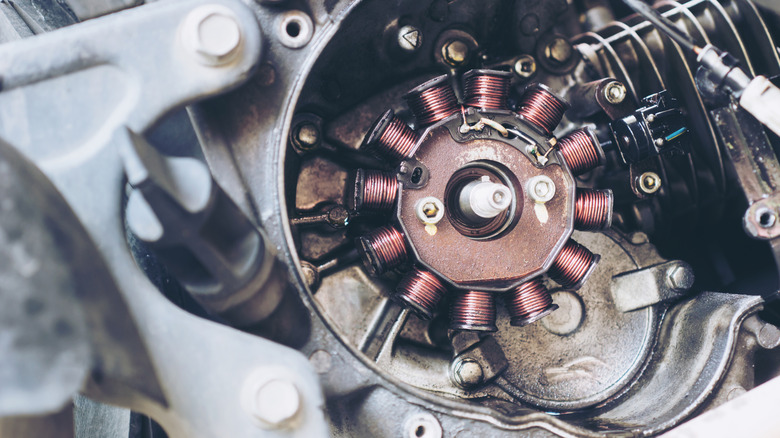
Even when looking up must-know motorcycle maintenance tips, there’s often not much attention paid to the electrical components. Sure, you’re advised to check the battery, but even a pristine battery won’t stand a chance if your bike has electrical issues. That’s why it helps to know both what a stator is and what it does. In the most basic terms, it’s the part of the system that turns the engine’s movement into usable electrical power.
Located deep inside the engine, the stator uses the engine’s rotation to create an alternating current. From there, the rectifier or regulator turns the alternating current into the direct current needed to power the motorcycle. That direct electrical current (or DC) can serve several different purposes, including replenishing the battery while the engine runs, powering the lights and ignition system, and providing juice for the bike’s electronic accessories.
You might be wondering about the difference between an alternator and a stator. Generally speaking, cars and trucks use external, self-contained alternators, but most motorcycles divide this job between several components, including the stator, a rotating magnet assembly, a rectifier, and a regulator.
How a stator generates electricity
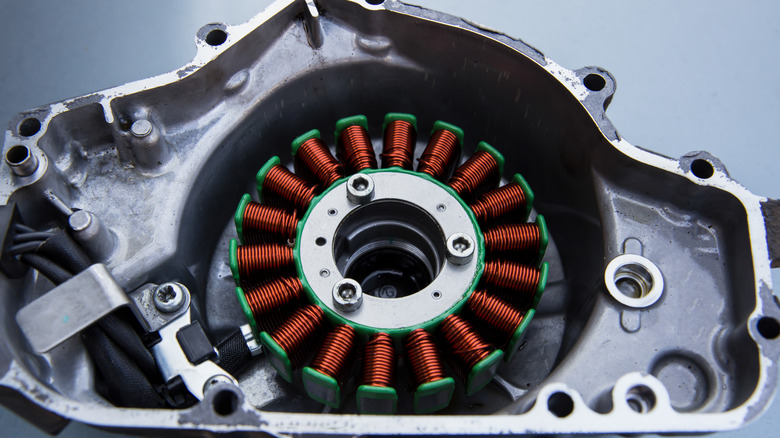
The stator consists of wire coils positioned around a rotating magnetic component. The magnet moves as the engine turns, generating AC electricity in the coils, and the amount produced increases with engine speed. Rather than sending all that electricity straight to the motorcycle’s electrical components, however, the motorcycle’s charging system manages the output using the rectifier and regulator. There, the AC output is converted into DC power and regulated down to a suitable, consistent supply.
Stator designs aren’t universal because different motorcycles have different electrical needs. Depending on the motorcycle’s design, a stator can either produce electricity for the ignition alone or to supply power for the entire bike. Some motorcycles also incorporate a pickup coil, which can tell the motorcycle’s crank position and send that information to the ignition computer to determine spark timing. All these responsibilities are split up among the motorcycle’s ignition system, starting system, and charging system.
You must be logged in to post a comment Login