Tech
What Does MFD Stand For In Boating?


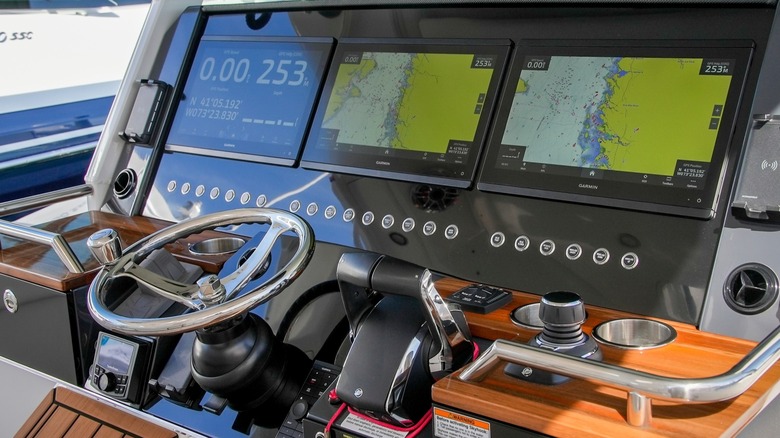
Before modern technology, seafaring was a complex affair. Navigation instruments like the backstaff, used centuries ago, utilized the stars to determine position. In order to calculate depth long ago, poles called sounding rods were lowered until they physically touched the ocean floor. Suffice it to say, vessel data used to be much less precise and somewhat open to interpretation.
Fortunately, tools on modern vessels have advanced dramatically. Things like GPS, sonar, and radar provide a wealth of data. You can even monitor any one of the basic types of boat engines with real-time diagnostic monitors. However, the problem was no longer a lack of information, but how to organize it and see it all in one convenient place. Enter the multifunction display (MFD), which is essentially a boats electronic control center. These devices utilize touchscreens and come in sizes from 5 to 16 inches across diagonally. Smaller basic units may only show one instrument at a time, whereas larger, premium MFDs can pull information from a variety of tools and display it simultaneously by splitting the screen into sections.
Many MFDs showcase data from fishfinders, chartplotting, real-time condition measurements like water currents, and system monitors, to name a few. Some MFDs come equipped out of the box with these tools; however, you can also connect standalone devices to an MFD via a specialized Ethernet connection or the maritime communication standard, NMEA 2000. You can even integrate different types of solar panels for your boat into an MFD.
Multifunction displays have made boating safer

Electronic navigation tools first appeared in 1984, with the Geonav navigation display. While it wasn’t immediately embraced by boaters, it laid the foundation for things to come, eventually leading to multifunction displays. However, before MFDs became common and more adaptable, the helm could be a confusing cluster of several standalone screens. And this was in addition to various analog gauges which still provided relevant data.
For instance, back then a captain may have separate units for radar, plotting, fish-finding, and auto pilot, among others, from different manufacturers scattered across the instrument panel. Each one of these devices was a standalone tool, making it more cumbersome to get important data quickly. And the number of tools was limited, as the helm only offers so much space. With today’s MFD units, boaters don’t need to divert their attention across several displays and analog gauges, making is easier to quickly view and interpret important data.
Not only have modern MFDs consolidated all these tools into one package, but some also come with, or can integrate with, additional safety systems. For instance, some MFDs include a Risk Visualizer, which uses an advanced algorithm to help prevent collisions by analyzing routes and flagging high-risk areas. You can also connect tools like 1st Mate by Mercury Marine, which uses tracker wearables on the wrist that will sound alerts if a passenger goes overboard and even shuts off the engines if the captain goes into the water.
You must be logged in to post a comment Login