Tech
What Does The EAC Mean On Electronics & Other Products?


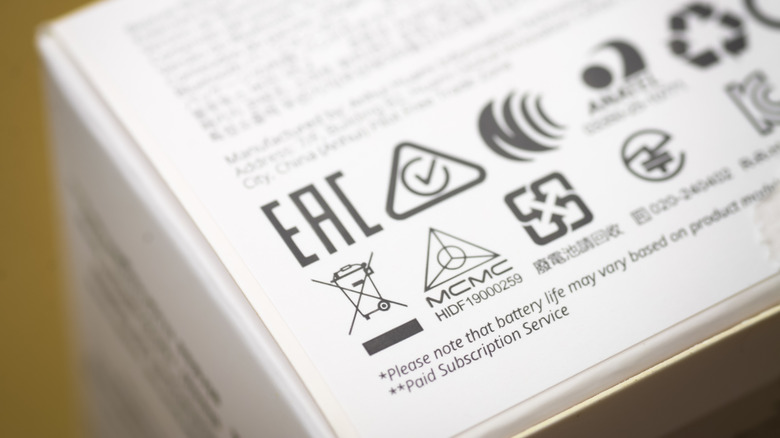
Flip over the box of any product, and you’ll usually see that it’s adorned with a number of official-looking logos at the bottom. Most of us don’t give these markings a second thought, but they all signify an important step –- or steps -– required in order to bring that product to specific markets or to meet certain standards related to safety or testing. You’ve almost certainly come across an ETL Listed marking from Intertek, or maybe a UL Listed or UL Certified marking on a package.
Depending on where you live, you may also have seen an EAC marking on a product’s packaging. The Eurasian Conformity (EAC) mark shows that a product has met compliance requirements as established by the Customs Union of the Eurasian Economic Union (EAEU). A product with an EAC certificate means that it can be bought and sold across all member states of the EAEU, which includes Armenia, Belarus, Kazakhstan, Kyrgyzstan, and Russia. It’s not uncommon to find un-branded, cheap electronics on marketplaces like Amazon that try to skirt these certifications, and those are products you should avoid buying.
What EAC certification actually means
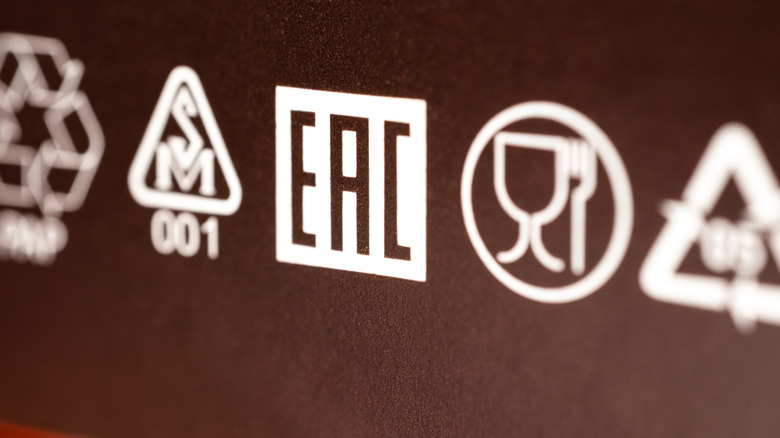
Similar to how the CE marking on electronics and other products works, any product bearing the EAC mark means that it complies with the various technical regulations governed by the Eurasian Customs Union. Many of the technical regulations set forth by the EAEU are based on previous existing standards from its member states, such as Russia’s GOST-R or Kazakh’s GOST-K. The basis of these regulations are to establish safety standards and requirements for the consumer and the environment, and the EAEU has 52 technical regulations it has adopted spanning multiple product categories.
Three methods exist for obtaining an EAC mark, and it usually depends on the products and where they are coming from -– for example, whether they’re originating from a EAEU member state or being imported by a foreign manufacturer. These methods include EAC Certificate of Conformity, EAC Declaration of Conformity, or a Certificate of State Registration. The biggest difference between an EAC Certificate and an EAC Declaration is required testing. The EAC Declaration of Conformity allows a manufacturer to provide its own testing and documentation to verify compliance, where an EAC Certificate always requires independent testing through an approved laboratory, and the certificate has to be issued by a certification body.
A Certificate of State Registration provides proof that certain products in the EAEU meet sanitary guidelines. These include food and beverages, hygiene products, or equipment that comes in contact with food and water. In cases where a product doesn’t fall under established EAEU guidelines for EAC certification, it is still required to meet conformity standards according to its governing member state, and frameworks such as Russia’s GOST-R are still important for addressing those products.
EAC and CE marks are similar, but not the same
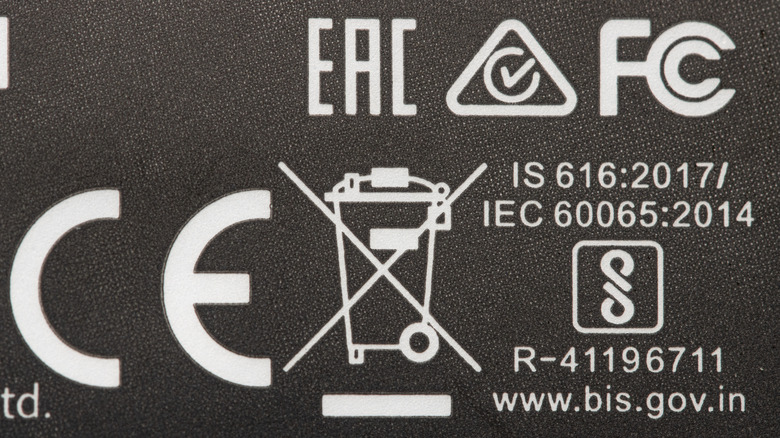
Another marking stamped on products is the CE marking, and it is used to largely achieve the same thing as the EAC mark –- to ensure products being sold meet minimum safety and health requirements serving both the customer and the environment. The primary difference is in which markets the marks are intended to serve: The EAC mark serves countries within the EAEU, and the CE mark serves those within the European Union (EU) and the European Economic Area (EEA). While there are similarities in some of the regulations for each mark, there is no mutual recognition between them and they are separate systems. However, certain products may require both marks if they are being sold across different markets.
Another key difference is foreign manufacturers can self-apply for CE conformity, rather than having to go through an independent representative in the case of EAC certification. It’s also important to recognize that there is no entity or body that validates product compliance or that issues a certification. It is up to the manufacturer to ensure product compliance with any and all applicable CE rules, maintain proper documentation, and use the CE mark legally. In some cases, a company may need to address a notified body (an EU-authorized independent organization) for third-party conformity assessment.
Because the onus of conformity is mostly on the companies that sell the products, CE marks are also commonly abused or forged. The best way to spot a fake CE mark is to be aware of the design requirements in using one legally. The regulations and directives that form the underpinning of the CE and EAC marks often have a ripple effect on other markets, such as the case of Europe forcing Apple’s iPhone to switch to USB-C.
You must be logged in to post a comment Login