Tech
What Exactly Is A Nuclear Reactor Used For And How Does One Work?


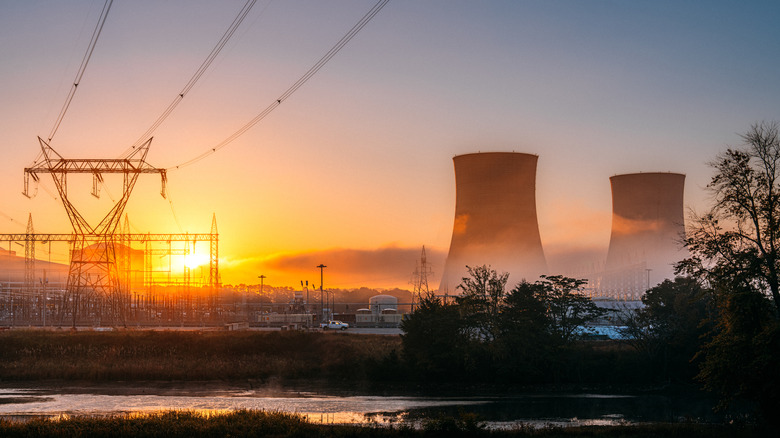
The US has the most nuclear power plants in the world. However, despite this, it remains a divisive subject that people seem to either embrace or shun in equal measure. We won’t go into this argument here, but what we will do is break down the relatively simple science behind nuclear reactors, how they work, and what they can be used for.
A good way to start this is by looking at what must be the most famous equation in the world – E=mc². This equation explains why nuclear reactors can produce so much power from relatively little fuel. In this equation, E denotes energy, m denotes mass, and c denotes the speed of light. Because the speed of light squared is an enormous number, even a tiny amount of mass contains a huge amount of energy. Nuclear reactors tap into that energy by splitting atoms and releasing the energy locked inside their mass.
That’s the simple bit of the science (relatively speaking). However, releasing all that energy in a controlled and predictable manner is where things begin to get tricky. We’ll discuss how this works and how different types of reactor harness that energy in more detail later — but basically, a nuclear reactor uses a chain-reaction process called nuclear fission. This splits the atoms in a reactor’s fuel rods and releases the energy stored within them, according to Albert Einstein’s equation. The released heat energy produces steam that spins a turbine to generate electricity and, ultimately, could charge your phone.
How nuclear reactors work
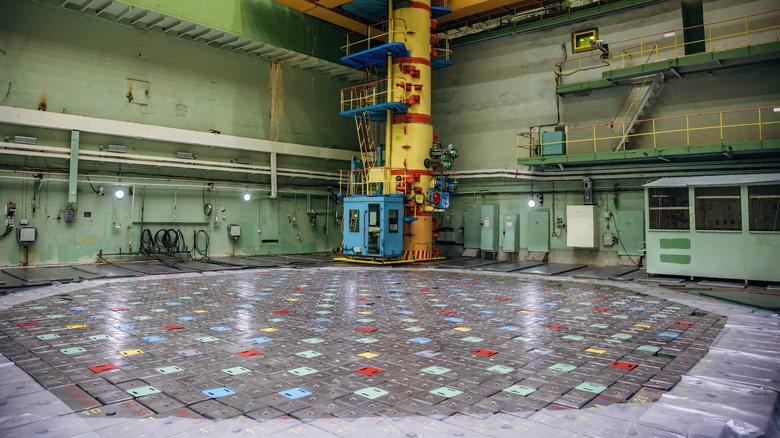
The same physics underlies every nuclear reactor. Inside the reactor core, fuel pellets (mostly uranium) are arranged in fuel rods. The key to releasing the energy is the fission chain reaction; fission happens when sub-atomic neutron particles collide with uranium atoms. When a neutron hits, it splits the atom into two smaller atoms and also releases additional neutrons. In turn, these impact other uranium atoms, creating the chain reaction. The specifics about what is produced when an atom is split can vary, but a typical reaction might split a Uranium-235 atom into a barium and krypton nucleus while releasing two or three further neutrons.
Now, what we don’t want at this stage is for this reaction to continue unchecked. There are two main ways to control this. The first is through the use of control rods. These are made with a material that absorbs excess neutrons and can be used to speed, slow, or even stop the reaction depending on how much of it is exposed to the core. Common materials used include boron and silver. Water also acts as both a moderator and a coolant by carrying away excess heat.
These fundamentals apply to all nuclear reactors; it’s how they handle the water loop that defines the two major types of commercial reactors used in the US, which we cover in detail next. However, regardless of the type, one of the contentious parts of the process is the problems associated with dealing with spent fuel rods. These remain highly radioactive, and safely storing them is one of the biggest challenges facing the sector.
The different types of nuclear reactors
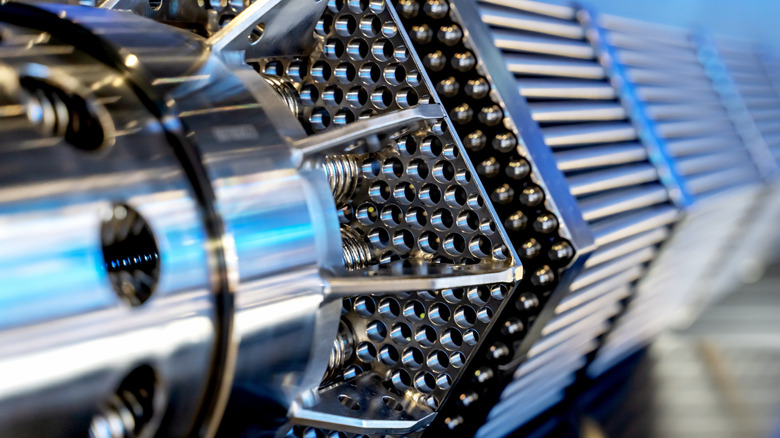
There are two main commercial reactor designs — Pressurized Water Reactors (PWRs) and Boiling Water Reactors (BWRs). The defining difference between them lies in how they handle water within the reactor and the steam loop.
The most common of these are PWRs, which account for about 65% of US commercial reactors. As the name suggests, in this type of reactor, the water is kept at high pressure within a closed loop to prevent it from boiling. The water is heated by the nuclear reaction and is then cycled through a heat exchanger. The heat exchanger transfers the heat to a secondary water loop, and the steam from this loop is what’s used to drive the turbines and generate electricity.
BWRs also use heated water to drive turbines. However, instead of two separate “water loops”, BWRs pump water directly into the reactor core and use a system of pipes to feed the steam from the water directly to the turbines. Any remaining steam is condensed and pumped back into the core.
It’s also worth looking at the differences between these and the types of reactors that power the US Navy’s nuclear ships. Ships like the USS Gerald R. Ford, the world’s largest aircraft carrier, use scaled-down PWRs for power. However, unlike commercial reactors that use low-enriched uranium (LEU), carriers and submarines use highly enriched uranium (HEU). The latter has a far higher energy density than LEU, which means US nuclear-powered ships can go for decades without refueling. So, although refueling a nuclear-powered carrier can take years, it’s a process that normally happens only once in a ship’s operational life.
You must be logged in to post a comment Login