If you want the best quality out of your Bluetooth audio, it’s worth reviewing some settings.
Blackcat/Getty Images
Bluetooth is perhaps one of the most enigmatic technologies around. Fittingly symbolized by Scandinavian runes and named after a king who likely had a nasty dental problem, this mysterious technology that transports data through the air is fairly difficult to fully comprehend in and of itself. To further complicate things, there are Bluetooth codecs — which determine the quality of the audio you hear — to contend with, but these are actually simpler than they seem once you learn the terminology.
Codec comes from the words “coder” and “decoder,” and is the method in which your audio data is communicated from the source to your Bluetooth headphones or speakers. They’re essentially like different languages — they’re all communicating the same thing (your audio files), but doing so differently depending on the codec. Each codec has different limitations, as do the devices you’re using. Even Bluetooth itself, despite improvements over the years, can only handle so much data: it caps out at around 2 Mbps, and no Bluetooth device can currently handle true lossless audio unless they simultaneously utilize a Wi-Fi connection.
Advertisement
Understanding Bluetooth codecs
Which Bluetooth codec is best is situational, dependent upon what devices you’re using to send and receive audio and the quality of the audio itself. To best understand the difference between codecs, there are a few different measurements that are important to know. In simplified terms, it all comes down to bits of data.
Bit rate: How much data is sent per second; the more data that can be sent at once, the more of the original quality of the audio is preserved
Audio bit depth: This is the number of bits in each second of audio, which impacts the highs and lows of audio able to be communicated on the other side; the higher the bit depth, the better the dynamic range
Advertisement
Sample rate (kHz): The sample rate of the music per second — essentially how many times a snapshot of the audio is captured. The more it’s sampled, the more accurate the snapshot. The most common sample rate in music production is 44.1kHz, which means that 44,100 snapshots are captured per second.
The standard codec is SBC, which is receivable by and included on every Bluetooth device. For all other codecs, it’s a case-by-case basis for whether they’ll be compatible with your device, making it important to check the finer details on your headphones or speakers. Some codecs, like the Sony-developed LDAC and Samsung Scalable, are proprietary, making the tech that supports it more niche. Though AptX codecs are more widely supported, it’s still a family of codecs owned by Qualcomm, meaning that some (like AptX HD) require specific licensing if you want to, say, use it on your PC. Looking at just the raw data, this is how the most common Bluetooth codecs compare.
Advertisement
Which Bluetooth codec is best?
sdx15/Shutterstock
Looking at just the raw data, this is how the most common Bluetooth codecs compare:
Codec
Max Bit Rate
Max Audio Depth
Max Sample Rate
Advertisement
SBC
345 kbps
16-bit
48 kHz
Advertisement
AAC
264 kbps
16-bit
44.1 kHz
Advertisement
AptX
352 kbps
16-bit
48 kHz
Advertisement
AptX HD
576 kbps
24-bit
48 kHz
Advertisement
AptX Adaptive
420 kbps
24-bit
96 kHz
Advertisement
AptX Lossless
1.2 mbps
24-bit
96 kHz
Advertisement
LDAC
990 kbps
24-bit
96 kHz
Advertisement
LHDC
900 kbps
24-bit
96 kHz
Advertisement
LC3
345 kbps
32-bit
48 kHz
Advertisement
Samsung Scalable
512 kbps
24-bit
44.1 kHz
Advertisement
There are still other factors to consider when dubbing one codec “best.” Just because a certain codec has a higher bit rate than another, it may still compress audio less efficiently — this is the case with SBC versus AAC, where the latter utilizes a more complex algorithm. Other variables and limitations apply as well, like the fact that SBC can have a bit rate of up to 345 kbps, but manufacturers often limit this to 256kbps to prevent battery drain.
Similarly, LDAC, AptX Adaptive and Lossless, LHDC and LC3 all use variable bit rates, adjusting based on the strength of your connection, so you may not reap the full benefits of the codec. That being said, at a certain point there are diminishing returns, as the human ear can only hear qualitative differences up to a certain point. Some of the higher-quality codecs can also drain battery much quicker, so they aren’t the best choice for all-day listening.
Advertisement
How to switch Bluetooth codecs
Depending on your device, you may not be able to control which codec your tech is using. Apple devices, for example, only support AAC and SBC. With an Android device, you can toggle your codecs by activating Developer options or third-party apps.
Switching codecs with developer settings
Turn on Bluetooth and connect your accessory
Go to Settings
Select About phone
Select Software information
Press Build numberseven times to activate Developer options
Go back to Settings
Select Developer options, then search for codec
Select Bluetooth Audio Codec in the results, then again once your phone navigates there
Select the codec you want and press OK
Alternatively, you can use an app like the Bluetooth Codec Changer from developer AmrG DEV. This can be less cumbersome than navigating Android menus, and also allows you to do things like set specific audio profiles for different occasions — the kind of codec setup you need for phone calls is likely different than dedicated music listening, for example — though some of these special features require a subscription.
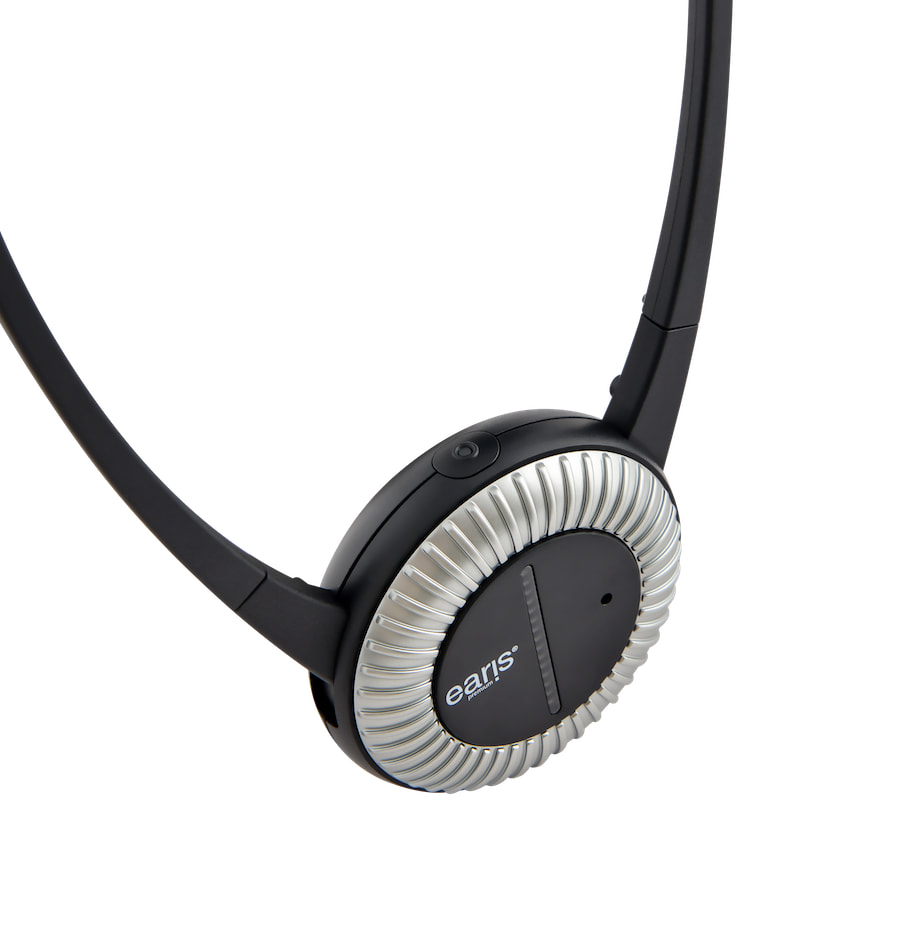
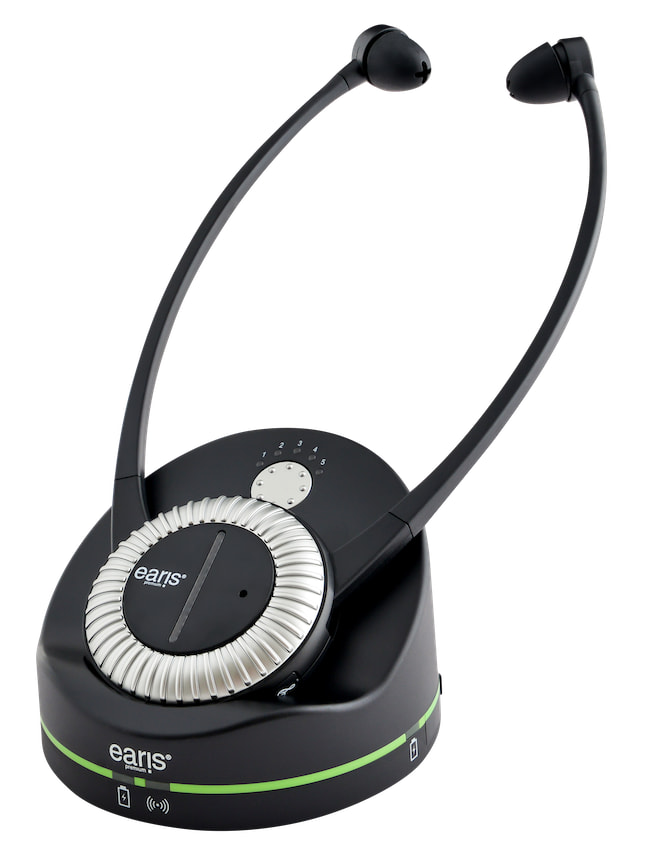
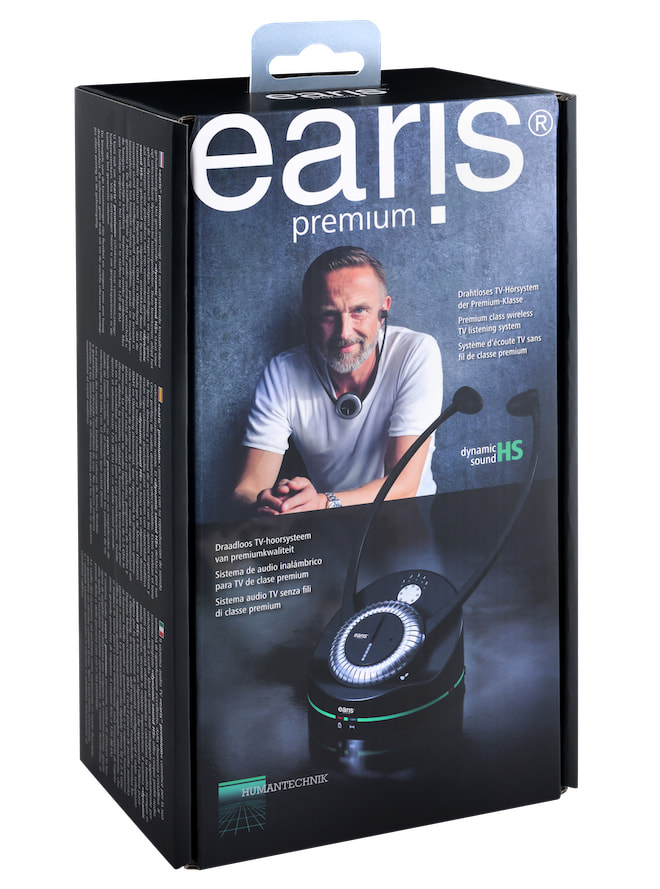
Essence For Hi-Res Audio has introduced the Earis Premium Personal TV Audio System, a wireless personal-audio solution designed for viewers who want clearer dialogue, independent volume control, and a more immersive listening experience without relying on TV speakers, a soundbar, or a conventional two-channel or multichannel system.
Essence, which manufactures HDMI DACs and also represents brands including Amphion, Acoustic Energy, FIBBR, and ATI, is positioning Earis Premium as more than a simple TV listening headset. The system is designed to reproduce dialogue, music, ambience, and movie effects with greater clarity while allowing the listener to control volume without changing the level for everyone else in the room. The Earis Premium receiver provides up to nine hours of battery life and recharges when placed in its transmitter and charging base.
Solving a Problem
Wide-dynamic-range movie and television soundtracks can shift quickly from quiet dialogue to dramatically louder music and effects, often sending viewers reaching for the remote to adjust the volume. Earis Premium takes a different approach by moving the audio system directly to the listener through a personal headset, allowing the user to hear dialogue and other program material at a comfortable level without changing the volume for everyone else in the room.
The Earis Premium is designed for longtime audio enthusiasts whose hearing has changed with age, viewers who have difficulty following dialogue, couples who prefer different listening levels, late-night viewers, and apartment or condominium residents who want high-quality sound without disturbing neighbors. It could also appeal to home-theater owners looking for a personal listening alternative when firing up the full system is impractical—or when they are simply tired of riding the volume control through every quiet conversation and explosive action sequence.
Advertisement
The Wireless Receiver
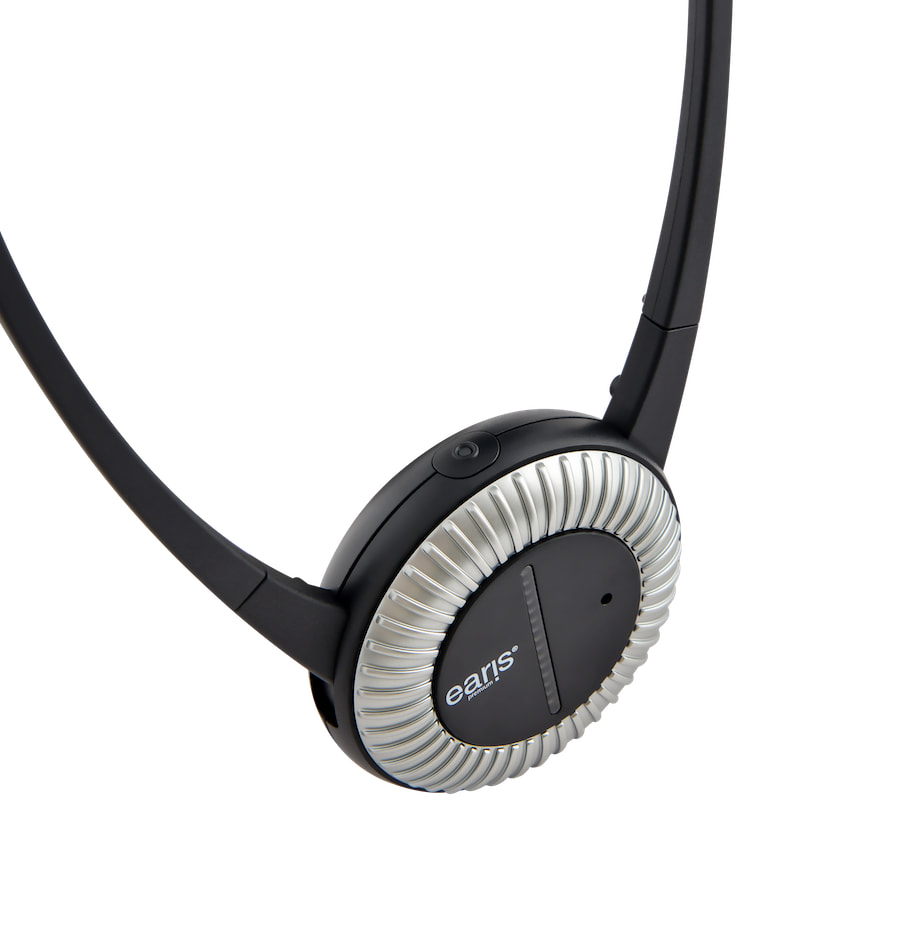
The 2-ounce under-chin wireless receiver integrates a Wolfson WM8918 24-bit DAC/headphone amplifier, 14.8 mm moving-coil transducers, 24-bit/48 kHz PCM operation, and dedicated 2.4 GHz wireless transmission. The result is a short, purpose-built signal path designed specifically for personal television audio, rather than relying on conventional Bluetooth headphones or earbuds that were designed to serve a much broader range of listening applications.
By using its own 2.4 GHz wireless connection, Earis Premium is built around the specific requirements of TV viewing, where reliable transmission, dialogue intelligibility, and synchronization between the picture and sound are particularly important.
“Designed and engineered in Germany, Earis Premium impressed me because it did far more than improve dialogue clarity,” said Bob Rapoport, founder of Essence For Hi-Res Audio. “Full range music, ambience, localization, effects and dramatic impact were all preserved. What I heard was the actual Hi Res Audio soundtrack of shows like House of the Dragon; I was immersed in the realism of the production’s sound design in a new and more direct way than my two-channel in-room system could take me. It was addictive.”
Personal Volume and Balance Controls
The Earis Premium provides a rotary volume control along with a separate left/right balance control on the rear of the under-chin receiver, giving listeners direct control over both overall listening level and channel balance.
Independent volume control allows one viewer to listen at a preferred level without forcing everyone else in the room to accept the same setting. The balance control can compensate for differences in hearing between the left and right ears, helping restore a more natural stereo balance and improve image localization.
Advertisement
A single Earis Premium transmitter can also support two headset receivers, making the system practical for couples or two viewers who both want a personalized listening experience.
Audio Specification Highlights
The Earis Premium has a stated frequency response of 20 Hz to 16 kHz, with maximum output rated at 122 to 125 dB SPL and latency of less than 47 milliseconds. The DAC section is specified at a 96 dB signal-to-noise ratio and 0.005% total harmonic distortion (THD).
Advertisement. Scroll to continue reading.
The transmitter accepts 24-bit/48 kHz PCM stereo through its optical digital input and also provides an analog input, allowing the Earis Premium to work with a broad range of televisions and other source components.
You Can Even Add a Subwoofer
Earis Premium can also be used alongside a powered subwoofer. With the main speakers turned down and the subwoofer left active, the headset handles the personal stereo presentation while the subwoofer continues to reproduce the lowest bass frequencies in the room.
Advertisement
That combination gives the listener the clarity and independent volume control of the Earis Premium while preserving some of the physical low-frequency impact of a conventional home-theater system, creating a more full-range personal viewing experience without running the entire speaker system at normal listening levels.
Earis Premium Personal TV Audio System Specifications:
Essence For Hi-Res Audio Model
Earis Premium
Product Type
Personal TV Audio System
Price
$699
Maximum Output
Up to 125 dB SPL
Digital Audio Input
Optical PCM stereo up to 24bits/48k
Analog Input
3.5mm
Microphone Input
3.5mm
Modulation method
PCM Analog-over-digital
Transmission Carrier frequency
2.4 GHz~2.5 GHz
Signal-to-Noise Distance
-87 dB
Transmission Power
10 dBm
Audio latency
< 47 ms
Transmission Range
> 70 m
Temperature Range
0 °C to 45 °C
Power Supply
5 Volt DC / 1.5 A
Power Adapter
100-240 Volt 50-60 Hz 300mA
Stethoset receiver
Harmonic Distortion
1kHz<1% at 500mVrms
Frequency Response
20 Hz – 16 kHz
Sound Pressure Level (SPL)
122 dB SPL at Input=1KHz/500mVrms
Earpad Material
Silicone rubber
Power Supply
3.7V 400mAh, Lithium-polymer rech. battery
Running Time Per Charge
9 hours
Charging time
2 hours
Weight (battery incl.)
61 g
Dimensions (mm)
244 x 112.5 x 24
Operating Temperature Range
0 °C – 45 °C
Pocket receiver
Connection
3.5mm stereo jack socket, 16 Ohm minimum
Power supply
3.7V 400mAh, Lithium-polymer rech. battery
Running Time Per Charge
9 hours
Charging Time
2 hours
Weight (battery incl.)
41 g
Dimensions (mm)
63 x 24 mm
Operating Temperature Range
0 °C – 45 °C
The Bottom Line
The Earis Premium is not the first wireless TV listening system, but its combination of a 2-ounce under-chin receiver, dedicated 2.4 GHz transmission, 24-bit/48 kHz PCM playback, independent volume and balance controls, support for two receivers, and the unusual ability to integrate with a powered subwoofer gives it a more audiophile-oriented spin on the category.
There are compromises. The Earis Premium is a stereo-only system with no Dolby Atmos or spatial-audio support, and its digital connectivity is limited to optical PCM rather than HDMI/eARC. At $699, it also costs considerably more than several Sennheiser TV-listening systems. Sennheiser remains the most obvious competitor, with models such as the RS 255 and RS 275 selling for well under $300, while products such as the RS 195 have established the brand in personalized TV listening and dialogue enhancement.
For viewers who primarily want a cheaper way to hear dialogue more clearly, Sennheiser offers plenty of alternatives. Earis Premium makes more sense for listeners who also care about music, stereo imaging, independent control, and getting closer to a full-range personal home-theater experience without turning on the entire room system.
Price & Availability
The Earis Premium is priced at $699, with U.S. shipping beginning August 25, 2026, directly from Essence For Hi Res Audio.
Copilot’s gurning blob is leaving Voice for a new career in education
Microsoft has yanked Mico from the Copilot spotlight less than a year after unveiling the anthropomorphic assistant intended to make its AI a little less soulless.
As part of Microsoft’s announcement that its consumer and work Copilot applications will merge, the company confirmed that the weird blob thing would shuffle out of Copilot Voice and into Learn Live, a voice-based study mode that guides users through subjects and assignments.
Advertisement
“Mico helped us learn about warmth, expressiveness, and how people want to talk with AI,” Microsoft wrote. “Those learnings are shaping Copilot going forward.”
“Learn is where the character has the most room to grow, with tutoring sessions that give Mico more to react to and teach through.”
As the update rolls out, Mico will no longer be the face of Copilot Voice. Users can still speak to Copilot and receive responses, but will be spared the blob’s gurning.
Mico is only the latest in Microsoft’s long line of anthropomorphic assistants. There was Clippy (or Clippit), which arrived with Office 97 but had been pushed into Microsoft’s desk drawer of doom by the time Office 2007 appeared. Then came Cortana, named after the character from the Halo video game franchise and pitched as a far more intelligent assistant. Microsoft introduced Cortana on Windows Phone in 2014 and brought it to PCs with Windows 10 the following year, before losing interest.
Advertisement
Mico didn’t even last a year as the face of Copilot Voice before Microsoft pulled it from the spotlight, although both the character and its Copilot “brain” live on in Learn Live. In terms of lifespans, it’s easy to compare it to the catastrophic Microsoft Bob, which was launched in 1995, with the last release happening that same year. However, the product lingered a little longer and later resurfaced, hidden as digital ballast on the Windows XP installation CD for licensing and encryption.
Modern digital distribution means that such a second life is unlikely to await Mico. Dave Plummer, the engineer responsible for Bob’s inclusion as an encrypted blob, said: “What’s ultimately important is that while Bob never got to play on the big stage, he always followed the band around and got to ride on the bus.”
Mico hasn’t been thrown off the bus just yet. Microsoft has merely made the blob sit with the schoolchildren. ®
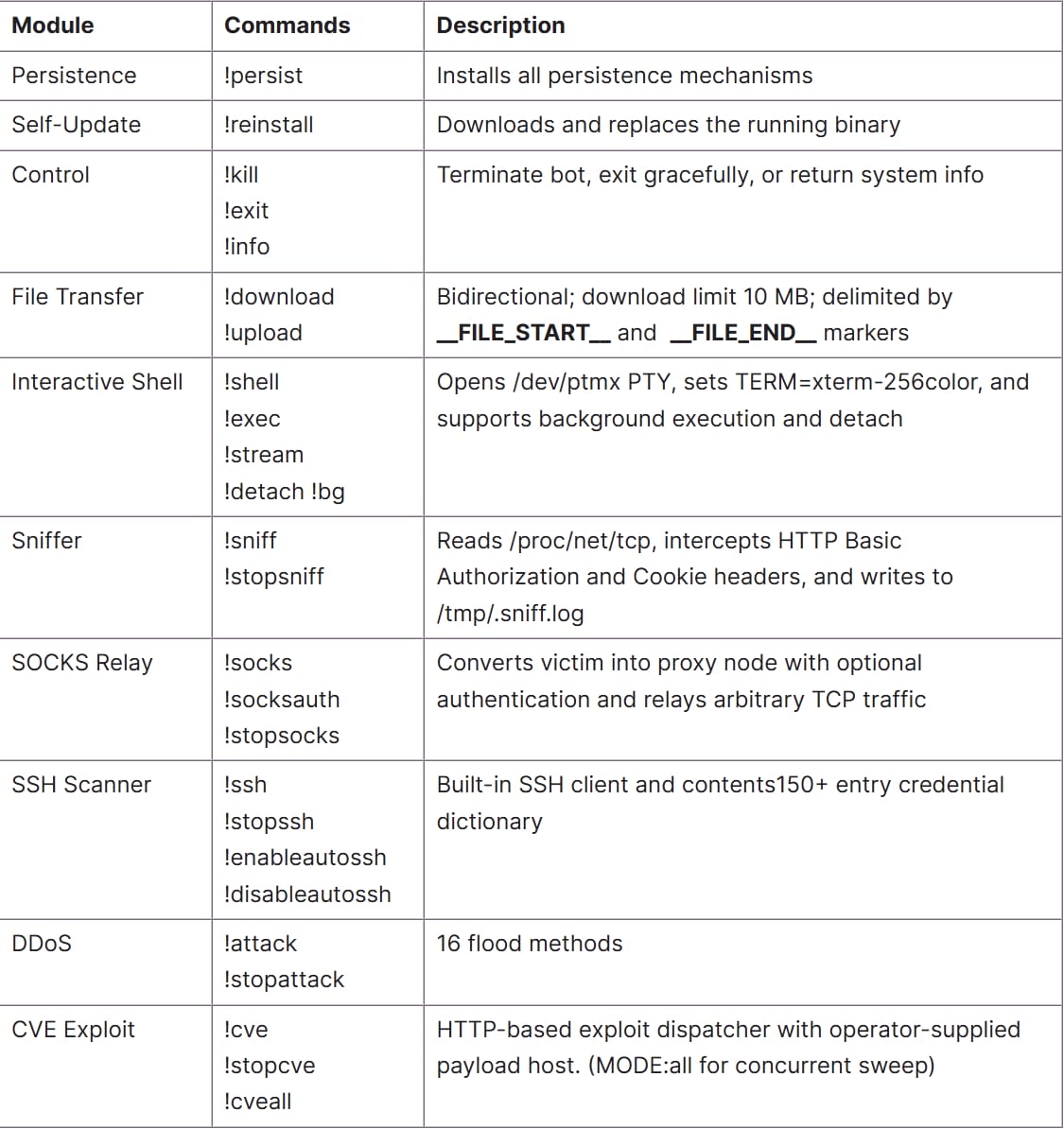
A new Mirai-based modular Linux botnet malware called Evooo1Bot has been targeting internet-facing gateway devices, turning them into SOCKS5 traffic relay nodes.
The malware’s capabilities extend beyond turning devices into proxy nodes and include credential theft, SSH brute-forcing, and launching distributed denial-of-service (DDoS) attacks.
Since at least July, Evooo1Bot has been targeting devices from Alcatel, NETGEAR, Tenda, Mitsubishi Electric, Telesquare, and D-Link across various regions by exploiting known vulnerabilities.
Evooo1Bot’s current geographical spread Source: Fortinet
“While the malware reuses the DDoS engine from the publicly leaked Mirai source code, it extends the original framework with numerous capabilities, including encrypted C2 communications, an SSH brute-force scanner, a SOCKS relay module, a credential sniffer, and an integrated exploit arsenal targeting multiple known vulnerabilities,” Fortinet researchers found.
Newer builds include a separate vulnerability-exploitation module targeting Hikvision cameras, Atlassian Confluence, Zyxel firewalls, TP-Link routers, D-Link NAS devices, WSO2 products, Kubernetes ingress-nginx, and vulnerable PHP-CGI installations.
Advertisement
However, Fortinet notes that some of the embedded exploits are not correctly implemented, leading to failed exploitation.
When leveraging an exploit successfully, a script downloads one of the 12 available malware builds that match the host’s CPU architecture, then clears Bash history to wipe traces of the attack.
Evooo1Bot uses encrypted command-and-control (C2) communications over port 443 and performs extensive checks for debuggers, security tools, sandboxes, virtual machines, containers, and honeypots before it launches on the infected device.
Persistence is established through systemd, SysV init, shell profiles, and rc.local, while a cron job attempts to re-download the payload every five minutes.
Advertisement
The malware’s modules Source: Fortinet
An interactive shell gives operators direct control over compromised systems, while file-transfer commands support uploads and downloads.
The malware also features a credential sniffer module that monitors ‘/proc/net/tcp’ and attempts to capture HTTP Basic Authentication and Cookie headers.
The SOCKS5 module supports direct listening and reverse-relay modes, allowing attackers to conceal malicious traffic, circumvent geographic restrictions, or potentially access networks through compromised systems.
Fortinet says proxying sessions run independently, and multiple can be opened simultaneously, allowing monetization through residential proxy services if the botnet grows large enough.
The SSH scanner module uses 150 username and password combinations for enterprise-oriented accounts, and performs post-login checks to avoid honeypots.
Advertisement
Finally, the DDoS module that was inherited by Mirai supports 16 flood methods, including UDP, DNS, SYN, ACK, GRE, fragmented TCP, and an HTTP flood with customizable requests.
To defend against botnet malware, keep your IoT devices’ firmware updated, replace default admin credentials, turn off remote access panels, and replace devices when the vendor no longer provides support for them.
Overall prevention scores can hide what happens after initial access. Once attackers are using valid credentials, prevention drops sharply.
The Blue Report 2026 measures defenses technique by technique across 338 million simulations run in customer production environments.
The big picture: The RAM crisis has made the latest hardware so unaffordable that components from four years ago are storming sales charts. AMD and Nvidia have already responded to the demand by re-releasing chips from 2022, and now Intel is poised to follow suit.
Robert Hallock, Intel’s vice president and general manager of enthusiast channel business, recently told Tom’s Hardware that the company plans to continue offering Raptor Lake CPUs, first launched in 2022, for a while longer. Intel, like AMD, is responding to sustained demand for hardware that supports DDR4 RAM.
During a lengthy interview, Hallock noted a spike in demand for Alder Lake and Raptor Lake processors, which have recently become harder to find. While the exec did not mention specific products, he confirmed that the company aims to stabilize and maintain the supply of 10-nanometer chips that support Intel’s LGA 1700 socket “for years to come.”
The comments align with prior rumors that Intel might introduce another refresh for Raptor Lake – the lineup’s third – during the first half of 2027. Tom’s Hardware heard reports on the topic during Computex earlier this year, where at least two motherboard vendors also confirmed plans to increase production of aging LGA 1700-compatible boards to meet rising demand. Intel’s rumored refresh, tentatively dubbed Raptor Lake Next, would exist alongside the DDR5-exclusive Nova Lake.
Surging demand for processors and mainboards that support the supposedly obsolete DDR4 memory is likely due to RAM shortages driven by AI data centers. The price of DDR5 RAM has skyrocketed over the past year, driving PC users to either purchase DDR4 memory at much lower (but still inflated) prices or hold onto the RAM they already have. Raptor Lake CPUs support DDR4 and DDR5 memory, giving buyers the opportunity to upgrade without replacing an entire PC.
AMD has already responded to the situation by re-releasing the Ryzen 7 5800X3D, the CPU that introduced 3D V-Cache in 2022. The ongoing crisis has also turned the modest Ryzen 5 5500 into the reigning budget CPU king. While the company offers better processors at similar prices, such as the 7500F and 9800X3D, they all require DDR5 RAM.
The trend has even affected Nvidia GPUs. While tightening stocks of GDDR7 VRAM have increased the prices of the company’s latest RTX 5000-series graphics cards and delayed the launch of the RTX 5000 Super cards, Nvidia has revived the 12GB RTX 3060, also from 2022, as a temporary substitute.
It’s not a controversial statement to say that energy bills are high these days, and that finding ways to lower these costs is essential to the modern budget. Consumer Reports offers helpful tips for lowering energy bills, though one of the biggest difference-makers is seeking out an alternative energy source to offset traditional energy consumption. Arguably the most popular option is solar, but wind power shouldn’t be overlooked in its own right. Installing a wind turbine at home isn’t just possible; it’s an effective method of cutting a sizeable percentage from your energy bill — though it is a pricey investment, ranging from $20,000 to $50,000 on average for a full-size unit.
On the whole, there’s potential for a wind turbine setup to save a significant amount of money every year on energy. Estimates place a small system as possibly dropping bills by between 50% and 90% in the absolute best conditions. With a battery setup, storing wind energy for later use is a possibility, too, and that’s not even getting into the environmental benefits. As a clean energy source, wind turbines don’t produce harmful emissions, nor do they require fossil fuels for power or water for cooling, so you’ll have peace of mind knowing much of your home energy production is environmentally conscious.
With all of that said, setting up a home wind turbine or two isn’t accomplished in an afternoon. It takes the right parts, expertise, documentation, and setup to reap the many benefits of this renewable energy source.
Advertisement
1. A sufficient location
Robert Heemskerk/Getty Images
Before purchasing a single wind turbine part or planning where to set it up, you need to assess if your home is in an ideal place for wind power to begin with. Naturally, even smaller wind turbines require ample wind, with residential turbines needing approximately 7 miles per hour (mph) of wind to generate power. All kinds of obstacles, including high surrounding buildings, tall trees, or even tight-knit homes in neighborhood environments, can restrict or divert wind gusts away from the turbine, limiting the potential for energy production. Thus, in such an area, wind power might not be worth the effort, and instead one of the other green energy alternatives for homes could be the answer.
If you’re comfortable moving, there are some regions worth considering for their wind energy viability. The most wind turbine-friendly areas within the United States include seacoasts, ridgelines, and throughout the Great Plains region, so if you want to try wind power, these areas are the way to go. With that said, you’re not strictly limited to these parts of the country. So long as there’s consistent wind movement to keep the turbine blades turning at a sufficient speed and a lack of wind-inhibiting obstacles, you’ll generate some amount of electricity for your home to run on.
Advertisement
2. The necessary permits and certifications
Nanci Santos/Getty Images
So, you’re ready to set up your residential turbine, but you can’t get started just yet. As any homeowner could tell you, building on your property isn’t simple. Wind turbines are no exception, being both a home improvement project you shouldn’t tackle yourself and an endeavor demanding extensive paperwork. Worse yet, there can be some legal inconsistencies from region to region, so it’s a good idea to start local with your documentation journey to make sure you don’t miss any key parts. Your chosen installer is a valuable resource at this step, since they should be able to acquire the necessary permits and certifications before beginning.
Generally speaking, a valid building permit is required to construct a wind turbine at your residence. To connect it to your power grid, you’ll need to reach out to your local utility for approval and assistance with this setup. At this point, you may have the opportunity to enter a net metering agreement with them to sell off any excess energy your turbine produces, so this could be a nice moneymaking venture, too. You should also be mindful of the color and patterning of your wind turbine, as some areas are highly specific regarding their appearance. During all of this paperwork, don’t forget to look into the potential tax benefits and general incentives turbines can qualify you for.
Advertisement
3. Professional help
Realpeoplegroup/Getty Images
Setting up residential wind power requires more than a few helping hands. Professional help is crucial to getting everything installed safely and correctly. As far as setting up the turbine, while a crew of capable friends and family members could get a guyed turbine raised and stabilized, a large self-supported tower will more than likely require more experienced hands. A concrete foundation is required, and depending on the size of the tower and turbine, heavy machinery could be necessary to move and stand everything up.
Structural labor aside, the electrical side of wind turbine setup isn’t for the faint of heart. Whether you’re connecting to the power grid or opting to connect the turbine to a battery, you need to have a strong understanding of how electrical systems work and how to safely work on them. Otherwise, you could add to the list of major electrical mistakes you don’t want to make at home. Thus, you’ll want to hire someone familiar with this type of wiring, and for all setup steps for your turbine, you’ll want to budget accordingly to cover these professionals’ services.
Advertisement
4. The turbine and tower
Alberto Masnovo/Getty Images
With your space determined, paperwork done, and professionals lined up, you can turn your attention to the turbine itself, as well as the associated items needed to run and utilize it. First, you want to assess what size turbine you want in terms of energy production. Home turbines range from 400 watts to 100 kilowatts, so you should do some research into what your dwelling needs. This power need will determine the size of the turbine, which can come in multiple forms. Most common are horizontal turbines, though vertical turbines — available in S-shaped Savonius and oval Darrieus forms — are possibilities for your setup, too.
Under the turbine goes the tower, to which it must be mounted in order to catch the wind and turn it into electricity. It’s recommended that the tower leave at least a 30-foot gap between the bottom-most part of the turbine and grounded obstacles within 300 feet for safety reasons. They come in two main variations: self-supported, concrete foundation-bound towers and guyed towers, characterized by pipe or tubing, stabilizing guy wires, and an anchor. Investing in a tilt-down tower for easier maintenance isn’t a bad idea either, assuming it doesn’t uncomfortably strain your budget. Of course, roof-mounted turbines like those from Ridgeblade are out there as well for those limited on yard space.
Advertisement
5. The electrical elements
Now that the wind turbine and mounting tower have been selected, the next step is the more technical part of a home wind setup. There are several key electrical elements to bring together that will allow the turbine to actually do its job. If you’re planning to connect your turbine directly to the home’s power grid, you’ll need a power conditioning unit, which is also known as an inverter. This is necessary to make the system’s direct-current output compatible with the alternating-current grid, making it safe and usable. That said, even without hard-wiring into the grid, an inverter is still necessary.
Advertisement
Should you keep your turbine independent of the existing power grid, you’ll need something else to store and channel that wind-generated power. This is where a battery setup comes into play, taking in the energy and holding onto it during periods of low wind. Alongside the battery itself, you’ll need a battery charge controller to prevent it from overloading and overheating, in addition to an inverter. While some appliances can use DC power directly from the battery, most will need DC-to-AC conversion to work safely. In either case, it’s paramount to consult a professional electrician to ensure these volatile electrical elements are set up correctly.
Advertisement
How these elements were selected
Sven Loeffler/Getty Images
To choose these elements for a home wind turbine installation, we took a multifaceted approach to researching the build. For one, there’s the actual selection and setup of the wind turbine itself, and the associated construction necessary. These parts of the process aren’t cheap or simple, so being aware of all of the elements needed to get such a system up and running is crucial. Not to mention, it’s a good idea to be aware of the potential cost range for this effort; this way, those considering wind power know if they can realistically afford such an undertaking.
Aside from the actual wind turbine planning, setup, and use, there are the location and paperwork-related aspects. Wind turbines need to be set up in specific areas with ample wind to achieve the owner’s energy production goals; they need to be built within the local laws and regulations in the area to avoid any legal trouble; and they should be set up by those who actually know what they’re doing. Homeowners need to know that there’s a lot of paperwork, phone calls, and planning involved to get this set up from a hypothetical to a usable reality.
Sam Altman told a summit of tech interns that two years of college was “the exact right amount of time” for him and that four years may be more than the world now requires. He made the case to an audience whose entry-level pipeline is already being closed by AI.
Sam Altman thinks a degree takes longer than it needs to. Two years at Stanford was “the exact right amount of time” for him, the OpenAI chief said, and staying would have brought “vastly diminishing returns.”
He was talking to tech interns. The remarks came during a surprise appearance at Internapalooza, a networking summit run by investor Cory Levy for students spending the summer in the industry.
“I’ve sort of thought that maybe the way the world has evolved, college just shouldn’t be as long as it is,” Altman said, while allowing that it was “still great to meet people and kind of like live on your own and get to work on projects.”
Advertisement
The audience is what complicates it. TNW has reported that AI is killing the summer internship, the mechanism that has long converted students into employees.
Nor is that only an American problem. A Swiss study found fewer job ads aimed at career starters as automation absorbed the tasks juniors used to be hired for.
Altman’s other advice pointed the same way without meaning to. “You can make a whole startup kind of by yourself in a room with a lot of AI tokens, but not much else,” he said.
Heard from a founder’s chair that is liberating. Heard from an internship, it is a description of a job that might not need filling.
Advertisement
Not everyone reads the trend that way. Adecco’s chief executive has argued that AI is changing jobs rather than destroying them, which is the more optimistic case and not an unreasonable one.
The rest of the session was conventional founder advice. People waste effort trying to be taken seriously, Altman said, though he conceded that enterprise sales was the exception and that he eventually solved it by hiring a 50-year-old.
His own route is worth remembering before anyone acts on this. Altman left Stanford in 2005 to co-found Loopt, which landed in Y Combinator’s first batch and led to him running the incubator, while his mentor Peter Thiel pays $250,000 over two years to under-22s on condition they drop out. As Altman put it himself, “you don’t get to run the experiment twice.“
What we know so far: Cybersecurity researchers have uncovered at least three new vulnerabilities that could potentially allow attackers to gain system privileges even on patched Windows computers. These include a memory configuration chip exploit named “Download more RAM,” a zero-day flaw dubbed “ShieldBreak,” and a “plug and pwn” exploit that could install malware remotely over RDP.
The “Download More RAM” vulnerability, which was presented at the 2026 USENIX Security Symposium in Baltimore, was discovered by researchers from the University of Birmingham and Durham University. It reportedly allows malicious actors to bypass Windows 11 security and gain system privileges without physical access by exploiting the lack of write protection on consumer memory modules.
The vulnerability allows anybody to remotely rewrite the Serial Presence Detect configuration chip that notifies the computer about the amount of installed RAM in the system. Attackers can take advantage of this vulnerability to transmit fake information to the computer, tricking it into believing that it has twice as much RAM installed as it actually does.
The false data tricks the memory controller into mapping additional pseudo-addresses, which overlap with genuine addresses. The aliases allow attackers to create a backdoor into memory by circumventing security and access control mechanisms used by the operating system and the processor.
Advertisement
The vulnerability could potentially allow hackers to re-enable old drivers with known exploits, disable anti-malware software, break into virtualization-based security enclaves, change corporate device management settings, and even bypass kernel-level anti-cheat systems used by video games.
Professor Tom Chothia from the University of Birmingham noted that the attack only requires a script that can be deployed remotely, while previous attacks of this kind required physical access to the machine. He added that major memory brands, including Corsair, G.Skill, and ADATA, ship at least one model line with an unprotected configuration chip in violation of JEDEC guidelines.
Tracked as CVE-2026-23670, the vulnerability has been acknowledged by both Microsoft and Corsair. While Microsoft issued mitigations in its April 2026 update, Corsair has added a feature to its iCue hardware management tool, allowing users to enable write protection on their DIMMs. PC diagnostic app HWiNFO has also added the same feature for non-Corsair users.
There’s also a zero-day vulnerability called ShieldBreak, found by bug hunter Nightmare Eclipse. Tracked as CVE-2026-50656, it’s an elevation-of-privilege vulnerability in Microsoft Defender that can circumvent the RoguePlanet patch and allow attackers to gain system privileges on Windows 10, Windows 11, and Windows Server. However, Microsoft Defender has to be active for the exploit to work.
Advertisement
Finally, security researchers Alejandro Hernando and Borja Martinez have described a new “plug and pwn” attack that exploits Windows’ automatic hardware identification and driver installation process to install signed vendor driver packages with system-level privileges.
Presented at DEF CON 34 in Las Vegas, the vulnerability can be exploited without admin privileges and without a logged-in user. In their proof-of-concept demo, the researchers also showed that the attack can be performed remotely over RDP without connecting any physical USB hardware to the target device.
Some 1.6 million unique email addresses tied to RingCentral have been leaked online, alongside names, physical addresses, and phone numbers, according to Have I Been Pwned. RingCentral disclosed the breach on July 28 and said “it was the target of a sophisticated social engineering campaign” affecting a “limited portion of RingCentral customers.”
The comms platform said that it promptly responded to the intrusion upon detecting it, “took steps to stop the unauthorized activity,” and immediately launched an investigation into the security incident with help from a “leading third-party forensic firm.”
Advertisement
“We have not seen any new unauthorized activity since taking these remediation efforts,” the company added.
RingCentral did not immediately respond to The Register’s request for comment on this story. We will update it as needed.
While the company hasn’t named its attacker, notorious data theft and extortion gang ShinyHunters previously claimed it compromised the collaboration platform, according to a post on its data leak site, viewed by The Register. Screenshots of the post also circulated on social media. The crooks claimed they stole more than 623 GB of data, and set a July 30 deadline for RingCentral to pay up – or else the crew would dump the stolen information online.
RingCentral apparently didn’t pay the extortion demand, and ShinyHunters followed through on its threat, posting customers’ details on the internet.
Advertisement
“The company failed to reach an agreement with us despite our incredible patience, all the chances and offers we made. They don’t care,” the crims wrote on August 3.
A ShinyHunters spokesperson told us that the group broke into RingCentral by voice-phishing an employee and tricking them into giving the crooks their password.
The crooks claim that they made off with more than 30 million rows of customer information, including more than one million Social Security numbers and 7.5 million dates of birth. More concerning, however, they said the haul includes 22 million-plus rows of client notes containing confidential doctor-patient conversations and health information, and more than 20 million medical-order records containing patient IDs, prescription types, order dates, and refill information.®
Editor’s note: This story was amended post-publication with comment from ShinyHunters.
After long evenings spent designing mechanisms and calibrating movement, a New Zealand engineer named Bruce finished a system that mounts directly onto an ordinary acoustic guitar and turns digital tablature into live string vibration. He calls it MegCell Pulse. Two coordinated robots handle the work of human hands. One presses the strings against the frets. The other plucks them with six individual plectrums. The sound that reaches the room is the actual instrument speaking, complete with the body resonance and the space around it.
Bruce began this project as an engineer rather than a musician, drawing on his skills in naval engineering, composite work, CAD drawings, and automation. In spare hours after his day job he kept asking what would happen if digital music instructions could drive a real guitar instead of a speaker. He spent roughly 6 or 7 years tinkering with the concept and its variants. The majority of the build is completed on a normal 3D printer, with the remaining parts sourced from a basic list that anybody can order. The software translates ordinary digital tablature into a precise timing signal for the actuators, and it does so without requiring special programming for each song.
WHY CARBON FIBER – Nova Go SP1 is made of carbon fiber composite material, which means it’s impervious to temperature and humidity change. Taking it…
WHERE THINGS GET INTERESTING – The absolute differentiator of this guitar is that it’s equipped with the SP1 pickup system. It gets you reverb…
A PRODUCTIVITY WORKHORSE – SP1 pickup system not only allows you to have tons of fun unplugged. But if you plug it into an amp or PA, this Nova Go SP…
After you put the frames onto the guitar, some gears and magnetic actuators begin moving the arms, which is quite cool. The fretting side simply presses each string in the proper location between the frets, while the plucking side strikes individual strings in sequence or all at once, depending on the file you imported. Timing remains fixed to the digital instructions, ensuring consistent performance from one run to the next. All the user has to do is load a tab file and hit play: the robots will do the rest, while the wooden body and strings generate the tone.
Advertisement
One of the most practical applications allows a human to handle only the plucking, leaving the fretting to the machine. A single-handed musician may complete a full arrangement this way, as Bruce has demonstrated in a video where the robot supplies the left-hand section while a person handles the right, which feels rather natural.
There are a few things it can’t do currently, such as not covering the entire fretboard or doing that nice sliding between frets for legato lines, but the limitations are real, and it still covers a large range of pieces if they are first available as digital tablature. The method focuses on accuracy and consistency rather than trying to record every single human flourish, which keeps the performances sounding rather clean.
No finished units are shipped from the factory, but Kickstarter backers receive the complete digital product, which includes STL files for the printed pieces, a detailed assembly guide, control software, and a parts list. The top tier was one hundred dollars. Once printed and assembled, the owner can simply fix or change it at home. That way, the project remains accessible while still allowing the design to grow and evolve in response to user feedback. [Source]
A woman identified as Jane Doe 4 has joined a lawsuit filed by three Tennessee teenagers against Elon Musk’s xAI over the role the company’s chatbot Grok allegedly played in creating child sexual abuse material.
According to a report in The Washington Post, the woman alleged that her stepfather used Grok to manipulate a photo taken when she was 11 years old to create more than 7,000 explicit images of her. The woman also said that her stepfather was found dead of suicide two days after the images were uncovered in a law enforcement raid.
“Limitless access to these tools is spreading so quickly,” said the woman. “It is taking everyday life and turning it into child sexual abuse.”












.jpg)











![CAUTION: Bitcoin Bulls Are Hanging On By A Knifes Edge! [Next Move’s Here?]](https://wordupnews.com/wp-content/uploads/2026/08/1786843645_maxresdefault-80x80.jpg)







































You must be logged in to post a comment Login