Tech
What is AUM in Finance? Definition and Calculation Method

Investing your money at the right time and right place is key to fighting rapidly growing inflation. But when we invest our hard-earned money, it is essential to know where the money is going, who is managing it, and how. There are numerous schemes and ways to invest your money. While doing so, we often come across many heavy financial jargons, and one of them is AUM. You must have often heard this in mutual funds. So what is AUM in finance, and why is it so important?
Keep reading to discover interesting financial facts about AUM.
What does AUM mean?
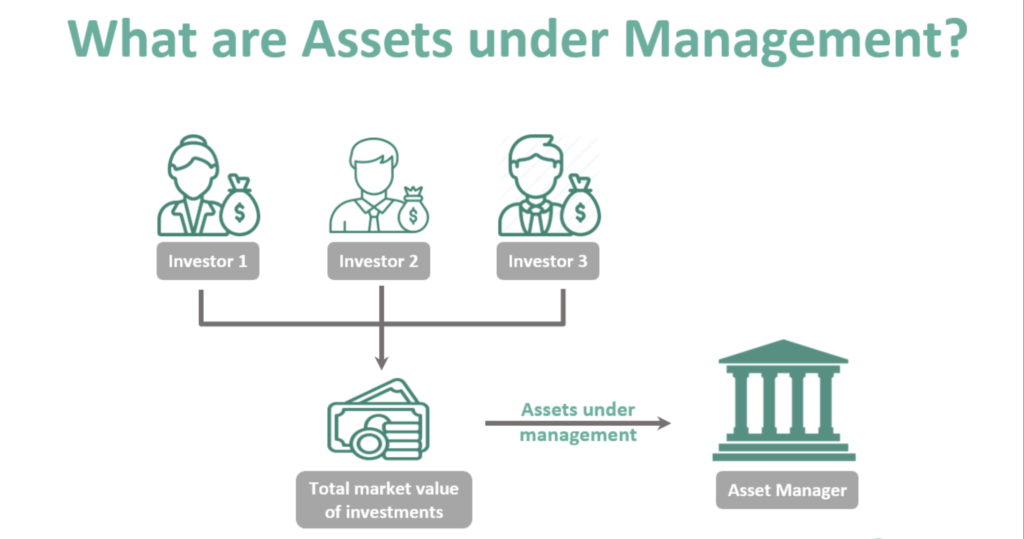
AUM refers to Assets Under Management, which is the total market value of investments managed by an investment manager/organization on behalf of their investor, with their consent. These assets can be anything, including stocks, bonds, mutual funds, ETFs, and other investment options.
The global asset under management (AUM) is expected to reach $200 trillion by 2030, growing at a CAGR of 6.2%. See the detailed market reports here.
How to calculate AUM?
It is calculated by adding the total current market value of all investments being managed.
AUM = ⅀ (Current Market Value of all Assets)
The formula, which is used to calculate the daily AUM value:
AUMtoday = AUMyesterday + Net Inflows + Market Profit/Losses
Here, net inflows are your new investments minus the redemptions, and market gains & losses are value changes of assets due to price movements.
How is your money turned into assets?
When you invest your money, it is converted into assets that are far more valuable than your paper money. These are the things bought with that money. And the value of these things keeps increasing faster than actual money. It can be anything, such as digital gold, ETFs, mutual funds, shares, stocks, and property.

Types of AUM Assets
As discussed above, your money can be converted into different types of assets by using it to buy various things. Let me tell you about some of them.
- Equities or Stocks: These are shares, or say you buy a certain percentage of a publicly traded company, including large-cap, mid-cap, and small-cap stocks.
- Debt Funds: These assets are essential components of mutual funds and emphasize fixed-income securities such as government bonds, corporate bonds, treasury bills, and marketable securities. They often have lower risks and a predictive outcome.
- Hybrid Funds: It is where investment managers diversify your money across assets like equities, debt, and sometimes even instruments like gold. It gives investors a wider portfolio and a good option for people choosing growth with less volatility.
- Thematic & Sectoral Investment: These are specified mutual funds for targeted industries or well-rounded investment themes. These have high growth potential but also come with significant risks due to condensed exposure. The risks are generally due to economic lows or sector-specific downfalls.
- IFs and ETFs: The index funds or exchange-traded funds are passive investments that track the performance of a specific market index. People like their simplicity and cost efficiency. Mostly, retailers and institutional investors prefer these investments.
- Alternative Investments: These investment approaches are different than traditional ones. Here you can invest in land, real estate, commodities, and gold. This can be used to diversify a portfolio, offer great returns over time, but comes with high risk.
Each of these investment types has more in-depth subcategories.
Factors that Affect AUM
The AUM value often keeps fluctuating; sometimes you gain, and sometimes you lose. There are different factors behind this, and some of them are listed below.
1. Market Graphs
The market often experiences upswings and downturns, and your underlying assets increase and decrease in value, respectively. Highly volatile assets such as stocks, commodities, crypto currencies etc can be frequently impacted.
2. Investor Activities
Here, AUM is affected by the investor’s action. Where there are inflows (new investments by investment) like buying new units, increasing capital, etc., the value of AUM increases. On the other hand, if there are outflows or redemptions by investors pulling out their money directly decreases the AUM.
3. Distribution
When a fund pays out dividends or interest, the AUM reduces, and if these payouts are compensated or reinvested, the value increases. When the funds with better performance outperform, the benchmarks tend to attract people to invest more, and this leads to increased AUM.
There are also some other factors, like sales and marketing. Different fund types, such as open-ended funds and different fund structures, also impact the AUM.
How do AUM Managers Earn?
You must be wondering if someone is using the brains and resources to invest your money, then what do they benefit? So here is how asset management companies make money.
These companies generally sell the investment solutions as products to their clients. They sell mutual funds, ETFs, and manage private accounts of other companies. In return, they either charge a fee or a percentage of assets under management.
The charges consider some factors such as investment type, asset class, investment sector, and transaction complexity. For instance, when an investment strategy involves a cultured process and tools like trading or taking short positions, then the clients can be charged a high fee.
Ongoing charge fee (OCF), performance fees, initial and exit charges, etc., are some charges incurred by companies that these agents charge to clients.


Types of Asset Management Companies
Different types of investment are managed by different specialized companies for the same purpose.
1. Mutual Fund Companies
These companies use the investor’s money to buy stocks, bonds, and other securities that align with the fund’s objective. These companies are best chosen by retail investors. The clients get fund units, and returns as per market performance.
2. Hedge Fund Companies
This is most opted for by high-net-worth people and institutional investors, where they use plans like leverage, short selling, and derivatives. The aim is to gain high returns in all sorts of market fluctuations. This involves high risk but has fewer regulatory restrictions.
3. Private Equity Firms
These are companies that invest directly in unlisted/private companies, or they pool capital from institutional investors and high-net-worth clients to take over, restructure, and improve private companies. Their goal is to increase their company’s worth over a period of time before selling it for a profit.
4. Real Estate Investment Trusts (REITs)
The firms invest in income-generating assets of real estate, like commercial spaces. The investors earn returns from real estate without actually owning the property. These corporations manage high-value real estate portfolios. Leasing, selling, and collecting rents, and later distributing among the shareholders as their incomes and dividends.
AUM vs. NAV
| Aspect | AUM | NAV |
|---|---|---|
| Meaning | Refer to as an asset under management, it is the total market value of all the assets managed by a firm. | Stands for net asset value, which is the net value of a fund equivalent to an investor’s equity. |
| Calculation | All assets of all funds (securities and cash) | Total assets minus total liabilities out of total outstanding units. |
| Usually refers to | Asset manager as a whole (total AUM of all funds) minus investor redemptions | Individual fund (based on per share or per fund) |
| It Indicates | It says a lot about the size of the asset manager, their position and trust among clients, performance gains, and experience | Tells about the share price (intrinsic value), and what is left is the liquidation value |
| Change Frequency | Fluctuates all day | Calculated at the end of the day |
Benefits of Asset Under Management
- Shows you trust and scalability, a higher AUM indicates that the fund or company is a trusted one. It reflects credibility, market position, and investor confidence.
- Larger AUM shows that fund managers can help you diversify your investments.
- When a company has bigger AUM, it can spread fixed costs for clients, which leads to lower expense ratios for investors.
- Fund houses with larger AUMs have better negotiating power and broader investment opportunities.
- Better AUM indicates the stability of a fund management company.
Conclusion
I hope this blog helped you understand what is AUM in finance. When you invest, you must know how and where the investment is happening. Learning and understanding about assets under management is the first step to doing so. We have discussed various aspects of it, such as types, risks involved, benefits, and how you can calculate AUM. I have also stated the clear difference between NAV and AUM, which often confuses investors. Keep reading, keep learning. And let me know in the comments, how you choose to invest your money?
Related: How Blockchain Can Transform the Financial Services Industry
You must be logged in to post a comment Login