You’ll undoubtedly have heard of Google Gemini, as it’s found within many of the best Android phones.
Essentially, Gemini is Google’s AI-powered virtual assistant that can do everything from answer questions, search the web and even create music. And it’s free to use too.
But what really is Google Gemini and how does it actually work? Which devices can you use Gemini on?
We explain everything you need to know about Gemini AI below. If you’re keen to see how Google’s assistant compares to some of the top dogs, then visit our Apple Intelligence vs Google Gemini and Claude vs Gemini comparisons too.
Advertisement
What is Gemini AI?
Gemini was officially announced back in February 2024, as Google revealed it would replace its previous AI system, Bard.
Advertisement
Although you might only know it as a chatbot, Gemini is actually the collective name for multiple AI models that fall under the same umbrella. However, the name “Gemini” refers to both the models and the public-facing chatbot.
Google Gemini
Essentially, Gemini is described as being the interface to a multiple modal LLM (Large Language Model) which can handle text, audio and image-based prompts. It’s based on Google’s research into LLMs which started back in 2013.
What can you do with Gemini?
Gemini can understand and answer user’s questions or their provided prompts with relevant results. For example, you can ask Gemini to create an email draft, summarise long-bodies of text and even write code.
Advertisement
Gemini can also be used to generate images, create videos and even music with just a simple prompt. In addition, with the use of Gemini Live which is found within the Gemini smartphone app, you can have in-depth conversations with the AI system in real-time too.
Advertisement
How does Gemini work?
Google breaks down the technicalities of how Gemini actually works into four stages:
Pre-training
Post-training
Responses to user prompts
Human feedback and evaluation
Google explains that its AI models are pre-trained on a “variety of data from publicly available sources”, although Google does disclaim that it applies “quality” and “safety filtering” to remove content that may violate policy.
After initial training, Google explains the LLMs are then put through additional steps to refine responses. Then there’s Reinforcement Learning from Human Feedback, where the model learns to generate better responses based on “scores or feedback from a special Reward model” that’s trained on human preference data.
Once Gemini is then given a prompt by a user, it will call on its training and use external sources like Google Search to generate relevant responses.
Advertisement
In the instance where Gemini gets something wrong or needs tweaking, then this is where the fourth stage kicks in. Basically, it relies on humans to flag any mistakes and identify areas for improvement too.
Advertisement
Gemini Live. Image Credit (Trusted Reviews)
How to access Google Gemini
There are a few ways you can access Gemini, with the main being via its free-to-download iOS or Android app. That’s probably the easiest way to access the chatbot, and you’ll benefit from access to Gemini Live too.
Otherwise, you can access the chatbot via its website instead.
Does Google Gemini cost money?
While Gemini is free to use, you can unlock more features and up-to-date models by paying a subscription. At the time of writing, while the free version of Gemini runs on Gemini 3, you can upgrade to Google AI Plus to access Google’s most capable 3.1 Pro model. Not only that, but you’ll have access to Nano Banana Pro, alongside limited access to Google’s new video generator Veo 3.1, Gemini within Google apps and 200GB storage too. That’s the cheapest of the available plans, at £6.99/$7.99 a month.
Advertisement
The next available plan is Google AI Pro, which includes everything found in Plus, alongside Google Home Premium (Standard), Fitbit Premium and access to Google Antigravity and Google Developer Programme Premium. This is slightly pricier at £18.99/$19.99 a month, but you will also see 2TB of storage too.
Advertisement
Finally, the top-tier plan is Google AI Ultra, which will set you back a whopping £234.99 a month. However, you’ll get everything from the Pro plan, plus the highest limits for all Gemini features and models, YouTube Premium, Google Home (Premium Advanced) and 30TB of storage too.
Opening Day doesn’t ask for permission. It just shows up with crisp air, misguided optimism, and 30 teams convincing themselves this is finally the year. Baseball still sells the lie better than anyone, and Hollywood has been riding shotgun on that con for decades; from Bull Durham to Moneyball, reminding us that the game is never just about the game. It’s about belief, failure, and the slow realization by mid-June that your bullpen is a crime scene.
Which brings us to audio, where this week’s more interesting question isn’t whether people are fooled by price tags and polished aluminum. It’s whether we actually hear differently with our eyes open or closed. A recent study raises that very question, and it’s a good one. Does shutting out visual input sharpen focus, improve spatial perception, or change the way we process music in a meaningful way?
Audiophiles have been treating that like gospel for years, but now science is at least poking around the edges instead of leaving the whole thing to late night forum theology. Turns out “close your eyes and listen” may not just be ritual. There might be something real going on there, which is both fascinating and mildly annoying for anyone who thought posture in the chair was the whole game.
Meanwhile, Sennheiser sits in limbo, waiting to see who picks up the tab and what kind of future they’re buying. We’ve seen this movie before; sometimes it ends with innovation, sometimes with accountants slowly draining the life out of something that used to matter. For a brand that helped define personal audio, the next move isn’t just business, it’s legacy. And those don’t always survive the handoff.
Advertisement
Sennheiser HD600 Open-back Headphones
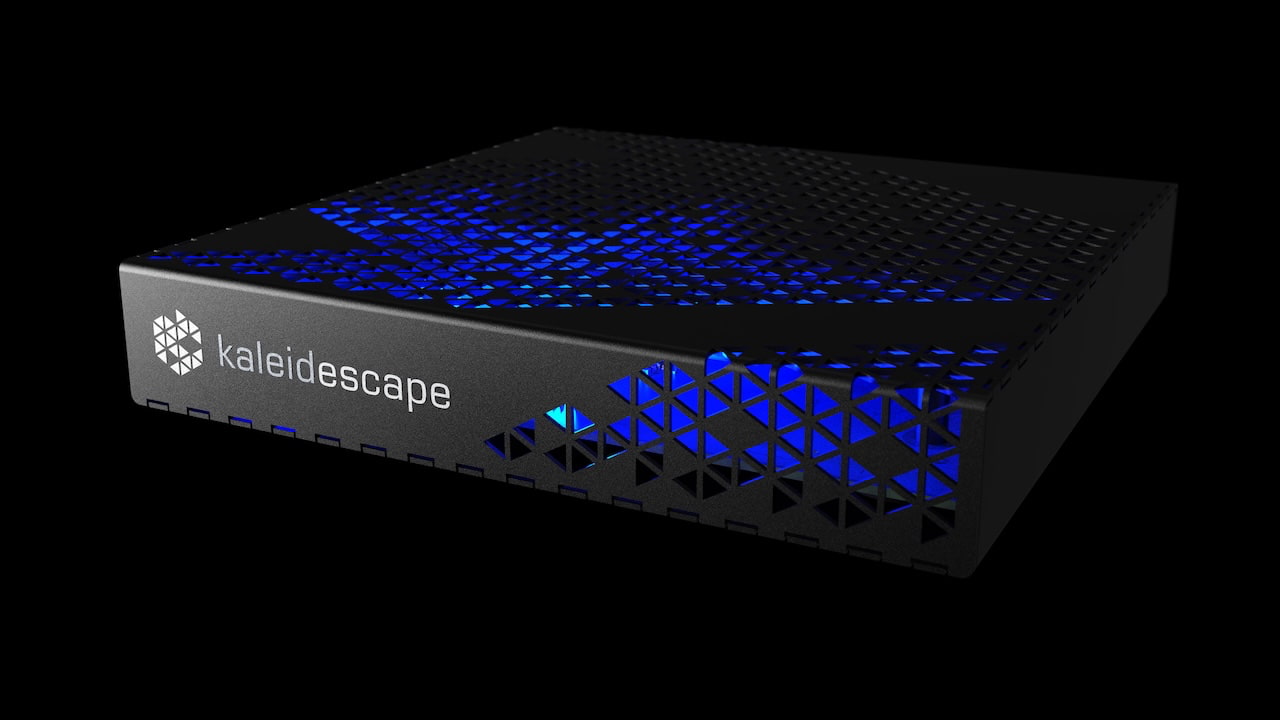
And then there’s Kaleidescape, quietly turning 25 while the rest of the industry chases streaming like it’s the only game in town. They’re still selling ownership in a world obsessed with access. Physical media without the fingerprints. No buffering, no licensing roulette, no “sorry, not available in your region.” It’s stubborn. It’s expensive. It also works.
Four stories. Same problem, different crime scenes. Opening Day is all sunshine and bad decisions waiting to happen. Sennheiser is stuck in a back room while someone else counts the money. Kaleidescape keeps selling ownership in a world hooked on rentals. And in audio, we’re finally asking whether something as simple as opening or closing your eyes changes what you actually hear.
Different games, same angle: perception isn’t clean. It’s messy, conditional, and easy to manipulate. Change the setup, change the outcome. And that gap between what you think is happening and what actually is? That’s where the bodies usually end up.
Opening Day Lies, Hollywood Truths, and the Long Season Ahead
Winter didn’t leave quietly; it got shoved out the door with a great deal of relief in 2026. One day you’re scraping ice off the windshield, the next you’re standing in sunlight that actually feels like something. Opening Day has that effect. It resets the mood whether you asked for it or not.
Up in Toronto, the Toronto Blue Jays aren’t pretending this is just another start. They’re carrying October with them; the kind of loss that sticks because it came down to feet, inches, and a stuck baseball against the Los Angeles Dodgers. That doesn’t fade over the winter. It sits there, waiting for the first pitch to give it somewhere to go.
Even if your head is still buried in the NHL standings, counting down to the Stanley Cup Playoffs, you can feel the shift. Fans of the New York Rangers, Toronto Maple Leafs, Florida Panthers, and New Jersey Devils already know how this ends—no parade, no miracle run, just a quiet exit and a long offseason.
Advertisement
Which means it might be time to start pretending you always cared about the New York Yankees, New York Mets, Toronto Blue Jays, Philadelphia Phillies, or Florida Marlins. Baseball doesn’t ask questions. It just hands you a clean slate and lets you pencil in the score and avoid those texts from the boss.
Advertisement. Scroll to continue reading.
And when it does, it brings the details the other sports can’t fake. The smell of real grass. The way an open-air stadium breathes compared to an arena. I’ve played on astroturf; it’s faster, cleaner, and completely soulless. Give me dirt under my cleats and a bad hop off third any day. New hats are already here, Tigers and Blue Jays, because this is the one sport where you buy in before you know better.
It’s also the only game that Hollywood keeps coming back to. More movies than any other sport, and not by accident. Baseball understands something the others don’t: the season is long, the failure is constant, and the story always feels bigger than the box score.
Advertisement
Five Baseball Movies That Still Get It Right (Even When the Game Doesn’t)
Bull Durham
This one never gets old because it doesn’t pretend baseball is clean or noble. It’s messy, repetitive, and full of people trying to hang on a little longer than they probably should. Crash Davis talking about “the church of baseball” still lands because every fan knows exactly what he means, even if they won’t admit it out loud. And “I believe in long, slow, deep, soft, wet kisses…” is a speech has nothing to do with baseball and somehow everything to do with it. It works because it understands the grind, the failure, and the weird romance of a game that doesn’t love you back sometimes.
The Natural
Total myth. Completely unrealistic. Still works every single time. Roy Hobbs stepping into the light with that bat feels like something bigger than the sport, and when he says, “I just want to say… I’m sorry,” you realize this isn’t about winning. It’s about redemption, or at least the illusion of it. The final swing, the sparks, the music, it’s over the top, but baseball has always had room for legends that don’t quite make sense. Long live the War Memorial and that ball that never came back down.
Advertisement
The Sandlot
https://www.youtube.com/watch?v=D0a3jkcTAe4
This is the one that sneaks up on you. You think it’s a kids’ movie until you realize it’s about memory, time, and everything you don’t get back. “You’re killing me, Smalls” became a joke, but it stuck because everyone knew a Smalls. And “Heroes get remembered, but legends never die” hits differently once you’re not a kid anymore. It works because it reminds you why you fell in love with the game before stats, contracts, and $32 beers got in the way; yes, even in the bleachers at Camden Yards, where nostalgia now comes with a receipt. And not even a decent bratwurst.
42
No nostalgia here. Just pressure and consequences. “I’m looking for a ballplayer with guts enough not to fight back” isn’t just a line—it’s the entire weight of what Jackie Robinson had to carry. The film works because it doesn’t try to make it comfortable. It shows what the game looked like when it actually mattered beyond the scoreboard, and why some players had to be more than just players in order to completely change the sport.
Advertisement
And shame on those of us who haven’t shown the same respect to the Negro Leagues Baseball Museum. We celebrate the story when Hollywood tells it, nod along when 42 reminds us what it cost, and then go right back to ignoring where that history actually lives. If you care about baseball, really care, not just box scores and nostalgia—you owe that place a visit in Kansas City, Missouri.
Moneyball
This one shouldn’t work as well as it does. It’s mostly conversations, spreadsheets, and people arguing in rooms. But “He gets on base” became a punchline for a reason. And when Billy Beane says, “If we win with this team, we’ll have changed the game,” you know it’s not just about baseball. It’s about control, or chasing it, in a system designed to remind you that you don’t have much. It works because it strips the game down to what wins and what doesn’t and then shows you how little that guarantees. Just ask the Blue Jays about that one.
Eyes Open or Closed? Science Just Complicated Your Listening Ritual
A new study reported by the American Institute of Physics and published in the Journal of the Acoustical Society of America takes a flamethrower to one of audio’s oldest habits: closing your eyes to “hear better.”
Advertisement
Turns out, that instinct might be working against you.
Researchers at Shanghai Jiao Tong University tested how people detect faint sounds in noisy environments under different visual conditions—eyes closed, eyes open with nothing to look at, and then with images or video that matched the sound. The result? Closing your eyes didn’t sharpen hearing; it made it worse. Participants actually struggled more to detect faint sounds with their eyes closed, while relevant visual cues made it easier to hear what mattered.
Research participants listened for faint sounds over audio noise. They could hear those sounds much better when they could open their eyes and watch videos or even still photos matching the sounds they were trying to hear. Credit: Yu Huang
The why is where it gets interesting. Brain scans showed that closing your eyes pushes the brain into a state of aggressive filtering, which might be great for blocking noise, not so great when it also filters out the signal you’re trying to hear. In other words, your brain gets a little too confident and starts throwing out the good stuff with the bad.
Advertisement. Scroll to continue reading.
Advertisement
Even more telling: the biggest improvement didn’t come from just having your eyes open, it came from seeing something that matched the sound. A video synced to the audio gave the brain a target, anchoring what it should be paying attention to. That’s not just hearing—that’s multisensory teamwork.
There’s a catch, of course. In a quiet room, the old advice still holds; closing your eyes can help you focus on subtle sounds. But in the real world, where HVAC systems hum, traffic never stops, and someone is always talking, keeping your eyes open might actually give you the edge.
So now the uncomfortable part—the questions this raises:
If visual input improves hearing in noise, what exactly are we doing when we sit in a dark room trying to “critically listen”?
Are we training ourselves to hear differently…or just removing useful information?
Does a two channel system without visual cues put us at a disadvantage compared to live music or even video based playback?
And the big one—how much of what we think we hear is actually shaped by what we see, expect, or believe is happening?
For a hobby built on the idea of control and precision, this is the kind of study that messes with the narrative. Not destroys it—but definitely pokes a few holes in it.
How do you listen?
Advertisement
Kaleidescape at 25: The Long Game Finally Pays Off
I’m not going to pretend this one is neutral. Seeing Kaleidescape hit 25 years actually makes me happy and a little relieved. Because there were plenty of moments where it felt like they weren’t going to make it. Wrong business model, wrong timing, too expensive, too stubborn. Pick your criticism. Meanwhile, the rest of the industry sprinted toward streaming like it was the only exit in a burning building.
And yet…here we are.
What Kaleidescape figured out early and refused to abandon, is something most people are just starting to realize: access isn’t ownership. Streaming is convenient, sure. Until your favorite film disappears. Until the bitrate collapses during the one scene that matters. Until the version you bought quietly changes because someone upstream decided it should. Kaleidescape doesn’t play that game. You get full-bitrate video, lossless audio, and a library that doesn’t vanish overnight because of licensing roulette. It’s not about convenience. It’s about control.
Kaleidescape Strato V is a 4K Movie Player
For someone like me with close to 3,800 physical films staring back at me like a second mortgage, that actually matters. The idea of consolidating even a portion of that into a system that actually respects the material? That’s not a luxury, it’s a solution. Yes, I’m fully aware I’ll have to pay again to build out a digital library on their platform. No, I’m not thrilled about it. But also…complaining about curating 1,000 of my favorite films into a system that preserves them properly feels like a first-world problem in the most literal sense. There are bigger things happening in the world than whether my copy of Double Indemnity streams in Dolby Vision at the right bitrate.
Advertisement
Kaleidescape exists for people who care about movies as objects, not just content. People who want the best version, every time, without compromise or excuses. People who understand that “good enough” is usually neither.
People like “Leia” who is the real authority in the room and their logical target customer. My ultimate movie-watching partner from across the galaxy; equal parts film historian and ruthless critic. She doesn’t care about specs, marketing, or what some influencer said last week. She knows what holds up and what doesn’t. Her taste in cinema would embarrass most critics, and frankly, most of you. Also better taste in shoes, food, and furniture. Not even close. Golden hair that would make Michelle Pfeiffer reconsider everything, pack it in, stay in Montana, and quietly dunk her head in the Madison like she just lost an argument she didn’t know she was having with Kurt.
Kaleidescape makes sense for people like that. People who don’t want to hunt for a film across five apps or settle for whatever version happens to be available that night. It’s a system built for commitment—to the medium, to the experience, and to the idea that some things are worth doing right the first time.
Advertisement. Scroll to continue reading.
Advertisement
Twenty-five years later, that doesn’t look stubborn anymore. It looks like they were right.
Sennheiser’s Future Is for Sale and Nobody Should Feel Comfortable About That
Earlier this week, I wrote that this wasn’t a shutdown, it’s an exit. And that distinction matters. Sennheiser isn’t disappearing tomorrow, but its consumer division is officially back on the market as Sonova refocuses on what it actually understands: hearing aids and medical tech.
Sennheiser HD 414 Headphones (circa 1968)
This is the second ownership shakeup in just a few years, and that’s not exactly how you build confidence in a brand that’s supposed to represent stability, engineering, and long term thinking. Sonova bought the business in 2022, decided it didn’t fit, and now wants out. That’s not strategy, that’s a reset button with consequences.
And then there was CanJam NYC 2026. I’ve seen Sennheiser booths for decades. They’re usually tight, focused, and intentional. This one felt scattered. Disorganized. Like nobody was fully in charge of the narrative. For a legacy brand that helped define the category, that should never happen, especially not at the one show where personal audio is the entire conversation.
Looking at it now, Axel Grell walking away and launching his own thing feels less like a side project and more like the right move at exactly the right time. If you’ve been paying attention to how fast the headphone and IEM world is moving in 2026, new players, faster cycles, more aggressive pricing, Sennheiser hasn’t exactly been leading that charge. And in this category, standing still is just a slower way of falling behind.
Advertisement
Axel Grell at CanJam SoCal 2023 previewing prototype OAE1 headphone.
If Sennheiser doesn’t survive this intact, it’s not just another brand disappearing. It’s one of the pillars. The HD 600 series alone carries more weight than entire product lines from other companies. Losing that kind of legacy would hit the industry harder than people want to admit.
But let’s be honest, this wouldn’t be the first time a legacy brand failed to adapt to a market that stopped waiting for it. And it won’t be the last.
So now we wait. Strategic buyer? Tech giant? Private equity with a spreadsheet and a stopwatch?
Or someone who actually understands why this brand mattered in the first place.
Because if this ends with the wrong owner, don’t call it evolution. Call it what it is: ordentlich vermasselt.
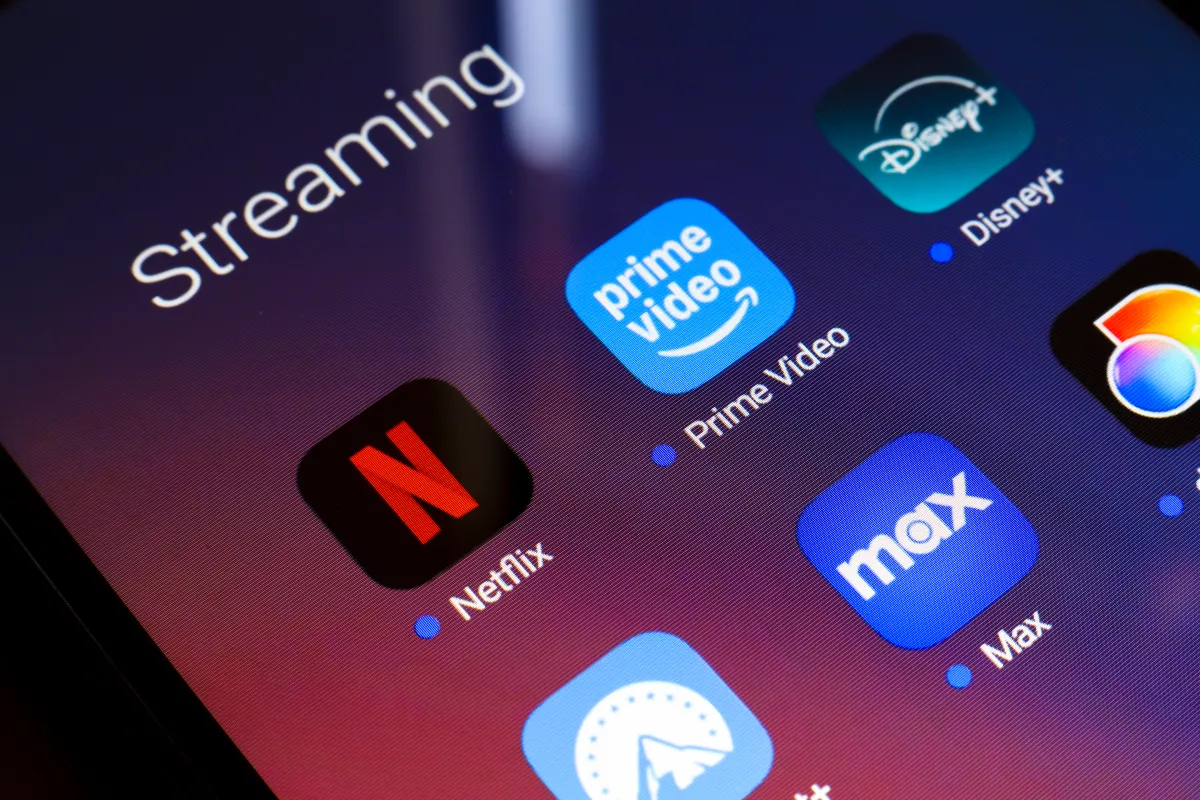
Netflix has quietly hiked its prices once again. The streaming giant’s most affordable, ad-supported tier now costs $8.99 per month, up from the previous $7.99 monthly subscription fee, Netflix confirmed to TechCrunch in an email.
The standard plan without ads also now costs $19.99 per month, a $2 increase from the previous $17.99 subscription fee, while the premium plan is also going up by $2 and will now cost $26.99 per month.
It’s also getting more expensive to add extra viewers outside of your household. To add a user to an ad-supported plan, it now costs $6.99 instead of $7.99. If you’re adding an extra viewer to an ad-free plan, it now costs $9.99 as opposed to $8.99.
The company told TechCrunch that the changes are designed to reflect improvements to its “wide range of entertainment” and the quality of its service.
Netflix says new members who sign up will see the new plan prices from March 26, while existing subscribers will see the updated prices roll out over the coming months. Existing members will be notified by email a month before the new prices are applied to them.
Netflix last raised prices in January 2025. Since then, the company has updated its platform with a series of new additions, including the rollout of video podcasts as well as more livestreaming content. The company also recently announced plans to revamp its mobile app and expand its short-form video feature.
Techcrunch event
Advertisement
San Francisco, CA | October 13-15, 2026
The new increases come as Netflix last month backed out of a bid for Warner Bros. Discovery.
Advertisement
Warner Bros. Discovery had announced that Paramount Skydance’s offer of $31 a share was a “superior proposal” and had given Netflix four business days to counter. Netflix then said it would not raise its $82.7 billion all-cash bid for the studio, ultimately walking away from the deal.
Increasing prices across the board are becoming a plague now, fueled by everything from tariffs to wars to the AI industry’s devouring of hardware components. Sony’s PlayStation hardware is the latest to get an increase, according to a blog post from the company on Friday. It’s the second such hike, in fact, after 2025’s price bumps.
The price increases take effect on Thursday, April 2, so now’s the time to get one of Sony’s consoles before they go up. The increases are pretty significant:
My big question is, who would ever pay $900 for a game console? And who will even pay $600 for a console that’s now almost six years old? While the PlayStation 5 has had a lot of wonderful games, sales declined last holiday compared to the year before. Gaming hardware increasingly feels like a luxury now, and I wonder how many people will continue to indulge in it versus just using whatever hardware they already have instead.
Within a 6 mile radius of New York University’s (NYU) campus, there are more than 500 tech industry giants, banks, and hospitals. This isn’t just a fact about real estate, it’s the foundation for advancing quantum discovery and application.
While the world races to harness quantum technology, NYU is betting that the ultimate advantage lies not solely in a lab, but in the dense, demanding, and hyper-connected urban ecosystem that surrounds it. With the launch of its NYU Quantum Institute (NYUQI), NYU is positioning itself as the central node in this network; a “full stack” powerhouse built on the conviction that it has found the right place, and the right time, to turn quantum science into tangible reality.
Proximity advantage is essential because quantum science demands it. Globally, the quest for practical quantum solutions — whether for computing, sensing, or secure communications — has been stalled, in part, by fragmentation. Physicists and chemical engineers invent new materials, computer scientists develop new algorithms, and electrical engineers build new devices, but all three often work in isolated academic silos.
Advertisement
Gregory Gabadadze, NYU’s dean for science, NYU physicist and Quantum Institute Director Javad Shabani, and Juan de Pablo, Anne and Joel Ehrenkranz Executive Vice President for Global Science and Technology and executive dean of the Tandon School of Engineering.Veselin Cuparić/NYU
NYUQI’s premise is that breakthroughs happen “at the interfaces between different domains,” according to Juan de Pablo, Executive Vice President for Global Science and Technology at NYU and Executive Dean of the NYU Tandon School of Engineering. The Institute is built to actively force those necessary collisions — to integrate the physicists, engineers, materials scientists, computer scientists, biologists, and chemists vital to quantum research into one holistic operation. This institutional design ensures that the hardware built by one team can be immediately tested by software developed by another, accelerating progress in a way that isolated departments never could.
NYUQI’s premise is that breakthroughs happen at the interfaces between different domains. —Juan de Pablo, NYU Tandon School of Engineering
NYUQI’s integrated vision is backed by a massive physical commitment to the city. The NYUQI is not just a theoretical concept; its collaborators will be housed in a renovated, million-square-foot facility in the heart of Manhattan’s West Village, backed by a state-of-the-art Nanofabrication Cleanroom in Brooklyn serving as a high-tech foundry. This is where the theoretical meets physical devices, allowing the Institute to test and refine the process from materials science to deployment.
NYUQI will be housed in a renovated, million-square-foot facility in the heart of Manhattan’s West Village.Tracey Friedman/NYU
Leading this effort is NYUQI Director Javad Shabani, who, along with the other members, is turning the Institute into a hub for collaboration with private and public sector partners with quantum challenges that need solving. As de Pablo explains, “Anybody who wants to work on quantum with NYU, you come in through that door, and we’ll send you to the right place.” For New York’s vast ecosystem of tech giants and financial institutions, the NYUQI offers a resource they can’t build on their own: a cohesive team of experts in quantum phenomena, quantum information theory, communication, computing, materials, and optics, and a structured path to applying theoretical discoveries to advanced quantum technologies.
Advertisement
Solving the Challenge of Quantum Research
The NYUQI’s integrated structure is less about organizational management, and more about scientific requirement. The challenge of quantum is that the hardware, the software, and the programming are inherently interconnected — each must be designed to work with the other. To solve this, the Institute focuses on three applications of quantum science: Quantum Computing, Quantum Sensing, and Quantum Communications.
For Shabani, this means creating an integrated environment that bridges discovery with experimentation, starting with the physical components all the way to quantum algorithm centers. That will include a fabrication facility in the new building in Manhattan, as well as the NYU Nanofab in Brooklyn directed by Davood Shahjerdi. New York Senators Charles Schumer and Kirsten Gillibrand recently secured $1 million in congressionally-directed spending to bring Thermal Laser Epitaxy (TLE) technology — which allows for atomic-level purity, minimal defects, and streamlined application of a diverse range of quantum materials — to NYU, marking the first time the equipment will be used in the U.S.
NYU Nanofab manager Smiti Bhattacharya and Nanofab Director Davood Shahjerdi at the nanofab ribbon-cutting in 2023. The nanofab is the first academic cleanroom in Brooklyn, and serves as a prototyping facility for the NORDTECH Microelectronics Commons consortium.NYU WIRELESS
Tight control over fabrication, and can allow researchers to pivot quickly when a breakthrough in one area — say, finding a cheaper, more reliable material like silicon carbide — can be explored for use across all three applications, and offers unique access to academics and the private sector alike to sophisticated pieces of specialty equipment whose maintenance knowledge and costs make them all-but-impossible to maintain outside of the right staffing and environment.
The NYU Nanofab is Brooklyn’s first academic cleanroom, with a strategic focus on superconducting quantum technologies, advanced semiconductor electronics, and devices built from quantum heterostructures and other next-generation materials.NYU Nanofab
That speed and adaptability is the NYUQI’s competitive edge. It turns fragmented challenges into holistic solutions, positioning the Institute to solve real-world problems for its New York neighbors—from highly secure data transmission to next-generation drug discovery.
Advertisement
The integrated approach also makes the NYUQI a testbed for the most critical near-term applications. Take Quantum Communications, which is essential for creating an “unhackable” quantum internet. In an industry first, NYU worked with the quantum start-up Qunnect to send quantum information through standard telecom fiber in New York City between Manhattan and Brooklyn through a 10-mile quantum networking link. Instead of simulating communication challenges in a lab, the NYUQI team is already leveraging NYU’s city-wide campus by utilizing existing infrastructure to test secure quantum transmission between Manhattan and Brooklyn.
The NYUQI team is already leveraging NYU’s city-wide campus by utilizing existing infrastructure to test secure quantum transmission between Manhattan and Brooklyn.
This isn’t just theory; it is building a functioning prototype in the most demanding, dense urban environment in the world. Real-time, real-world deployment is a critical component missing in other isolated institutions. When the NYUQI achieves results, the technology will be that much more readily available to the massive financial, tech, and communications organizations operating right outside their door.
NYUQI includes a state-of-the-art Nanofabrication Cleanroom in Brooklyn serving as a high-tech foundry.NYU Tandon
While the Institute has built the physical infrastructure and designed the necessary scientific architecture, its enduring contribution will be the specialized workforce it creates for the new quantum economy. This addresses the market’s greatest deficit: a lack of individuals trained not just in physics, but in the integrated, full-stack approach that quantum demands.
Advertisement
By creating a pipeline of 100 to 200 graduate and doctoral students who are encouraged to collaborate across Computing, Sensing, and Communications, the NYUQI is narrowing the skills gap. These will be future leaders who can speak the language of the physicist, the materials scientist, and the engineer simultaneously. This commitment to interdisciplinary talent is also fueled by the launch of the new Master of Science in Quantum Science & Technology program at NYU Tandon, positioning the university among a select group worldwide offering such a specialized degree.
Interdisciplinary education creates the shared language and understanding poised to make graduates coming from collaborations in the NYUQI extremely valuable in the current landscape. Quantum challenges are not just technical; they are managerial and philosophical as well. An engineer working with the NYUQI will understand the requirements of the nanofabrication cleanroom and the foundations of superconducting qubits for quantum computing, just as a physicist will understand the application needs of an industry partner like a large financial institution. In a field where the entire team must be able to communicate seamlessly, these are professionals truly equipped to rapidly translate discovery into deployable technology. Creating a talent pipeline at scale will provide a missing link that converts New York’s vast commercial energy into genuine quantum advantage.
NYUQI: Building Talent, Technology, and Structure
The vision for the NYUQI is an act of strategic geography that plays directly into the sheer volume of opportunity and demand right outside their new facility. By building the talent, the technology, and the structure necessary to capitalize on this dense environment, NYU is not just participating in the quantum race, it is actively steering it.
Attendees of NYU’s 2025 Quantum Summit.Tracey Friedman/NYU
The initial hypothesis for the NYUQI was simple: the ultimate advantage lies in pursuing the science in the right place at the right time. Now, the institute will ensure that the next wave of scientific discovery, capable of solving previously intractable problems in finance, medicine, and security, will be conceived, built, and tested in the heart of New York City.
Love them or hate them, inkjets are still a very popular technology for putting text and images on paper, and with good reason. They work and are inexpensive, or would be, if not for the cartridge racket. There’s a bit of mystery about exactly what’s going on inside the humble inkjet that can be difficult to describe in words, though, which is why [Dennis Kuppens] recently released his Interactive Printing Simulator.
[Dennis] would likely object to that introduction, however, as the simulator targets functional inkjet printing, not graphical. Think traces of conductive ink, or light masks where even a single droplet out-of-place can lead to a non-functional result. If you’re just playing with this simulator to get an idea of what the different parameters are, and the effects of changing them, you might not care. There are some things you can get away with in graphics printing you really cannot with functional printing, however, so this simulator may seem a bit limited in its options to those coming from the artistic side of things.
You can edit parameters of the nozzle head manually, or select a number of industrial printers that come pre-configured. Likewise there are pre-prepared patterns, or you can try and draw the Jolly Wrencher as the author clearly failed to do. Then hit ‘start printing’ and watch the dots get laid down.
[Dennis] has released it under an AGPL-3.0 license, but notes that he doesn’t plan on developing the project further. If anyone else wants to run with this, they are apparently more than welcome to, and the license enables that.
Mastodon is making changes in the hopes of making its social networking service more appealing and easier to use, especially for more mainstream users looking for an alternative to X or Threads.
On Thursday, the decentralized social networking software maker said it’s redesigning a key part of its platform by giving people’s user profiles a new look, which it hopes will appeal to organizations, as well as individuals.
Built on the ActivityPub protocol, Mastodon became better known after Elon Musk acquired Twitter, now called X, which led some to seek alternatives. The platform’s appeal is its decentralized nature, meaning a single company doesn’t have control of the algorithm, and users can move their accounts if they don’t like how a particular server operates or moderates its community.
However, this system is also more complicated compared with signing up for a traditional social network like X. On Mastodon, users have to pick a server to join and have different timelines (local and federated), which can be confusing to newcomers. The process for following others on the service can be cumbersome, too.
Advertisement
That’s left Mastodon struggling to pick up more users, numbers that now hover at around 800,000 monthly actives, down from a million at the height of the Twitter drama.
Mastodon has been working in more recent months to address various pain points that could alienate users. In February, it simplified the onboarding process and added other features users expect, like Quote Posts or “starter packs” called Collections.
Now it’s tackling user profiles. The revamped version makes several changes, many of which are visual in nature.
What’s changing
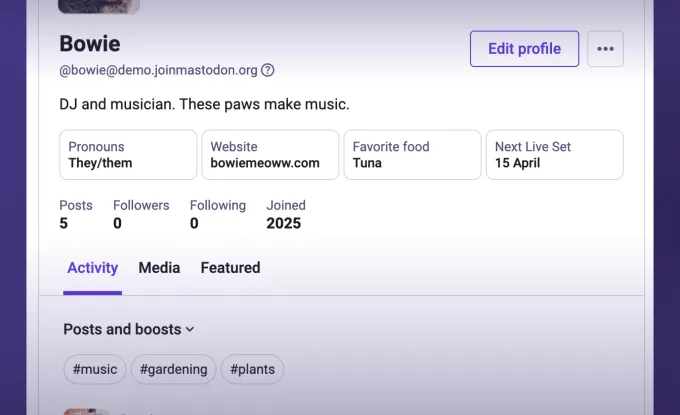
Instead of offering two views of a person’s posts (“posts” or “posts and replies”), similar to X, profiles feature just one “Activity” tab with a dropdown menu. This lets users configure other combinations of posts, by toggling on or off replies and boosts — the latter being Mastodon’s version of the repost.
Advertisement
Hashtags also now appear at the top of this Activity tab, allowing users to filter the posts on that account by the tag they click on.
Image Credits:Mastodon
Mastodon also ditched the pinned posts carousel, which many users didn’t like. The feature was meant to balance the needs of those who wanted to pin several posts, with the needs of those visiting a profile to quickly get to the user’s recent posts. Now Mastodon users with multiple pinned posts will have one featured, while the rest can be revealed by clicking on a new “View all pinned posts” button.
Another change is designed to explain Mastodon handles to newcomers. Unlike on X or Threads, where users are just @username, Mastodon handles have two @’s in them — one referencing their account name and the other their server’s name. A new informational pop-up explains this.
Image Credits:Mastodon
Users have more control over how their profile appears, too, with options to hide the “Media” or “Featured” tabs, if desired, or hide replies from their “Media” tab if they want to showcase their work.
Custom fields on the profile, where users add things like links, pronouns, and other information, are displayed side by side, which means there’s more vertical space available on the screen. These fields can now be modified on iOS and Android, too, not just the web.
Image Credits:Mastodon
Other tweaks to the design make profiles seem less cluttered — like the removal of a “following you” badge and moving the optional “personal note” users add to their profiles to an overflow menu.
Profile edits can now all be done from one place in the account settings, allowing users to manage tasks like their featured hashtags (which Mastodon helpfully now suggests), links, and other profile information.
Advertisement
Image Credits:Mastodon
Link verification — which is Mastodon’s tool to establish someone’s credibility without becoming a centralized authority (or requiring payment, as on X) — is no longer buried in settings. Users can crop and add alt text to their profile images and cover photos.
The changes will initially be available to the mastodon.social server and other servers that opt to run the nightly build. More servers will get the update when the Mastodon 4.6 software update arrives in a few weeks.
Omnissa’s 2026 State of Digital Workspace report outlines the IT challenges that various organizations face from the growing use of AI and the heterogeneous deployment of enterprise devices. The relative instability of Windows and Android is a recurring theme throughout the report. Read Entire Article Source link
The European Commission, the European Union’s main executive body, is investigating a security breach after a threat actor gained access to its Amazon cloud infrastructure.
Although the EU’s executive cabinet has yet to disclose the incident publicly, BleepingComputer has learned that the breach affected at least one account used to manage the compromised cloud infrastructure.
Sources familiar with the incident have told BleepingComputer that the attack was quickly detected and that the Commission’s cybersecurity incident response team is now investigating.
While the Commission has yet to share any details about this breach, the threat actor who claimed responsibility for the attack reached out to BleepingComputer earlier this week, stating that they had stolen over 350 GB of data (including multiple databases).
Advertisement
They didn’t disclose how they breached the affected accounts, but they provided BleepingComputer with several screenshots as proof that they had access to information belonging to European Commission employees and to an email server used by Commission employees.
The threat actor also told BleepingComputer that they will not attempt to extort the Commission using the allegedly stolen data as leverage, but intend to leak the data online at a later date.
The Commission disclosed another data breach in February after discovering on January 30 that the mobile device management platform used to manage its staff’s devices had been hacked.
The January incident appears to be linked to similar attacks targeting other European institutions (including the Dutch Data Protection Authority and Valtori, a government agency of Finland’s Ministry of Finance) that exploit code-injection vulnerabilities in Ivanti Endpoint Manager Mobile (EPMM) software.
Advertisement
These recent security breaches come on the heels of the Commission’s January 20 proposal for new cybersecurity legislation to strengthen defenses against state-backed actors and cybercrime groups targeting Europe’s critical infrastructure.
When it comes to AI chatbots, there’s currently a war on for consumer attention. All the big chatbot providers are looking to increase their user count and, in a minor coup for itself, Google just made it significantly easier for users of those other chatbots to defect to Gemini.
On Thursday, the company announced what it calls “switching tools,” new widgets that are designed to allow users to transfer “memories” (basically chunks of personal information) and even entire chat histories from other chatbots directly into Gemini. Users can easily share “key preferences, relationships, and personal context” in this way, the company says.
The idea is to make it significantly easier to adopt Google’s AI assistant, as users won’t have to spend large amounts of time re-training Gemini on who they are and what they want.
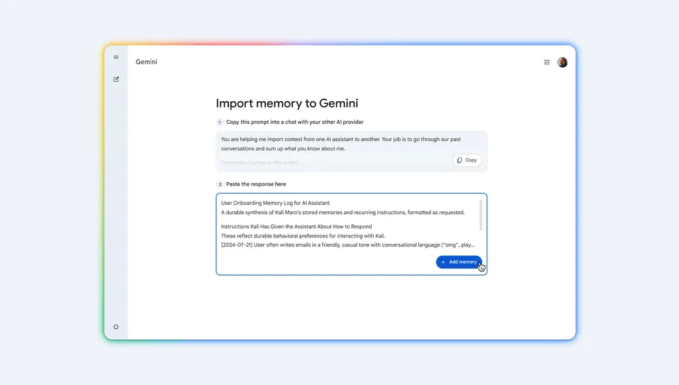
The memory feature works like this: Gemini will suggest a prompt that the user can enter into their current chatbot, which will then generate a response that can be copied and pasted back into Gemini. In this fashion, Gemini coaches the user on what kinds of information it would be helpful to know about them, while also helping facilitate the transmission of that information back into its own archive.
Advertisement
Image Credits:Gemini
“Once you import these memories, Gemini will understand the same key facts you’ve shared with other apps, like your interests, your sibling’s name, or where you grew up,” the company says. “Instead of starting over from scratch, you can quickly get Gemini up to speed on what matters most to you.”
When it comes to importing chat histories, Google says that all you need is to upload them in a zip file. It’s relatively easy to export chat logs via zips from most chatbots — including from ChatGPT and Claude. This allows users to “seamlessly pick up right where you left off,” the company says. Google says users also have the ability to search through those old chats.
ChatGPT remains the big kahuna in the consumer chatbot market, with OpenAI announcing last month that it has reached 900 million weekly active users. Gemini — despite Google’s vast distribution advantages, including its default placement across Android devices and the Chrome browser — has lagged in consumer mindshare. Last month, it shared its own numbers during Alphabet’s fourth-quarter earnings call, saying Gemini had surpassed 750 million monthly active users. This move is clearly aimed at helping Google catch up.
There were two questions I was looking to answer as I fired up MLB The Show 26. First, how much does the game cater to a baseball newbie like me? Second, will it keep me hooked enough to keep playing after my first few games?
I think it’s important to share some personal context. I have very limited experience with baseball. I have been to one MLB game, which was on my first visit to Canada as a teen. The lead-off Toronto Blue Jays hitter scored a home run on his first at-bat. Fireworks went off and everyone was going wild. Fun!
But that was the only score of the whole game. My dad and I (both lifelong soccer fans, for what it’s worth) were bored lifeless for the rest of the three hours.
An incredible run of a dog playing a baseball game at Games Done Quick aside, I had no real interest in the sport for the next couple of decades until the Blue Jays made a deep run into the 2025 playoffs. This time, now as a Canadian citizen, I bought into the excitement and watched all of the World Series last year. I was enthralled.
Advertisement
I slowly started to appreciate the nuances of pitching, the skill of trying to make every pitch look identical at the time the ball is thrown to hopefully hoodwink the batter. Friends who are in-the-know tolerated my most basic of questions about how everything works as the postseason wore on. Now, I’m planning to watch a lot more games this year and MLB The Show 26 arrived at just the right time to get me ready for the new season.
Sony’s San Diego Studio seemed to be speaking to me, personally, when the first thing the game asked me to do was select my preferred playstyle. The Competitive track was definitely out for now. The Simulation option offers an “authentic MLB experience that plays true to player and team ratings.” I wasn’t quite feeling that either. As a newcomer to all of this, I had to select the Casual style. That’s billed as “an easier, fun, pick up and play experience with an emphasis on learning the game.” Exactly what I needed.
I was immediately impressed with how deeply you can customize the gameplay, even if the vast array of batting and pitching options in particular felt a little overwhelming. Using both a thumbstick to aim and button to swing at the ball seemed too much for someone who has no idea as yet how to read pitches.
Dipping my toes in slowly was surely going to help me avoid getting too frustrated too quickly and uninstalling the game, so I chose to keep everything as simple as possible. I’m not switching off options like automated bullpen warm ups for a long time, if ever.
Advertisement
Finally, after about 20 minutes of fine-tuning some settings in the tutorial, it was game time.
The Dodgers didn’t know what hit ’em as I won my first game 38-0. I thought this Shohei guy was supposed to be good? Pffft, he didn’t even register a hit. His team only got a measly two players on base, while I had 46 hits. That blowout was a fun intro to MLB The Show 26, but I had to bump up the difficulty and make it a little more challenging if there was any chance of me sticking with it.
Instead of jumping into the Road to the Show career mode, an online match or another exhibition game to get my feet a tad wetter, I next tried the Storylines feature. This is what really drew me into MLB The Show 26.
San Diego Studio has been sharing the stories of several notable players from the Negro Leagues in the last few editions of the series. I know very little about baseball history outside of household names. So I was fascinated to learn about the likes of Roy Campanella, who debuted in the league as a 15-year-old catcher, and Mamie “Peanut” Johnson, the league’s first female pitcher.
Advertisement
The developers did a fantastic job of connecting these athletes’ stories to playable moments from their playing careers. Cutscene insights from Bob Kendrick, the president of the Negro Leagues Baseball Museum, tied everything together quite beautifully. Great stories are such an effective way to pull you into a sport and to start learning about it. Stories connect us more than just about anything else.
The default difficulty in the Storylines mode was much higher than I dealt with in my first washout game. Still, that gave me a chance to practice the Competitive playstyle without having to play a full game or the stop-start nature of the tutorial.
My pitching was less accurate, so figuring out how to compensate for that made for an interesting challenge. Batting was a lot tougher too, with balls travelling faster and pitchers trying to trick me. At first, I was swinging at every ball, but that clearly was the wrong idea. I tried to be more judicious and wait to see if a ball was breaking, but that meant I was swinging too late and fouling or giving the fielders an easy catch. That’s a tricky conundrum to solve, and I’ll need a lot more practice before I dream of playing online. I’m not even going to get started on how woeful I am at catching.
And yet all of this deepened my appreciation for baseball. There’s so much more nuance and complexity to the sport than I realized until a few months ago. And even as someone who doesn’t typically enjoy turn-based games, I found myself getting into the swing of it… so to speak.
Advertisement
I’m never going to care about Diamond Dynasty, MLB The Show’s take on Ultimate Team modes in EA Sports games. I can’t see myself diving into the team management-focused Franchise mode, in large part because I don’t yet have a strong enough understanding of stats to have a decent handle on what makes a specific player great in their role. And as much as I like the idea of the Road to the Show career mode — in which you can stick with a player from their high school days all the way to a Hall of Fame induction — I don’t think I can invest enough time into that to make it worth the effort.
I did find the answers to the two main questions I had about MLB The Show 26. It does a bang-up job of easing a baseball newbie like me into the fray. I’m eager to keep playing as well. I don’t think MLB The Show has quite enough pull to keep me away from my actual forever game, Overwatch, for too long. But I can absolutely see myself playing it on a second screen while streaming some MLB games this season. After all, I’m always on the lookout for a great story.
MLB The Show 26 is out now on PS5, Xbox Series X/S and Nintendo Switch.
















 Gregory Gabadadze, NYU’s dean for science, NYU physicist and Quantum Institute Director Javad Shabani, and Juan de Pablo, Anne and Joel Ehrenkranz Executive Vice President for Global Science and Technology and executive dean of the Tandon School of Engineering.Veselin Cuparić/NYU
 NYUQI will be housed in a renovated, million-square-foot facility in the heart of Manhattan’s West Village.Tracey Friedman/NYU
 NYU Nanofab manager Smiti Bhattacharya and Nanofab Director Davood Shahjerdi at the nanofab ribbon-cutting in 2023. The nanofab is the first academic cleanroom in Brooklyn, and serves as a prototyping facility for the NORDTECH Microelectronics Commons consortium.NYU WIRELESS
 The NYU Nanofab is Brooklyn’s first academic cleanroom, with a strategic focus on
  NYUQI includes a state-of-the-art Nanofabrication Cleanroom in Brooklyn serving as a high-tech foundry.NYU Tandon
 Attendees of NYU’s 2025 Quantum Summit.Tracey Friedman/NYU














































You must be logged in to post a comment Login