Tech
What Is The 4-Gallon Minimum ‘Law’ And Which Fuel Type Does It Apply To?


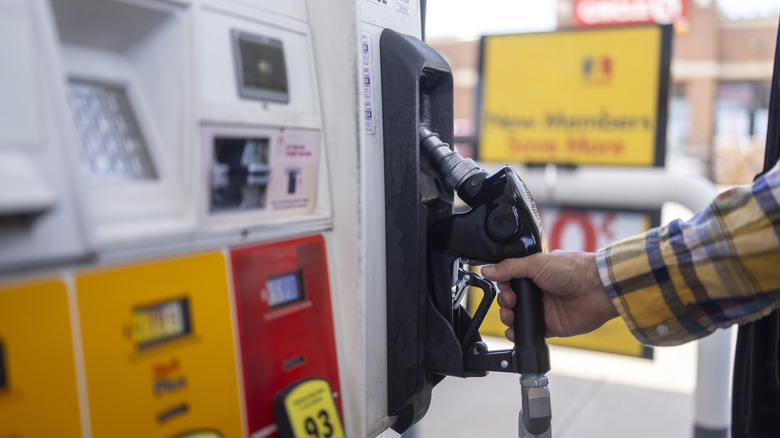
Federal law usually concerns itself with the big stuff, like how much you can earn before the IRS takes notice to where you can build. Then there’s this: Some gas pumps have a sticker warning about the minimum amount of fuel you can fill, which is four gallons. It’s a federal law, too — although it applies to a specific fuel pulled from one specific kind of pump.
That fuel is E10, the standard that blends 90% gasoline and 10% ethanol. While this basically flows through almost every car on U.S. roads, the rule isn’t specifically made for the type of fuel. Rather, it only kicks in when the same pump also dispenses E15, which is a higher-ethanol blend sitting at 15% ethanol and 85% gasoline, through the same hose and nozzle. These pumps are referred to as blender pumps. If you use a nozzle dedicated to just E10, the limits disappear.
This is actually to protect consumers themselves, specifically those who own older cars that do not support E15 fuel. After someone fills up on E15, about a third of a gallon of fuel actually remains inside the hose. If you’re next in line and want to fill up E10, what lands in your tank first is actually closer to 33% E15. Even that much E15 with its limited ethanol can damage older vehicles. To offset any chances of that happening, the EPA has set the floor at four gallons. This helps dilute any leftover E15 to safe levels.
How common is it, and what if your tank is too small?
When the rule was first announced back in 2012, it generated a lot of push back. Wisconsin Republican Jim Sensenbrenner actually went on the record calling it an unacceptable intrusion into drivers’ lives even though, at the time, the actual footprint of this rule at gas stations was tiny since very few dispensed E15 via blender pumps. Today, their numbers have grown significantly, with over 5,000 stations across the US doing so. Of course, this is still a small fraction of the 150,000+ stations in total across the States.
When the rule first arrived, the American Motorcyclist Association flagged an obvious problem with the small gas tanks of motorcycles and lawn mowers. The average yard-equipment gas tank tops out at just one or two gallons. As a result, in February 2013, the EPA signed off on a third configuration proposed by the Renewable Fuels Association, which said that stations that dispense E15 must also offer at least one nozzle exclusively dispensing fuel with 10% ethanol or less. These pumps will be labeled “Passenger Vehicles Only,” and gas stations should also post signage pointing customers toward them.
One other thing to note is that this only applies to E15, excluding gasoline with higher blends of ethanol. It’s because E15 is actually the legal limit for standard cars. Anything higher than that can only be handled by flex-fuel vehicles, which can run just fine even on an E85 blend. These higher blends also use dedicated hoses, thereby eliminating any chances of cross-contamination.
You must be logged in to post a comment Login