Tech
What Is The 5-Year Rule For Motorcycle Helmets?


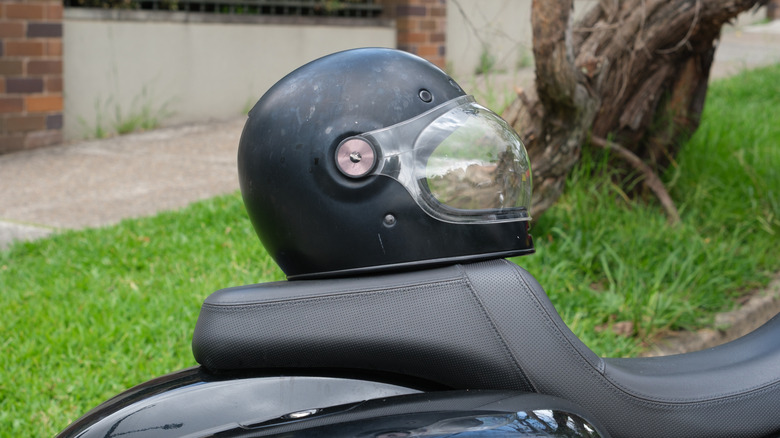
Most of your riding gear shows clear signs of wearing out. Boots split, gloves thin out, and jackets fray. With these, you can tell when it’s time for a replacement. But helmets are arguably sneakier, because, contrary to appearances, they do have a lifespan – and it’s not tied to how scruffy they look.
The five-year rule serves as a rough yardstick for when it’s time to replace your helmet with a new one. It may sound harsh, especially if you’ve spent money on customizing your beloved helmet, but there’s a pretty solid reason behind it. The component at fault is the EPS liner, which is basically an expanded polystyrene foam that sits between your skull and the hard outer shell.
This liner is made out of the same material that cushions a new TV inside its box; because it’s foam, it will absorb some of your sweat when you ride. Then, when it dries out, it shrinks a little and stiffens. It’s estimated that the foam will shrink 3 to 5% annually. Use a helmet for five years, and the problem starts to add up.
How can you be sure about the rule?
Helmet manufacturers recommend you stick to the five-year rule, too. helmet. Arai, for example, suggests that owners replace helmets after five years of use. It appears the foam degrades even when the helmet isn’t in use, though, as the company caps its warranty at seven years from the date of manufacture. Shoei also draws the line at five years from the first retail sale. In fact, it goes a step further, recommending a new helmet even if the EPS liner still looks good and the helmet has never been in a crash.
There are ways to tell if it’s indeed the time for a replacement, in case you want to double-check. You can start with the shell and hunt for cracks or any deformation by running your fingers over it. Then there’s the EPS itself. If it starts showing through on the inside, that means it’s either too worn out or has shrunk significantly, meaning it’s time for a change.
A more surefire way is to wear the helmet, fasten the strap, and give your head a little shake. If the helmet twists around or doesn’t fit as it used to, that’s your cue. Of course, if you ever crash, you should replace it right away, no matter how fresh it looks. At that point, the question turns to what to look for when buying a new motorcycle helmet.
What if you overuse or underuse the helmet?
Sometimes, it’s about the mileage rather than the actual passage of time. Generally, the five-year rule assumes you’re clocking somewhere around 6,000 to 8,000 miles a year. That works out to about 40,000 to 50,000 miles over five years. Commuters who ride more than that should replace helmets after two or three years, because the liner may wear out much faster. Frequent riding also means more mishaps, including drops. These are usually fine, but can still cause damage in some cases.
Even if you’re on the other end of the spectrum and barely use your helmet, though, you’ll still have to replace your helmet after five years. Moisture can slowly evaporate out of the foam or seep in; either way, it’s bad for the liner. Storing it carefully can probably stretch that out a bit, but why risk it? Besides, if your helmet is super old, it may miss out on the comfort and safety upgrades available on newer units, like the MIPS helmet technology that minimizes rotational forces in a crash.
You must be logged in to post a comment Login