Tech
What Is The Left Hand Rule For Electric Motors?

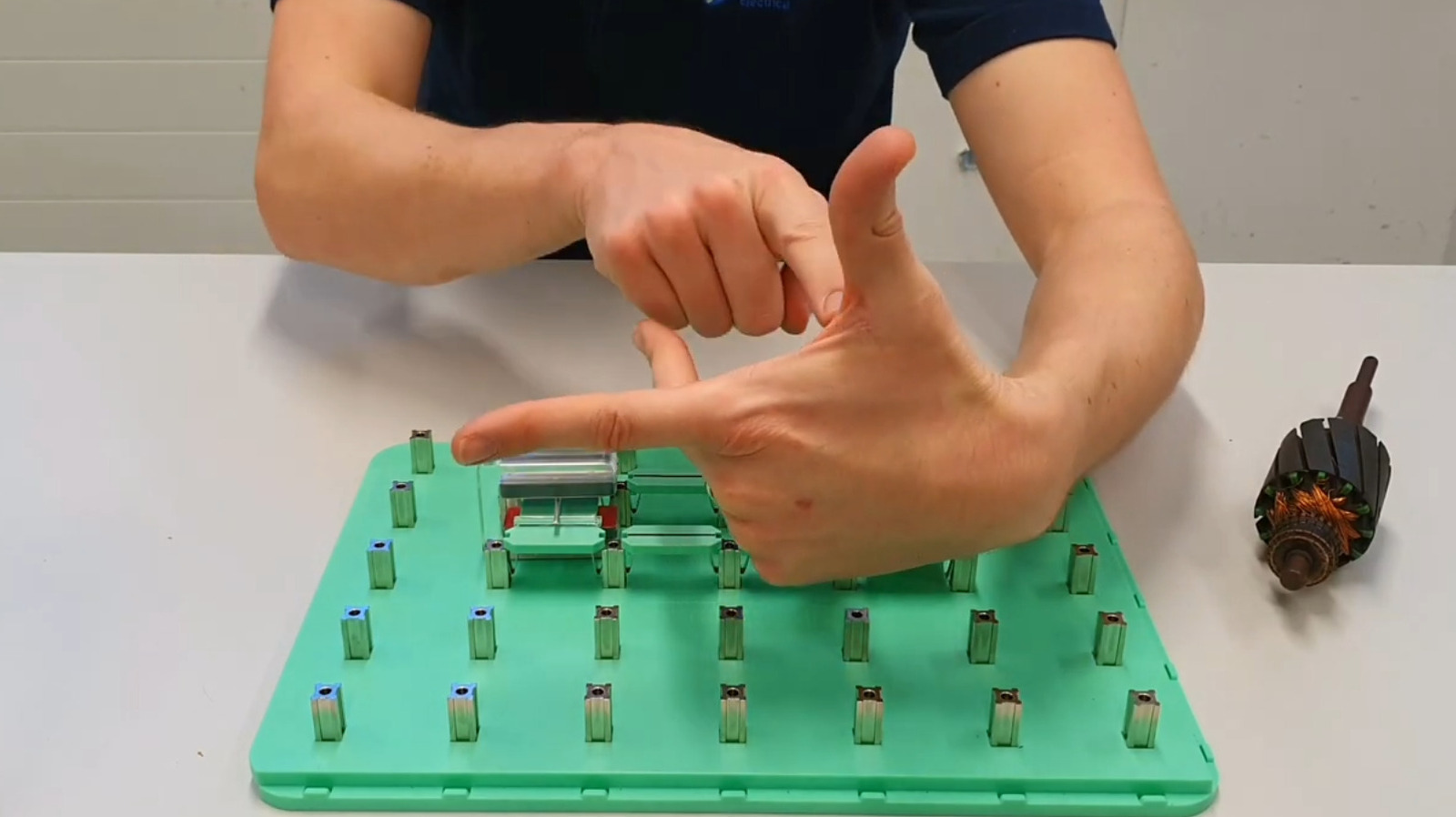

Electric motors are everywhere, from huge industrial machines to devices so small you can’t see them without using a microscope. The technology used for these motors can vary based on the configuration and application, but they generally all rely on the same ideas of electromagnetism to create movement. To understand exactly how electrical current interacts with a magnetic field, it’s important to know the Left Hand Rule.
The Left Hand Rule is a method used to predict the direction of movement produced when an electrical conductor carries current while placed within a magnetic field. To use it, position your left hand with your thumb pointed upward, index finger pointing forward, and your middle finger pointing to the right. The end result should be all right angles. Your index finger represents the direction of the magnetic field, moving from the north pole to the south pole. Your middle finger is pointing in the direction of the conventional flow of electrical current. Your thumb then shows the direction of the force acting on the conductor, which determines the direction of motion inside the motor.
The force represented in the Left Hand Rule is known as the Lorentz force, which creates the force that drives motion in an electric motor. The rule itself was developed by British physicist and engineer John Ambrose Fleming, who used it as a way to help his students understand how the direction of current and magnetic fields affects the forces involved in electrical systems.
Understanding the Right Hand Rule
The basic ideas behind Fleming’s Left Hand Rule are present in electric motors that many people use every day. This includes motors that operate with DC power commonly found in cordless power tools, robotics, and other devices that require precise control to work effectively. It also applies to AC motors that power everything from ceiling fans and washing machines to HVAC systems, pumps, and larger machinery. Though the design of these motors can vary, they all depend on the interaction between electrical current and magnetic fields to produce motion.
While the Left Hand Rule is used for electric motors, the Right Hand Rule is used with generators. This rule determines the direction of the current produced when a conductor moves through a magnetic field. To use the rule, extend the thumb, index finger, and middle finger of your right hand so they’re all pointing in right angles. Your thumb represents the direction the conductor is moving, while your index finger shows the direction of the magnetic field from north to south. Your middle finger shows the direction of the current.
The Right Hand Rule applies to a variety of devices, many of which are used by people in real-world applications every day. This includes hand-crank flashlights for camping, hydroelectric generators, bicycle dynamos, wind turbines, and more. Because the Right Hand Rule is a simpler way to understand the relationship between motion, magnetic fields, and current, the operation of many power-generating systems is easier to understand.
You must be logged in to post a comment Login