More than half of CV writers say the work they receive now contains AI
AI-generated text risks being impersonal and exaggerative
But the tech is helping expression, creativity and storytelling
While workers continue to explore ways to adopt AI in their everyday workflows, recruiters are warning they should be doing so when writing their resumes, new research has claimed.
More than half (56%) say they often or always receive resumes that contain at least some AI-generated text – two-thirds (67%) also note an increase in AI-generated content.
The report by Kickresume stresses the role of a resume is to demonstrate a person’s skills and character on paper, thus emotionless, polished text ultimately fails to represent individuals.
Latest Videos From
AI-generated CVs are on the rise
With AI generating more text that users might otherwise write, around a third (32%) said they’ve seen two-page CVs become more popular. “63% of professional CV writers report that generic/boiler plate content is the most common issue in client CVs,” the report revealed.
Advertisement
The data also reveals that workers often exaggerate skills or provide inaccurate information. Conversely, only 8% considered typos and spelling mistakes a noticeable issue – a double-edged sword implying that AI both produces better-quality resumes while also falsely representing an individual’s competency.
“AI is there to be leaned on, but what makes a CV stand out is the personal touch you add to it,” CEO Peter Duris commented.
“The specifics of your skills, experience, and achievements are only something individuals can provide.”
Advertisement
Sign up to the TechRadar Pro newsletter to get all the top news, opinion, features and guidance your business needs to succeed!
While Kickresume is discouraging the use of AI in producing CV content, it does recognize that generative AI has helped applicants express their own creativity. A quarter (24%) have seen an increase in personal branding and storytelling, and a fifth (18%) have seen more creative and infographic-style CVs.
bcachefs boss Kent Overstreet has announced version 1.38.6 of the Linux filesystem, dubbing it “the performance release” and declaring the project is no longer experimental.
The new code is ostensibly a relatively modest point release, but is noteworthy as it’s only the second release this year that project leader Kent Overstreet has described on his Patreon blog.
Advertisement
His latest post reveals he no longer considers the filesystem experimental. “Consider this the belated official announcement :)” he wrote, noting that he dropped the experimental tag some unspecified time ago.
Although the bcachefs Git repo is sufficiently busy that it’s hard to track progress, the repo for the accompanying bcachfs-tools is much more readable. Starting with January’s 1.35.0 it shows 18 releases so far this year. So, strictly speaking, the version number applies to the accompanying utilities rather than the filesystem module itself. However, a peek into the Debian APT repository shows that kernel DKMS module has a matching version number, and neither the blog post about the release nor the changelog distinguishes between them.
According to said changelog, this version bumps the number of devices in a filesystem to 255, and contains fixes for half a dozen bugs.
Advertisement
More significantly, it also identifies another six performance optimizations.
The Reconcile operation – previously called “rebalance” – is now faster and more parallel. Erasure coding (which Register sister site Blocks & Files explains) is “in use and seems to be working quite well”. The post refers to the handbook, bcachefs Principles of Operation [PDF], which has been updated since we last looked – the current revision is from April. There’s also a handy Getting Started guide.
Overstreet notes that all the major distributions he’s checked now enable kernel Rust support, and he says that work has already started at converting the filesystem and tools into Rust:
“The bcachefs userspace code has already been converted to Rust, and that work has included safe Rust interfaces for the core btree iterator API and quite a bit of utility code. The next release will pull these bindings into the DKMS module, and we’ll start to convert core code.”
Advertisement
That’s a long-term project, though. In the Phoronix forums, Overstreet explains a little more about the task. In one comment, he says:
I don’t know how long it’ll take for it to be fully Rust – e.g. converting the journal to safe Rust will be… interesting.
But it should be ~50% Rust this year, maybe in the next few months depending on how it goes with deploying a mixed C/Rust DKMS module.
We were also pleasantly surprised to see him expressing considerable skepticism towards AI-authored code contributions in the discussion:
Advertisement
I’m definitely not against AIs, but I am starting to see the lazy patch submissions/bug reports where someone clearly is just asking an LLM to do all the work, and that’s not ok.
We find the performance comparisons in the Patreon post interesting because in places they’re slower than XFS…
On the Epyc 9454 I’ve been testing on, 48 Zen4 cores, 1.38.6 is pushing 16.5 GB/sec through dbench 48 clients – vs. 16 GB/sec for XFS.
And later:
Advertisement
Testing 4k random writes with fio, bcachefs is now hitting 700k iops on this hardware, vs. 1 million for XFS.
Overstreet explains that bcachefs is doing much more work here than XFS, but for us, these values feel more plausible simply because he’s not claiming vastly superior results.
As an interesting side-note, in the course of researching this article, we also discovered an experimental Linux NAS OS based around bcachefs, which rejoices in the name of NASty. If you want to experiment with bcachefs without getting down and dirty and building the OS by hand, this could be a good way to do it.
We are still sad that the personality clash between Overstreet and Torvalds resulted in bcachefs being booted out of the Linux kernel. However big its main developer’s ego may be, bcachefs is a very promising project, and we hope that one day it may get merged again… Perhaps as the kernel’s first filesystem implemented in Rust. ®
We spend hours testing every product or service we review, so you can be sure you’re buying the best. Find out more about how we test.
Klipsch The Nines II: Two-minute review
The Klipsch The Nines II are a tough pair of small speakers to beat for a large room. The amount of power and the clean, slightly overly bassy, sound are just some of what make these speakers special. There’s also a ton of features on offer, including virtualized spatial audio (which is admittedly limited) Wi-Fi streaming, and even Dirac Live (though I couldn’t seem to get it to work during my testing).
In fact, the buggy nature of the Dirac Live is my only real gripe with Klipsch’s The Nines II (well, that and their cumbersome name if you’re writing a review…), and the Dirac issue could be more due to environmental factors than a fundamental problem. My other issue — the fact that the speakers are heavy — is more just inconvenient than a real flaw.
Advertisement
Whenever I listen, I’m convinced that The Klipsch The Nines II are among the best stereo speakers to come out this year. And the amount of connectivity and features make them a nice alternative to the best soundbars, especially if you still want a bit of that more traditional stereo speaker setup.
Latest Videos From
Just be aware that these are quite a bit more expensive than the original Klipsch The Nines. That said, The Klipsch The Nines II offer a lot more than the first version as well.
(Image credit: Future / James Holland)
Klipsch The Nines II review: Price and release date
How much does it cost? $2,399 / £2,249 / AU$4,999
When is it available? Available now
Where can you get it? Available in the US, UK, and Australia
The original Klipsch The Nines have been out for a few years now, so the Spring release of the Klipsch The Nines II in 2026 is perfect timing. Speakers may not benefit from the yearly iterations of something like phones or TVs, but it’s about time for the upgrade considering the improvements in Bluetooth technology and W-iFi streaming over those last few years.
Interestingly enough, the Klipsch The Nines II are more than an iterative upgrade. Dolby Atmos (even if it’s a virtualization) and Dirac Live support are on offer in the new version, along with support for more Hi-Res codecs and a wider frequency range, which is why this newer version also comes with a much higher price tag — they’re $700 / £700 more than the originals. That’s quite a price hike.
Advertisement
Klipsch The Nines II Powered Stereo Speakers: Specs
Swipe to scroll horizontally
Dimensions
18.13” (460.38mm) H x 9.62” (244.5mm) W x 14.75” (374.65mm) D
Weight
Advertisement
Active speaker: 32.8lbs (14.9kg); Passive speaker: 31.7 lbs (14.43kg))
Active or passive
Active
Subwoofer
Advertisement
No (has sub out)
Frequency response
31Hz-25kHz +/- 3dB
Dolby Atmos / DTS:X enabled
Advertisement
Yes (virtualized)
Maximum output
107dB
Advertisement
Klipsch The Nines II Powered Stereo Speakers: Features
Virtualized Dolby Atmos, and Dirac room correction
Wi-Fi streaming for a bunch of different music apps
App has a lot of functionality, including custom EQ
The Klipsch The Nines II speakers may be limited in terms of features just by their form factor compared to a soundbar system like the Klipsch Flexus Core 300, but they have the right amount of options for a pair of bookshelf speakers.
Sign up for breaking news, reviews, opinion, top tech deals, and more.
Dolby Atmos and DTX:S is available on these speakers, though the spatial audio support is virtualized due to the fact that there aren’t any upward-facing speakers, and obviously limited width. Still, the virtualization does give a sense of height to the audio that works decently with a blockbuster movie.
Along with Bluetooth connectivity (5.4 specifically), the Klipsch The Nines II also support Wi-Fi streaming, specifically Google Cast, Apple AirPlay 2, Spotify Connect, Tidal Connect, Qobuz Connect, and more. Since they work with Google Cast, they can be set up with Google Home for smart home users.
There’s a tiny bit of a lag between source and speaker when going wireless. However, there is a Lip Sync setting in the app to better synchronize when using the speakers with a wireless source with visuals, such as watching a video on a laptop with the audio coming through the Klipsches.
Advertisement
There will still be a lag between play, pause, etc. but that’s not something that I found to really affect my experience of the speakers.
Image 1 of 4
The Klipsch app’s front page is intuitive to use(Image credit: Future / James Holland)
All the inputs are selectable from the app’s front page(Image credit: Future / James Holland)
The Klipsch The Nines II have a number of audio adjustments on offer in the app(Image credit: Future / James Holland)
The Klipsch app has a five band EQ along with some presets available(Image credit: Future / James Holland)
Speaking of the app, this is the central place for any deeper fine tuning. If you want to tweak the audio, there’s a five-band EQ in the app along with some presets. If you want to set up or use Dirac Live, you do that through the app — by the way, the speaker comes with a limited license that will adjust the audio between 200 and 500 Hz (the full frequency is paywalled).
Lastly (well, I’m leaving a few less consequential things out), you can turn on a few different modes: Dynamic Bass, Dialog mode, and Night Mode, and they all work decently enough with the latter being the most effective at its purpose (bringing up quiet sounds and bringing down loud ones).
The controls on the Klipsch The Nines II are fairly minimalist (Image credit: Future / James Holland)
Advertisement
Klipsch The Nines II Powered Stereo Speakers: Sound quality
Weighty, robust sound
Lots of bass, mid-bass a bit too full
Lots of dynamic headroom
Klipsch’s The Nines II are really good sounding speakers, and they might be the most weighty sounding speakers I’ve heard for the size, too. Despite not having a subwoofer (or maybe because of it and still providing a lot of bass), every element seems to have a thickness or robustness to it that I usually don’t hear with a lot of audio equipment.
Listening to music the low end is there in spades, whether I was listening to pop, hip hop, or even Counting Crows. The massive bass gives a boominess to the mid-range that is not unpleasant, but is far from neutral or accurate. Using the app to bring the 400Hz slider down one or two notches does clean up the sound a lot, but know that this is fundamentally built into its audio profile.
The high end is slightly on the warm side due to that weightiness I spoke about. Boosting the 8kHz slider in the app does brighten the affair though, if you prefer. Regardless, the Klipsch The Nines II did retain all the detail in the high-end in elements such as the strings in Radiohead’s Pyramid Song or Joni Mitchell’s higher register in A Case of You.
The soundstage, while dependent on correctly setting up the speakers, is not only nice and wide but has good separation thanks to the amount of headroom on these speakers. After all, I never really had them higher than halfway up in volume and they filled a good sized room full of distortion-free, clean audio.
Sound quality score: 4.5 / 5
Klipsch The Nines II: Design
These speakers are big for bookshelves
Few physical controls, lots of inputs
There’s a subwoofer output
The Klipsch The Nines II are big at over 18 inches tall, over nine and a half inches wide, and almost 15 inches deep, weighing up to 33 lbs per speaker (the one without all the controls is two measly pounds lighter). They’re also attractive, thankfully, coming in three colorways: walnut, red oak, and black (reviewed here).
In terms of controls, the active speaker only has a volume dial and a single power / input cycle button. There’s also an LED indicator above the power button that changes colors depending on the input selected and, while there may only be two physical controls (there’s also a pairing button on the back of each speaker labeled Utility), there are quite a few inputs.
Advertisement
There’s HDMI eARC, optical, phono, USB, Bluetooth, coaxial, and ethernet. It’s easier to select them through the app, because remembering which color corresponds to which port isn’t easy to remember.
All the ports are situated on the back of the primary speaker. Besides the physical ports for the channels listed above that need them, there’s also a sub out and a mic in, the latter of which is for the Dirac Live feature.
Also included are speaker covers that attach magnetically, along with a matte black remote, the aforementioned wired mic, an HDMI cable, power cable, and cable to connect the two speakers to each other physically, if you don’t want to have them speaking to each other wirelessly (they’re automatically paired with each other out of the box, so going wireless is no hassle).
It’s a good thing these are large, because there’s a lot you can connect (Image credit: Future / James Holland)
Advertisement
Klipsch The Nines II review: Setup and usability
Setup is made more difficult by the speakers’ weight
App is intuitive to use for the most part
Dirac Live is difficult to set up
The Klipsch The Nines II are both easy and not easy to set up, entirely based on their weight. The primary and secondary speakers are automatically paired out of the box and just need to be plugged in to power. Pairing via Bluetooth requires just being on the Bluetooth input and connecting via your smart phone.
And the physical connections just need their respective cables and possibly a settings change — changing a TV’s audio output to eARC, for instance. In terms of functionality, that’s all you have to do to use them.
That said, each speaker is heavy at over 30 lbs each (or over 14.5kg). That’s cumbersome to move. Even if that weight is not a problem for you, these are big boxes. Add in speaker stands, which I believe are ideal for getting the best sound out of these speakers (an additional $475 for a pair if you want Klipsch’s own…) and setup becomes more of a physical challenge than it might be for some speakers.
The stand just takes time to assemble: connect the proper rubber feet based on flooring, the base to the stand, and the stand to the speaker. But if you connected the stand to the speaker upside down like I did, you’ll encounter my least favorite part… flipping the speaker over while connected to the stand, which weighs an additional 24.1 lbs (10.9kg), by the way.
Each complete 57 lbs unit was unwieldy, to say the least, and I felt like I had to be careful so as not to let these fairly pricey speakers accidentally fall and get damaged.
Advertisement
Outside of that, adjusting the speakers for placement is similar to any other pair of bookshelf speakers, if heavier, and it didn’t take me long to get them situated for a listening sweet spot on the couch.
Using the speakers is likewise a slightly mixed bag. Using the remote is easy and I appreciate the ability to remap the two bottom buttons to my favorite inputs. The app is generally intuitive as well.
However, as much as I enjoy the difference Dirac Live can make with speakers, I had an incredibly difficult time getting the calibration test to run even though I had the upgrade for the full frequency range (an additional $99).
I know that the microphone is very sensitive so needs as much quiet as possible, but no matter how hard I tried, that degree of quiet threshold I just could not reach.
Advertisement
Setup and usability score: 3.5 / 5
The Klipsch The Nines II do come with a number of accessories. Cat not included… (Image credit: Future / James Holland)
Klipsch The Nines II Powered Stereo Speakers: Value
Comes with a premium price tag
A lot of very good speakers available for much less
Much more expensive than the original Klipsch The Nines
When the original Klipsch The Nines came out, they were priced similarly to the KEF LSX II LT, one of the most popular active stereo speaker systems out there. The Klipsch The Nines II are not only seven hundred bucks more than the original, but the KEF speakers have come down to $999 / £899 since they came out. That’s a massive price difference.
That said, the KEF LSX II LT are compact so are not able to really fill a room the way The Nines II can. Plus, there’s no analog connectivity or the extensive set of features the Klipsch The Nines II have.
When it comes to being a complete and yet powerful stereo system in two (reasonably) compact boxes, The Nines II are good value — but no one’s going to claim they’re a bargain.
Advertisement
Should I buy the Klipsch The Nines II speakers?
Swipe to scroll horizontally
Score card
Attributes
Notes
Rating
Features
Advertisement
Dolby Atmos, Wi-Fi streaming, Dirac Live and a huge suite of connectivity options.
4.5 / 5
Sound quality
You might want to do some minor EQing, but they sound immersive and full, with enough bass to skip adding a subwoofer.
Advertisement
4.5 / 5
Design
They look good, the controls are nicely done, and the connectivity is well-handled.
4.5 / 5
Advertisement
Setup and Usability
Setup is easy but does take some muscle or a second person to do properly. Dirac Live calibration has issues.
3.5 / 5
Value
Advertisement
The price hike from the previous version may seem too much, but it’s worth it with the added features.
3.5 / 5
Buy them if…
Advertisement
Don’t buy them if…
Klipsch The Nines II review: Also consider
How I tested the Klipsch The Nines II
Used regularly for a few weeks
Listened to all sorts of audio
Used the various controls and ports
I used the Klipsch The Nines II for a few weeks, listening to all sorts of genres of music, such as hip hop, EDM, pop, rock, jazz, and folk to get a better feel for these speakers. They were also tested with some TV viewing and computer games.
I’ve tested a lot of tech gear over the years from laptops to keyboards and speakers, and so have been able to use my expertise towards giving an honest and fair opinion, not to mention a critical eye, to any product I test.
Here it is: the dumbest defense of automatic license plate readers I’ve ever read. While we can subtract some points because the person writing it has no power to install/un-install/cover in garbage bags surveillance tech, he’s a regular contributor to a long-running newspaper in a major city. And since this paper is still willing to give him a byline and inches (or digital equivalent), he’s not going to get a pass.
This would be the work of Ted Diadiun, who at least appears to be the MAGA ideal of a centrist. (This means he occasionally criticizes Trump but also gets big mad when people suggest this nation might be better off if Trump was dead.)
I don’t expect everyone — even those with newspaper staff credentials — to get into the weeds when it comes to surveillance tech. On the other hand, I fully expect them to present a better argument in favor of ALPR systems than “Man, I wish the cops were pulling over every driver I think they should be pulling over.”
How many of us have witnessed an idiotic driver and muttered, “Why is there never a cop around when you need one?”
That is why – getting to the point – I’m a big fan of surveillance cameras. Speed cameras, red-light cameras, Flock cameras … all of them.
They’re always around, even when a cop isn’t. And they give me some assurance that people who think laws are for others will get what’s coming to them. And those, like me and my friend, who think that scofflaws are increasing exponentially, can cling to the hope that the number will come down if people know or suspect they’re on camera.
Bro, I hear you. I share the road (and see it not equally shared) with assholes. I do wish vengeance upon them. But I also would rather keep my rights than give them up in exchange for traffic enforcement that subjectively pleases me.
I’m on the other side. And that would be the other side that Ted feels is too stupid, too soft on crime, or otherwise misinformed.
Advertisement
Not everyone, unfortunately, thinks that way.
How can you tell you’re the greatest? Well, it’s when you present your side (me and my friend think “idiotic” drivers need more punishment) and follow it up with a statement that says anyone opposed to your subjective views on traffic enforcement are “unfortunately” wrong.
Ted Diadiun is upset because city leaders are trying to do their best to serve their constituents. Many are opposed to the ALPR system imposed on them. This system belongs to Flock, which has become a surveillance tech front runner — one that has often greeted legitimate criticism with “go fuck yourself” vibes.
Immediately after invoking the unholy name of Flock, Diadiun says a number of things very quickly. First, he admits ALPRs won’t do anything to punish the speeders and scofflaws that so incensed him and his neighbor. Then he says something even Flock itself might not want him to say:
These cameras do not identify speeders or people who bust through red lights – there are other devices for that. What they do is capture the license numbers of every vehicle that drives by. Their gaze can also capture other things, such as porch pirates and car thieves and vandals and other dregs of society lurking in our neighborhoods.
Wow, Ted, wow. These ALPRs are great because… they do so much more than collect the plate/location records the public assumed AUTOMATIC LICENSE PLATE READERS (ALPRs) would be limited to doing.
Advertisement
But you’re fine with surveillance, surveillance creep, and giving the finger to your fellow Cleveland residents because?
There are more than 1,700 of these devices scattered around Cuyahoga County, but at current issue are 100 Flock cameras in Cleveland. Mayor Justin Bibb, who correctly understands their value, has tried to renew the city’s contract with the company, but has been beset by objections from, among others, a raucous group called “Flock No.” As a result, he tossed the decision to Cleveland City Council. Flock No members disrupted a recent council meeting with clapping and chanting, but there’s been no decision as yet.
That organization has also taken on the Cleveland Metropolitan School District, which has 200 Flock cameras outside its buildings in an effort to help police solve cases of car break-ins, vandalism, street takeovers in parking lots and sex offenders illegally visiting school property.
Hmmm. The citizens protested a council meeting. The mayor punted. And while Flock may have installed 200 cameras in the school district, naming the things Flock claims it cameras will prevent isn’t even in the same galaxy as naming the things Flock’s cameras have actually prevented. Why, I could claim my use of the letter “e” in this post has been done to prevent sex offenders from being appointed by the Trump administration. And it would be every bit as credible as claiming a couple hundred cameras are “helping” police do everything from investigating petty theft (they don’t care) or keeping sex offenders off school property (citation PLEASE).
And then Diadiun goes on to both (1) make it clear Flock’s cameras aren’t limited to license plate readings and (2) pretend fighting for rights is just advocacy for criminals.
Advertisement
The American Civil Liberties Union, which can always be counted on to throw roadblocks in front of efforts to stop crime and capture criminals, of course has weighed in on the anti-camera side, charging that it amounts to mass spying that turns its plate-reading into surveillance cameras, and that its recordings of bumper stickers amount to an invasion of privacy.
(Ironically, it was the photos of bumper stickers on a Chevrolet Camaro captured by Flock cameras that allowed federal agents to capture and arrest an armed robber who had held up ten local stores at gunpoint in 2021, as chronicled in a Thursday story on cleveland.com. Guess the ACLU would have preferred that the guy remain free to continue to terrify and perhaps harm additional clerks and customers.)
If the first paragraph doesn’t make you want to punch the columnist in the face, read it again. This is not what the ACLU does. It’s not there to protect criminals. It’s there to protect rights. Rights apply to everyone, even (alleged) criminals. Ted is here to declare he’d rather see a thousand innocent people jailed than allow a single criminal to go free.
Then he goes on to (unhelpfully — in the case of Flock) note that Flock captures more than plate images and allows law enforcement to run searches on things that aren’t normally considered to be part of day-to-day ALPR business… like bumper stickers.
And, again, Diadiun closes out the paragraph by pretending the ACLU’s intervention in this case was in the interest of increasing crime, rather than forcing the government to respect constitutional rights.
Advertisement
Having already demonstrated he’s a facile dolt, Ted Diadiun wraps things up by ensuring there can be no debate about his (barely) “useful idiot” status:
Unless you have something to hide, why would you object to cameras that record license plates and other information?
Please post your location history data publicly, Ted. You have nothing to hide. Let’s see where you’ve been and who you’ve associated with. Just dump it out in a future column so we can sift through like the cops you love so much. Until you’re willing to that much, please shut the fuck up about location tracking, ALPRs, civil liberties, and drivers who will now feel increasingly justified in their attempts to run you off the road.
[I have reached out to Ted Diadiun to see if he’ll provide readers with location data collected by his phone and/or other services since he’s apparently has nothing to hide. I’ve also asked him to explain why it’s okay for the government to have this information by default, if he’s unwilling to share it with his readers. I will update this post in the unlikely event that Ted chooses to respond to my inquiries.]
Pool robots have become remarkably capable over the last few years. What started as simple cleaners designed to remove debris from the bottom of a pool has evolved into a new category of intelligent systems capable of navigating entire pools, adapting to changing conditions, and taking on multiple maintenance tasks at once. As expectations around smart home technology continue to rise, pool owners are increasingly looking for the same combination of automation, convenience, and reliability from their pool-care equipment.
Few brands have embraced that shift more aggressively than Beatbot. Available through the Beatbot website and Amazon storefront, the company has established itself as a leader in premium robotic pool care by combining advanced robotics, AI-powered vision systems, and intelligent navigation technologies into products designed to reduce the time and effort required to maintain a clean pool. This Prime Day, Beatbot’s lineup offers a closer look at how far automated pool care has progressed, from flagship systems capable of real-time decision-making to versatile robots designed to handle multiple aspects of maintenance in a single cleaning cycle.
Rather than focusing on a single product category, Beatbot has spent the last several years building a broader pool-care ecosystem powered by advanced robotics, intelligent navigation, and AI-driven automation. From flagship robotic cleaners capable of real-time decision-making to surface skimmers and more accessible cleaning solutions, the goal remains the same: reducing the time, effort, and guesswork traditionally associated with pool maintenance.
Inside Beatbot’s most advanced pool-care system
Beatbot
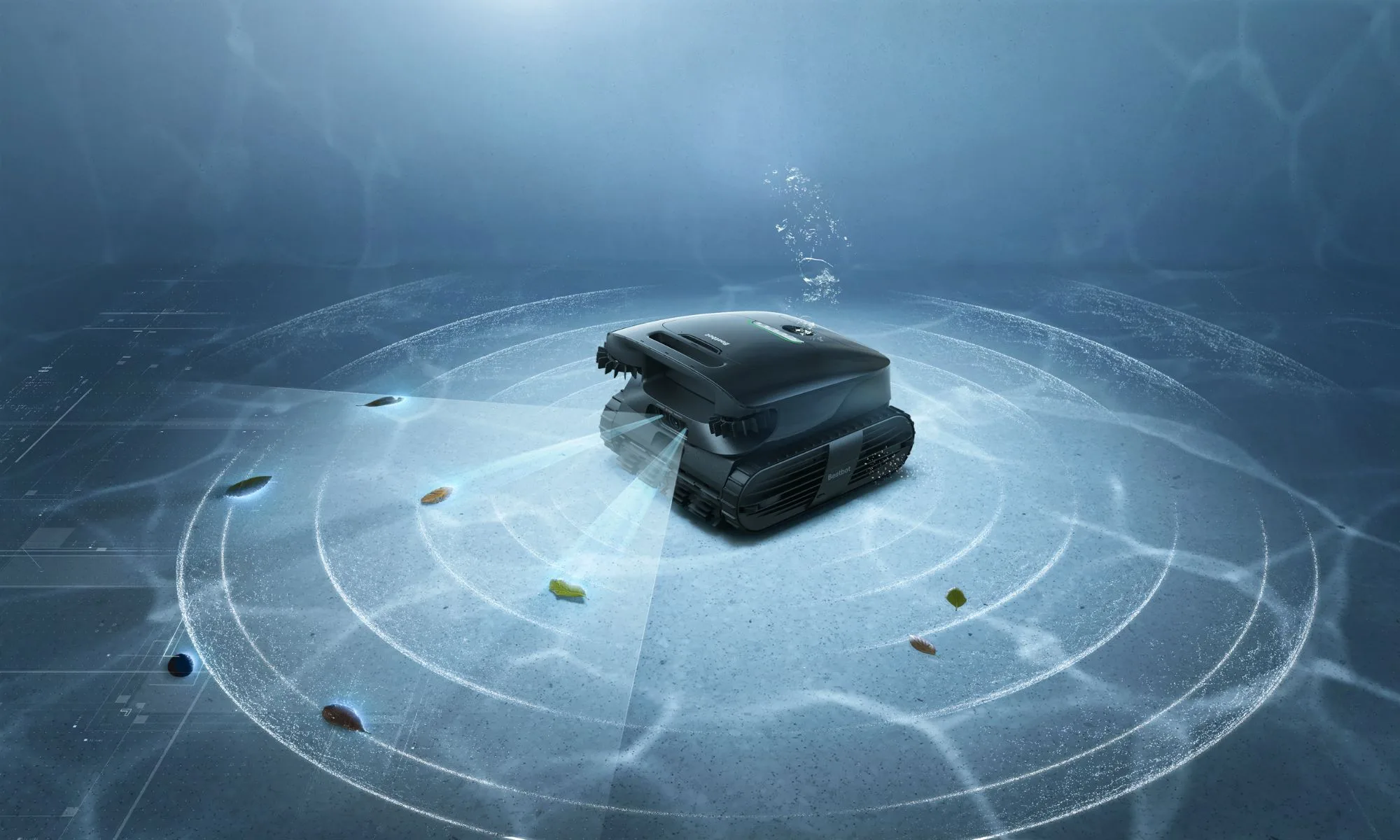
Beatbot’s vision for AI-powered pool care comes together most clearly in the AquaSense X. Combining an autonomous self-cleaning station with HybridSense™ AI Vision, CleverNav™ AI Path Planning, AI debris detection, intelligent obstacle avoidance, auto-recovery functionality, and night cleaning capabilities, it brings a deeper level of awareness and adaptability to the cleaning process.
The system continuously analyzes its surroundings, identifies obstacles and debris, and adjusts cleaning routes in real time to improve coverage across the entire pool. Instead of relying on fixed cleaning patterns, it adapts as conditions change, helping deliver a more thorough and efficient clean while reducing the need for user intervention.
Advertisement
The autonomous self-cleaning station further reinforces that hands-off approach. By minimizing routine maintenance after each cleaning cycle, it allows pool owners to spend less time managing their cleaner and more time enjoying their pool. For those looking for the most advanced option in Beatbot’s ecosystem, the AquaSense X combines intelligent navigation, adaptive cleaning, and automated maintenance in a single platform.
Prime Day price: $3,999 (regularly $4,250).
AquaSense 2 Ultra expands the idea of intelligent pool maintenance
Beatbot
While many robotic pool cleaners focus primarily on debris removal, the AquaSense 2 Ultra takes a broader view of pool maintenance. As the world’s first AI-powered 5-in-1 robotic pool cleaner, it combines floor cleaning, wall cleaning, waterline cleaning, surface skimming, and water clarification within a single system.
HybridSense™ AI Vision and CleverNav™ AI Path Planning help the AquaSense 2 Ultra navigate multiple cleaning zones while adapting to changing pool conditions. Combined with AI debris detection and intelligent obstacle avoidance, the system is built around what Beatbot calls full-pool intelligence, allowing it to tackle different maintenance tasks through a single platform.
Water clarification is what further separates the AquaSense 2 Ultra from traditional robotic cleaners. Beyond collecting debris, it actively contributes to cleaner, clearer water while reducing the need for additional maintenance tools. For pool owners looking for a more comprehensive approach to pool care, it brings cleaning, water care, and intelligent automation together in a single solution.
Advertisement
Prime Day price: $1,999 (regularly $3,150).
AquaSense 2 Pro brings comprehensive care into a single system
Beatbot
The AquaSense 2 Pro focuses on simplifying pool maintenance without sacrificing capability. Combining floor cleaning, wall scrubbing, waterline cleaning, surface skimming, and water clarification within a single platform, it is built for pool owners who want a more complete maintenance solution without juggling multiple tools.
Features such as the ClearWater™ Clarification System, Smart Water Surface Parking, and one-touch app retrieval help streamline day-to-day ownership, while Full Coverage Path Optimization supported by 22 sensors helps ensure efficient navigation and consistent cleaning performance across the pool. By continuously assessing its surroundings and adjusting cleaning routes as needed, the AquaSense 2 Pro is designed to deliver thorough coverage with minimal intervention.
The result is a system that brings together intelligent navigation, water care, and multi-zone cleaning in a way that feels practical rather than complicated. For pool owners looking for a balance between advanced automation and everyday usability, the AquaSense 2 Pro sits comfortably in the middle of Beatbot’s growing pool-care ecosystem.
Prime Day price: $1,699 (regularly $2,299)
Advertisement
The Sora Series brings smarter cleaning to more pools
Not every pool owner needs a flagship-level solution, which is where the Sora Series fits into Beatbot’s broader lineup.
Beatbot
The Sora 70 is the most capable model in the range, delivering 4-in-1 cleaning across the floor, walls, waterline, and surface. By incorporating dedicated surface cleaning alongside traditional robotic cleaning functions, it provides broader coverage than many mid-range alternatives. Features such as Smart Surface Parking, shallow-area accessibility, SonicSense™ AI Ultrasonic Obstacle Avoidance, and intelligent path planning help improve cleaning consistency while making retrieval easier once a cleaning cycle is complete.
SonicSense™ AI Ultrasonic Obstacle Avoidance and intelligent path planning help the Sora 70 navigate more efficiently while improving cleaning consistency across the pool. Together with its 4-in-1 cleaning capabilities, those technologies make it one of the most capable options in Beatbot’s mid-range lineup.
Prime Day price: $999 (regularly $1,499)
The Sora 30 focuses on delivering stronger day-to-day cleaning performance without the premium investment associated with flagship models. Its enhanced 3-in-1 cleaning capability covers floors, walls, and waterlines, providing broader coverage and greater versatility than many entry-level cordless cleaners. For buyers looking to step into Beatbot’s ecosystem, it offers an appealing balance of performance, convenience, and value.
Advertisement
While positioned as a more accessible option, the Sora 30 still benefits from the design philosophy that runs throughout Beatbot’s lineup: broader coverage, smarter operation, and less manual effort. For pool owners seeking dependable day-to-day maintenance, it offers a practical entry point into Beatbot’s intelligent pool-care ecosystem.
Prime Day price: $649 (regularly $999)
Prime Day is the perfect time to upgrade
Beatbot
Beatbot’s Prime Day offers extend well beyond the flagship models. Alongside deals on the AquaSense X, AquaSense 2 Ultra, AquaSense 2 Pro, Sora 70, and Sora 30, shoppers can also save across the company’s broader pool-care ecosystem. The Sora 10 drops from $699 to $449, while the AquaSense 2 is available for $799, down from its regular $1,298 price. Surface-cleaning solutions are also seeing significant discounts, with the iSkim available for $299 (normally $499) and the iSkim Ultra reduced from $999 to $549.
Available from July 8 through July 11, these promotions make it one of the best opportunities of the year to upgrade to Beatbot’s AI-powered pool-care ecosystem. Whether you’re looking for a flagship robotic cleaner, a comprehensive maintenance solution, or a dedicated surface-cleaning system, the lineup offers options across a range of pool sizes, maintenance needs, and budgets.
For pool owners ready to spend less time cleaning and more time enjoying their pool, Prime Day may be the ideal time to make the switch.
Norway will largely prohibit generative AI use for elementary kids ages 6 to 13 beginning with the new school year, while allowing limited, teacher-supervised use for older students. The government says the restrictions are intended to prevent children from skipping foundational reading, writing, and mathematics skills amid declining test scores. Reuters reports: Facing a broad decline in education test scores, the government in 2024 banned smartphones from schools and has given teachers back more powers to enforce discipline in the classroom. Using AI increases the risk that young children skip important steps in their education, Prime Minister Jonas Gahr Stoere told a press conference on Friday. “The most important thing in school is that our children learn to read, write and do mathematics,” Stoere said, adding that the new standards will be imposed from the new school year beginning in late August.
Pupils from first through seventh grade, aged 6 to 13, should as a general rule not be using AI, while those in lower secondary school, aged 14 to 16, can cautiously adopt tools under teachers’ supervision, the government said. In upper secondary education, from ages 17 to 19, students should learn to use AI appropriately so that they are prepared for further education and work, it added. In a related statement, the Norwegian government also said it would propose legislation to fund the use of more books in classrooms, reversing the trend towards computer tablets.
Pause not a permanent withdrawal from drone delivery operations in Ireland, Manna said.
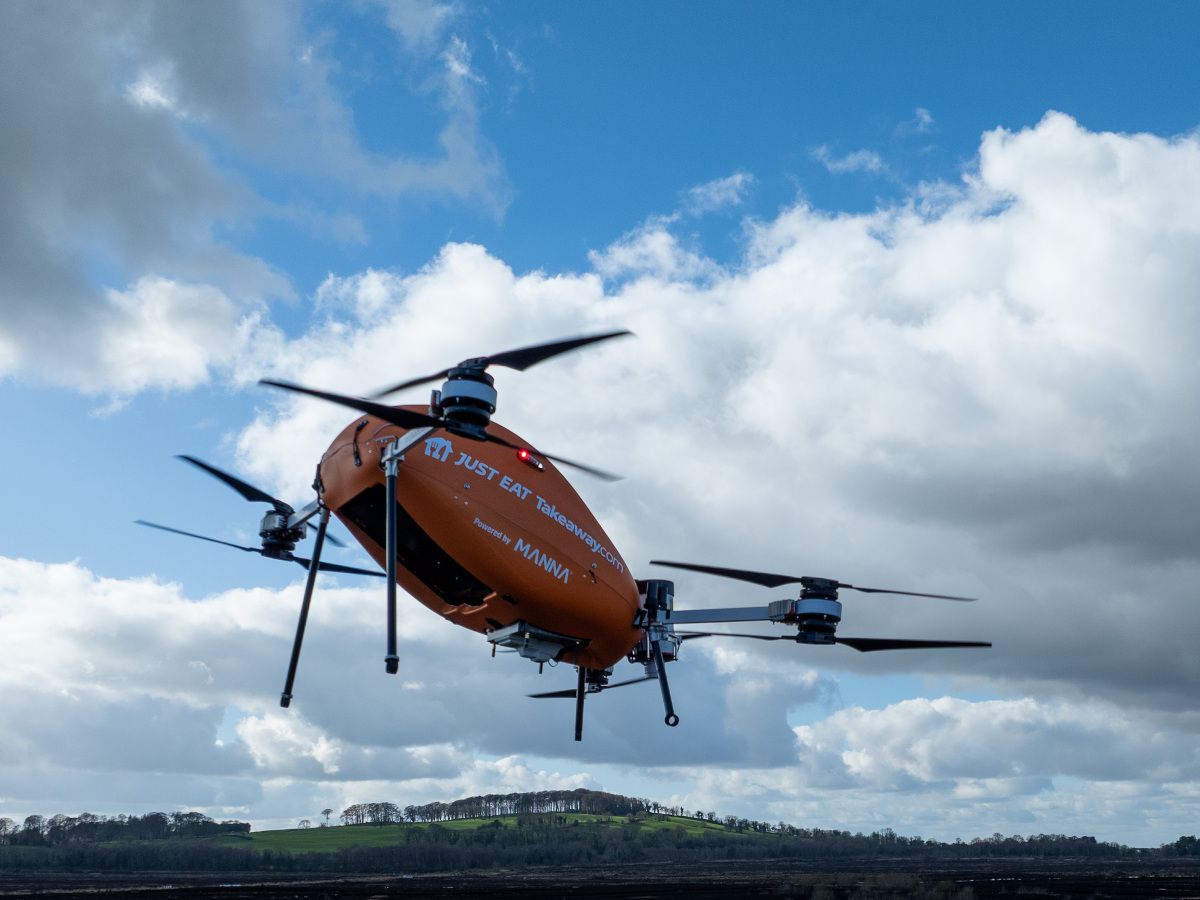
Drone delivery firm Manna is taking a “strategic pause” in operations in Ireland over what it describes as a lack of a clear national framework surrounding the technology.
The Irish company is instead shifting focus to the US, UK and other international markets where “regulatory, and planning frameworks are advancing and commercial drone delivery is accelerating”, it said in a statement. The company already has operational authorisation in both the US and UK and anticipates full authorisation to operate in the United Arab Emirates.
“The absence of a clear national policy framework for commercial drone delivery means there is currently no defined pathway for the sector to scale in Ireland,” Manna said.
Advertisement
“In the absence of such a framework, decisions are assessed locally, creating uncertainty around the planning and infrastructure requirements needed to support commercial drone delivery at scale.” The pause is not a permanent withdrawal from drone delivery operations in Ireland, the company said.
Manna was refused planning permission for drone aerial delivery hub in Dublin’s Dundrum region this week.
Last year, it was refused permission to retain a drone delivery hub in Blanchardstown, meanwhile, Cork City Council has also sent the company letters raising concerns about its operation there.
Despite the supposed regulatory setbacks, Manna has completed more than 300,000 deliveries and partnered with more than 120 Irish businesses.
Advertisement
It has also teamed up with companies such as food delivery platforms JustEat and Deliveroo – and Uber, more recently, primarily servicing parts of Dublin. And last year, it expanded its focus and announced an entry into Cork’s airspace.
“This is a difficult decision because Ireland is where Manna was founded, built and first proven,” said Bobby Healy, the founder and CEO of Manna.
“However, in the absence of a clear national pathway to scale commercial drone delivery, we have to focus our investment in markets where that pathway is now clear.”
Manna has launched and operated drone delivery services in Ireland in Moneygall, Oranmore, Balbriggan, Blanchardstown and Cork, and has expanded services internationally to Finland and Texas.
Advertisement
It has made nearly 90,000 deliveries in its most mature market in Blanchardstown, where Manna has operated since early 2024.
Manna has been at the receiving end of criticism from residents – especially in Dublin 15 – where it runs four sites. Complaints include the frequency of drones, with one telling the Irish Independent that they saw “at least” 50 drones every day, as well as noise and environmental concerns.
According to Manna’s own account, its three planning permissions drew objections from 255 individuals.
Manna currently employs nearly 200 people across engineering, technology, operations and corporate functions in Dublin. It said that future employment and planned expansion at local delivery hubs will not proceed “at this time”. Earlier this year, the company announced around 300 new jobs in the country, alongside a $50m Series B raise.
Advertisement
“This decision does not affect Manna’s continued investment in Ireland, which will remain the company’s primary base for research and development, engineering, robotics, regulatory affairs, customer operations and corporate functions,” Manna clarified.
Responding to Manna’s decision, Minister for Enterprise, Tourism and Employment Peter Burke, TD, said: “I regret the announcement and the uncertainty that this creates for workers and their families.
“Government are ensuring that all available supports are put in place for workers that may be impacted, including supports for retraining and job search assistance.”
Last August, the Department of Transport published a national policy framework for Unmanned Aircraft Systems that aims to foster “growth and innovation, while ensuring that operations remain safe and secure and environmental and social concerns are managed”.
Advertisement
An action plan, published in March, laid out sixteen goals across planning, compliance, enforcement and innovation.
Don’t miss out on the knowledge you need to succeed. Sign up for the Daily Brief, Silicon Republic’s digest of need-to-know sci-tech news.
Updated, 07:40pm, 19 June, 2026: The article has been updated with the Government’s response and background information.
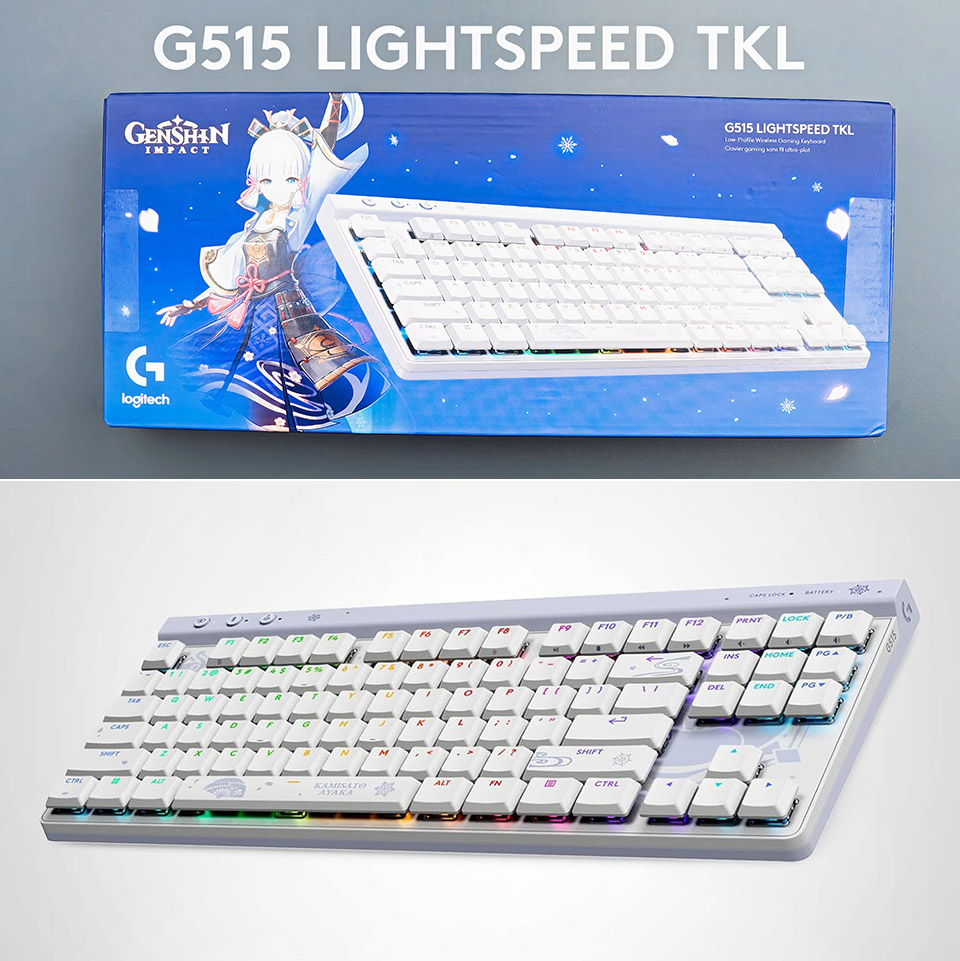
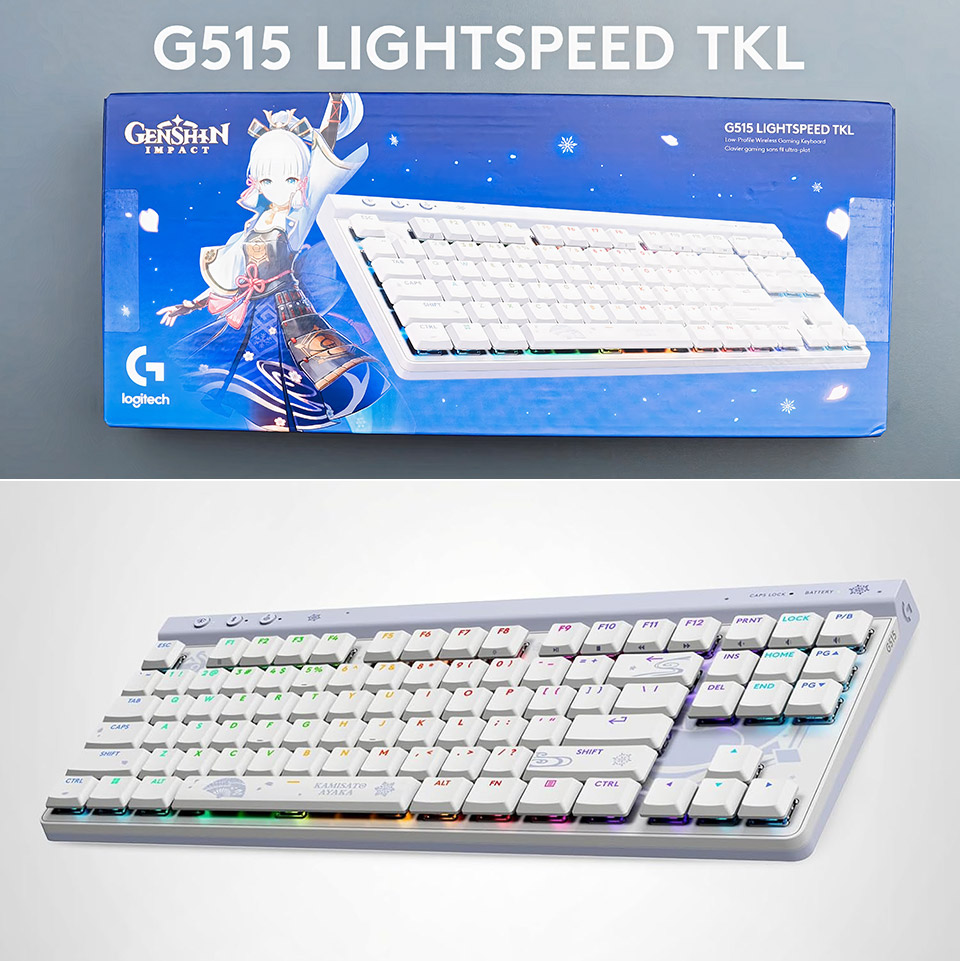
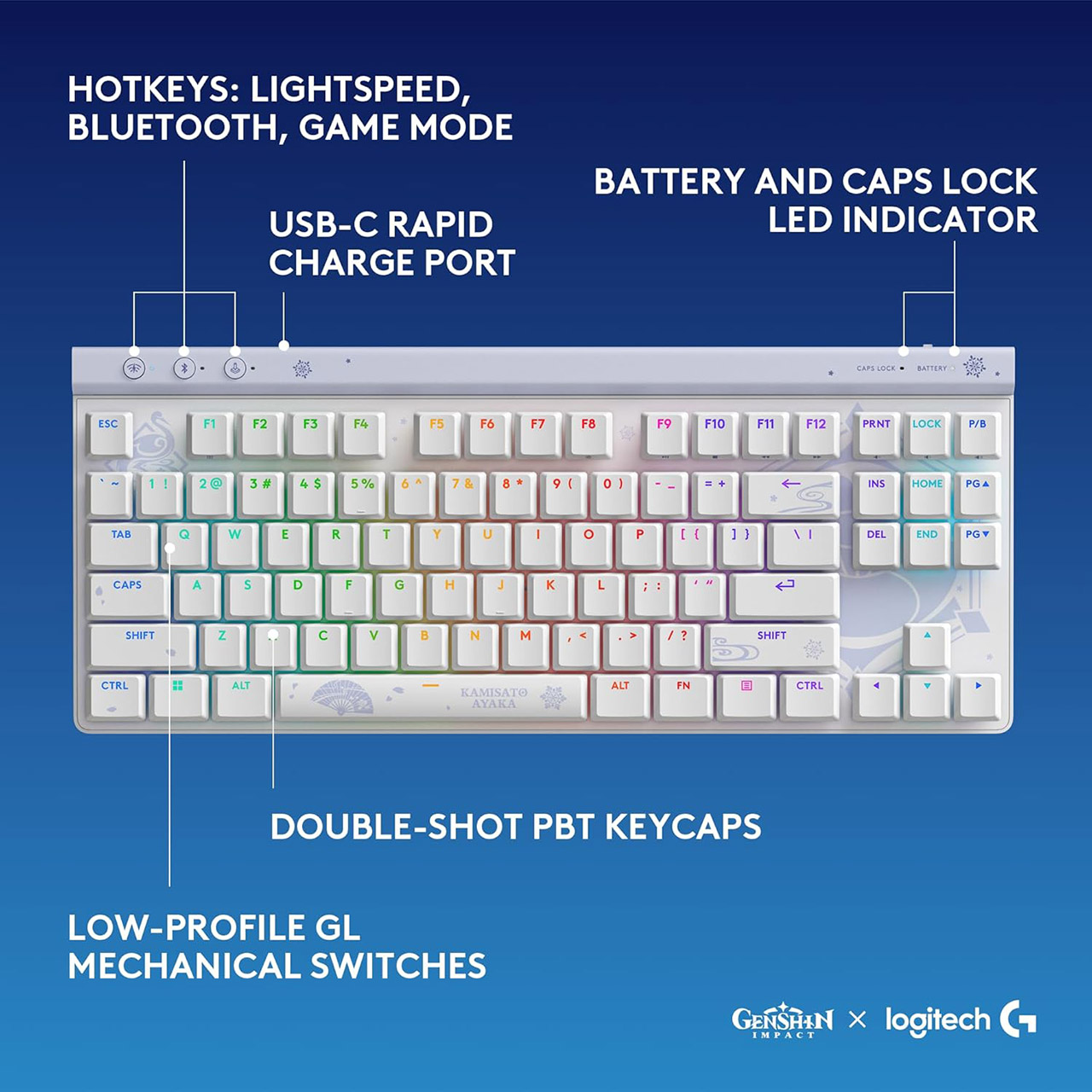
Logitech teamed up with the Genshin Impact team for a special edition of its slim wireless keyboard, and the result feels more thoughtful than most licensed gear. The G515 Kamisato Ayaka special edition model, priced at $69.99 (was $170), takes the standard low-profile TKL hardware and wraps it in a clean white design that nods to the character without turning the whole thing into a billboard. It stays subtle enough for daily use while still giving fans something distinctive to look at every time they sit down.
The keyboard itself measures only 22 millimeters at its tallest point, giving it a very thin profile, thanks mostly to the low-profile GL mechanical switches and a chassis that has been shortened significantly by the lack of a number pad. The end product is a really slimline device, with the white body featuring some really sleek light blue and lavender artwork down the edges, as well as swirling swirls and snowflake accents that pay homage to Ayaka’s cryo theme and her extremely graceful fan design. To accentuate the idea, the spacebar features a fan emblem and her name. The legends on the keycaps are designed in a way that uses a variety of colors that are readable even when the RGB lighting is turned on, since they do not clash with it.
The keycaps are made of double-shot PBT and have lasting legends, as well as a nice matte finish that does not shine with time. The casing provides significant sound dampening, as it is much quieter than many low-profile boards. The stabilisers are adequate for a prebuilt keyboard, though you may notice a slight vibration in the spacebar if you search for it. The feet on the bottom offer two tilt angles, allowing you to modify the slope without using any other equipment.
The 1.3-millimeter actuation point and 3.2-millimeter overall travel are beneficial for both typing and gaming, since the tactile brown switches in this edition are light and provide sharp feedback that registers rapidly without being mushy. The factory lubrication ensures that the keys remain smooth from day one. Going low profile also means less finger travel, which some individuals find less exhausting during extended sessions. The bad news is that there is no wrist rest in the box, so users who like one will have to either get used to the floating feel or create their own.
Wireless performance is based on Logitech’s LIGHTSPEED 2.4 GHz connection, which maintains a 1-millisecond report rate throughout gaming. There’s a Bluetooth option if you merely want to use it for light tasks or multi-device settings, as well as a USB-C wired mode that can be used as a backup or to charge. The provided dongle allows 2:1 pairing, which means that one USB port can handle both this keyboard and a compatible Logitech mouse. The battery should last for at least 36 hours with the RGB turned on, and much longer if you dim or turn off the lights. A USB-C to USB-A cable for charging is included in the box, along with the dongle and basic documentation.
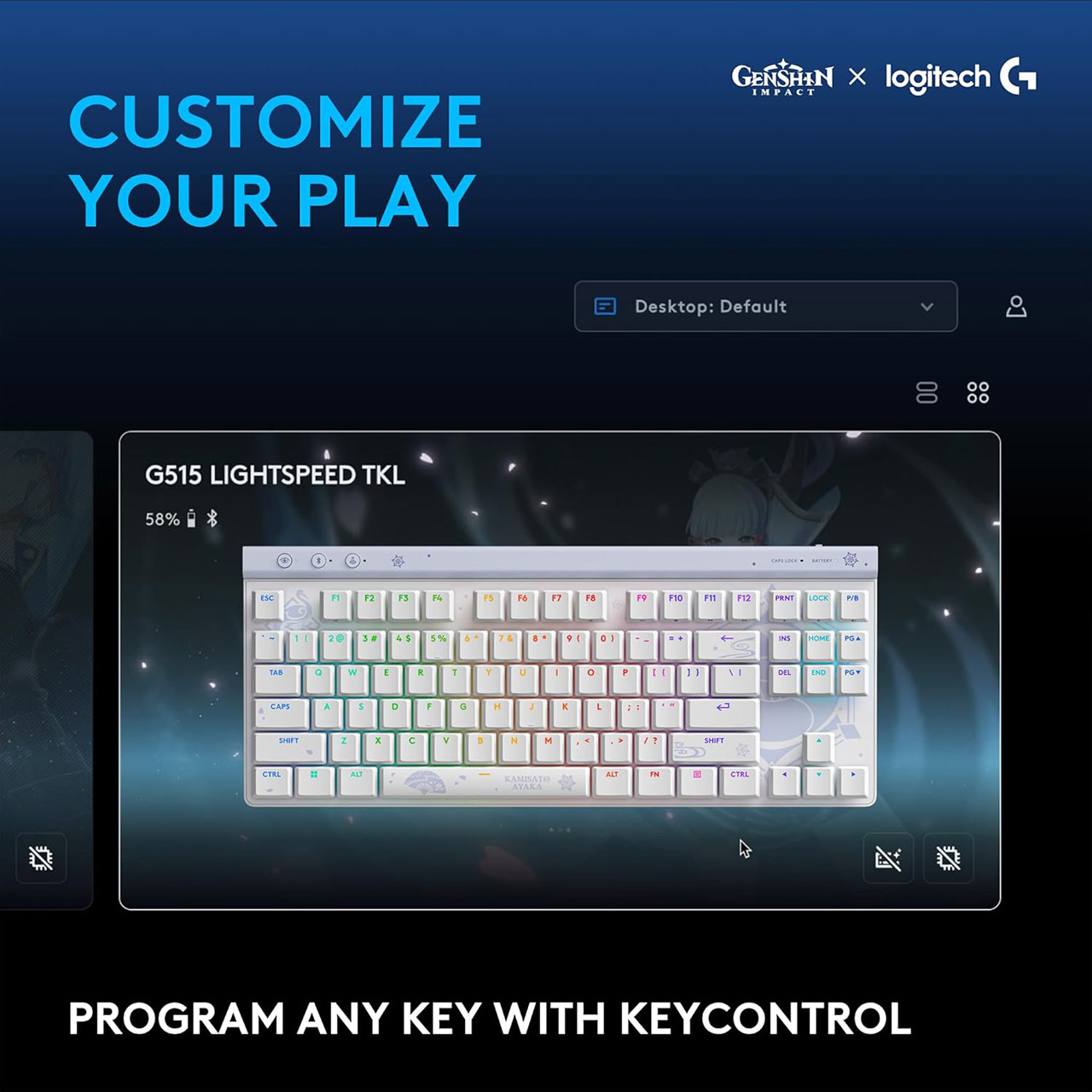
The RGB illumination is fully incorporated into Logitech’s LIGHTSYNC system and looks stunning on the shine-through keycaps. Because this is a special edition, you’ll find some custom Ayaka-themed effects in G HUB, which focus on soothing blues and whites and subtle transitions rather than dramatic rainbow sweeps. The software allows you to build profiles, remap keys, and customize illumination by key or across zones. Onboard memory stores a few profiles, allowing the keyboard to work properly on different computers without the need to reload anything.
‘Entirely automating everything is not the future we want’: OpenAI CEO Sam Altman lays out his company’s vision as it opens a ‘third phase’ and looks to build technology “to benefit everyone”
OpenAI’s Sam Altman and chief scientist Jakub Pachocki list future goals for the AI giant
The world economy is now beginning to shape around AI and are committed to delivering tools that people would use
The note also reaffirmed OpenAI’s commitment to AGI with a caveat: ensuring it benefits all of humanity
With modern AI solutions moving well beyond simple chatbots to agents and projected to evolve into operators, one could assume that the automation of everything is an eventual goal.
This, however, has been denied by OpenAI CEO Sam Altman and chief scientist Jakub Pachocki, who said the goal of the artificial intelligence research and deployment company is not to automate everything but to allow people to make better decisions as AI improves their lives.
In a note titled ‘Built to benefit everyone’ that marked a break from OpenAI’s AI model capability pushes of late, two of the most important people in the AI ecosystem penned an unusually values-forward document that outlined their future plans for AI.
Latest Videos From
AI for everyone equally?
The note highlighted three major focuses for OpenAI:
Advertisement
– Building an automated AI researcher
– Accelerating the economy
– Giving everyone on Earth a personal AGI
Advertisement
Sign up to the TechRadar Pro newsletter to get all the top news, opinion, features and guidance your business needs to succeed!
OpenAI estimates that by March 2028, a significant portion of its research will be conducted by AI systems, in addition to its own researchers. This will help them to traverse a ‘post-AGI world’.
This, combined with the focus on giving everyone an AGI, is an interesting outlook because it assumes that everyone agrees on what AGI would look like. The definition is not set in stone and can vary from person to person and also at an organizational level.
OpenAI’s statement also provides clues about what an AGI would be like, with an “automated AI researcher” who both provides a path to AGI and is an important cog in the wheel.
Advertisement
OpenAI’s narrative about AI benefiting everyone worldwide is not a new one, but its focus on equality is an interesting one, especially given the timing: OpenAI’s note popped up exactly the same day it filed confidential paperwork for its IPO, making it perhaps read more as PR than it would otherwise be perceived.
OpenAI’s latest models are state-of-the-art, but many feel Anthropic’s now-banned Fable pushes frontier models even further than what GPT currently offers in multiple segments. Training new models is increasingly capital-intensive even as new capabilities are introduced, tested, and refined over time.
OpenAI also has something of an image problem after it stepped in to replace Anthropic’s Claude and Mythos-class solutions for the US military earlier this year, a move the latter company maintains was necessary because the restrictions it insisted on for the use of its AI were important.
Advertisement
When OpenAI stepped in to replace Anthropic on classified networks, it was widely perceived as willing to look past those restrictions to some degree, even though Sam Altman insists that the same two principles (no domestic mass surveillance and use of force permitted only by humans) would apply, with many critics pointing to a ‘softer’ approach on the matter by OpenAI to fill the void that comes with lucrative military contracts in the future.
The note, therefore, does read like a checklist for the future, but also paints OpenAI as a more magnanimous organization before its IPO, and that might be the primary intention here, but it does fail to weigh in on growing power consumption concerns, even as one could also consider it a reply or acknowledgment to a similar note by Anthropic about recursive self-improvement where its AI solutions effectively already act as an AI researcher for the company.
A Yoodli.ai cardboard sign is visible at right during Fox’s FIFA World Cup broadcast on Thursday from Seattle, featuring, from left, Rob Stone, Stu Holden, Clint Dempsey, and Alexi Lalas. (Screen grab via Fox Sports)
When a startup town turns into a soccer town attracting worldwide attention, it’s a great opportunity to test your guerrilla marketing skills.
Seattle’s Yoodli leaned into that theory on Thursday by getting its name and web address on Fox Sports’ live broadcast of FIFA World Cup festivities from Pier 62 on the waterfront.
The company, which launched out of the former AI2 Incubator in 2021, develops AI-powered software that allows users to simulate and practice real-world conversations. Yoodli has been at AI House all week on nearby Pier 70, and the team said grabbing free TV ad time was a “Hail Mary move” — especially in an era when AI company billboards are such a thing.
In a description of events relayed to GeekWire via email, the effort started with Yoodli’s new growth marketing manager Connor Wright scrolling Instagram earlier that morning to catch up on World Cup updates. He saw that Fox was live-streaming from Pier 62.
A scrappy startup lightbulb went off.
Advertisement
Communications and content leader Sage Ke’alohilani Quiamno said she quickly ripped up a monitor box — because the startup is getting a new office soon — and wrote “Yoodli.ai” on the front and “USA” on the back.
Yoodli’s Sage Ke’alohilani Quiamno, left, makes a company sign from a computer monitor box and Connor Wright shows off the finished product that made it onto a Fox Sports broadcast in Seattle. (Yoodli Photos)
Marketing intern Luis Quiroz ran down Alaskan Way with Wright to get inside Fox’s Pier 62 makeshift studio space and hold up the sign just over the shoulder of soccer commentator Alexi Lalas.
“When you’re standing outside with a piece of cardboard and a Fox broadcast camera sweeps by, you seize the moment,” Quiamno said. “Connor held the sign without hesitation while I directed him via phone from the office.”
Yoodli has been watching World Cup action daily from the lunchroom at AI House, and Quiamno said the energy downtown has been something else, especially in anticipation of Friday’s noon match between the U.S. and Australia at Seattle Stadium (Lumen Field).
“It’s the kind of vibe Seattle rarely gets: the waterfront is packed, everyone’s in a good mood, and there’s this collective feeling that the city is on the global stage,” she said.
Advertisement
Yoodli was co-founded by Esha Joshi and Varun Puri and is ranked No. 22 on the GeekWire 200 index of the Pacific Northwest’s top startups. The company currently has about 80 employees.
“We’re growing but still small enough to pull off a guerrilla PR stunt,” Quiamno said.
And apparently it worked. Yoodli says it saw an increase in website traffic and demo inquiries following the broadcast.
“Proof that a handmade sign and a little World Cup energy go a long way,” Quiamno added.



















































You must be logged in to post a comment Login