









Connect with us
DAPA Banner
DAPA Coin
DAPA
COIN PAYMENT ASSET
PRIVACY · BLOCKDAG · HOMOMORPHIC ENCRYPTION · RUST
ElGamal Encrypted MINE DAPA
🚫 GENESIS SOLD OUT
DAPAPAY COMING

Tech

What the New Screen-Time Debate Means for Edu

Published

on

The screen-time debate is no longer confined to parenting advice. As states introduce legislation limiting devices in schools, and pediatric researchers rethink how digital environments affect development, educators are confronting a difficult question: when does technology support learning, and when does it undermine it?

In the first part of this series, I examined the American Academy of Pediatrics’ updated guidance on children’s digital ecosystems and how screens can shape early development at home. The same principles now apply in another place where children spend much of their day: school.

Screens are already a routine part of early childhood classrooms. In a 2025 RAND survey of pre-K teachers, roughly two-thirds reported using games on electronic devices in their classrooms. At the same time, a growing body of research is raising new questions about how different types of digital media affect children’s developing brains.

One frequently cited Canadian longitudinal study followed nearly 2,500 children between 24 and 36 months old and found that higher levels of screen time were associated with missed developmental milestones on screening tests at ages 36 to 60 months. That means that we’re seeing the developmental effects of increased toddler screen time as early as one year later.

Advertisement

Other studies suggest that certain types of media may be particularly overstimulating for young children. Fast-paced content designed to capture attention usually features rapid scene changes, constant motion, bright colors and loud sound effects. I love shows like Netflix’s “Word Party” for the language acquisition skills it teaches, but its features can overwhelm developing brains and temporarily disrupt executive functions such as attention, emotional regulation and self-control (ask me how I know).

These design features are meant to hold viewers’ attention, but the result can sometimes be what many parents recognize instantly: the moment when their sweet child suddenly turns into what I jokingly call a “screen monster.” I have three of them. I can’t imagine a classroom full of screen monsters.

As new technology becomes even more embedded in our lives, screens have become more pervasive in both homes and classrooms. And because technology changes so frequently, it’s helpful for educators to understand how instructional technology choices can either support or disrupt healthy digital environments for students.

I know this tension well, both as a parent and as a behavioral science and public health researcher. In the first part of this column series, I wrote about how screens have both helped and challenged my own family as we navigated parenting during the pandemic. Like most parents and teachers, we are still figuring it out. I’ve written previously about how short-form video addiction has made its way to Gen Z and Gen Alpha. And I recently reported the results of a research project we did at EdSurge that showed that prohibiting devices doesn’t really meet its intended goal.

Advertisement

Devices, screens, algorithms and technology in general have mutated from a household question to an education policy issue.

NEWSLETTERS

STAY AHEAD IN EDUCATION.

Sign up for EdSurge newsletters for timely news, insights and analysis.

The Emerging Landscape of Technology Regulation

From a public health perspective, digital media is becoming part of the broader developmental environment shaping childhood development.

Advertisement

In education, conversations about technology traditionally have focused on the digital divide and ensuring equitable access to devices and internet connectivity. That conversation is shifting.

Researchers are now examining how digital environments affect sleep, attention, emotion regulation and social development. Population-level research suggests that heavy or poorly designed media exposure can contribute to sleep disruption, emotional dysregulation and difficulty disengaging from devices. Remember, screen monsters are lurking with their snotty noses and sippy cups.

Now, these concerns are beginning to influence policy.

Across several states, lawmakers are proposing restrictions on student device usage during the school day, including bans on smartphones and new scrutiny of edtech that uses personalized algorithms to maximize engagement. Since many edtech companies have enhanced or marketed their AI-powered features, the competition to capture and hold students’ attention has likely stiffened.

Advertisement

This is a significant shift. Historically, digital technology, social media and the Internet has been one of the least regulated environments with, arguably, among the greatest effects on both children’s and adults’ lives. Technological change often moves faster than public policy and data, leaving lawmakers and educators to respond after new tools become widespread.

Now the regulatory landscape appears to be catching up and entering the environments children already inhabit.

So What Should Educators Do?

What started as a deeply personal parenting dilemma has become a much larger question for schools. As pediatric researchers update guidance on children’s digital environments, and states debate limits on student screen exposure, educators are being asked to reconsider how technology shapes the cognitive environments where children learn.

The debate often falls into extremes. Some people argue that screens are ruining learning. Others claim that technology is the future of education.

Advertisement

The research suggests that the truth lies somewhere in the middle.

This is one of those test questions where “all of the above” fits best. How screens affect children depends heavily on context, content and duration of use. A passive, fast-paced digital experience is very different from an interactive lesson where students discuss ideas, solve problems or collaborate with peers.

It can be tempting to respond to uncertainty by rejecting technology altogether. And I don’t fault that perspective, because I believe that response comes from a desire to protect kids from unpredictable harm. But the reality is that there is no one-size-fits-all approach for every child, classroom, school or community.

Public health offers a useful framework for thinking about this challenge: harm reduction.

Advertisement

When an exposure is widespread and difficult to eliminate, reducing risk is often more effective than banning it outright. Seatbelts and car seats made riding in cars and buses safer, instead of banning vehicles to reduce vehicular accidents. That’s a classic harm-reduction strategy.

Similarly, screens are unlikely to disappear from classrooms. The more productive question is how educators can create guardrails that reduce potential harms while preserving the benefits of digital tools. I think students would keep using devices, anyway. What’s school without TikTok dances nowadays?

That means choosing technology that supports interaction rather than passive consumption, and balancing digital activities with discussion and hands-on learning. The personalized algorithms in edtech are becoming more common, but the science suggests that it’s best to avoid tools designed primarily to maximize screen engagement.

As states debate new regulations on student screen exposure, educators and school leaders will increasingly be asked to make decisions about how technology shapes the environments where children learn.

Advertisement

The research offers a useful starting point: children’s brains learn best through interaction, conversation, manageable stimulation, productive struggle, and moments of curiosity that make ideas stick.

Technology can support those experiences. But it cannot and will not replace the relationships between students and the adults who teach and care for them.

The real question for schools is not whether screens belong in classrooms, but whether they help students think, or simply keep them clicking and scrolling.

Source link

Advertisement
Continue Reading
Click to comment

You must be logged in to post a comment Login

Leave a Reply

Tech

Today’s NYT Connections: Sports Edition Hints, Answers for June 17 #632

Published

on

Looking for the most recent regular Connections answers? Click here for today’s Connections hints, as well as our daily answers and hints for The New York Times Mini Crossword, Wordle and Strands puzzles.


Today’s Connections: Sports Edition is a tough one. If you’re struggling with the puzzle but still want to solve it, read on for hints and the answers.

Connections: Sports Edition is published by The Athletic, the subscription-based sports journalism site owned by The Times. It doesn’t appear in the NYT Games app, but it does in The Athletic’s own app. Or you can play it for free online.

Advertisement

Read more: NYT Connections: Sports Edition Puzzle Comes Out of Beta

Hints for today’s Connections: Sports Edition groups

Here are four hints for the groupings in today’s Connections: Sports Edition puzzle, ranked from the easiest yellow group to the tough (and sometimes bizarre) purple group.

Yellow group hint: Almost time to draft!

Advertisement

Green group hint: U.S. Bank is another one.

Blue group hint: Sharp items on sports shoes.

Purple group hint: Big Red Machine.

Answers for today’s Connections: Sports Edition groups

Yellow group: Fantasy football moves.

Advertisement

Green group: NFL stadiums.

Blue group: Soccer cleat makers.

Purple group: Cincinnati Reds to win MVP.

Read more: Wordle Cheat Sheet: Here Are the Most Popular Letters Used in English Words

Advertisement

What are today’s Connections: Sports Edition answers?

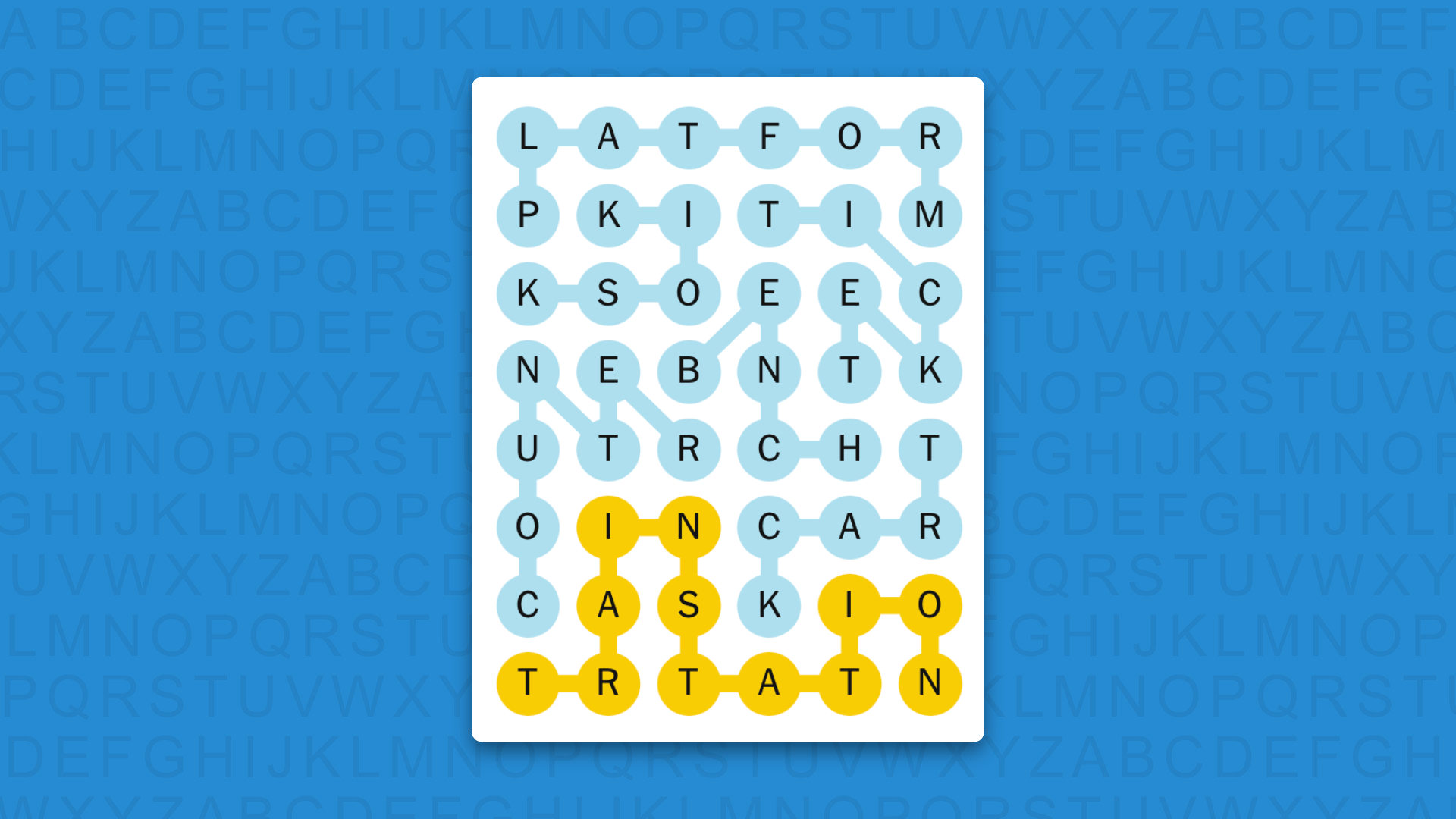
completed NYT Connections: Sports Edition puzzle for June 17, 2026

The completed NYT Connections: Sports Edition puzzle for June 17, 2026.

NYT/Screenshot by CNET

The yellow words in today’s Connections

The theme is fantasy football moves. The four answers are add, drop, sit and start.

The green words in today’s Connections

The theme is NFL stadiums. The four answers are Arrowhead, Highmark, MetLife and SoFi.

Advertisement

The blue words in today’s Connections

The theme is soccer cleat makers. The four answers are Adidas, Diadora, Lotto and Puma.

The purple words in today’s Connections

The theme is Cincinnati Reds to win MVP. The four answers are Bench, Larkin, Morgan and Votto.

Source link

Advertisement
Continue Reading

Tech

The Problem Of Making A Good Metal-To-Glass Seal

Published

on

If you’ve ever taken a close look at a vacuum tube, you’ll have seen the seals around the pins that keep everything air-tight while providing the the device’s electrical contacts. As [maurycyz] finds out, it’s not an easy process to get right.

The problem is one of both chemistry and thermal expansion, as while a good seal can be made between glass and red copper oxide, it remains very difficult indeed to stop the glass cracking on cooldown due to differing thermal expansion properties. We’re led through a variety of experiments including surface treatments and flattening the metal to a sheet, with varying pros and cons. The most successful seal on the page comes from very thin tungsten wire, though hardly the most practical conductor for a vacuum tube.

It’s a fascinating investigation for the casual reader, taking them into the properties of metal-glass bonds and the difficulties involved in making them. We have even more respect for the people who make their own tubes after reading it.

Advertisement

Source link

Continue Reading

Tech

Next-gen nuclear company TerraPower plants flag in UK

Published

on

TerraPower test equipment
TerraPower’s lab tests the equipment and processes for next-generation nuclear reactors. (GeekWire File Photo / Kevin Lisota)

TerraPower, the Bellevue, Wash.-based nuclear energy company, announced Tuesday the opening of a subsidiary office in the United Kingdom as it pursues its first international power plant.

“TerraPower is entering the UK market with a long-term commitment to supporting the nation’s clean energy future and establishing ourselves as a serious and reliable deployment partner,” Chris Levesque, company president and CEO, said in a statement.

In October 2025, TerraPower submitted its Generic Design Assessment (GDA) application to UK regulators and in February received formal acceptance from the country’s Department for Energy Security and Net Zero. The company has now officially started Step 1 of the GDA process.

Nuclear power has seen a resurgence of interest in recent years, driven by spiking energy demand from data center expansion, the electrification of transportation and other economic sectors, and energy security concerns tied to fossil fuel dependence.

TerraPower is among the companies developing next-generation nuclear technologies that aim to be safer, less expensive and faster to deploy than traditional reactors.

Advertisement

@media (max-width: 600px) {
aside.callout { float:none !important; max-width:100% !important; margin-left:0 !important; margin-right:0 !important; }
aside.callout .callout-img { display:none !important; }
}

The company broke ground on its Natrium demonstration plant in Kemmerer, Wyo., in 2024, starting with non-nuclear construction. In April, it began work on the nuclear components after approval from the Nuclear Regulatory Commission.

The facility features a 345-megawatt, sodium-cooled fast reactor paired with a molten salt thermal storage system that captures excess heat. Drawing on that salt battery can boost the plant’s output to 500 megawatts for more than five hours. By comparison, Seattle uses around 2,000 megawatts during extreme weather events. TerraPower aims to have the reactor splitting atoms by the end of 2030.

The company also has a deal with Meta to build up to eight Natrium reactors in the U.S., with the first two targeted to come online by 2032.

The UK office extends that growth beyond American borders. Ian Hudson, the newly appointed head of TerraPower UK, said a permanent presence will allow the company to work closely with British partners.

Advertisement

Source link

Continue Reading

Tech

Security Camera Gets Several Defensive Upgrades

Published

on

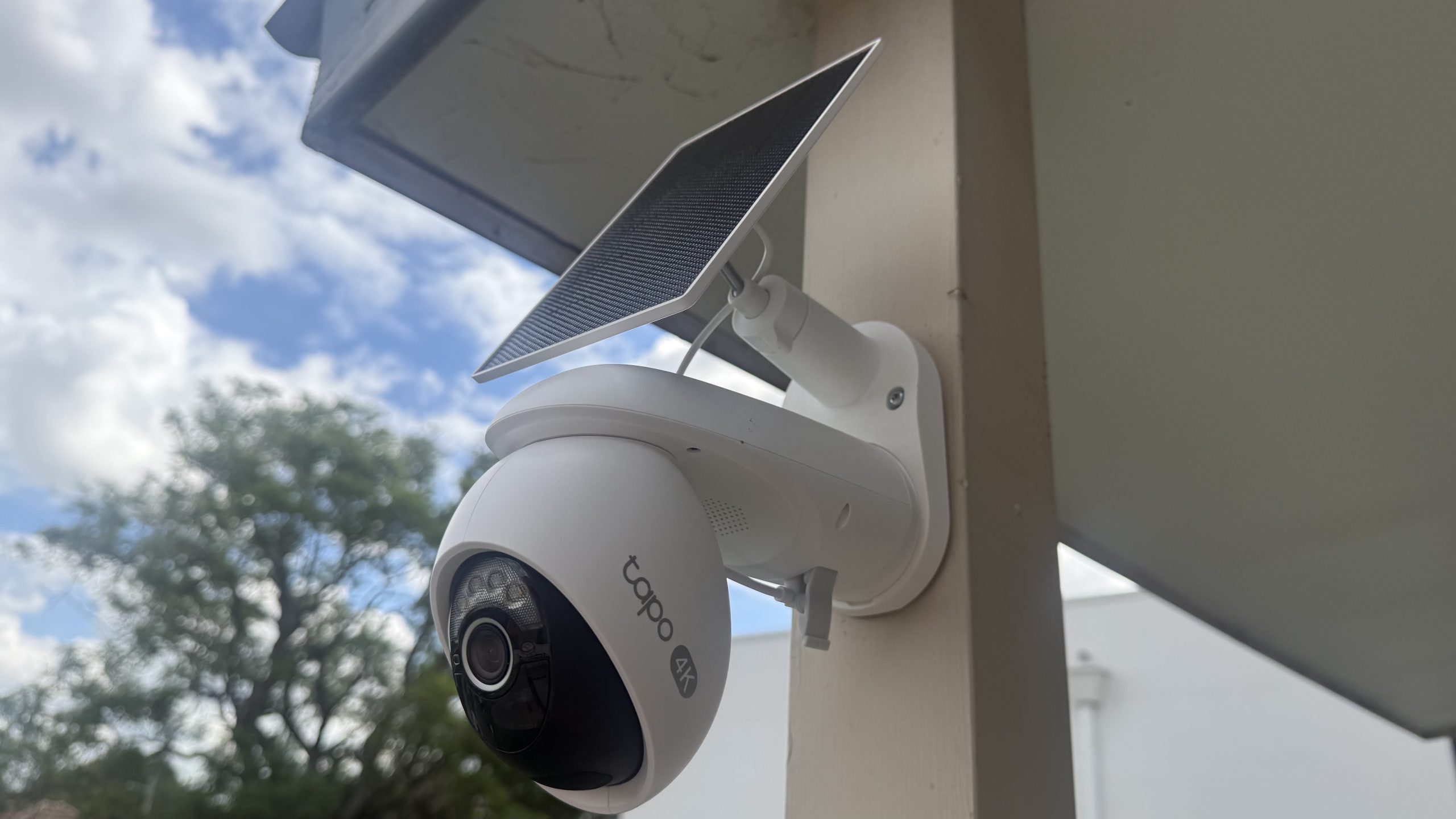
Ever since the early web, people have been streaming video with inexpensive webcams, and since the advent of the Raspberry Pi and its dedicated camera slot we’ve really seen how easy it can be to build security cameras or any other webcam and get it online quickly. But these cameras notably lack defensive capabilities if anyone tries to break into an area they shouldn’t be, and [John] added some features to this webcam to help defend his garage.

The webcam itself is a custom build, mounted on a custom-built tilt-and-pan mount that lets it freely rotate to view any location in the garage. Some custom software running on a Raspberry Pi lets it operate in autonomous mode or be controlled manually from an Android tablet. But for the defensive capabilities, it also carries a Nerf machine gun with a laser sight and spotlights which can all be controlled autonomously by the Raspberry Pi, including a computer vision system that lets it track various objects. While this is mostly a fun novelty for his security camera, the noise it makes might be enough to startle any would-be burglar.

[John] added a few other features to this build as well, including a speaker, which allows the system to be voice-controlled and to communicate back to the user. This lets him activate and deactivate the system using a verbal password. These types of Nerf guns are fairly popular for turrets as well, and some have practical uses as well like keeping cats from walking on the kitchen counters.

Advertisement

Source link

Advertisement
Continue Reading

Tech

The new Siri makes one of Apple’s most convenient OS features a cumbersome mess

Published

on

ai + ml

Goodbye, useful Spotlight; hello force-fed Apple intelligence bloatware that feels distressingly like Google AI Overviews

HANDS ON That new AI-juiced Siri that Apple rolled out last week at WWDC was supposed to set a new paradigm for on-device AI.

But don’t believe the hype coming out of Tim Cook’s final big event. After a week-long test drive, it seems like Apple just crammed Google AI Overviews on top of the most useful parts of its various operating systems and made the whole ecosystem more cumbersome to use. But hey, it has more AIs! 

Advertisement

I’ve been running the iOS and macOS 27 developer betas since they were made available on June 8, and I was blessed by the waitlist gods with access to the new version of Siri a few days after that. There are definitely some useful new features: Siri now carries on actual conversations, which makes it far more useful than the ask, get a response, we’re-done-here flow of the old Siri that left no room for clarifying questions or follow ups. Siri is now able to find things on my device more easily too – at least on my M1 MacBook. My iPhone 15 Pro has been telling me it’s still re-indexing my device after the update for more than a week, but I was still able to use it to conduct web searches and find some things on my phone – it’s possible this message itself was an error.

The dedicated Siri app is also nice in its own way, as it shows a record of every conversation I’ve had with the new Apple Intelligence front end for later review, but that comes with a caveat, too. Even the most brief questions  – the overnight weather  forecast, for example – is now stored in perpetuity, cluttering up the list of chats we’ve had until I manually delete it. The only apparent alternative is setting an expiration window for past chats and losing records of the more useful conversations we’ve had.

Who turned out my Spotlight?

Those are small inconveniences, however, compared to my biggest gripe with Siri AI: It’s completely ruined Spotlight. 

I’ve come to rely on Apple’s embedded search/launcher feature almost exclusively for digging up apps that I don’t keep a shortcut for, and on my iPhone, it’s the main method I use to kick off a web search because it’s so simple. Swipe down from the center of the screen, type what I want to search for, and tap on the item that points to my query as a Google search in Safari. Swipe, type, and a tap and I’m perusing a search result page. 

Advertisement

Not anymore. 

The new Siri-first interface that presumes that if you’re searching for anything but an app or file, you must want Siri to feed you a few links of Apple Intelligence’s choosing. 

Getting to a web search from a Spotlight query now requires multiple taps: Type your query, tap “Show Results” (careful: hitting enter will trigger Siri to craft a response, eliminating the possibility of seeing any actual Spotlight content), tap on “Show More” next to the list of Siri-surfaced web results, scroll down until you see Search Google (or whatever engine you have set as your default), then tap that. 

Maybe I’m being a grumpy old journalist who likes things the way they used to be, the transformation of Spotlight into a Siri interface seems like intentional degradation of a basic feature in order to front-load an AI that in my experience so far is largely an inconvenience.

Advertisement

Overall, the experience reminds me of Google’s much-maligned and often wrong AI Overviews, which push actual search results down the page in favor of force-fed info from Google Gemini.

There’s a logical reason for the similarity. At the end of 2025, Apple replaced its former AI chief John Giannandrea, formerly Google’s SVP of search and AI, in a bid to right the Siri ship. Taking his place was another Google alum with even closer ties to The Chocolate Factory’s AI strategy, Amar Subramanya, who spent 16 years there, including a turn as the head of Gemini engineering. Subramanya, now Apple’s VP of AI, now reports directly to Apple’s SVP of software engineering, Craig Federighi, who himself has assumed responsibility for Apple’s machine learning initiatives, including the construction of Apple foundation models. 

As we learned at WWDC last week, Apple has leaned heavily on a partnership with Google to build its foundation models, and it appears Subramanya has brought some of that Google AI ethos with him as well.

So, what’s the alternative to the new AI bloat in iOS 27? Siri can still be turned off entirely in the Settings app, so there’s that, but I’ve decided to take another tack and use one of Apple’s other AI features to get what I want. 

Advertisement

As the iMaker mentioned at WWDC, you can now create shortcuts (tiny scripts that automate basic tasks) by making a natural language request to Siri. In my case, I asked it to build a shortcut I could drop on my home screen to do a Google search with whatever text I input. It works perfectly, and is available to duplicate on your own iDevice should you see fit. 

Again, this is a developer beta, so it’s entirely possible that Apple will wise up and stop burying basic Spotlight search functionality before its 27 series of OSes release to the public this fall. We asked Apple if the change was intentional, but didn’t hear back. ®

Source link

Advertisement
Continue Reading

Tech

beyerdynamic DT 30 IE In-Ear Monitors Launch for Musicians at $159

Published

on

beyerdynamic has expanded its professional in-ear monitor lineup with the new DT 30 IE, a more affordable stage-focused IEM designed for musicians who need proper monitoring without jumping straight into the custom-molded or higher-end pro IEM category.

Priced at $159.99, the DT 30 IE sits below beyerdynamic’s DT 70 IE Series ($579.99) and is aimed at singers, drummers, guitarists, church musicians, rehearsal spaces, and working performers who are ready to move beyond floor wedges or consumer earbuds. Cheap earbuds on a loud stage are not a monitoring solution. They are a cry for help with a 3.5mm plug.

A More Affordable Entry Into beyerdynamic’s Pro IEM Lineup

Rather than offering instrument-specific tuning like DT 70 IE Series offers, beyerdynamic is positioning DT 30 IE as the versatile all-rounder in the lineup. That makes sense at this price. Most musicians shopping at $159 are not buying four pairs of IEMs and picking one based on whether they are playing bass, keys, or trying to survive playing with a rather enthusiastic drummer. The DT 30 IE is designed to be an affordable in-ear monitoring system for performers who need a more reliable, isolated, and balanced option for live work.

Related Review: Beyerdynamic DT 7x IE Series IEMs Review: Four Tunings For Stage Life

Advertisement
beyerdynamic-dt-30-ie-iems-back
beyerdynamic DT 30 IE

11mm Dynamic Driver and Balanced Stage Monitoring

Inside the DT 30 IE is an 11mm dynamic driver with a stated frequency response of 5Hz to 20kHz. beyerdynamic says the tuning is balanced and neutral, with a focus on monitoring rather than casual listening.

That distinction matters. A lot of consumer earbuds are tuned to impress quickly, with boosted bass and hyped treble that sound exciting during a commute or a quick demo. That can be fun for playlists, but it is not what a musician needs when pitch, timing, vocal placement, click tracks, backing tracks, and the rest of the band all have to be heard clearly without fighting the mix.

Up to 39dB Passive Isolation

One of the most important specs here is up to 39dB of passive noise isolation. For live performers, that may matter more than any exotic driver claim.

Stage volume can get ugly fast. Loud drummers, guitar amps, bad venue monitoring, crowd noise, and unpredictable room acoustics can wreck a performance before the first chorus. Passive isolation helps musicians hear their own mix more clearly at lower volumes, which is better for focus and potentially better for long-term hearing health.

The DT 30 IE includes three pairs of silicone ear tips and three pairs of foam ear tips in small, medium, and large sizes. That is not just accessory padding. With in-ear monitors, the seal matters. A poor fit can reduce bass response, weaken isolation, and make the sound less consistent from one listen to the next.

Advertisement

Lightweight Shells Built for Long Sets

The DT 30 IE weighs 2.7 grams per side, which is extremely light for a stage IEM. beyerdynamic says the shell shape was developed using hundreds of ear scans, with the goal of creating a secure, ergonomic fit that stays in place during long rehearsals and full sets.

That lines up with what we found in our coverage of the DT 70-73 IE Series. beyerdynamic’s recent pro IEM designs are compact, lightweight, and clearly intended for real-world use rather than desk-bound audiophile pampering. Fit still matters, and memory wire can be a little fussy depending on your ears, but the company has been taking stage comfort seriously.

Advertisement. Scroll to continue reading.

The DT 30 IE also uses an over-ear cable design with integrated memory wire to help keep the monitors locked in place during movement.

Advertisement

Rugged Enough for Stage Abuse

Beyerdynamic has also given the DT 30 IE some practical durability features. The monitors carry an IP54 rating for protection against dust and water splashes, which is useful for sweat, rehearsal rooms, outdoor gigs, and the general filth of live music life.

beyerdynamic-dt-30-ie-iems-with-cable
beyerdynamic DT 30 IE

The included 1.4-meter Kevlar-reinforced detachable cable uses MMCX connectors and terminates in a 3.5mm 3-pole plug. The cable is designed to minimize handling noise, while the detachable design means it can be replaced if it fails. Gold-plated connectors, spare foam cerumen filters, and separately available replacement parts also point to a product intended to survive beyond one tour, one semester, or one chaotic weekend of bar gigs.

The package includes the cable, silicone tips, foam tips, spare filters, quick start guide, and carrying case.

How the DT 30 IE Fits Below the DT 70 IE Series

The DT 70 IE Series remains the more advanced and specialized option in beyerdynamic’s in-ear monitor range. In our review of the DT 70-73 IE models, the key story was how beyerdynamic used the same basic platform across four versions but tuned each one for a specific use case.

Advertisement

The DT 30 IE strips that idea down to something more accessible. One model. One price. One all-purpose tuning.

That may actually be the smarter move for a lot of musicians. Not everyone needs a dedicated IEM for drum monitoring, vocal work, classical instruments, or neutral reference listening. A lot of performers just need something that isolates well, fits securely, sounds balanced, and does not cost more than the gig pays.

At $159.99, the DT 30 IE is clearly aimed at that audience.

Advertisement

The Bottom Line

The DT 30 IE is for musicians who are ready to stop using consumer earbuds or fighting bad floor wedges and move into proper in-ear monitoring. It should make the most sense for vocalists, drummers, guitarists, keyboard players, worship musicians, rehearsal bands, small venue performers, and anyone who needs isolation and reliable monitoring without spending custom-IEM money.

It is probably not the IEM for listeners chasing luxury materials, exotic multi-driver configurations, or boutique tuning drama. This is a stage tool first.

That is not a bad thing. In fact, it might be the entire point. The DT 30 IE looks like beyerdynamic’s attempt to bring its pro IEM thinking to a price that working musicians can actually justify. For $159.99, that could make it one of the more practical new in-ear monitor options for performers who need to hear themselves clearly before the room, the drummer, or the house mix ruins the evening.

Price & Availability

The beyerdynamic DT 30 IE retail for $159.99 through beyerdynamic and authorized retailers. However, we currently see them on sale for $119 at Audio46.

Advertisement
Advertisement. Scroll to continue reading.

Source link

Continue Reading

Tech

HPE Tempts VMware Users, Partners With Year of Free Virtualization Software

Published

on

An anonymous reader quotes a report from Ars Technica: Hewlett Packard Enterprise’s (HPE) new virtualization software promotion will likely pique the interest of end users and resellers who are unhappy with Broadcom’s pricing of VMware. During its HPE Discover event in Las Vegas this week, HPE announced that customers could use its “HPE Morpheus Software — VM Essentials” offering for free for “up to one year,” per a press release. HPE’s website describes its virtualization platform as a “VMware alternative.” It includes a hardware virtual machine (HVM) hypervisor and unified management and lets users “manage VMware ESXi and HVM clusters from one console and migrate when you’re ready,” HPE’s website says. “New VM Essentials customers can receive up to one free year of licenses for VM Essentials, a year of HPE Zerto for $1 to support non-disruptive migration to HPE virtual machines, and 0 percent interest on software through HPE Financial Services,” HPE’s announcement reads, referring to HPE’s group for helping IT teams manage funding.

Free for a year is cheaper than what Broadcom has charged for VMware vSphere since taking over. VMware prices have skyrocketed due to VMware’s parent company eliminating perpetual licenses and bundling products into expensive packages. Notably, per its website, HPE recommends charging $600 per CPU socket per year for VM Essentials; Broadcom has controversially shifted vSphere licensing pricing to a per-core basis. “Customers are feeling quite a bit of pain in the change that some of the virtualization companies have put there, specifically Broadcom,” Jeremiah Jenson, VP of HPE’s North American channel and partner ecosystem, told CRN. The executive claimed that VM Essentials could bring up to 90 percent cost savings compared to VMware while also helping to “eliminate vendor lock-in and simplify hybrid IT.”

From March 1 to June 30, HPE has also been offering a free year of VM Essentials via rebate to customers who buy an AMD server and a one-year VM Essentials license. VM Essentials is only available through channel partners, a stark contrast from Broadcom’s VMware approach, where the chip giant has drastically reduced the number of resellers that can sell VMware products. HPE’s new promotion aims to entice customers to more deeply consider migrating off VMware. […] HPE also announced that it would give 600 reseller partners who earn the HPE partner program’s Private Cloud with Virtualization competency by the end of the year free VM Essentials software licenses for three years. Partners still have to pay support costs, though. The benefit is “a step in the correct direction,” said Dean Colpitts, CTO of Canadian managed services provider (MSP) Members IT Group (MITG), which VMware cut from its reseller program after 19 years of partnership a year ago. However, limiting the promotion to 600 partners is “very shortsighted.” He believes that HPE should give all of its partners VM Essentials “to facilitate getting [VM Essentials] into customer sites and displacing the competitors.”

“They need to fling [VM Essentials] as far and as fast as they possibly [can] to immediately gain traction and draw ISVs to them, which will increase adoption even more,” he said.

Advertisement

Source link

Continue Reading

Tech

Cyberattack sees crops kept in the ground

Published

on

CYBER-CRIME

Sugar cane in the field

A cyberattack on Australia’s second-largest sugar producer has forced farmers to keep crops in the ground, and looks like denting their incomes.

Advertisement

Mackay Sugar, based in the Australian state of Queensland, processes sugar cane farmed in nearby districts. The company disclosed a cyberattack on June 10 and limited operations while it dealt with the fallout. 

Some operations remain restricted, but the company said on Monday that it managed to perform some manual crushing at its Farleigh Mill site, working with sugar cane that was harvested before the attack.

“Significant progress has been made over the weekend in restoring the systems that support cane supply, harvesting, and mill operations,” Mackay Sugar said in a statement.

“Steam trials are now underway, and subject to final validation activities, some harvesting is expected to recommence this week in preparation for the staged restart of crushing operations later this week.”

Advertisement

While the company is optimistic it can resume crushing, it’s advised growers not to harvest their crops for the time being.

That edict works for Mackay Sugar because sugar producers need to process crops within 48 hours of harvest. Doing so preserves high sugar content and overall yield. Delaying the processing for any longer after harvesting could result in sucrose converting to simple sugars, unwanted fermentation, and lower yields. 

But late harvesting can reduce the quality of cane, reducing the price they earn for their crops. Interrupted harvesting also impacts the railways used to move cane from farms to mills.

Mackay Sugar acknowledged the impact its downtime could have on growers and other partners, and committed to restoring systems safely.

Advertisement

“We are communicating directly and regularly with our employees, growers, and key partners,” it said. “We recognise the impact this incident is having on our growers, and we are doing everything we can to support them and to safely resume full operations as soon as possible.

“We take our responsibility to protect our systems, operations, and information very seriously. We apologise for any disruption this incident has caused and will continue to provide updates as we continue our investigation.”

The company operates three mills across Queensland, two of which were operating at a limited capacity due to the attack.

Its Racecourse Mill, described as the heart of the business and home to its corporate offices, was among those affected. Racecourse Mill typically generates 213,000 tons of raw sugar and 58,000 tons of molasses a year, and the site’s cogeneration plant generates 156,000 MWhs of renewable electricity a year, around 71 percent of which is sent back into the national electricity grid.

Advertisement

Mackay’s mill in Farleigh, the company’s oldest, was also affected. It typically produces around 196,000 tons of raw sugar and 49,000 tons of molasses per year.

The company’s largest and most productive factory, Marian Mill, was unscathed.

Ungentlemanly conduct

Cybercrime group The Gentlemen claimed responsibility for the attack on Mackay Sugar, posting the company to its data leak site without offering any details about the attack or whether it stole data to use as leverage for extortion demands.

Cyber threat intelligence professionals have known of the group for almost a year, after spotting it in July 2025 and classifying it as a ransomware-as-a-service provider. 

Advertisement

However, there is no evidence that ransomware was used in the attack on Makay Sugar. The company has never mentioned ransomware in its statements, referring to the attack only as a “cyber security incident.”

However, The Gentlemen is known for using file-encrypting malware in its double extortion attacks.

The group caught the attention of Microsoft’s researchers, who last month published a deep dive into how it carries out attacks.

Microsoft’s report noted that not only do The Gentlemen affiliates have access to a powerful file encryptor, but also one that self-propagates, which “increases the likelihood of widespread impact once initial access is achieved.”

Advertisement

It has also recently established a partnership with BreachForums, which allows the group to recruit prospective new affiliates with different skillsets, such as penetration testers and initial access brokers. ®

Source link

Continue Reading

Tech

Avatar, Interstellar, The Rolling Stones and Breakfast at Tiffany’s: I took a look at the Blu-ray reference library used by the world’s biggest AVR maker to develop its home theater gear

Published

on

I recently visited the Japanese factory where Denon and Marantz make the hi-fi and home theater gear, and the best part of the seeing the facility was getting a demo of the reference home theater listening there, with its 9.4.6 channels of Dolby Atmos sound delivered via $250k of Bowers & Wilkins speaker.

While snooping around the room, the shelving in the corner that houses their disc library naturally caught my eye. Marantz’s engineers had already told me that they consider Gravity to be one of the ultimate stress tests for AVRs (you can read why in the piece I linked above), but what else do they keep on hand for testing AV receivers and other gear?

Source link

Continue Reading

Tech

Why Weibo’s tiny VibeThinker-3B has the AI world arguing over benchmarks again

Published

on

On Sunday, a team of nine researchers at Sina Weibo — the Chinese social media giant better known for its microblogging platform than for cutting-edge artificial intelligence — quietly posted a 14-page technical report to arXiv that sent shockwaves through the AI research community. Their claim: a language model with just 3 billion parameters can match or exceed the reasoning performance of flagship systems from Google DeepMind, OpenAI, Anthropic, and DeepSeek that are hundreds of times larger.

The model, called VibeThinker-3B, scored 94.3 on AIME 2026 — the American Invitational Mathematics Examination, one of the most demanding standardized math competitions in the world. That figure places it alongside DeepSeek V3.2, a model with 671 billion parameters, and ahead of Gemini 3 Pro, Google’s high-performance flagship reasoning system, which scored 91.7. With a test-time scaling technique the team calls Claim-Level Reliability Assessment, the score climbs to 97.1, edging past virtually every system in the public record.

Within hours of publication, the paper had drawn 62 upvotes on Hugging Face’s daily papers feed, the model repository had accumulated 130 likes, and the GitHub repository had reached 685 stars. But the reaction on social media was not uniformly celebratory. It was, in many cases, deeply skeptical.

“WHAT THE HELL is happening in AI?” wrote the user @orcus108 on X, in a post that accumulated over 161,000 views. “A 3B parameter model just put up coding benchmark scores in the same league as Claude Opus 4.5… I genuinely don’t know if this is a breakthrough or if the benchmarks are broken.”

Advertisement

That tension — between genuine scientific advancement and the growing suspicion that AI benchmarks have become gameable to the point of meaninglessness — sits at the heart of the VibeThinker-3B story. And the answer matters enormously, not just for academic bragging rights, but for the multibillion-dollar question of whether the AI industry’s relentless push toward ever-larger models is the only path to intelligence.

Benchmark scores that defy the scaling laws of modern AI

The results reported in the technical report are, by any conventional standard, extraordinary.

On the mathematics side, VibeThinker-3B achieved 91.4 on AIME 2025, 94.3 on AIME 2026, 89.3 on HMMT 2025 (the Harvard-MIT Mathematics Tournament), 93.8 on BruMO 2025 (the Brown University Math Olympiad), and 76.4 on IMO-AnswerBench, a benchmark comprising 400 problems at the level of the International Mathematical Olympiad. In coding, it posted an 80.2 Pass@1 on LiveCodeBench v6, a benchmark designed to test executable code generation, and achieved a 96.1 percent acceptance rate on unseen LeetCode weekly and biweekly contests from late April through late May 2026. On instruction following, it scored 93.4 on IFEval.

To put the parameter disparity in perspective: DeepSeek V3.2 has 671 billion parameters — roughly 224 times the size of VibeThinker-3B. GLM-5, from Zhipu AI, has 744 billion parameters. Kimi K2.5, from Moonshot AI, exceeds 1 trillion. VibeThinker-3B’s 3 billion parameters could run on a consumer laptop.

Advertisement

The researchers frame this result not as an anomaly but as evidence for a broader theoretical claim. They introduce what they call the “Parametric Compression-Coverage Hypothesis,” which argues that different types of AI capability have fundamentally different relationships to model size. Verifiable reasoning — the kind tested by math competitions and coding challenges, where answers can be definitively checked — is what the paper calls a “parameter-dense” capability: one that can be compressed into a compact core. Open-domain knowledge, by contrast, is “parameter-expansive,” requiring broad coverage across facts, concepts, and edge cases that inherently demands more parameters.

The paper acknowledges this distinction directly. On GPQA-Diamond, a graduate-level science knowledge benchmark, VibeThinker-3B scored just 70.2 — well behind the 91.9 achieved by Gemini 3 Pro and the 87.0 scored by Claude Opus 4.5. The authors write that this gap “is consistent with our claim rather than a contradiction to it: the main finding is not that a 3B model has fully replaced leading general-purpose models, but that a small model can reach first-tier performance on many verifiable reasoning tasks.”

Inside the four-stage training pipeline that powers a tiny reasoning engine

VibeThinker-3B is not built from scratch. It is post-trained on top of Qwen2.5-Coder-3B, a compact foundation model from Alibaba’s Qwen team, through what the Weibo AI researchers call the “Spectrum-to-Signal Principle” — a multi-stage pipeline first introduced in the team’s earlier VibeThinker-1.5B work in November 2025.

The training unfolds in four major phases. The first is a two-stage supervised fine-tuning process that uses curriculum learning: the model first trains on a broad mixture of math, code, STEM reasoning, general dialogue, and instruction-following data, then shifts to a curated subset of harder, longer-horizon reasoning problems. In the second stage, samples with reasoning traces shorter than 5,000 tokens are discarded, and problems that VibeThinker-1.5B can solve more than 75 percent of the time are filtered out, forcing the model to focus on genuinely difficult challenges.

Advertisement

The second phase applies reinforcement learning across multiple domains — mathematics, code, and STEM — using the team’s MaxEnt-Guided Policy Optimization algorithm, or MGPO, which prioritizes training on problems at the model’s current capability boundary rather than problems it already solves easily or finds impossible. Notably, the team found that a strategy that worked well at the 1.5B scale — progressively expanding the context window during RL training — actually hurt performance at 3B. They hypothesize that the stronger starting checkpoint meant that truncating reasoning traces during warm-up was no longer removing noise but disrupting valid reasoning patterns. The solution was to train with a single 64,000-token context window throughout.

Within the math RL phase, the team also introduces what it calls “Long2Short Math RL,” a secondary optimization stage that redistributes rewards to favor shorter correct solutions over longer ones, reducing verbosity without sacrificing accuracy. The technique uses a zero-sum reward redistribution that avoids biasing the overall reward signal while nudging the model toward more efficient reasoning.

The third phase extracts high-quality reasoning trajectories from the RL-trained checkpoints and distills them back into a unified model through supervised fine-tuning. The team uses a “learning-potential score” — essentially the student model’s perplexity on each teacher trajectory — to prioritize traces that are correct but that the student has not yet internalized. The final phase, called Instruct RL, applies reinforcement learning on instruction-following tasks using a combination of rule-based validators for format constraints and rubric-based reward models for open-ended quality assessment.

Francesco Bertolotti, an AI researcher who flagged the paper early on X, described the approach succinctly: “These results were achieved primarily through post-training refinements on Qwen2.5-Coder. The paper doesn’t provide many details, but it appears they distill from RL ckpts and then do a final RL-based instruct RL.” His post drew over 161,000 views.

Advertisement

Real-world testing reveals the gap between benchmark scores and practical AI performance

For every enthusiastic reaction, the paper drew an equally forceful objection. The AI research community in mid-2026 has grown deeply wary of benchmark-driven claims, and VibeThinker-3B arrived in an environment primed for suspicion.

“The benchmarks are literal pattern matching single file coding,” wrote @BigMoonKR on X. “It has no relation to actual coding work. I don’t know how people still don’t get this.”

“Benchmaxxing,” declared @oflu_bedirhan, using a term that has become shorthand in the AI community for models that appear optimized specifically for benchmark performance at the expense of real-world utility.

The most pointed criticism came from users who actually downloaded and tested the model. “Just tried the full precision,” wrote @politilols. “It doesn’t even know what a uv script (so the most popular Python dev tool) is. Haven’t seen that in a single LLM in at least a year now. Benchmaxxed.” When Bertolotti responded that the model seemed more focused on mathematical reasoning than practical coding, the user countered: “They include a livecodebench score. Zero chance that is reflective of the model.”

Advertisement

@Itsdotdev raised a structural criticism: “Look into the benchmarks themselves and it probably won’t be so shocking. Why no DeepSWE? Why none of the standard benchmarks SOTA providers use?” The user @AvenirReym posed a more diagnostic question: “If it holds on a benchmark made after the model’s training cutoff, it’s real. If it only wins on AIME-style sets that have been circulating for years, it’s leakage.”

The paper’s authors appear to have anticipated these objections. The technical report states that training sets “have undergone strict benchmark decontamination,” including n-gram-based filtering to remove “n-gram overlaps with evaluation sets.”

The LeetCode contest evaluation — which covers contests from April 25 to May 31, 2026, dates that postdate any plausible training data cutoff — represents the most robust guard against data contamination concerns. On those contests, VibeThinker-3B passed 123 out of 128 first-attempt submissions, a 96.1 percent rate that exceeded GPT-5.2, Doubao Seed 2.0 Pro, Kimi K2.5, and Claude Opus 4.6 under identical evaluation conditions.

Still, real-world user reports suggest a significant gap between benchmark performance and practical utility — a phenomenon that has become familiar across the industry. “In LM Studio it only responds well to first question, next questions reply to the first question,” reported @luismolinaab.

Advertisement

Why a social media company may have found a crack in the scaling hypothesis

Even the sharpest critics acknowledged that achieving these benchmark numbers at 3 billion parameters — regardless of how transferable they are to production use cases — is a meaningful engineering achievement. “Even if it’s benchmaxxing doing so with 3B parameters is fascinating, goes to show how fast this field is progressing,” wrote @rohityin.

The observation cuts to a question that has consumed the AI industry since the advent of the scaling hypothesis: Is bigger always better? The conventional wisdom, articulated most famously in the Chinchilla scaling laws and reinforced by the commercial dominance of ever-larger foundation models, holds that more parameters and more training data reliably yield better performance. The economic corollary is stark: training and deploying frontier models costs tens or hundreds of millions of dollars, creating enormous barriers to entry.

VibeThinker-3B challenges that consensus — but only partially. The paper is careful to draw a boundary around its claims, distinguishing between tasks with “clear verification signals” and those that require broad factual knowledge. The Parametric Compression-Coverage Hypothesis explicitly argues that small models cannot replace large ones across the board.

“The true significance of VibeThinker-3B does not lie in proving that a 3B model can replace large-scale generalists,” the paper states, “but rather in providing a concrete empirical signal: the development of compact models is no longer merely a passive compromise for deployment efficiency or cost control; it emerges as a promising research trajectory that is fundamentally complementary to the traditional parameter scaling paradigm.”

Advertisement

Perhaps the most surprising element of the work is its provenance. Sina Weibo — publicly traded on Nasdaq and Hong Kong, with a market capitalization that fluctuates in the single-digit billions — is not a company typically associated with frontier AI research. Yet the VibeThinker series is Weibo’s second major open-source AI contribution in seven months. 

VibeThinker-1.5B, released in November 2025, demonstrated that a model with just 1.5 billion parameters could outperform the original DeepSeek R1 on several math benchmarks — a result the team achieved for what it claimed was a post-training cost of just $7,800, compared to the $294,000 estimated for DeepSeek R1.

The research team is compact — nine authors, all listed as Sina Weibo Inc. employees. The model is released under the MIT License, one of the most permissive open-source licenses available, and the weights are freely downloadable from both Hugging Face and ModelScope. Within the first day of release, community members had already created GGUF quantizations and derivative models.

Small models, big implications, and the question the AI industry can no longer avoid

The most honest assessment of VibeThinker-3B may be that it is simultaneously less and more than what the benchmarks suggest. Less, because a model that struggles with basic knowledge of popular developer tools is unlikely to replace any production-grade coding assistant anytime soon. More, because the underlying insight — that reasoning ability and factual knowledge are partially decoupled, and that the former can be compressed far more aggressively than previously assumed — has profound implications for how the industry thinks about model design, deployment economics, and the accessibility of advanced AI capabilities.

Advertisement

If the Parametric Compression-Coverage Hypothesis holds, it suggests a future in which small, specialized reasoning engines operate alongside large knowledge-rich models in hybrid architectures — a vision where a 3-billion-parameter model handles the logical heavy lifting while a larger system supplies the factual grounding. Such an architecture could dramatically reduce the cost of deploying AI reasoning capabilities, potentially bringing competition-level mathematical and coding performance to devices with modest hardware.

“The interesting part is that we’re starting to separate knowledge from reasoning,” wrote @RealLambdaFlux on X. “A small model with strong post-training can punch way above its size on tasks with clear feedback.”

@cmitsakis suggested the practical endgame: “I think small models are the future for agents because they can use tools to get the knowledge and they can run fast and cheap.”

Whether that future arrives through VibeThinker-3B specifically, or through the dozens of teams now racing to reproduce and extend these results, the paper has already accomplished something that no benchmark score can fully capture.

Advertisement

It has forced the AI community to confront an uncomfortable possibility: that for years, the industry may have been spending billions of dollars scaling up parameters to improve a kind of intelligence that could have fit, all along, on a laptop. The weights are public. The code is open. And the most important test isn’t on any leaderboard — it’s whether anyone can make a model this small actually useful in the real world.

Source link

Continue Reading

Trending

Copyright © 2025