New York City has always been a place that people flock to—to live, to work, to visit, or to play. It’s big and exciting, and there’s almost always something happening: a new play, a new exhibit, or a new restaurant opening.
According to a 2024 report by venture capital firm SignalFire, NYC experienced a tech boom in 2023, becoming the top destination for people relocating with tech jobs, with around 15 percent of them choosing the Big Apple as their destination.
This isn’t the first time the city has seen an influx of technology workers; the 1990s tech boom saw Manhattan’s Flatiron District take off as a hub for high-tech companies, even going so far as to being nicknamed “Silicon Alley.”
That area has since spread, moving its way downtown to Soho, west to Hudson Yards, and more recently over the bridge(s) and into Brooklyn—specifically Dumbo, the Brooklyn Navy Yard, and Downtown Brooklyn, forming the Brooklyn Tech Triangle.
Advertisement
Dumbo, which stands for “Down under the Manhattan Bridge overpass,” is situated between the Brooklyn and Manhattan Bridges on the East River waterfront. The popular neighborhood has great views of Manhattan and the bridges, and an ever-expanding food and drink scene to keep you fed while working and making time to play.
Jump to Section
Where to Stay
Courtesy of 1 Hotel Brooklyn Bridge
60 Furman St., (347) 696-2500
Advertisement
If you’re going to stay in Dumbo, you’re going to want views of the Manhattan skyline, the East River, and the iconic bridges that extend between the two, and 1 Hotel Brooklyn Bridge offers that and more. Yes, there is a gym and spa, but there’s also a rooftop pool, which comes in quite handy on those stupidly hot summer days. James Beard Award–winning restaurateur Jonathan Waxman recently brought his iconic West Village restaurant, Barbuto, to the hotel. On the 10th Floor, find Harriet’s Lounge for sushi, bao buns, and wagyu toasts. From 10 pm on Friday, Saturday, and Sundays, listen to live DJs spinning sets while you enjoy craft cocktails and the view.
Don’t forget to end the day with a sustainable drink (or two) at Harriet’s Rooftop, just one floor up from the lounge, for more iconic sunset views. The hotel is pet-friendly, and there’s a café serving espresso, fresh-pressed juices, and artisanal and locally sourced snacks. There’s also a farm stand in the lobby daily from 7 am to 4 pm; grab seasonal fruits that, while they may look “ugly,” are perfect in taste, and all part of the hotel’s sustainability mission.
85 Flatbush Ave Ext., (718) 329-9537
About a 10-minute walk to the bridges and Brooklyn waterfront, The Tillary is a slightly more affordable stay for the area, but still boasts a lobby cafe and rooftop garden bar. Featuring pet-friendly rooms and a fully-equipped gym, this hotel is a great option for still being close to the action, but saving a bit more money. The lobby café offers an affordable range of options (think $4 for an English muffin with egg and cheese and up to $14 for a vegetarian wrap), while the rooftop has a variety of sandwiches, salads, and beverages (both n/a and boozy) to keep you from needing to stray too far.
Advertisement
Courtesy of Ace Brooklyn
252 Schermerhorn St., (718) 313-3636
Technically in Boerum Hill, bordering Downtown Brooklyn, the Ace Hotel is a boutique hotel with trendy furnishings and warm vibes, plus a fitness center. They feature a rotating artist in residence and DJ’s spinning in the lobby most weekend nights. For food, there’s Lele’s Roman, featuring a rotating selection of Roman Aperitivo bites daily from 5 to 7 pm, or hit them up for breakfast (lots of egg options!), lunch (panini, pizza, salad!), and dinner (pasta! pizza! classic contorni!). Don’t feel like Italian? Try Koju for an omakase experience set to a carefully curated vinyl music program.
Where to Work
Photograph: Michael Lee/Getty Images
68 Jay St., (718) 210-3650
Advertisement
Whether you’re looking for fully enclosed office spaces monthly or long-term, a coworking space, or a conference room, Greendesk has got you covered for a very reasonable price. The space is fully furnished with 24/7 access, high-speed internet, kitchens, and a cleaning service.
Multiple locations
From the SOHO House team, SOHO Works is a network of office spaces; rent a meeting room or use the shared lounge space, plus get access to SOHO member events and amenities. Work at either location—10 Jay Street or 55 Water Street—by the hour or rent by the day.
295 Front St., (347) 414-8782
Advertisement
Located in Vinegar Hill, the Bond Collective has numerous options for you to work, whether you need a dedicated desk, private office, team suite, conference rooms, coworking, or simply a day pass. You’ll have 24/7 access, Wi-Fi, fruits, snacks, and breakfast, plus unlimited printing.
Where to Get Your Coffee
Courtesy of Jacques Torres Chocolate
66 Water St., (718) 875-1269
Located on Water Street and open daily from 10 am to 7 pm, this flagship location of the famous chocolatier is where it all began 25 years ago. Here, you’ll find handmade confections, hot chocolate, and ice cream sandwiches. Sample it all, then grab a few things to take with you to share with friends (or not—sharing is overrated).
Advertisement
85 Water St., (718) 797-5026
Almondine has been in Dumbo for over 20 years. Opened by French baker Herve Poussot, this unpretentious bakery thrives on tradition, innovation, and evolution. You’ll feel as though you’ve been transported right to Paris with the fresh bread, croissants, and cakes. They even have a daily lunch special from 12 to 3 pm; choose from a half sandwich, then pair it with a soup, salad, cookie, and half-priced drink for only $18.
45 Washington St., (212) 924-7400
Grab a coffee here before strolling down Washington Street (it’s literally located at one of the most iconic spots that people snap photos of the bridge, so beware of influencers posing in the middle of the street) to the waterfront for a nice break and some fresh air.
Advertisement
Where to Eat
Courtesy of Vinegar Hill House
72 Hudson Ave., (718) 522-1018
This is the place you go when you want a relaxed environment with incredible food in cute surroundings. Dining in the outdoor garden is cozy and comforting, while the inside is vintage-inspired and laid back. The menu, while also simple and comforting, is consistent and hits every time.
68 Jay St. #119
Advertisement
Open Tuesday to Friday from 10 am to 2-ish, this unassuming French-style bakery from Ayako Kurokawa is tucked away in the lobby of 68 Jay Street. The pastries, though French in style, are inspired by Kurokawa’s Japanese upbringing. Scones, cookies, cakes, and slices of pie are all served on silver platters, with handwritten labels on blue paper. The gateau basque is a popular item; go early, as they sell out daily.
1 John St., (718) 522-5356
Opened in 2017, Celestine is the kind of spot that feels chill enough to be your neighborhood go-to, while also special enough to go for a celebration. The menu includes thoughtful vegetable-heavy starters and sides, as well as whole branzino and a 14-ounce ribeye. With floor-to-ceiling windows, there’s not a bad seat in the house to enjoy your meal with a view of the East River and all its happenings.
147 Front St.
Advertisement
This intimate, 10-seat chef’s counter offers a tasting menu and à la carte menu, featuring oysters, crudo, and natural wines by the glass. Try the caviar Frito pie: an open bag of Fritos topped with entirely too much caviar and creme fraiche.
1 Front St., (718) 858-4300
Originally opened in 1990 by Patsy Grimaldi and his wife, Carol, Grimaldi sold the business in 1998 to Frank Ciolli. Grimaldi is of the Patsy’s of Harlem lineage (Patsy is his uncle, from whom he learned to make pizza at age 12). In 2000, Grimaldi’s moved locations next door to their original spot where they continue to sell whole pies in a coal-fired oven.
19 Old Fulton St., (718) 596-6700
Advertisement
If you like a side of gossip with your slice, then Juliana’s is the place to go. Patsy and Carol Grimaldi opened Juliana’s in the original Grimaldi’s location at 19 Old Fulton Street in 2012, which caused a stir in the pizza community, since it’s located next door to Grimaldi’s, their previous business. They even got their original coal-fired oven back. Named after Patsy’s mother, Juliana’s serves coal-fired pizza, meatballs, and salads. They also sell four flavors of par-cooked pies to “take & bake” at home. Try an egg cream—a New York City classic of milk, chocolate or vanilla syrup, and seltzer made frothy by whisking the three ingredients vigorously until foamy. Grub Street called it the best in the city in 2017.
This article is crossposted from IEEE Spectrum’s careers newsletter. Sign up now to get insider tips, expert advice, and practical strategies, written in partnership with tech career development company Parsity and delivered to your inbox for free!
Engineers today are caught in a strange new reality. We’re expected to move faster than ever using AI tools for coding, analysis, documentation, and design. At the same time, there’s a growing worry in the background: If the AI is doing the work, what happens to my skills?
That concern isn’t just philosophical. Research from Anthropic, the company behind Claude, has suggested that heavy AI assistance can interfere with human learning—especially for more junior software engineers. When a tool fills in the gaps too quickly, you may deliver working output without ever building a strong mental model of what’s happening underneath.
More experienced engineers often feel a different version of this anxiety: a fear that they might slowly lose the hard-earned intuition that made them effective in the first place.
Advertisement
In some ways, this isn’t new. We’ve always borrowed solutions from textbooks, colleagues, forums, and code snippets from strangers on the internet. The difference now is speed and scale. AI can generate pages of plausible solutions in seconds. It’s never been easier to produce work you don’t fully understand.
I recently felt this firsthand when I joined a new team and had to work in a codebase and language I’d never used before. With AI tools, I was able to become productive almost immediately. I could describe a small change I wanted, get back something that matched the existing patterns, and ship improvements within days. That kind of ramp-up speed is incredible and, increasingly, expected.
But I also noticed how easy it would have been to stop at “it works.”
Instead, I made a conscious decision to use AI not just to generate solutions, but to deepen my understanding. After getting a working change, I’d ask the AI to walk me through the code step by step. Why was this pattern used? What would break if I removed this abstraction? Is this idiomatic for this language, or just one possible approach?
Advertisement
The shift from generation to interrogation made a massive difference.
One of the most powerful techniques I used was explaining things back in my own words. I’d summarize how I thought a part of the system worked or how this language handled certain concepts, then ask the AI to point out gaps or mistakes. That process forced me to form my own mental models rather than just recognizing patterns. Over time, I started to build intuition for the language’s quirks, common pitfalls, and design style. This kind of understanding helps you debug and design, not just copy and paste.
This is the core mindset shift engineers need in the AI era: Use AI to accelerate learning, not to replace thinking.
The worst way to use these tools is also the easiest: prompt, accept, ship, repeat. That path leads to shallow knowledge and growing dependence. The better path is slightly slower but more durable. Let AI help you move quickly, but always come back and ask, Do I understand what I just built? If not, use the same tool to help you understand it.
Advertisement
AI can absolutely make us faster. Used well, it can also make us better at our jobs. The engineers who stay sharp won’t be the ones who avoid AI, they’ll be the ones who turn it into a collaborator in their own learning.
—Brian
When war strikes, critical power infrastructure is often hit. Engineers in Ukraine have risked their lives to keep electricity flowing, and some have been hurt or killed in the dangerous wartime conditions. One such engineer, Oleksiy Brecht, died on the job in January. “Brecht’s life and death are a window into the realities of thousands of Ukrainian engineers who face conditions beyond what most engineers could imagine,” writes IEEE Spectrum contributing editor Peter Fairley.
The semiconductor industry needs more engineers to build the chips that power our daily lives. To help expand the talent pool, the industry is testing new approaches, including training software engineers to design hardware with the help of AI tools. All engineers will still need to have an understanding of the fundamentals—but could computer science students soon apply their coding skills to help design hardware?
Effective writing and communication are among the most important skills for engineers looking to advance their careers. Though often labeled a “soft skill,” clear communication is essential in both academia and industry. IEEE is now offering a course covering key writing skills, ethical use of generative AI, publishing strategies, and more.
Moz Pro now includes AI-powered keyword suggestions, an AI Visibility feature in open beta, and the industry-standard Domain Authority metric, all starting at $39/month on annual billing. A 7-day free trial is available on Standard and Medium plans, and a free Moz Community account gives permanent access to limited versions of Keyword Explorer and Link Explorer at no cost. In a market where most SEO platforms charge $100+/month before you see any data, Moz Pro is the most affordable way to bring AI into your SEO workflow.
Disclosure: This article contains affiliate links. If you click through and make a purchase, we may earn a commission at no additional cost to you. This helps support our content. All opinions expressed are our own.
Something fundamental changed in SEO this year, and most businesses haven’t caught up yet. Google’s AI Mode is now generating answers from sources that don’t even appear in the traditional top 10 results. Moz’s own research across nearly 40,000 queries found that 88% of AI Mode citations come from URLs that aren’t ranking in the organic SERP for the same query. The old playbook of ranking for a head term and collecting the traffic is no longer the whole game. Topic authority, content structure, off-site visibility, and brand presence across the web now determine whether your business shows up when AI assembles its answers.
For anyone trying to navigate this shift, the tooling question gets uncomfortable fast. The major SEO platforms run between $100 and $250 a month, and most of them lock their newest AI features behind mid-tier plans that cost even more. Ahrefs Lite starts at $99/month. Semrush Pro starts at $139.95/month. If you’re a freelancer, a small team, or a business that knows it needs professional SEO data but can’t justify enterprise pricing, those numbers create a gap between free tools that lack depth and paid platforms that assume a corporate budget.
Advertisement
Moz Pro fills that gap, and in 2026, it’s doing it with AI. Starting at $39 per month on annual billing, it’s the lowest entry price among the three major platforms, and it now includes AI-powered keyword suggestions on every plan, an AI Visibility feature currently in open beta, and the same Domain Authority metric that the entire marketing industry already speaks fluently. Start your free trial at moz.com
What Moz’s AI features actually do (and why they matter right now)
Moz has been in the SEO business since 2004, longer than Ahrefs (2011) and Semrush (2008). That longevity produced Domain Authority, the 1-100 score predicting how likely a domain is to rank in Google results. DA is used in agency reports, PR tools like Cision, journalist outreach platforms, and client pitches across the industry. When someone says “our DA is 52,” everyone in marketing knows exactly what that means. And Moz Pro is the only platform that calculates it natively.
But the more interesting story in 2026 is what Moz is building on top of that foundation. Keyword Explorer, the platform’s centerpiece tool, now includes AI-powered keyword suggestions that go beyond simple stem matching. Instead of generating variations of the word you typed in, the AI pulls from semantic relationships and actual search behavior patterns to surface keyword ideas you wouldn’t find through traditional methods. It also includes a Priority score that combines search volume, keyword difficulty, and organic click-through rate into a single number, so instead of toggling between three data columns and doing mental math, you get a clear recommendation of which keywords are worth targeting right now.
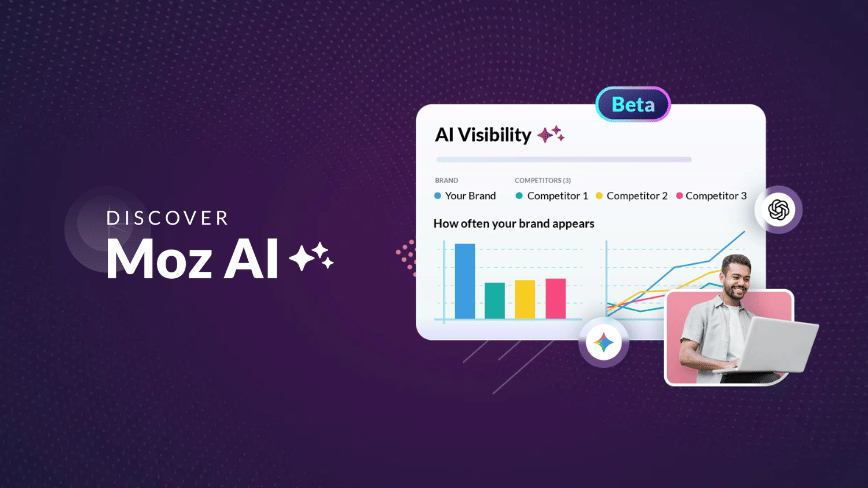
Then there’s the AI Visibility feature, currently in open beta. This is Moz’s response to the measurement problem that the entire industry is grappling with: if AI-generated answers are pulling citations from sources beyond the traditional top 10, how do you know whether your brand is being mentioned? The setup is simple. Enter your brand name, add related terms, input competitors, and Moz AI generates prompts based on queries users are actually asking about your brand. You get a dashboard showing citation frequency, competitive positioning, and visibility trends across generative search results.
Advertisement
Brand Authority rounds out the AI-adjacent features. It’s a metric that scores your brand’s overall search presence, not just backlinks, but how often your brand appears in search results relative to competitors. For businesses that care about visibility beyond traditional keyword rankings, this adds a dimension that rank tracking alone can’t capture.
These aren’t cosmetic additions. When Google’s AI Mode is assembling answers from YouTube, Reddit, LinkedIn, and niche authority sites (and Moz’s own research confirms that it is), the tools that help you understand and optimize for that broader landscape are the ones worth paying for.
The full toolkit and what it costs
AI features aside, Moz Pro earns its subscription through how it connects its tools into a workflow that makes sense for people managing SEO alongside other marketing responsibilities. Site Crawl runs automated weekly audits, flagging broken links, duplicate content, missing meta tags, and crawlability issues, all severity-ranked so you fix the high-impact problems first instead of drowning in a list of 400 warnings. Link Explorer provides backlink analysis using an index of approximately 45 trillion links, and every link gets a Spam Score to help you identify toxic backlinks. The Link Intersect tool shows which domains link to your competitors but not to you, giving you a ready-made prospecting list. Rank tracking updates weekly with mobile and desktop segmentation and local search tracking.
Moz Pro keeps its pricing transparent across four plans, all with a 20% discount on annual billing. The Starter plan at $49/month ($39/month annually) covers 1 campaign, 50 tracked keywords, and 20,000 pages crawled. For a single website that needs professional keyword research and basic rank tracking, this is the most affordable entry point in the all-in-one SEO market. The Standard plan at $99/month ($79/month annually) jumps to 3 campaigns, 300 tracked keywords, and 400,000 pages crawled. This is where most users land, and it’s also one of two plans eligible for the 7-day free trial. The Medium plan at $179/month ($143/month annually) scales to 10 campaigns and 1,500 tracked keywords, and is the second plan eligible for the free trial. The Large plan at $299/month ($239/month annually) maxes out at 25 campaigns and 3,000 tracked keywords for agencies and large in-house teams.
Advertisement
For comparison, Ahrefs Lite starts at $99/month with no free trial at all. Semrush Pro starts at $139.95/month with a 7-day trial on that single plan. Moz undercuts both on price and offers a more flexible entry path. For a full breakdown of how these platforms compare, Tekpon’s Moz Pro review and Moz Pro pricing comparison cover the details.
How to get the best deal right now
Moz gives you two free entry points, which is more than most competitors offer. The 7-day free trial provides full access to either the Standard or Medium plan. Credit card required to start, but you can cancel at any time during the trial and keep access for the remaining days. Seven days is enough to run a full site audit, pull keyword research for a content plan, test the AI-powered keyword suggestions, check your AI Visibility dashboard, analyze your backlink profile, and set up rank tracking. You can build an entire SEO action plan before paying a dollar.
The free Moz Community account is permanent, no trial period, no credit card. It gives limited access to MozBar (the Chrome extension that overlays DA and PA on any webpage), Keyword Explorer (10 queries per month), and Link Explorer (10 queries per month). For someone who only needs occasional DA checks or quick keyword lookups, this may be all you need.
The optimal strategy is to start the 7-day free trial on the Standard plan ($79/month annual). Test the AI features, run your audits, pull your keyword research. If the data proves useful (and for most sites doing any meaningful SEO work, it will), lock in the annual rate for a 20% savings. Standard drops to $79/month, saving $240 over the year. Medium drops to $143/month, saving $432. No promo codes needed. Registered 501(c)(3) nonprofits can access a dedicated discount page directly from Moz. See all plans at moz.com
Advertisement
Moz Pro Standard at $79/month (annual) includes 3 campaigns, 300 tracked keywords, AI-powered keyword suggestions, AI Visibility in beta, and a full site audit engine, at less than half the price of comparable Ahrefs and Semrush plans. Start your free trial at moz.com
The search landscape in 2026 rewards brands that show up across the entire ecosystem, not just in the ten blue links. Moz Pro is one of the few platforms that’s building tools for that reality while keeping the price accessible enough that you don’t need an enterprise budget to use them. The AI features are already live. The free trial is already available. The only cost of waiting is the visibility you’re not tracking yet.
For decades, software companies designed their products for a single type of customer: a human being staring at a screen. Every button, menu, and dashboard existed to translate a person’s intention into a machine’s action. But a small startup based in San Francisco and Zurich believes that era is ending — and that the future belongs to companies that build software not for people, but for the artificial intelligence agents that increasingly act on their behalf.
Manufact, a three-person company that emerged from Y Combinator’s Summer 2025 batch, announced in February that it raised $6.3 million in seed funding led by Peak XV, the venture capital firm formerly known as Sequoia Capital India and Southeast Asia, which now manages more than $10 billion in assets. Liquid 2 Ventures, Ritual Capital, Pioneer Fund, and Y Combinator also participated in the round, alongside angel investors including the co-founder and chief operating officer of Supabase.
The company’s thesis is deceptively simple and potentially enormous: as AI agents take over more of the work that humans perform inside software applications — filing expense reports, managing customer support tickets, writing code, booking travel — every software product on earth will need a new kind of interface designed specifically for those agents. Manufact is building the open-source tools and cloud infrastructure to make that transition possible.
“Software products are already being accessed by and will be accessed mainly by AI agents, or by users through chat interfaces,” Luigi Pederzani, co-founder and co-CEO of Manufact, said in an interview with VentureBeat. “That’s our bet. That’s our thesis. And that’s what we are really rooting our company on.”
Advertisement
How Anthropic’s Model Context Protocol became the universal standard for AI agents
To understand Manufact, you first have to understand the technology it is built on: the Model Context Protocol, or MCP, an open standard introduced by Anthropic in late 2024 that has rapidly become the dominant way for AI agents to communicate with external software tools and data sources.
Before MCP, connecting an AI agent to a company’s software required custom integration work for every single tool — a bespoke connector for Slack, another for Salesforce, another for a database. It was tedious, expensive, and fragile. MCP standardized this process into a single protocol, functioning as what CIO magazine recently called “the USB-C of AI” — a universal connector that lets any AI model plug into any software system through a single, consistent interface.
The adoption has been explosive. In December 2025, Anthropic donated MCP to the Linux Foundation’s new Agentic AI Foundation, co-founded with Block and OpenAI, with support from Google, Microsoft, Amazon Web Services, and Cloudflare. More than 10,000 active public MCP servers now operate across the ecosystem. ChatGPT, Cursor, Google Gemini, Microsoft Copilot, and Visual Studio Code all support the protocol. Enterprise-grade deployment infrastructure exists from AWS, Cloudflare, Google Cloud, and Microsoft Azure. An estimated 7 million downloads of MCP servers occur every month.
“Great protocols are as good as their adoption,” Pederzani said, drawing a comparison to the mobile revolution. “We saw the same transition with mobile, right? In the beginning, companies were just creating a pretty simple mobile app. Who would have bought a hotel or a flight or used a bank account from a mobile app? But as time passed, the web became mobile first. What we think is that software products will be MCP first, or chat first.”
Advertisement
The stakes are high. The global AI agents market reached $7.84 billion in 2025 and is projected to surge to $52.62 billion by 2030, according to industry analysts. The MCP Dev Summit, the largest conference dedicated to the protocol, takes place April 2–3 in New York City under the Linux Foundation’s banner, with speakers from Docker, Workato, and major cloud providers — and Manufact will be among the companies presenting.
Two Italian founders, a Zurich co-working space, and an open-source library that went viral
Manufact’s origin story reads like a case study in the power of open-source communities to validate a startup idea before a single dollar of venture capital is raised.
Pietro Zullo and Luigi Pederzani, both originally from Italy, met at a co-working space in Zurich — the same space that produced Browser Use, Bloom, and other startups that went through YC in previous batches. Zullo was studying at ETH Zurich; Pederzani was working at Morgen, an ETH spin-off AI startup used by teams at Spotify, GitHub, and Linear, after leading a 12-engineer team at Accenture Switzerland. Both were winding down previous projects in early 2025 when MCP launched.
“We both wrote agents in the past, and it was such a mess to write the tools, the integrations,” Zullo recalled. “When MCP came out, it looked like the perfect fit for what we were trying to do. But only Cursor, Claude Code, a few closed-source applications allowed you to actually use the protocol. I don’t think I’m going to do groceries or browse the internet or check my emails from Cursor — it’s like, not the right code, right? So we wrote an open-source library to basically do what you could do in Cursor with MCP servers, but on your own machine, on your own application, in your own terms.”
Advertisement
They called the library mcp-use, with a slogan that resonated across the developer community: “Connect any MCP to any LLM in six lines of code.” The repository attracted 2,000 to 2,500 GitHub stars within weeks. Today, the SDK has surpassed 5 million downloads and 9,000 GitHub stars. Organizations including NASA, Nvidia, and SAP use the library, and Manufact claims that 20 percent of the US 500 have experimented with it.
“The amount of power that you can put in six lines of code was really staggering,” Zullo said. The pair applied to Y Combinator on the day of the deadline. “We were super spontaneous because we had this open-source vibe and just enjoyed the process. We had so much energy from the community that was lifting us up, and we knew it was going to be fine.”
Inside Manufact’s plan to become the ‘Vercel for MCP’ — from SDK to cloud in 60 seconds
Manufact’s strategy borrows directly from the playbook that turned Vercel into a multi-billion-dollar company by providing hosting and developer tools for front-end web applications. The analogy is deliberate: just as Vercel made it trivially easy to deploy a Next.js app, Manufact wants to make it trivially easy to build, test, and deploy the MCP servers and MCP apps that AI agents need to interact with software.
The company offers three core products. First, the open-source mcp-use SDK, available in both Python and TypeScript, lets developers spin up a fully functional AI agent connected to MCP tools in as few as six lines of code. It supports any large language model, including local models, and has integrations with LangChain and other popular frameworks. Second, a built-in inspector and testing suite allows developers to visually debug their MCP servers in a browser, view raw JSON-RPC traffic, and test tool execution in a sandbox — without connecting to a live AI agent. Third, the Manufact Cloud platform handles deployment, scaling, authentication, access control, and observability, allowing teams to go from a GitHub push to a production MCP server in under 60 seconds.
Advertisement
“As software becomes more agentic, the hard part isn’t the model anymore — it’s everything around it,” Zullo said. “We started Manufact because developers were spending too much time on plumbing instead of building and shipping their products.”
The company has also moved aggressively into MCP apps, a newer extension of the protocol that allows developers to render interactive user interface components — React widgets, data visualizations, input forms — directly inside chat clients like ChatGPT and Claude. Manufact’s SDK lets a developer scaffold an MCP app with a single terminal command, edit React widgets, and deploy to ChatGPT in under a minute. This positions the company at the center of a potentially massive new distribution channel: ChatGPT alone has more than 800 million users.
5 million downloads, zero revenue, and a crowded field of cloud giants
Every open-source company faces the same fundamental tension: the community that makes the project valuable is not the same thing as a paying customer base. Manufact has been candid about this challenge.
Pederzani said the company made a deliberate decision after Y Combinator to focus entirely on the open-source product and community, rather than rushing to monetize. “A lot of open-source projects jump immediately on the monetization part and kind of betray the community,” he said. While NASA, Nvidia, and other prominent organizations use the SDK, Pederzani acknowledged they are not paying customers. Manufact’s target is to reach $2 million to $3 million in annual recurring revenue by the end of 2026, which would position it for a Series A fundraise.
Advertisement
The competitive landscape is crowding fast. AWS, Cloudflare, Vercel, and Docker have all launched MCP hosting features. But Manufact’s founders argue they sit in a complementary position relative to the model providers. “Anthropic and OpenAI are betting that their own chat products — Claude and ChatGPT — will become the primary interfaces through which people access all software,” Pederzani said. “If that bet plays out, we will serve these systems. That’s going to be massive.”
Why software companies without MCP servers risk becoming “dumb databases” for AI agents
Behind Manufact’s optimism lies a darker observation about the software industry that gives their pitch urgency. Pederzani argued that companies that fail to make their products accessible to AI agents risk being reduced to “systems of record” — dumb databases that agents query but that no longer own the user experience or the customer relationship.
“Now we have customers that come to us and say that their customers are choosing to adopt their product over a competitor because they offer an MCP server,” Pederzani said. “At the same time, there is a threat here that could put companies to become just systems of records. And this is really something that a lot of companies are scared of.”
In late February, Manufact co-hosted what it called the largest MCP apps hackathon to date at Y Combinator’s headquarters in San Francisco. The event drew 650 applications and 300 builders. OpenAI, Cloudflare, and Anthropic all sponsored it. Perhaps the most telling detail: eight employees from Anthropic attended — more people than Manufact’s own three-person team. The model providers, it appears, view Manufact as an ally rather than a threat.
Advertisement
Three employees, $6.3 million, and the ambition to capture a share of every AI tool call on Earth
For all its momentum, Manufact faces significant headwinds. The company has just three employees and has not yet demonstrated a scalable revenue model. Its most high-profile users are not paying customers. The $6.3 million seed round provides limited runway in an industry where infrastructure companies often require substantial capital to reach profitability. And the cloud providers that have launched MCP hosting features already own the customer relationships and billing infrastructure that enterprise buyers rely on.
But when asked what success looks like in two years, both founders pointed to a single metric: the percentage of global AI tool calls that flow through their infrastructure. “Our metric is the global tool calls or servers that run on Manufact — how many tool calls are passing through Manufact, made by agents,” Pederzani said. “Like Stripe is doing for the global GDP. We’re going to win if we can get a great number for it.”
The Stripe analogy is ambitious — Stripe processes hundreds of billions of dollars annually and is valued at roughly $90 billion — but it captures the scope of what Manufact’s founders believe is at stake. If MCP becomes the universal standard through which AI agents interact with all software, the company that provides the infrastructure for building and deploying MCP servers could occupy a position of outsized influence.
“In the end, what matters is to make something agents want,” Zullo said, riffing on Y Combinator’s famous dictum to “make something people want.” “What we’re focusing on and what we’re building is to help this transition of building for agents instead of building for humans.”
The B-21 Raider is a stealth bomber developed by Northrop Grumman. It isn’t yet in active duty but, as of February 2026, is scheduled to enter service in 2027. In order to make that happen, Air & Space Forces Magazine reports an enormous investment of $4.5 billion dollars was committed by Congress in order to speed up to process of its development. There’s tremendous faith in the U.S. Air Force, then, that the aircraft’s going to be a huge asset. True enough, several factors make the B-2 Raider stealth bomber special compared to other jets, and now the world has got its first look at one of the test models performing a very risky maneuver: Approaching for midair refueling.
This image, captured by X’s @minor_triad, shows the sleek, enigmatic B-2 refueling through connection to a KC-135R Stratotanker:
This was one of the very first public sightings of the Air Force’s formidable new asset, and a spokesperson for the military branch moved quickly to address all the speculation and confirm the identities of the two aircraft. In a statement provided to Defense One on March 11, the day after images were posted, they noted that “a test event involving a close-proximity flight” took place between a B-21 and a KC-135R. Furthermore, it was just one flight in a series of maneuvers, tests, and trials that are intended “to validate the B-21’s capabilities and operational readiness.” The specific tanker in question, according to The War Zone, is a veteran of midair refueling flight tests, operating from Edwards Air Force Base in southern California. If the B-21 is to have a long service life ahead of it (and the significant investment in it suggests that’s the intent), it’s critical to know that it can perform these sorts of risky midair maneuvers.
Advertisement
The great importance, and potential risks, of mid-air refueling
The Air Force highlighted that the incredibly close proximity of the two aircraft was a key element of this particular test flight. Though midair refueling is the primary purpose of a KC-135R, that doesn’t detract from the fact that it’s one of aviation’s most dangerous maneuvers, and confidence and experience is crucial. As the Hill Aerospace Museum emphasizes, there’s an enormous size disparity between tankers built for capacity and a fighter jet, and they have to be close enough throughout for the connection to be established and continue while the fuel is transferred. It’s a feat that demands enormous skill, and there may be adverse weather conditions or other environmental factors to also account for.
Nonetheless, it’s vital for some bombers and other aircraft to be able to be refueled in this way, and that’s why the B-2 engaged in a flight exercise that brought it so very close to a KC-135R. The operation must be perfected, and adapted to the capabilities of the tanker and the unique physics of each aircraft in need of refueling. Depending on where a bomber is operating, the mission it’s engaged in, and other factors, it may well not have the luxury of anywhere to land to refuel conventionally, and operations would be sorely limited in terms of scope without this capacity. This is why, while commercial planes don’t refuel in the sky, it’s generally important that military aircraft like bombers can.
NASA is preparing to conduct its first spacewalk at the International Space Station (ISS) in nearly a year, ending an unusually long break for the activity.
The space agency is currently targeting March 18 for a spacewalk involving NASA astronauts Jessica Meir and Chris Williams.
Coincidentally, the spacewalk is scheduled for the 61st anniversary of the first-ever spacewalk. The milestone was achieved by Alexei Leonov, who exited his spacecraft for around 10 minutes during the Voskhod 2 mission in 1965. This was followed about three months later by the first-ever U.S. spacewalk, performed by NASA astronaut Ed White during the Gemini 4 mission.
Advertisement
Meir and Williams have been getting ready for their upcoming extravehicular activity by inspecting their spacesuits, trying them on, and checking the Quest airlock from where they will exit the space-based facility.
The pair will spend around six-and-a-half hours in the vacuum of space, installing a modification kit and route cables on the port side of the orbital outpost as part of preparations for a future roll-out solar array. The seventh roll-out solar array will be installed on a later spacewalk to augment the main solar arrays’ power generation capabilities, NASA said.
This will be the fourth spacewalk for Meir, who participated in her first one in 2019, followed by two more several months later. Meir arrived at the space station last month as part of SpaceX’s Crew-12.
Williams, on the other hand, is on his first space mission and so the upcoming spacewalk will mark his debut outside the station. The American astronaut arrived at the ISS before Meir, in November 2025, aboard a Russian Soyuz spacecraft.
For close to three decades, the Northrop Grumman B-2 “Spirit” carried the mantle of being the only stealth bomber in the U.S. Air Force arsenal. Alongside the Lockheed Martin F-117 Nighthawk stealth attack aircraft, the B-2 is one of the most advanced stealth planes ever made. It continues to be one of the mainstays of the U.S. nuclear triad, even in 2026. While the aircraft remains operational, there is no denying the B-2s are slowly approaching retirement age and will need to be replaced by an equally capable — or even better — stealth bomber in the years to come.
As it turns out, the U.S. Air Force already has that successor in sight. A small number of next-generation stealth bombers have begun entering the USAF inventory, with at least two test aircraft delivered so far. Known as the Northrop Grumman B-21 Raider, this new platform is expected to gradually take over the B-2’s role in the decades to come. While visually similar to the aging B2 bombers, the new B-21 features several changes from the B2, including fewer engines and smaller dimensions.
Advertisement
The B-21 bomber should greatly enhance the U.S. Air Force’s strike-anywhere capabilities. To that end, the Department of the Air Force signed a new agreement with Northrop Grumman, essentially directing the manufacturer to speed up production of the aircraft. The U.S. Air Force is slated to receive at least two more B-21 test aircraft in FY2026, and the new agreement means that the U.S. Air Force now expects to start fielding B-21s in 2027.
Advertisement
The USAF needs B-21s, and it needs them fast
Kevin Burkholder/Getty Images
The signing of the new agreement between Northrop Grumman and the U.S. Air Force to enhance the B-21’s production capacity was publicly announced in February 2026. As per the revised terms, the manufacturer will increase the annual production rate of the B-21 by around 25%. According to the U.S. Air Force, this increase in production rate will allow it to acquire B-21s faster than originally anticipated. This move will also ensure that more B-21s will be combat-ready for any future conflicts. In addition, the compressed delivery schedule should ensure that the program doesn’t massively exceed the projected budget, as more aircraft would be delivered in a shorter timespan.
This move requires some serious money. The U.S. Air Force will spend an additional $4.5 billion as part of this move, which had already been authorized and appropriated under the FY2025 Reconciliation Act (also known as the One Big Beautiful Bill). It is pertinent to note that, unlike several other crucial U.S. military projects that are running way behind schedule – like the heavily delayed USS Enterprise — or have been plagued by cost overruns, the B-21 program has largely stuck to its schedule. It will be interesting to see whether the accelerated delivery requirements change anything in this regard.
There may be several reasons for your mechanic’s refusal to give your car back. Maybe the bill came in way higher than what you were expecting, and you are unable to pay it in full. Whatever the reason, if you find yourself in such a situation, it’s likely because of a legal guarantee called a mechanic’s lien. It essentially lets repair shops hold onto your car until the bill is settled, similar to how collateral works at a bank. Every state in the U.S. has some version of this on the books, though the specific rules around those can vary quite a bit.
For instance, in some states, the shop has to give you written notice of the lien before they can even enforce it. Others are stricter and demand that the shop file paperwork with local authorities on top of that. Some states even let the shop sell the car to recover anything that’s owed to them. In Louisiana, for example, that window is 45 days after the lien notice goes out.
Of course, those are the rules when everything is done properly and by the book. The good news is that not every shop actually follows them correctly, which gives you some room to push back.
Advertisement
The first thing to do
Thx4stock/Getty Images
Before you escalate anything, figure out whether the mechanic’s lien is even valid from their end. Knowing how to avoid getting ripped off by a car mechanic starts with understanding that you have the right to approve every charge before the work begins. Most states require written authorization for repairs above a certain dollar amount.
The most common way repair shops get themselves into legal trouble is by hitting customers with bills for work they never approved. For example, if someone drops off their car, and when they come back to pick it up there’s a $5,000 invoice just waiting for them. The shop says the work was necessary, but the customer maintains they never signed off on any of it. Now, to prevent this kind of miscommunication from the start, there is a specific phrase you should never say to your mechanic, or you may find yourself victim of a common car mechanic scam.
Advertisement
Anyway, your first move in the situation should always be to request an itemized bill and compare it against the original estimate. If those numbers don’t add up, or if the work was done poorly or left incomplete, the lien might not hold up at all. Some states will even let you pay under protest – you basically settle the bill to get your car back, and the shop has to note that it was paid under protest on the receipt, which protects you for what comes next.
Advertisement
Getting your car back (and getting even)
Dmytro Varavin/Getty Images
If the shop still won’t budge after all of that, or if the shop won’t communicate with you at all, the first real step is sending a formal demand letter (preferably by email and certified mail) requesting an update on the vehicle and a deadline for its return. Doing so ensures that any silence from the shop becomes a problem for them legally. It essentially shows they’re potentially detaining your vehicle without any real justification for doing so.
From there, you can file a complaint with your state’s consumer protection agency or attorney general’s office. In some states, like North Carolina, there’s also this neat legal mechanism where you can post a bond with the Clerk of Superior Court for the disputed amount, and then the court will order the shop to release your car while the whole dispute gets sorted out.
If the bill is small enough, small claims court is always on the table for something like this. You represent yourself, lay out all the evidence, and let a judge decide on it. For bigger amounts, or if you suspect outright fraud, hiring a consumer protection attorney is probably worth the cost. In some states, if the shop violated the law, you could actually be entitled to triple your losses plus legal fees on top of those.
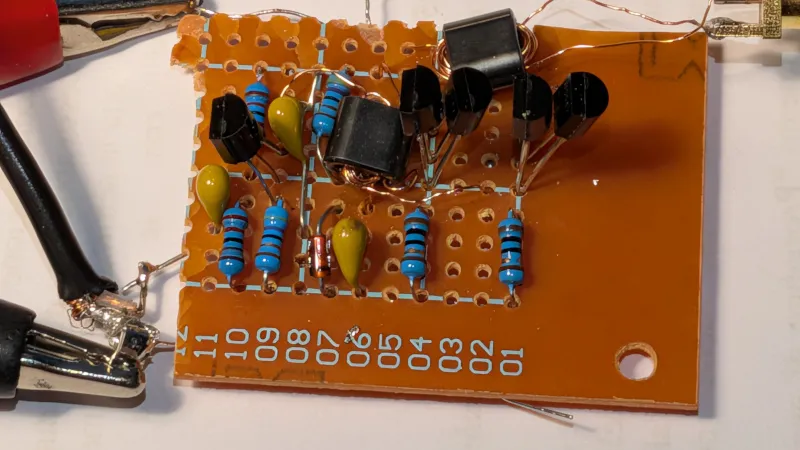
When building a radio transmitter, unless it’s a very small one indeed, there’s a need for an amplifier before the antenna. This is usually referred to as the power amplifier, or PA. How big your PA is depends on your idea of power, but at the lower end of the power scale a PA can be quite modest. QRP, as lowe power radio is referred to, has a transmit power in the miliwatts or single figure watts. [Guido] is here with a QRP PA that delivers about a watt from 1 to 30 MHz, is made from readily available parts, and costs very little.
Inspired by a circuit from [Harry Lythall], the prototype is built on a piece of stripboard. It’s getting away with using those cheap transistors without heatsinking because it’s a class C design. In other words, it’s in no way linear; instead it’s efficient, but creates harmonics and can’t be used for all modes of transmission. This PA will need a low-pass filter to avoid spraying the airwaves with spurious emissions, and on the bands it’s designed for, is for CW, or Morse, only.
We like it though, as it’s proof that building radios can still be done without a large bank balance. Meanwhile if the world of QRP interests you, it’s something we have explored in the past.
An anonymous reader quotes a report from the New York Times: In a paper, published last month in the journal The Anatomical Record, researchers offered a novel take on falling felines. Their evidence suggests new insights into the so-called falling cat problem, particularly that cats have a very flexible segment of their spines that allows them to correct their orientation midair. […] People have been curious about falling cats perhaps as long as the animals have been living with humans, but the method to their acrobatic abilities remains enigmatic. Part of the difficulty is that the anatomy of the cat has not been studied in detail, explains Yasuo Higurashi, a physiologist at Yamaguchi University in Japan and lead author of the study. […]
Modern research has split the falling cat problem into two competing models. The first, “legs in, legs out,” suggests that cats correct their falling trajectory by first extending their hind limbs before retracting them, using a sequential twist of their upper and then lower trunk to gain the proper posture while in free fall. The second model, “tuck and turn,” suggests that cats turn their upper and lower bodies in simultaneous juxtaposed movements. […]
The researchers found that the feline spine was extremely flexible in the upper thoracic vertebrae, but stiffer and heavier in the lower lumbar vertebrae. The discovery matches video evidence showing the cats first turn their front legs, and then their lower legs. The results suggest the cat quickly spins its flexible upper torso to face the ground, allowing it to see so that it can correctly twist the rest of its body to match. “The thoracic spine of the cat can rotate like our neck,” Dr. Higurashi said.
Experiments on the spine show the upper vertebrae can twist an astounding 360 degrees, he says, which helps cats make these correcting movements with ease. The results are consistent with the “legs in, legs out” model, but definitively determining which model is correct will take more work, Dr. Higurashi says. The results also yielded another discovery: Cats, like many animals, appear to have a right-side bias. One of the dropped cats corrected itself by turning to the right eight out of eight times, while the other turned right six out of eight times.
Last year IEEE launched its first virtual career fair to help strengthen the engineering workforce and connect top talent with industry professionals. The event, which was held in the United States, attracted thousands of students and professionals. They learned about more than 500 job opportunities in high-demand fields including artificial intelligence, semiconductors, and power and energy. They also gained access to career resources.
“We are bringing together companies, universities, and young professionals to help meet the demand for technical talent in critical sectors,” Bian says. “It is part of our commitment to preparing the next generation of innovators.”
The virtual career fairs are expanding to more IEEE regions this year. One was held last month for Region 9 (Latin America). One is scheduled next month for Region 8 (Europe, Middle East, and Africa) and another in May for Region 7 (Canada).
Advertisement
A global career fair is slated for June.
Registration information for all the fairs is available at careerfair.ieee.org.
Innovative recruitment events
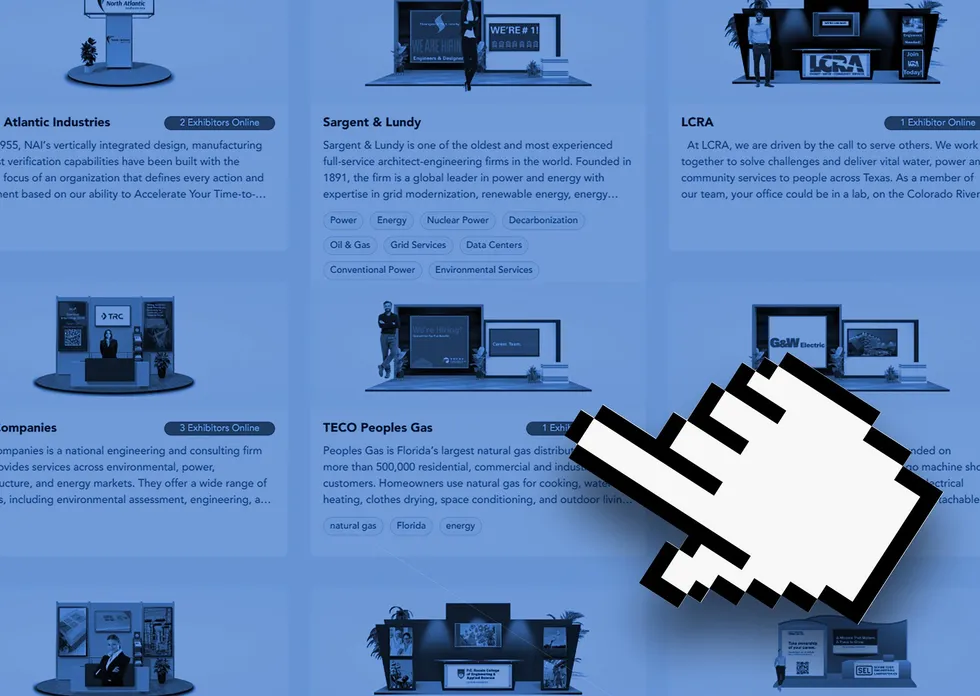
The fairs, which use the vFairs virtual platform, provide interactive sessions with representatives from hiring companies, direct chats with recruiters, video interviews, and access to downloadable job resources. The features help remove geographic barriers and increase visibility for employers and job seekers.
The career fair platform features interactive engagement tools including networking roundtables, a live activity feed, a leaderboard, and a virtual photobooth to encourage participants to remain active throughout the day.
Advertisement
Bringing together thousands of professionals
STEM students participated in the U.S. and Latin America events, along with early-career professionals and seasoned engineers—almost 8,000 participants in all. They represented diverse fields including software engineering, AI, semiconductors, and power systems.
“I found the overall process highly efficient and the platform intuitive—which made for a great sourcing experience,” said a recruiter from Burns & McDonnell, a design and construction firm. “I was able to join a session, short-list several high-potential candidates, review their résumés, and initiate contact with a couple of them.
“I am optimistic that we will be able to extend at least one offer from this pipeline.”
Advertisement
Participating students described the fair as impactful.
Attendees had access to AI-guided job-matching tools and career development programs and resources.
Prior to the fair, registrants could use the IEEE Career Guidance Counselor, an AI-powered career advisor. The ICGC tool analyzes candidates’ skills and experience to suggest aligned roles and provides tailored professional development plans.
Advertisement
The ICGC also makes personalized recommendations for mentors, job opportunities, training resources, and career pathways.
Pre-event workshops and mock interview sessions helped participants refine their résumé, strengthen interview strategies, and manage expectations. They also provided tips on how to engage with recruiters.
“I gained valuable hiring insights from industry leaders, like Siemens, TRC Companies, and Schweitzer Engineering Laboratories.” —Michael Dugan, graduate student at Rice University, in Houston
During the Future Ready Engineers: Essential Skills and Networking Strategies to Stand Out at a Career Fair workshop, Shaibu Ibrahim, a senior electrical engineer and member of IEEE Young Professionals, shared networking strategies for career fairs and industry events as well as tips on preparation, engagement, and effective follow-up.
Advertisement
“The workshop offered advice that shaped my approach to the fair,” Dugan said. “It truly helped manage expectations and maximize my preparation.”
“While exploring volunteer opportunities, I was excited to learn about IEEE Future Networks,” Dugan said. “Connecting with dedicated IEEE members, like Craig Polk, was a definite highlight.” Polk is an IEEE senior member and a senior program manager for IEEE Future Networks.
A commitment to career development
IEEE created the career fairs as free, accessible platforms for employers and job seekers to serve as a trusted bridge between companies seeking top technical talent and members dedicated to advancing their career. It is our responsibility to support them by connecting them with meaningful career opportunities.
Advertisement
In today’s unpredictable job landscape, IEEE is stepping up to help our talented members navigate change, build resilience, and connect with future employers.




.jpg)