Tech
What’s The Average Lifespan Of A Mower Deck Belt And How Often Should You Replace It?


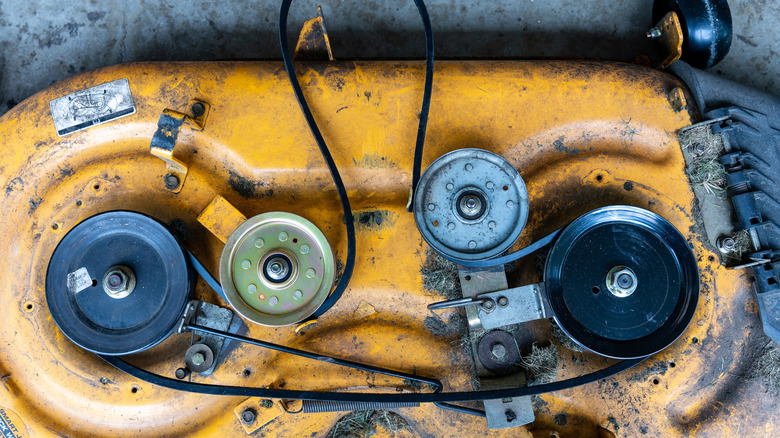
Users are likely to see dramatically improved performance and lifespan from their tools and appliances by being fastidious with their maintenance. This includes regular cleaning, changing batteries, being careful with charge times, and so on. This doesn’t just apply to battery-powered devices, either. Mechanical parts, blades, and heavily used components must be kept clean and cared for, and where appropriate, replaced promptly.
This is very important for lawn mower maintenance, and for caring for the mower deck belt specifically. This is the belt on the deck that’s responsible for powering the blades, essentially, by delivering engine power to them (or PTO pulley power in some cases). As a result, they’re subjected to significant pressure from heat and friction while the mower’s operating. A wide range of mowers have deck belts (you can check the manual of your model for particulars), which means it’s essential to know how long this belt is likely to last on yours.
Belts for residential mowers can typically last around 100-200 hours, representing between three and five years of use. Australia’s AIMS notes that there’s considerable variation to such a baseline, with spindle/blade drive options lasting between 50 and 150 hours, and as much as 400 hours for a transmission drive model under less-demanding typical residential conditions. Generally, these belts should be replaced every 100-150 hours, but factors like usage frequency and intensity will have a big impact on this. Let’s take a look at signs that your mower belt(s) may need replacement, as well as ways users can care for them to help maximize their lifespan.
Some signs that you may need to replace your mower deck belt
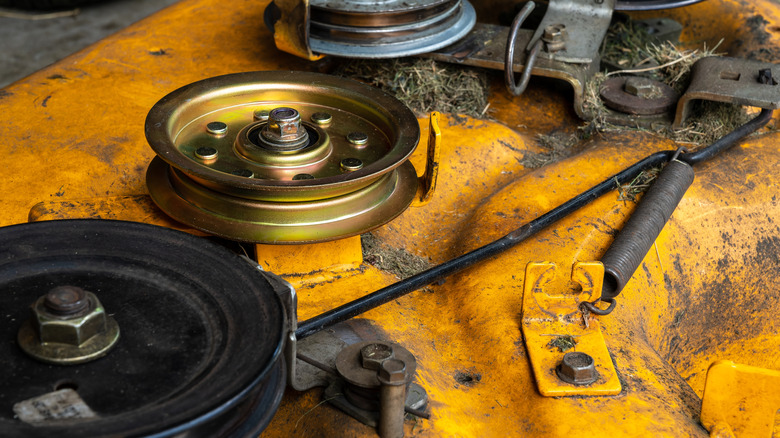
The first thing to note is that many mowers are powered by a system of several belts, and the interactions between them are important to their operation. With the mower deck belt providing the cutting impetus to the mower as a whole, without it, the mower couldn’t perform its intended role at all. This is why the key is to be able to determine whether there are any issues with the belt from the very first sign.
You can never quite tell how they might arise on a specific model, but some general examples to look for include potential unevenness in cutting performance or a jarring noise that suggests the components aren’t aligning smoothly as they should. With closer, careful inspection, you may also notice signs of physical wear. Of course, some repairs may be more complicated than others, so it might be practical to simply replace your belt (or consult a professional if you’re not confident or unfamiliar with the process). Installing a new belt on the pulley of the mower can be a tricky business if you aren’t used to doing it, after all.
Cracking or damage to the belt wall is also a glaring warning sign that it should be removed and replaced. It’s a huge inconvenience and potentially dangerous if the belt wears all the way through during use, so try not to delay if you notice any such issues, or factors like a misaligned mower deck, which can also impede performance.
How to help your mower deck belt to last longer
You should be sure to run your mower carefully to avoid putting undue strain, friction, or stress on it. What you’ve also got to remember is that the belts are secured by smaller components like bolts and pulleys, and any issues here could potentially lead to significantly degraded performance. Lifespan will be significantly affected by the type of belts you buy. More expensive aramid belts, or those strengthened with Kevlar, will generally last much longer.
For instance, according to Chinese manufacturer Shihai, 2023 testing by the Rubber Manufacturers Association concluded that “heat-resistant belts still have about 92 percent of their original flexibility after running for 300 hours straight.” It’s a question of how much you’re willing to pay, and whether the cheaper ones will wear out so quickly that it’s more economical to buy the costlier, long-lasting ones.
In any case, you should always brush the underside of your machine after each use. Even a small clump or two can become problematic, and it can be a nightmare to keep grass from sticking to your mower deck. There are also situations that will cause your machine to work harder, such as tricky, uneven paths on your lawn, grass that has been allowed to grow particularly long between cuts, or mowing up steep hills. A user may get between 2 and 5 years from the mower deck belt of a walk-behind mower, while a ride-on mower should serve the user for at least three years. Keep in mind, though, the impact that your usage habits can have on this factor.
You must be logged in to post a comment Login