Tech
When a 1,139-Horsepower Porsche Cayenne Turbo Electric Ran Beneath the World’s Biggest Plane

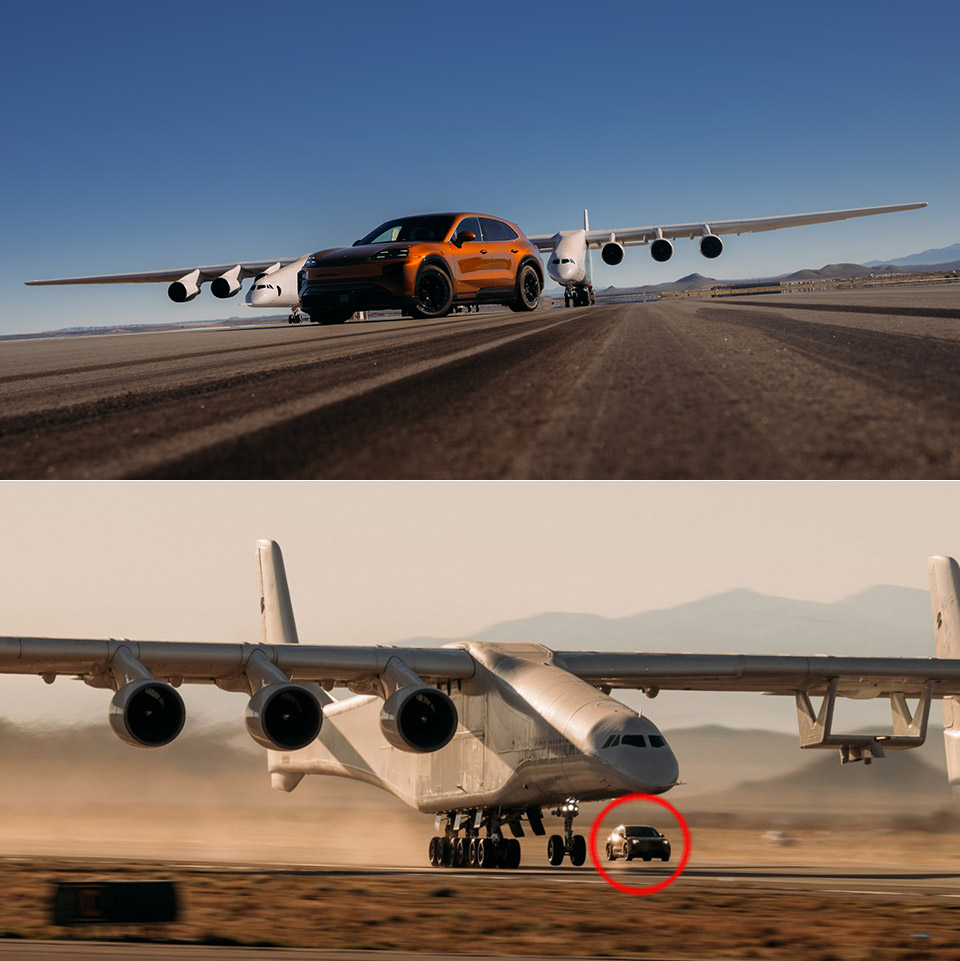
Mojave Air and Space Port sits in the high desert where the air stays dry and the runways stretch long enough for machines that refuse ordinary limits. On a recent morning there, a prototype Porsche Cayenne Turbo Electric rolled into position under the shadow of Stratolaunch’s Roc. Six jet engines sat silent for the moment. The SUV waited between the twin fuselages of an aircraft whose wings span 385 feet.


Roc is designed to carry enormous payloads into the sky for hypersonic experiments and spacecraft launches. Even when empty, with its six Pratt & Whitney engines cranking out a staggering 340,500 pounds of thrust, the plane can take off at a maximum weight of 1.3 million pounds, which is enormous when compared to modern airliners. Porsche’s new Cayenne has just arrived with a pair of electric motors that provide 1,139 horsepower and 1,500 Nm of torque, an outstanding spec sheet. It takes 2.4 seconds to accelerate from 0 to 60 mph, which is incredible. When things get hairy, the Cayenne has active aerodynamics and, as an option, very heavy-duty carbon-ceramic brakes ready to bail it out.
Sale


LEGO Speed Champions Porsche 911 GT3 RS Super Car Toy – Model Kit & Pretend Play Toy for Boys & Girls…
- BUILD A RACING LEGEND – Boys and girls ages 9 years old and up can construct the LEGO Speed Champions Porsche 911 GT3 RS Super Car (77239) building…
- AUTHENTIC PORSCHE DETAILS – Young builders can recreate the real-life vehicle’s signature elements including the famous rear wing, air intake…
- 1 PORSCHE DRIVER MINIFIGURE – Kids can place the driver minifigure with helmet and red Porsche Track Day Experience outfit behind the wheel to stage…

Stratolaunch’s engineers had been monitoring the airflow near Roc. During takeoff and landing, a strange small pocket of still air emerges directly behind the main landing gear and just ahead of the tail, and this bubble follows the plane. In principle, a car that was both fast and stable enough could simply sit in the center of this bubble and remain there. That concept evolved into a hunch, which led to a strategy. Straotlaunch had a volunteer driver lined up, none other than former Porsche factory driver Patrick Long. He was joined by crew chiefs Shauntel Williams and John McKinney, who were keeping radio contact with the flight deck crew, as well as Orlando Bloom and a lucky automotive journalist Mat Watson.
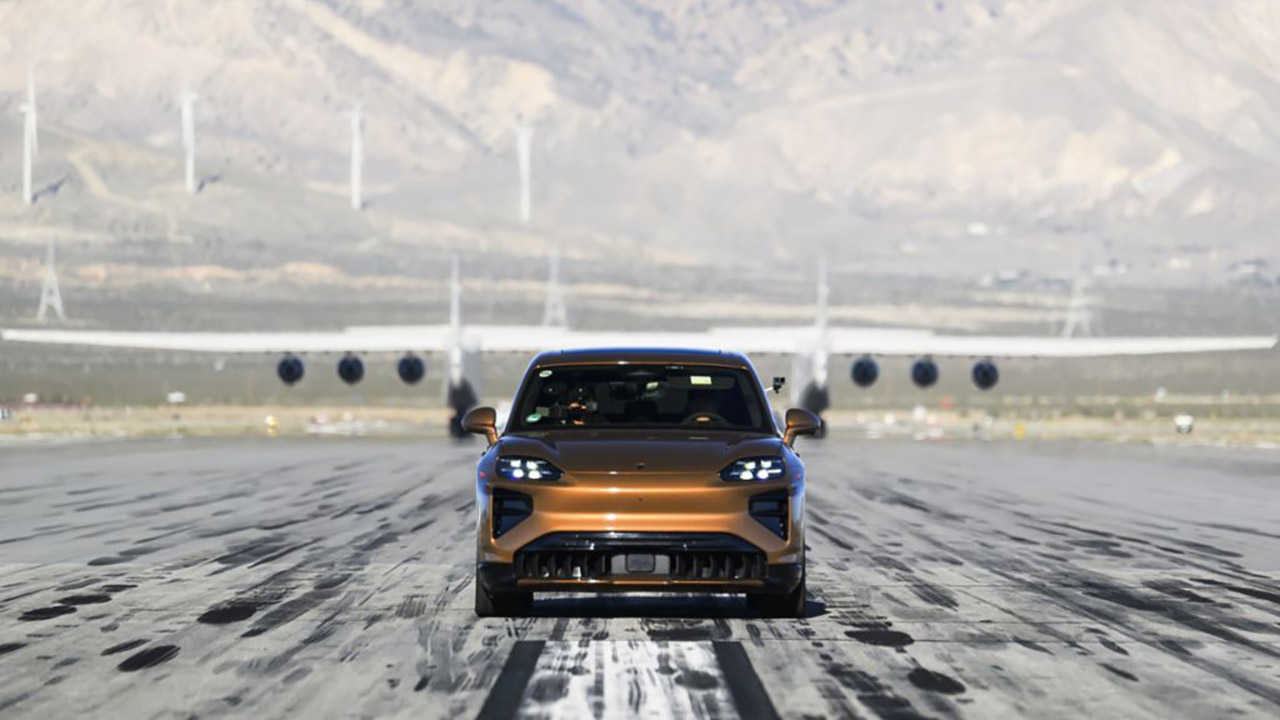
The first run began with Long carefully positioning the Cayenne in just the perfect area, applying almost little throttle at all. Roc’s engines burst into life. At roughly 100 mph, he put the Cayenne into boost mode and flew after the plane, matching its stride for stride. The SUV remained right beneath the plane’s gear as it pulled away, and it was apparent as day that the vehicle had the stability to endure the turbulence when the engines lowered. Long later described how, when the engines began to descend after takeoff, he felt a great jolt and the car continued to go as if nothing had happened. He glanced down at the speedometer, and holy moly, the needle was over 170 before he yanked his foot off the throttle and slapped on the carbon-ceramic brakes to reduce the speed before the runway ended.

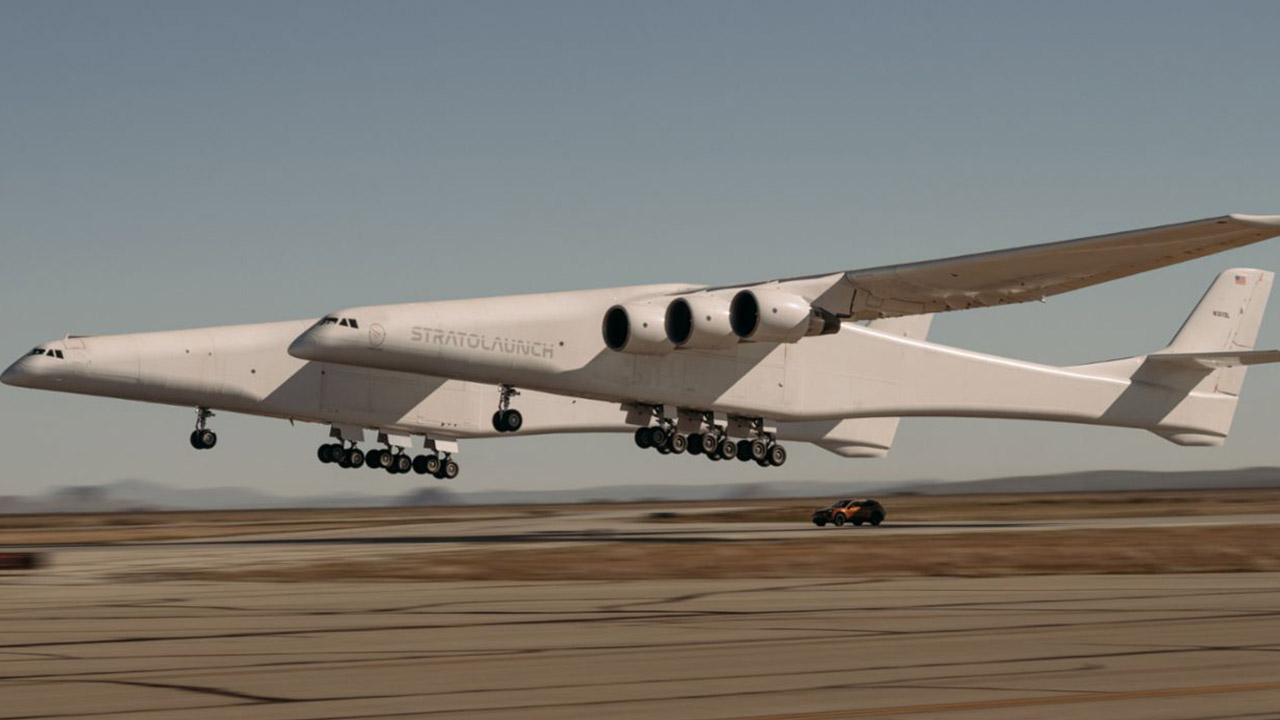
Landing, on the other hand, is a completely other story since time is everything. Roc is massive, making visual cues scarce, so Long had to merge onto the runway at precisely the exact moment, skillfully maneuvering between the plane’s fuselage such that the automobile appeared under the gear just as the plane touched down. The Stratolaunch crew commanders were right there in the cabin, keeping Long on track with continuous radio calls. The pattern repeated itself over two takeoffs and landings, with all four landings going off as planned. The Cayenne utilized only 13 percent of its battery charge the entire time.
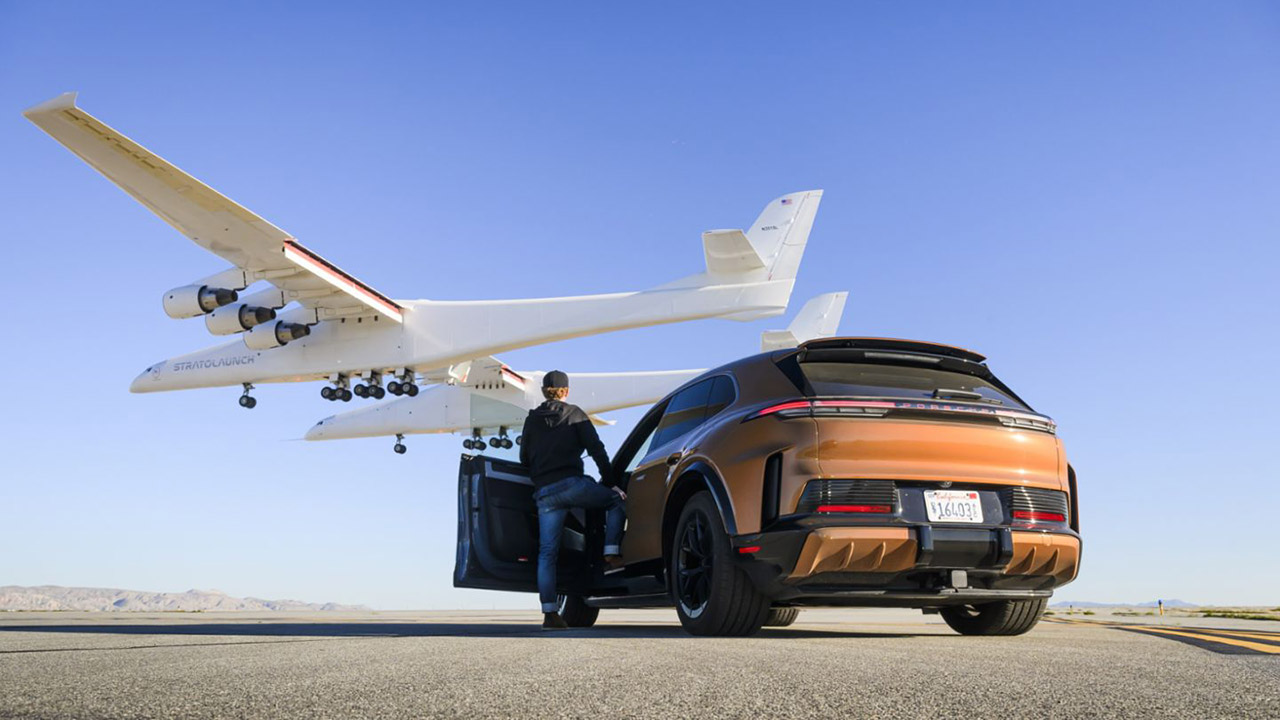
Patrick Long described it as one of the most focused moments he’d ever had in a car. He trusted the data, the automobile, and the pilots. And it appears that the trust paid off, since Jonathan Bearce, the plane’s principal test pilot, was also impressed. From the cockpit, all he could see was a Cayenne-sized black hole, but the footage subsequently revealed it was spot on. Bearce even got to drive the thing himself later on, and he stated it accelerated so quickly that it surprised him. Overall, it was an eye-opening exercise in demonstrating the importance of precision over raw speed.
You must be logged in to post a comment Login