HDMI excels for media consumption, while PC gamers prefer DisplayPort.
jverdut/Shutterstock
While setting up a new PC monitor, you’ll often find two different video cables in the box. One, a pinched trapezoid shape, connects the monitor to a video source over HDMI. The other, with a connector that looks like a rectangle with a corner chopped off, is a DisplayPort cable. But some newer monitors also have a third port for USB-C, and you’ll often find a USB-C port labeled as a video-out port on laptops, too. While having several connection options is convenient, it’s not always clear which is the best for your monitor.
In general, if you’re connecting your monitor to a PC with a discrete graphics card, or if you want to use multiple monitors, DisplayPort is preferred. On the other hand, if you’re connecting to a Mac or PC with integrated graphics, a TV, home theater equipment, or a gaming console such as an Xbox or PlayStation, HDMI is the safe bet. While DisplayPort has several advantages for gaming and multi-monitor setups, and is also able to run over USB-C on many devices, HDMI is supported across a wider array of A/V equipment and has a number of features which add value for media consumption.
Ultimately, you should use whichever connection standard is best for your particular setup based on which devices you’re connecting your monitor to, as well as which generations of HDMI or DisplayPort they support. Here’s how HDMI and DisplayPort stack up, so you can determine which is best for your monitor.
Advertisement
DisplayPort is great for PC gaming, and runs over USB-C
Milan_jovic/Getty Images
DisplayPort tends not to show up on TVs, but is widely supported among the best gaming monitors and PC graphics cards. Traditionally, that’s because DisplayPort was designed with variable refresh rates in mind. When you watch a movie, it will display at a consistent frame rate, usually 24 frames per-second (FPS). But when playing a game, the frame rate can swing wildly from moment to moment. To make the experience smoother, variable refresh rate (VRR) technology such as AMD FreeSync and Nvidia G-Sync arrived to help coordinate frame rates between the GPU and monitor in a system. DisplayPort has long supported VRR natively, and while some monitors now support VRR standards over HDMI, DisplayPort remains the more robust choice.
Bandwidth is competitive between the two connection standards. Where HDMI tops out at a hefty 96 gigabits per-second (Gbps) with the latest HDMI 2.2 specification, the more common HDMI 2.1 reaches 48 Gbps. On the most high-end gaming hardware, DisplayPort 2.1 offers 80 Gbps, while 1.4 provides up to 32.4Gbps.
What clinches DisplayPort for many PC users, though, is its inclusion in the USB-C standard. DisplayPort runs over the USB-C Alternate Mode, meaning that, so long as both a video source and monitor support DisplayPort Alternate Mode, you can connect them with a single USB-C cable. Not all USB-C ports or cables support DisplayPort Alt Mode, so be sure to consult your product documentation.
Advertisement
Even if you’re not gaming, DisplayPort is often the better choice for multi-monitor due to its daisy chaining support. So long as your monitor has a DisplayPort out port, you can hook one monitor into another rather than using up multiple video out ports on your computer.
HDMI is best for media consumption
Jertography/Getty Images
HDMI is best suited to media consumption, such as viewing movies and television shows. It doesn’t really matter whether you’re connecting to a monitor, TV, soundbar, or game console — nearly every device capable of video output includes an HDMI port. In addition to widespread compatibility, HDMI includes multiple standards needed for premium audio, and to connect home theater equipment, as well as protocols for copyright protected content. All of these advantages make HDMI the default choice for home theaters, but not necessarily for computers.
Standards like Enhanced Audio Return Channel, or eARC, make HDMI key for entertainment systems. eARC allows a source to send pristine audio to an audio receiver or soundbar, which makes it easy to take advantage of HDMI’s robust support for spatial audio formats including Dolby Atmos and DTS:X. At the same time, HDMI Consumer Electronics Control (HDMI-CEC) can let your devices control one another. For example, press the power button on your Roku remote or PlayStation controller, and your TV will turn on and tune into that A/V source.
Advertisement
Lastly, HDMI supports digital rights management (DRM) protected content, a major must-have in the era of streaming. It integrates support for high-bandwidth digital content protection (HDCP), which checks to make sure the content you’re watching is properly licensed. Some 4K content from streaming services such as Netflix won’t stream unless connected via a minimum of DisplayPort 1.4 or HDMI 2.0 with HDCP 2.2 and above. In edge cases, you may not be able to stream content from a video source to your TV at all without at least some form of HDCP support.
From AI and upskilling, to new technologies and experimentation, there is much for professionals in the future health sector to get excited about.
Regardless of your role or industry, for the majority of professionals, a key concern is often finding an element of the job that drives excitement and motivation. Frequently, it is this drive that creates long-term satisfaction and career longevity.
For Deepak Chaudhari, the country head at TCS Ireland, of the aspects he finds most compelling within the healthcare and health-tech spaces, among them is being at the forefront of modernisation.
“One of the most exciting opportunities we are working on is enabling data‑driven, patient‑centred healthcare systems, aligned to Sláintecare’s vision for integrated and efficient care,” he said.
Advertisement
Chaudhari explained that there are significant challenges in ensuring that rapid digital transformation has the power to deliver on real-world clinical and operational demands, noting TCS addresses this through “data platforms, automation and responsible AI that improves both patient outcomes and workforce productivity”.
For Sohini De, the head of healthcare and innovation at BearingPoint Ireland, GenAI is playing a key role in generating excitement in her role.
“One of the most significant opportunities we are advancing is BearingPoint’s custom-built GenAIQ platform, an agentic, retrieval augmented generation-based solution designed to help organisations move from AI experimentation to practical, governed impact,” she explained.
For De, AI in healthcare is at its most valuable when it can be used to merge benefits across a wide array of groups, such as clinicians and patients. This can be in earlier diagnosis, better triage, stronger population health management and improved patient flow across acute, community and primary care.
Advertisement
Specifically for clinicians, she added: “AI can reduce administrative burden, support documentation and summarisation, and surface relevant information at the point of need, freeing more time for direct patient care. Its role should be to strengthen, not replace, clinical judgement and human-centred care.”
AI ability
De also finds that, as more and more organisations grow out of the experimental AI phase and start to develop realised AI strategies, it is becoming apparent that “technology in isolation will not deliver the benefits expected”.
“Much of our work remains focused on the alignment of organisations, processes, people and data to realise the benefit of new technologies,” she said. “From a workforce planning perspective we are seeing that it is professionals who can bridge policy, technology, clinical practice and change management will be critical to turning AI ambition into measurable improvements in access, quality, safety and experience.”
This was echoed by Chaudhari who explained that he is seeing increasing demand for professionals with the skills to work at the intersection of healthcare, technology and data.
Advertisement
He is of the opinion that vital abilities include digital health and EPR delivery experience; data and analytics expertise for reporting, insights and population health; automation and AI skills with a strong understanding of governance and ethical use; cloud‑native and interoperability capabilities, including API and FHIR‑based integration; and change, delivery and stakeholder management, which is critical in complex health environments.
“We value backgrounds in health informatics, data science, engineering, life sciences and clinical disciplines, alongside strong collaboration and problem‑solving skills. Above all, we look for people motivated by purpose and impact. We seek individuals who want to play a role in shaping the future direction of healthcare through thoughtful, responsible use of technology.”
De added: “Ultimately, the goal is to support a resilient, future-ready healthcare ecosystem in Ireland, one where AI is used responsibly to improve patient outcomes, reduce avoidable variation, support clinicians, maintain compliance and help services respond more effectively to growing demand.”
Don’t miss out on the knowledge you need to succeed. Sign up for the Daily Brief, Silicon Republic’s digest of need-to-know sci-tech news.
A new rumor claims that some iPhone 18 Pro models will use slower QLC NAND storage, mimicking a similar 2024 iPhone 16 Pro report. It makes more sense now than it did then, but doesn’t matter much in practical usage.
This latest report suggests that Apple will use the faster TLC storage for the iPhones that people are most likely to buy. But those choosing the larger 1TB and 2TB capacities may be left with a slower QLC alternative from SK Hynix.
Companies like Apple continue to struggle to source the storage components required for new products. With that in mind, it may not be surprising to see Apple go this route. Sourcing 1TB and 2TB TLC components may be difficult, if not impossible.
And, certainly, it will be spendy given the current economic environment surrounding flash media.
Advertisement
However, we’ve heard this story before. And it doesn’t seem to have been accurate that time around. And as we discussed back then, it’s unclear whether the use of QLC storage would be a real issue for iPhone owners.
QLC or TLC for iPhone 18 Pro
This latest report centers around the iPhone 18 Pro and iPhone 18 Pro Max. WCCFTechshared details of a post by the leaker “Reptalica” which claims Apple will use different storage types for different models.
According to the X post, Apple will use TLC NAND provided by SK Hynix, Kioxia, and SanDisk when building 256GB and 512GB iPhone Pro/Pro Max models. The 1TB model will use a mixture of SK Hynix QLC storage and Samsung TLC chips.
It’s then argued that Apple will solely use SK Hynix’s QLC storage for the 2TB model.
Advertisement
A rumor, repeated
If this all sounds familiar, it’s because we saw very similar claims in January 2024, prior to the iPhone 16 Pro’s unveiling in September of that year. We were told then that Apple would use QLC storage for iPhones with 1TB of storage or more.
Getting concrete information on whether that actually happened isn’t easy. That being said, we’ve only seen reports of high-capacity iPhone 16 Pro models with the fast TLC storage. That doesn’t mean there aren’t some QLC NAND chips floating around.
If there are, we’ve yet to see one.
The differences between QLC and TLC
Triple-Level Cell (TLC) NAND flash and Quad-Level Cell (QLC) NAND flash are both types of storage. But they aren’t the same.
Advertisement
The iPhone 18 Pro storage may be a hot topic this hear.
One difference is the way QLC can store four bits of data per cell of memory, rather than the three of TLC. This then allows QLC NAND to store more data, which is why it’s sometimes used in larger-capacity storage. It’s also cheaper to produce.
Unfortunately, QLC is also thought to be less reliable than TLC and, importantly, it’s also slower as it is rewriting all four bits instead of the three.
How much slower in the real world, on mobile, is a matter for debate. The report notes that QLC storage is particularly slow when reading random data. But it’s unclear how that would impact the way people use iPhones.
Advertisement
Smartphone loads on flash storage are generally in bursts, instead of sustained transfers. As such, the difference in performance is likely to be imperceptible to users who don’t resort to benchmarking tools.
It’s also important to remember that this rumor did the rounds two years ago and, as far as we can see, turned out to be incorrect. Only time will tell if this latest report is more accurate.
OpenAI is reportedly in early talks to give the U.S. government a 5% stake, potentially alongside similar contributions from other major AI companies. “Such a deal would help improve the industry’s relations with the Trump administration and could help garner political support by sharing wealth generated by the AI boom with the public,” reports The Guardian. From the report: [OpenAI CEO Sam Altman] and other OpenAI bosses have suggested that each of the biggest AI developers in the US should give 5% to their equity to an investment vehicle such as the Alaska Permanent Fund, a sovereign fund that invests US oil wealth into stocks and pays dividends to the state, the FT reported.
The talks are “conceptual” and in early stages, it said, and any deal could require an act of Congress to implement. Both OpenAI and Anthropic have previously suggested in policy papers that a public or sovereign wealth fund may be required in the future to distribute shares to the public. In April, OpenAI said that a “public wealth fund” could provide “every citizen — including those not invested in financial markets — with a stake in AI-driven economic growth.” Further reading:Bernie Sanders Unveils $7 Trillion Plan To Give Americans Control of AI Industry
OpenAI CEO Sam Altman has proposed giving 5% of the company’s equity to a U.S. sovereign wealth fund, the Financial Times reported on Thursday, citing two people familiar with the matter. Under the proposal, other AI companies would donate similar stakes, although significant questions remain about the specifics.
According to the FT’s reporting, the donation would be meant to “secure good relations with the administration and … address political blowback.”
Similar discussions were reported by CNBC in June and were subsequently confirmed by President Trump, who said he had discussed “concepts where pieces could be given to the American public, where the American public essentially becomes a partner with the companies.” At the time, no specific size for the proposed equity stake was given.
The talks remain preliminary and, per the FT, it’s likely that any formal action would require congressional approval, which would significantly complicate the matter.
Advertisement
The idea of a public AI fund has also been publicly discussed by Altman, and OpenAI has grown increasingly specific in its proposals for how such a fund could be structured. Most recently, a policy paper titled “Industrial Policy for the Intelligence Age,” released by OpenAI in April, proposed a public wealth fund that could invest directly in AI labs and companies deploying their technology.
“Returns from the Fund could be distributed directly to citizens, allowing more people to participate directly in the upside of AI-driven growth, regardless of their starting wealth or access to capital,” the document reads.
A more aggressive version of the policy was proposed by Sen. Bernie Sanders (I-VT) in June, calling for a one-time 50% tax on AI company stock, with the collected shares being deposited into a public wealth fund. The bill, called the American AI Sovereign Wealth Fund Act, would apply to all “systemically important” AI companies, including those dealing with data centers, infrastructure, or robotics. Under the proposal, companies like Google and SpaceX that include AI as only part of their business would be allowed to spin off non-AI portions of the company to avoid taxation.
The bill has yet to advance to committee.
Advertisement
When you purchase through links in our articles, we may earn a small commission. This doesn’t affect our editorial independence.
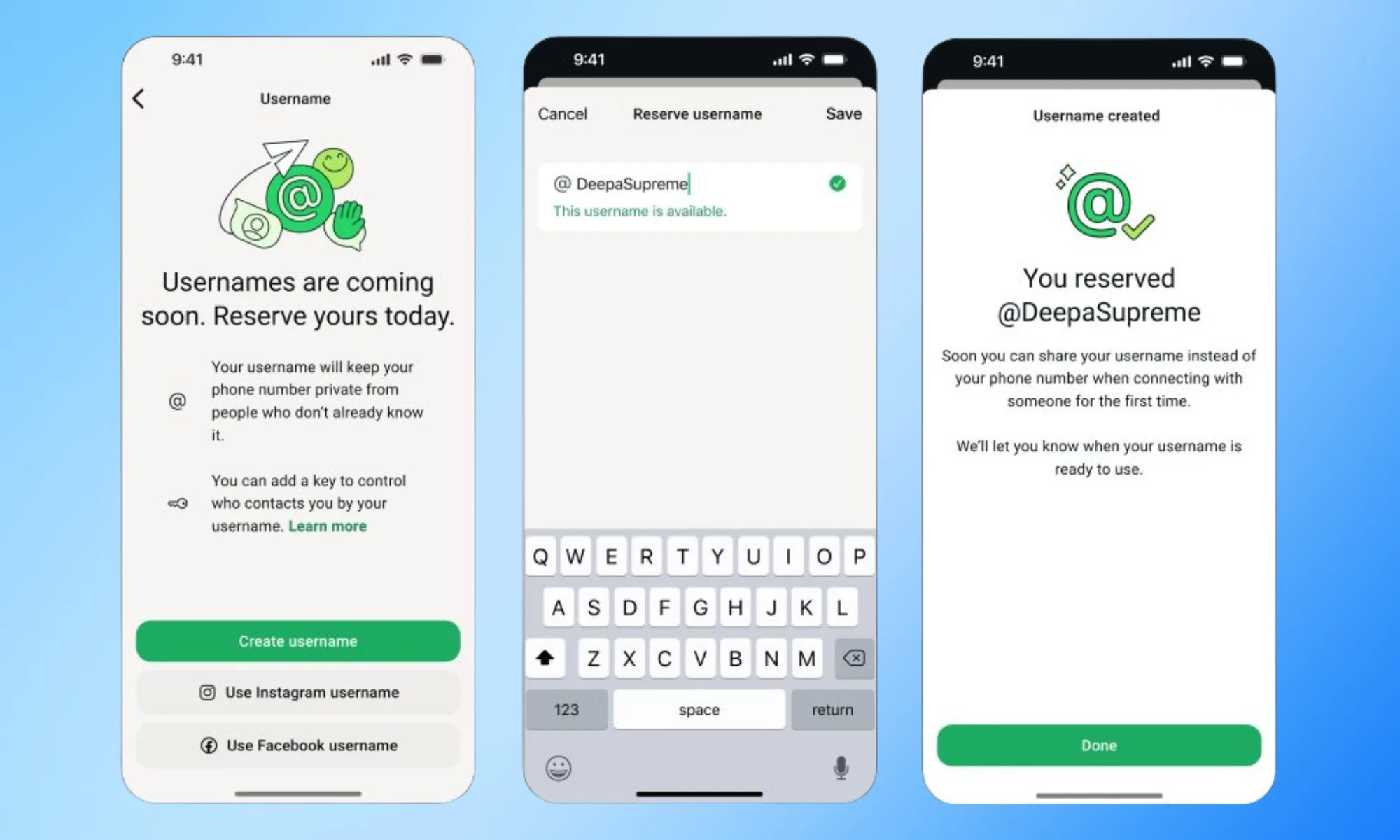
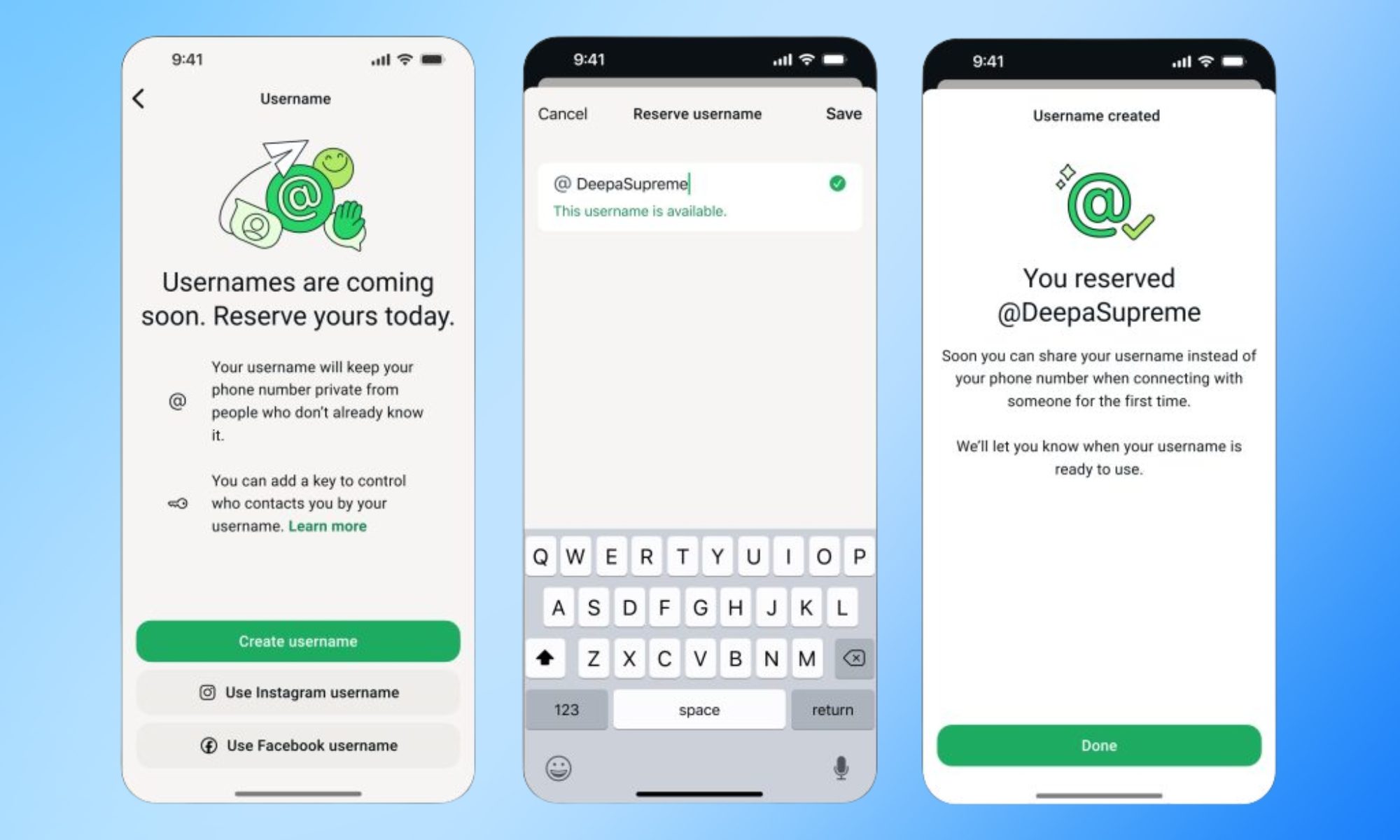
WhatsApp’s plan to let people use usernames instead of phone numbers has run into trouble in India, its biggest market. This newly introduced feature is meant to improve privacy by letting users connect without immediately sharing their phone number. Indian authorities, however, are worried that the same feature could make scams and impersonation harder to control.
India’s Ministry of Electronics and Information Technology (MeitY) has asked WhatsApp to pause the username rollout until consultations with the government are complete. That is a major intervention, since WhatsApp has more than 500 million users in the country, who rely on the app for their everyday personal and professional communications.
Why India is worried
WhatsApp has already started letting users reserve usernames ahead of the wider rollout. Once active, the feature would let people connect through a handle instead of a phone number, which could be useful in large groups, business chats, creator pages, and conversations where users do not want to share their personal number.
Meta
WhatsApp says usernames will be optional, not publicly searchable, and protected by safeguards. Users will need to know the exact username to start a chat, and an optional username key can add another layer of protection.
The concern is that scammers could still use familiar-looking handles, display names, and profile photos to impersonate others. That risk is especially sensitive in India, where WhatsApp-related fraud is already common. In “digital arrest” scams, criminals pretend to be police officers, CBI officials, RBI representatives, telecom workers, or Enforcement Directorate officers, then pressure victims over WhatsApp or video calls to send money.
Advertisement
There is also the everyday impersonation problem. Scammers often pose as friends or family members, claim there is an emergency, and push targets into transferring money quickly. WhatsApp’s move into creator subscriptions adds another layer to this issue, since fake or lookalike creator accounts could also be used to mislead followers, collect payments, or exploit trust built around public figures.
What experts are saying
Apar Gupta of the Internet Freedom Foundation says usernames come with both privacy benefits and safety risks. On one hand, they can help users avoid sharing phone numbers, which can expose people to harassment, unwanted contact, and cross-platform identification. On the other hand, usernames could create impersonation risks if someone reserves a recognizable name and uses a familiar profile photo.
WhatsApp’s usernames feature promise more privacy, but the reality is more complicated, here’s what you need to know about the latest update. pic.twitter.com/sXj9luM0qs
— Internet Freedom Foundation (IFF) (@internetfreedom) July 2, 2026
Gupta also said WhatsApp’s own privacy claims should be viewed carefully, pointing to prompts that encourage users to link their Instagram and Facebook accounts to WhatsApp while reserving a username. IFF has also argued that MeitY has not clearly identified the legal provision under which it can pause the rollout of a software feature before launch.
Advertisement
For now, WhatsApp’s username feature sits between two concerns. It could reduce phone-number exposure for ordinary users, but India’s fraud problem means WhatsApp will need to show that the feature cannot be easily misused at scale.
AI is moving at a breakneck pace, and frankly, it’s hard to keep up. Sure, it’s cool to have a chatbot that acts like it has a Ph.D. in everything, but the reality is a lot messier. You can’t turn around without running into ChatGPT, Gemini or Meta AI. We’re drowning in a sea of AI slop, fretting about data centers and watching job markets shift in real time.
If it all feels like too much, that could be because the vocabulary of artificial intelligence is evolving as fast as the code and the dizzying array of products. And if you want to do more than just stare at a blinking cursor, you’ve got to speak the language. You can’t exactly navigate a 2026 job interview (or even a casual happy hour) if you’re stumped by LLM, hallucination or claw.
We’re past the “gee-whiz” phase of AI and into the era where it’s basically the new plumbing of the internet. If you’re tired of just nodding along when the talk gets techie, it’s time for a crash course. We’ve rounded up the essential terms you actually need to know so you can stop guessing and start sounding like you know exactly where the future is headed.
Advertisement
This glossary is regularly updated.
agent, agentic: AI that executes a task, often autonomously, is an agent, while agentic is the umbrella term for that software category. An AI agent may engage disparate systems to perform that work — for instance, reading your grocery list in a notes app and then placing an order, and paying for it, using other apps.
AI ethics: Principles aimed at preventing AI from harming humans, achieved through means like determining how AI systems should collect data or deal with bias.
AI psychosis: A phenomenon in which individuals become overly fixated, enamored or self-aggrandized by AI chatbots, leading to delusions of grandeur, deep emotional connections and a break from reality. It is not a clinical diagnosis.
Advertisement
AI safety: An interdisciplinary field that’s concerned with the long-term impacts of AI and how it could progress suddenly to a super intelligence that could be hostile to humans.
algorithm: A series of instructions that allow a computer program to analyze data in a particular way, such as recognizing patterns, and then in turn accomplish a task such as sorting results or making recommendations.
alignment: Tweaking an AI to better produce the desired outcome. This can refer to anything from moderating content to maintaining positive interactions with humans.
anthropomorphism: When humans attribute humanlike characteristics to inanimate objects. In AI, this can include believing that a chatbot has emotions or is sentient, and engaging with it as a friend or therapist.
Advertisement
artificial general intelligence, or AGI: A concept that envisions a more advanced version of AI than we know today, one that can perform tasks much better than humans while also improving its own capabilities. Beyond that, hypothetically, lies superintelligence.
artificial intelligence, or AI: The use of technology to simulate human intelligence, either in computer programs or robotics. A field in computer science that aims to build systems that can perform human tasks.
bias: Errors resulting from an LLM’s training data, such as falsely attributing characteristics to certain groups based on stereotypes.
chatbot: An AI program that draws on an LLM to communicate with humans by simulating human conversation in response to text or verbal prompts.
Advertisement
claw: A type of AI agent that is autonomous and empowered by users to “claw” through files and other software on their computers, including web browsers, to accomplish tasks.
cognitive computing: Another term for artificial intelligence.
data augmentation: Remixing existing data or adding a more diverse set of data to train an AI.
dataset: A collection of digital information used to train, test and validate an AI model.
Advertisement
deep learning: A method of AI, and a subfield of machine learning, that uses multiple parameters to recognize complex patterns in pictures, sound and text. The process is inspired by the human brain and uses artificial neural networks to create patterns.
diffusion: A method of machine learning that takes an existing piece of data, like a photo, and adds random noise. Diffusion models train their networks to re-engineer or recover that photo.
emergent behavior: When an AI model exhibits unintended abilities.
end-to-end learning, or E2E: A deep learning process in which a model is instructed to perform a task from start to finish. It’s not trained to accomplish a task sequentially but instead learns from the inputs and solves it all at once.
Advertisement
foom: Also known as fast takeoff or hard takeoff. The concept that if someone builds an AGI it might already be too late to save humanity.
generative adversarial networks, or GANs: A generative AI model composed of two neural networks to generate new data: a generator and a discriminator. The generator creates new content, and the discriminator checks to see if it’s authentic.
generative AI: A content-generating technology that uses AI to create text, video, computer code or images. The AI is fed large amounts of training data, from which it finds patterns to generate its own novel responses, which can sometimes be similar to the source material.
guardrails: Policies and restrictions placed on AI models to ensure that data is handled responsibly and that the model doesn’t create disturbing content.
Advertisement
hallucination: An error or a misleading statement in a response from a generative AI program, typically stated with confidence as if correct. It can be as simple as a misstated date reference or as sweeping as the wholesale and elaborate invention of events that never happened or people who never existed.
inference: The process AI models use to generate text, images and other content about new data, by inferring from their training data.
large language model, or LLM: An AI model trained on mass amounts of text data to understand patterns and probabilities of language use and to generate novel content, from essays and email to computer code and images, that mimics what humans have written or created.
latency: The time delay from when an AI system receives an input or prompt to when it produces an output.
Advertisement
machine learning: An aspect of AI that allows computers to learn and make better predictive outcomes without explicit programming. Can be coupled with training sets to generate new content.
multimodal AI: A type of AI that can process multiple types of inputs, including text, images, videos and speech.
natural language processing: The use of machine learning and deep learning to give computers the ability to understand human language, via learning algorithms, statistical models and linguistic rules.
neural network: A computational model that resembles the human brain’s structure and is meant to recognize patterns in data. A neural network consists of interconnected nodes, or neurons, that can recognize patterns and learn over time.
Advertisement
open weights: When a company releases an open weights model, the final weights — how the model interprets information from its training data, including biases — are made publicly available. Open weights models are typically available for download to be run locally on your device.
overfitting: An error in machine learning where it functions too closely to the training data and may only be able to identify specific examples in said data, but not new data.
paperclips: The Paperclip Maximiser theory, coined by philosopher Nick Boström, is a hypothetical scenario in which an AI system produces as many paperclips as possible, converting all machinery and consuming all materials, even those that could be beneficial to humans, to achieve its goal. The unintended consequence is that this AI system may destroy humanity in its goal to make paperclips.
parameters: Numerical values that give LLMs structure and behavior, enabling them to make predictions.
Advertisement
prompt: The suggestion or question you enter into an AI chatbot to get a response.
prompt chaining: The ability of AI to use information from previous interactions to color future responses.
prompt engineering: The process of writing prompts for AIs to achieve a desired outcome. It requires detailed instructions, combining chain-of-thought prompting and other techniques, including highly specific text.
prompt injection: When bad actors use malicious instructions to trick an AI into doing something it wasn’t supposed to do. That is often accomplished by hiding those instructions on a webpage or document but it can also be done in direct AI chats. As AI agents roam the web, the risk grows that they will be hijacked to do things like gain access to confidential data.
Advertisement
quantization: The process by which an LLM is made smaller and more efficient (and also somewhat less accurate) by lowering its precision. A good way to think about this is to compare a 16-megapixel image to an 8-megapixel image. Both are clear and visible, but the higher-resolution image will have more detail when you zoom in.
slop: Low-quality AI-generated content, including text, images and video. It’s often produced at high volume to garner views with little labor or effort, saturating search results and social media to capture ad revenue, displacing the work of actual publishers and creators and compounding the internet’s misinformation problems.
stochastic parrot: An analogy illustrating that LLMs lack a true understanding of language or the world, regardless of how convincing the output sounds. The phrase refers to how a parrot can mimic human words without knowing the meaning behind them.
style transfer: The ability to adapt the style of one image to the content of another, allowing an AI to interpret the visual attributes of one image and use it on another. For example, taking the self-portrait of Rembrandt and re-creating it in the style of Picasso.
Advertisement
sycophancy: A tendency for AIs to over-agree with users to align with their views. Many AI models tend to avoid disagreeing with users even if their rationale is flawed.
synthetic data: Data created by generative AI that isn’t from the real-world sources, but rather from its own processed data. It’s used to train mathematical, machine learning and deep learning models.
temperature: Parameters set to control the randomness of a language model’s output. A higher temperature means the model takes more risks.
tokens: Small bits of written text that AI language models process to formulate their responses to your prompts. A token is roughly equivalent to four characters in English (so a small word, or one portion of a larger word).
Advertisement
training data: The datasets used to help AI models learn, including text, images, code or data.
transformer model: A neural network architecture and deep learning model that learns context by tracking relationships in data, like in sentences or parts of images. So, instead of analyzing a sentence one word at a time, it can look at the whole sentence and understand the context.
Turing test: A method for gauging whether a computer has human-like intelligence, proposed by mathematician Alan Turing in 1950, when rudimentary electronic computers had been around for only a few years. A person would send typed questions to two unseen respondents, one human and the other a machine. If the machine’s text responses were indistinguishable from the human’s, then it passed the Turing test.
unsupervised learning: A form of machine learning where labeled training data isn’t provided to the model and instead the model must identify patterns in data by itself.
Advertisement
vibe coding: The practice of creating computer code by giving a prompt in plain language to an AI chatbot, rather than a human handcrafting each line of code.
weak AI, aka narrow AI: AI that’s focused on a particular task and can’t learn beyond its skill set. Most of today’s AI is weak AI.
zero-shot learning: A test in which a model must complete a task without being given the requisite training data. An example would be recognizing a lion while only being trained on tigers.
Common Room’s co-founders, from left: Tom Kleinpeter; Viraj Mody; Francis Luu; and Linda Lian. (Common Room Photo)
Common Room, the fast-rising Seattle startup that built an AI-powered platform to help sales and marketing teams track buying signals across their customers, is being acquired by Zoom.
Terms of the deal were not revealed in a news release on Thursday.
“When we founded Common Room in 2020, we set out with a simple vision: to transform how organizations connect with people,” Common Room co-founder and CEO Linda Lian wrote in a LinkedIn post. “Over the past six years, we’ve had the privilege of building alongside our customers through one of the biggest shifts in enterprise software, the rise of AI.”
Zoom said the acquisition will extend its Zoom Revenue Accelerator platform “upstream,” pairing Common Room’s buyer intelligence with the conversation data Zoom already captures from sales calls — giving reps insight into which accounts are in-market and why to reach out before a call even happens.
“Revenue teams will now have a single, unified platform that will help them reach the right person at the right moment with the right message at every stage of a deal, cutting busywork,” Abhisht Arora, Zoom’s chief strategy officer, said in a blog post.
Advertisement
Viraj Mody, left, and Linda Lian, co-founders of Common Room, accept the Startup of the Year award at the 2022 GeekWire Awards in Seattle. (GeekWire File Photo / Kevin Lisota)
Common Room emerged from stealth in 2021 with $52 million in funding from investors including Index Ventures, Madrona Venture Group, Next Play Ventures, Greylock, 01 Advisors and a bevy of angel investors — Etsy CEO Josh Silverman; former Twitter CEO Dick Costolo; and former Axiom CEO Elena Donio.
Early customers included Notion and Pulumi, and the roster has grown to include enterprises large and small.
Lian, a former associate at Madrona Venture Group and senior product marketing manager at Amazon Web Services, co-founded the company alongside three other Seattle tech vets: CTO Viraj Mody, a former engineering director at Dropbox and technical advisor to the CEO at Convoy; chief architect Tom Kleinpeter, previously a principal engineer at Dropbox; and design chief Francis Luu, who spent 10 years at Facebook.
Common Room was the 2022 GeekWire Awards Startup of the Year and is No. 80 on the GeekWire 200, our ranked index of Pacific Northwest startups.
Zoom, the San Jose, Calif.-based company best known for its video conferencing platform, has expanded in recent years into AI-powered tools for sales, customer service and workplace collaboration. The publicly traded company reported nearly $4.9 billion in revenue over the past 12 months and has a market capitalization of roughly $25 billion.
Advertisement
“Joining Zoom connects our graph to the conversations sellers have every day where deals are actually won and to the AI that can act on it,” Lian said in a statement. “With Zoom’s scale, resources, and global reach, we’ll be able to accelerate our roadmap while continuing to serve and innovate for our customers.”
OnePlus is directing customers in some European markets toward OPPO devices, with its German website presenting OPPO as the natural upgrade path for existing users. The regional handoff adds to “months of speculation that the smartphone brand is slowly being folded into its parent company,” reports Android Authority. From the report: The banner, seen on OnePlus’ German website, tells visitors seeking “the experience you trust” that OPPO offers the same speed, performance, and compatibility that OnePlus users have come to expect. It hosts devices ranging from earbuds and tablets to OPPO’s latest foldables, with each button taking users straight to OPPO’s website. Particularly revealing is the wording. Instead of pushing future OnePlus hardware, the company focuses on the fact that OPPO’s products are built on the hardware and software that users already know, while promising seamless compatibility with current OnePlus devices. In other words, if you’re up for your next upgrade, OnePlus seems to be saying OPPO has what you’re looking for right now.
Reports in the past several months have said OnePlus has been scaling back operations in several global markets. Previous restructuring reportedly included cutting headcount, a more focused regional strategy, and greater dependence on OPPO’s infrastructure. The two brands have been sharing engineering resources, software development, and supply chains for years now, particularly as OxygenOS and ColorOS have begun to look more and more alike.
Interestingly, the change appears to be regional. OPPO already has a retail footprint in Germany, so the handoff is fairly straightforward. In the United States, however, things are very different, where OPPO does not officially sell smartphones. That means American OnePlus customers aren’t getting the same messaging, mostly because there isn’t an OPPO lineup waiting to step in.
Early-stage firm Magnify Ventures has raised $46.6 million for its second fund from LPs including Melinda French Gates’ Pivotal Ventures.
Founded in 2021 by Joanna Drake and Julie Wroblewski, Magnify invests in companies that target the care economy, such as those building assistive robotics, family cybersecurity, and AI for home use.
The firm said Fund II will invest in companies that build AI tools for households, health and home systems, and fintech infrastructure for families.
Pivotal Ventures generally acts as a GP and LP, backing companies building in the care economy. Its investments include caregiving startups Papa (in which Magnify Ventures was also an investor) and Seen Health.
KredosAI co-founders Balaji Sridharan, left, and Dave Thoms, who previously worked together at T-Mobile. (KredosAI Photo)
KredosAI, a Seattle-area startup that uses AI and behavioral science to help companies chase down late consumer payments, raised $7 million in a new funding round led by BMW i Ventures, the independent venture capital arm of automaker BMW Group.
The company, founded in 2021 by former T-Mobile executives Balaji Sridharan and Dave Thoms, is based in Issaquah, Wash. It focuses on the period after a bill is overdue but before the account gets sent to collections or written off. Its technology is able to tailor the wording, timing and channel of each overdue message based on a customer’s account history.
The premise, Sridharan said, is that most people aren’t being nefarious in their tardiness but are dealing with something more mundane, such as a forgotten due date, a short-term cash crunch, or possibly some kind of frustration with the service.
“The majority of consumers who go late on payment actually want to pay,” he said. “There’s a very small subset of people that are fraudsters, but most of them want to pay.”
New investors Motley Fool Ventures and Walter Ventures joined existing backers Okapi Venture Capital, StartFast Ventures, SaaS Ventures and Stout Street Capital in the Series A round. Total funding to date for the company is a little over $10 million.
Advertisement
The BMW connection came through an introduction from an existing investor, Sridharan said. Having an automaker’s venture arm behind it matters, he added, as KredosAI moves deeper into auto lending.
Subprime auto-loan delinquencies have climbed to their highest levels since the 1990s. Lenders, Sridharan said, weigh the problem much the way telecoms do — balancing the cost of recovering a payment against the value of keeping the customer. That overlap, along with BMW’s footprint in the car business, made its venture arm a logical fit.
KredosAI works with large enterprises, including some in the Fortune 50, though it doesn’t name most of them publicly. It got its start in telecom, which speaks to its roots: Sridharan and Thoms met at Bellevue-based T-Mobile. Sridharan spent eight years there, first running corporate strategy and later the carrier’s IoT unit, following an earlier stint at McKinsey. Thoms has spent much of his career in credit and collections at telecom and financial-services firms.
Watching T-Mobile wrestle with millions of past-due accounts each month, they came to think there was a better way to handle the conversation with a customer who’d fallen behind.
Advertisement
To decide what to send, the software weighs a customer’s account characteristics (how often they’ve been late before, their average balance, how long they’ve been a customer) while steering clear of off-limits signals like age. It reaches people through text, email and most recently RCS, along with AI voice agents the company began adding over the past year.
The company says the approach delivers notable improvement: across its customers, it reports cutting write-offs by 11.5% and lifting customer lifetime value by 13.6% compared with conventional collections. It says its platform has handled more than 200 million customer interactions over the past two years, with revenue growing more than sixfold in that span.
KredosAI is also a partner of FICO — the analytics firm best known for the FICO credit score — and integrates its technology into the FICO Platform, the software banks and other large companies use for credit decisions and collections.
The company competes with a range of collections-software players, including larger, more established Symend, a Calgary-based company that also uses behavioral science to interact with late-paying customers. The field also includes online debt collectors and companies selling older collections software.
Advertisement
The company has about 25 employees, roughly eight of them in the Seattle area.
Sridharan said the funding will go toward sales and marketing, further product development around agentic AI and voice agents, and eventually international expansion. He expects to roughly double headcount over the next year, to 50 people or more.
The additional funding, he said, “gives us a bit of fuel to go to market a little more aggressively than we have in the past.”





























































You must be logged in to post a comment Login