
Tech
Who is Asha Sharma? A closer look at Microsoft’s surprise pick to lead the Xbox business

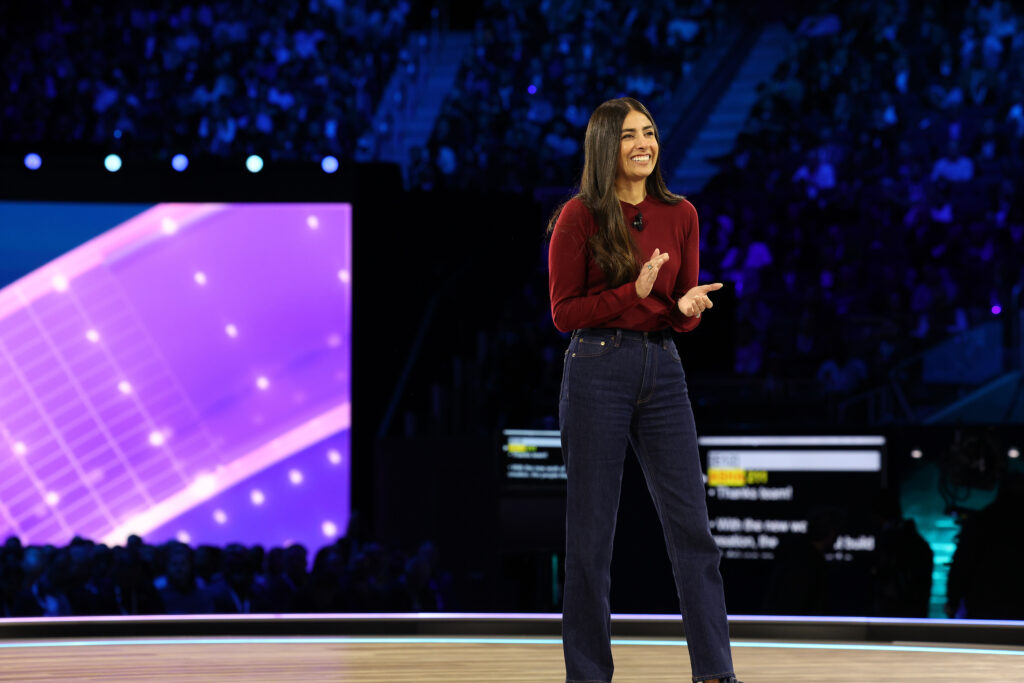

“And the thing about games is, if you get good at one game, you can be good at any game. … They’re all hand-eye coordination and observing patterns.”
That’s a line from Tomorrow, and Tomorrow, and Tomorrow, Gabrielle Zevin’s 2022 novel about two friends who build a video game company from nothing — struggling with the tension between art and commerce, and ultimately with the challenges of operating a business at scale.
This describes almost perfectly what Asha Sharma will be attempting to do in her new role leading Microsoft’s Xbox and video-game business: She’ll need to take all the patterns she’s observed as an executive with Facebook, Instacart, Seattle startup Porch, and Microsoft’s AI platform, and apply them to a world she hasn’t played in before.
And get this: it’s one of her favorite books.
Speaking last year on Lenny Rachitsky’s podcast, Sharma mentioned she had read the novel every year for the past three years. “I love it so much,” she said, calling it a “beautiful story.”
She didn’t mention on the podcast speed round that it’s a story about video games. It wasn’t really relevant at the time. But it is now, given the news Friday that Sharma will succeed 38-year Microsoft veteran Phil Spencer as CEO of Microsoft Gaming, in a shakeup that also saw Xbox President Sarah Bond — previously seen as Spencer’s likely successor — decide to leave.
Sharma was a surprise pick, in part because she has no prior video-game industry leadership experience, and limited background as a gamer, which is creating skepticism in gaming circles already. However, she has experience running large tech platforms, the clear trust of Microsoft CEO Satya Nadella, and a belief in the potential of AI to reshape every business.
On that last point, she quickly offered some reassurance to Microsoft employees and the broader universe of Xbox gamers in her introductory memo last week.
“As monetization and AI evolve and influence this future, we will not chase short-term efficiency or flood our ecosystem with soulless AI slop,” she wrote. “Games are and always will be art, crafted by humans, and created with the most innovative technology provided by us.”
Sharma laid out three priorities in the memo: great games above all else, a recommitment to Xbox’s core console fans, and what she called the “future of play” — new business models and a shared platform where developers and players can create together.
She vowed not to treat the company’s iconic franchises as “static IP to milk and monetize,” and said she wants to return to “the renegade spirit that built Xbox in the first place.”
Her first act was promoting longtime studio chief Matt Booty to executive vice president and chief content officer, pairing her platform background with his decades of gaming credibility.
“My first job is simple,” she wrote. “Understand what makes this work and protect it.”
The challenge ahead
There’s a lot to protect, and plenty of work to do.
Microsoft has been in gaming for decades, from early PC titles like Flight Simulator to the launch of the original Xbox console in 2001.
Under Spencer, the company made massive bets on expansion, acquiring ZeniMax Media and its family of studios — including Bethesda — for $7.5 billion in 2021, and then closing the $69 billion acquisition of Activision Blizzard in 2023, the largest gaming deal in history. That brought Call of Duty, World of Warcraft, Candy Crush, Diablo, and Overwatch under Microsoft’s roof, making it the third-largest gaming company in the world by revenue.
Spencer also expanded Xbox’s reach across PC, mobile, and cloud gaming, and built Game Pass into a major subscription service, transforming the division’s business model.
But the financial picture has been rough. Microsoft’s gaming revenue fell 9% in the most recent quarter, with hardware revenue down 32%. The division represents about 7% of the company’s total revenue, and has faced pressure in recent years to meet aggressive profit targets.
Xbox’s challenge has not been a lack of talent or popular franchises. GeekWire gaming contributor Thomas Wilde observed that the biggest problem has been instability: waves of layoffs and studio closures that left even successful teams uncertain about their future.
In his memo about the transition, Nadella said Sharma brings “deep experience building and growing platforms, aligning business models to long-term value, and operating at global scale.”
The implication in the selection is clear: Xbox spans console, PC, mobile, and cloud platforms, requiring an operator who knows how to make all the pieces work together.
That’s the job Sharma has done everywhere she’s been.
From Wisconsin to Redmond
Sharma’s career and biographical details have been widely scrutinized over the past few days, as the video game and business press have scrambled to figure out who this person is, who arrived seemingly out of the blue to lead one of Microsoft’s biggest consumer brands.
Now 37, she grew up in Wisconsin and started working at 17, with an early role at SC Johnson, according to a 2014 MarTech profile. She earned a bachelor’s degree in business from the University of Minnesota’s Carlson School of Management, and by the time she left college had worked at Cargill, Deloitte, and Microsoft, and lived abroad in Hungary.
As of last fall, she was a second-degree black belt in Taekwondo, explaining to Rachitsky on his podcast that the discipline is “more mental than it is physical.”
She has been at Microsoft for two years, running the CoreAI product organization, the team behind Azure AI Studio, the company’s AI model catalog, and the developer tools for Microsoft Copilot. She was previously COO of Instacart, and before that VP of product at Meta, where she ran Messenger and Instagram Direct. She’s on the Home Depot and Coupang boards.
What’s lesser known is that she got her start at Microsoft, interning at the company and then working in marketing right out of college before leaving to help build Porch, the Seattle home services company, where she was COO during the company’s early years.
In a 2024 interview with GeekWire at Microsoft’s Build developer conference, not long after rejoining the company, Sharma talked about what brought her back. After years working across different types of organizations, she said, the lesson she drew from her career was the importance of working with great people on problems that matter.
She described feeling fortunate to be working on “some of the most important technology of our lifetime” at a critical juncture, with people embracing a growth mindset.
Winning over the gamers
Part of what made Spencer so beloved among Xbox fans was that he was one of them — a lifelong gamer with a prolific achievement history and a habit of wearing gaming T-shirts under blazers at industry events.
Sharma knows she can’t replicate that overnight, but she’s clearly trying to close the gap.
Over the weekend, she began engaging directly with Xbox fans on social media, sharing her gamertag (AMRAHSAHSA, her name spelled backwards) and listing her top three games as “Halo, Valheim, Goldeneye” — Microsoft’s flagship franchise, a popular survival game, and classic title that first launched on the Nintendo 64 in 1997.
When one fan accused her account of being run by AI, she replied: “Beep Boop Beep Boop.”
She’s also getting public support from inside Xbox. Longtime exec Aaron Greenberg, the division’s VP of marketing, wrote on X that after spending time with Sharma during the past week, he was “incredibly optimistic about the opportunity ahead under her leadership,” describing her as “exceptionally bright, eager to listen and learn from others, no ego.”
The activity history in Sharma’s Xbox profile, which IGN and Windows Central quickly dissected, shows she’s played about 30 titles since mid-January, gravitating toward narrative-driven indie games like Firewatch, Gone Home, and What Remains of Edith Finch — the kinds of games you’d play if you wanted to understand games as art, not just entertainment.
She unlocked her first achievement Jan. 15, about five weeks before the announcement of her new role. It was a Halo: Master Chief Collection milestone, fittingly titled “Your Journey Begins.”

Tech
The Beats Studio Buds+ drop to $99, and they’re the wireless earbuds I’d recommend for iPhone and Android users alike


The Beats Studio Buds+ are down to $99.95, a $70 saving off their $169.95 list price, and that gets you true wireless noise canceling, spatial audio, and sweat resistance at a price that most competing earbuds with this feature set can’t touch. For anyone using an iPhone or an Android device, these cover the bases better than most things at this price.
What you’re getting
The Studio Buds+ improved on the original Studio Buds in two meaningful ways: better ANC performance and the addition of spatial audio, which delivers a more immersive, three-dimensional listening experience on compatible content. The noise-canceling handles commuting and office environments well, and transparency mode is responsive enough to actually use when you need to stay aware of your surroundings.
What sets the Studio Buds+ apart from most earbuds at this price is the cross-platform compatibility. They pair seamlessly with iPhone through the Apple ecosystem while offering full Android integration through the Beats app, one-touch Google Assistant access, and Find My Device support. Most earbuds at this price favor one platform at the expense of the other; the Studio Buds+ don’t make that compromise.
The built-in microphone handles calls clearly, the IPX4 sweat resistance makes them a practical gym companion, and the compact charging case keeps the overall package travel-friendly.
Why it’s worth it
Spatial audio and ANC together in a wireless earbud typically push the price well above $100. The Beats Studio Buds+ at $99.95 bring both to a price point where the decision becomes considerably easier, particularly for anyone who switches regularly between Apple and Android devices and doesn’t want to sacrifice features to do so.
The bottom line
The Beats Studio Buds+ at $99.95 are a well-rounded wireless earbud at a price that makes the feature set look considerably more expensive than it is. The ANC, spatial audio, and genuine dual-platform compatibility add up to an earbud that’s difficult to beat at this price, and the $70 saving makes it the right time to pick them up.


Conditions in the hardware market remain strained, with prices for nearly all components rising sharply as AI companies place unprecedented pressure on supply chains for future demand. In this environment, stricter market regulation may be warranted, but there appears to be little appetite in Washington for increased government intervention.
Read Entire Article
Source link

Whoop, the makers of a screen-free fitness tracker of the same name, could soon have some competition. Fitbit teased its take on a Whoop-style band with the help of Steph Curry at the end of March, and based on a trademark filing spotted by Gadgets & Wearables, Garmin appears to be working on its own band that tracks similar health metrics.
This new Garmin wearable, called “CIRQA” in the trademark filing submitted in February, is designed to measure “the body’s physical parameters and other physiological data, bio-signals, and bodily behavior.” That could broadly describe the smartwatches and fitness trackers Garmin already sells. But the CIRQA apparently goes further, by also measuring “recovery from physical and emotional stress, human alertness level, and performance,” a set of more granular, wellness-focused features that could bring the unreleased wearable into the same ballpark as a Whoop.
Garmin accidentally leaked that it was working on a new wearable via a hastily removed store page in January, Android Authority reports. While some phantom web pages and a trademark do not guarantee Garmin is working on a new device, or that the band will be screen-free in the same way the Whoop is. If the company is preparing a competitor, though, the timing makes sense. Where other devices try to split the difference between tracking biometrics and offering real-time information or other smartwatch features, Whoop is decidedly data-first. Its wearables monitor as much information as possible through a nondescript band, and then analyze and display what it learned via a smartphone app. The approach is attractive to anyone tired of dealing with screens, and the growing number of people obsessed with optimizing their health. In fact, Whoop just raised $575 million on the back of its current success. It would make sense that Garmin and Google (via its Fitbit brand) would want a piece of the company’s audience, too.
Whoop-style bands are also a perfect fit for future uses of AI in health and fitness tracking. Google is interested in having users turn to Fitbit’s AI-powered health coach for everything from workout tracking to nutrition advice. If health data processing is going to happen in the cloud, and you’re going to have to pull out your smartphone to view that data anyway, it makes sense to sell a tracker without a screen.

Sick! The Federal Aviation Administration is targeting gamers in its most recent job advertisement for air traffic controllers. The administration’s annual hiring window opens at 12AM ET on April 17, and considering the ongoing shortage of air traffic controllers, it’s calling this a period of “supercharged hiring.” Rad! The FAA’s YouTube video draws parallels between gaming and directing air traffic, and notes that the average salary for the role after three years is $155,000. Hella!
The FAA is clearly seeking players who are at least old enough to remember the Xbox One and Bjergsen in the LCS, which puts would-be candidates around their early 20s at least. It’s either that, or the ad editors really just picked videos at random from the pile of stock footage marked gamerz. But I won’t lie, it made me smile to see that Xbox One logo appear out of nowhere. Nostalgia is a hell of a thing.
“To reach the next generation of air traffic controllers, we need to adapt,” US Transportation Secretary Sean P. Duffy said. “This campaign’s innovative communication style and focus on gaming taps into a growing demographic of young adults who have many of the hard skills it takes to be a successful controller.”
The FAA has been losing more air traffic controllers than it can hire and retain since the 2010s, and this trend only worsened during the pandemic in the 2020s, according to a report released in December by the US Government Accountability Office. The administration increased hiring every year since 2021, but at the end of 2025 it employed 13,164 air traffic controllers, 6 percent fewer than in 2015, the report said. At the same time, the number of flights in the air traffic control system increased by about 10 percent, to 30.8 million.
Or, as the FAA put it on the ATC hiring page: “Join the BEST AND BRIGHTEST, the elite squad of 14,000 controllers protecting 2.9 million daily passengers.” Applicants must be a US citizen, under 31 (maybe those video editors do know what they’re doing), and be able to speak fluent English. An aptitude test, medical screening and academy training follows, among other steps.

Attackers briefly hijacked part of CPUID’s backend and swapped legitimate download links on its site with malware-laced ones. “The issue hit tools like HWMonitor and CPU-Z, with users on Reddit and elsewhere starting to notice something wasn’t right when installers tripped antivirus alerts or showed up under odd names,” reports The Register. From the report: CPUID has since confirmed the breach, pinning it on a compromised backend component rather than tampering with its software builds. “Investigations are still ongoing, but it appears that a secondary feature (basically a side API) was compromised for approximately six hours between April 9 and April 10, causing the main website to randomly display malicious links (our signed original files were not compromised),” one of the site’s owners said in a post on X. “The breach was found and has since been fixed.”
The files themselves appear to have been left alone and remain properly signed, so it doesn’t seem like anyone got into the build process. Instead, the problem sat in front of that, in how downloads were being served. For anyone who hit the site during that stretch, though, that distinction offers little comfort. If the link you clicked had been swapped out, you were pulling whatever it pointed to, whether you realized it or not.


Hackers gained access to an API for the CPUID project and changed the download links on the official website to serve malicious executables for the popular CPU-Z and HWMonitor tools.
The two utilities have millions of users who rely on them for tracking the physical health of internal computer hardware and for comprehensive specifications of a system.
Users who downloaded either tool reported on Reddit recently that the official download portal points to the Cloudflare R2 storage service and fetches a trojanized version of HWiNFO, another diagnostic and monitoring tool from a different developer.

The name of the malicious file is HWiNFO_Monitor_Setup, and running it launches a Russian installer with an Inno Setup wrapper, which is atypical and highly suspicious.
Users reported that downloading the clean hwmonitor_1.63.exe from the direct URL was still possible, indicating that the original binaries were intact, but the distribution links appear to have been poisoned.
The externalized download chain was also confirmed by Igor’s Labs and @vxunderground, who reported that a fairly advanced loader using known techniques, tactics, and procedures (TTPs) is involved.
“As I began poking this with a stick, I discovered this is not your typical run-of-the-mill malware,” stated vxunderground.
“This malware is deeply trojanized, distributes from a compromised domain (cpuid-dot-com), performs file masquerading, is multi-staged, operates (almost) entirely in-memory, and uses some interesting methods to evade EDRs and/or AVs such as proxying NTDLL functionality from a .NET assembly.”

The researcher claims that the same threat group targeted users of the FileZilla FTP solution last month, suggesting that the attacker is focusing on widely used utilities.
The downloaded ZIP is flagged by 20 antivirus engines on VirusTotal, although not clearly identified. Some classify it as Tedy Trojan, and others as Artemis Trojan.
Some researchers on Virustotal say that the fake HWiNFO variant is an infostealer malware.
BleepingComputer has contacted CPUID to learn more about what happened, the date of the compromise, the affected versions, and what impacted users should do. A spokesperson has provided the following statement.
“Investigations are still ongoing, but it appears that a secondary feature (basically a side API) was compromised for approximately six hours between April 9 and April 10, causing the main website to randomly display malicious links (our signed original files were not compromised). The breach was found and has since been fixed.” – CPUID
The same person told us that the hackers hit them at a time when the main developer was away on holiday.
Currently, it appears that CPUID has fixed the problem and now serves clean versions for both CPU-Z and HWMonitor.

Automated pentesting proves the path exists. BAS proves whether your controls stop it. Most teams run one without the other.
This whitepaper maps six validation surfaces, shows where coverage ends, and provides practitioners with three diagnostic questions for any tool evaluation.

The Orion capsule carrying the Artemis II astronauts has successfully splashed down off the coast of San Diego at 8:07PM Eastern time on April 10. It signals the conclusion of Artemis II’s 10-day journey around the moon, which is meant to be a test flight for a future mission that would bring humanity back to the lunar surface. The Orion crew module carrying the mission’s astronauts separated from the service module at 7:33 PM. While the service module was designed to burn up in the Earth’s atmosphere, the crew capsule was built to bring the astronauts back home safely.
By 7:53 PM, Orion reached our planet’s upper atmosphere, where a six-minute communication blackout occurred due to the capsule heating up as it started its guided descent. The capsule has 11 parachutes, with its drogue parachutes being deployed at 23,400 feet to stabilize and slow it down. When Orion reached 5,400 feet above the ground, the drogue parachutes were cut off so that the three main parachutes could be deployed. That decreased the capsule’s velocity to 200 feet per second, enabling a safe splashdown.
NASA’s engineers conducted several tests while the capsule was in the water before the recovery team headed to the capsule on inflatable boats to extract the crew from Orion. By 9:34 PM, all four crew members were out of the capsule. They were then hoisted into helicopters and flown to the USS John P. Murtha dock ship, where doctors will assess their health.
Artemis II launched on April 1 with four astronauts on board: NASA’s Reid Wiseman, Victor Glover and Christina Koch, as well as Canadian Space Agency’s Jeremy Hansen. They traveled around the moon for almost 10 days, reaching distances no other crewed mission has before it. The astronauts took photos of the far side of the moon, the side we don’t see from our planet, including amazing closeups of the lunar surface using their smartphones. That makes them the first humans to directly and personally view the lunar far side.
During NASA’s post-splashdown news conference, the agency said it will announce the Artemis III crew soon. Artemis III will rendezvous with one or both commercial landers being developed by SpaceX and Blue Origin in low Earth orbit, which will take humans to the lunar surface. It will test the lander’s ability to dock with Orion before NASA lands humans on the moon again.

Here’s the astronauts’ out-of-this-world menu.
Astronaut eats: they’re not just Tang and Space Food Sticks these days. NASA shared a look at the menu for the Artemis II astronauts, and it doesn’t sound half bad.
The Artemis II crew will enjoy more than 10 types of beverages, including coffee, mango-peach smoothies, green tea, apple cider, lemonade, a pineapple drink, cocoa and breakfast drinks flavored in their choice of chocolate, vanilla or strawberry.
The most common food items they’ll eat include tortillas, wheat flat bread, vegetable quiche, barbecued beef brisket, mango salad, granola with blueberries, macaroni and cheese, tropical fruit salad, couscous with nuts, broccoli au gratin, spicy green beans, almonds, cashews, and butternut squash cauliflower.
NASA also reports that the astronauts can choose to spice up their meals — there are five different hot sauces available to the crew. And culinary flavorings available include maple syrup, chocolate spread, peanut butter, spicy mustard, strawberry jam, honey, cinnamon and almond butter. Sweet treats include cookies, chocolate, pudding, cake, candy-coated almonds and cobbler.
And, no, they’re not popping a flavor pill or sucking a sandwich out of a tube, like old sci-fi shows told us.
“Food aboard Orion is ready-to-eat, rehydratable, thermostabilized or irradiated,” NASA says. “The crew uses Orion’s potable water dispenser to rehydrate foods and beverages and a compact, briefcase-style food warmer to heat meals as needed.”
Looking for the most recent Mini Crossword answer? Click here for today’s Mini Crossword hints, as well as our daily answers and hints for The New York Times Wordle, Strands, Connections and Connections: Sports Edition puzzles.
Need some help with today’s Mini Crossword? It’s the longest of the week, the Saturday edition. Read on for all the answers. And if you could use some hints and guidance for daily solving, check out our Mini Crossword tips.
If you’re looking for today’s Wordle, Connections, Connections: Sports Edition and Strands answers, you can visit CNET’s NYT puzzle hints page.
Read more: Tips and Tricks for Solving The New York Times Mini Crossword
Let’s get to those Mini Crossword clues and answers.
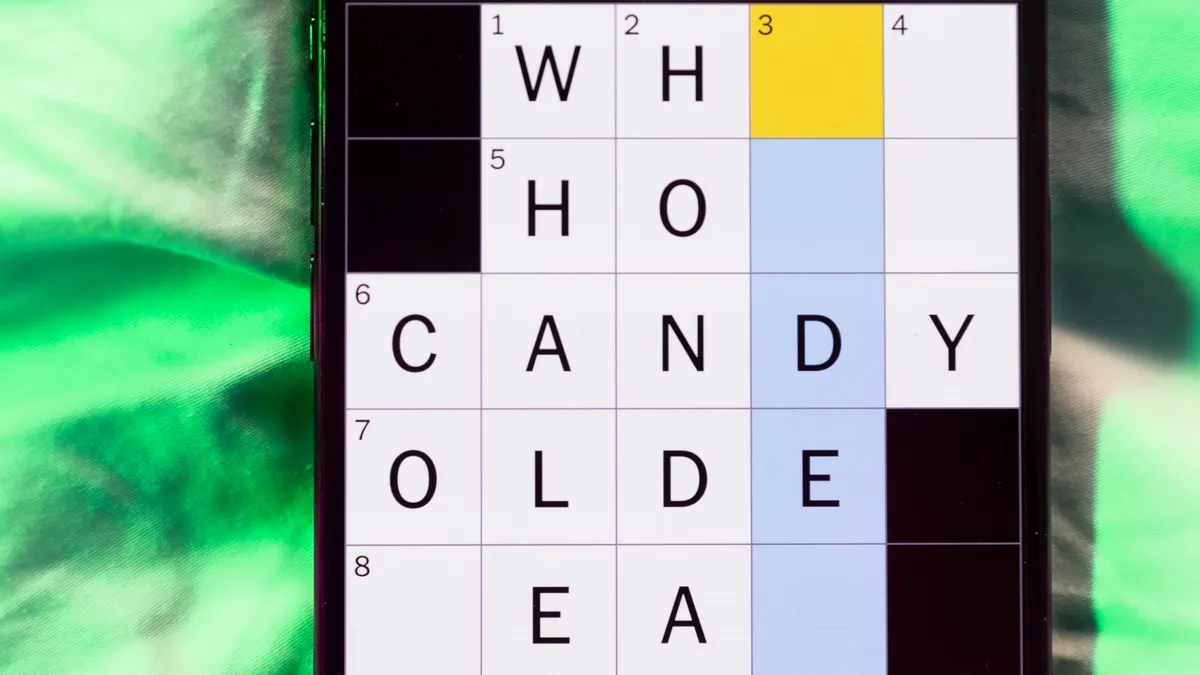
The completed NYT Mini Crossword puzzle for April 11, 2026.
Mini across clues and answers
1A clue: N.B.A. team that plays at M.S.G.
Answer: KNICKS
7A clue: Guy with a nerdy, passionate interest
Answer: FANBOY
8A clue: Rudely merges
Answer: CUTSIN
9A clue: Standard number of bowling pins
Answer: TEN
10A clue: Inflated sense of one’s own importance
Answer: BIGEGO
13A clue: Arrived via airplane
Answer: FLEWIN
14A clue: History-making achievements, perhaps
Answer: FIRSTS
Mini down clues and answers
1D clue: Colonel Sanders’s fast-food chain
Answer: KFC
2D clue: Spiral-shelled mollusks
Answer: NAUTILI
3D clue: 1, 2 or 3, but not 1.23
Answer: INTEGER
4D clue: “60 Minutes” producer
Answer: CBSNEWS
5D clue: Colorful pond fish
Answer: KOI
6D clue: Thesaurus listing: Abbr.
Answer: SYN
10D clue: Closest pal, for short
Answer: BFF
11D clue: “Go on, ___!” (“Scram!”)
Answer: GIT
12D clue: Opposite of offs
Answer: ONS
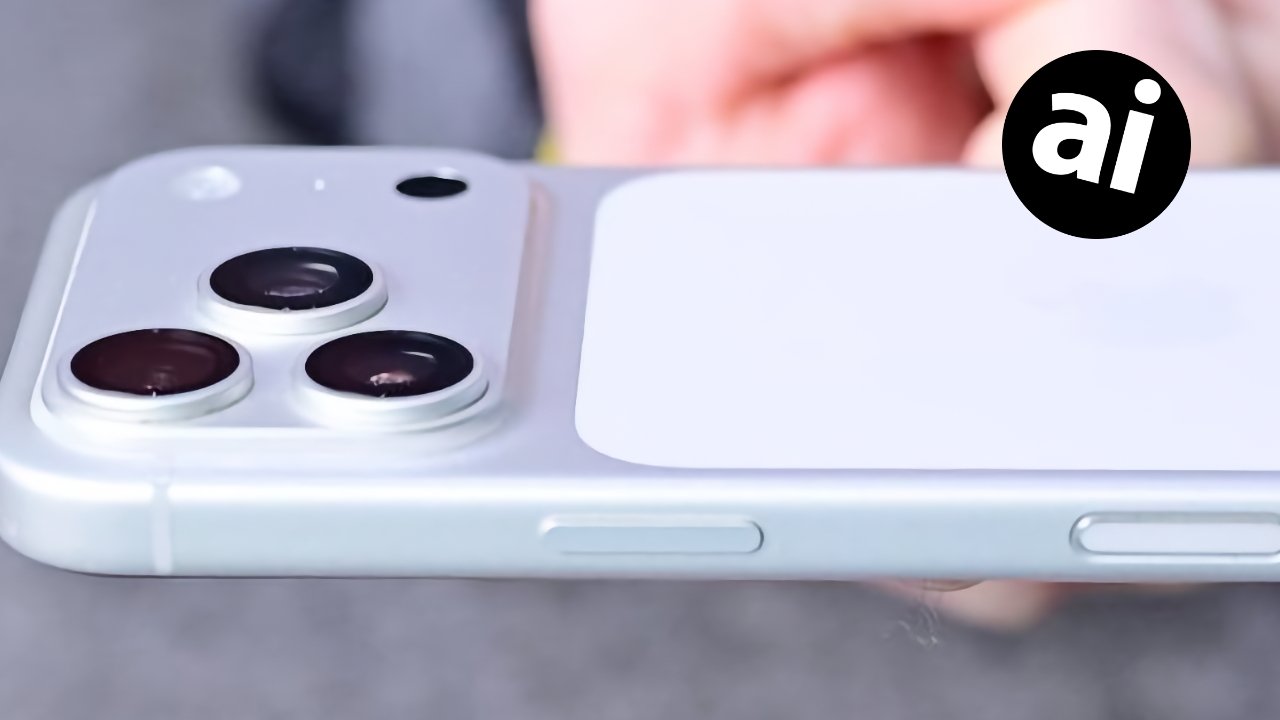
There is a huge amount to say about the latest iPhone Fold rumors, and a lesson for Apple in how the MacBook Neo could even be too successful, on the AppleInsider Podcast.
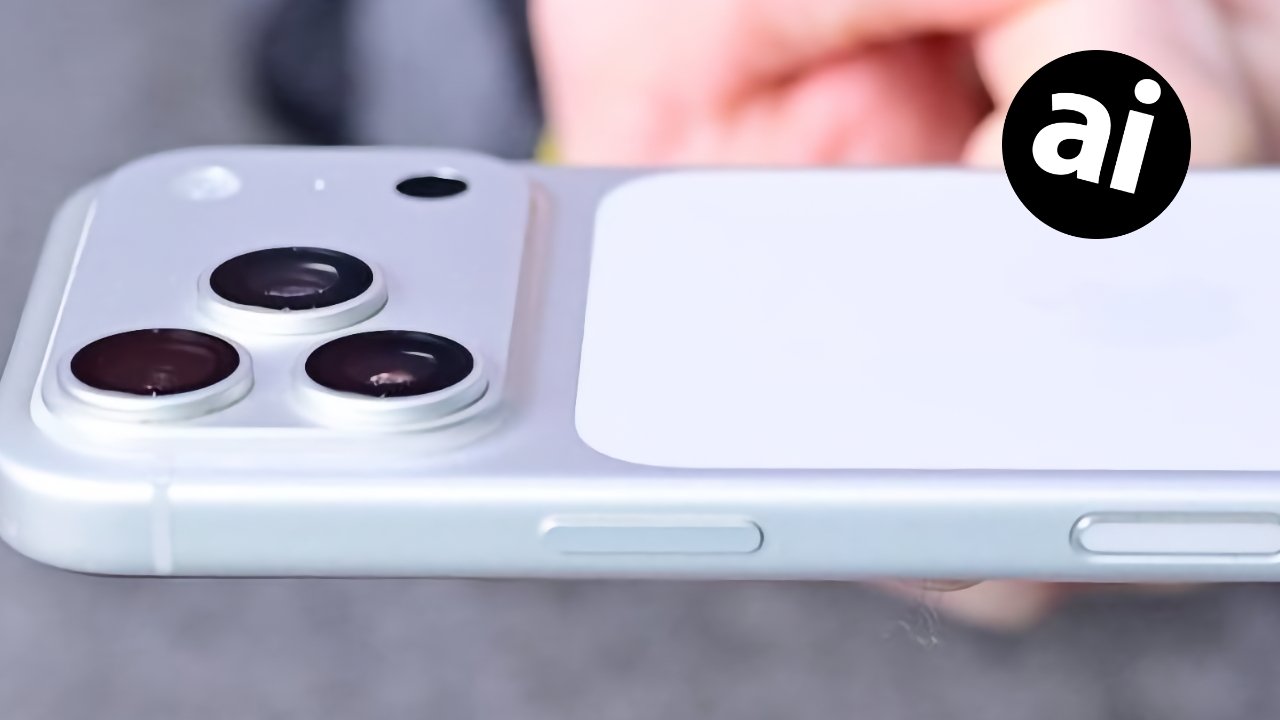
Even on Earth, iPhones are so light they feel as if they could float
After months or even really years of rumors and expectations over the iPhone Fold, it really does look as if one is coming. There’s still the issue of when, as conflicting reports are arguing over a range of dates, but they all agree it’s coming.
Not all of them can agree on why, though. If only to save you unnecessarily buying the single most expensive iPhone ever conceived, we’ve got reasons why you should and shouldn’t buy it. And we’ve got reasons why it will probably be worth waiting.
Continue Reading on AppleInsider | Discuss on our Forums

Premier League title race: Could April decide destiny for Arsenal and Man City?

Will His Injury Affect His Performance in World Cup 2026?

CFTC Expands Crypto Push as CLARITY Act Awaits Senate Action


-

 Business5 days ago
Three Gulf funds agree to back Paramount’s $81 billion takeover of Warner, WSJ reports
-

 Sports6 days ago
India men’s 4x400m and mixed 4x100m relay teams register big progress | Other Sports News
-

 Politics14 hours ago
US brings back mandatory military draft registration
-

 Fashion14 hours ago
Weekend Open Thread: Veronica Beard
-

 Tech3 days ago
How Long Can You Drive With Expired Registration? What Florida Law Says
-

 Business6 days ago
No Jackpot Winner, Prize to Climb to $231 Million
-

 Fashion5 days ago
Massimo Dutti Offers Inspiration for Your Summer Mood Board
-
 Sports15 hours ago
Man United discover Nico Schlotterbeck transfer fee as defender reaches Dortmund agreement
-

 Fashion4 days ago
Let’s Discuss: DEI in 2026
-

 Crypto World3 days ago
Bitcoin recovers as US and Iran Agree a Ceasefire Deal
-

 Business11 hours ago
Tesla Model Y Tops China Auto Sales in March 2026 With 39,827 Registrations, Beating Cheaper EVs and Gas Cars
-

 Business6 days ago
Akebia Therapeutics, Inc. (AKBA) Discusses Pipeline Progress and Strategic Focus on Kidney Disease Treatments at R&D Day – Slideshow
-

 Crypto World2 days ago
Canary Capital Files SEC Registration for PEPE ETF
-

 Business20 hours ago
OpenAI Halts Stargate UK Data Centre Project Over Energy Costs and Copyright Row
-

 Tech5 days ago
Haier is betting big that your next TV purchase will be one of these
-

 Tech5 days ago
Gamer Restores the Original PlayStation Portal From Two Decades Ago
-

 Tech5 days ago
The Xiaomi 17 Ultra has some impressive add-ons that make snapping photos really fun
-

 Tech5 days ago
Samsung just gave up on its own Messages app
-

 Tech5 days ago
Save $130 on the Samsung Galaxy Watch 8 Classic: rotating bezel, sleep coaching, and running coach for $369
-

 Tech5 days ago
Italian court says Netflix must refund customers up to $576 over price hikes
You must be logged in to post a comment Login