Tech
Why A Good Phone Case Matters More Now Than Ever Before


We may receive a commission on purchases made from links.
When the first iPhone launched, it cost $500. This was considered very expensive for a cell phone, regardless of its smarts. Former Microsoft CEO Steve Ballmer infamously laughed at the price and expected it to fail, and few predictions have aged with less grace. Today, the iPhone 17 starts at $800 for the base model, while the 17 Pro Max can hit $2,000. On the Android front, Samsung’s new Galaxy Z TriFold retails for an eye-watering $2,900. At least it includes a charger in the box! What most phones do not include, though, is a case. And cases are more essential than ever for smartphone owners.
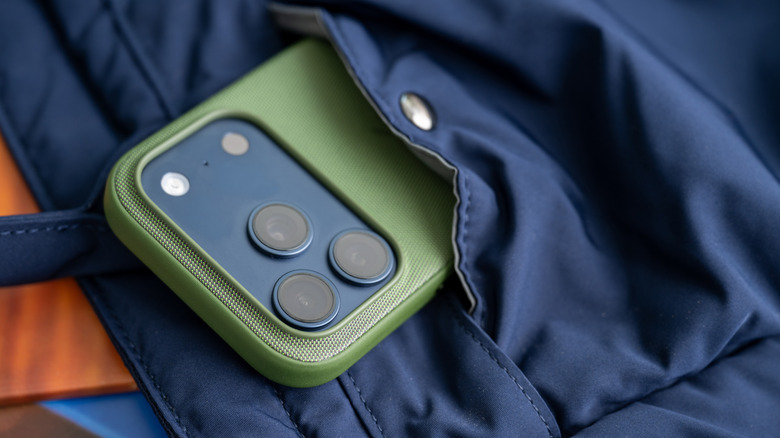
Devices like the TriFold are more delicate thanks to their folding designs, but even regular, slab-style phones like the iPhone 17 Pro break. Ironically, the more expensive your phone is, the more likely it is to be made out of delicate materials like glass. Companies like Corning, which provides Gorilla Glass to Apple, Samsung, and other manufacturers, can only do so much to overcome the reality of physics. And then there are the massive camera humps on flagship phones, which a good case will also protect.
Even with insurance or a care plan, breaking a phone may still lead to costly repairs, replacements that take a while to arrive, and data you can’t recover. In that light, a quality smartphone case is a small investment to avoid such headaches. But there are yet more benefits to using a case that you may not have considered.
The unsung benefits of smartphone cases
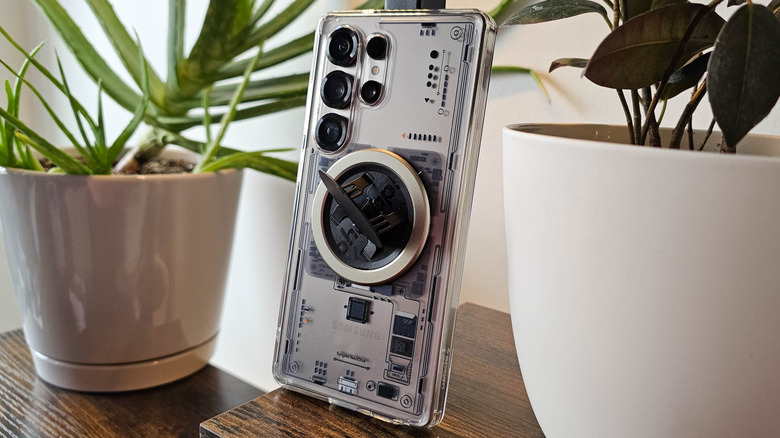
There are more benefits to using a case than protection alone, especially in 2026. If your smartphone does not have a MagSafe-style magnet ring on the back, you’re missing out on the most innovative accessory ecosystem in recent memory. Once you add a magnetic case and get a few accessories, it’s tough to beat the satisfying click that accompanies an instant connection to charging banks, tripods, and car smartphone mounts, not to mention what may be the best alternative to a Popsocket.
Cases can also improve the ergonomic experience of using a smartphone. Glass and metal may look pretty, but they’re not very comfortable to hold. Cases like the Speck Presidio 2 Grip fix this by having ridges and anti-slip materials that are easy to hold. Moreover, with nary a scintilla of bezel left around modern smartphone displays, those with large hands may find their nude smartphone constantly registering unwanted inputs from their palm. Cases put a bit of extra distance between a user’s hand and the touchscreen.
With that said, smartphone designers put a lot of work into crafting products that stand out, and going caseless is a valid decision. As long as you’re willing to bear the risks and have the means to get a new phone in the event yours breaks, go for it! Just be sure to back up your data first. But if you’re in the market for a great case, check out our ranking of major smartphone case brands.
Expensive phones mean expensive repairs and replacements
According to a 2023 YouGov poll, 68% of smartphone users use a case. Some use them as a form of protection, others as a form of expression, and many, both. By 2024, the market for protective smartphone covers had grown to $21.51 billion, according to Grand View Research, a massive figure when you consider that the vast majority of phone cases retail for less than $50.
With phone costs continuing to rise and new designs making them more prone to damage, a case can be the difference between a costly mistake and business as usual. With that said, it’s hard to know how much to pay for a good case, or what makes a case good in the first place. After all, some popular cases cost just a few bucks, while others can cost close to $100. Not all cases are made equal: Some are merely aesthetic and offer very little protection against drops and scrapes, while others provide varying degrees of protection depending on design and materials.
A cheap case might not protect your device, but some expensive ones won’t, either. In general, the best protection will come from a case that uses high-quality, shock-absorbent materials such as TPU or has a two-layer design. The latter will be similar to a bike helmet, with a rigid exterior and a more malleable interior. No matter the case you choose, check that your buttons remain easy to press, your charging port can still accommodate your USB-C cable, and that the phone can still offload heat from its chassis. If you use wireless charging, also check that it works through the case.