
The most unique thing about human beings is this: We are creatures who long to matter.
Tech
Why are human beings so obsessed with finding the meaning of life?

That’s according to Rebecca Newberger Goldstein, the philosopher and author of a new book called The Mattering Instinct. If you’ve ever wondered why we humans are so singularly obsessed with discovering the meaning of life, this book — and her ideas — are for you.
Goldstein presents an evolutionary explanation that starts off with a law of physics: the law of entropy, which basically says that things naturally tend toward disorder and destruction over time. All biological creatures need to devote a huge amount of energy and attention to resisting entropy — to surviving. But humans also have a special ability to self-reflect, and we can’t help but notice that we ultimately devote the vast majority of our attention to ourselves. To our own thriving, not the thriving of others. And so we feel the need to somehow justify that.
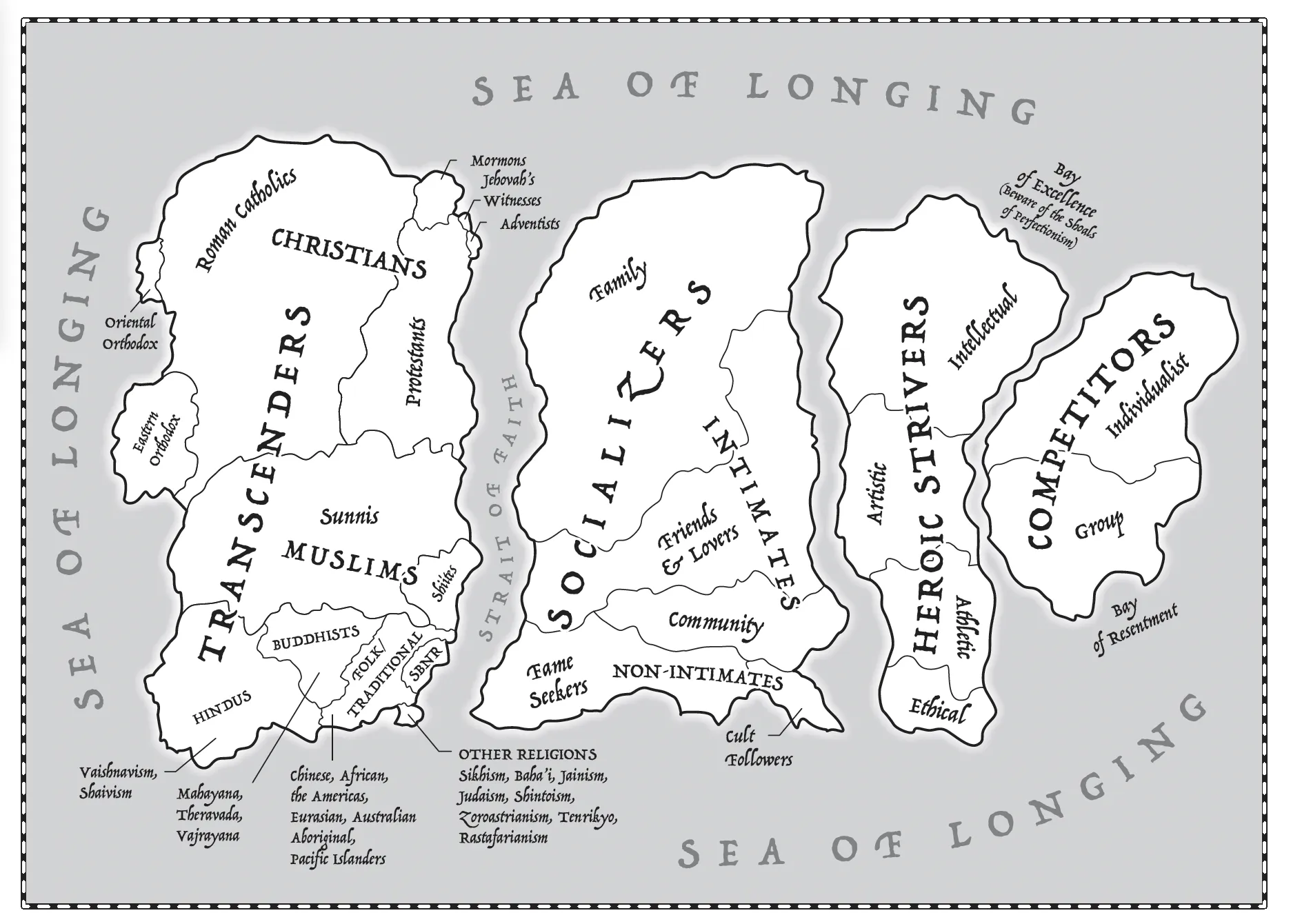
This, Goldstein says, is why we developed the “mattering instinct” — the drive that pushes us to find a “mattering project” that makes our lives feel purposeful and worthy. Goldstein sketches out four main ways people try to do that.
Some are transcenders, who seek to matter to a transcendent presence like God. Others are socializers, who find purpose in helping and mattering to other people. Then there are heroic strivers, who push themselves to achieve excellence in the domain that matters to them, whether it’s intellectual, artistic, athletic, or moral. And finally, there are competitors, who focus on mattering more than others.
In the newest installment of my Your Mileage May Vary advice column, I suggested that Goldstein’s “mattering map” (see below) can be a useful tool for anyone who’s worried that AI may soon replace them in an arena where they find meaning, like their career. Locating ourselves on the map can help us each think afresh about which of the four categories makes us feel a sense of purpose, so we can consider additional types of work that could form a satisfying mattering project for us in the future.
I was curious about how Goldstein is thinking about automation-induced joblessness, what she’d do if her own work gets automated, and whether she thinks we’re in danger of losing our human dignity. So I asked her for a follow-up chat. Here’s a smattering of our nattering about mattering.

Courtesy of Rebecca Newberger Goldstein
You argue that our drive to matter is one of the cornerstones of human life. What convinced you of that? How have you felt that drive show up in your own life?
I really feel justified in my righteous anger when people treat me as if I don’t matter!
I have a very favorite story about that. I mean, just being a woman, there are a lot of stories. But I was once at a party in Princeton with a bunch of physicists, and one very, very prominent physicist wanted to talk to another prominent physicist, and I was in the middle. So he just picked me up — I’m very slight — he picked me up and moved me like I was a potted palm!
And I had this real sense of…but I’m a person! I matter! That feels justified. And if I can justify that about myself, I have to universalize it to everybody. There’s no way it’s going to work for me and not work for everybody else.
Wow, that’s pretty appalling!
So from that, you offer this evolutionary account of how everybody ended up with a mattering instinct. I always find it hard to evaluate evolutionary stories because there’s an element of speculation in them. Your account about how we evolved the mattering instinct seems plausible, but I could also imagine another account being true. For example, maybe the drive for mattering is a way of making sure that others will think we matter, because we want society to think well of us and take care of us. What convinces you that your account is more likely than others?
To me, it explains more of the variety of ways that people try to go about this. If the more social story were true, we would all be socializers. But I mean, the fact that there is a very strong religious aspect — I spent a good part of my life as a transcender — means that to me, phenomenologically, it doesn’t ring true. And it doesn’t ring true to the diversity [of how different people find mattering].
But it might be that I’ve just spent too much time with mathematicians who don’t give a damn about social acceptance!
“What I’m thinking in my most optimistic moments is that the deepest questions, they’re still going to belong to us.”
Yes, we can see that from their fashion! But seriously, I have to say that I really love the mattering map in your book. I feel like I’m mostly one of the artistic-intellectual strivers, but I’m also a bit of a socializer in that I derive meaning from helping others with my work. Do you think most people live on only one island?
No, I don’t think so. I know that I don’t.
And I think all of us have a strong need for connectedness — it’s the other part of flourishing. We need people in our lives, and we often want to make a difference in people’s lives.
Maybe we have our main residence, and then we have our vacation home. You can definitely make a bridge [between the islands].
Why is the island of transcenders exclusively populated with different religions and spiritual traditions? I can imagine other sorts of people — like artists or psychedelic users — who feel there’s a transcendent dimension to the universe, and who derive their sense of mattering by tapping into that.
I think in some sense, all heroic strivers have some notion of the transcendent. They often talk in terms of these ideals. I mean, every artist I know talks about beauty. For knowledge workers, it’s knowledge.
But I really wanted to single out the ones who actually feel that there is some sort of personal presence in the universe that has intentions — that there’s an intentionality that permeates the universe. It’s just so very different.
I had a very religious childhood — I was brought up Orthodox [Jewish] — and it was like, God knows if I cheated and took a bite of a Hostess cupcake! And there was this sense of mattering, that I was created for a purpose. I really felt like I had a role to play in the narrative of eternity. God has his plan, and I’m part of it. And I know that when I went from believing that to not believing that, the universe changed in such a big way for me. It just felt a little meaningless, to tell you the truth. That [form of mattering through transcendence] seemed worthy of its own continent on the map.
You suggest that humans are the only animal that has a mattering instinct — we are “creatures of matter who long to matter.” You also call us “dust with dignity.” How does the mattering instinct connect with the idea of human dignity?
We are wired to take ourselves very seriously — the bulk of our attention is going to somehow be self-referential — and then we ask ourselves for justification. We feel we have to come up with some project, some story, and we devote so much energy to this justificatory project. I find that there’s a certain dignity in that. There’s something estimable, there’s something noble about a species that needs to prove to itself that it really matters.
That leads me to a very timely question: What happens to human dignity if AI replaces us in an important area, like our jobs, which is how many of us carry out our mattering projects? Are we in danger of losing our dignity, or is that some inalienable quality that we’ll just end up expressing in other ways?
The latter. I really think that when one is not able to minister to this, to appease this [mattering instinct], you end up with death within life, which is what extreme chronic depression is. So we will come up with something.
Here’s me at my most optimistic: I think about philosophy, because I’ve been speaking to a lot of philosophers who were worried about it. There’s a lot of shit work that’s done in philosophy, and yes, let AIs do it. Let them explain the 53 ways of interpreting Kant’s deontological argument. They’ll be able to do it and come up with all the utilitarian counterarguments and all of that.
But there’s still so many problems that I think come out of being human and knowing what it’s like to be motivated by the mattering instinct and how hard it is to live an ethical life, given how much attention we are wired to pay to ourselves. AI can’t do that for us. So what I’m thinking in my most optimistic moments is that the deepest questions, they’re still going to belong to us.
I think plenty of people could listen to this conversation and say, “I don’t get my meaning from my job. What is this obsession with your career? Maybe it’s great if AI takes your job because you’ll finally learn how to find mattering in ministering to others or something!” Should we perhaps start thinking more expansively about where we find our sense of mattering?
Yeah, I think it’s not a bad idea to be thinking about that. But I also think you can’t force mattering strategies on people. It comes from something very deep — temperament, interest, passions, all of this. I’ve always resented it very much when people say, well, this here is the meaning of life.
So I really want to be a pluralist about this. I do think that there always are going to be heroic strivers. There are people who have to meet or at least approach certain standards of excellence, including ethical and athletic and artistic.
With the artistic — just as when you have a forgery of a great painting and it’s indistinguishable from the original, it’s just not as valuable because it doesn’t come out of a human experience that came out of somebody’s individuality and what they’re struggling with — maybe that extra thing is always important in our aesthetic pleasure. If an AI writes something and it’s comparable to Shakespeare, I don’t believe that our aesthetic pleasure is going to be the same. It’s about knowing: Oh, this is a window into somebody else’s subjectivity!
Have a question you want me to answer in the next Your Mileage May Vary column?
In my recent advice column, I suggested that even if AI takes your job, you can hang onto a sense of mattering by looking at the mattering map, identifying the broader island of mattering that tends to make you feel satisfied, and seeing what other jobs might be an expression of that. If you yourself weren’t able to work as a philosopher and novelist anymore, what would you do instead to make ends meet while still fulfilling your drive for mattering?
There are two careers that I’ve often thought, Gee, I should have given them more thought. One is to work with children. I just love kids and I think they’re really fascinating. I have a daughter who’s a clinical psychologist, and she deals with a lot of kids, and I think it’s really interesting work. And it is that socializer [drive], which is very strong in me as well.
The other thing is to go to Africa and just live with animals, observing [them]. I love elephants, I love chimpanzees. And I could see doing that too — a more scientific career.
This is reminding me that ever since I was a kid, thinking of humanity makes me think of an injured animal — I always pictured a three-legged dog. It’s struggling, it’s limping along. And I feel like our search for meaning is that limp. It’s a burden on us, in a way, right?
Yeah, it’s hard to be a living thing. It’s that much harder to be a human and to want to get it right. You can think of that as our limp. But you can also think of it as our crown.
For me it’s precisely because humanity is saddled with this sort of struggle that I’m rooting for it extra, that I feel a special affinity for it.
That’s almost a protectiveness. And that’s a beautiful emotion. I mean, that is something to cultivate: Wherever there is humanity, there is a struggle, and that matters.

Continue Reading
Looking for a different day?
A new NYT Strands puzzle appears at midnight each day for your time zone – which means that some people are always playing ‘today’s game’ while others are playing ‘yesterday’s’. If you’re looking for Sunday’s puzzle instead then click here: NYT Strands hints and answers for Sunday, April 12 (game #770).
Strands is the NYT’s latest word game after the likes of Wordle, Spelling Bee and Connections – and it’s great fun. It can be difficult, though, so read on for my Strands hints.
SPOILER WARNING: Information about NYT Strands today is below, so don’t read on if you don’t want to know the answers.
Article continues below
NYT Strands today (game #771) – hint #1 – today’s theme
What is the theme of today’s NYT Strands?
• Today’s NYT Strands theme is… While not in use
NYT Strands today (game #771) – hint #2 – clue words
Play any of these words to unlock the in-game hints system.
- SHOE
- BEAR
- HEEL
- ROWDY
- GRIME
- HORSE
NYT Strands today (game #771) – hint #3 – spangram letters
How many letters are in today’s spangram?
• Spangram has 11 letters
NYT Strands today (game #771) – hint #4 – spangram position
What are two sides of the board that today’s spangram touches?
First side: left, 1st row
Last side: right, 6th row
Right, the answers are below, so DO NOT SCROLL ANY FURTHER IF YOU DON’T WANT TO SEE THEM.
NYT Strands today (game #771) – the answers

The answers to today’s Strands, game #771, are…
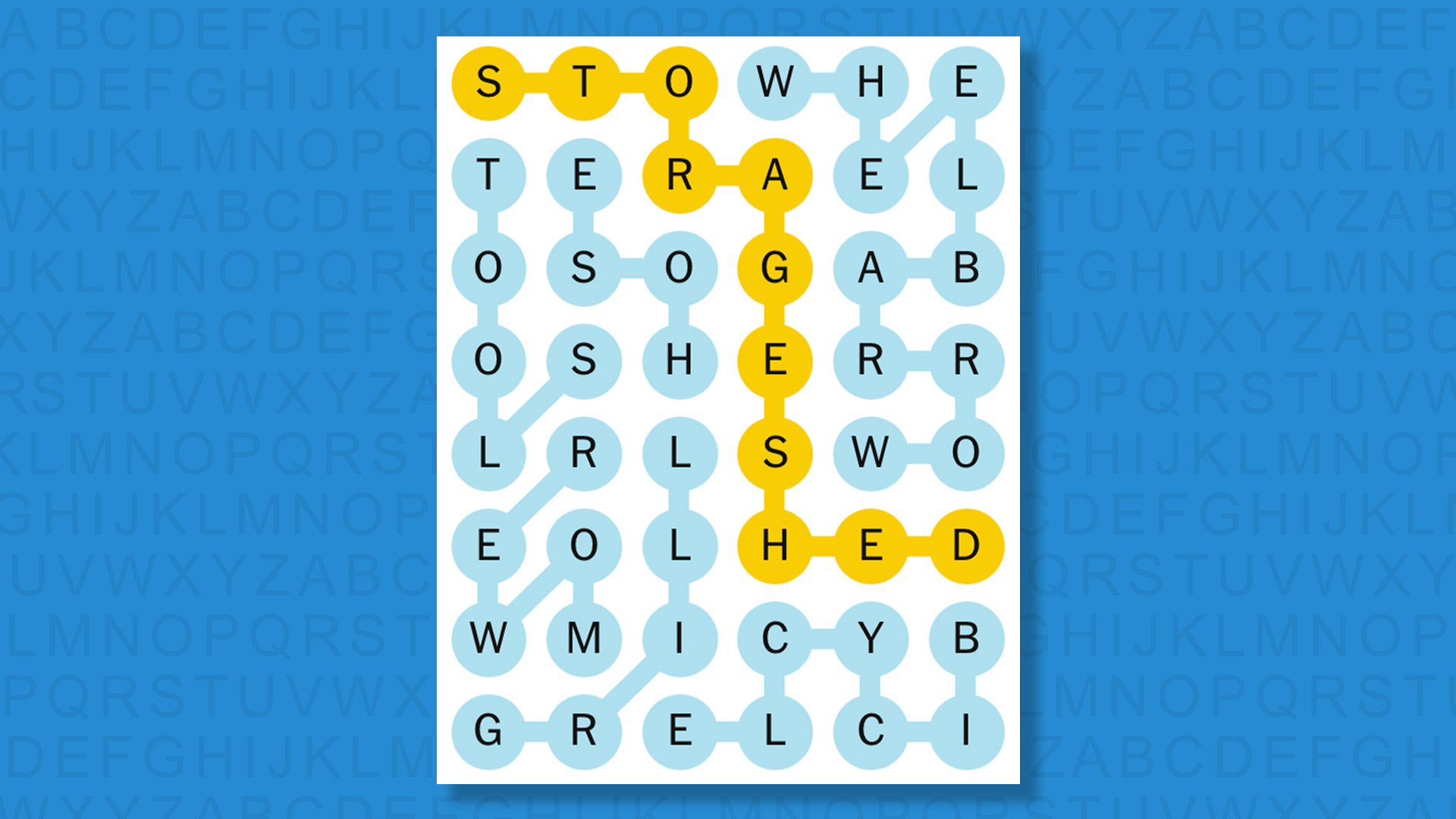
- BICYCLE
- GRILL
- MOWER
- WHEELBARROW
- TOOLS
- HOSE
- SPANGRAM: STORAGESHED
- My rating: Hard
- My score: 1 hint
A day to forget for me.
Hopefully I was not the only person in the world that didn’t realize we were looking for things that you would keep inside a STORAGESHED and was instead searching for other things you could keep your junk in.
After abandoning this fruitless diversion I took a hint and realized the error of my ways.
Having said that, other than TOOLS my shed is far too small to store any of the items we were hunting for — not that that’s any excuse!
Yesterday’s NYT Strands answers (Sunday, April 12, game #770)
- COMB
- BRUSH
- PREEN
- GROOM
- BEAUTIFY
- STYLE
- SPANGRAM: INTHEMIRROR
What is NYT Strands?
Strands is the NYT’s not-so-new-any-more word game, following Wordle and Connections. It’s now a fully fledged member of the NYT’s games stable that has been running for a year and which can be played on the NYT Games site on desktop or mobile.
I’ve got a full guide to how to play NYT Strands, complete with tips for solving it, so check that out if you’re struggling to beat it each day.

AMC’s new black comedy about a manchild tech titan spinning out of control is a skewering Silicon Valley’s billionaire class deserves.

Immigration and Customs Enforcement has a certain Redditor in its crosshairs and it’s now strong-arming the social media platform to reveal who they are with a grand jury subpoena, according to a report from The Intercept. The nonprofit news outlet was able to obtain the subpoena that ordered Reddit to provide info on one of its users who’s been accused of criticizing ICE by April 14.
According to the report, ICE has been trying to identify this Redditor for a month without success. More specifically, Reddit is being asked to give up the user’s name, address, phone number and other personal data. The Intercept reported that the subpoena was issued by federal prosecutors in Washington, D.C. after a failed attempt from ICE to do the same through a federal court in Northern California, which has jurisdiction in San Francisco where Reddit is headquartered.
Reddit attorneys said their client’s posts and anonymity are protected under the First Amendment and described ICE’s use of a grand jury as “a disturbing escalation,” according to the report. Reddit didn’t state if it would challenge the government’s order or not, according to The Intercept, but it did provide a statement saying, “privacy is central to how Reddit operates and we take our commitment to protecting that seriously.” Reddit also said in the statement that it does “not voluntarily share information with any government, especially not on users exercising their rights to criticize the government or plan a protest.”
While this grand jury subpoena could set an alarming precedent, it’s not the first time a government agency has requested social media platforms reveal accounts that have spoke negatively about ICE. According to a New York Times report, the Department of Homeland Security has filed hundreds of subpoenas to Google, Discord, Meta and even Reddit again, for identifying details about its users.
If you Ask any bike shop owner or manager if they fix electric bikes, you get an interesting array of stories.
“I know a guy who has lost a finger working on ebikes,” says MacKenzie Hardt, owner of Hardt Family Cyclery in Aurora, Colorado, and the former executive director of the nonprofit bike shop and community hub Bikes Together. Hardt has torn tendons in his own hand after accidentally triggering a cadence sensor that caused the wheel to spin out of control on the stand, even when the motor and battery were disconnected.
He now has a message on the company voicemail that informs customers the shop will not repair any ebike without third-party UL 2849 certification, the gold standard that certifies that an ebike’s entire package, from electrical drive train to battery to charger system, has been thoroughly tested. (Check out our guide to How to Buy an Electric Bike for more info.)
The Wild, Wild West
A lot of the problem in fixing ebikes is related to the fact that a surprising number of electric vehicles that are sold as ebikes are not, in fact, ebikes. According to PeopleForBikes, the third-party advocacy group, an ebike is a low-speed electric vehicle that “closely resembles traditional bicycles in their equipment, handling characteristic, size, and speed.”

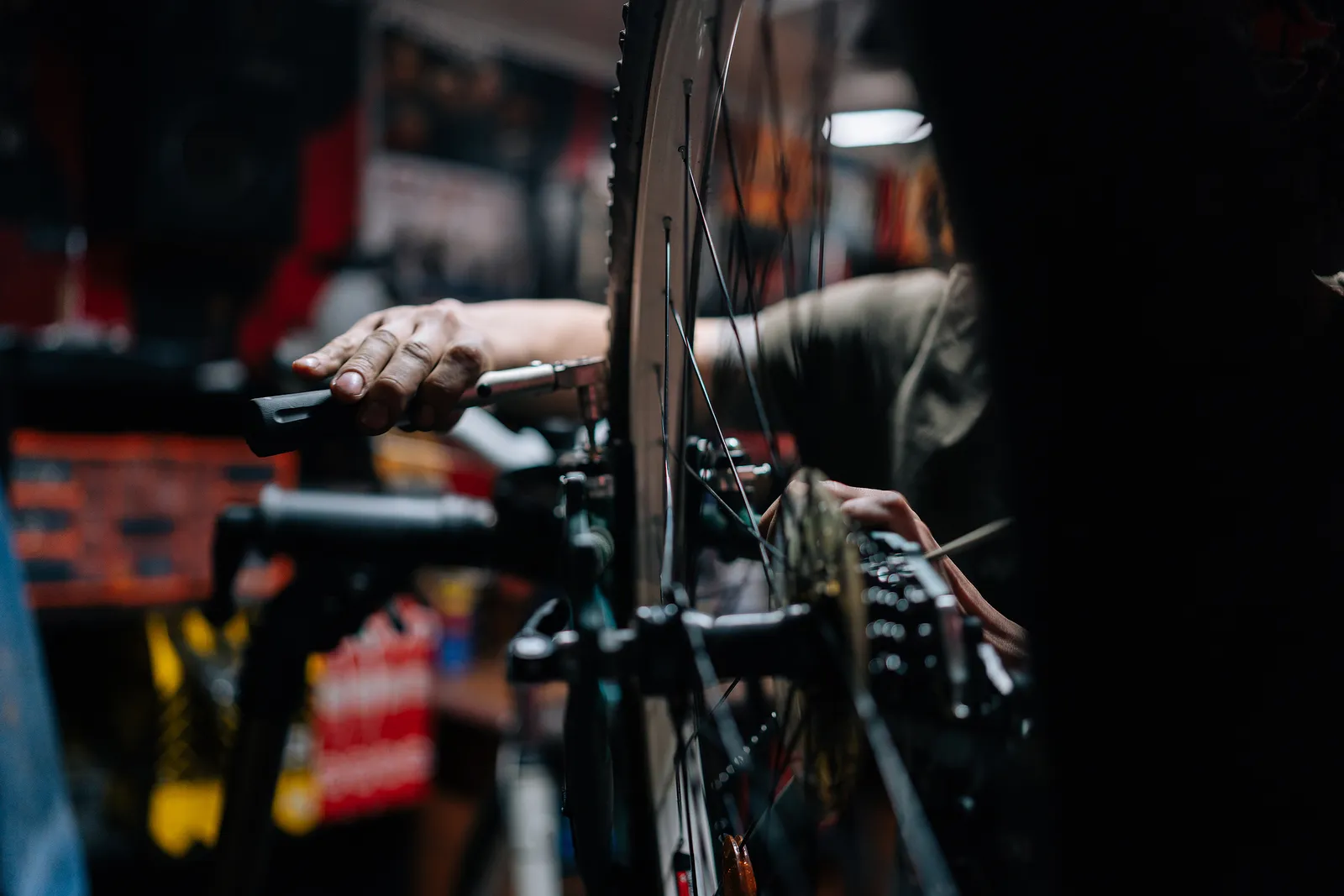
A mechanic works on a bicycle.Photograph: Dikushin/Getty Images
In 46 states, all ebikes fall under a Class 1, 2, or 3 distinction. The distinction depends on the bike’s maximum motor-assisted speed and how it’s powered. However, many ebikes sold online are way more powerful than the maximum 28 mph speed allowed on a Class 3 ebike, and they operate more like a moped or even a motorcycle.
“That’s really the heart and soul of the service problem,” says Cory Oseland, manager of the Ski Hut, a high-end bike shop in Duluth, Minnesota. “Once you slide out of the three classes, you run into a lot of parts and equipment that aren’t part of the bike industry.”
Repairing an ebike can also land the shop in a quagmire of liability issues. As bike shops are part of the product liability chain, they can be held responsible if they so much as inflate a tire on an electric vehicle and the rider later injures themselves or another person. Ebike-related injuries have jumped more than 1,020 percent nationwide from 2020 to 2024, according to hospital data, so this is not an unforeseen occurrence. “I have known people who have lost their shirt,” says Hardt.
In most states, if the bike doesn’t fit the Class 1-3 classification system, the shop’s insurance will likely be null and void. The problem, says Hardt, is that “we don’t regulate nationally what an ebike is. What is legal here may not be legal somewhere else.” Working on an unregulated bike, he adds, “is like if somebody brought in a Tesla to fix.”

Apple plans to sell its first smart glasses in 2027, with a possible unveiling at the end of this year, according to Bloomberg’s Mark Gurman.
Gurman has been reporting steadily on the evolution of the company’s smart glasses strategy, but now he has more details about how they’ll look — he said Apple is testing four designs, and could ultimately launch with some or all of them.
Those designs reportedly include a large rectangular frame, a slimmer rectangular frame (similar to the glasses worn by CEO Tim Cook), a larger oval or circular frame, and a smaller oval or circular frame. Apple is also considering different colors including black, ocean blue, and light brown.
In some ways, these glasses are a step back from an ambitious plan that once called for Apple to launch a variety of mixed and augmented reality devices — a plan that already stumbled with product delays and the lackluster reception of the Vision Pro.
These glasses, meanwhile, sound closer to the Meta’s Ray-Ban glasses. They won’t have any displays, but will allow users to take photos and videos (Apple is reportedly oval camera lenses), answer phone calls, play music, and interact with the long-promised Siri upgrade.

At this point, we’ll assume you already know that four humans took a sightseeing trip around the Moon and made their triumphant return to Earth on Friday. Even if you somehow avoided hearing about it through mainstream channels, we kept a running account of the mission’s highlights stuck to the front page of the site for the ten days that the crew was in space.
On the assumption that you might be a bit burned out with space news at this point, we won’t bring up it up in this post… other than to point out that excitement for the lunar flyby has driven the number of simultaneous players of Kerbal Space Program to its highest count ever — nearly 20,000 armchair astronauts spent this weekend trying to cobble together their own rocket in honor of the Artemis II mission.
With so many folks focused on the Moon it would be the perfect time for a company to sneak out some bad news, which is perhaps why Amazon picked this week to announce they would be dropping support for Kindles released before 2012. Presumably there aren’t too many first and second generation Kindles still out there in the wild, but the 2012 cutoff does mean the first iteration of the Paperwhite will be one of the devices being put out to pasture come May 20th.
Amazon says the pre-2012 Kindles that are currently in user’s hands will still function, but they’ll no longer be able to purchase or download new books. The bigger issue is that you won’t be able to register these older devices after May. So if you have to factory reset your own Kindle, or want to buy one on the second hand market that’s already been wiped, you won’t be able to link it to your account to download books you’ve purchased.
Frankly, the idea that Amazon will no longer have their nose in these devices doesn’t bother us one bit. In fact, it sounds like an improvement over the status quo. If you own one of the device’s in question, now would be a fantastic time to download Calibre and start managing your own offline ebook library. In fact, even if your Kindle is new enough to not be affected by this change, you should still download it. Seriously, just use Calibre.
On the subject of software, an entry for XChat has recently popped up on Apple’s App Store. No, not that XChat. Instead of connecting to your favorite IRC server, the new mobile app will let you send messages to… whoever it is still actively using Twitter X. Confusingly, there’s also an XChat on the Google Play Store, but that appears to be a totally different thing altogether.
Finally, we’ve been seeing a lot of chatter online this weekend about France ditching Windows and switching over to Linux. While we applaud any mainstream push towards open source software, it’s worth digging into the details for this one. The directive says that the Interministerial Digital Directorate (DINUM) will be switching its desktop machines over to Linux, but that only represents a few hundred machines.
The experience gained during this roll-out will help shape a larger scale migration in the future, with the rest of the government asked to come up with a migration plan before the end of the year. When those other agencies, and the thousands of machines they use, will actually be penguin-powered is not clear. It’s possible they could come back and say a full migration would take a decade to complete.
So it’s certainly a step in the right direction, but it will likely be quite some time before any significant part of France’s infrastructure is divorced from the Redmond giant.
See something interesting that you think would be a good fit for our weekly Links column? Drop us a line, we’d love to hear about it.


Three of the sources said the new model would be produced in China, while one added that Tesla also aims to expand production to the United States and Europe. Two sources said the vehicle would measure about 4.28 meters (14.0 feet) in length, making it significantly shorter than the Model…
Read Entire Article
Source link

Since his retirement was announced in 2025, Apple Intelligence head John Giannandrea has been reduced to the role of an advisor, but is now expected to exit Apple Park shortly.

John Giannandrea – image credit: Apple
If you spend your notice period at home, you’re on gardening leave. If you spend it at work and you’re waiting for when your contracted stock bonuses realize, it’s called “rest and vest”.
It appears that the stock options agreed for John Giannandrea’s contract when Apple hired him in 2018, are due on April 15. According to Bloomberg’s “Power On” newsletter, Giannandrea is consequently going to leave around then.
Continue Reading on AppleInsider | Discuss on our Forums

Some might say the venerable Z80 doesn’t need another operating system, but [Scott Baker] obviously disagrees. He has come up with a brand new, from scratch OS called NostOS for the Z80-based RC2014 homebrew retrocomputer. [Scott] describes it as CP/M-like, but it’s not CP/M– in fact, it’s totally incompatible with CP/M–and has a few tricks of its own up its sleeve.
As you might expect of an operating system for this vintage of hardware, it is “rommable” — that is, designed to run from read-only-memory, and fit inside 64kB. It of course supports banking memory to go higher than that 16 bit limit, and natively supports common serial devices, along with the good old WD37C65 floppy controller to get some spinning rust into the game. Of course if you don’t have floppies you can plug in a compact flash card– try that with CP/M– or, interestingly Intel Bubble Memory. [Scott] has a soft-spot for bubble memory, which at one point seemed poised to replace both hard drives and RAM at the same time. We also appreciate that he included drivers for vacuum fluorescent displays, another forgotten but very cool technology. Back in the day, this operating system would have enabled a very cool little computer, especially when you take his implementation of text-to-speech with the SP0256A-AL2 chip. Fancy a game of talking Zork? Yes, he ported Zork, and yes, it talks.
The whole thing is, of course, open-source, and available on [Scott]’s GitHub. Unlike too many open-source projects, the documentation is top-notch, to the point that we could picture getting it in a three-ring binder with a 5 1/4 floppy on the inside cover. If you like video, we’ve embedded [Scott]’s walkthrough but his blog and the docs on GitHub have everything there and more if you’re not into rapidly-flickering-pixels as an information exchange medium.
[Scott] isn’t wedded to Zilog, for the record; this OS should run on an Intel 8080, perhaps like the one in the Prompt 80 he restored last year.
Thanks to [Scott Baker] for the tip!
Treasury Secretary Scott Bessent and Federal Reserve Chair Jerome Powell summoned bank executives for a meeting this week where they encouraged the executives to use Anthropic’s new Mythos model to detect vulnerabilities, according to Bloomberg.
Indeed, while JPMorgan Chase was the only bank listed as one of the initial partner organizations with access to the model, Goldman Sachs, Citigroup, Bank of America, and Morgan Stanley are reportedly testing Mythos as well.
Anthropic announced the model this week but said it would be limiting access for now, in part because Mythos — despite not being trained specifically for cybersecurity — is too good at finding security vulnerabilities. (Others suggested this was hype or simply a smart enterprise sales strategy.)
The report is particularly surprising since Anthropic is currently battling the Trump administration in court over the Department of Defense’s designation of Anthropic as a supply-chain risk; that designation came after negotiations fell apart over the company’s efforts to limit how its AI models can be used by the government.
Meanwhile, the Financial Times reports that U.K. financial regulators are also discussing the risk posed by Mythos.
Business30 seconds ago
US stock futures slide over 1% after Iran ceasefire talks fall through
Entertainment3 minutes ago
Early 2000s Fashion Is Trending Ahead of ‘The Devil Wears Prada 2’

News Videos5 minutes ago
BREAKING: TRUMP’S (WLFI) WORLD LIBERTY FINANCIAL EXPOSED!

Politics2 months ago
Why Israel is blocking foreign journalists from entering

News Videos2 months ago
Bitcoin: We’re Entering The Most Dangerous Phase

Politics1 month ago
Alan Cumming Brands Baftas Ceremony A ‘Triggering S**tshow’
News Videos5 minutes ago
BREAKING: TRUMP’S (WLFI) WORLD LIBERTY FINANCIAL EXPOSED!

News Videos25 minutes ago
Claude code automates daily bookkeeping and reconciliation for real-time financial visibility.

News Videos41 minutes ago
They Have Billions of Dollars, But ‘Can’t Show Their Face’ Bitcoin Vs Normal Billionaires! #shorts
-

 Politics2 days ago
US brings back mandatory military draft registration
-

 Fashion2 days ago
Weekend Open Thread: Veronica Beard
-

 Tech5 days ago
How Long Can You Drive With Expired Registration? What Florida Law Says
-
 Sports2 days ago
Man United discover Nico Schlotterbeck transfer fee as defender reaches Dortmund agreement
-

 Politics10 hours ago
World Cup exit makes Italy enter crisis mode
-

 Crypto World3 days ago
Canary Capital Files SEC Registration for PEPE ETF
-

 Fashion7 days ago
Massimo Dutti Offers Inspiration for Your Summer Mood Board
-

 Business2 days ago
Tesla Model Y Tops China Auto Sales in March 2026 With 39,827 Registrations, Beating Cheaper EVs and Gas Cars
-

 Fashion5 days ago
Let’s Discuss: DEI in 2026
-

 Crypto World4 days ago
Bitcoin recovers as US and Iran Agree a Ceasefire Deal
-

 Politics3 days ago
Malcolm In The Middle OG Turned Down ‘Buckets Of Money’ To Appear In Reboot
-
 NewsBeat2 hours ago
Pep Guardiola and Gary Neville agree over Arsenal title problem that benefits Man City
-

 Business3 days ago
OpenAI Halts Stargate UK Data Centre Project Over Energy Costs and Copyright Row
-

 Tech7 days ago
Italian court says Netflix must refund customers up to $576 over price hikes
-

 Business1 day ago
Ireland Fuel Protests Enter Day 5 as Blockades Spark Shortages and Government Prepares Support Package
-

 Tech7 days ago
Haier is betting big that your next TV purchase will be one of these
-

 Tech7 days ago
Gamer Restores the Original PlayStation Portal From Two Decades Ago
-

 Tech7 days ago
The Xiaomi 17 Ultra has some impressive add-ons that make snapping photos really fun
-

 Tech7 days ago
Samsung just gave up on its own Messages app
-

 Tech7 days ago
Save $130 on the Samsung Galaxy Watch 8 Classic: rotating bezel, sleep coaching, and running coach for $369
You must be logged in to post a comment Login