Tech
Why Are Some Speed Limit Signs Smaller Than Others?


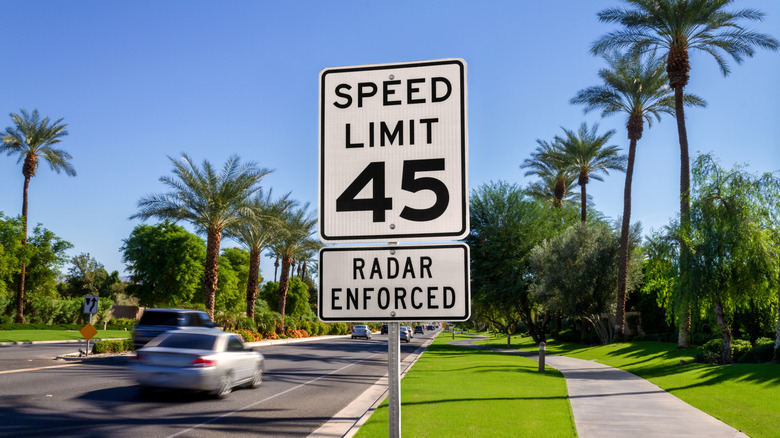
As you make your way down the street or highway, you are likely — and hopefully should be — paying attention to the road signs you pass by along the way. Obviously, these signs are there to provide important information to the drivers, be it the speed limit, traffic patterns, lane alignment, or something else. Beyond that primary information presented on these signs, you may also notice other additional details that aren’t always obvious from a quick, passing glance.
Maybe it’s the unique shapes and color patterns, or the fact that some speed limit signs have very odd numbers. Maybe it’s the physical size of the signs themselves — which, as we’re about to see, can actually change quite a bit depending on the type of roadway you’re on. Keen eyes may have noticed that some speed limit signs are substantially larger than others, and there are actually some very specific rules behind this sizing, which apply not just to speed limit signs but to all types of traffic signs. This is regulated by the Manual on Uniform Traffic Control Devices for Streets and Highways, also known as the MUTCD.
Depending on the road you’re driving on, there are a few different several different size categories for speed limit signs, and broadly speaking, the larger and faster a given roadway is, the larger its speed limit signs will need to be.
What is the MUTCD?
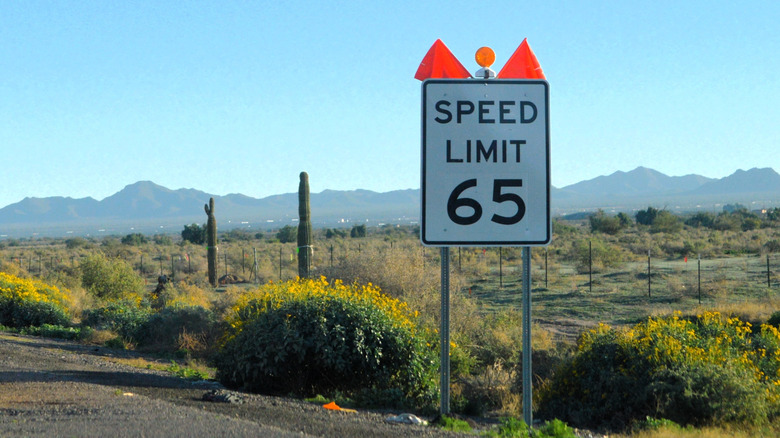
While the typical motorist might not think much about the sizes and designs of the road signs they pass by, there are very detailed rules and standards behind all the common road signs used in the country. As mentioned before, those standards can be found in the Federal Highway Administration’s Manual on Uniform Traffic Control Devices, or MUTCD.
Spanning over 1,000 pages, the MUTCD is a massive guidebook that sets standards for the design, coloring, shape, size, and placement of all of the signs commonly used on American roadways. Beyond just making the road signs easy to read and understand, the MUTCD also ensures that no matter where you travel in the country, the road signage will be familiar and easy to follow. The MUTCD includes a large table which specifies the different sizes for signs based on road type, with speed limit signs being one of the most important parts. After all, there’s a reason it’s called a posted speed limit when it comes to the law.
Along with the normal, posted speed limit signs you see along roads and highways, there are also yellow-colored advisory speed signs, which are typically placed near curves, bridges, and inclines, and are used to alert drivers that their speed will need to be adjusted in that section. The MUTCD outlines the design and placement of these signs as well, which change depending on the type of curve or road layout.
Faster roads need larger signs
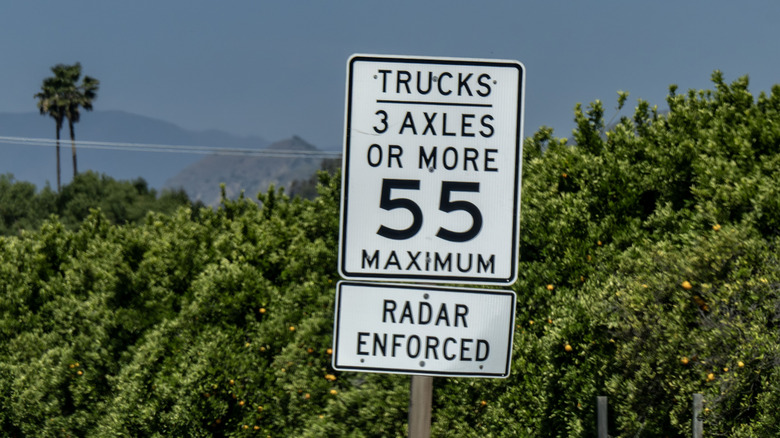
For the basic white speed limit sign, which has an MUTCD code of R2-1, there are three different primary size categories listed in the MUTCD. Given the higher speeds of major highways, it makes sense that their road signs should be larger, allowing them to be read quickly and more easily by passing drivers.
At their smallest, conventional road speed limit signs should have a size of 24 by 30 inches, while the next category, for roads classified as expressways, bumps that up to 36 by 48 inches. The largest size category, for freeway signs, calls for 48 by 60 inches. In addition to those categories, the standards leave room to use smaller signs on low-speed roadways or on roads with limited space. On the other end, there’s also an allowance for oversized signs on roads that might have higher speeds than expected or other environmental factors that could necessitate easier to read signage.
While there are established rules and reasoning behind the different sizes of speed limit signs, in some cases, traffic planners have gone beyond just making larger signs to get motorists’ attention. In the state of Texas, for example, distinct, red borders have been added to speed limit signs to draw the eye and more clearly warn passing drivers of speed limit changes on a particular stretches of highway.
You must be logged in to post a comment Login