Tech
Why Companies Making High-Tech Weapons Are Turning To 3D Printing


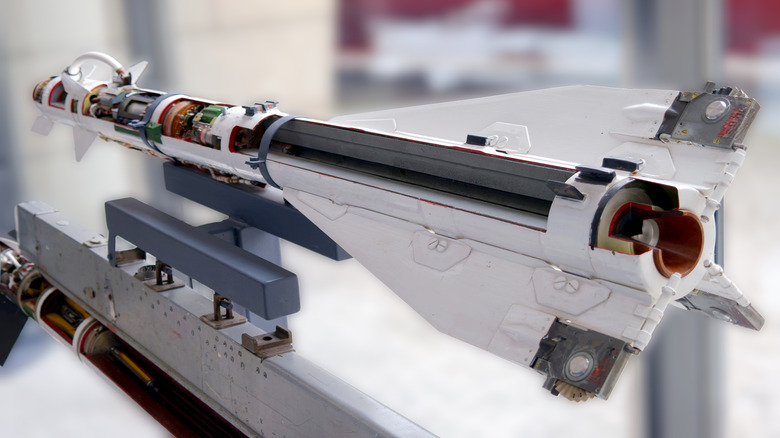
For decades, high-tech weapons have been designed around maximizing sophistication. Increasing the capability itself through longer ranges, increased maneuverability, and more sophisticated guidance systems mattered far more than how quickly the weapon could be manufactured. That approach is now changing. As conflicts in Ukraine and the Middle East have highlighted the enormous rate at which modern munitions are consumed, defense manufacturers are encountering a critical challenge. We know how to build capable missiles, but how can we build enough of them?
That shift has pushed additive manufacturing, better known as 3D printing, into the spotlight. Once viewed as a useful prototyping tool, industrial-scale metal printing is increasingly being adopted by major defense contractors to accelerate production, simplify supply chains, and reduce dependence on specialized suppliers.
There are limitations though, and the reality is less dramatic than headlines describing 3D-printed missiles might imply. Manufacturers are not printing complete precision weapons. Instead, they are focusing effort on streamlining sectors of the production process where additive manufacturing offers genuine advantages. 3D printing today is not yet replacing traditional manufacturing, it’s simply delivering the greatest possible benefit as weapons development adapts to suit a new era of warfare.
Why missile manufacturing remains so difficult
If building missiles were simply a matter of printing metal components, defense companies would have embraced 3D printing years ago. The real obstacle isn’t just producing parts; it’s proving those parts can survive some of the harshest operating environments imaginable.
A modern cruise missile may spend years inside a storage container, aboard a ship, or in a military depot prior to being launched. From that moment, every structural component must withstand violent acceleration, sustained vibration, aerodynamic loading, rapid pressure changes, and significant temperature variation without the slightest loss of integrity. Even microscopic flaws can become catastrophic failures when encountering the extreme limits of high speed flight.
This demand for consistent dependability is why aerospace manufacturing remains one of the world’s most tightly controlled industries. Components typically incorporate a vast array of rare earth minerals, extremely tight-tolerance machining, heat treatment, precision finishing, and rigorous inspection before they are ever approved for service. The result is that component qualification, not manufacturing, is often the greatest bottleneck in ensuring trust in a munition that may be employed above or near civilians, or friendly forces.
From next year, additive manufacturing will produce select structural parts of the Tomahawk’s mid-body airframe and warhead casing, with rumors this may expand into printing avionics and guidance computer parts with Silicon-photonics-enabled 3D printers. However, 3D printing has not advanced enough to produce the rare-earth-element-intensive critical components that make the Tomahawk a truly state-of-the-art smart munition. Although additive manufacturing of samarium-cobalt and neodymium-iron-boron magnets, dysprosium and terbium-doped materials, and guidance and electronic components containing gallium, germanium, and tantalum is technically achievable, these technologies have yet to see implementation across live production lines. We can’t 3D print a Tomahawk, and we probably never will.
The future belongs to affordable mass
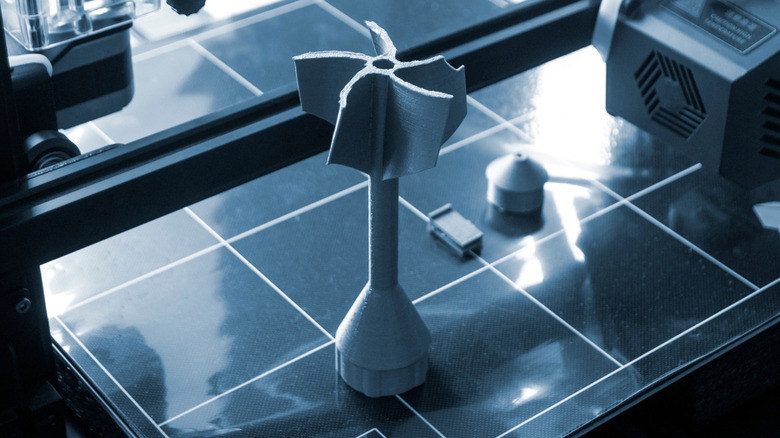
Ultimately, the greatest impact of 3D printing may not be simply increasing the production of today’s missiles, but enabling an entirely new generation of weapons designed from the outset for rapid, high-volume production.
Military planners are recognizing that advantage in future conflicts may be based on quantity, more so even than technological sophistication. Precision-guided weapons remain essential, but expensive missiles built slowly from limited supplies of rare-earth minerals are difficult to replace once wartime demand begins to outpace production. The answer to this problem is affordable mass, larger numbers of less sophisticated weapons built at a fraction of the cost, but at a much greater scale.
This is precisely where additive manufacturing excels. Engineers can consolidate dozens of conventionally machined parts into a single printed structure, reduce material waste, shorten production timelines, and simplify supply chains. Meanwhile, the U.S. Department of Defense is encouraging industrial expansion through multi-year procurement programs that give manufacturers confidence to invest in higher production capacity.
The result is unlikely to be a warehouse stocked with 3D-printed Tomahawks as we know them. Instead, tomorrow’s missiles will increasingly be designed around the realities of modern manufacturing and supply. A combination of additive manufacturing, commercial production techniques and modular components to deliver weapons that are easier to build at scale and less dependent on foreign-controlled raw materials. In an era where raw production capacity is returning to its Second World War level of value as a strategic asset, additive manufacturing is likely to be critical in attaining strategic advantage.
You must be logged in to post a comment Login