Tech
Why Did Samsung Remove Bluetooth From The S Pen?


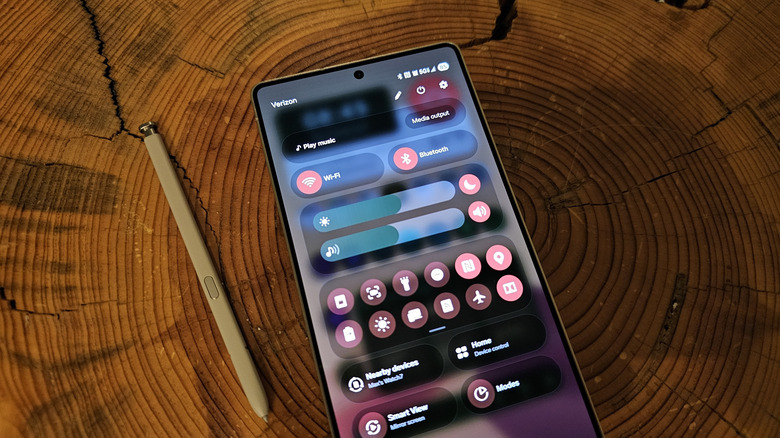
Samsung’s history in the smartphone arena is one of constant innovation. Not all of the Korean tech giant’s ideas are good (looking at you, Bixby), but it has consistently been willing to throw concepts at the wall to see what sticks. In the 2020s, that experimentation led to a whole new category of folding smartphones, but all the way back in 2011, it led to the S Pen stylus. Samsung introduced the S Pen alongside that year’s Galaxy Note to aid users with the sort of productivity work the device was designed for.
But the most impressive S Pen features didn’t come until the launch of the Note 9 in 2018, when Samsung added low-energy Bluetooth to the tiny stylus. With that, users could wave the pen like a tiny wand to control their phone, thanks to the many S Pen productivity tricks. Air Actions, as they were called, allowed users to make specific motions with the stylus to navigate the OS, control media playback, and take photos and videos — even if their phone was across the room. That functionality remained even as the Note line was deprecated and the S Pen was moved to the Galaxy S Ultra series.
Then, in early 2025, Samsung shocked dedicated S Pen users by stripping Bluetooth from the Galaxy S25 Ultra’s S Pen, undoing seven years of progress. Outrage was palpable, and users demanded answers. The answer they got only made matters worse. According to Samsung, Bluetooth was removed from the S Pen because not enough people used it. This predictably didn’t sit well with those who did use it. So, here’s Samsung’s explanation, and why its story doesn’t line up for everybody.
Samsung says no one used Bluetooth S Pen features — but some users beg to differ
Samsung’s decision to strip Bluetooth functionality from the S Pen on the Galaxy S25 Ultra came as a shock to many users. After all, it had become a staple of Samsung’s top-range devices, a flagship feature that set those premium products apart from the competition. But according to Samsung, diagnostic data and a study showed that fewer than 1% of users used the wireless functionality.
Users were so shocked by the removal that they even started a petition asking Samsung to reverse course, which racked up over 9,500 signatures. So, when a blog post on the Samsung website claimed that a Bluetooth-enabled S Pen would be sold separately, users began to scour Samsung’s website. Unfortunately, Samsung eventually confirmed the blog contained incorrect information, further embittering S Pen die-hards. Indeed, when users got their hands on the new phone, they found that older Bluetooth S-Pens would not fit in the stylus slot, nor would Bluetooth features from those older styluses work with the S25 Ultra.
By now, it’s clear that Samsung has no plan to keep Bluetooth on any of its S-Pen compatible devices. Its most recent flagship tablet, the Galaxy Tab S11 Ultra, comes with an S Pen that lacks Bluetooth, making the Tab S10 Ultra the last such device to support the wireless protocol.
Samsung has a long history of removing features from new hardware
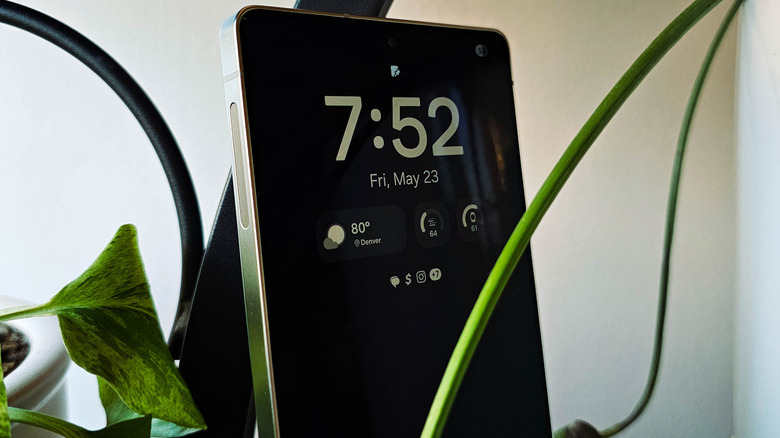
Some users held out hope that the Galaxy S26 Ultra would return Bluetooth functionality to the S Pen, but those hopes look all but dashed. If the company’s 2025 product cadence hadn’t demonstrated its total abandonment of the Bluetooth S-Pen, the S26 Ultra may drive that point home. A content creator, Sahil Karoul, got his hands on one of the brand-new devices ahead of launch, and his testing showed no sign of the Bluetooth features. The S26 Ultra will have features that make it hard to beat, but a Bluetooth S Pen will almost certainly not be one of them.
No Bluetooth in Spen in #SamsungS26ultra pic.twitter.com/6qAIVDgbmS
— Sahil Karoul (@KaroulSahil) February 22, 2026
Air Actions in the S Pen are only the latest in a long line of enthusiast features Samsung has removed from its flagship smartphones. Samsung has removed plenty of other features over the years. These include removable batteries, the headphone jack, the SD card slot, a mechanical camera aperture, a pressure-sensitive display, heart rate and SpO2 readers, MST technology in Samsung Pay for older payment terminals, and LED notification indicators, to name a few.
It even got rid of its signature curved displays and stopped including a charging brick in the box with most new devices. Samsung might argue that some of those features were outdated, while the functionality of others can be replicated through alternative means, but a loss is a loss. One thing that certainly hasn’t been removed is the high price tag that accompanies many of the devices, despite feature cuts. When you’re charging over $1,300 for a phone, customers are expecting a luxury experience. Thus, it’s not shocking they’d feel slighted by the removal of a Bluetooth sensor.