
I first noticed it when, a few months ago, I opened an email from Ian, my literary agent. Before I’d had a chance to read anything he’d written, Gmail was recommending a full, fleshed-out, AI-generated reply, ventriloquizing ideas for a book and even my feelings about the job transition I’d recently made. It had mined my inbox to infer why Ian was writing to me and ingested bits of my style, even signing off with the lowercase “m” that I use with people with whom I have an easy familiarity.
Tech
Why Gmail’s AI-generated email replies feel so creepy



For around a decade, Google had been suggesting very generic, sometimes monosyllabic “smart replies” — things like “Okay” or “Thanks!” or “Any thoughts?” I’ve used these to send quick acknowledgements to emails I’d have otherwise forgotten about. But in the last couple years, Gmail has begun to offer fully formed draft replies that presume to impersonate my own, individual reactions to my interlocutors’ questions, ideas, and emotions.
This felt like a striking turn. I reflected with some sadness on the idea of sending one of these to someone who matters to me — how dehumanizing to both me and Ian it would feel to make him read a counterfeit subjectivity pretending to be my own.
You might say this is no big deal; maybe it gives you time back for deeper work or more meaningful parts of your life (I wouldn’t begrudge that at all — AI saves me time, too!). We’re all drowning in too much email, much of it pointless or lacking any great meaning. Isn’t that exactly the kind of day-to-day tedium that we should happily invite AI to liberate us from?
But I think that this machine-generated personal correspondence, which is only likely to spread further into other forms of communication, has preoccupied me because there’s something deeper going on here. A lot of ink has been spilled in the last few years about AI-generated writing and its social consequences — how it will deskill millions of workers, outsource our thinking, confuse kids growing up in the AI age about the difference between real and synthetic friends, and so on. We already know that AI language is unnervingly good at sounding like it’s the product of a fellow consciousness. But the particular creepiness of elaborate email autocomplete is that it’s training on and simulating your consciousness. And as it does so, it also gives you a little less reason to actually be conscious.
AI writing and “cognitive surrender”
Like many knowledge workers who derive their living and their identities from cognitive capacities now being at least partially replicated in silicon, I have a complicated and ambivalent relationship with generative AI. I now depend on it to research almost every story I work on, a purpose for which it’s obviously very useful (despite those who still insist it can never be useful for anything).
I am, though, deeply skeptical of using it for writing, because, as many writers smarter than me have already noted, writing is inextricable from thinking, and short-circuiting it can diminish our capacity for deep thought. The friction of writing is not dead weight but is part of how you decide what you mean and give coherence to ideas. For that reason, my former Vox colleague, the brilliant Kelsey Piper, who is generally positive about AI’s potential to make us more productive and improve human life, said on a recent podcast episode, “I would never use it to write.”
In a recent paper, a pair of University of Pennsylvania scholars described the wholesale outsourcing of cognitively complex tasks to AI as “cognitive surrender.” “An abdication of critical evaluation,” they write, “where the user relinquishes cognitive control and adopts the AI’s judgment as their own.” This is one reason why it felt especially inappropriate to have AI generate thoughts for me in reply to someone with whom I’m brainstorming about writing a book, likely one of the most cognitively demanding things I’ll ever do. Email, for all of its annoyances, is also relational. And letting a machine generate your side of the exchange diminishes the authenticity of your connection to another person.
Sometimes the AI drafts, of course, are plainly wrong. An AI-suggested email might, for example, say you’ve read a book that you haven’t, perhaps making it more likely that you go along with the false claim. But what unsettles me the most is not the mere hallucination, it is when the AI is right, or right enough. My email’s AI is pulling from its knowledge of everything I’ve written before, so it can often make a reasonable guess of what I’d want to say anyway. The system is not wholly failing to reproduce my mind, but is actually producing a close-to plausible substitute for it.
It feels like the beginnings of what Silicon Valley has prophesized for decades as a coming merge (sometimes called the “singularity”) between human and machine minds. I used to consider this a totally improbable idea, but I hadn’t been open-minded enough. It might turn out to be dispiritingly easy for an advanced AI to train on a sample of your past thoughts and write future ones for you.
Still, it seems unlikely that we will simply acclimate to the idea that all the written communication we encounter and generate every day may be AI-generated. So much, if not most, of our interpersonal communication now takes place in writing. However vulnerable we may be to cognitive surrender, humans also have a deep countervailing need to experience language as coming from another conscious mind — to feel seen and known, and to assert our own distinctness in return.
And anyway, Gmail isn’t yet that good at imitating my conscious voice. I would never write, “Lots of interesting stuff coming up at Vox!” (Which isn’t, of course, to say that there isn’t a lot of interesting stuff going on at Vox.) That still leaves me, for now, with the pleasure of figuring out what I want to say.

Continue Reading

OPPO India has announced a major expansion of its service network across the country. The company is rolling out its Service Center 3.0 Pro to over 150 locations in India, going beyond its earlier plan of 110 centers. OPPO aims to launch more than 50 new service centers by June 2026 as part of this growth.
As smartphones continue to play a major role in everyday activities, the importance of strong after-sales support has increased. OPPO India is working to improve its service quality while making support easier to access for users across India. The brand is clearly focusing on delivering a smoother and more reliable customer experience.
To improve the service experience, the Service Center 3.0 Pro model brings several user-friendly features. OPPO India includes digital check-ins, real-time updates, and clear communication throughout the visit. Customers can see the repair process directly, making it more transparent. The centers also offer a cleaner layout, product display zones, and relaxing waiting spaces.
OPPO is strengthening its service quality by training staff and offering multilingual support, making interactions smoother for users. Customers are often attended to within minutes of arrival. As per Counterpoint Research, the brand is among the top performers in repair transparency, which builds greater trust among users.
Furthermore, the company provides assistance in 19 languages, making it easy for users across regions to interact without difficulty. Additionally, the company provides free pick-up and drop-off services for any repairs. This adds another layer of convenience for customers, especially if they are unable to reach the service center.
The company provides service for most repairs within a day, so customers do not have to wait long to start using their devices. This expansion by OPPO reinforces its dominance by ensuring customers receive reliable, convenient service.
Tech
Linux introduces system-level age checks as new legislation pressures OS developers and sparks controversy across global distro communities


- Systemd now includes a user date-of-birth field for age verification purposes
- Garuda Linux refuses to enforce age checks, citing no legal obligation
- TBOTE Project claims Meta contributes significant funding to push age laws
Recent changes within the Linux ecosystem suggest that age verification could move closer to the operating system level.
An update to systemd introduces a new field for storing a user’s date of birth, designed to support compliance with laws in regions including California, Colorado, and Brazil.
The addition is intended to enable age verification requirements and may also support upcoming parental control features linked to application frameworks.
Article continues below
Age data will be stored
The feature stores user birth dates within system records, with modification restricted to users holding root privileges.
While the change has been merged into the codebase, its long-term role depends on adoption across distributions and whether it remains in future releases.
Reactions across Linux distros have been inconsistent, reflecting differing legal obligations and technical philosophies.
Developers associated with Garuda Linux stated that the distribution will not introduce age verification measures, citing the absence of legal requirements in its jurisdictions.
The maintainers also described the wider discussion as contentious, noting that “some of us have honestly been quite shocked at the way this conversation has been moving in the Linux community as a whole.”
They added that “distribution developers are being hounded at every corner for complying with these laws,” pointing to growing tension between compliance and community expectations.
The response illustrates how decentralized development models complicate unified approaches to regulatory changes.
The introduction of age-related features follows new legislation aimed at enforcing online safety requirements.
Reports linked to research from the TBOTE Project claim that lobbying efforts behind these laws are backed by substantial financial resources.
The research suggests that Meta has contributed funding toward initiatives such as the App Store Accountability Act, although these claims remain part of ongoing public debate.
Additional pressure is attributed to advocacy groups such as the Digital Childhood Alliance, which has reportedly influenced policy discussions despite its relatively recent formation.
These developments indicate that regulatory changes affecting operating systems may continue to expand beyond application-level controls.
The shift has broader implications for distributions that rely on systemd, as well as those that deliberately avoid it.
Some projects, including GrapheneOS, have publicly stated that they will not require personal data or identification for use, even if this limits availability in certain regions.
The integration of age-related data into system components may also affect related technologies, including application packaging systems and parental control frameworks.
As discussions continue, Linux distros will likely adopt different responses depending on legal exposure and community priorities.
Via The Register
Follow TechRadar on Google News and add us as a preferred source to get our expert news, reviews, and opinion in your feeds. Make sure to click the Follow button!
And of course you can also follow TechRadar on TikTok for news, reviews, unboxings in video form, and get regular updates from us on WhatsApp too.


The Meadow slips into a pocket without a second thought. Measuring just 1.3 by 2 by 0.4 inches and weighing four ounces, it feels closer to a good luck charm than a conventional smartphone. The recycled polycarbonate shell has a smooth, understated feel that should hold up well to everyday use, and the three inch square display sits centered in that compact body, clear enough for a quick glance but small enough that lingering on it for too long simply isn’t that appealing. That last part is rather the point.
Setup takes under five minutes and works with your existing phone number, no new SIM required. Calls go to your main phone first, and if that is unavailable Meadow picks up automatically. Messaging works on a similar principle, with one deliberate restriction: only 12 contacts you have approved can reach you by text. Anything from outside that list simply does not come through, which cuts spam and unwanted pings entirely. Leave your main phone behind and an auto-reply lets people know you are unreachable for the time being.
Sale

Google Pixel 10 – Unlocked Android Smartphone – Gemini AI Assistant – Advanced Triple Rear Camera…
- Google Pixel 10 is the everyday phone unlike anything else; it has Google Tensor G5, Pixel’s most powerful chip, an incredible camera, and advanced…
- Unlocked Android phone gives you the flexibility to change carriers and choose your own data plan[2]; it works – Google Fi, Verizon, T-Mobile, AT&T…
- The upgraded triple rear camera system has a new 5x telephoto lens – up to 20x Super Res Zoom for stunning detail from far away; Night Sight takes…
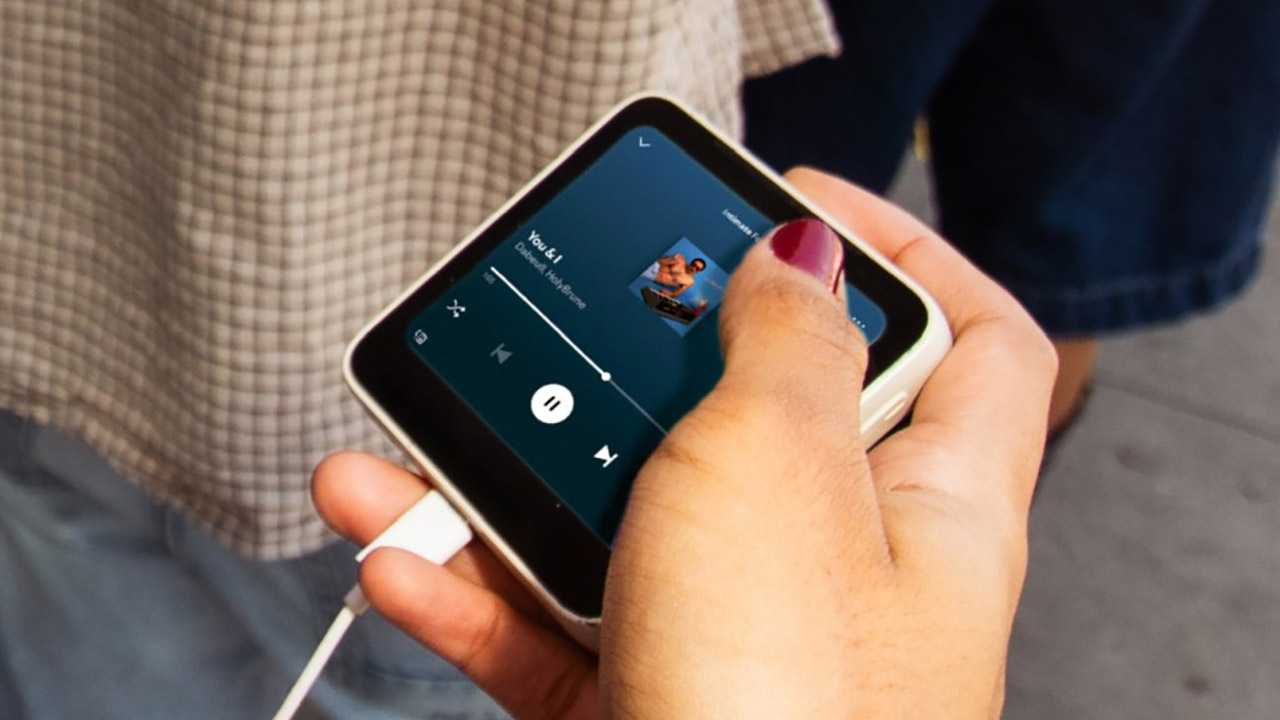
The app selection is deliberately minimal but covers what most people actually need day to day. You get calls, messaging, a camera, a clock, maps, notes, and weather. Spotify and Apple Music handle music streaming, with local playback and a dedicated app available for podcasts and audiobooks. Strava covers fitness tracking and Uber handles rides. That is the full list, and there is no app store to tempt you into adding more. For anyone who has grown tired of their attention being pulled in a dozen directions at once, that simplicity feels less like a limitation and more like a breath of fresh air.
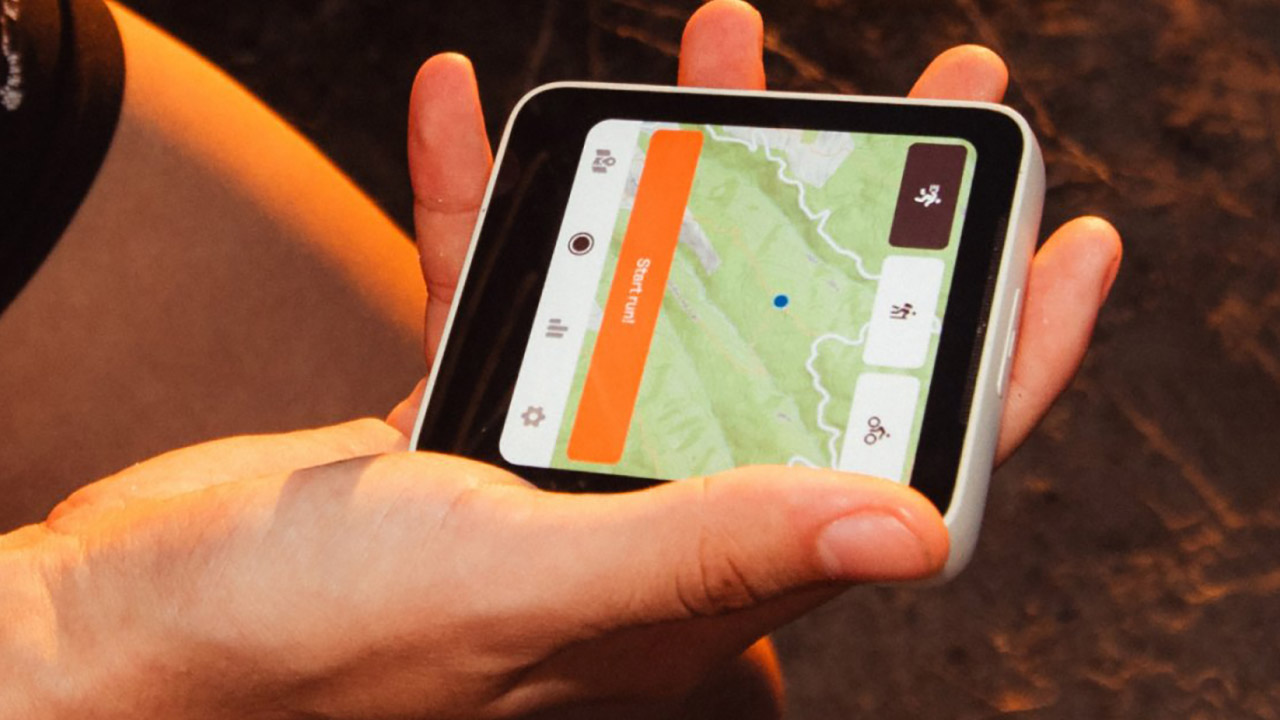
The hardware is more than capable of handling the lean app selection without any lag, with 6GB of memory and 128GB of storage on board. A single 13 megapixel rear camera is there when you need it, and the absence of a front facing lens is a deliberate trade-off rather than an oversight. Battery life stretches to a day or two of mixed use depending on how you are using it, and USB-C fast charging keeps top-ups quick. Bluetooth handles headphones and speakers without issue, though there is no headphone jack. Wi-Fi, Bluetooth, NFC, and 4G are all supported, with connectivity managed through a monthly service that costs $10 after the first nine months of free service included with purchase.

Pre-orders are open now at $399, with the price rising to $449 once stock arrives. US customers can expect delivery around June 2026, with each unit coming bundled with a beach pouch, an activity case, and a charging cable.
[Source]
Tech
Europe Gets Its First Driverless Robotaxi Service Starting in Zagreb, Thanks to Uber and Pony.ai
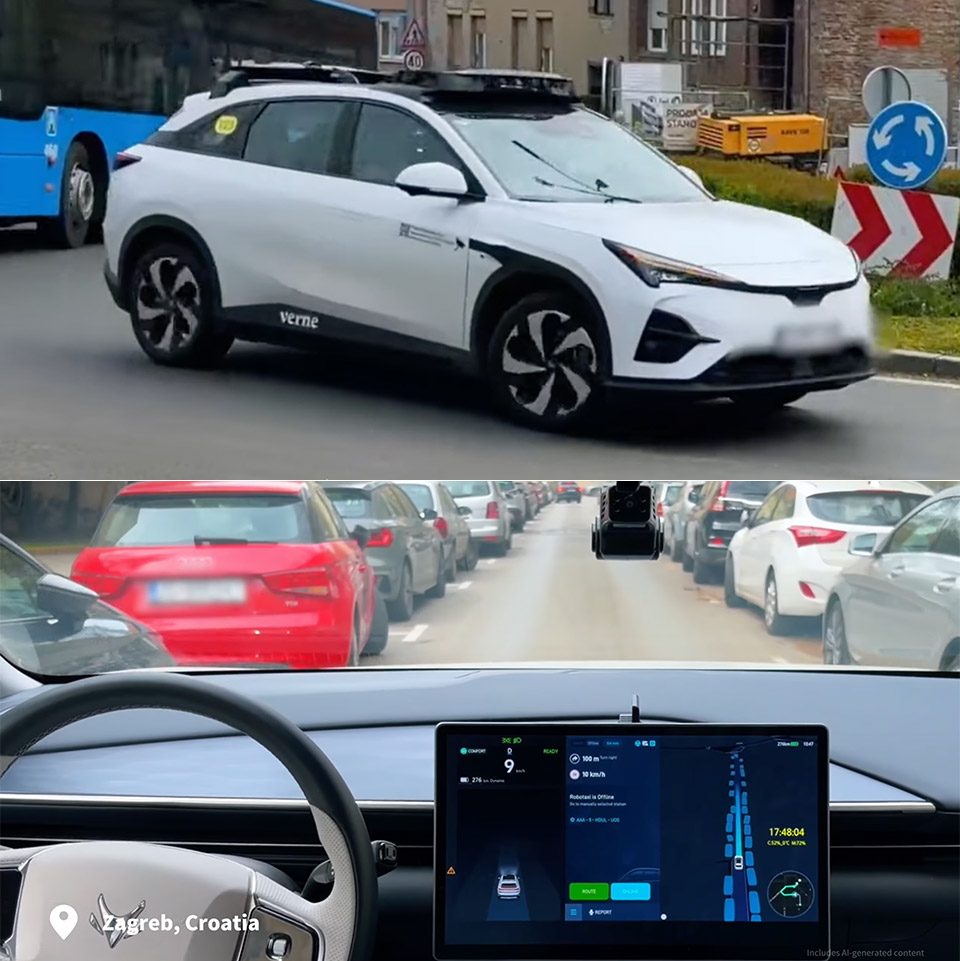
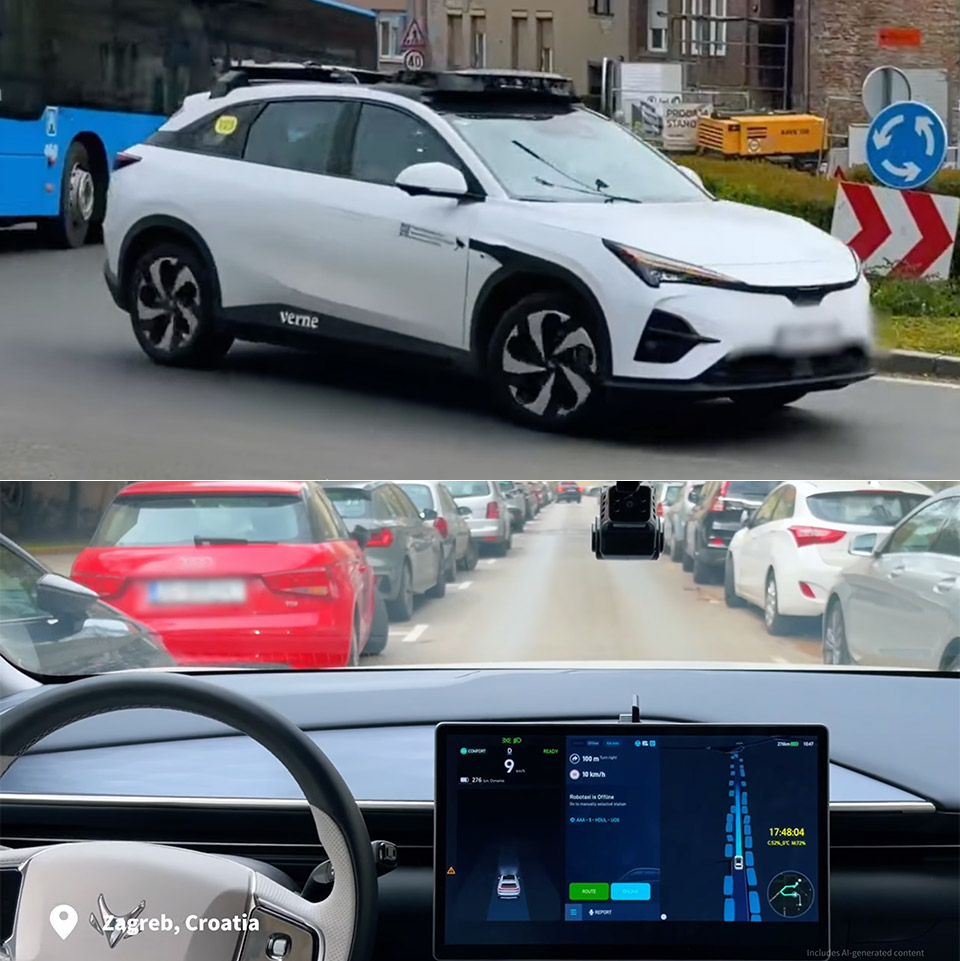
Riders in one European capital will soon be able to summon a self-driving car and pay for it using a familiar app. Uber is collaborating with Pony.ai, a Chinese autonomous car technology startup, and Verne, a Croatian company familiar with the local scene. On March 26, 2026, the three firms revealed their plans, and they’ve decided to kick things off in Zagreb.
You can already witness test vehicles driving around Zagreb as part of the real-world testing procedure. They’re all powered by Pony.ai’s latest autonomous system, Gen-7 technology, which provides them with more than enough intelligence to navigate from A to B without the need for a human driver. They are all Arcfox Alpha T5s, and after the final checks are completed, fare collection will be only a few weeks or months away.
Sale

LEGO Technic Ferrari FXX K Toy Car – Building Toy for Girls & Boys, Ages 10+ – Cool Birthday Gift for…
- LEGO FERRARI MODEL CAR KIT – Builders ages 10+ can create the legendary Technic Ferrari FXX K with authentic details and working mechanical features
- AUTHENTIC RACE CAR DETAILS – This supercar building set features working butterfly doors, opening hood, and an engine cover that reveals the…
- CAR MODEL KIT – Young engineers explore real automotive concepts with this educational learning toy as they build the working differential and watch…
It all works relatively simply: Pony.ai provides the self-driving technology and software that allows the cars to traverse routes on their own. Given their local experience and presence in Zagreb, Verne owns the cars and manages the day-to-day operations, while Uber integrates the rides into their worldwide network, allowing anybody with the app to order one alongside a regular ride or bike, all from the same app.
Pony.ai has already launched commercial robotaxis in a number of Chinese cities, and the data show that they are covering costs and turning a profit. That track record gives the partners great confidence that they can replicate this success in Europe as well. Verne understands the local roads and rules, as well as client expectations across Europe. Together, they want to avoid the lengthy delays that have hindered other autonomous initiatives throughout the continent.
Next, the partners discuss expanding their fleet to thousands of vehicles and several cities in the coming years. For the time being, Zagreb serves as a proving ground. Success there will be the key to expanding into other European markets, and even beyond. Meanwhile, Verne is working with regulators to ensure that their safety standards remain similar no matter where the service ends up.

Dara Khosrowshahi, Uber’s CEO, says the goal is to make autonomous rides more accessible by combining great technology with a thorough grasp of the local market. James Peng who founded Pony.ai pointed to the same idea noting that proven systems work best when paired with operators who understand each market. Marko Pejkovic who leads Verne put it simply that Europe has waited long enough for real autonomous service instead of endless tests.
[Source]

The first day of the BGIS final has just curtailed. Today, we saw some amazing battle action not just from the top teams but from almost everyone. Still, we had winners and also losers. The biggest winner of today was Soul, which topped the rankings, followed closely by Godlike and VS. At the bottom was Nebula, who had a horrible run of matches. Here’s what the standings look like after day one of BGIS Grand Finals.
BGIS 2026 Grand Finals Standings After Day 1
| Teams | WWCD | Position Points | Finish Points | Total Points |
|---|---|---|---|---|
| SOUL | 1 | 18 | 48 | 66 |
| GODL | 2 | 21 | 42 | 63 |
| VS | 1 | 23 | 34 | 57 |
| WF | 1 | 23 | 32 | 55 |
| GENS | 0 | 10 | 44 | 54 |
| VE | 1 | 17 | 31 | 48 |
| RGE | 0 | 17 | 25 | 42 |
| RNTX | 0 | 6 | 29 | 35 |
| OG | 0 | 7 | 21 | 28 |
| NINZ | 0 | 8 | 18 | 26 |
| K9 | 0 | 10 | 14 | 24 |
| MYTH | 0 | 10 | 14 | 24 |
| WELT | 0 | 8 | 13 | 21 |
| TT | 0 | 5 | 15 | 20 |
| LEFP | 0 | 5 | 11 | 16 |
| NBE | 0 | 4 | 10 | 14 |
Day 2 awaits us tomorrow, and it’s historically a day of comebacks in BGMI. We hope to see similar top-tier action. If you missed today’s games, check out our highlights of day 1.


The DJI Mini 3, priced at $299 (was $419), is the type of drone that keeps people coming back for more, and the reasons why are undeniable. With a weight of just under 249 grams, it falls under the FAA registration radar in the United States, allowing you to pull it from your backpack and fly in no time, with no paperwork or licensing to come in the way. That kind of spontaneity transforms a last-minute trip to the park into a legitimate aerial photography opportunity.
Its camera is a true show stopper, especially for an entry-level drone. It has a 1.3-inch sensor that captures 4K footage at 30 frames per second and has enough range to handle both brilliant sky and dark shadows in the same shot – all while maintaining a three-axis gimbal that keeps everything smooth and stable whether you’re banking, ascending, or making fast bends. With just one swipe to switch to vertical mode on your phone, you’re ready to go without having to fool around with cropping.
Sale

DJI Mini 3, Drones with Camera for Adults 4K, 38-min Flight Time, up to 32800ft (10km) Video…
- No Registration Needed – Under 249 g, FAA Registration, and Remote ID are not required if you fly for recreational purposes. Visit the FAA’s official…
- 4K UHD Stunning Imagery- Film in 4K HDR Video for crystal clear aerial shots. With Dual Native ISO Fusion, Mini 3 enables the capture of details in…
- Striking Vertical Videos are Ready to Share – With True Vertical Shooting, you can easily capture tall landmarks like skyscrapers and waterfalls.
The battery life is quite impressive for a drone this small. Standard packs will last 38 minutes in calm conditions, but in the actual world, you’ll get about 25-30 minutes, which is no small feat. Even when the wind comes up, the Mini 3 can withstand gusts of up to 24 mph, which is a huge advantage when you have smaller drones that are prone to getting blown off course. If you lose signal or sight of it, the Mini 3’s built-in hover hold and return to home functions will safely return it to you.
Getting off the ground is easy. Simply switch it on, connect your phone or tablet to the controller, and it will be linked within seconds. The software walks you through the basics in a matter of minutes, and then you can experiment with the automated flight modes; circles, spirals, and all that jazz are just one tap away, making it an excellent choice for beginners who are still learning the controls. The capacity to simply replace parts when necessary alleviates the burden of long-term ownership.
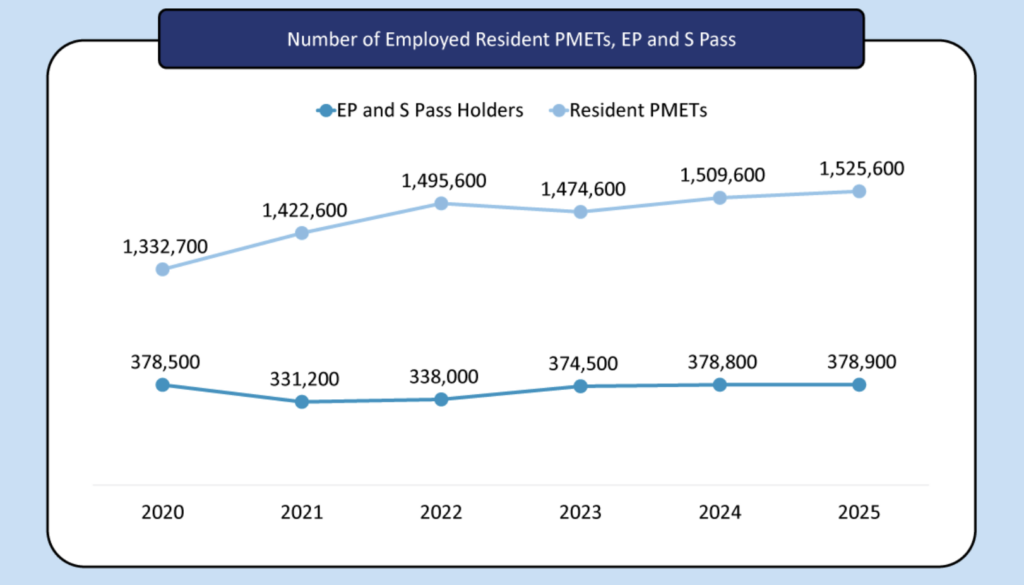
Over the last 5 years, the number of S Pass and EP holders grew by just 400
In debates over foreign labour in Singapore, one claim often surfaces: that foreign professionals are stealing well‑paid, high-skilled jobs from Singaporeans.
But data from the Ministry of Manpower (MOM) figures paint a more nuanced picture that challenges the assumptions behind this narrative. According to provided stats, the number of foreign professionals barely budged between 2020 and mid-2025, and the best-paying sectors are still overwhelmingly held by locals.
Here’s what the numbers actually show.
There are at least 4 locals for every foreign professional
Among Singapore’s foreign workforce, not all passes are created equal.
The ones Singaporeans are particularly worried about are Employment Pass (EP) holders—high-earning professionals cleared to work here based on salary and qualifications—and S Pass holders, the mid-skilled technical workers one rung below.
Together, they’re the foreign hires competing directly with locals for PMET (Professionals, Managers, Executives, and Technicians) jobs, or positions that typically offer higher wages and career progression.
According to online outrage, you might expect this group to have grown significantly over the years, but surprisingly, MOM’s latest Local Employment Outcomes report, released last month, shows otherwise.
From 2020 to 2025, the total number of S Pass and EP holders increased by only 400. That’s not a typo.
From 378,500 in 2020, the total number of these pass holders had actually dipped to 331,200 in 2021, rose slightly to 338,000 in 2022, and then gradually climbed to 378,900 in 2025.

At the same time, the resident workforce, comprising Singapore citizens and Permanent Residents, is gaining ground. The proportion of PMETs (Professionals, Managers, Executives, and Technicians) among employed residents rose from 1.3 million in 2020 to 1.5 million in 2025.
This growth outpaced the combined increase in EP and S Pass holders, showing that locals are not being crowded out. They are, instead, expanding their presence in high-skill roles.
Moreover, there are at least four times more local PMETs employed than foreign S Pass and EP holders in comparable roles—a clear sign that Singaporeans still dominate professional and managerial positions across industries.
The best-paying sectors remain primarily held by locals…
Industry-level data reinforces this picture.
According to MOM’s Job Vacancy report released last year, across all major industries, there is no sector where foreign workers make up more than 25% of PMET roles.

The best-paying sectors still remain dominated by locals. In finance, foreign pass holders account for less than 15% of PMET roles, while Health & Social Services, which includes doctors and specialised healthcare technicians, shows a similar proportion.
Only three sectors—Food & Beverage Services, Construction, and Administrative Services—have the highest foreign employment shares, with foreigners accounting for 40–50% of PMET roles.
These are also the sectors that Singaporeans are typically the least interested in, even at managerial levels, and they offer the fewest quality job openings.
… and it will stay that way
The data makes it very clear: while foreigners do fill some PMET roles, locals remain firmly in control of Singapore’s high-paying, high-skilled jobs.
It is worth noting, though, that the data does not distinguish between Singapore citizens and Permanent Residents, which means some of these roles may be held by foreigners.
However, this distinction does little to change the broader picture. SCs and PRs are both part of the resident workforce, with similar access to opportunities and responsibilities, making them a meaningful measure of local participation.
Resident Singaporeans may only strengthen their hold on high-paying, high-skilled roles in the years ahead.
In Budget 2026, the Government announced further tightening of the foreign workforce criteria, including raising the minimum qualifying salary for Employment Pass holders to S$6,000 (and S$6,600 in finance), and increasing S Pass thresholds as well, to S$3,600 (and S$4,000 in finance).
These changes are not just technical adjustments. They are part of a broader strategy to ensure that foreign hires remain high-quality and complementary, rather than substitutes for local workers. As Prime Minister Lawrence Wong put it, Singapore will remain open to global talent, while ensuring that Singaporeans “remain firmly at the centre of our workforce and our policies.”
In other words, the data already shows that locals dominate the country’s most desirable jobs—and policy is moving in a direction that will prioritise them even further.
- Read other articles we’ve written on Singapore’s current affairs here.
Featured Image Credit: TK Kurikawa/ Shutterstock.com

joshuark shares a report from BleepingComputer: The TeamPCP hacking group continues its supply-chain rampage, now compromising the massively popular “LiteLLM” Python package on PyPI and claiming to have stolen data from hundreds of thousands of devices during the attack. LiteLLM is an open-source Python library that serves as a gateway to multiple large language model (LLM) providers via a single API. The package is very popular, with over 3.4 million downloads a day and over 95 million in the past month. According to research by Endor Labs, threat actors compromised the project and published malicious versions of LiteLLM 1.82.7 and 1.82.8 to PyPI today that deploy an infostealer that harvests a wide range of sensitive data.
[…] Both malicious LiteLLM versions have been removed from PyPI, with version 1.82.6 now the latest clean release. […] If compromise is suspected, all credentials on affected systems should be treated as exposed and rotated immediately. […] Organizations that use LiteLLM are strongly advised to immediately:
– Check for installations of versions 1.82.7 or 1.82.8
– Immediately rotate all secrets, tokens, and credentials used on or found within code on impacted devices.
– Search for persistence artifacts such as ‘~/.config/sysmon/sysmon.py’ and related systemd services
– Inspect systems for suspicious files like ‘/tmp/pglog’ and ‘/tmp/.pg_state’
– Review Kubernetes clusters for unauthorized pods in the ‘kube-system’ namespace
– Monitor outbound traffic to known attacker domains
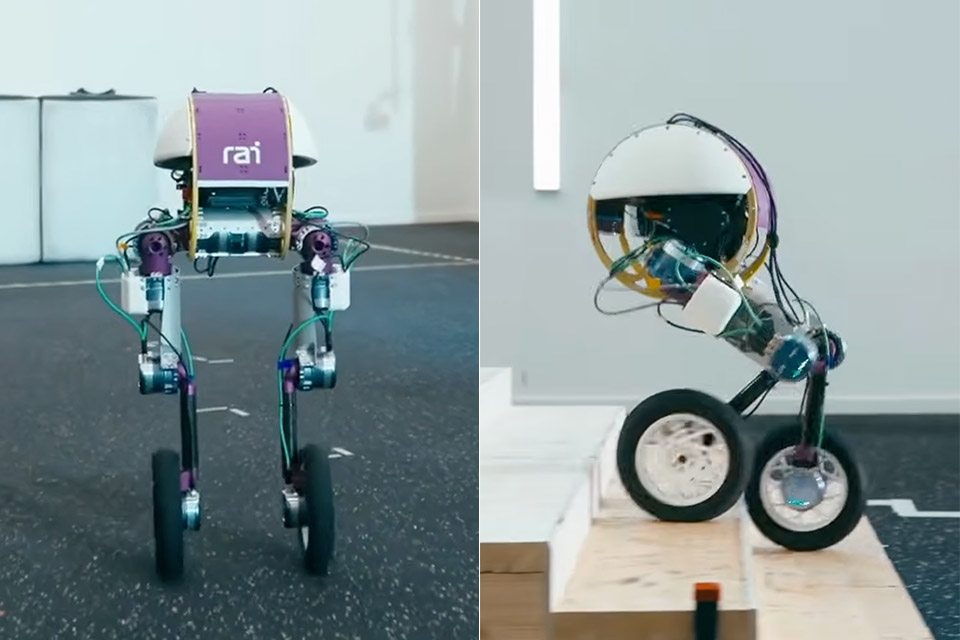
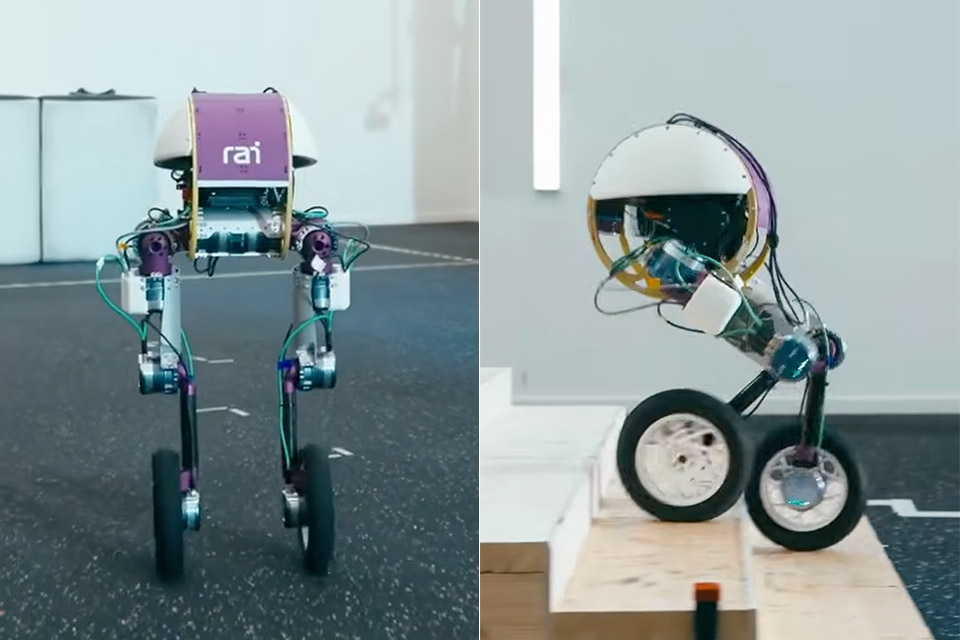
The RAI Institute has just unveiled Roadrunner, a compact robot no heavier than a medium sized dog that moves in ways that catches you off guard. It glides across flat ground on wheels, shifts its stance to tackle a staircase, rides down a ramp with the kind of casual ease you would expect from something with years of practice, backs down another set of steps with equal confidence, and caps it all off by balancing on a single wheel while the rest of its body stays completely still.
The team behind this project is based in Massachusetts and has an amazing track record, having been created by Marc Raibert, the former CEO of Boston Dynamics. This new venture is continuing the same emphasis on robots that can handle complex motion without appearing like complete clowns, and Roadrunner is their latest research platform built to test out all sorts of ideas that most legged robots can only dream of.

Unitree G1 Humanoid Robot(No Secondary Development)
- Sleek & Durable Design: Standing at 132cm tall and weighing only approx. 35kg, the G1 is constructed with aerospace-grade aluminum alloy and carbon…
- High Flexibility & Safe Movement: Boasting 23 joint degrees of freedom (6 per leg, 5 per arm), it offers an extensive range of motion. For safety, it…
- Smart Interaction & Connectivity: Powered by an 8-core high-performance CPU and equipped with a depth camera and 3D LiDAR. It supports Wi-Fi 6 and…
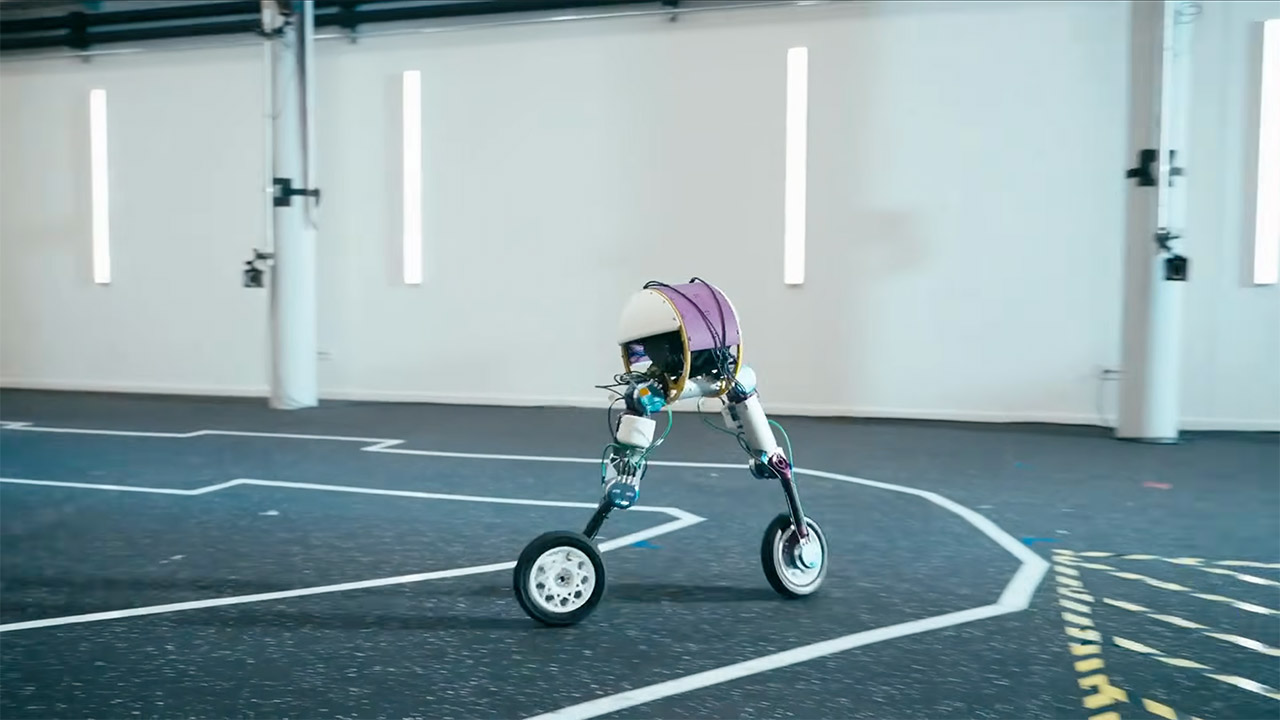
At 15 kilograms the robot is light enough to move quickly without sacrificing structural integrity. Each leg ends in a wheel and has a knee joint that works equally well facing forward or backward, a symmetry that lets the machine adjust its stance instantly to sidestep an obstacle or line up for the next step. A single control system handles every movement style, from rolling side by side like a small cart to lining up like a scooter to taking actual walking steps. That same software has learned to get the robot back on its feet from almost any position on the ground and keep it balanced even when only one wheel is making contact with the surface.

Approaching a staircase, the robot slows, lifts a leg, and places the wheel onto the first step, repeating the motion steadily until it reaches the top, with the wheels only spinning when the terrain actually calls for it. Coming back down it simply turns around and descends with the same unhurried control, never losing its footing. None of this required additional fine tuning in the real world. The team refers to it as a zero-shot transfer, meaning the robot learned everything it needed entirely in simulation and carried that info straight into the physical world without any further adjustment.
[Source]




SiliconRepublic.com spoke with experts at Amgen to explore how early career guidance can set the foundations for a happy and productive career.
The last decade has brought significant change to the working world and it is fair to say that in many cases, advancements have worked to reduce and even eliminate organisational silos. That is to say, in 2026 there is no real reason for employees – remote, hybrid or in-person – to feel isolated in their work or limited in how they might progress professionally.
That is where planned mentorship often comes in. For many professionals, mentorship can be the factor that enables them to upskill quickly, learn the ropes on the job, develop a network, move beyond their own expectations and even take up the mantle of mentor, eventually. But for that to happen, guidance has to be a key element of an organisation, not a box-ticking exercise every now and then.
“Mentorship has multiple benefits,” explained Michelle Somers, the senior director of facilities and engineering at Amgen. “One of the first things for an organisation to do, to encourage mentorship as a core pillar, is to set up some structured mentorship.
“Once that is there, the structure is there. You know, the questions are there, the pathways are there and then people get really familiar with it. Then mentorship really becomes a natural thing.”
For Somers, in establishing a system that supports mentorship publicly, organisations not only showcase their goals to empower career progression, but also make it clear that career guidance is not an anomaly, but part of a company’s ethos.
“I had a colleague come to me recently who said, ‘I know you’ve mentored a colleague of ours, any chance I can avail of your services?’ That turned into just a couple of coffee conversations, where I was able to be a sounding board on her potential career path.
“The structured programme sets up an expectation that people are available for help and support and then it happens quite naturally and fluidly, especially like what we do here in Amgen.”
Plan in action
Lauren Moore, a manufacturing manager at Amgen, is one such person to benefit from having a mentor take an interest in her career. As Moore’s career progressed at the organisation, she was promoted to a leadership role, which she took in her stride, however, roughly two months in, she began to face some of the challenges that naturally come with a change in expectations.
She told SiliconRepublic.com: “I was facing some challenges with the additional level of responsibility. So, I sat down with my mentor at the time, who was a leader in the manufacturing area. For me that was incredibly impactful at that early stage in my career. And it really enabled me to build confidence, to build resilience and ultimately to succeed in that position.”
Moreover, she is of the opinion that, in developing a positive attitude and adopting a strong sense of company culture, she, alongside Amgen, can better deliver medicines and vital treatments to the patients who depend on the organisation’s services.
For Amgen’s senior director of quality control, Claire Shaw, to achieve the best results for employees and for the people using Amgen’s services, companies have to prioritise inclusivity, especially at the induction level.
She said: “I would consider it very collaborative. There’s a strong sense of teamwork and a strong sense of belonging. Organisations can support a happy work environment that ensures that we serve our patients through developing their staff, and ensures each colleague is valued and can contribute to our daily mission to serve patients.”
Don’t miss out on the knowledge you need to succeed. Sign up for the Daily Brief, Silicon Republic’s digest of need-to-know sci-tech news.

Sports10 seconds ago
Prayers up for WWE legend Jamie Noble

Tech1 minute ago
OPPO Rolls Out Service Center 3.0 Pro Across 150+ Cities in India

NewsBeat3 minutes ago
Our top picks for comfort, performance and style


-
 Crypto World7 days ago
NIO (NIO) Stock Plunges 6.5% as Shelf Registration Sparks Dilution Worries
-
 NewsBeat2 days ago
Manchester United reach agreement with Casemiro over contract clause amid transfer speculation
-

 Crypto World6 days ago
Best Crypto to Buy Now: Strategy Just Spent $1.57 Billion on Bitcoin During Fear While Early Investors Quietly Enter Pepeto for 150x Potential
-

 Crypto World6 days ago
Bitcoin Price News: Bhutan Sells $72 Million in BTC Under Fiscal Pressure, but the Smart Money Entering Pepeto Sees What the Market Does Not
-

 News Videos2 days ago
Parliament publishes latest register of MPs’ financial interests
-

 Sports4 days ago
Remo Stars and Kano Pillars Strengthen Survival Hopes in NPFL
-

 Sports4 days ago
Gary Kirsten Accuses Pakistan Cricket Board Of ‘Interference’, Mohsin Naqvi Responds
-

 Business5 days ago
No Winner in March 21 Drawing as Prize Rolls to $133 Million for Next
-

 Tech5 days ago
Give Your Phone a Huge (and Free) Upgrade by Switching to Another Keyboard
-

 Tech5 days ago
AI enters the chat: New Seattle dating app relies on tech to facilitate meaningful human connections
-

 News Videos4 days ago
Ch 9 Financial Management Part 1 | Detailed One Shot | Class 12 Business Studies Boards 2026
-
Business7 days ago
Columbia Sportswear enters $500 million credit agreement with JPMorgan Chase
-

 Tech6 days ago
Today’s NYT Connections Hints, Answers for March 22 #1015
-

 Business23 hours ago
Instagram, YouTube Found Responsible for Teen’s Mental Health Struggle in Historic Ruling
-

 Business5 days ago
Will Duke Basketball Win It All? Duke Basketball Enters Second Round as Third Favorite to Claim NCAA Title
-

 Sports5 days ago
2026 Kentucky Derby horses, odds, futures, preview, date: Expert who hit 12 Derby-Oaks Doubles enters picks
-
 NewsBeat5 days ago
Update on Wisbech river crash as search for teenage boy enters fifth day
-
 Entertainment4 days ago
Cynthia Bailey Dishes on ‘RHOA’ Season 17, Discusses Kandi
-
 NewsBeat2 days ago
Tesco is selling new Cadbury Dairy Milk bar and people can’t wait to try it
-

 Tech4 days ago
Samsung will soon let you control smart home devices from your car’s dashboard
You must be logged in to post a comment Login