Tech
Why Low Mileage Vehicles Still Need An Oil Change Every 6 To 12 Months


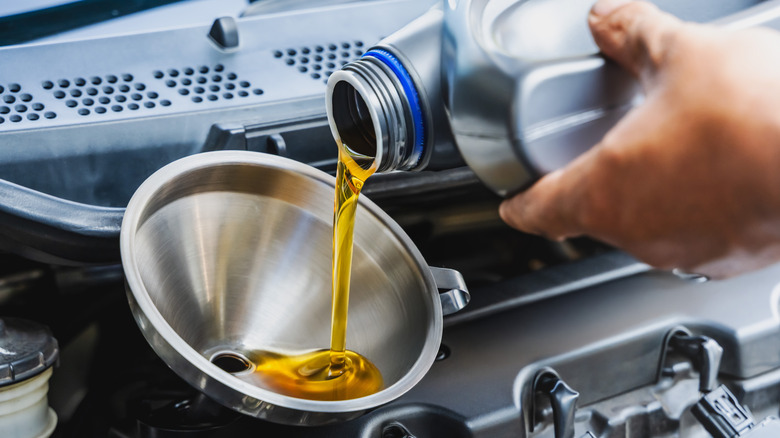
Oil is possibly the most important single fluid in a car’s powertrain, responsible for lubricating all of the engine’s working surfaces and keeping contaminants at bay. It’s a mature and well-understood science, with dozens of companies each touting their own formulas, chemical compositions, and thicknesses. Normally, one might expect the shelf life to be based on mileage, as that’s what we’re used to. Change the oil yourself after a certain number of miles, and you’re fine, right?
That’s certainly true, of course, but mileage isn’t the only factor to consider. Time is just as important, and it’s one that people don’t consider as often, likely because it doesn’t apply to many car owners. According to the Federal Highway Administration, Americans drive an average of 16,550 miles per year. For most of us, that means we’ll change our oil about three times a year, assuming a regular 5,000-mile service interval.
What about cars that don’t cover enough miles a year to warrant an oil change? Well, you’ll still need to change the oil, as it can and will go bad over time. Once engine oil is exposed to contaminants like moisture and carbon buildup, it’ll begin to degrade and lose its lubricating properties.
Why does oil degrade in the first place?

You might think that oil is a relatively stable product. After all, a typical internal combustion engine is an incredibly violent place. Oil needs to lubricate pistons moving up and down hundreds of times per minute, a crankshaft spinning around extremely quickly, and all the valves and pistons opening and closing at precise intervals. How could such a high-performance fluid degrade from just being in the open?
The key isn’t the oil itself, but the additives in the oil that are responsible for its anti-corrosion, anti-sludge, and anti-wear properties. These additives will usually separate from the oil, or lose their effectiveness, after five years in a sealed container. That drops to one year if the oil container is opened, exposing it to oxidation, moisture, and contamination from dust and pollutants. Without any circulation, the separated additives will spoil the oil itself, turning it a dark or milky color and giving it a rancid smell.
This also applies to oil sitting in an engine. Even though your car’s oil system is a sealed environment (assuming there aren’t any oil leaks), your oil will oxidize and absorb moisture regardless. It’s also worth noting that conventional oil degrades faster than synthetic, owing to the natural molecules being less consistent than synthetic equivalents — just one of several differences between the two types.
How to tell if your oil is expired
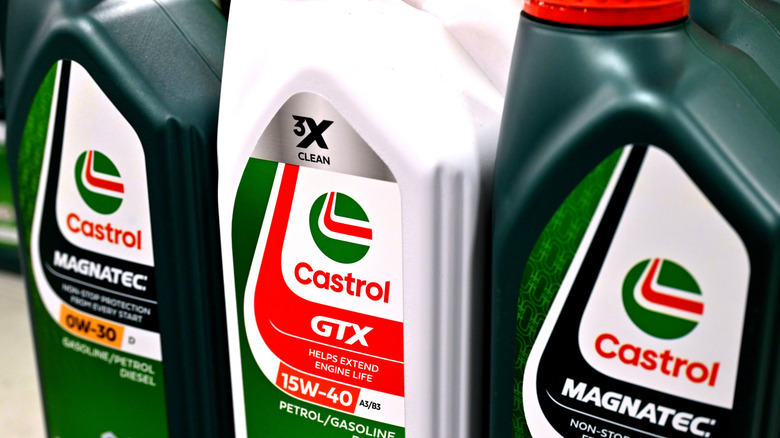
Most motor oil you buy at the store will have an expiry date printed somewhere on the bottle, so check the bottom and see how close you are to that threshold. If the oil is already in the car, it’s best to follow the six- to 12-month rule and change the oil at those intervals, especially if you’re storing the car long-term. You can easily tell if the oil is going bad if the dipstick comes out a deep brown or black color; good motor oil is generally golden amber.
How quickly the oil degrades will depend on environmental conditions. Engine oil goes bad more readily when exposed to fluctuating temperatures, light, and humidity, which is why oil bottles are opaque, not translucent. To properly store oil, keep the bottle in a dark, dry, and cool environment, such as a box in a controlled garage or basement.
If you run a car on old oil, the effects will become apparent rather quickly. Degraded engine oil can’t do its job nearly as well. It loses some of its viscosity, for one, meaning your oil weights all go out the window. The separation of additives means the oil can no longer adequately protect your engine against sludge buildup. And components will rub against one another more often because the oil can’t effectively cling to the metal surfaces it needs to anymore. While brand-new motor oil may be somewhat expensive, it’s way less money than a bottom-end rebuild.
You must be logged in to post a comment Login