Several years ago, Jared Cooney Horvath’s interest in teaching took a scientific turn.
He entered teaching during a period he calls “the decade of the brain” — when much of the buzz around education and learning covered new theories about brain activity and information processing. Horvath believed that if he learned more about the brain, he’d become a better teacher.
Jared Cooney Horvath
But the education ideas that captured the popular imagination in the early 2000s had to do with catering to so-called learning styles — right- versus left-brain thinkers or visual versus word learners — and notions about how to hasten cognitive development through certain outside stimuli. Remember those moms-to-be with headphones on their bellies for their babies to experience the “Mozart Effect” in utero?
Yet the science of learning persists. And what Horvath — today a neuroscientist and education consultant — now knows about human cognitive development has spurred him to join a cohort of researchers who are questioning the proliferation of technology and education software in schools.
Advertisement
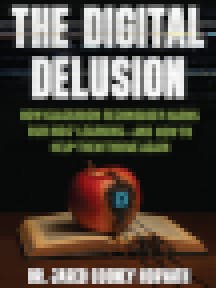
His new book “The Digital Delusion” feels like a logical progression from Jonathan Haidt’s 2024 bestseller “The Anxious Generation,” which looked at how hours spent in front of screens, especially on social media, with its rapid-fire videos and toxic commentary, has damaged children’s overall mental health and learning.
In “Digital Delusion,” Horvath outlines research showing how digital devices and screen time, at the expense of playtime, interferes with children’s cognitive development. Then he argues how the ubiquitous use in schools of laptops and edtech, at the expense of traditional skills like handwriting and note-taking, alters, for the worse, how kids learn.
Horvath takes a pragmatic approach on that score, suggesting arguments parents can use with administrators and at school board meetings. He has chapters that include examples of letters and other tools parents can customize to mobilize action at state and federal levels.
Some educators maintain that schools should emphasize responsible use of technology, including AI, to prepare students for a technology-driven workforce. Horvath isn’t convinced. First, he argues, workforce preparation should not be education’s priority, particularly in younger grades. Second, it’s inefficient: “Teach someone to use a tool and they’ll be able to use that tool,” he writes. “Teach someone how to think and they’ll be able to use any tool.”
Advertisement
Even so, Horvath insists he isn’t anti-tech: “This isn’t a book about resisting devices,” he writes. “It’s a book about reclaiming education as a deeply human endeavor.”
EdSurge spoke with Horvath about “The Digital Delusion” and his work with schools around the globe, including in Australia, which at the end of last year banned social media for anyone under 16.
This interview has been edited for length and clarity.
EdSurge: You make the point that whenever a new technology is introduced to a culture, early adopters are the enthusiasts. But for any given technology to have broad acceptance, it must pass muster with skeptics. Yet that didn’t really happen with digital technology in schools, did it?
Advertisement
Horvath: If I invented something, I had to convince you. This [product] will get rid of that stain on your shirt. This will keep your iceberg lettuce crisp in the fridge. If you promised something you had to live up to it, because for the few people who adopted it to begin with, if you didn’t clean their stains, they’re not coming back.
Digital technology never made a claim to anything. It just kind of appeared and people just started using it. When AI came out, the developers flat-out said, we don’t know what this does. Why don’t you guys tell us what it does? And for some reason we shoved it into schools and said, instead of me telling you what it does, why don’t I let my kids tell you what it does?
Something very weird happened where they made no claims to efficacy and then we jumped in and started using it. Our job now is to start to pull some of those weeds rather than protect before planting. And unfortunately that means there’s been a lot of victims along the way.
A lot of kids have suffered due to our rush to just put things in their hands, unfortunately.
Advertisement
I think we have this love affair with digital technology. I don’t know if it’s because of sci-fi or “Star Trek” or what. We intuitively think this is going to be helpful.
And now we’re just scrambling back.
You explain that children need to play for optimum cognitive development, but ordinary childhood play and behavior has been disrupted by screens. Is there evidence that if we take the technology away from children whose brains are still forming that they can bounce back?
Yes, absolutely. The good thing about human biology is it is wickedly malleable.
Advertisement
There’s two aspects to keep in mind. One, biology is also wickedly conservative. It changes all the time, but it never forgets anything. So if you have had a habit at one point and you drop that habit, you can move your biology a different way, but if you come back to that habit even once, your biology will have held onto that entire circuit. It’s a survival mechanism. Our genes, our brain, hold everything.
So when it comes to these tech habits, if you’ve already formed them as a kid, they will always kind of be there. If you think, I’m over this, and you pick up your phone, you will move much faster back into that habit than you did before.
The other thing to recognize here is everything we know about learning, and most of what we know about biology, basically starts after the age of 5. That’s when what we call human biological learning mechanisms really kick in.
From birth to about 5, you’re in a totally different world. The brain is basically in input mode. Gimme, gimme, gimme. And I’m going to hold onto everything. This is why if a kid grows up in a house with two languages, they will easily learn two languages because the brain just says gimme, gimme, gimme.
Advertisement
So that’s where I think the super danger zone comes in. If you develop habits or problems before the age of 5, when you hit 5, the brain locks itself down. You won’t be able to consciously remember what happened before the age of 5, but all of that [input] forms the foundation upon which further learning is going to occur.
My fear is if you form a habit before the age of 5 and then your brain locks down, are you now stuck in a spot where it will be very hard to get that out? If you’ve already addicted your kid before age 5, be careful. I don’t know what that’s going to mean when they get older.
Why? My question is just why? There are a lot of states right now putting forward bills to limit screen time in primary years: K through [grade] 2, 90 minutes; [grades] 2 through 5, two hours a day. To which I always reply, why any hours?
Advertisement
I could easily make a case they don’t need any of this at any moment. It makes no sense for learning and development why [technology] needs to interface with anything they’re doing.
But by banning, aren’t we setting up a mystique around technology — causing a different kind of distraction around the yearning to use it?
That’s what you want. By banning and building a mystique, you give kids aspirations. I think back to my generation, when we turned 16, you couldn’t stop us from driving. Why? Because with our parents, that was the hold: you want to go to your friend’s house? You got a bike, you got feet, I’m not driving you. You want to get to school? There’s a bus, you got feet, I’m not driving you. So by the time we knew we could drive, that’s the first thing we did.
If by banning tech, that makes kids say when I’m 18, I’m using tech — then, good, that means I have 18 years to train you to be ready to use that machine.
Advertisement
Can schools realistically go back to paper? Textbooks, for instance, are expensive and take longer to update than websites, which are dynamic.
It’s funny, this is where you get the clash between different masters. In a good rule of thumb you can only serve one master at a time. So we’ve got issues of, I want my kids to learn, but I have monetary constraints and I have administrative bureaucracy that I’ve got to wend my way through.
When you’ve got multiple masters, eventually you’ve got to settle on one because if you try and serve many, no one’s going to be happy. And I would hope that in education we choose learning as our ultimate master. If that means, look, we have to devote more of our budget to textbooks and that means we won’t be able to do X this year, then so be it.
If that means, look, we’re going to only use the website for the last two years of history, but we’re going to have the book for the rest because it’s better for learning, then so be it.
Can you explain the findings around taking notes by hand?
Most students think note-taking is something they do while they learn. So [they think] if AI does it for me — cool! But they miss the point. Note-taking is the learning, not something that’s happening in parallel to learning. That is the learning. Because that’s where you’re doing your transformation: Your teacher said it. I now have to analyze it, think about it, organize it, get it out.
That requires friction. Your brain is going much faster. So the handwriting is constraining the speed with which you can think, which in turn is forcing you to focus on ideas, which in turn is transforming those ideas as you’re going along.
Advertisement
That is the definition of learning.
The act of handwriting is arguably the most complex thing we do. When it comes to motor skills, there might be nothing more complex than that.
We talk about the difference between gross- and fine-motor movements. Name one skill we do that is so minutely fine as handwriting and so varied as handwriting. If you’re using a pen versus a pencil versus a crayon versus a marker, you’re doing very subtly different movements.
Those develop so much more awareness and understanding of the body in a way that then translates into other fields in ways we’ve never seen from any other skill before.
Advertisement
If you know how to write, you will become better at reading. If you know how to write, you will become better at recognizing faces. Why? We don’t know. But everything seems to be correlated back to that skill.
So when people debate [whether] handwriting is still worth teaching? Of course. Is cursive still worth teaching? Of course. No one’s going to use cursive as an adult. That’s not why we’re teaching it, baby. It has nothing to do with what you’re going to do as an adult. ’
You were just in Australia. What is the feedback from the social media ban?
The response is overwhelmingly positive. Basically every school I worked at, the kids are fine with it. Teachers are fine with it. All of a sudden, behaviors are getting so much better in school. They said the biggest problem is with parents, oddly enough, who basically have to hang out with their kids and they don’t know what to do. If that’s our biggest problem, we’ll solve that. Hang out with your kid.
Advertisement
Any time you remove something from your kid’s heart, you’re going to have to fill it with something else. You’re going to have to fill it with yourself, which means you’re going to have to take some of your own tech out of your own life to devote more of your time to your kid.
While other tech companies have been laying off employees year after year, OpenAI is doing the opposite. According to a report from the Financial Times, the AI giant is looking to expand its workforce to 8,000 employees by the end of 2026, nearly doubling staff from its current headcount of 4,500.
The FT reported that the new hires will be across several departments, including product development, engineering, research and sales. OpenAI’s hiring spree will also include “specialists” for “technical ambassadorship,” or employees tasked with helping businesses better utilize its AI tools, according to the report. As the FT noted, OpenAI is likely trying to amp up the competition against Anthropic and its Claude AI chatbot. According to the AI Index from Ramp, a fintech startup that manages corporate expenses, businesses are now 70 percent more likely to go with Anthropic when buying AI services for the first time as opposed to OpenAI.
OpenAI made waves in February when it announced a contract with the Department of Defense to use its AI models, following a public fallout between Anthropic and the federal agency. On top of the government contract, OpenAI is also in “advanced talks” with private equity firms like Brookfield Asset Management to deploy its AI tools across a firms’ portfolio of companies, according to Reuters.
The best-selling game of all time is moving from the virtual to the physical. Minecraft World, a permanent Greater London theme park based on the game, is scheduled to open in 2027. The announcement came during Minecraft Live 2026.
It will be a new section in Chessington World of Adventures, a theme park with a built-in zoo. The resort is a 35-minute train ride from London’s Waterloo station.
Details are still fairly light on the park. But we know it will include a roller coaster, “interactive adventures” and “epic block-built playscapes.” Torfi Frans Ólafsson, the game franchise’s creative director, said they’re aiming for “an experience that feels immersive, authentic and welcoming.” Naturally, that will include welcoming you to open your wallet in Minecraft-themed retail and dining spots.
The park is a collaboration between Mojang Studios and Merlin Entertainments, the world’s second-largest theme park builder. (A certain rodent-led empire is first.)
Advertisement
If visiting the full theme park in England isn’t your thing, the latest location of the game’s (also real-world) pop-up events will open in May. Minecraft Experience: Moonlight Trail will let visitors in Buenos Aires, Argentina, go on an hour-long outdoor nighttime adventure. As its name suggests, you’ll “walk a moonlit trail” through iconic Minecraft biomes. Along the way, you’ll craft gear, mine diamonds, battle mobs and “help restore an ancient beacon.” The event opens in May.
The game’s next big drop, Tiny Takeover, arrives on Tuesday. (Mojang Studios)
Not all of Minecraft Live’s announcements were about real-world empire building. Minecraft, the game, is getting some updates, too. Its next big drop, Tiny Takeover, will live up to the billing with a redesigned “cuter” look for baby mobs. The update will also add a golden dandelion, which you can feed to a baby mob to make it stay young forever. (Or, at least until you feed it a second one.) Tiny Takeover arrives on March 24.
Mojang also teased the next drop after that. Later this year, Chaos Cubed will add a sulfur cube that changes properties when absorbing different materials. “There is a lot of variety in what the cube can do,” Mojang promises. “Just like there are balls with different ‘bounciness’ and behavior, the sulfur cube can have different physics.”
Finally, the long-rumored Minecraft Dungeons II game is official. We’re still extremely light on details about the sequel to the 2020 spinoff, aside from the fact that you can wishlist it on March 21.
Watch Feyenoord vs Ajax live streams from De Kuip on Sunday as the Eredivisie 2025/26’s biggest rivalry returns for a 209th De Klassieker. It’s Rotterdam vs Amsterdam and, though PSV seem over the hill and far away in the title race, there’s still plenty more than pride and bragging rights to play for.
Feyenoord also have revenge on their minds after losing 2-0 at the Johan Cruyff Arena in the reverse fixture earlier in the season. Robin van Persie’s side sit second in the table, five points ahead of their Sunday opponents, and know that victory goes a long way towards securing a runners-up spot and a Champions League group stage place with it. Japanese forward Ayase Ueda has 23 goals in all competitions this season and will look to inflict another win as wide as a memorable 6-0 in April 2024.
Ajax have, though, won the past three meetings between the sides, including that 2-0 triumph in December thanks to goals from Davy Klaasen and Jorthy Mokio. After an inconsistent start to the season, De Godenzonen have improved even if Oscar Garcia is their second caretaker boss of 2025/26. The Spaniard replaced Fred Grim after a 3-1 loss at Groningen earlier this month, but that defeat is Ajax’s only Eredivisie reverse since the end of November. Win, and they cut the gap to Feyenoord to two points.
Advertisement
Both teams head into this clash on the back of league wins . Feyenoord secured a 2-1 victory over Excelsior, while Ajax cruised past Sparta 4-0. Who takes Sunday’s clash? Read on as we show you how to watch Feyenoord vs Ajax.
Can I watch Feyenoord vs Ajax for free?
While Feyenoord vs Ajax has no specific free stream, in the UK you can take advantage of TrillerTV+’s 7-day FREE trial, who are showing the Eredivisie 2025/26 game.
In Australia, Kayo Sports also has a 7-day free trial offer.
Advertisement
Outside your country? Access your regular Eredivisie streams via a VPN — we recommend NordVPN.
Use a VPN to watch any Feyenoord vs Ajax stream
How to watch Feyenoord vs Ajax live streams in the US
In the US, ESPN Select will broadcast Feyenoord vs Ajax.
Cord-cutters can stream ESPN Select via Sling TV, Fubo, YouTube TV and Hulu with Live TV. We believe Sling (from $45.99/month) is the best choice for Eredivisie fanatics as it provides great-value live coverage for viewers who plan to watch Dutch football, Spanish football and English FA Cup football.
Premier Sports costs £16.99 on a rolling monthly basis.
TrillerTV+ $7.99 per month (it’s billed in dollars) or $69.99 a year. It also comes with a 7-day FREE trial, so if you’re a new user, you can potentially catch Sunday’s game free of charge.
We test and review VPN services in the context of legal recreational uses. For example: 1. Accessing a service from another country (subject to the terms and conditions of that service). 2. Protecting your online security and strengthening your online privacy when abroad. We do not support or condone the illegal or malicious use of VPN services. Consuming pirated content that is paid-for is neither endorsed nor approved by Future Publishing.
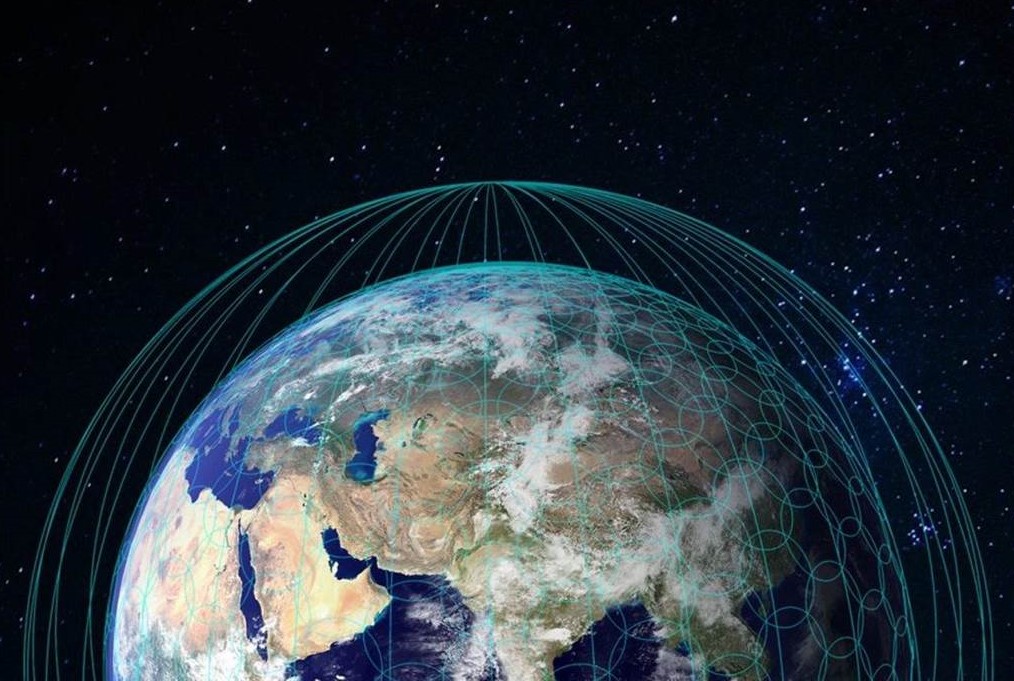
An artist’s conception shows a constellation of satellites in orbit. (OneWeb Illustration)
Jeff Bezos’ Blue Origin space venture is asking the Federal Communications Commission for authority to send up to 51,600 data center satellites into low Earth orbit, signaling its entry into an increasingly crowded space race.
The proposed constellation, dubbed Project Sunrise, would complement Blue Origin’s previously announced plans for a 5,408-satellite TeraWave constellation. TeraWave would provide ultra-high-speed connectivity for Project Sunrise’s satellites — and for terrestrial data centers, large-scale enterprises and government customers as well.
Tech companies are becoming increasingly interested in fielding orbital data centers because such networks could bypass the power and cooling constraints facing Earth-based AI data centers. Last October, Bezos said at a tech conference in Italy that orbital data centers would be the “next step” in a transition from Earth-based to space-based industry. “We will be able to beat the cost of terrestrial data centers in space in the next couple of decades,” he said.
Blue Origin, SpaceX and Starcloud aren’t the only companies involved in the data center space race. Other ventures that have expressed interest include Google, Axiom Space, Aetherflux and Sophia Space.
Advertisement
The competition to build and launch orbital data centers is distinct from the competition to provide high-speed internet access via satellites in low Earth orbit. SpaceX, which now has more than 10,000 satellites in its Starlink constellation, currently dominates that market.
In its 14-page application to the FCC, Blue Origin says Project Sunrise’s satellites would operate in circular, sun-synchronous orbits ranging from 500 to 1,800 kilometers (310 to 1,120 miles) in altitude. The satellites would be built in groupings with three different types of antennas to reflect a variety of coverage requirements. They’d transmit data primarily through laser links, and route traffic through TeraWave and other mesh networks to communicate with ground stations.
Advertisement
Blue Origin is seeking waivers from some regulatory requirements — for example, the requirement for a processing round and a six-year deadline for deploying half of Project Sunrise’s satellites. The company says such requirements could be waived because its satellites will be designed to minimize interference with other satellites.
It didn’t take long for SpaceX to file an objection to Blue Origin’s application.
“SpaceX submits for the record Amazon’s petition to deny SpaceX’s orbital data center application and requests that the commission apply the substantive and procedural arguments in Amazon’s petition to Blue Origin’s application to facilitate equitable and consistent review and treatment across both applications,” the company said.
Advertisement
Starcloud CEO Philip Johnston took note of SpaceX’s filing in a post to X, calling it “one of the funniest responses to an FCC filing of all time.”
“For background, Amazon opposed SpaceX’s filing, and then Blue Origin (both effectively controlled by Jeff Bezos) filed the exact same thing as SpaceX,” he wrote.
So, will Starcloud get involved in the dispute? “We’re staying out of it!” Johnston said.
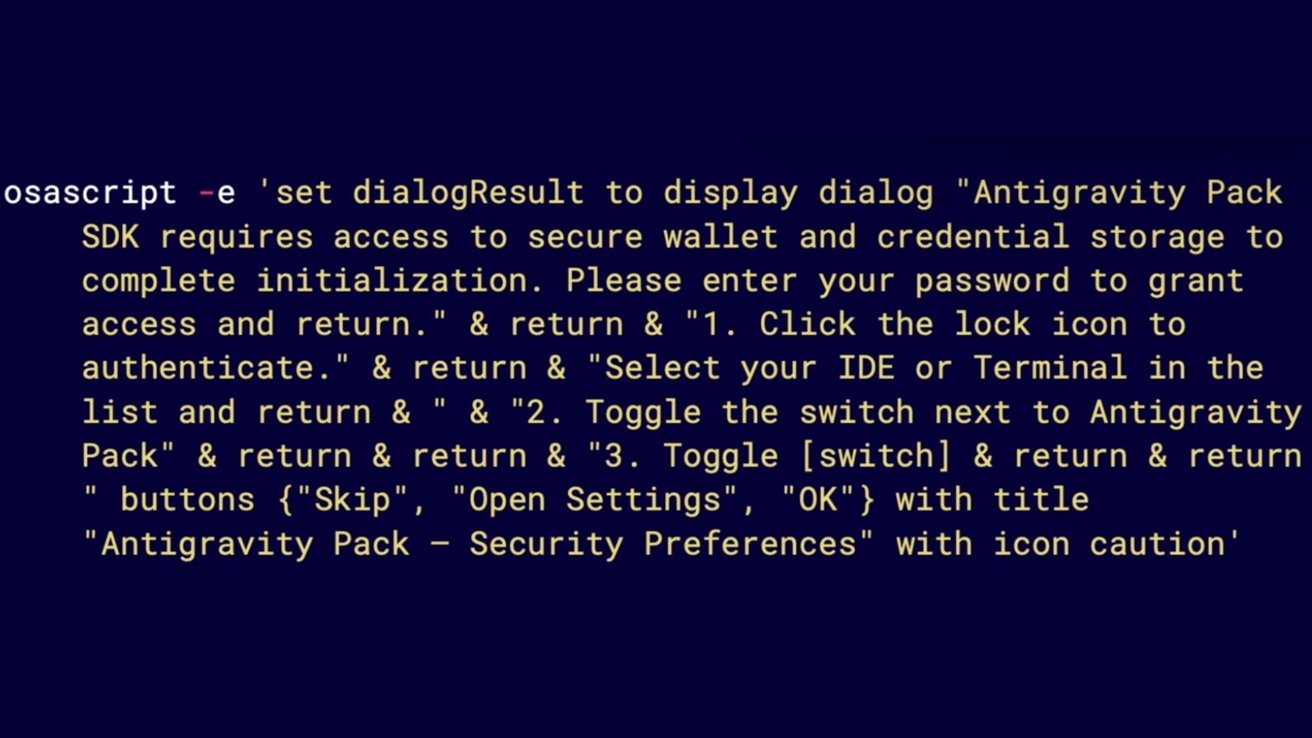
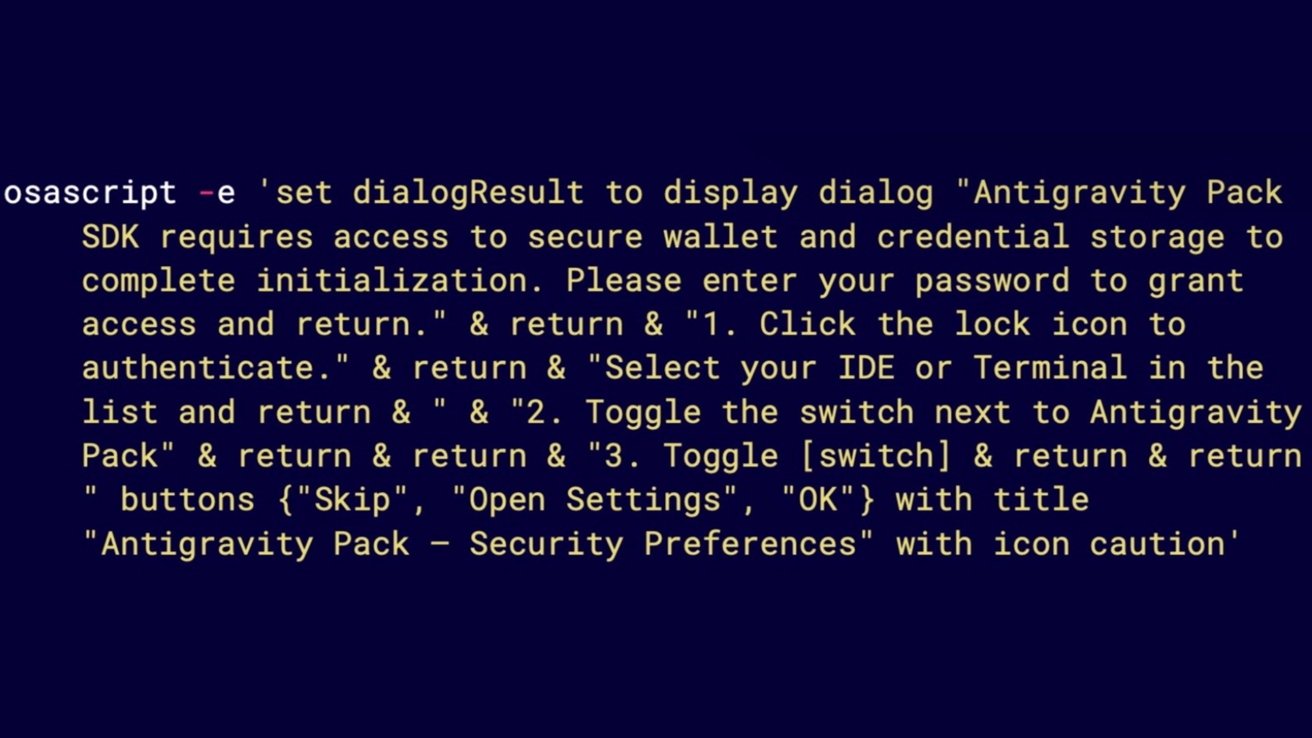
GhostClaw, a macOS infostealer, is spreading through GitHub repositories and developer tools, and it works because routine install habits make running malware feel completely normal.
GhostClaw is spreading across GitHub
Jamf researchers tracked the campaign’s shift from npm packages to GitHub repositories and AI-assisted development environments. The payload, a macOS infostealer, blends into expected behavior rather than exploiting software. Developers regularly pull code from GitHub, follow README instructions, and run install commands without much hesitation. Familiar patterns build trust, and GhostClaw slips directly into that routine. Continue Reading on AppleInsider | Discuss on our Forums
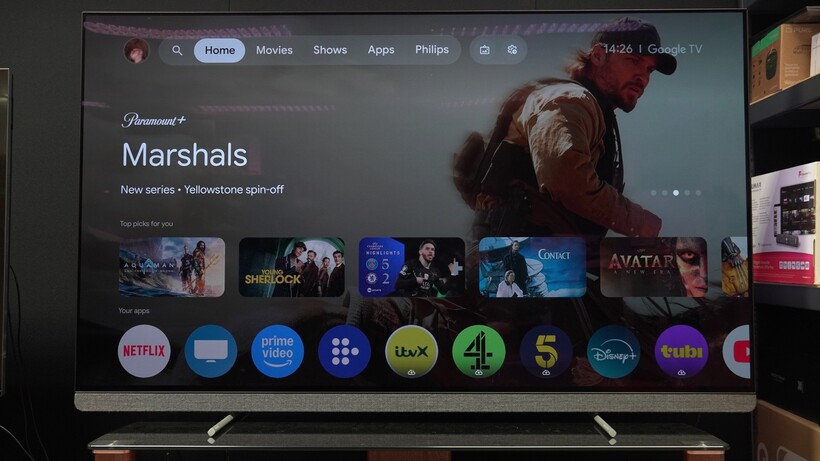
Although Philips probably didn’t use any of those words, it has said goodbye to Google TV with the 2026 TV models, and brought Titan OS into the fold as the main UX partner.
This could be a very good arrangement for Philips.
The battle for customers’ attention in the TV space will, in my view, come down to the user interface. You can throw as many specs at the wall as you want, but at the end of the day, people like a TV that’s easy to use, and while Google TV is very good, in hindsight, perhaps it wasn’t the best partner for Philips.
Advertisement
A smart change?
It’s a change that could end up being a smart move for Philips. Google TV is a big platform; it has all the global apps, it comes with integrated smarts and connectivity such as Google Assistant, Google Home and Google Cast. If you want a capable user experience, then Google TV offers that.
Advertisement
But in the UK at least, it’s had and continues to have an issue with catch-up apps and services. I’ve heard a few voices give their opinion, and at least one issue was that catch-up and on-demand services such as BBC’s iPlayer and Channel 4 did not want to let go of non-negotiables – namely their position at the top of the EPG; whereas Google wanted to bring some flexibility and change to that.
I can’t say that’s the absolute truth on the matter but an opinion that’s been floated as to why Google TV and UK TV services haven’t really got on with each other. It’s likely the reason why Panasonic, released TiVo and Fire TV models in the UK while Europe got Google TV models instead.
Advertisement
Image Credit (Trusted Reviews)
It’s likely the reason why iPlayer rarely appears on Google TV models in the UK, aside from Sony and TCL models, who seem to have gone through the trouble of negotiating their own deals (or using different TV platforms) to get these apps onboard.
Whether it’s a TV or a smart projector, Google TV is almost certainly leaving iPlayer off the list; while Channel 4’s level of support is sketchy. And let’s not beat about the bush – these are apps that many want to have included from the get-go. Not having them is a disadvantage in the minds of UK customers who want a TV that’s easy to use.
And therefore it’s a disadvantage to Philips. The Philips OLED910 is a great TV but I’ll have to highlight the fact that it doesn’t have iPlayer will annoy customers who simply want a TV packaged with everything they might need. Does anyone remember the kerfuffle customers brought up when LG TVs dropped Freeview Play? Is that important to many.
Advertisement
A titan in waiting
But switching to Titan OS makes sense. Philips has practically incubated this user platform from birth, working with them on their less expensive TVs and gradually adding to across the line to the point where it’s available on the flagship level.
Advertisement
It’s certainly not as big a brand name as Google is, but now Philips can weave a story that includes both them and Titan OS, rather than being eased out of the way by Google taking the limelight.
They can build a platform that works for Philips, with much closer collaboration. Titan themselves are looking to bring in some interesting new features, including a sports section that’s tailored to what the viewer wants to watch, rather than what the platform wants you to watch.
Image Credit (Trusted Reviews)
Say you prefer watching tennis? Based on what you’ve clicked, the platform will learn what you like, and rather than focus on shovelling association football to your eyeballs, you’ll instead be presented with tennis content instead.
Advertisement
This is a long-term goal and not something that’s going to be launched in the next few months, but it’s a sign of what can be done on a smaller scale, rather than being a smaller voice next to a global player such as Google.
Advertisement
Titan OS supports Freely, so you get all the catch-up apps and services included from the get-go. It might not have the flash or scale of Google TV, but it’s building up a base and growing in terms of recognition.
After all, what does Philips have to lose? If anything, it should be seen as what Philips can gain from such a move. I think there’s plenty of opportunity available for Philips and Titan to make their mark.
TfL introduces radar cameras that monitor five lanes without visible alerts
Half of London’s 2024 fatal collisions involved excessive speed
Cameras will be installed on 20mph and 30mph roads across ten boroughs
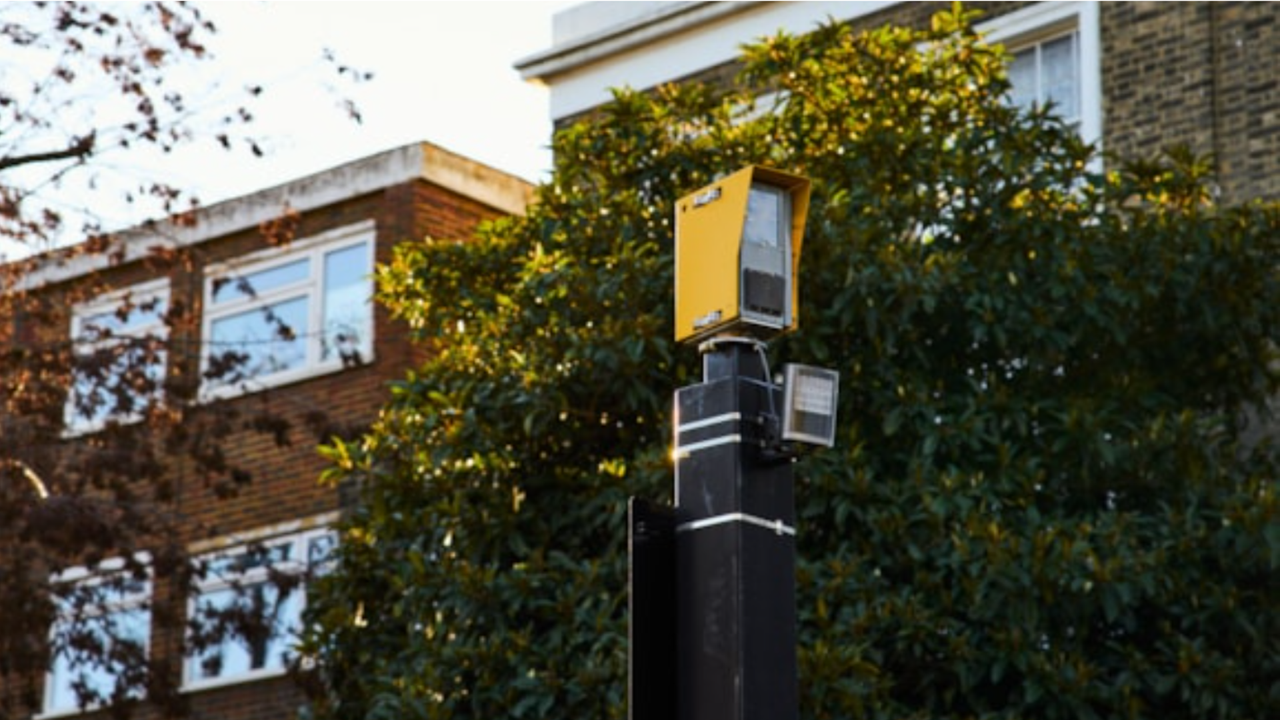
Transport for London (TfL) is moving ahead with trials of radar-based speed cameras which differ significantly from existing roadside systems in both design and operation.
The new devices combine 4D radar tracking with 4K imaging, removing the need for embedded road sensors, visible flashes, or painted markings that typically signal enforcement zones to drivers.
The absence of these cues suggests a system which operates continuously without alerting motorists in the traditional ways many have come to expect.
Article continues below
Advertisement
Expanded coverage and enforcement rationale
The new cameras will be installed at up to 10 sites across London, including boroughs such as Haringey, Tower Hamlets, Havering, Croydon, Hammersmith and Fulham, Brent, Hackney, Ealing, and Sutton.
All sites are located on roads with either 20mph or 30mph limits, chosen on the basis of risk and suitability.
Advertisement
Each of these cameras is expected to monitor up to five lanes of traffic simultaneously in both directions.
This is a notable increase compared with older spot cameras that are limited to fewer lanes and rely on physical infrastructure beneath the road surface.
Sign up to the TechRadar Pro newsletter to get all the top news, opinion, features and guidance your business needs to succeed!
TfL states this expanded coverage allows each unit to survey 67% more traffic, which may alter how frequently drivers encounter enforcement across busy routes.
Advertisement
Authorities continue to link excessive speed with severe road incidents across London’s transport network, with official figures indicating speed contributed to roughly half of fatal collisions recorded in London during 2024.
This statistic forms part of the justification for introducing updated enforcement tools, alongside a broader policy framework aimed at reducing casualties over the coming years.
“Speeding continues to be a major cause of the most devastating collisions on our roads,” said Siwan Hayward, TfL’s Director of Security, Policing and Enforcement.
Advertisement
“This trial allows us to test new radar‑based camera technology to ensure it meets London’s future enforcement needs.”
The rollout also aligns with a wider plan involving expanded camera deployment and adjustments to speed limits across sections of the road network.
Authorities indicate that these measures are being implemented alongside efforts to reshape urban streets into environments with lower traffic speeds.
From an enforcement perspective, the improved image quality produced by the new cameras is expected to affect how offences are processed and verified.
Advertisement
According to the Metropolitan Police, clearer imagery supports accountability by providing stronger evidence when pursuing violations.
“This trial will improve reliability and deliver better quality images, helping our officers hold offenders to account,” said Donna Smith, Detective Chief Superintendent of the Met’s Roads and Transport Policing Command.
This points to a system that may reduce ambiguity in enforcement, although it also raises questions about how drivers adapt when traditional warning signals are absent.
The decision to deploy these cameras across multiple boroughs indicates a targeted approach rather than a uniform rollout.
Advertisement
Its long-term impact will depend on whether increased detection translates into sustained behavioural change among drivers.
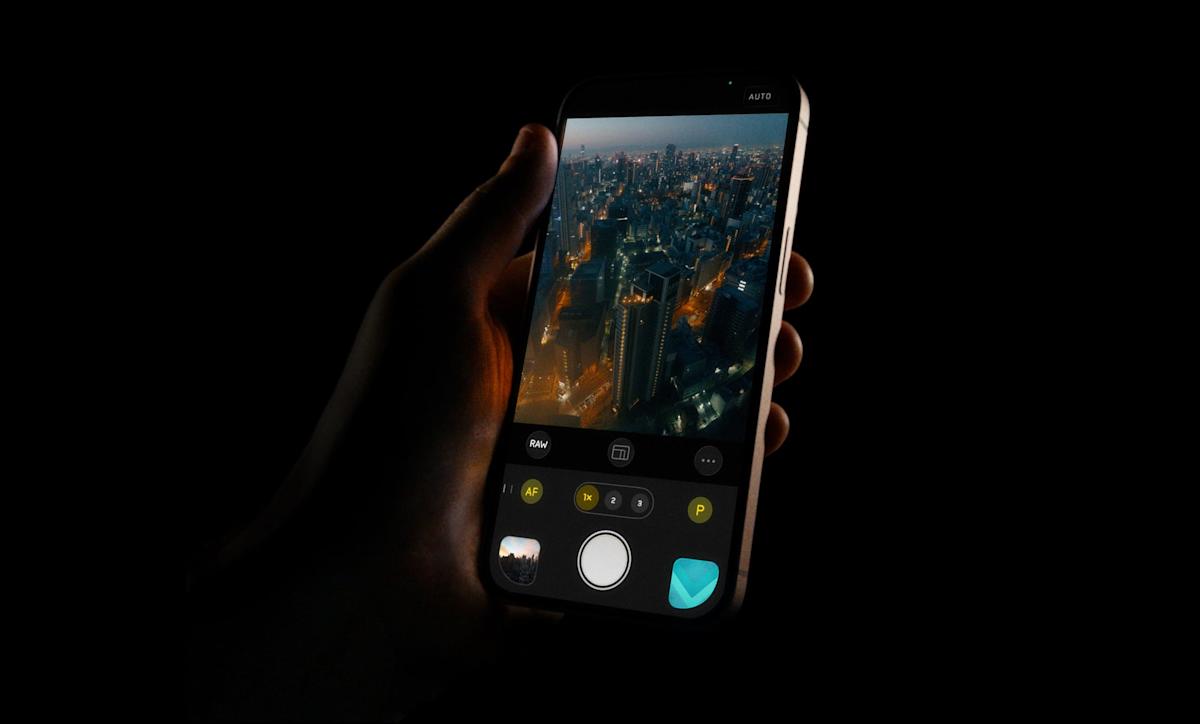
A legal feud between the co-founders of Lux Optics, the developer behind the Halide camera app, revealed that Apple was close to acquiring the company. As first reported by The Information, Apple held acquisition talks for Lux Optics, which also developed the Kino, Spectre and Orion apps, in the summer of 2025.
According to The Information, the deal eventually fell through in September of that year, but the potential acquisition could’ve provided Apple with the third-party software to improve its own built-in camera app. Apple is already rumored to be introducing variable aperture to its upcoming iPhone 18 Pro models, so it’s not surprising that the iPhone maker was looking for software with advanced features to match its possibly upgraded camera hardware.
Despite Apple’s interest, Lux Optics’ co-founders, Ben Sandofsky and Sebastiaan de With concluded that future updates to Halide could increase the company’s valuation and ended the acquisition talks. According to the lawsuit between the co-founders, Sandofsky started investigating de With for the alleged misuse of company funds shortly after the talks with Apple ended. Afterwards, de With was fired from Lux Optics and later joined Apple’s design team. While Halide may remain third-party software for iPhones and iPads, users can still look forward to some software improvements to the built-in camera app, since that’s reportedly one of Apple’s priorities.
It sounds a bit redundant at first — you’re already in a designated turning lane, yet you must use your turning signal. However, in states like California, you may get a ticket if you don’t.
According to the California DMV’s Driver’s Handbook, there are certain steps drivers must take before taking a left or right turn. This includes entering a designated turn lane if one is available, looking out for pedestrians and bicyclists, and then turning on a turn signal about 100 feet ahead of the turn itself, usually before stopping behind the limit line.
While it’s not explicitly stated, this section of the Driver’s Handbook indicates that you’ll need to use the turn signal even if there’s a designated turning lane. This is emphasized in California Code, VEH 22108, which states: “Any signal of intention to turn right or left shall be given continuously during the last 100 feet traveled by the vehicle before turning.” No exceptions are mentioned.
Advertisement
The United States generally wants you to use a turn signal in a turning lane
jpreat/Shutterstock
California isn’t alone in requiring a turn signal when you’re in a designated turning lane. It’s a pretty general traffic safety law throughout the United States.
Florida Statute 316.155 requires drivers to use a turn signal any time they turn a vehicle, turning it on 100 feet before the turn. Massachusetts General Laws Chapter 90, Section 14B also requires drivers to use a turn signal “before making any turning movement.” Nebraska Statute 60-6,161 also states that drivers must use a turning signal 100 feet ahead of any turn.
Advertisement
While it may seem redundant or obvious to the driver, this law exists to keep drivers safe. A turn lane won’t necessarily tell other drivers your thoughts — although it can be assumed. The turn signal itself shows your actual thought process and intentions more clearly. It’s all about communication — to other drivers, to pedestrians, and everyone else around you.
You will also avoid fines: it’s $238 if you violate California Code 22108 — though some would argue not to pay it. It’s best to just follow the general turn signal rules, whether it’s a designated turning lane or a roundabout.
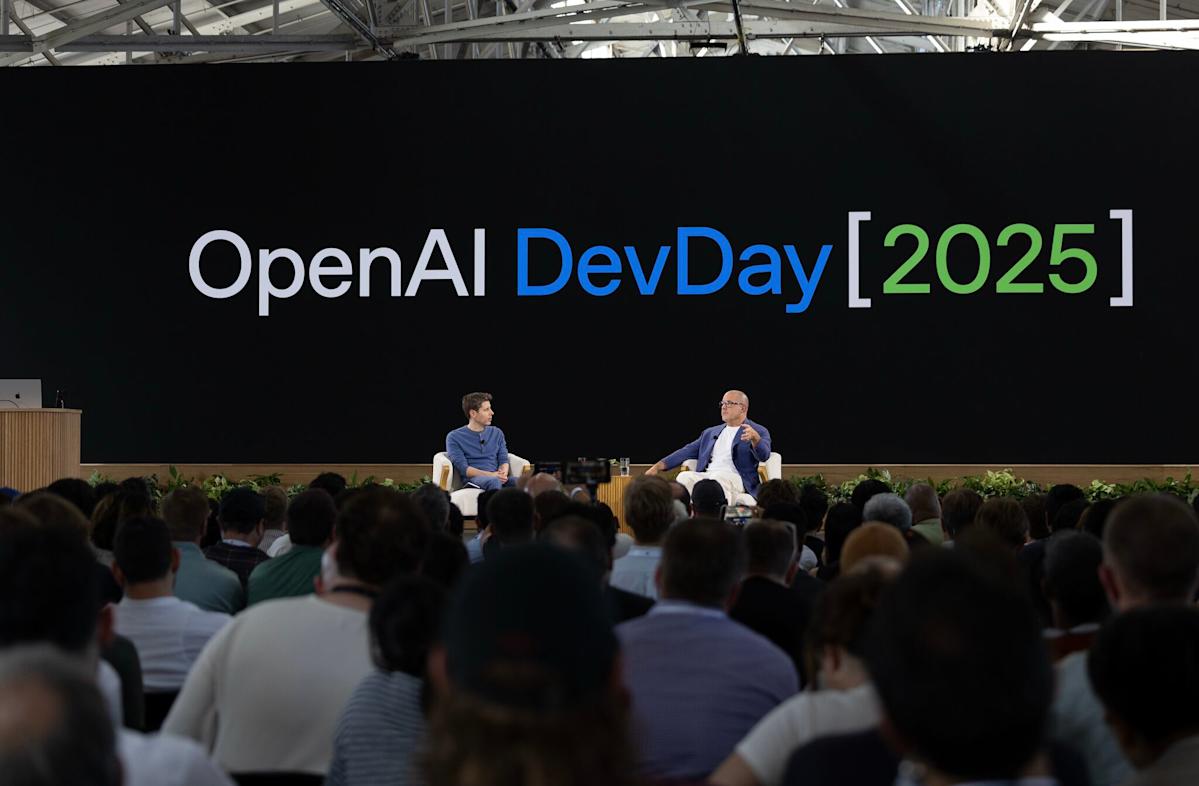
This week, a topic that has been boomeranging around Silicon Valley bounced into the spotlight: AI tokens as compensation. The idea is straightforward enough — rather than giving engineers only salary, equity, and bonuses, companies would also hand them a budget of AI tokens, the computational units that power tools like Claude, ChatGPT, and Gemini. Spend them to run agents, automate tasks, crank through code. The pitch is that access to more compute makes engineers more productive, and that more productive engineers are worth more. It’s an investment in the person holding them, is the idea.
Jensen Huang, the leather-jacket-wearing CEO of Nvidia, seemed to capture everyone’s imagination when he floated the notion at the company’s annual GTC event earlier this week that engineers should receive roughly half their base salary again — in tokens. His top people, by his math, might burn through $250,000 a year in AI compute. He called it a recruiting tool and predicted it would become standard across Silicon Valley.
It isn’t entirely clear where the idea was first, well, ideated. Tomasz Tunguz, a renowned VC in the Bay Area who runs Theory Ventures and focuses on AI, data, and SaaS startups — and whose writing on all things data has garnered a loyal following over the years — was talking about this in mid-February, writing that tech startups were already adding inference costs as a “fourth component to engineering compensation.” Using data from the compensation tracking site Levels.fyi, he put a top-quartile software engineer salary at $375,000. Add $100,000 in tokens and you’re at $475,000 fully loaded — meaning roughly one dollar in five is now compute.
That’s no coincidence. Agentic AI has been taking off, and the release of OpenClaw in late January accelerated the conversation considerably. OpenClaw is an open-source AI assistant designed to run continuously — churning through tasks, spawning sub-agents, and working through a to-do list while its user sleeps. It’s part of a broader shift toward “agentic” AI, meaning systems that don’t just respond to prompts but take sequences of actions autonomously over time.
Advertisement
The practical consequence is that token consumption has exploded. Where someone writing an essay might use 10,000 tokens in an afternoon, an engineer running a swarm of agents can blow through millions in a day — automatically, in the background, without typing a word.
By this weekend, the New York Times had put together a smart look at the so-called tokenmaxxing trend, finding that engineers at companies including Meta and OpenAI are competing on internal leaderboards that track token consumption. Generous token budgets are quietly becoming a standard job perk, the paper reported, the way dental insurance or free lunch once was. One Ericsson engineer in Stockholm told the Times he probably spends more on Claude than he earns in salary, though his employer picks up the tab.
Maybe tokens really will become the fourth pillar of engineering compensation. But engineers might want to hold the line before embracing this as a straightforward win. More tokens may mean more power in the short term, but given how fast things are evolving, it doesn’t necessarily mean more job security. For one thing, a large token allotment comes with large expectations. If a company is effectively funding a second engineer’s worth of compute on your behalf, the implicit pressure is to produce at twice the rate (or more).
Techcrunch event
Advertisement
San Francisco, CA | October 13-15, 2026
And there’s a muddier problem underneath that: at the point where a company’s token spend per employee approaches or exceeds that employee’s salary, the financial logic of headcount starts to look different to its finance team. If the compute is doing the work, the question of how many humans need to be coordinating it becomes harder to avoid.
Advertisement
Jamaal Glenn, an East Coast-based Stanford MBA and former VC turned financial services CFO, similarly points out that what may seem like a perk can be a clever way for companies to inflate the apparent value of a compensation package without increasing cash or equity — the things that actually compound for an employee over time. Your token budget doesn’t vest. It doesn’t appreciate. It doesn’t show up in your next offer negotiation the way a base salary or equity grant does. If companies successfully normalize tokens as pay, they may find it easier to keep cash comp flat while pointing to a growing compute allowance as evidence of investment in their people.
That’s a good deal for the company. Whether it’s a good deal for the engineer depends on questions most engineers don’t yet have enough information to answer.






















































You must be logged in to post a comment Login