






Connect with us

Tech

Why the IBM MWave Sound Card Could be One of the Most Disappointing Pieces of Hardware from the 1990s

Published

on

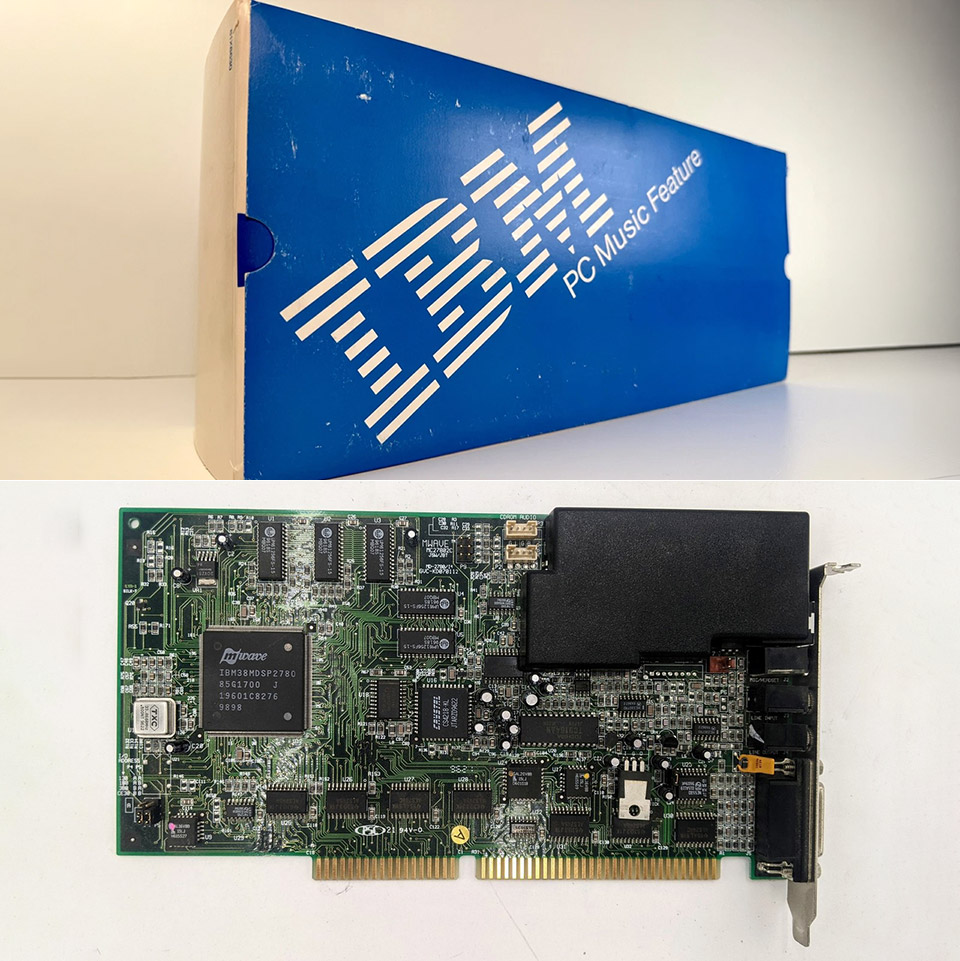
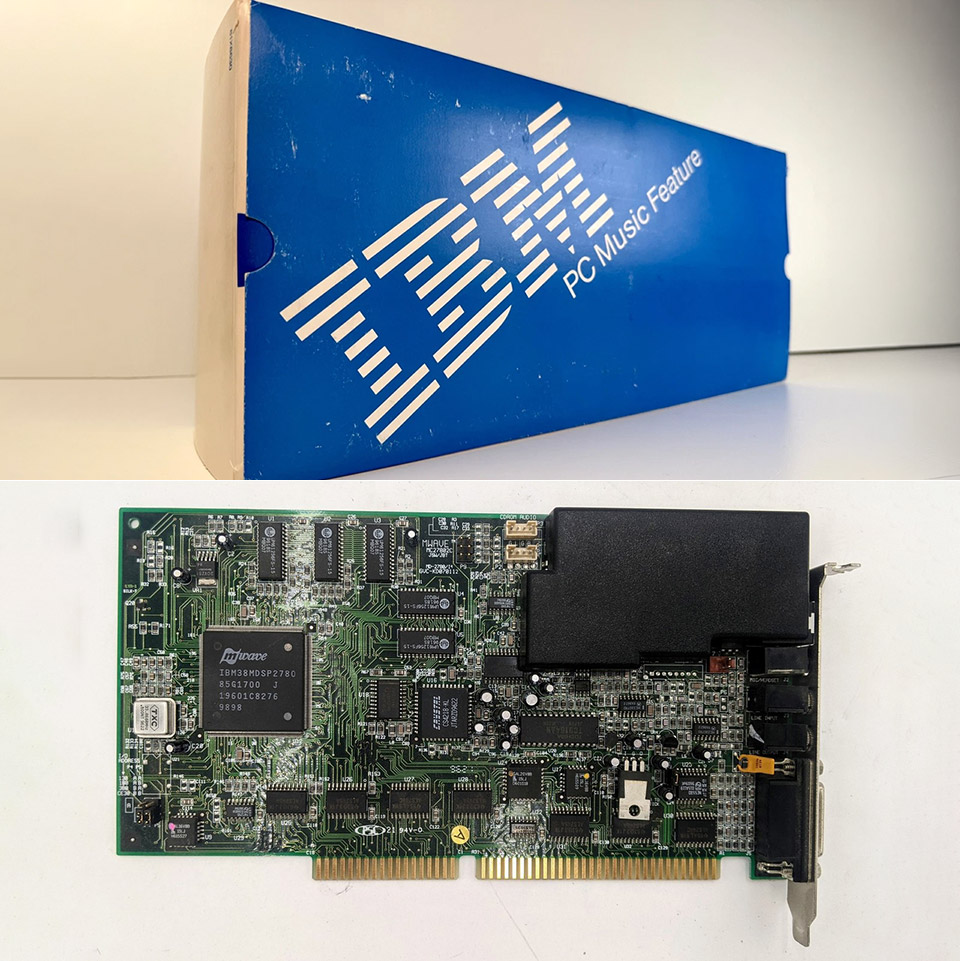
IBM MWave Sound Card
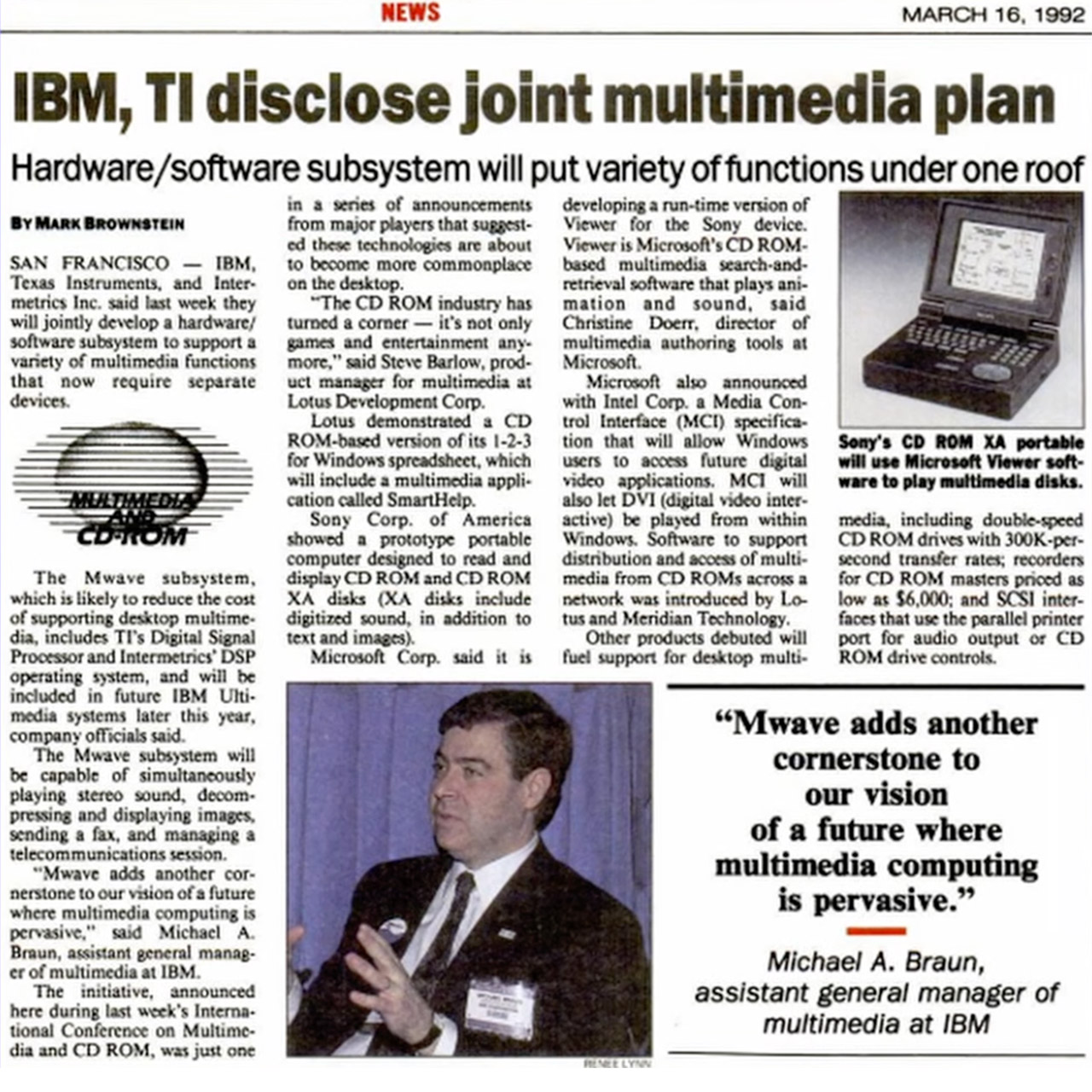
The IBM MWave sound card is still talked about in retro computing circles today, though not in a good way. It’s remarkable how many people can’t stop thinking about how disappointing it was. Launched around 1992 and utilized in IBM’s Aptiva desktops and ThinkPads, the MWave was designed to be a nifty little combo of sound playback and dial-up modem on a single chip. The idea promised convenience and cost savings during an era when sound cards carried prices similar to today’s graphics cards, but reality delivered something far different.


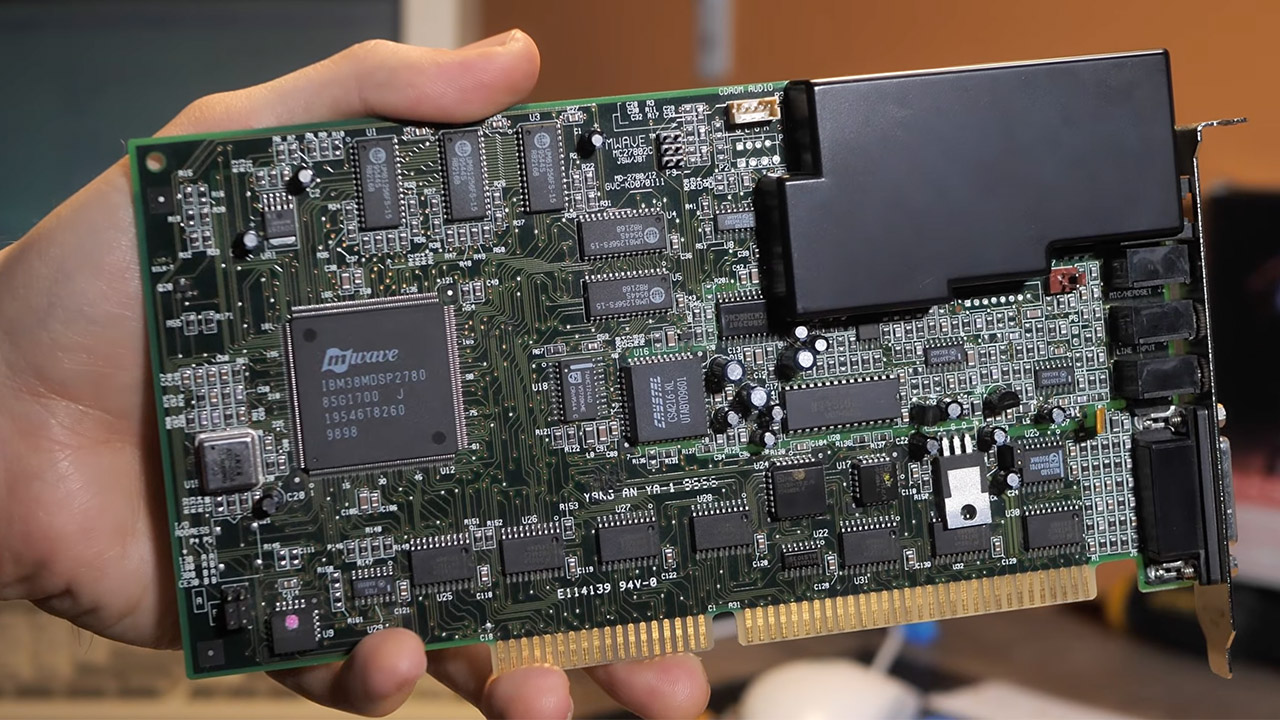
IBM created the MWave around a unique digital signal processor that was expected to handle audio and modem functions. It had a separate chip for digital to analog conversion and another for dealing with the very rudimentary game audio of FM synthesis, as well as General MIDI wavetables for fuller sound and, of course, modem functions up to 28.8 kbps. Later drivers touted 33.6 kbps, since this all appeared to be a forward-thinking approach at first, with one card handling game sound effects, MIDI backgrounds, and internet connections without the need for additional hardware. You have some useful features, such as wake on ring for the Aptivas resume functionality. Few other manufacturers were attempting this tight integration at the time.

Sale


Anker Soundcore 2 Portable Bluetooth Speaker with Stereo Sound, Bluetooth 5, Bassup, IPX7 Waterproof,…
  • Outdoor-Proof Speaker: Portable design with IPX7 waterproof protection to safeguard against splashes, waves, and water vapor. Get incredible sounds at…
  • 24H Non-Stop Music: With Anker’s world-renowned power management technology and a 5,200mAh Li-ion battery, the soundcore 2 speaker delivers a full day…
  • Powerful Sound: The speaker features 12W power with enhanced bass from dual neodymium drivers. An advanced digital signal processor ensures pounding…

The compatibility concerns began almost immediately, with owners complaining about the modem and audio conflicts at startup. The shared CPU simply wasn’t powerful enough to manage both tasks. Owners experienced frequent failed connections, garbled audio, or no audio at all, with the modem failing in one instance while the audio worked in another. From the start, the drivers seemed suspicious. People frequently had to manually meddle with restarts and fiddling around the edges in the hopes that their system would even recognize the card.

Advertisement

IBM MWave Sound Card
Users who used Windows reported a host of issues, beginning with frequent crashes and system errors, particularly when attempting to run Sound Blaster emulation in Windows 95 and 98. DOS games had to be booted up in specific ways so that when you heard audio, it was actually there rather than just gone.

IBM MWave Sound Card
The audio quality suffered significantly as a result of FM synthesis, which was intended to replicate the iconic sound of the soundblaster but instead produced horrible distorted sound. Pitches would shift unexpectedly, notes would vanish, and percussion would just evaporate, while sound effects such as reverb, chorus, and so on would become muddy. The wavetable MIDI was considerably worse, with instruments sounding out of sync, missing vibrato pitch bends, and terrible timbres that sounded if a game’s original soundtrack had been blended. Some audio clips from games like as Duke Nukem 2, Commander Keen, Descent, and Tyrian 2000 demonstrate the severity of the issues, with severe artificial echoes, warped melodies, and what should have been magnificent sound effects reduced to glitches as well as awful basic tones.

IBM MWave Sound Card
It wasn’t only Windows; even DOS-based games suffered from static and poor audio quality. Most consumers were vocal about their dissatisfaction, and IBM faced a class-action lawsuit in the late 1990s, which was eventually settled in 2001. Some customers received a check and a modem in exchange for their quiet and a non-disclosure agreement, while others just had their forum postings “disappear” when they dared to report difficulties. IBM eventually removed the MWave from new systems in 1998, nearly 6 years after it initially began failing, and replaced it with separate sound cards and a modem.
[Source]

Source link

Continue Reading
Click to comment

Leave a Reply

Your email address will not be published. Required fields are marked *

Tech

You’ll soon make WhatsApp video calls right in your browser

Published

on

WhatsApp web video calls are starting to roll out, so you can place voice and video calls straight from a browser tab. You won’t need the desktop app for the basics anymore, at least if the feature has reached your account.

The first wave is limited to one-to-one chats. Open a conversation, tap the call icon, and you can start a voice or video call without leaving WhatsApp Web. Group calls aren’t part of this initial release.

This is a practical fix for people who live in the browser all day, and it’s especially useful on Linux, where WhatsApp still doesn’t offer an official desktop app.

The web version gets serious

WhatsApp has been building toward this for roughly a year, aiming to make the web experience feel closer to its desktop apps instead of a messaging-only companion. The big change is that calling now sits alongside chat in the same window, which reduces friction when you’re working on a laptop.

Advertisement

Security doesn’t shift with the move to the browser. Calls on WhatsApp Web keep end-to-end encryption, using the Signal protocol WhatsApp already uses across messages, calls, and status updates.

WhatsApp Web also supports screen sharing, but only during a video call. If your goal is to show a document or walk someone through a settings menu, you’ll need to start a video session even if you don’t plan to be on camera.

The next milestone is bringing group calling to the web. The same report points to group calls with up to 32 participants, plus extras like call links and scheduled calls, once that phase is ready.

What you should do now

WhatsApp has begun its gradual rollout of native voice and video calling for beta users. If you’re in the WhatsApp Web beta, the simplest check is inside a one-to-one chat. If you see calling controls, you can use the browser for voice and video calls, plus screen sharing during video.

Advertisement

If you don’t see it yet, you’re likely still waiting on the wider rollout, and WhatsApp hasn’t said which browsers or platforms get priority first. For now, treat web calling as the fast option for one-to-one chats, and keep the phone app handy if group calls are part of your routine.

Source link

Advertisement
Continue Reading

Tech

Tem raises $75 M to automate energy markets with AI-first platform

Published

on


London-based energy software company Tem has closed a $75 million Series B round led by Lightspeed Venture Partners, with additional funding from AlbionVC, Atomico, Hitachi Ventures, Schroders Capital, Voyager Ventures, Allianz, and others. The round reportedly values the company at more than $300 million and will fund its expansion into the United States and Australia. Tem builds an AI-native energy platform designed to automate the pricing, matching, and execution of electricity transactions, a market that has long relied on manual processes and legacy infrastructure. Its core system uses machine learning to forecast supply and demand, match buyers with suppliers, and…
This story continues at The Next Web

Source link

Continue Reading

Tech

Lockheed Martin’s LampreyMMAUV Can Launch Underwater Drones in Contested Waters

Published

on

Lockheed Martin LampreyMMAUV Drone
Lockheed Martin’s Lamprey Multi-Mission Autonomous Undersea Vehicle (MMAUV) challenges traditional methods for operating underwater drones in adverse environments. This stealthy autonomous vehicle attaches to a larger ship or sub, travels quietly to remote locations, and is ready to enter without using up its own power.


Lockheed Martin engineers drew inspiration from nature for the basic idea, similar to how lampreys and remoras employ hosts for free rides. They did the same thing with the Lamprey, using a docking system that clicks onto the hull of a surface ship or submarine, requiring no alterations to the host vessel. As it travels, it includes built-in generators that use the energy from the host’s movement to fully recharge its batteries, ensuring that it reaches at its destination with all of the necessary power.


DJI Neo 2 (Drone Only), Lightweight & Foldable 4K Drone With Camera, Palm Takeoff & Landing, Gesture…
  • Lightweight & Portable Design – Weighing just 151g [9] and C0 certified, this compact drone features full-coverage propeller guards for safer,…
  • Palm Takeoff & Landing [1], Gesture Control [2] – Enjoy easy palm takeoff and landing, plus intuitive gesture controls for hands-free operation and…
  • Smooth & Reliable Tracking – ActiveTrack [3] keeps your subject in focus, while Apple Watch lets you view live feed, check flight status, or use voice…

Once in position, the Lamprey breaks free and begins to operate on its own. Its boxy hull includes a 24 cubic foot cargo bay with plenty of capacity inside for the operator to arrange to suit the mission, and no defined limits on what can be stored within. You can equip it with lightweight torpedoes to destroy submarines, retractable tubes that launch up to six aerial drones for surveillance or attack, and just about any other type of equipment you might think of.

Lockheed Martin LampreyMMAUV
With four thrusters, it can move in any direction, while the onboard computers handle navigation, steering it through hazardous waters. A retractable mast rises to the surface to send a signal, while data is transmitted below through seabed nodes or to adjacent aircraft such as an F-35.

Lockheed Martin LampreyMMAUV
The Lamprey’s capabilities are nearly limitless, as it can acquire information using its own sensors (which could include sonar, radio signals, or optical gear) or drop down sensors to the seafloor to monitor objects. It can use a variety of technology to monitor large areas of the floor, then silently collect the data and go, or stay and observe. This indicates that commanders can keep an eye on areas where humans cannot reasonably be kept for a lower cost than a manned submarine.

Lockheed Martin LampreyMMAUV
The Lamprey is designed with two main roles in mind: in a scenario where you need to get in and out without being noticed, it’s great for stealthy surveillance, long-term watching, and precise strikes; however, if you need to disrupt the enemy, it can also do that by deploying decoys, delivering attacks, or just generally causing havoc.

Lockheed Martin had total control over the Lamprey’s development budget, allowing them to complete tasks far faster than they could otherwise. According to Paul Lemmo, VP of Sensors, Effectors, and Mission Systems, this speed enabled them to design a platform capable of detecting threats, manipulating them, creating diversions, and defending itself against attacks.
[Source]

Advertisement

Source link

Continue Reading

Tech

Fugitive behind $73M ‘pig butchering’ scheme gets 20 years in prison

Published

on

Cryptocurrency bitcoin

A dual Chinese and St. Kitts and Nevis national was sentenced to 20 years in prison in absentia for his role in an international cryptocurrency investment scheme (also known as pig butchering or romance baiting) that defrauded victims of more than $73 million.

In pig butchering scams, criminals use messaging apps, dating platforms, and social media accounts to build trust with their targets before introducing fraudulent investment schemes. In the end, rather than investing the funds to deliver the promised huge profits, the scammers drain victims’ cryptocurrency wallets.

42-year-old Daren Li pleaded guilty in November 2024 to conspiracy to launder funds obtained through “pig butchering” scams operated from centers in Cambodia after his April 2024 arrest at Hartsfield-Jackson Atlanta International Airport.

Wiz

However, Li fled in December 2025 after cutting off his ankle monitor, becoming a fugitive before sentencing in California federal court. In addition to the 20-year prison sentence, he also received three years of supervised release after the prison term.

“As part of an international cryptocurrency investment scam, Daren Li and his co-conspirators laundered over $73 million dollars stolen from American victims,” said Assistant Attorney General A. Tysen Duva of the Criminal Division. “The Court’s sentence reflects the gravity of Li’s conduct, which caused devastating losses to victims throughout our country.”

Advertisement

Court documents revealed that Li and co-conspirators were part of an international crime syndicate that used a network of money launderers to move millions stolen from dozens of victims to U.S. bank accounts linked to approximately 74 shell companies, then transferred funds to domestic and international accounts and cryptocurrency platforms to conceal their origins.

He instructed accomplices to open bank accounts and transfer more than $73 million to Deltec Bank in the Bahamas for conversion into cryptocurrency, including Tether. The investigators also discovered more than $341 million in cryptocurrency in one of the crypto wallets the fraud ring used for money laundering.

Li is the first defendant directly involved in receiving victim funds to be sentenced among eight co-conspirators who have also pleaded guilty.

The Justice Department charged four additional suspects in December with involvement in another pig butchering scheme linked to over $80 million in losses.

Advertisement

The FBI’s 2024 Internet Crime Report noted that investment scammers stole over $6.5 billion from 47,919 victims, up from $4.57 billion in 2023.

Modern IT infrastructure moves faster than manual workflows can handle.

In this new Tines guide, learn how your team can reduce hidden manual delays, improve reliability through automated response, and build and scale intelligent workflows on top of tools you already use.

Source link

Advertisement
Continue Reading

Tech

‘I Can Read, But I Don’t Know What It Means’: Rethinking Literacy for Multilingual Kids

Published

on

In classrooms across the country, children are showing progress in reading, yet many students cannot tell you what those words mean, why they matter or how the text connects to their lives.

My first grade multilingual learner asked for help with an assignment that required reading the word and matching it to the corresponding picture. I assumed that my student had not read it. My student replied, “I read the word, but I don’t know what it means.”

At that moment I realized that my students were decoding but not understanding what they read. According to the simple view of reading, students must be able to decode and have linguistic comprehension to attain reading comprehension. Multilingual learners are developing language, which makes comprehension more challenging.

Data from national assessments revealed that reading comprehension outcomes have worsened nationwide (Figure 1). More students scored below proficiency in reading in the 2024 report than in the 2022 and 2019 reports (Figure 2).

Advertisement

Figure 1: National Assessment of Educational Progress, 2024

Figure 2: Trend in Eighth Grade NAEP Reading Achievement-Level Results, 2024

The sharpest declines, according to NAEP and the Department of Public Instruction, are among African American, Hispanic, Native American, and multilingual learners. The data highlights that despite widespread science of reading reforms emphasizing foundational literacy skills, minority students continue to struggle with comprehension.

Culturally and Linguistically Sustaining Practices Matter

America’s classrooms are more diverse today than at any point in history. There are over 5 million multilingual learners in the United States.

Yet science of reading curricula rarely reflect this diversity. Many curricula assume that students come from white, English-speaking, middle-class households.

Research shows students improve in reading when texts reflect their racial, cultural and linguistic identities, because culture shapes the oral language needed for comprehension. When curricula ignore students’ experiences, understanding suffers, not from lack of ability, but from lack of relevance.

Advertisement

Science of reading reforms have boosted decoding, but they were built for monolingual, culturally narrow classrooms.

Grounded in English-only assumptions, many science of reading curricula lack multilingual learners’ home languages and cultural knowledge, making it harder for them to comprehend texts. Decodable texts deepen this gap because they are designed to practice phonics rather than to develop rich vocabulary, complex language or connections to texts.

As a result, students may look strong on decoding data while continuing to lag in comprehension, confirming NAEP’s widening comprehension gaps even with decoding gains.

Classroom solutions

Despite these challenges, teachers have powerful tools at their disposal that do not require abandoning foundational skills. Instead, they ask us to expand our definition of literacy beyond decoding and provide instructional time for students to develop language comprehension.

Advertisement

1. Choose culturally representative texts

Research with African American, Latinx, Indigenous, and multilingual students shows that literature that affirms identities improves comprehension, motivation and critical thinking. Representation matters.

2. Make read-alouds a daily nonnegotiable

Read-alouds provide students with rich vocabulary and syntax, model fluent reading, and build shared background knowledge, all essential for reading comprehension. Choose read-alouds that are 2-3 levels above students’ reading levels to provide opportunities to learn new vocabulary.

Advertisement

3. Explicitly teach vocabulary before, during and after reading

Building vocabulary is needed for students to construct background knowledge and linguistic comprehension.

Multilingual learners and some students from lower-income backgrounds may require images or visuals to support comprehension. I discovered that students were unfamiliar with simple consonant-vowel-consonant words like “fig” or “hut.”

Additionally, vocabulary instruction is more effective when woven into the lesson rather than as an afterthought. Students also benefit from thematic units that reuse vocabulary words, which provide students with opportunities to practice new oral language.

Advertisement

4. Use collaborative talk structures frequently

Oral language develops language comprehension, one of the two main components necessary for reading comprehension. According to the simple view of reading framework, reading comprehension is the product of decoding words and language comprehension.

While foundational literacy science of reading curricula teach students to decode, students must engage in collaborative learning through turn-and-talks, small-group discussions and shared inquiry to develop language comprehension.

5. Allow translanguaging for multilingual learners

Advertisement

When students use their home languages to process ideas, compare concepts or discuss texts, comprehension deepens. It is a powerful cognitive tool, validated by decades of research in bilingual education.

Try using strategies such as identifying cognates, teaching children to use bilingual dictionaries or apps, and providing a space within the lesson for students of the same home language to brainstorm.

We Can’t Do It Alone

Teachers cannot solve the literacy crisis without the support of parents and community partners.

I recently read an article about a literacy initiative in a refugee camp, which found that sending home tablets with stories in families’ home languages increased students’ motivation and improved reading comprehension.

Advertisement

When parents are given tools to read with their children, regardless of language, students develop literacy skills. Teachers can improve literacy efforts at home through bilingual books, multilingual reading apps, family literacy nights, community tutoring partnerships and take-home literacy kits.

One of my most successful classroom projects was a “Bilingual Book in a Bag.” Students took home a bilingual book, a stuffed animal, creative activities and a writing journal to complete with their families. The joy students brought back to the classroom, and the growth in their writing and comprehension, proved what research has long shown: Children learn best when their languages and families are valued.

A Call for a More Humanizing Literacy Future

If we expect students to improve reading comprehension, we must move beyond narrow, English-only interpretations of the science of reading. Foundational skills matter, but decoding is only the beginning.

Children need oral language, background knowledge and cultural connections. Reading is not simply sounding out words. It is making meaning, connecting text to identity, culture and lived experience. The future of literacy depends on our willingness to honor the full humanity of every child.

Advertisement

Source link

Continue Reading

Tech

Databricks CEO says SaaS isn’t dead, but AI will soon make it irrelevant

Published

on

On Monday, Databricks announced it reached a $5.4 billion revenue run rate, growing 65% year-over-year, of which more than $1.4 billion was from its AI products. 

Co-founder and CEO Ali Ghodsi wanted to share these growth numbers because there’s so much talk about how AI is going to kill the SaaS business, he told TechCrunch.

“Everybody’s like, ‘Oh, it’s SaaS. What’s going to happen to all these companies? What’s AI going to do with all these companies?’ For us, it’s just increasing the usage,” he said.

To be sure, he also wants to distance Databricks from the SaaS label, given that private markets value it as an AI company. Databricks on Monday also officially closed on its massive, previously announced $5 billion raise at a $134 billion valuation, and nabbed a $2 billion loan facility as well.

Advertisement

But the company is straddling both worlds. Databricks is still best known as a cloud data warehouse provider. A data warehouse is where enterprises store massive amounts of data to analyze for business insights.

Ghodsi called out, in particular, one AI product that’s driving usage of its data warehouse: its LLM user interface named Genie.

Genie is an example of how a SaaS business can replace its user interface with natural language. For instance, he uses it to ask why warehouse usage and revenue spike on particular days.

Just a few years ago, such a request required writing queries in a specific technical language, or having a special report programmed. Today, any product with an LLM interface can be used by anyone, Ghodsi noted. Genie is one reason for the company’s usage growth numbers, he said.

Advertisement

The threat of AI to SaaS isn’t, as one AI VC jokingly tweeted, that enterprises will rip out their SaaS “systems of record” to replace them with vibe-coded homegrown versions. Systems of record store critical business data, whether it’s on sales, customer support, or finance.

“Why would you move your system of record? You know, it’s hard to move it,” Ghodsi said.

The model makers aren’t offering databases to store that data and become systems of record anyway. Instead, they hope to replace the user interface with natural language for human use, or APIs or other plug-ins for AI agents.

So the threat to SaaS businesses, Ghodsi says, is that people no longer spend their careers becoming masters of a particular product: Salesforce specialists, or ServiceNow, or SAP. Once the interface is just language, the products become invisible, like plumbing.

Advertisement

“Millions of people around the world got trained on those user interfaces. And so that was the biggest moat that those businesses have,” Ghodsi warned.

SaaS companies that embrace the new LLM interface could grow, as Databricks is doing. But it also opens up possibilities for AI-native competitors to offer alternatives that work better with AI and agents.

That’s why Databricks created its Lakebase database designed for agents. He’s seeing early traction. “In its eight months that we’ve had it in the market, it’s done twice as much revenue as our data warehouse had when it was eight months old. Okay, obviously, that’s like comparing toddlers,” Ghodsi says. “But this is a toddler that’s twice as big.”

Meanwhile, now that Databricks has closed on its massive funding round, Ghodsi tells us that the company is not immediately working on another raise, nor prepping for an IPO.

Advertisement

“Now is not a great time to go public,” Ghodsi said. “I just wanted to be really well capitalized” should the markets go “south” again as they did in the 2022 downturn, when interest rates rose sharply after years of near-zero rates. A thick bank account “protects us, gives us many, many years of runway,” he added.

Source link

Continue Reading

Tech

Google redeems Gemini after awkward Olympics ad in a Super Bowl spot among many sentimental AI contenders

Published

on

For sixty seconds during Super Bowl LX, Google Gemini managed to seem like a tool the average person might like. That’s a surprisingly rare feat, but one that many of the biggest AI companies attempted during the big game.

In a soft-spoken, emotionally textured ad titled “New Home,” a mother uses Gemini to help her young son imagine what their new house might feel like. She pulls up a photo of the empty bedroom and asks Gemini to recreate it with her son’s toys, bed, and even the dog’s bed from a photo in their current home. They decorate. They wander through a photorealistic version of the new yard, dreaming up possibilities. The tech is present, but never central.

New Home | Google Gemini SB Commercial 2026 – YouTube
New Home | Google Gemini SB Commercial 2026 - YouTube


Watch On

Source link

Advertisement
Continue Reading

Tech

This heated foot massager is 47% off, and it’s a surprisingly great Valentine’s Day gift

Published

on

Valentine’s Day gifts get tricky when you want something that feels thoughtful but also genuinely useful. That’s why a foot massager can be a sleeper hit. It’s comfort, stress relief, and “I noticed you’ve been tired lately” wrapped into one box. Right now, the RENPHO Foot Massager Machine with Heat is $79.99, down from $149.97 for 47% off. If you’re shopping for someone who’s on their feet all day or simply loves at-home comfort upgrades, this is one of those deals that makes the gift feel smarter than the price tag.

What you’re getting

This is a shiatsu-style foot massager with heat, designed to deliver that kneading, pressure-based sensation people associate with a real massage. It’s positioned for common soreness issues like plantar fasciitis and general foot fatigue, and it comes with cordless control so it’s easy to adjust settings without fumbling around mid-session.

Why it’s worth it

The best gifts are the ones that become part of someone’s routine. This is ideal for the person who finishes a long shift, gets home, and wants ten minutes of peace. It’s also a solid pick for anyone who works out regularly, travels often, or just carries a lot of daily stress in their body.

At $79.99, this is a great value buy because you’re getting the heated massage feature at a price that usually sits closer to “basic” massage gadgets. If you want to make it feel extra intentional, pair it with a simple add-on like cozy socks or a note that says, “Use this whenever you need a reset.”

Advertisement

The bottom line

If you want a Valentine’s Day present that feels personal, practical, and likely to be used all year, this RENPHO heated foot massager at $79.99 is a great deal. It’s especially well-suited for anyone who’s on their feet a lot or loves easy, at-home relaxation.

Source link

Advertisement
Continue Reading

Tech

How to watch The Artful Dodger season 2 online from anywhere

Published

on

How to watch The Artful Dodger season 2

The Artful Dodger, the much-loved Australian period crime drama, is returning for a second season and will see Jack facing a new wave of trouble. Based on characters from Charles Dickens’ Oliver Twist, the series reimagines the life of former pickpocket Jack Dawkins – aka the Artful Dodger – 20 years after the original novel.

Swipe to scroll horizontally

Source link

Advertisement
Continue Reading

Tech

Irish AI start-up MARC raises $1m from angels

Published

on

The property management platform aims to help asset managers streamline and utilise fragmented contract data.

A Dublin-based property management AI start-up named MARC has raised $1m from angel investors in a pre-seed funding round.

The platform uses AI to analyse fragmented sources of vendor contract and invoice data related to property units and consolidates the information for use by owners and managers to help identify discrepancies leading to overpayments.

No VC investors were involved in the recent funding round, but there was participation from 23 individuals including Ireland-based backers like Jack Pierse, Tom Kennedy, Susan Spence and Eoghan Quigley, as well as multiple institutional real estate investors and US-based multifamily executives, according to the company.

Advertisement

Since launching in 2024, MARC has expanded from working with local Irish property managers into the US and Canadian markets, with some clients managing up to 30,000 units. MARC’s customers now hold a company estimate of over $75bn in assets under management.

CEO Aaron Devitt – who was 22 when he founded the start-up – said: “When you manage thousands of units, contract data directly affects asset values, but most teams can’t access that data quickly or reliably.”

“On top of this, the relationship between the accounts payable systems and contract management systems have been historically disconnected, causing marginal and continuous overbilling at scale – to the tune of many millions of dollars for larger residential portfolios.”

The platform works by reading existing property contract data, which may be dispersed in multiple locations and systems, and extracting information around key terms like fees, renewal dates and termination clauses to create a live “source of truth” for asset portfolios, the company said.

Advertisement

Devitt said the aim is to “ensure every portfolio contract is accurate, up-to-date and being billed for accordingly, without thousands of human hours required to find, vet and verify thousands of contracts”.

“Backing founders like Aaron is how we continue to build Ireland’s next generation of global technology companies,” said Jack Pierse, co-founder of Wayflyer.

“MARC is tackling a deeply entrenched problem in real estate with an AI-native approach, and the early traction in the US speaks for itself. This is the kind of ambition and execution we should be supporting more of from Irish startups expanding internationally.”

Don’t miss out on the knowledge you need to succeed. Sign up for the Daily Brief, Silicon Republic’s digest of need-to-know sci-tech news.

Advertisement

Source link

Continue Reading

Trending

Copyright © 2025