Tech
Why There’s Simply No Need For Smart TVs Anymore


We may receive a commission on purchases made from links.
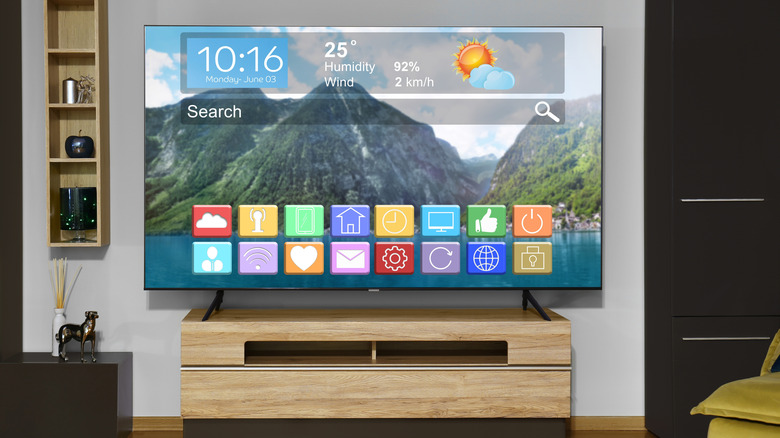
With the rise of streaming services came smart TVs with built-in apps and features that make it easier than ever to start watching content on the big screen from the moment you take it out of the box. But let’s be honest, most smart TVs aren’t all they’re cracked up to be, and they really never have been. Many proprietary operating systems that come with your TV are both sluggish and confusing to navigate. They may drop support for popular apps over time, lack quality-of-life features, and turn the experience of using your smart TV into a constant headache.
Meanwhile, a few companies have created products that universalize the smart TV experience, adding features and app libraries inside of HDMI dongles that cost less than the sales tax you’ll pay on most TVs. That means you don’t even need to get a different television if you’re looking to escape the software experience on the one you own. It also means you can extend your TV’s longevity by years longer than you might think. Between all of those factors, the entire concept of a smart TV is becoming somewhat obsolete. Diving in a bit deeper, here’s why there’s hardly any need for smart TVs anymore.
Streaming boxes and dongles are cheap and capable
There’s one glaring reason to ignore your TV’s smart features: smart TV dongles and set-top boxes are cheap and often have a wider range of features. Even a “dumb” TV can instantly be made smart by plugging in something as cheap as an Amazon Fire TV Stick 4K or Roku Streaming Stick 4K for under $40, and even on the expensive side, a Google TV Streamer is just shy of $100. You can even flex your budget a drop more to $130 for an Apple TV 4K, which can integrate with other Apple devices. In essence, you’re plugging a brand-new operating system into your TV, and it will add just as much value to your setup, whether your display is a cheap computer monitor or a multi-thousand-dollar OLED with all the fixings.
All of the aforementioned products will immediately add features your TV may have lacked, such as voice control, the ability to pair Bluetooth headphones, and smart home integration. You can control Google Home through your Chromecast or control your Alexa ecosystem through your Fire TV Stick, and even Roku will integrate with both so that you can control media with voice commands by using a smart speaker.
Moreover, Fire OS, Roku OS, and Google TV (the respective operating systems used by those devices) have a robust app library that contains pretty much every streaming service you could ask for. No more hoping that the developers of that obscure service, which exclusively streams the movie you’re trying to watch, bothered to make an app for your Samsung Tizen TV. In the case of Google TV, you can even install many apps from the Play Store just like on an Android phone.
Many smart TV operating systems are simply awful
Not only do cheap streaming dongles make any TV into a modern smart TV, but you can configure most TVs to simply boot into the connected device when you turn them on, bypassing their built-in operating system entirely. That’s a good thing, because not only do some of the major smart TV operating systems have features your TV likely doesn’t have by default, but also because your TV’s operating system may not be particularly great to use.
On the high end, TVs may have enough processing power and memory to run their OS fluidly, but budget TVs rarely do. That makes them frustratingly sluggish as you wait for apps and menus to load. Another common issue is that, due to their relatively small user bases, many developers abandon app development for proprietary smart TV operating systems. Even if your TV has great app support when you buy it, just a few years later, you might have lost some of your favorites. Among the apps that have dropped support for certain smart TVs in some capacity are YouTube, Disney+, and Netflix, all streamers that are staples of the modern media ecosystem.
Although smart capabilities are still essential for modern TVs, the real brains have moved off-device to streaming peripherals. That’s actually good news, since it means you can keep your TV up-to-date without needing to buy a brand new one.
You must be logged in to post a comment Login