Tech
Why This Mitsubishi Manual Transmission Used Two Gear Shifters Instead Of One

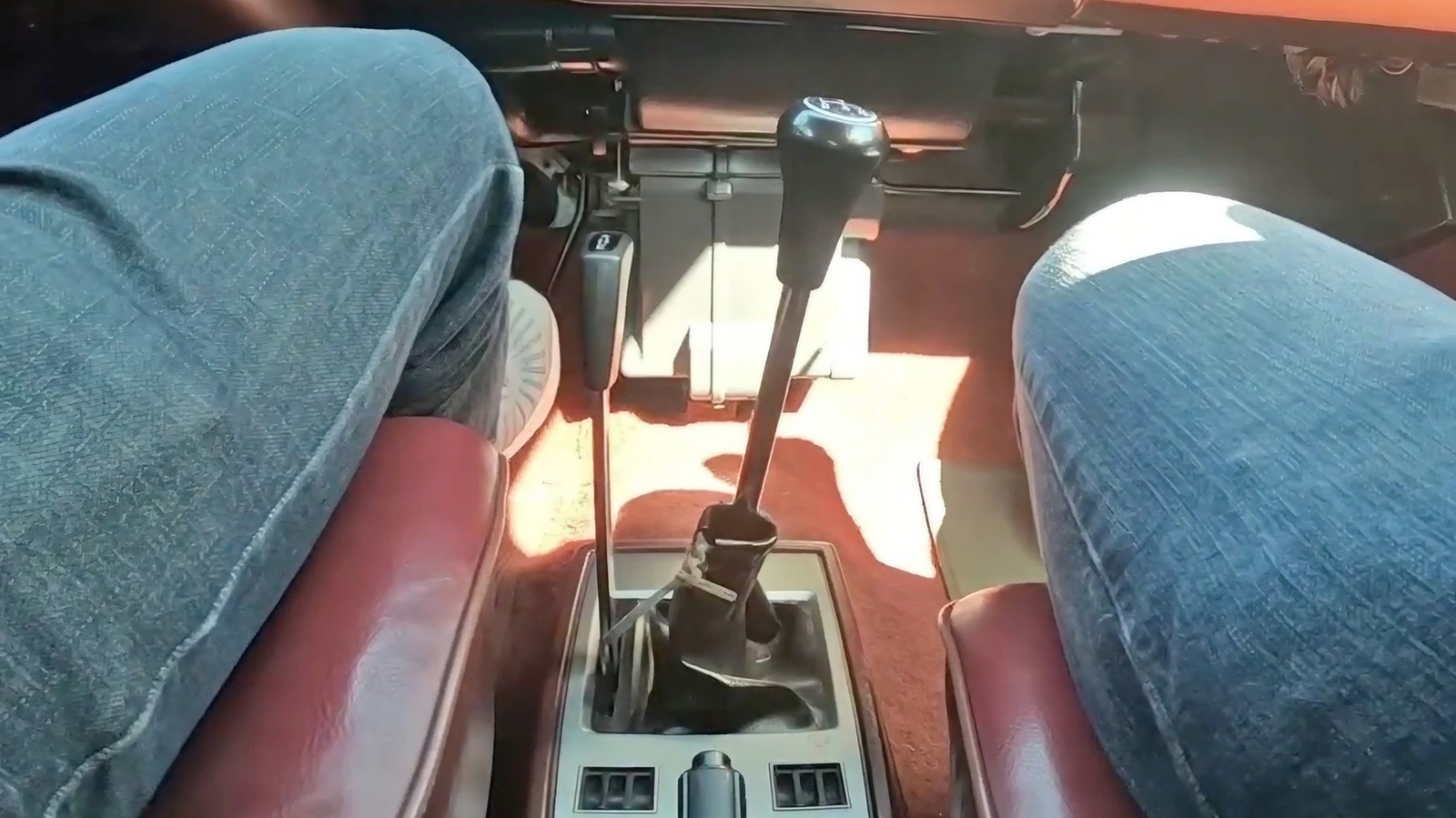

The 1970s were a period of great change in the US car market, thanks to the oil crisis of the decade, which led to lower horsepower in cars. Many companies simply had to rethink how engines, gearboxes, and cars should be packaged. They began to prioritize efficiency in ways they hadn’t before, and one of the ways they did that was by shrinking car sizes and moving to front-wheel drive.
Mitsubishi saw the opportunity and took it. It launched a little hatchback in 1978 called the Mirage, and this car came with an odd engineering quirk. As highlighted by The Autopian, most rivals at the time were building transverse front-drive layouts, in which the engine is mounted sideways, with the gearbox bolted to the side. Mitsubishi decided to take a different route, though, and stacked the gearbox underneath the engine instead. This made the whole package narrower from side to side, making it easier to fit into the Mirage’s tight engine bay, and, as a result, freeing up more space for the wheels and cabin. But rather than simplifying things, the choice actually set off a cascade of quirks. At the end of that cascade sits the Twin-Stick transmission, as it was branded in some markets.
How the two sticks came to be
When the Mirage was being designed, its Orion inline-four engine sat with its carburetor facing the front of the car. Further testing revealed icing problems up there, and that’s what kicked off the cascade, as mentioned. The fix itself was simple: just flip the engine around so the carb faced the other way. Trouble is, turning the motor also reversed the direction the crankshaft spun, and that meant the wheels would now turn in reverse.
Normally, you’d solve that by slipping in a small idler gear between the engine and the gearbox to flip the rotation back the right way. But the engineering team saw an opportunity. If they were already adding a gear set to sort out the rotation, why not build a second ratio into it while they were at it? The result was two sticks paired together, a four-speed manual lever, and a second one sitting beside it. It was something no one else was offering at the time.
That second stick was a two-position lever, and when paired with the four-speed manual, it essentially gave drivers eight forward gears to choose from. The lever moved between Power and Economy modes, with a little indicator on the dashboard letting you know which one was active. The economy mode basically turned the car into a normal four-speed. Flick it over to Power, though, and the gear ratios immediately shorten, giving you punchier ratios for acceleration.
Did they actually improve the driving experience?
Power wasn’t just a crawler-style low range. Unlike the off-road high/low gearing on a 4×4, the gears under this mode still stayed tall enough to use all the way up to highway speeds. In fact, there were just a few hundred rpm separating the Power and Economy versions of each gear. The transfer case also worked in reverse, so you technically had two reverse gears at your disposal.
Because the rpm differences weren’t major, the performance boost wasn’t significant either. MotorWeek actually ran the turbocharged Colt GTS Turbo, a rebadged Mirage sold in North America, back in the day. They recorded a 0 to 60 mph sprint of 9.4 seconds in Power mode and 9.7 seconds in Economy, which, again, isn’t that big of a difference unless you’re really looking for it. Mirage owners figured this out for themselves soon enough. Rather than shuffling between all eight gears in sequence, which would have taken some extreme levels of coordination, most settled on one mode depending on the situation.
But the Mirage, at least the initial Japanese model, wasn’t the only car to get Mitsubishi’s Super Shift. The setup also made its way into the Cordia, Tredia, and Chariot, as well as the Dodge and Plymouth Colt, which were rebadged Mirages sold in North America. The implementation remained in production until 1990, when it was quietly phased out. The Mirage itself was produced until 2003 before being revived in 2012.
You must be logged in to post a comment Login