Connect with us
DAPA Banner

Tech

Why TikTok shelved its second Irish data centre

Published

on

TikTok points to capacity constraints and slow infrastructure development as the deciding factors in shelving its planned second data centre, but leaves door open to future opportunities.

The need for greater capacity, and the infrastructure development environment – these were the two key factors behind TikTok shelving a planned second data centre in Dublin, a company spokesperson told SiliconRepublic.com today (2 April) while confirming the reported decision.

Instead, the ByteDance-owned company will focus its European data storage expansion in some of its other locations – in particular, sites in Norway and one in Finland.

TikTok said that when looking at its various sites across Europe, it considered where could best meet its growing capacity demands as regards infrastructure and the speed of development, and that the Nordic countries were a better fit for those considerations.

Advertisement

The company said Ireland remained one of its biggest and most important strategic sites in Europe and, should future opportunities arise that did meet its capacity needs in particular, it would remain open to exploring them.

The spokesperson emphasised that the existing data centre operation in Ireland, which came online in 2023, remains fully operational as an important part of its Project Clover, and that TikTok is still very much committed to Ireland.

Project Clover is the Chinese-owned platform’s initiative designed to update its data security practices across Europe, so as not to fall foul of strict European data privacy regulations.

Part of that commitment involves storing the data of more than 150m monthly TikTok users in Europe locally across three data centres. The original stated plan was for two in Dublin and one in Norway.

Advertisement

TikTok had originally planned to lease data centre space at Echelon’s campus in Clondalkin, Dublin, as part of a three-site strategy. However, as Irish newspaper the Business Post was first to report earlier this week, plans for the second Irish data centre have been shelved.

Don’t miss out on the knowledge you need to succeed. Sign up for the Daily Brief, Silicon Republic’s digest of need-to-know sci-tech news.

Source link

Advertisement
Continue Reading
Click to comment

You must be logged in to post a comment Login

Leave a Reply

Tech

Pan And Tilt The Weatherproof Way, With Bowden Cables

Published

on

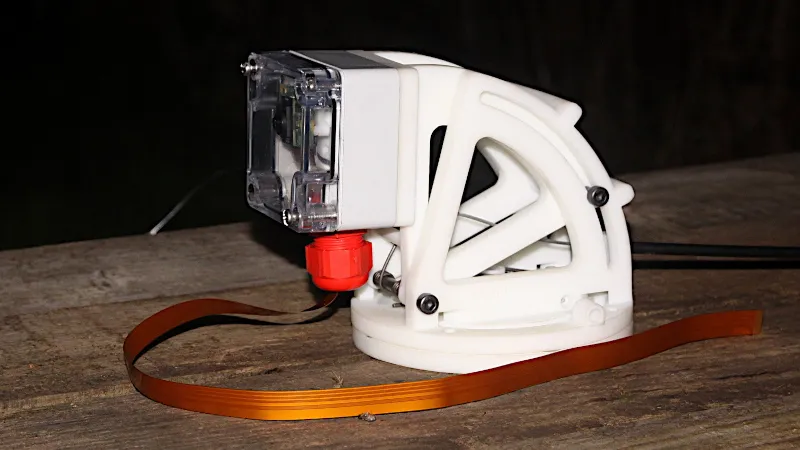
Over the years there have been many designs for pan-and-tilt camera mounts suitable for single board computer cameras. Often they mount small servos for the movement, but those in turn present problems when the device finds its way outdoors. [GOAT Industries] is here with a novel solution to this problem, instead of trying to cover up the servos on the mount itself, the whole thing is remotely controlled by linear actuators through Bowden cables.

Testing was performed using Mole-Grips instead of actuators, and revealed a few design quirks. There are hefty springs to provide tension, and since they work against 3D printed assemblies those in turn have to be reinforced. The layout of the Bowden cable run is also important, as it has a bearing on the amount of springinesss in the system. But it provides a versatile pan-and-tilt mount for a Pi camera mounted in an IP-rated box, which is the object of the exercise.

For anyone wishing to build one the files can be found in a GitHub repository, and there’s a video below showing the device in action. Meanwhile it’s by no means the first pan-and-tilt head we’ve seen here at Hackaday, however many others are by necessity much more substantial affairs.

Advertisement

Source link

Advertisement
Continue Reading

Tech

The credibility economy. Why AI will redefine how value is measured

Published

on

A growing sense of unease is shaping how professionals engage with artificial intelligence, particularly as its capabilities expand across information creation and execution. Dan Pratl, founder of Quadron, believes this anxiety reflects a deeper structural issue that extends beyond automation and into how value itself is recognized.

We’ve reached a point at which the maturation of AI has meant that almost everyone feels insecure,” Pratl says, pointing to a broader disconnect between technological advancement and the systems designed to reward human contribution. In his view, existing frameworks for recognition and financial return have either failed to evolve or have devolved into what he frames as speculative or game-like environments, referencing developments in crypto markets and retail-driven trading ecosystems.

Pratl’s central argument is that AI is accelerating a shift that has been underway for years. “AI is very good at commoditizing knowledge and the execution of that knowledge,” he explains. “The scarce resource becomes the last mile, expertise, judgment, deployability of judgment.” As knowledge becomes increasingly abundant and execution more automated, he argues that distinguishing high-quality work from low-quality output becomes significantly more difficult, particularly for non-experts evaluating it.

This dynamic creates what Pratl refers to as a “meta problem,” where the volume of available information continues to grow, yet the mechanisms to verify credibility have not kept pace. “If you’re not an expert, all high-quality work looks the same,” he notes, underscoring that current systems offer limited ability to differentiate between accurate insight and confident but unsubstantiated claims.

Advertisement

The 💜 of EU tech

The latest rumblings from the EU tech scene, a story from our wise ol’ founder Boris, and some questionable AI art. It’s free, every week, in your inbox. Sign up now!

Within this environment, Pratl argues that visibility often substitutes for credibility. Social platforms, in his assessment, tend to reward attention instead of prioritizing accuracy, enabling what he frames as “the loudest voices” to outperform more rigorous but less visible expertise. “There’s no system to reward being right,” he says. “No mechanism to verify individuals quickly and enable non-consensus voices to have a seat at the table.

Pratl suggests that as AI-generated content becomes more prevalent, the absence of reliable credibility signals risks undermining decision-making across sectors, from business to healthcare. Research has shown that online misinformation and disinformation are estimated to cost the global economy about $78 billion per year, highlighting the severity of the situation. 

Advertisement

In response, Pratl proposes a credibility economy, which essentially means a system designed to measure, verify, and reward expertise in a more structured and scalable way. Instead of focusing on output alone, this model shifts emphasis toward judgment and trust. In doing so, it helps create mechanisms that attribute value to individuals based on the quality and impact of their decisions.

Quadron, the company he founded, is positioned as an endeavor to build the infrastructure required for such a system. According to Pratl, this involves three core components.

The first is an enterprise layer that introduces a finishing and cohesive layer for work within organizations. “I have several work productivity platforms, but what I often find missing is a finishing layer for the final, comprehensive use,” he says. This layer, Pratl explains, is intended to ensure that individuals are recognized for applying sound judgment and delivering validated outcomes, instead of contributing to ongoing workflows without clear attribution. 

The second component is a verification layer aimed at modernizing how knowledge is structured and shared. Pratl characterizes existing intellectual property systems as outdated and insufficient for the pace and scale of contemporary knowledge exchange. In their place, Quadron is developing mechanisms that allow insights to be exposed and evaluated while maintaining appropriate levels of security. 

Advertisement

The third element consists of what Pratl refers to as credibility markets, which differ from traditional prediction markets by focusing on domain-specific expertise. “It’s not generalized speculation. You’re not betting on external events where you don’t understand the odds,” he explains. Instead, these markets are designed to calibrate credibility in real time, connecting individuals with relevant expertise and allowing their judgment to be assessed within appropriate contexts. He adds, “Organizations need context and structure which requires a different methodological approach. Individuals need incentives and rewards to organize their information in that manner. We are building the systems to provide both.” 

Pratl’s perspective is informed by a career that has spanned law, open-source software, crowdfunding, and crypto, each of which, he argues, revealed limitations in how systems incentivize and sustain meaningful participation. Reflecting on these experiences, he shares, “Many such systems didn’t have the structural integrity at the incentives level to exist beyond their original creators, and they’d often lose alignment once initial motivations weakened.

A more personal catalyst emerged during a medical crisis involving his mother, where access to critical information proved inconsistent despite being technically available. “The information was centralized, but it wasn’t truly accessible,” he says, noting a system where incentives did not align with the need to surface actionable knowledge. 

The eventual outcome, he notes, depended on informal networks instead of structured systems, a reality he believes is untenable given the tools now available.

Advertisement

In the upcoming years, Pratl argues that the continued advancement of AI will only intensify these challenges unless new systems are introduced to address them. Without mechanisms that reward accuracy and surface credible expertise, he suggests that decision-making processes risk becoming increasingly dependent on visibility or chance rather than informed judgment.

We’re all experts,” he says. “Our expertise is valuable if it’s structured and surfaced in the right way.” In his view, the credibility economy represents an opportunity to realign technological progress with human value, ensuring that individuals remain active participants in AI-driven systems while also being recognized and rewarded for the quality of their contributions.

Source link

Advertisement
Continue Reading

Tech

Today’s NYT Connections: Sports Edition Hints, Answers for April 3 #557

Published

on

Looking for the most recent regular Connections answers? Click here for today’s Connections hints, as well as our daily answers and hints for The New York Times Mini Crossword, Wordle and Strands puzzles.


Today’s Connections: Sports Edition has a timely theme, and if your bracket has already been busted (or even if it hasn’t been), you should do well. If you’re struggling with today’s puzzle but still want to solve it, read on for hints and the answers.

Connections: Sports Edition is published by The Athletic, the subscription-based sports journalism site owned by The Times. It doesn’t appear in the NYT Games app, but it does in The Athletic’s own app. Or you can play it for free online.

Advertisement

Read more: NYT Connections: Sports Edition Puzzle Comes Out of Beta

Hints for today’s Connections: Sports Edition groups

Here are four hints for the groupings in today’s Connections: Sports Edition puzzle, ranked from the easiest yellow group to the tough (and sometimes bizarre) purple group.

Yellow group hint: More points!

Advertisement

Green group hint: Home for hoops.

Blue group hint: March Madness.

Purple group hint: Exceptional hoopsters.

Answers for today’s Connections: Sports Edition groups

Yellow group: Ways to score.

Advertisement

Green group: Areas on the basketball court.

Blue group: Locations of this year’s women’s Final Four teams.

Purple group: Women’s NCAA tournament most outstanding players.

Read more: Wordle Cheat Sheet: Here Are the Most Popular Letters Used in English Words

Advertisement

What are today’s Connections: Sports Edition answers?

completed NYT Connections: Sports Edition puzzle for April 3, 2026

The completed NYT Connections: Sports Edition puzzle for April 3, 2026.

NYT/Screenshot by CNET

The yellow words in today’s Connections

The theme is ways to score. The four answers are 3-pointer, floater, free throw and layup.

The green words in today’s Connections

The theme is areas on the basketball court. The four answers are corner, elbow, paint and wing.

Advertisement

The blue words in today’s Connections

The theme is locations of this year’s women’s Final Four teams. The four answers are Austin, Columbia, Los Angeles and Storrs.

The purple words in today’s Connections

The theme is women’s NCAA tournament most outstanding players. The four answers are Azzi, Boston, Cash and Fudd.

Source link

Advertisement
Continue Reading

Tech

What is the release date for Marshals: A Yellowstone Story episode 6 on CBS and Paramount+?

Published

on

Almost halfway through Marshals: A Yellowstone Story and the spinoff has had its closest brush with the main Yellowstone series yet.

After it was revealed that Kayce’s (Luke Grimes) ex-wife Monica (Kelsey Asbille) had died offscreen in the interim, Yellowstone fans were shocked. Now, four episodes later, Kayce has been channelling her spirit by taking it upon himself to find the area’s missing indigenous girls.

Advertisement

Source link

Continue Reading

Tech

Claude Code leak used to push infostealer malware on GitHub

Published

on

Claude Code leak used to push infostealer malware on GitHub

Threat actors are exploiting the recent Claude Code source code leak by using fake GitHub repositories to deliver Vidar information-stealing malware.

Claude Code is a terminal-based AI agent from Anthropic, designed to execute coding tasks directly in the terminal and act as an autonomous agent, capable of direct system interaction, LLM API call handling, MCP integration, and persistent memory.

On March 31, Anthropic accidentally exposed the full client-side source code of the new tool via a 59.8 MB JavaScript source map included by accident in the published npm package.

The leak contained 513,000 lines of unobfuscated TypeScript across 1,906 files, revealing the agent’s orchestration logic, permissions, and execution systems, hidden features, build details, and security-related internals.

Advertisement

The exposed code was rapidly downloaded by a large number of users and published on GitHub, where it was forked thousands of times.

According to a report from cloud security company Zscaler, the leak created an opportunity for threat actors to deliver the Vidar infostealer to users looking for the  Claude Code leak.

The researchers found that a malicious GitHub repository published by user “idbzoomh” posted a fake leak and advertised it as having “unlocked enterprise features” and no usage restrictions.

GitHub repository spreading malware
Source: Zscaler

To drive as much traffic to the bogus leak, the repository is optimized for search engines and is shown among the first results on Google Search for queries like “leaked Claude Code.”

Search result pulling users to the malicious GitHub repo
Search result for the malicious GitHub repo
Source: Zscaler

According to the researchers, curious users download a 7-Zip archive that contains a Rust-based executable named ClaudeCode_x64.exe. When launched, the dropper deploys Vidar, a commodity information stealer, along with the GhostSocks network traffic proxying tool.

Zscaler discovered that the malicious archive is updated frequently, so other payloads may be added in future iterations.

Advertisement

The researchers also spotted a second GitHub repository with identical code, but it instead shows a ‘Download ZIP’ button that wasn’t functional at the time of analysis. Zscaler estimates it is operated by the same threat actor who likely experiments with delivery strategies.

Second malicious GitHub repository
Second GitHub repository linked to the same threat actor
Source: Zscaler

Despite the platform’s defenses, GitHub has often been used to distribute malicious payloads disguised in various ways.

In campaigns in late 2025, threat actors targeted inexperienced researchers or cybercriminals with repositories claiming to host proof-of-concept (PoC) exploits for recently disclosed vulnerabilities.

Historically, attackers were quick to capitalize on widely publicized events in the hope of opportunistic compromises.

Automated pentesting proves the path exists. BAS proves whether your controls stop it. Most teams run one without the other.

This whitepaper maps six validation surfaces, shows where coverage ends, and provides practitioners with three diagnostic questions for any tool evaluation.

Advertisement

Source link

Continue Reading

Tech

Google has launched Gemma 4

Published

on

Built from the same research as Gemini 3, the new family spans a 2B edge model that runs on a Raspberry Pi to a 31B dense model currently ranked third on the Arena AI open-model leaderboard. The Apache 2.0 licence is a significant shift from previous Gemma releases.

Google has released Gemma 4, the latest generation of its open-weight model family, in four sizes designed to cover everything from on-device inference on smartphones to workstation-class deployments.

The models are built from the same research and technology that underpins Gemini 3, Google’s proprietary frontier model, and are released under an Apache 2.0 licence, a more permissive terms than previous Gemma generations, and a change that Hugging Face co-founder Clément Delangue described as “a huge milestone.”

Demis Hassabis, CEO of Google DeepMind, called the new models “the best open models in the world for their respective sizes.”

Advertisement

The four variants are the Effective 2B (E2B) and Effective 4B (E4B) edge models, designed to run on-device on phones, Raspberry Pi, and Jetson Nano hardware developed in collaboration with the Pixel team, Qualcomm, and MediaTek; and the 26B Mixture-of-Experts (MoE) and 31B Dense models, aimed at offline use on developer hardware and consumer GPUs.

Advertisement

The 31B Dense model currently ranks third among all open models on the Arena AI text leaderboard; the 26B MoE sits sixth. Google claims both larger models outcompete models up to 20 times their size on that benchmark.

The 31B’s unquantised weights fit on a single 80GB Nvidia H100 GPU; quantised versions run on consumer hardware.

All four models are multimodal, natively processing video and images, and are trained across more than 140 languages. The E2B and E4B models additionally support native audio input for speech recognition. Context windows are 128K tokens for the edge models and 256K for the two larger variants.

On capability, Google highlights multi-step reasoning improvements, native function-calling and structured JSON output for agentic workflows, and offline code generation. On performance, the Android Developers Blog notes the E2B model runs three times faster than the E4B, while the edge family overall is up to four times faster than previous Gemma versions and uses up to 60% less battery.

Advertisement

The E2B and E4B models are also the foundation for Gemini Nano 4, Google’s next-generation on-device model for Android, which will arrive on consumer devices later this year.

Gemma has accumulated more than 400 million downloads and over 100,000 community-created variants since its first release, a figure Google points to as evidence of developer adoption at scale.

Gemma 4 is available immediately on Hugging Face, Kaggle, and Ollama, with the 31B and 26B models accessible via Google AI Studio and the edge models via AI Edge Gallery.

The Apache 2.0 licensing decision is the most consequential commercial signal in the launch: it removes restrictions that prevented some enterprise and commercial deployments under the previous Gemma terms, opening the ecosystem to a broader range of production use cases.

Advertisement

Source link

Continue Reading

Tech

Ctrl-Alt-Speech: Age Old Questions | Techdirt

Published

on

from the ctrl-alt-speech dept

Ctrl-Alt-Speech is a weekly podcast about the latest news in online speech, from Mike Masnick and Everything in Moderation‘s Ben Whitelaw.

Subscribe now on Apple Podcasts, Overcast, Spotify, Pocket Casts, YouTube, or your podcast app of choice — or go straight to the RSS feed.

In this week’s round-up of the latest news in online speech, content moderation and internet regulation, Mike and Ben cover:

Advertisement

If you’ve got Elon Musk in your Ctrl-Alt-Speech 2026 Bingo Card this week, you’re in luck.

Filed Under: australia, child safety, content moderation, csam, doge, eu, social media, trust and safety

Companies: meta, youtube

Source link

Advertisement
Continue Reading

Tech

Look Outside’s April 1 update that let you kiss enemies is now a permanent ‘smooch mode’

Published

on

For April Fools’ Day, the developer of Look Outside released an update that added a new option to your interactions with NPCs: kissing. Instead of just fighting or talking to enemies and surviving neighbors in the cursed apartment building, you could give ’em a smooch. Their dialogue and sprites were updated accordingly, too. Cue stammering eldritch horrors with bright red blushing cheeks. April Fools’ Day is (thankfully) over now, but there’s good news for anyone who has been enjoying the lovefest or didn’t get a chance to try it. Developer Francis Coulombe has built in a way for players to access “smooch mode” going forward.

“If you started a game on April 1st and kissed the wounded neighbor, that save file is now permanently in smooch mode!” Coulombe posted on social media. “You can also activate smooch mode on a new save file by naming Sam ‘Casanova’.” I immediately started a new save to confirm and, yes, doing this does indeed allow you to go on a kissing spree. While you can’t smooch every single person/abomination you’ll run into, you sure can kiss a lot of them.

Want to kiss the Rat King? Go wild. Pierre? Yup. That weird bug guy in the basement who eats bandages? Unfortunately yes, he’s kissable too. This truly is the game that keeps on giving. We’re apparently getting a real, non-silly update in the near-future as well, so Look Outside fans are eatin’ good. Now, please excuse me while I get back to my Kiss Everyone (except Lyle) run.

Source link

Advertisement
Continue Reading

Tech

HP unleashes the Z8 Fury G6i with insane GPU power and memory for massive AI and simulation workloads

Published

on


  • HP Z8 Fury G6i supports up to four Nvidia RTX PRO GPUs
  • Next-generation Intel Xeon processors deliver up to 86 cores and 174 threads
  • Memory scales up to 2TB DDR5-6400 ECC across 16 DIMM slots

HP recently unveiled a host of new high-performance systems at its latest product showcase, but one device seems to dominate the conversation.

The HP Z8 Fury G6i stands out as the company’s most aggressive attempt yet at addressing heavy AI and simulation workloads without compromise.

Source link

Advertisement
Continue Reading

Tech

AI Tool Spots Mental Health Conditions

Published

on

Abhishek Appaji has committed his career to bringing lifesaving technology to underresourced communities. The IEEE senior member weaves together artificial intelligence, biomedical engineering, deep learning, and neuroscience to make doctors’ jobs easier and to improve patient outcomes.

“The intersection of these fields is where the most impactful breakthroughs in diagnostic precision occur,” says Appaji, an associate professor of medical electronics engineering at the B.M.S. College of Engineering, in Bengaluru, India.

Abhishek Appaji

Employer

Advertisement

B.M.S. College of Engineering, in Bengaluru, India

Job title

Associate professor of medical electronics engineering

Member grade

Advertisement

IEEE senior member

Alma maters

B.M.S. College of Engineering; University of Visvesvaraya, in Bengaluru; Maastricht University, in the Netherlands

Many of his inventions have been deployed in remote areas of India, providing physicians with quality diagnostic tools, including an AI-powered machine that can scan retinas to detect medical conditions and a smart bed that continuously monitors a patient’s vital signs.

Advertisement

An active volunteer with the IEEE Young Professionals Bangalore Section, he has launched professional networking events, technology workshops, a mentorship program, and other initiatives.

For his “contributions to accessible AI-driven health care solutions and leadership in empowering young professionals,” Appaji is the recipient of this year’s IEEE Theodore W. Hissey Outstanding Young Professional Award. The honor is sponsored by the IEEE Photonics and Power & Energy societies as well as IEEE Young Professionals. The award is scheduled to be presented this month during the IEEE Honors Ceremony in New York City.

“This award represents a significant milestone in my career,” Appaji says. “It validates my core belief that our success as engineers is not solely measured by research outcomes or publications but by the tangible impact we have on lives through accessible technology and the quality of the next generation of leaders we empower.”

Developing a blood glucose measurement device

After earning a bachelor’s degree in engineering from B.M.S. in 2010, he joined the school as a lecturer in its medical electronics engineering department. At the same time, he pursued master’s degrees in bioinformatics at the University Visvesvarya College of Engineering, also in Bengaluru. He graduated in 2013 and continued to teach at B.M.S.C.E.

Advertisement

Four years later, Appaji signed up for the MIT Global Entrepreneurship Bootcamp, a two-week intensive hybrid program that includes webinars, online courses, and a five-day stay at MIT. It’s designed to give teams of aspiring entrepreneurs, innovators, and early-stage founders the structured mindset, tools, and frameworks they need to succeed.

Appaji says he discovered the program while researching opportunities in innovation.

“I had the technical expertise, but I needed a structured framework to transition my research from the laboratory to the market,” he says.

During the MIT boot camp, he and a team of four other participants were tasked with approaching a complex health care challenge. They developed a noninvasive blood glucose measurement device to manage gestational diabetes—a condition that causes high blood sugar and insulin resistance during pregnancy. When the program ended, Appaji and two of his Australia-based teammates continued their collaboration by founding Glucotek in Brisbane, Australia.

Advertisement

Inspired to continue his research in health care technology, Appaji pursued a doctorate in mental health and neurosciences at Maastricht University, in the Netherlands.

His thesis focused on computational methods to identify retinal vascular patterns.

“The patterns we analyze—including the curvature of the vessels, the angles at which they branch out, and their dimensions—reveal the health of the microvascular system,” he says. “With conditions like schizophrenia and bipolar disorder, microvascular changes mirror neurovascular changes in the brain.”

“My journey has shown me that IEEE is much more than a professional society; it is a global platform that allows me to collaborate with a diverse network of experts to solve local humanitarian challenges.”

Advertisement

Examining and measuring the retinal vascular system offers physicians a noninvasive way to examine neural changes, which can be biomarkers for psychiatric illnesses, he says.

To bring his idea to life, he collaborated with an ophthalmologist, a psychiatrist, and colleagues from his engineering school to develop a screening device. They also created and trained the AI models that analyze retinal images.

Ideas from his thesis led to the creation of the Smart Eye Kiosk, an AI-powered tool that scans the network of small veins that deliver blood to the inner retina. The tool monitors stress levels and mental health. It also screens for basic eye diseases such as diabetic retinopathy, as well as damage to retinal blood vessels caused by high blood sugar.

Retinal images also can reveal physiological changes in the brain associated with psychiatric disorders such as schizophrenia and bipolar disorder, Appaji says. The kiosk uses AI models to analyze measurements of the vasculature network, such as vessel thickness, which can be biomarkers for psychiatric conditions. Since mental illnesses can be linked to genetics, relatives of patients with schizophrenia and bipolar disorder were also invited to participate in a study funded by India’s Cognitive Science Research Initiative’s Department of Science & Technology. The clinical data from this study can pave the way for earlier, more accurate diagnoses.

Advertisement

“The biological basis for this is fascinating,” Appaji says. “The retina is the only place in the human body where the central nervous system and the vascular system can be visualized directly and noninvasively. Anatomically, the retina is an extension of the posterior part of the brain. Therefore, physiological changes in the brain are often reflected in the eyes.”

This kiosk was developed in collaboration with Tan Tock Seng Hospital and Nanyang Technological University, which was funded by Ng Teng Fong Healthcare Innovation Program.

He earned his Ph.D. in 2020 from Maastricht, and he received the Best Thesis Award from the university’s Mental Health and Neuroscience Research Institute. Appaji credits his time at the school for his multidisciplinary approach to developing medical devices.

“Having the perspectives of mentors from diverse fields was essential to help me move my research beyond theory into a data-driven diagnostic tool,” he says.

Advertisement

He was then named institutional coordinator of R&D at B.M.S. and later was promoted to be its head.

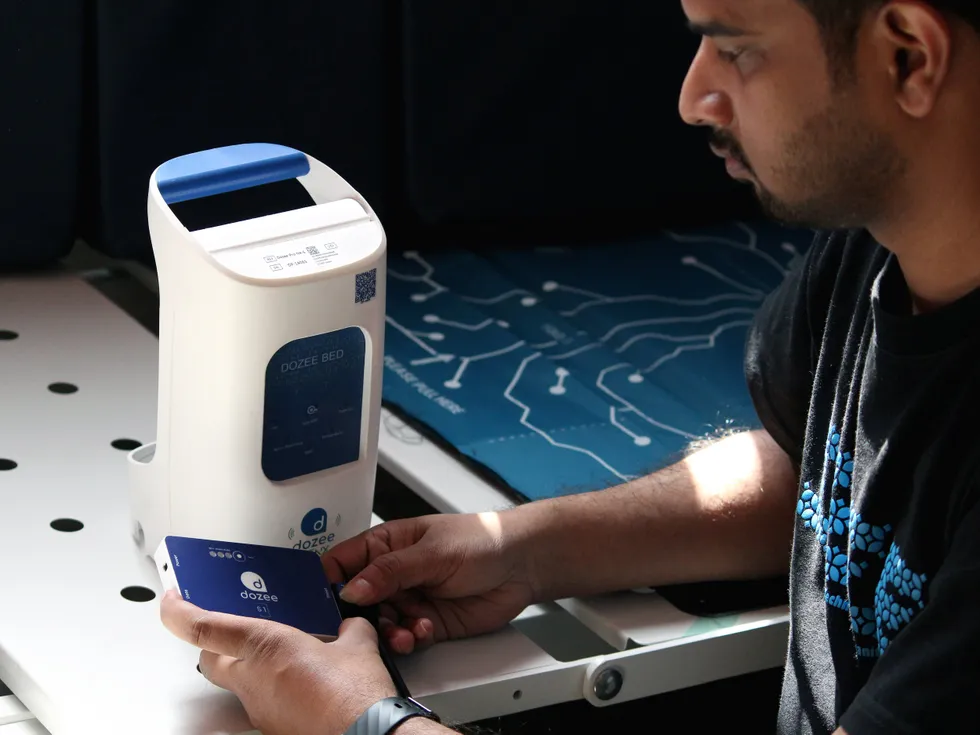
An adult Indian man looking at a rectangular device in his hand, labeled \u201cdozee\u201d. Abhishek Appaji working on a smart bed sensor that continuously monitors a patient’s vital signs without the use of wires or wearable sensors.Abhishek Appaji

A wireless smart bed to monitor vital signs

Appaji continues to develop technologies for patients who need them most. “I feel a deep need to bridge this gap and ensure innovations have a tangible impact on society,” he says. In addition to the Smart Eye Kiosk, he improved the performance of the sensors of the smart beds that continuously monitor a patient’s vital signs without the use of wires or wearable sensors. The beds help hospital staff check on their patients in a noninvasive way.

The project was done in collaboration with health AI company Dozee (Turtle Shell Technologies) in Bengaluru. The system measures mechanical microvibrations produced by the body in response to the ejection of blood into the aorta, which occurs with each heartbeat. A thin, industrial-grade sensor sheet is placed underneath the mattress. Additional funding is being provided by India’s Department of Science and Technology.

“These sensors are incredibly sensitive,” Appaji says. “They pick up minute mechanical tremors through the mattress material.”

Advertisement

The sensors detect the force of the patient’s heartbeat and the expansion and contraction of their chest during respiration. The vibrations are converted into electrical signals and analyzed using deep learning algorithms developed by Appaji and his team at the university in collaboration with Dozee.

The technology is used in more than 200 hospitals throughout India and in thousands of households, he says.

Mentoring budding entrepreneurs

Appaji is also executive director of the BMSreenivasiah Innovators Guild Foundation, dedicated to nurturing entrepreneurial talent among students and faculty across the BMS group of Institutions. A not-for-profit company promoted by the BMS Education Trust, BIG Foundation provides a structured ecosystem for innovation, incubation, and startup growth.

There, Appaji mentors budding entrepreneurs, offering advice on business plans, product pitches, marketing strategies, and licensing. Participants are students and faculty members.

Advertisement

The foundation has incubated more than 10 ventures, according to Appaji.

“The majority are centered on health care applications,” he says, “and have successfully secured backing from investors and seed funds.”

Taking IEEE’s mission to heart

Appaji was introduced to IEEE as an undergraduate when one of his professors encouraged him to volunteer for a conference sponsored by the IEEE Engineering in Medicine and Biology Society. He transcribed the seminars for session chairs, assisted with managing the talks, and helped answer attendees’ questions.

“That experience was transformative,” he recalls. “I was amazed to find myself in the same room with the speakers and scientists who had authored the very textbooks I was studying.

Advertisement

“It was then that I realized IEEE is far more than just technology and volunteering; it is a global platform for high-level networking with world-class scientists and technologists.”

Appaji has served in several IEEE leadership positions, including 2018–2019 chair of the Young Professionals Bangalore Section. He is now treasurer of the IEEE Education Society, chair of IEEE Computer Society Bangalore Chapter, member of the steering committee of IEEE DataPort, and serves on the IEEE Member and Geographic Activities and IEEE Educational Activities boards.

“What motivates me to remain active within IEEE is the profound alignment between my personal goals and the organizational mission of advancing technology for the benefit of humanity,” he says. “My journey has shown me that IEEE is much more than a professional society; it is a global platform that allows me to collaborate with a diverse network of experts to solve local humanitarian challenges.”

The organization has helped fund some of Appaji’s lifesaving work. During the COVID-19 pandemic, he received a grant from the IEEE Humanitarian Technologies Board and Region 10 to develop 3D-printed protective equipment for people in Bengaluru’s underserved communities. The virus spread quickly in the high-density areas, where social distancing was nearly impossible. The kits, which included a door opener to avoid high-touch surfaces and an elbow-operated soap dispenser, were sent to nearly 500 households.

Advertisement

“This work remains one of my most meaningful contributions to humanitarian technology,” Appaji says, “demonstrating how engineering can be rapidly deployed to protect vulnerable populations during a global crisis.”

He advises younger IEEE members to: “Say yes to taking on roles of responsibility. Don’t wait for a formal title to lead; instead, start by volunteering to do small, manageable tasks within your local chapter or section.”

“The networking opportunities and leadership skills you gain through these early responsibilities will shape your professional career far more than any textbook ever could.”

From Your Site Articles

Advertisement

Related Articles Around the Web

Source link

Continue Reading

Trending

Copyright © 2025