Tech
Why US Navy Avenger-Class Minesweepers Have Been Pulled From The Middle East


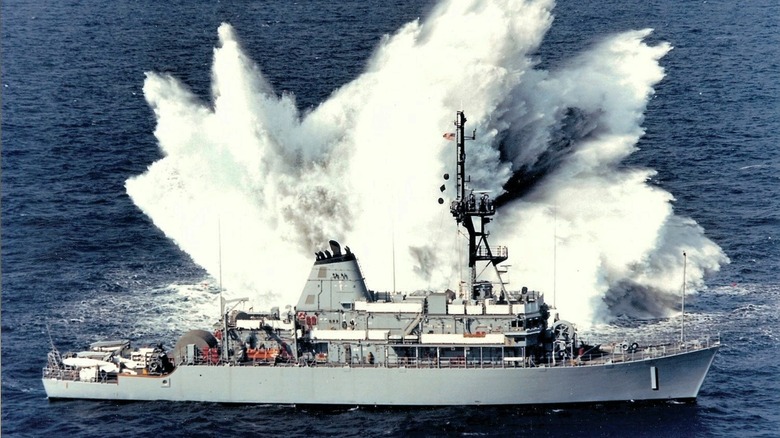
The U.S. Navy has a lot of different types of warships, and while its aircraft carriers, destroyers, and different types of submarines are well known, they’re hardly the only vessels in service. In addition to the better-known ships, the Navy also operates minesweepers, or as they’re technically known, “mine countermeasure ships” (MCMs). As the name implies, these are ships designed specifically to clear naval mines from critical waterways, and they’ve been around for a long time.
As of writing, the Navy operates four Avenger-class MCMs, having retired the remaining ten of its 14-ship fleet. These vessels entered service in the 1980s and were used during Operations Desert Shield and Desert Storm. As of early 2026, the remaining four Avenger-class ships are forward-deployed in Japan, though an additional four had remained in operation in the Persian Gulf until they were decommissioned late the previous year: The USS Devastator, USS Dextrous, USS Gladiator, and the USS Sentry. In January 2026, the Navy contracted a heavy lift vessel to carry these ships out of the area, removing them from the Middle East entirely.
There are several reasons for this move, but chief among them is the age of the Avenger-class and the fact that they’ve been replaced with highly complex Independence-class Littoral Combat Ships. Mine-clearing is still a vital function of U.S. Navy operations, but time in service for the Avenger-class has largely come to an end. Removing them from the Persian Gulf was in accordance with U.S. Navy force transition efforts, and it required a great deal of planning and support to finalize their departure. All four are set to be dismantled and scrapped.
How Avenger and Independence-class ships compare
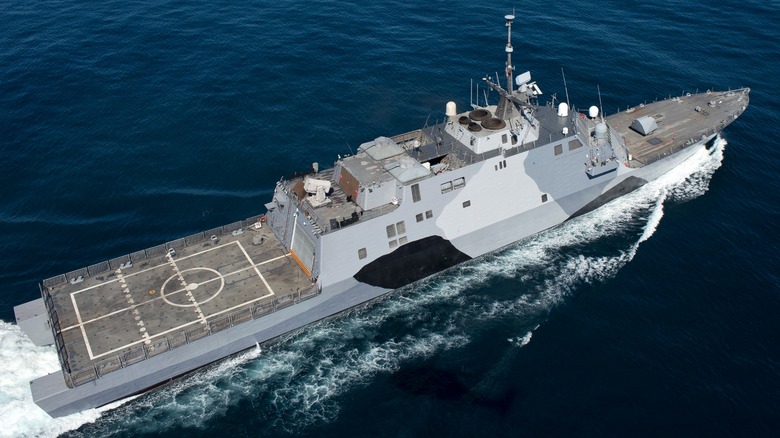
The U.S. Navy began operating its fleet of 19 Independence-class Littoral Combat Ships (LCS) in 2010. The vessels are designed for high-speed operation in the littoral zone (close to the shore). They feature an angular trimaran (three-hulled) design, can reach speeds of up to 52 mph, and are capable of carrying out numerous operations, including chasing down pirates. In terms of mine-clearing, Independence-class ships are modular and carry a variety of systems, including a mine countermeasure module. Others include anti-submarine warfare and surface warfare modules.
LCS mine countermeasures utilize aviation and uncrewed surface and underwater vehicles with an assortment of sensors. These work in tandem to detect and neutralize a variety of mines in the littoral environment and are deployed outside of the area of the ship, keeping it safe from potential mines; working together, they can isolate beach and buried mines along the shore. For comparison, Avenger-class ships have a top speed of around 16 mph and operate a remote mine countermeasure system with a remotely operated vehicle. These worked together to find, classify, and neutralize a variety of mines.
While capable, Avenger-class ships had limited operability in littoral zones and couldn’t detect the same variety of mines as Independence-class vessels. The older MCMs were also considerably smaller and constructed of wood and fiberglass, while Independence-class vessels are composed primarily of aluminum. The newer class of ships utilizes a technologically superior mine countermeasure system that has been updated significantly since its introduction, ensuring mission operability improves as the US Navy’s LCS fleet continues to fulfill its many duties around the world.
You must be logged in to post a comment Login