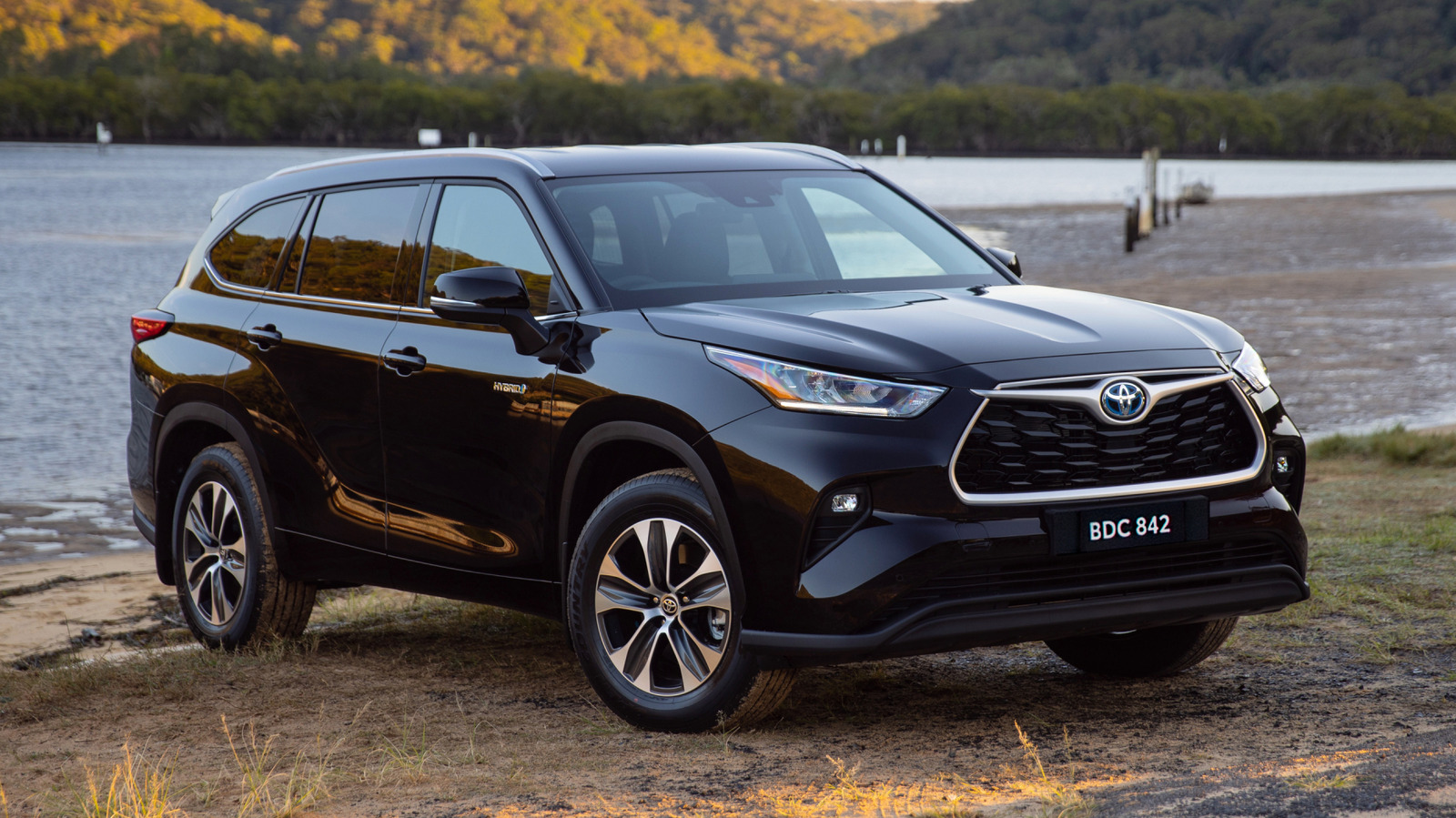
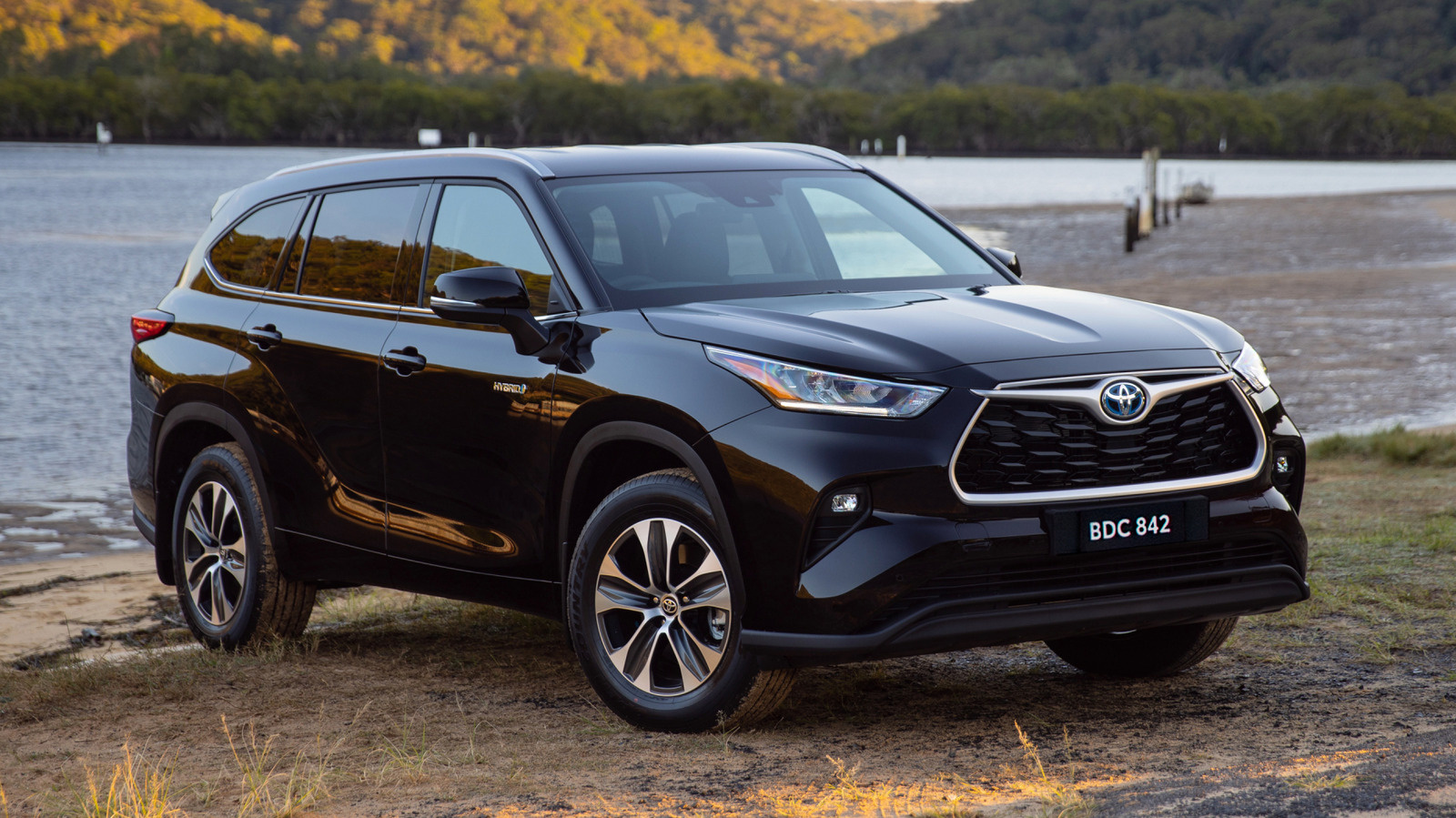
Toyota has reinvented the Highlander for the 2027 model year, with an entirely new look and new drivetrain technology, both of which are arguably overdue. We’ve previously concluded that the 2026 Highlander had outstayed its welcome, and at first glance, there are very few similarities between the new and outgoing versions of the car. However, rather than launch a new nameplate to reflect the all-new model, the Japanese automaker has chosen to stick with the Highlander moniker.
It’s a name that carries plenty of weight with American buyers, but elsewhere in the world, the same SUV is known by a very different name. In Australia, the Highlander is called the Kluger, a name which Toyota says is derived from “klug,” a German word that means wise or smart. Toyota was blocked from using the Highlander name in Australia because Hyundai already owned the trademark, which it used for the top trim of its Terracan SUV.
Advertisement
Hyundai first filed for the Highlander trademark in Australia in 1999, while Toyota applied to use the name in 2003. That application was denied, leaving Toyota with no choice but to hastily find an alternative. In Japan, the Highlander had already been marketed as the Kluger V since its introduction in 2000, and so Toyota borrowed the name for use in Australia.
Despite being denied the use of the name 20 years prior, Toyota filed again for the use of the Highlander trademark in Australia in 2024. Yet again, the application was not accepted, since Hyundai still uses the Highlander name for certain model trims.
Advertisement
Toyota dropped the Kluger name in Japan
Although it actively tried to claim the Highlander trademark, Toyota Australia told Drive in 2024 that there are “no plans to use the name ‘Highlander’ locally.” While it seems that the Kluger name isn’t going anywhere in Australia, the Japanese market version of the SUV no longer uses it.
The original Japanese Kluger V that launched at the turn of the century was never very popular with buyers. They mostly preferred its sister model, the Harrier. Incidentally, the Harrier is another model that’s known by different names in different markets, with American buyers knowing it as the Lexus RX. While the Harrier gained a reputation as being ahead of its time and became a big commercial success in Japan, the Kluger V was mostly overlooked. The launch of a three-row variant and another sister model, the Kluger L, didn’t do anything to boost its popularity, and Toyota axed the Kluger in Japan altogether in 2007.
The model remained absent from the Japanese market for almost two decades, but it’s now being relaunched. This time around, the model uses the Highlander name, with the first examples set to hit dealers in Japan in August 2026. Strangely though, the brand new Japanese-market Highlander isn’t actually configured for the Japanese market at all.
Advertisement
It’s instead designed for the New Zealand market, and as a result, Toyota says that some drivers aids and most of the infotainment system won’t work in Japan. The Japanese launch of the Highlander SUV, albeit in New Zealand market form, means that Australia is the only major market to continue using the Kluger name.
Advertisement
Land Rover nearly launched a Highlander SUV
Toyota Japan is marketing the new Highlander as a rugged, North American-made SUV that can deal with all kinds of terrain with ease. Ruggedness and utility were key themes in picking the Highlander name in the first place, and the term itself is synonymous with the Scottish Highlands.
Neither the Japanese manufacturer nor its Korean rival can claim any real connections to the Highlands, but a different manufacturer with British roots nearly launched a Highlander SUV long before Toyota or Hyundai. In the late ’80s and early ’90s, Land Rover considered launching both the Discovery and the Freelander under the Highlander name, before a separate trademark issue saw the company abandon the idea.
Land Rover even went as far as trademarking the Highlander name in Australia, beating Hyundai by around a decade. However, when the company went to trademark the name in its home market, the U.K., it found that Volvo Trucks already owned the trademark there.
The story goes that the Freelander name was partly chosen because Land Rover had already designed the recess mould for the name badge, and needed something that took up the same amount of space as “Highlander.” Freelander sounded similar enough and wasn’t already trademarked, so it became the name of the production model. If it hadn’t been for Volvo’s British truck division, it’s likely that Land Rover would have launched its new model as the Highlander, and Toyota fans would know its current Highlander under a different name today — perhaps it might have even been known globally as the Kluger.
Nous Research, the startup behind the open-source Hermes agent, is finalizing a new round of funding led by Robot Ventures, with significant participation from USV and other prominent investors at a $1.5 billion valuation, according to three sources with knowledge of the deal. The company is raising at least $75 million, and fielded a high level of interest from investors, according to the people.
Nous Research declined to comment. USV and Robot Ventures didn’t respond to our request for comment.
The company was founded in 2023 by Jeffrey Quesnelle, Karan Malhotra, Ryan Teknium, Shivani Mitra. Before this round, it had raised a total of $70 million in funding from investors including Paradigm, Robot Ventures, North Island Ventures, OSS Capital, and Balaji Srinivasan, according to Crunchbase.
Weeks after Openclaw’s agent went viral, Nous Research released its own competitor called Hermes. OpenClaw is an agent that runs locally on a PC and can perform tasks on behalf of the user. One key difference is that Hermes shipped with built-in “skills,” such as web search, coding and image understanding. Furthermore, it was designed to automatically learn from people’s usage and build more skills without manual intervention. Additionally, the startup has released language models focused on coding and math.
Advertisement
Just like Openclaw, users can automate tasks with Hermes and chat with these agents or receive messages from them in apps like Telegram and Discord. These tools have become increasingly popular as they allow users to run their AI agents remotely and around the clock.
Open-source and widely adopted, Hermes has amassed a massive following on GitHub, boasting roughly 214,000 stars and nearly 40,000 forks. Developers can run Hermes on a desktop or on a virtual private server.
But Nous Research also offers a cloud-hosted version, which some users may find to be more user-friendly, avoiding any setting up on their own machines. The hosted version is available via various paid tiers ranging from $20-$200 a month.
Sources say the new funding will help to expand Hermes’ products and business model further.
Advertisement
When you purchase through links in our articles, we may earn a small commission. This doesn’t affect our editorial independence.
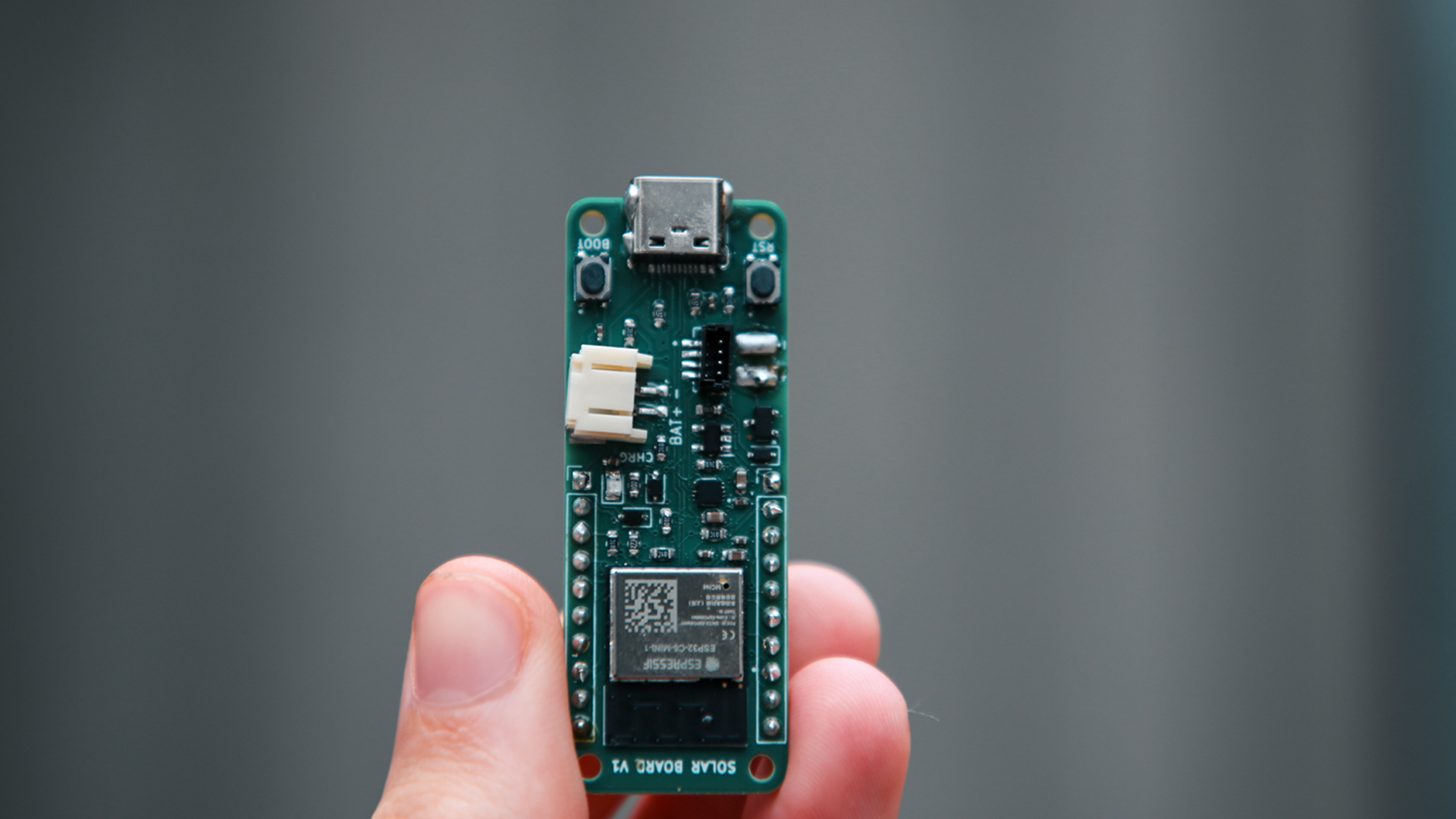
There are a lot of ESP32-based development boards out there– and why not? It’s a versatile chip that can be used in all sorts of situations, and people want boards to match them. Not finding one to his liking that was specifically built for solar powered IoT projects, [Narrow Studios] rolled his own. Well, designed it; like most these days, he’s outsourced the manufacturing to PCBWay, which is where you’ll need to go if you want one.
Why might you want one? Well, if you have similar goals in mind to [Narrow Studios]. He’s put an ESP32-C6 Mini on the board, which means it’s got most of the IoT communications protocols you might be interested in — bluetooth, wifi, Matter, Thread, and Zigbee, too. Ten 10 IO pins have been broken out, plus I2C on a QWIIC connector, which gets you a whole ecosystem of sensors to easily plug into. The “solar” part is justified by the inclusion of a BQ25186 linear battery charging IC from Texas Instruments, with the designated solar power input protected against reverse voltage in case you– like this author– have let magic smoke out by hooking things up backwards. Is it embarrassing? Yes. Does it happen? Also yes, so putting protection on the board is a nice feature. [Narrow Studios] released a video that we’ve embedded below discussing his design choices and demonstrating the device, but the project page can give you the gist.
Of course there’ve been plenty of solar-powered projects to feature the ESP32 here before– you can even use it for maximum power point tracking— but this dev board might be exactly what someone is looking for to build their next IoT project, so we’re thankful to [Narrow Studios] for the tip.
On United States highways, you probably won’t ever exceed 75 mph — unless you want to risk a pricey ticket. There are a few exceptions, like the State Highway 130 in Texas, which has the fastest speed limit sign in America at 85 mph, but even that highway can’t quite match some highways in Europe as far as speedl imits go. Poland and Belgium, for example, have highways with posted speed limits that are higher than SH130.
Poland’s urban areas are limited to 50 km/h (31 mph), while divided highways are limited to 120 km/h (75 mph). But its “autostrada,” or highway, has a speed limit of 140 km/h (87 mph). Don’t expect a bunch of speed demons here, though; these speed limits are strictly enforced and there are heavy fines for those caught driving too fast.
Bulgaria also has an 87-mph speed limit for specific highways. Most are 75 mph, but newer divided highways with emergency stopping lanes are capped at 87 mph. Lawmakers did propose an amendment to the Road Traffic Act in 2025 that would have lowered the speed limit for certain vehicles to 130 km/h (81 mph), but it was rejected. Neither of these comes close to the highest speed limit in the world, though, which stood at 100 mph until it was reduced in 2026.
Advertisement
Some European roads have no speed limit at all
Isabella Biava/Getty Images
While the highways in Poland and Bulgaria have the highest posted speed limits in Europe, there are actually two locations in Europe that have public roads without any speed limits. The first is the Isle of Man, a small island in the Irish Sea that has become known among car enthusiasts for its winding, scenic roads and lack of a speed limit. The local police are aware that drivers head there to engage in spirited driving, with enforcement focusing on reminding drivers that they’re still on public roads and should thus drive safely and respectfully.
The second European location with no speed limit is the German Autobahn. This road is more than 8,077 miles, and more than half of those miles have no speed limit — if you’re in a car, at least. The recommended speed is about 80 mph, and drivers tend to listen: The average speed on the Autobahn stood at around 78 mph as of 2025.
Xiaomi reveals its first extended-range electric vehicle
SkyNomad will sit separately from its pure EV Xiaomi Auto company
The 1.5-liter engine is manufactured by Changan’s subsidiary Harbin Dongang
Xiaomi is set to enter the hotly contested luxury SUV sector with an all-new business that it has dubbed SkyNomad.
Fresh off the success of both the SU7 and YU7, the former of which has outsold the Tesla Model 3 in the Chinese market, smartphone-maker Xiaomi sees a gap in the market for its first extended-range electric vehicle (EREV), which sees a gasoline engine act as a generator to charge battery packs on the move.
While the powertrain is still in its infancy in Europe, with just the Leapmotor C10 REEV and Mazda MX-30 R-EV currently on sale in many markets, it has experienced sales success in much of China.
Latest Videos From
Li Auto is the current market leader, with six models offering a mix of combustion engines and battery packs, while AITO, Deepal, Avatar and Leapmotor also offer similar solutions.
Unlike traditional plug-in hybrids, which use a gas engine to drive the wheels or charge the batteries, EREVs rely solely on a fully electric powertrain for propulsion, with the combustion engine serving as a generator to charge the batteries.
Advertisement
According to Car News China, Xiaomi’s SkyNomad brand will offer the N70 and N90, the latter coming as a full-size, three-row SUV with rotating front seats, a full leather premium interior, and an N90 Max Camping Edition that adds a pop-up roof and a built-in side awning for upmarket camping trips.
SkyNomad is also selling the idea of modularity, stating in its promotional material that the cabin can transform into a studio for one, a cafe for two, a meeting room for three, or a play area for the whole family.
Sign up for breaking news, reviews, opinion, top tech deals, and more.
Advertisement
Under the skin, a 1.5-liter gasoline engine from Changan’s subsidiary, Harbin Dongang, sends power to a 76 kWh ternary NMC battery pack in the N90, while a pair of electric motors team up to deliver 310 kW (416 hp) of power.
Analysis: unnecessarily enormous
(Image credit: Xiaomi/SkyNomad)
Xiaomi’s decision to launch an EREV-focused brand, SkyNomad, is a clear shot at market leader Li Auto, which is experiencing a 74% year-over-year sales decline in the first four months of 2026, according to Electrek.
The introduction of EREVs to Xiaomi’s stable will undoubtedly help it boost sales in China, but it’s difficult to get away from the fact that the N90 is absolutely enormous. It measures over five meters in length and weighs 3,361 kg, which makes the 416 hp feel slightly underpowered.
Advertisement
Car News China says the N90 can manage around 230 miles before the batteries are depleted, by which point the 1.5-liter engine is called upon. Overall range is in excess of 1,500 km — or around 930 miles.
It’s also interesting that Xiaomi, a company that found great success with pure EVs, is pivoting back to fossil fuels.
All of the PR coming out of China suggests that its public EV charging network is both faster and more widespread than most other markets, which raises the question of why the market needs big, heavy range extenders like this in the first place.
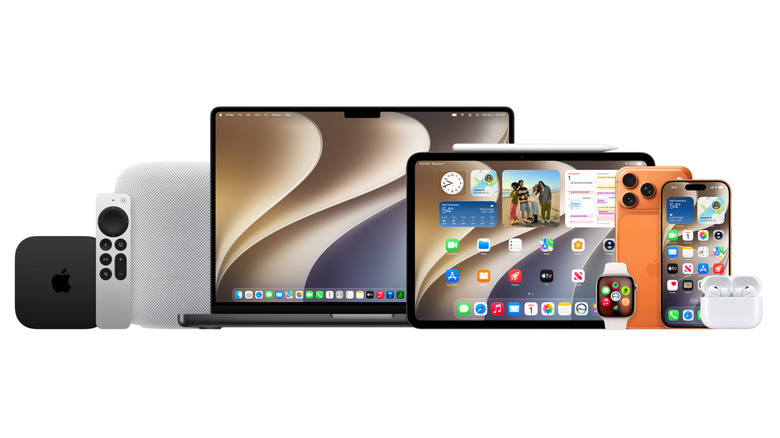
Try the new Siri AI and system-wide performance improvements.
Apple
Siri and Apple Intelligence
Apple
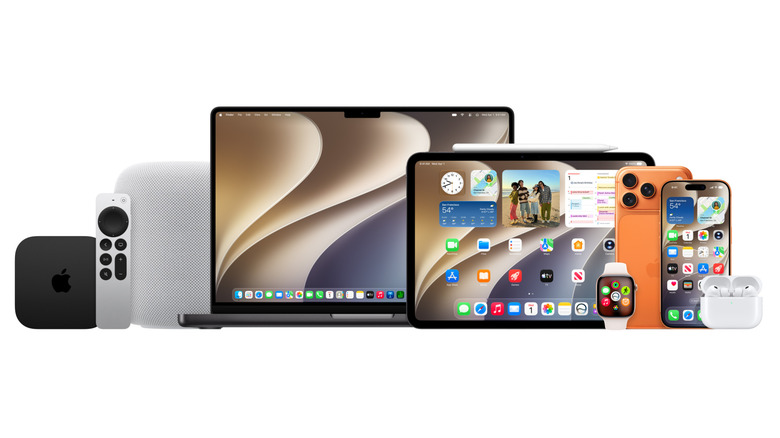
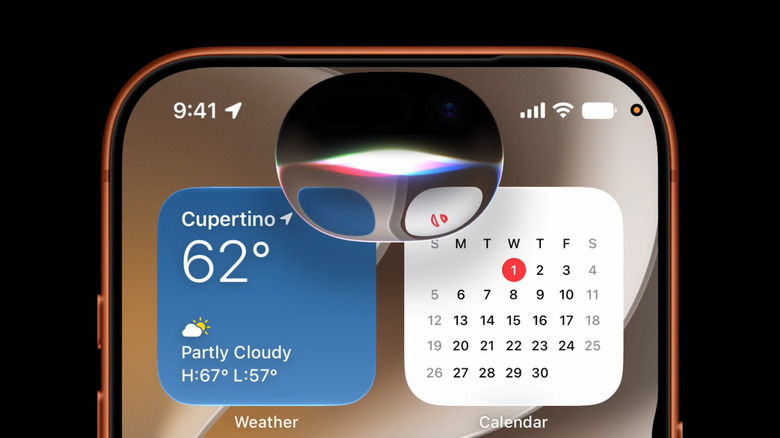
The headliner of iOS 27 is the long-awaited Siri AI. The new version transforms from a basic voice-command system into a modern AI assistant. It can hold natural conversations, understand follow-ups, answer questions about the content on the screen and perform multi-step actions inside apps. On recent Apple devices, you can even customize the expressiveness of the assistant’s voice. There’s also a dedicated Siri app that stores your history.
Siri AI is available in the public beta for all Apple Intelligence-capable devices. In the early developer betas, there’s been a waitlist to access the new assistant. So, some patience may be required. The new Siri only works in English for now, and it won’t initially be available in the EU.
Not all Apple Intelligence features are Siri-related. Photos now has more robust editing tools, including Spatial Reframing, which adjusts composition after the photo is taken. The Extend feature outcrops images past their original boundaries. There’s also an improved Clean Up tool that’s better at removing unwanted objects. And Image Playground can now generate higher-quality images, including photorealistic styles.
Advertisement
Speed boosts and more features
Even if you don’t care about AI, here’s an iOS 27 update that might interest you: Apple is promising big performance improvements across the board. The company says apps launch up to 30 percent faster, newly captured pictures appear in the Photos app up to 70 percent faster, and AirDrop transfers can be up to 80 percent faster. (Although I can’t vouch for specific numbers, my devices felt noticeably zippier on the early iOS 27 developer betas.)
Elsewhere, Safari can declutter your workflow by automatically organizing your tabs into groups. It also has a new Notify Me feature that monitors webpages for price changes or restocks. The Passwords app can detect weak passwords and automatically update them. And in the Shortcuts app, you can create new automations by describing what you want in natural language.
Advertisement
iOS 27 (and its brethren) also addresses criticism of last year’s big design overhaul: Liquid Glass. The new version has readability improvements, and there’s a slider to customize the effect.
Once you’re on the iOS 27 beta, you can install a public beta for AirPods. The new software adds a custom equalizer, an adaptive audio slider and a new settings menu.
Advertisement
watchOS 27, macOS 27 Golden Gate and iPadOS 27
Apple
Siri AI will also be coming to the wrist, where it could be handy for answering questions mid-workout or while you’re otherwise on the move. watchOS 27 adds a new Dynamic App Grid that surfaces apps you’re most likely to need. The Apple Watch gets a new single-tap gesture that lets you select a widget in the Smart Stack to see more info. (You can still double-tap to scroll.) Menstrual tracking adds menopause and perimenopause support. And Workout Buddy gets some upgrades: new workout data insights, the ability to work without a nearby iPhone, and Spanish-language support.
Apple is positioning Siri AI as a productivity tool in macOS 27 Golden Gate. Like with other devices, you can summon the assistant directly from Spotlight, use it to analyze what’s on your screen or rely on it for writing help. There are also a few Mac-specific Liquid Glass and other design improvements, including uniform toolbars, edge-to-edge sidebars, and more refined window shapes and menu bar icons.
What about iPad owners? iPadOS 27 includes all the aforementioned iOS 27 features, but there isn’t much that’s unique to the tablet this year. Visual Intelligence, which can analyze anything on your display via screenshots, works with the Apple Pencil: just circle what you want to learn about. And external hard drive support gets a boost: Apple says file transfers between iPad and an SSD are now up to five times faster and “just as fast as Finder on Mac,” according to the company.
Advertisement
How to install
Keep in mind that these are early versions of the software. Bugs, battery drain and other issues will likely pop up. (Apple hopes you’ll use the Feedback app to help it optimize the software before the final release.) If you want a safer balance between cutting-edge features and stability, it couldn’t hurt to wait for at least the second or third public beta.
If you’ve never installed pre-release software before, you’ll need to enroll in the Apple Beta Software Program first. Once you’re in, you can download the beta software by navigating to Settings > General > Software Update. Under the Beta Updates section, choose the “27” public beta for your device.
A pattern is emerging among people who’ve already made it big. They’re rolling up their sleeves again, seemingly out of fear of missing AI’s defining moment and, presumably, the irresistible allure of making even more money — potentially a lot more.
Tom Blomfield, who co-founded GoCardless and Monzo before spending 4.5 years mentoring founders as a Y Combinator Group Partner, announced on Monday that he is taking a leave of absence to join Anthropic’s compute team — not as an executive, but as a member of technical staff.
He’s not alone in making that kind of move. Instagram co-founder Mike Krieger joined Anthropic as Chief Product Officer in 2024, and Andrej Karpathy, a founding member of OpenAI who went on to lead AI at Tesla and start his own company, Eureka Labs, joined Anthropic’s pre-training team in May, framing the decision almost identically to Blomfield’s, writing that “the next few years at the frontier of LLMs will be especially formative.”
Not everyone is joining someone else’s lab. Chamath Palihapitiya, the “SPAC King” who has mostly stuck to boardrooms and all things “All In” since leaving Facebook in 2011, just took his first full-time operating role in over a decade as CEO of 8090 Labs, his enterprise AI coding startup, which he announced a couple of weeks ago along with a $135 million Series A led by Salesforce Ventures. Wrote Palihapitiya on X, “I am convinced that what we are building now is even more important, so there was no decision to make except to be all in.”
Advertisement
Similarly, Eric Wu, who ran Opendoor for a decade before stepping back in 2023, recently launched NavigateAI, an AI “copilot” for construction workers, with $25 million in seed funding. Wu told me directly on a recent call about his decision to dive into an AI startup, “I knew if I looked back in 10 years and didn’t do something related to it, I would probably regret that.”
The clearest sign of how keen people who’ve already “made it” are to work on what they view as the still-early-innings of AI might be the job title itself. “Member of technical staff” is the deliberately flat, non-hierarchical label that Anthropic and OpenAI use for nearly everyone on their technical teams, regardless of seniority. It’s the same title Blomfield is taking.
It’s also the title that Peter Bailis took this March, just months after becoming Workday’s CTO, a role overseeing AI strategy across an $8 billion-revenue business. Bailis lasted less than a year before trading it for a spot at Anthropic.
When you purchase through links in our articles, we may earn a small commission. This doesn’t affect our editorial independence.
I’m not sure who out there is in RFK Jr.’s corner anymore, beyond some unfortunately powerful people in seats of federal power at the moment. That Kennedy’s tenure at HHS has lasted even this long is as absurd as it is dangerous, given the mountains of chaos he’s created in a mere year and change thus far. All of this anti-vaxxer nonsense, the seemingly random attacks on Tylenol of all things, an ongoing measles outbreak he’s mismanaging, and an inability to follow proper governmental procedure has produced a sample size of sucking that really should have been enough to get him booted from office at this point. Whatever you might think of Kennedy’s conspiracy theories and policies, there is simply no arguing that he doesn’t completely suck at his job.
Dr. Debra Houry, the former chief medical officer at the Centers for Disease Control and Prevention (CDC), decried the direction of the agency under Department of Health and Human Services (HHS) Secretary Robert F. Kennedy Jr.
“I think the secretary has caused a lot of irreparable harm, and when you look at many of the polls out there, the trust in public health, specifically CDC, has decreased dramatically, over 20 points in many polls,” Houry told host Margaret Brennan in an interview that aired Sunday on CBS News’s “Face the Nation.”
“That’s really difficult to recover from, and when states are removing links to the CDC website and following other medical organizations, I don’t know how you build back that trust overnight,” she added.
Advertisement
You absolutely don’t and this is a point I’ve been making for many months. It doesn’t take much skill or time to destroy the trust the public has in federal health officials. That part is very fast and very easy, as Kennedy is demonstrating. But to rebuild that trust, to win back the faith of the public, is going to take years, or decades, or perhaps may never really happen at all. The consequences of the idiotic placement and confirmation of RFK Jr. to lead HHS is going to span decades. The nihilists who managed to put this current cadre of clowns into federal office may not understand that, or may simply not care. But that is the reality.
A poll conducted by Harvard University’s T.H. Chan School of Public Health and the de Beaumont Foundation’s Public Health Listening Lab from March 19 through April 1 found that 50 percent of 2,205 U.S. adults said they trust health recommendations from the CDC.
In spring 2025, 77 percent of respondents to a similar survey conducted by the joint pollsters said they trust recommendations from the agency.
Whenever this country moves past the MAGA era, it’s going to have what might be the Sisyphean task of repairing all of this damage. And not just in terms of reestablishing good, sane health policies. That’s just part of the task. The other will be the public messaging that must go along with it. That is equally, if not more important to repairing all of the damage Kennedy has and is doing. It’s not enough to have good policy built on science. Someone has to actually get the public to buy into and trust in those policies.
And the public is going to be in a very reasonable place when they ask why they should trust the next government to not be anymore idiotic than this one.
Gemini makes voice control feel genuinely conversational
Strong smart home integration
Better sound than previous compact Google speakers
Modern, compact design
Excellent value at $99
Cons
Advanced features require a subscription
Best experience requires buying into Google’s ecosystem.
No display for visual controls or information
Quick Recap
Google just introduced a new Home Speaker powered by Gemini, and it may represent the biggest shift that the company’s smart home lineup has seen in years. This isn’t simply a hardware refresh with improved sound or a new design. Instead, Google is positioning Gemini as the foundation of a smarter home assistant, one that understands natural conversation instead of relying on rigid voice commands. At $99, the new Home Speaker also enters one of the most competitive segments of the smart home market, where it will inevitably be compared with devices like Apple’s HomePod mini.
Having used the speaker for the past couple of weeks, it quickly becomes clear that Gemini is the real upgrade. The hardware itself is a step forward over Google’s previous compact speakers, but the biggest difference comes from how naturally the speaker understands requests and carries on conversations. Rather than forcing you to think about the right command, it adapts to the way you naturally speak.
Google Home Speaker specs: What’s inside the round shell?
Colors
Berry, Porcelain, Hazel, Jade
Dimensions
Product: 3.4″ height x 4.2″ diameter Power Cable: 59.1″
Weight
0.9 lbs (speaker + captive cable, excludes power adapter)
Power Adapter & Ports
Adapter: 30W Type-C USB-PD PPS PDO: 5V/3A, 9V/3A 15V/2A, 20V/1.5A PPS: up to 11V/2.73A, 16V/1.88A, 21V/1.43A Dimensions: 2.3″ H x 1.1″ W x 2.2″ L Weight: 0.1 lbs
Memory & Storage
Memory: 1 GB LPDDR4 Storage: 4 GB EMMC
Processor
Quad Core A55 2.0 GHz with NPU
Speaker & Microphones
Omnidirectional sound with 58mm full-range driver 3 far-field microphones 2-stage mic mute switch (hardware mute)
Technology
Gemini for Home, Voice match technology
Sensors
Capacitive touch controls (3 touch areas)
Materials
Made with at least 37% recycled materials based on product weight 100% plastic-free packaging
Works with Google Home, Matter Works as a hub for Matter with Google Home
Supported OS
iOS, Android
In the Box
Google Home Speaker, Power adapter, 59.1″ captive power cable, Quick start guide, Safety & warranty document
Google Home Speaker design and setup: It’s clean and breezy
Image used with permission by copyright holder
Measuring 3.44 inches tall, 4.2 inches in diameter, and weighing just 0.9 pounds, the new Google Home Speaker is compact enough to blend into almost any space while still feeling more premium than Google’s older Nest speakers. Setup is straightforward. Inside the box, Google includes the speaker, a 30W USB-C power adapter, and a 1.5-meter power cable, with everything configured through the Google Home app.
Google is offering the speaker in four colors: Hazel, Porcelain, Jade, and Berry, with Jade and Berry currently exclusive to the U.S. The Porcelain model used for this review has a clean finish that should fit comfortably into most homes without drawing attention to itself. Overall, the design feels minimal, modern, and understated. Rather than becoming the focal point of a room, it blends naturally into a desk, shelf, or living space. Like much of Google’s recent hardware, recycled materials are used throughout the design, including the 3D-knit fabric exterior, which immediately brings Apple’s HomePod to mind.
One of my favorite details is the dynamic light ring around the base. It changes depending on whether the speaker is listening, processing a request, or responding, so instead of wondering what it’s doing, you always have visual feedback. It sounds like a small addition, but it makes the entire experience feel more alive. Omnidirectional microphones round things out, allowing the speaker to hear requests clearly from across the room without constantly asking you to repeat yourself.
Advertisement
Google Home Speaker interactions: Gemini changes how you use a smart speaker
Image used with permission by copyright holder
The biggest shift with Google’s new Home Speaker has very little to do with the hardware. Instead, it comes from replacing Google Assistant with Gemini, and that fundamentally changes how you interact with the speaker.
Previous Google smart speakers worked best when you thought in commands. You would ask it to turn off the lights, set the thermostat, or play music, usually one request at a time. Gemini moves away from that approach. Rather than remembering specific phrases, you simply talk to it the way you would another person. Saying something like, “Set the house up for bedtime,” is enough for Gemini to understand the intent behind the request and carry out the necessary actions. It can also handle multiple requests in a single sentence and even adapt if you change your mind halfway through speaking.
Reasoning is where Gemini begins to separate itself from Google’s previous assistants. During testing, asking whether it would rain during a baseball game didn’t just produce the day’s weather forecast. Rather than simply pulling information, Gemini reasons through the request by combining context from multiple sources. Google calls this real reasoning rather than simply retrieving data, and it is one of the biggest differences between Gemini and the Google Assistant experience that came before it.
Gemini is just as useful for everyday tasks. It can help with reminders, calendar events, shopping lists, and planning your day while supporting natural follow-up questions that build on the conversation instead of starting over each time. Users can also choose from 10 different voice options to personalize how the assistant sounds.
Google is making the core Gemini experience available without an additional subscription. Buyers who purchase the Home Speaker before the end of September also receive six months of Google Home Premium, which unlocks Gemini Live. Instead of issuing commands, you can simply say, “Let’s chat,” and have a full back-and-forth conversation with your home assistant. Premium also introduces more advanced smart home features, including camera search history that lets you ask questions like whether someone left the garage open or whether the dog jumped on the couch, along with Home Briefs, which summarize everything that happened while you were away. Google Home Premium is available in two tiers, with the standard version included in Google AI Pro and the advanced tier bundled with Google AI Ultra
Advertisement
Image used with permission by copyright holder
Google Home Speaker sound quality: It’s okay for the mission
Audio has received meaningful upgrades alongside Gemini. Google says the new Home Speaker features improved microphone processing for better voice pickup, true 360-degree sound, and 2.5 times stronger bass than the Nest Mini. Compared to Google’s previous compact smart speakers, the difference is immediately noticeable, making this a worthwhile upgrade for anyone coming from an older Nest Mini.
Stereo pairing is available when using two Home Speakers together, while integration with Google TV Streamer, Nest devices, and Cast-enabled products allows it to become part of a whole-home audio setup. Rather than existing as a standalone smart speaker, it slots neatly into Google’s broader ecosystem. As far as the raw audio quality goes, it avoids the expected pitfall of overtly-processed and synethetic tunes. It can fill a small to medium-sized room with punchy audio without any jarring distortion at high volume levels.
The sound profile is pleasant, in general, it’s sufficiently clear for listening to podcasts and audiobooks. Notably, it excels at mids, which means vocal-heavy tracks and classic music will please you ear canals. On the flip side, don’t expect delicate instrumental separation and at high volumes, complex tracks definitely get a tad muddy. If you seek that kind of audio nirvana, you might want to pay up a little bit and get the Sonos Era 100, or the bigger Google Nest Audio.
Google Home Speaker vs. HomePod mini
Comparison with Apple’s HomePod mini is almost unavoidable since both speakers occupy the same $99 price point. Both feature compact, fabric-covered designs that are meant to blend into a room and are available in multiple colors. The difference lies in what each product is trying to be. HomePod mini feels like a music-first accessory for the Apple ecosystem, while Google’s new Home Speaker is designed as a display-less AI hub powered by Gemini.
Gemini is also where Google creates the biggest distinction. Natural conversations, follow-up questions, and multi-step requests all feel more fluid than the command-driven interactions that have traditionally defined smart speakers. Apple has introduced Siri AI, but the current HomePod mini will not support those new capabilities. Anyone looking for Apple’s next-generation AI assistant will likely need to wait for future HomePod hardware.
Advertisement
Image used with permission by copyright holder
Buyers already invested in HomeKit will still find plenty to like about the HomePod mini, but Google’s approach feels more flexible today. Gemini supports multi-action commands, context-aware conversations, and AI-driven automation, making interactions feel less reactive and more conversational.
Audio performance is another area where the two speakers differ. HomePod mini delivers clean, balanced sound for its size, while Google’s new Home Speaker focuses on stronger bass, wider 360-degree room-filling audio, and stereo pairing. Neither is intended to replace a dedicated speaker system, but Google places greater emphasis on creating a more immersive listening experience throughout a room.
Image used with permission by copyright holder
Should you buy
Stepping back, this is more than a speaker upgrade. Google is rethinking what a smart home assistant should actually feel like. The future is not about commands or repeating yourself. It is about natural interactions, and that is ultimately the biggest selling point of the new Google Home Speaker. For its size, the sound quality is surprisingly punchy, and it performs pretty well if you’re more into listening to podcasts or music without deep audiophile expectations.
It, however, excels with arguably the smartest on-device AI assistant out there. Voice interactions are natural, the cross-device interplay is rewarding, and it can actually get work done across different apps and services, if you have linked the respective accounts with your Google account. The biggest caveat is that some of the smartest capabilities are locked behind a subscription, but if you merely need a no-frills tiny smart speaker, the Google Home Speaker’s latest avatar is as good as it gets.
Why not try
Amazon Echo Dot Max — If audio quality is your top preference, the two-way speaker fitted on the latest Amazon Echo Dot Max is right up your alley. Packing a dedicated woofer and tweeter, it delivers a surprising amount of bass and clarity. The cool Omnisense system brings presence awareness to the table, and it also offers support for multiple smart home protocols, including Matter and Thread. On the audio side, it even adapts to the layout of your room or home space. Plus, the new Alexa+ assistant is a meaningful upgrade.
Apple HomePod mini — The direct rival to Google’s speaker, Apple’s HomePod mini offers a similar design and build profile. It offers a signature audio output that is pleasing, though not hte loudest or room-filling kind. Where it wins is the deep Apple ecosystem integration, and finally, a much smarter Siri AI that is now ready to pull intelligence from — and get work done across — third party apps. But if you have an Android device in your hands, it’s not the best bet because a healthy bunch of features get locked.
Advertisement
Sonos Era 100 SL— In case you’re chasing a true audio pedigree, the Sonos Era 100 SL is arguably the best bet, even though it’s slightly more expensive. It delivers more refined audio, deeper bass, wider soundstage, and stereo separation, thanks to the combination of dual-angled tweeters and a bigger mid-woofer. It seamlessly allows multi-room audio playback and offers meaningful EQ tuning, as well. The assistant situation takes a hit, however, and the Sonos app still needs some work.
How we tested
We tested the Google Home speaker for a couple of weeks. In that span, it was linked to a personal Google account for accessing all the Gemini smart home features and automations. The audio quality was tested standalone, and to get a better perspective, it was also compared against the latest Apple HomePod mini. While testing, we focused on three core areas for qualitative evalauation, and they include raw sound quality, responsiveness and accuracy of the onboard AI assistant, and the wider cross-device weaved around it.
For audio quality evaluation, we played a variety of songs across difference genres to gauge how it handles different frequency ranges. Additionally, the onboard AI assitant was tested by throwing natural language queries its way, ranging from day-to-day smart device controls to knowledge delivery. We focused on accuracy and latency as the key metrics to assess the digital assistant’s efficacy. For the overall setup, we tested it across different positions under varying network and cross-device syncing environments.
An AI rewrite of a popular Anthropic-owned JavaScript runtime and toolchain has sparked praise for the speed of its execution, but also criticism of the coding practices behind the project itself.
Last week, Bun creator Jarred Sumner announced that he ported Bun from the Zig programming language to Rust in only 11 days, using a fleet of Claude agents running in parallel. The work cost an estimated $165,000 at API pricing, suggesting that software revisions previously considered too large to undertake could actually be feasible now with AI.
Sumner said the port was necessary given the growing number of bugs Bun users were finding, including one implicated in the recent Claude Code source leak.
But the creator of Zig, Andrew Kelley, didn’t want his project to be seen as the culprit behind Bun’s woes, which he blames on Sumner’s bad programming practices.
Advertisement
For Kelley, the move to Rust was not about the feature differences between the two languages, or even the use of AI, but rather “the diverging value systems of the two projects,” he wrote.
Bun in the oven
Bun is a JavaScript suite consisting of a runtime, package manager, bundler and test runner. Some developers like it because it is a fast one-stop shop that plays well with Node.js.
To make Bun speedy, Sumner used Apple’s low-memory fast-start WebKit JavaScriptCore (JSC) engine, rather than Google’s stock V8 engine. He used the up-and-coming Zig because he appreciated its performance and low-level control.
By then, Sumner had also grown to appreciate AI’s coding abilities, and was using it heavily in the upkeep of Bun. By the time of acquisition, a Claude Bot called RoboBun had been doing a lot of the heavy lifting in the Bun repo. It supplied the most merged PRs of any contributor, fixing bugs and remediating test failures.
But as Bun’s user base grew, more cracks started appearing in the code. Users found issues across the software. Anthropic’s 512,000-line code leak in March? That was Bun’s fault, thanks to a bug in the bundler that generated source maps during builds even when told not to, NodeSource reported.
All these bugs weren’t Zig’s fault, Sumner explained in a blog post last week detailing the migration. Bun’s architecture mixed garbage collection and application-driven memory management. Sumner admitted that Zig wasn’t designed for that task. Rust was just better at automating memory management.
The Rustification of Bun
Rewriting 500,000 lines of Zig into another language would be a gargantuan undertaking if done by hand. “A rewrite in another language would take a small team of engineers a full year. It would mean freezing bugfixes, security fixes or feature development for that time,” Sumner wrote.
Advertisement
Instead, Sumner went with Claude. He spun up about 50 dynamic Claude Code workflows, reaching a peak of about 1,300 lines of code per minute and generating over a million lines of Rust code. The job took 11 days and cost about $165,000 at API pricing. Claude Fable did most of the heavy lifting.
The Rust-based Bun was then subjected to Bun’s exhaustive test suite of more than one million assertions. According to Sumner, it passed 100 percent of those tests across all supported platforms without skipping or deleting any.
“There’s absolutely no way an engineer with that salary would’ve been able to achieve the milestones Claude did in 11 days,” an impressed HashiCorp co-founder Mitchell Hashimoto noted on X.
Zig zags
But does Bun’s speed of execution betray the core tenets of good software development?
Advertisement
One person not impressed has been Zig’s Kelley, who shared his misgivings in an impassioned post entitled “My Thoughts on the Bun Rust Rewrite.”
Even before the Anthropic acquisition, “we became increasingly horrified at the programming practices we saw in Bun’s codebase,” Kelley wrote. Bun was one of the largest and highest profile projects using Zig and, up until the Anthropic acquisition, a regular financial contributor to The Zig Software Foundation.
In Kelley’s view, the project aggressively released new features, resulting in piled-up bugs, bad error-handling code, and technical debt.
Sumner “was already writing slop well before he had access to LLMs,” Kelley quipped. He speculated that Sumner may have been under pressure to meet business objectives rather than technical ones, a pressure that increased with Anthropic’s acquisition.
Advertisement
In fact, Bun’s codebase had grown so suspect in Kelley’s estimation that Bun parting with Zig was good news. As he put it, no longer would “the publicly presumed poster child for Zig programming language actually [be] the prime example of How Not To Write Zig Code,” he wrote.
The Bun team also tried to upstream some of its AI-assisted work to Zig, to no avail. Leading up to the Bun rewrite, the team maintained a fork of Zig that it said improved debug compilation speed fourfold, as eagle-eyed Reg reporter Tim Anderson revealed in May. But the Zig project would not accept Bun’s changes, citing a policy of not accepting AI-based contributions.
Zig had been getting an influx of LLM-generated submissions, most of dubious quality. This lack of engineering oversight around AI-generated code would lead to countless problems down the road, Kelley reasoned.
Kelley pointed out that if Bun’s tests missed these bugs in Zig, how would they be caught in unsupervised Rust code?
Advertisement
“The argument for shipping all the million lines of unreviewed code is that the test suite is good enough to catch everything,” he wrote. “It’s not sufficient to catch bugs in Zig code but it is sufficient to catch bugs in [a] million lines of unreviewed slop?” ®
Starting small with $37m and maybe 50MW but reckons full-stack service plan can succeed
Indian tech services giant and retro software house HCL has decided to get into the AI datacenter business.
The company yesterday revealed its plan in an announcement [PDF] released alongside its Q1 results, which included news of three-percent year-over-year revenue growth to $3.65 billion and 20 percent growth in net income which reached $488 million.
Advertisement
CEO C. Vijayakumar also pointed to 62 percent year-over-year revenue growth for a segment HCL calls “Advanced AI” that encompasses building its own AI platforms.
The CEO said HCL’s strategy is to “Benefit disproportionately from the AI-native and AI-amplified opportunities” because they “together represent the fastest growing pool of enterprise spend.”
The company has therefore decided to get into the datacenter business and has found ₹3,500 crore ($36.5 million) to put toward facilities it says have “potential to scale to 50MW of capacity.”
That’s not a vast facility – just one of Meta’s datacenters will host 50GW of kit – but Vijayakumar said HCL can make it relevant by using its existing software to offer “full-stack” infrastructure.
Advertisement
“The biggest opportunity is not to rent AI, but to own the full stack,” the CEO said. “The datacenters that compute the models built to address client-specific needs.”
“This is a business which is shifting from physical infrastructure to higher value AI-ready solutions,” he added. “We will create full-stack offerings by combining our capabilities across AI datacenter design, DevOps, and cloud operations, as well as a software portfolio with our new datacenter business.”
HCL’s focus appears to be on Indian customers, as Vijayakumar said the datacenter investment will “position us as a key enabler of India’s sovereign AI ecosystem, expanding our presence in the fastest-growing market among largest economies with differentiated offerings around sovereign cloud, secure AI, and managed AI infrastructure.”
The CEO said HCL is already “in advanced discussions with clients to ensure we start with certain level of committed consumption from day one.”
Advertisement
The company didn’t say where it will build its bit barns, when they might come online, or how it will secure energy supply – an important consideration given we yesterday reported on an effort to locate a datacenter in renewable-energy-rich Bhutan to serve Indian customers.
Vijayakumar also revealed that HCL booked $2.4 billion of new business in the quarter, a record. The CEO pointed to one of those deals as an exemplar of HCL’s AI smarts, as it will see the services company work with an unnamed Fortune 250 semiconductor equipment OEM “to accelerate AI-driven transformation across its semiconductor engineering and manufacturing value stream.” To make that happen, HCL will deploy SAP, integrate it with existing systems, and establish “an enterprise backbone for a future-ready, scalable, AI-led digital supply chain.”
Another new deal, struck earlier this month and therefore not included in the $2.4 billion of new deals won in the quarter ended June 30, will see HCL work with an unidentified “Europe-headquartered Fortune Global 50 firm as a technology partner to accelerate AI-led transformation and management of their digital workplace and enterprise networks.”
Numerous reports in Indian media identified the new client as Mercedes Benz, and suggest the automotive giant has moved its business to HCL from Infosys, which announces its quarterly results next week. ®
















































You must be logged in to post a comment Login