Tech
Why You Should Think Twice Before Buying A Smart Ring


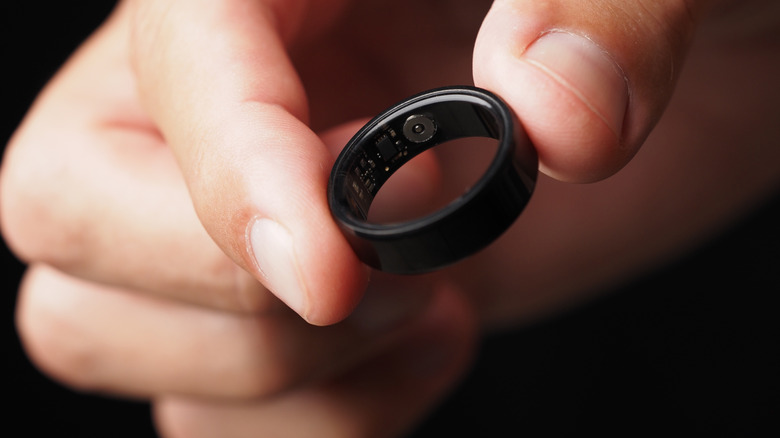
With any tech craze, the important thing for longevity is to have practical use cases. While it’s very easy to be tempted to buy the latest tech fashion, products soon lose their luster if they’re just another social media trend with limited utility. Consumers increasingly want devices that simplify their lives and cut down on distractions, rather than adding more to the equation. This is where smart rings can really show their practical advantages.
They’re very low-maintenance while active and are designed to monitor various facets for the wearer automatically. They also neatly sidestep some of the issues that come with smartphones when used for similar purposes: Without a screen or instant access to that time-sapping social media, there’s no temptation to be sucked into a doomscrolling session that might be counterproductive to your fitness goals. Similarly, being a hands-off sort of device (which is extremely ironic considering how it’s worn), there’s no need to mess with it as we may have a tendency to do with our smartphones.
While they lack some of the downsides that other devices like our smartphones have, they are fundamentally different systems. This means that they also don’t have some of their advantages either. Let’s take a look at some particular weaknesses of one of these tiny devices, including potential hefty subscriptions and their reliance on secondary devices. Ultimately, a smart ring may not be worth it for you.
One of the major potential disadvantages: cost
At the top of the range are products like the Oura Ring, which tends to demand a premium pricetag. The latest version, the Oura Ring 5, starts at $399 for the standard silver and black versions. Premium color options like Stealth, Deep Rose, Brushed Silver, and Gold command an additional premium of $100 on top of that. If you want the Oura Ring 5 Charging Case, it costs an additional $134.
After that, there’s another common charge to concern yourself with: the subscription. In the case of an Oura Ring, the cost of membership is the same as it was for the base $349 Oura Ring 4: $69.99 annually, or $5.99 billed monthly if you prefer. Oura states that, “with an active membership, you can track numerous biometrics and receive personalized insights from Oura to help you understand what your body needs.” The premium features locked behind a membership include SpO2 Blood Oxygen Sensing, detailed sleep analysis, Oura Labs features that the brand is experimenting with before rolling out, and the Women’s Health suite.
That means that even after forking over the cash for the Oura Ring itself, some of its key features will be locked behind an additional paywall. If you don’t think that’s worth it, there are plenty of alternatives to the Oura Ring without subscriptions like the Samsung Galaxy Ring or the Circular Ring 2. Still, these models cost $399 and $349, respectively, so they are still quite the investment. While other models might be cheaper, like the Amazfit Helio Ring priced at $150, you’ll generally start to sacrifice other features like battery life when you prioritize a cheaper price.
Some more pros and cons of a smart ring
As noted, the discreet and screen-free nature of a smart ring is great for those users who might want to reduce their screen time or simply stop worrying about being inundated with notifications. On the flipside, though, the Oura Ring effectively requires an app in order to access the data it collects, which kind of makes the point of not using your phone moot. For what it’s worth, however, most smart rings including the Samsung Galaxy Ring and the Circular Ring 2 work with apps, too.
Because of the ring’s placement on the body, some reviewers have also expressed concern that they might not record your heartrate with the same accuracy as other wearables, which can usually be tightened along the wrist or chest with a band. They could also be disruptive to your workout if, for example, you are lifting weights or needing to grip something.
Like any device, it’s all about choosing the option that fits your needs the best. While some might have limited use for a smart ring, these devices do have unique functions and an aesthetic that will certainly appeal to others. It seems they’re going to continue to, as well. In January 2026, the Los Angeles Times reported that “smart rings are finally going mainstream with a projected 49% jump in shipments, far outpacing smartwatches’ expected 6% growth.”
You must be logged in to post a comment Login