But this shift in Windows adoption looks less like a wave of enthusiastic upgrades and more like a forced march driven by expiring support deadlines, strict hardware policies, and a steady drumbeat of problematic patches. Read Entire Article Source link
People familiar with the matter told the Financial Times that the deal marks a major step toward a potential initial public offering later this year, even amid warnings of speculative excess across the AI sector. The scale dwarfs previous records, including Anthropic’s $30 billion funding earlier this year and OpenAI’s… Read Entire Article Source link
To understand why this matters, it helps to know how current web security actually works. When you visit a website, your browser checks a digital certificate to confirm you’re actually talking to the real site and not some imposter. Those certificates are secured using complex math problems that regular computers… Read Entire Article Source link
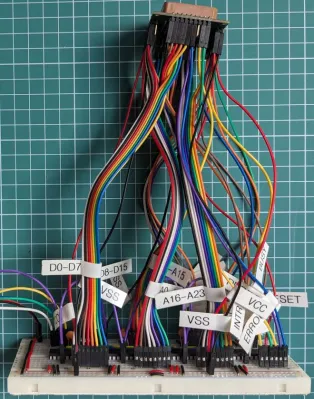
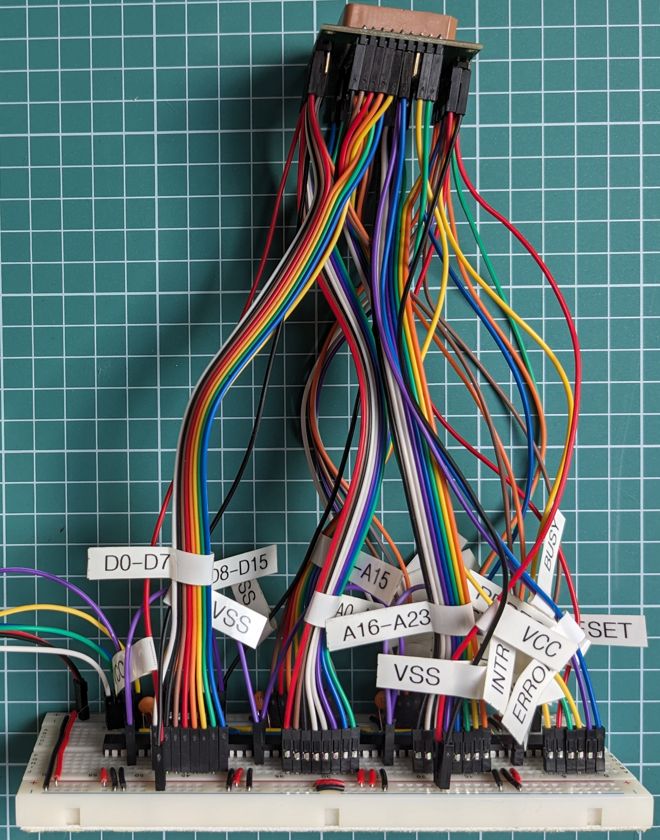
[Nagy Krisztián] had an Intel 286 CPU, only… There was no motherboard to install it in. Perhaps not wanting the processor to be lonely, [Nagy] built a simulated system to bring the chip back to life.Okay, 68 pins does look like a lot when you arrange them like that.
The concept is simple enough. [Nagy] merely intended to wire the 286 up to a Raspberry Pi Pico that could emulate other parts of a computer that it would normally expect to talk to. This isn’t so hard with an ancient CPU like the 286, which has just 68 pins compared to the 1000+ pins on modern CPUs. All it took was a PLCC-68 socket, an adapter PCB, a breadboard, and some MCP23s17 logic expanders to give the diminutive microcontroller enough I/O. With a bit of work, [Nagy] was able to get the Pi Pico running the 286, allowing it to execute a simple program that retrieves numbers from “memory” and writes them back in turn.
Notably, this setup won’t run the 286 at its full clock speed of 12 MHz, and it’s a long way off from doing anything complex like talking to peripherals or booting an OS. Still, it’s neat to see the old metal live again, even if it’s just rattling through a few simple machine instructions that don’t mean a whole lot. [Nagy] equates this project to The Matrix; you might also think of it as a brain in a jar. The 286 is not in a real computer; it’s just hooked up to a microcontroller stimulating its various pins in a way that is indistinguishable from its own perspective.
Motorola is slowly teasing more details about its upcoming Razr Fold, including its battery capacity, thickness and durability. I got an early look at the phone at Mobile World Congress in Barcelona, before it debuts in North America this summer.
In January, the company shared a handful of Razr Fold specs, including that it’ll have a 6.6-inch external display and an 8.1-inch internal screen — making it slightly bigger than the Samsung Galaxy Z Fold 7 and Google Pixel 10 Pro Fold.
We now also know the Razr Fold will be 4.6mm thick when open and 9.9mm thick when closed, weighing 243 grams. That places it firmly between Samsung’s and Google’s foldable offerings.
Advertisement
In my hand, the Razr Fold felt similar to the Z Fold 7 in terms of its sleekness. The cover display is a comfortably and viable option for tasks like texting and scrolling. When you open the Razr, you can multitask with up to three apps. The incremental size-up compared with Samsung’s and Google’s foldables is hardly noticeable, but it should place it safely within their orbit.
The Razr Fold will also pack a triple 50-megapixel camera system, along with a 32-megapixel selfie camera on the cover and a 20-megapixel selfie inside.
The Razr Fold has a triple 50-megapixel camera system.
Advertisement
Celso Bulgatti/CNET
Despite its sleeker frame, the Razr Fold will have an impressively large 6,000-mAh battery. It’ll also support 80-watt wired charging and 50-watt wireless charging. That should help it stand out, especially from the 4,400-mAh battery on the Galaxy Z Fold 7. It’s powered by the Snapdragon 8 Gen 5 processor to boost performance and efficiency and to power AI features.
Motorola also shared more details about the Razr Fold’s durability. It’ll have an IP48 and IP49 rating, meaning it can withstand a meter of water for 30 minutes and handle high water pressure. But, unlike the Pixel 10 Pro Fold, it’s not dust-resistant. The Razr Fold will be the first smartphone to feature Corning’s Gorilla Glass Ceramic 3 on the cover.
Like most premium Android phones, the Razr Fold will come with seven years of software and security updates. There are two color options: Pantone blackened blue, which has a more textured back, and Pantone lily white, which is smoother and matte. Both backs are made of vegan leather and offer a more luxurious feel than the glass on most premium phones (not to mention the relative lack of fingerprints).
Advertisement
The two biggest questions still loom: price and availability. Motorola says it’ll share information on that as the summer release window approaches.
Inside Amazon’s headquarters in Seattle. (GeekWire Photo / Taylor Soper)
Amazon is doubling down on OpenAI, announcing a strategic partnership Friday that includes a $50 billion investment in the ChatGPT maker.
The companies said Amazon will start with $15 billion, with $35 billion more expected “in the coming months when certain conditions are met.” The investment is part of a broader $110 billion funding round for OpenAI that includes SoftBank and NVIDIA, and brings the company’s pre-money valuation to a whopping $730 billion.
OpenAI and AWS are also deepening their technical ties, expanding an existing $38 billion multi-year agreement by $100 billion over eight years. OpenAI will run more of its AI workloads on AWS, including a commitment to consume 2 gigawatts’ worth of capacity on Trainium — Amazon’s in-house chips built to train and run AI models — to support new OpenAI tools and other computing.
“Combining OpenAI’s models with Amazon’s infrastructure and global reach helps us put powerful AI into the hands of businesses and users at real scale,” OpenAI CEO Sam Altman said in a statement.
The news marks a push to make AWS a go-to place to build and run OpenAI-powered software, as Amazon, Microsoft, and Google battle for AI customers and the computing work that comes with them. It also gives AWS a high-profile customer for Trainium at enormous scale.
Advertisement
“We think they’ll be one of the big winners in AI, we can help them grow, and we believe we’ll earn a strong return for Amazon over the long term,” Amazon CEO Andy Jassy wrote on LinkedIn.
Analysts with William Blair called the deal a clear positive for AWS, estimating the added $100 billion in OpenAI usage over eight years could work out to roughly $17 billion a year in revenue if spending is spread evenly — about 11% of AWS’s expected 2026 revenue, based on consensus forecasts. They also said OpenAI’s plan to use huge amounts of Trainium is a meaningful endorsement as AWS tries to prove it can win the biggest AI workloads.
Microsoft, a longtime partner and key cloud provider to OpenAI, issued a statement Friday emphasizing that the OpenAI-Microsoft relationship remains intact. “Nothing about today’s announcements in any way changes the terms of the Microsoft and OpenAI relationship that have been previously shared in our joint blog in October 2025,” the company wrote.
Advertisement
The Redmond tech giant added that its commercial and revenue-sharing relationship with OpenAI “remains unchanged,” and noted that it has “always included sharing revenue from partnerships between OpenAI and other cloud providers.”
Microsoft also reiterated that Azure remains the exclusive cloud provider of “stateless OpenAI APIs,” and said that any stateless API calls to OpenAI models that result from collaborations with third parties — “including Amazon” — would be hosted on Azure.
In basic terms, the “stateless” calls that Microsoft retains exclusivity over are simple, one-and-done AI requests: ask a question, get an answer. The “stateful” environment that Amazon is building on AWS is where companies run AI systems that remember context, work on complex tasks over time, and coordinate with each other. This is territory where Microsoft also operates through its own Copilot products and Azure OpenAI Service, but where Amazon is now staking a major claim, as well.
Other key details from Amazon and OpenAI’s expanded partnership:
Advertisement
AWS and OpenAI said they will co-create a “Stateful Runtime Environment” powered by OpenAI models, offered through Amazon Bedrock, so customers can build AI applications and agents “at production scale.”
AWS will be the “exclusive third-party cloud distribution provider” for OpenAI Frontier, an enterprise platform for building and managing teams of AI agents with shared context, governance, and security. Microsoft says Frontier will continue to be hosted on Azure.
Amazon and OpenAI will collaborate to develop “customized models” to power Amazon’s own customer-facing applications.
As GeekWire previously reported, Amazon was actually OpenAI’s first cloud partner — providing computing resources at the lab’s founding in 2015, before Microsoft swooped in and built the partnership that defined the generative AI era.
Now, a decade later, the company that OpenAI once left because Amazon was being petty about terms and conditions is writing a $50 billion check to get back in.
Anthropic acquired Seattle startup Vercept on Wednesday, raising familiar questions about the impact of early exits on the broader Seattle startup ecosystem, and the question of whether AI startups can compete long-term against the giants of the field.
We dig into the deal, the public feud between two of the company’s early investors on LinkedIn, and why one co-founder’s prior departure to Meta may have been worth more, ultimately, than the acquisition of the entire company.
Then, the New York Times reported this week that Jeffrey Epstein built deeper connections inside Microsoft than any other major tech company. We break down the key revelations, and talk about what we found when we searched the Epstein files for “GeekWire.”
And stick around for GeekWire Trivia: With Xbox entering a new era under Asha Sharma, we look back at the celebrity who appeared on stage for the original Xbox unveiling 25 years ago.
With GeekWire co-founders Todd Bishop and John Cook. Edited by Curt Milton.
Do you like having a second screen with your computer setup? What if your laptop could carry a second screen for you? That’s the idea behind Lenovo’s latest proof of concept, the ThinkBook Modular AI PC, announced at Mobile World Congress in Barcelona.
At MWC 2026, Lenovo trotted out three concepts. While it’s unclear whether any of them will become real, purchasable products, there’s some unique utility here, and a peek at how computing experiences could change in the future.
A Laptop With a Built-In Portable Screen
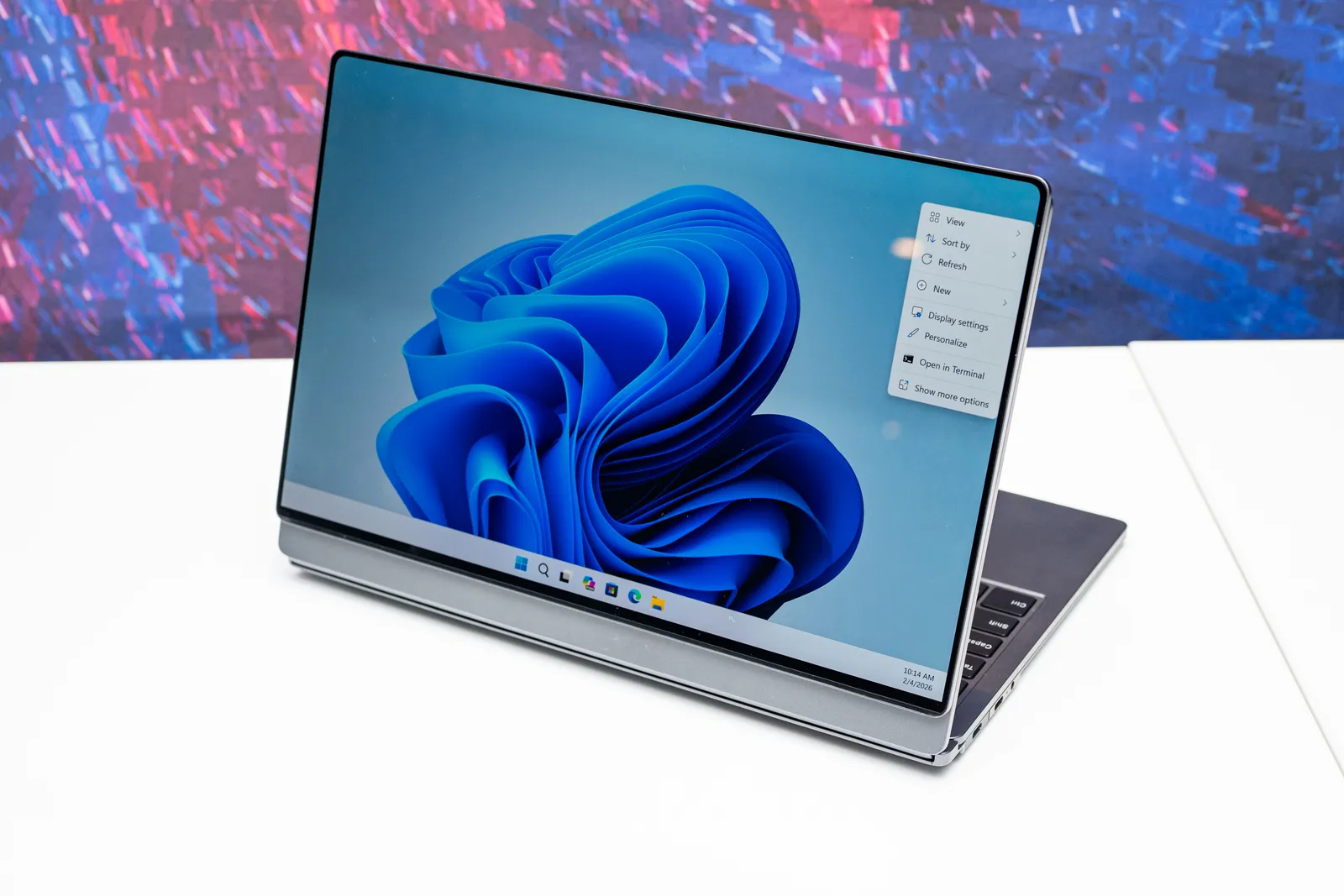
The ThinkBook Modular AI PC has a second screen hanging magnetically off the back of the laptop, and it can show content to people sitting in front of you.
Advertisement
Photograph: Julian Chokkattu
This is with the second screen removed from the back and placed in front of the main display. The keyboard is removable and works via Bluetooth.
Photograph: Julian Chokkattu
As someone with a multi-screen setup at home and a fondness for portable monitors, the ThinkBook Modular AI PC appeals to me the most. At first glance, it looks like a normal laptop. Take a look behind, and you’ll notice there’s a second screen magnetically hanging off the back of the laptop, like a koala carrying a baby on its back.
The screen is connected to the laptop using pogo-pin connectors, so you can use it in this state to display content to people in front of you, say, if you were making a presentation during a meeting. Alternatively, you can pop this second screen off, remove a hidden kickstand resting under the laptop, and magnetically attach it to the 14-inch screen so that you have a traditional portable monitor experience. (You’ll need to connect this to the laptop via a USB-C cable in this orientation.)
If you don’t have the desk space for that orientation, you can always remove the keyboard from the base and pop the second screen there—it’ll auto-connect to the laptop via the pogo pins, and you’ll be able to use the Bluetooth keyboard to type on a dual-screen setup that resembles the Asus ZenBook Duo. The whole system is a fantastically portable method of improving productivity on the go, and the laptop isn’t too thick or cumbersome.
Ultrahuman has released the highly anticipated Ring Pro for preorder with a price of AU$739 in Australia
It improves on battery life and heart-rate tracking, but its charging case steals the show
Singapore and New Zealand availability and price TBC
Just a day after Ultrahuman’s CEO broke his silence on the new Oura-beating smart ring, it went up for preorder in most major markets for $479 / £419 / AU$739. That makes the new Ultrahuman Ring Pro a lot pricier than the $349 / £329 / AU$599 Ring Air, but the several improvements its brings — including the promised 15-day battery life — does seem to justify the premium.
Alongside the better battery comes improved sensors for better heart-rate tracking, especially during sleep, and an upgraded dual-core CPU that enables on-chip processing so the Ring Pro doesn’t need to rely on a paired phone. Ultrahuman also says that the CPU offers more accurate metrics thanks to machine learning.
(Image credit: Ultrahuman)
It’s the new charging case that steals that show in my opinion. Not only does it extend the smart ring’s battery life to a staggering 45 days, it features an LED light that gives you a clear visual indication of how much battery it still holds.
Advertisement
It even has enough onboard storage to save a year’s worth of health data from the Ring Pro. It will also provide haptic feedback when delivering alerts. If that wasn’t enough, a built-in speaker will sound a small alarm when you activate the Find My Case feature in the app.
It’s still a little up in the air
One of the main reasons I like Ultrahuman is that you get all your key metrics without a subscription. There are a few that are locked behind a paywall, but most users can get by without paying for any of them. Moreover, it plays well with iOS and Android.
All the improvements I’ve listed above are tempting me to upgrade from my Ultrahuman Ring Air — despite the Ring Pro’s high asking price — and I’m glad I’m not based in the US.
Advertisement
The Ultrahuman Ring Air is my daily driver (Image credit: Sharmishta Sarkar / TechRadar)
As an Australian, I can already pre-order the Ring Pro, but it’s as yet uncertain whether it will be available to buy in the US. It’s availability in other APAC regions is also yet to be confirmed.
Sign up for breaking news, reviews, opinion, top tech deals, and more.
The Ring Pro is the product named in Ultrahuman’s patent-infringement case against Oura, which it lost in the US, meaning the company’s products are banned from being imported into America and the Ring Air was pulled from shelves last year.
Perhaps Ultrahuman has done its due diligence this time and the Ring Pro will soon find its way to US customers, especially since the Ring Air is one of the best smart rings on the market and I’m hoping the Ring Pro will prove just as good.
Apple Stores are preparing for a significant number of physical product launches during its early March event, with the new MacBook getting its own table.
A new MacBook is on the way
From Monday, Apple will be making multiple product announcements before holding a three-city “experience” event. While the actual products that will launch are not officially known, it seems Apple is expecting one to make a big impression on consumers. Retail workers were told to prepare for a sudden influx of customers in early March due to its program of product launches this week, writes Mark Gurman in the Bloomberg “Power On” newsletter. The prelaunch planning for the week is at a similar level to an iPhone launch, meaning Apple has big expectations for its lineup. Rumor Score: 🤯 Likely Continue Reading on AppleInsider | Discuss on our Forums
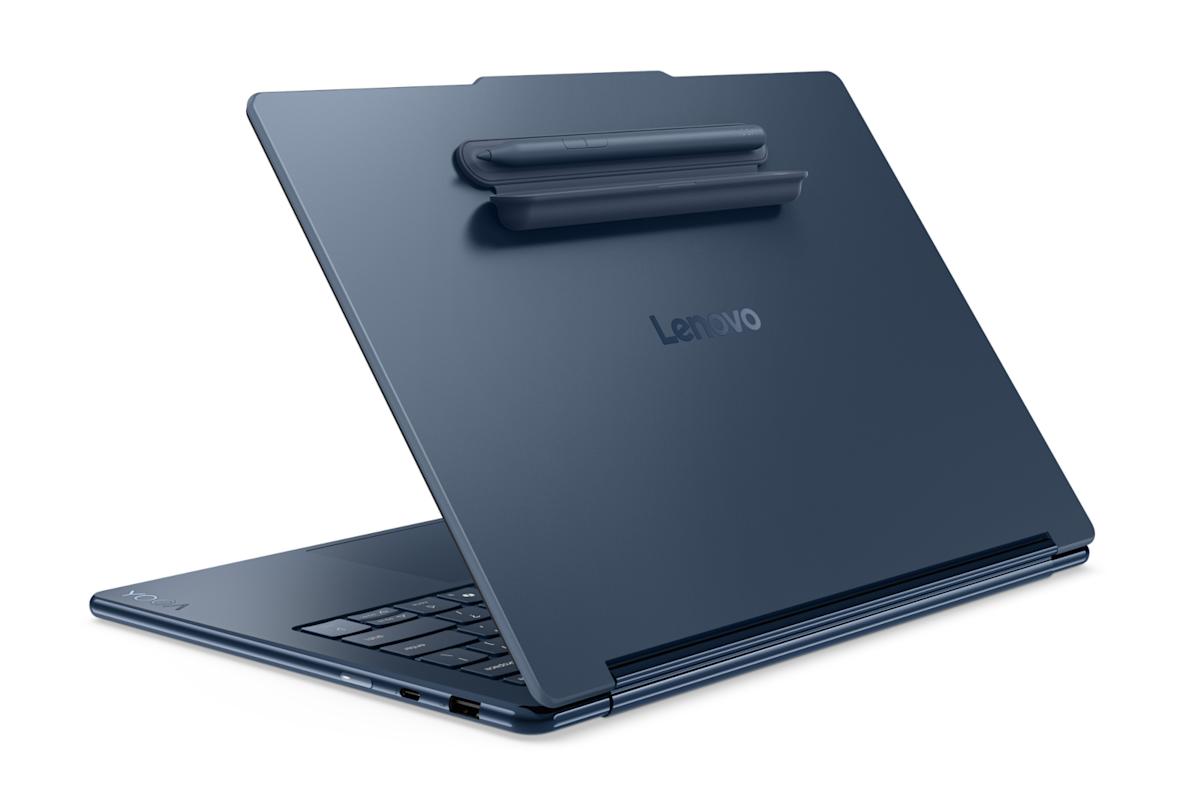
Lenovo has given the Yoga 9i 2-in-1 Aura Edition a refresh for 2026 and launched the new device at this year’s Mobile World Congress. The convertible laptop comes with a new Canvas Mode when the Yoga Pen Gen 2 case it’s bundled with is attached to the A-cover. When you lay the device down on a flat surface with the case attached, you’ll get a slight elevation on the display, which may make it easier to sketch or draw.
The Copilot+ laptop is powered by Intel Core Ultra Series 3 processors with integrated graphics, has up to 32GB in memory and runs Windows 11. Its 14-inch screen has a resolution of 2,880 x 1,800 pixels, has a variable refresh rate of 120 Hz and supports multi-touch. In addition to the new Canvas Mode, the device also supports Tablet, Tent, Stand and traditional Laptop Modes like its predecessors do. The Yoga 9i 2-in-1 Aura Edition Gen 11 will be available in May, with prices starting at $1,949.
Lenovo has also launched the new Yoga Pro 7a at MWC 2026. This Copilot+ laptop is powered by AMD Ryzen AI Max+ Series processors and comes with up to 128GB of RAM, so it can be used for heavy AI tasks. It has a 15.3-inch 2.5K PureSight Pro OLED display and is equipped with a big Force Pad trackpad that doubles as a drawing tablet. You can get the device starting in August this year for at least $2,099.
For a more affordable option, there’s the new IdeaPad Slim 5i Ultra laptop, which also has Copilot+ features. It’s powered by Intel Core Ultra processors and comes with either a WUXGA OLED or a WQXGA IPS LCD 14-inch display that has a VRR of 120 Hz. The device was designed for portability, with its thinnest part measuring just 11.9 mm in depth, and weighs 2.5 lbs. It will be available starting in October for at least $799.
Advertisement
Another affordable option is the new Idea Tab Pro Gen 2, which is specifically targeted towards students. It’s powered by theSnapdragon 8s Gen 4 Mobile Platform and has a 13-inch 3.5K display. The Tab Pro Gen 2 is Lenovo’s first tablet to ship with its Qira AI assistant and the company’s AI tools. It will be sold with a Lenovo Tab Pen Plus included for $419 starting in July.













.jpg)