Tech
Xerox Alto was the Quiet Cabinet That Mapped Every Screen We Touch Today

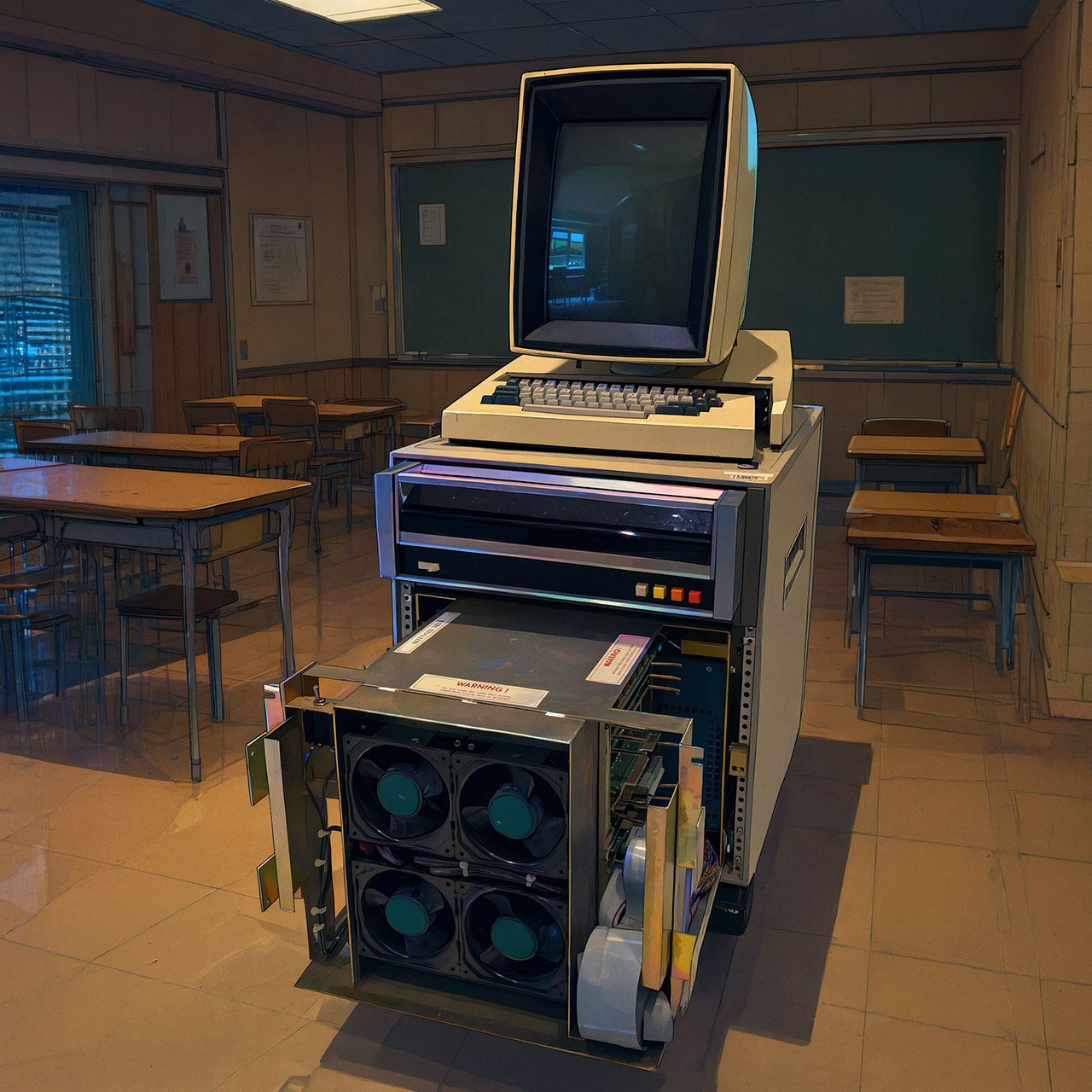
Photo credit: Righto
In late 1972 Butler Lampson sat down at Xerox PARC and wrote a short internal memo titled “Why Alto?” He wanted a machine each researcher could claim as their own. Alan Kay had been dreaming of a portable Dynabook for years. Lampson and Chuck Thacker offered him an interim version that would fit under a desk instead. Bob Taylor gave the project its name, and work began that November. By April 1973 the first unit was running, with a Sesame Street Cookie Monster test pattern appearing on its tall portrait screen.


The screen was an unusual 606 by 808 pixels, with each of them entirely independent and controlled by the Alto. No one else came close to creating a display that functioned like a blank piece of paper on its end (right on the edge of your desk). A three-button mouse lay on the edge, beside a detachable keyboard. The main box, about the size of a compact filing cabinet, housed a microcoded CPU running at around 5.8 Mhz, 128 kilobytes of memory, and a 2.5 megabyte detachable disk cartridge. Each Alto cost Xerox a hefty $12,000 in 1973 ($90,257 today).
Sale


GEEKOM Air12 Mini PC, Intel 7505, 8GB Dual-Slot Upgradeable RAM, 256GB SSD
- [Ultra-Compact Mini PC: 25% Faster Single-Core] Measuring just 4.6 x 4.4 x 1.35 inches, this space-saving small pc fits seamlessly into any office…
- [Dual-Channel RAM & NVMe SSD Expandability] Pre-equipped with 8GB DDR4 RAM and a fast 256GB NVMe SSD to supercharge your daily productivity. Unlike…
- [48EU Intel UHD Graphics: Double the EUs of N100/N150] Features Intel UHD Graphics with 48 Execution Units (EUs)—double the graphics cores of…
PARC researchers immediately filled their offices with Alto machines by the dozens. By 1975, there were dozens buzzing away under desks across the facility. Users began pointing and clicking rather than entering obscure commands. They changed the documents and saw the final layout on screen before printing them. Charles Simonyi and his colleagues created Bravo, the first word processor that delivered on its promise of what you see is what you get. You could use Laurel to send emails, interact with vector graphics and paint tools, and even construct software with Smalltalk by treating everything as an object capable of communicating with other objects.

Bob Metcalfe and David Boggs used Alto to create a network called Ethernet, which flowed at roughly three megabits per second. Laser printers, pioneered at PARC by Gary Starkweather, sat immediately on the same network, allowing anyone to print a clean page without leaving their desk.

Over the next decade, around 2,000 Altos were manufactured. The majority of them ended up in Xerox offices. A few hundred made their way to universities and research facilities. One even ended up at the White House. However, none of these ever made it into a store catalog. Xerox’s headquarters were a long way to the east, and their definition of success was essentially steady sales of copiers, toner, and drums. A machine that could reduce paper usage appeared to be a threat to their ongoing revenue rather than a beneficial concept. Earlier efforts into large computers had cost the corporation a lot of money. The government’s inspection of Xerox’s dominance in the photocopying business gave them still another reason to be wary about selling a whole new type of computer. Selling a new type of computer also put them at risk of being accused of abusing their position in one market to get access to another.
In December 1979, a young Steve Jobs walked thru PARC as part of a stock deal. He observed the cursor travel under the mouse, jumping between overlapping windows, and subsequently stated that this type of demonstration made all of the other tech feel very evident. Apple’s Lisa and then Macintosh brought the same principles into people’s homes and offices. Charles Simonyi later contributed to the development of Microsoft Word. Ethernet became the standard as local networks began to be wired with it. The visual language of icons, menus, and pointing devices spread like wildfire, making it feel like it was meant to be.
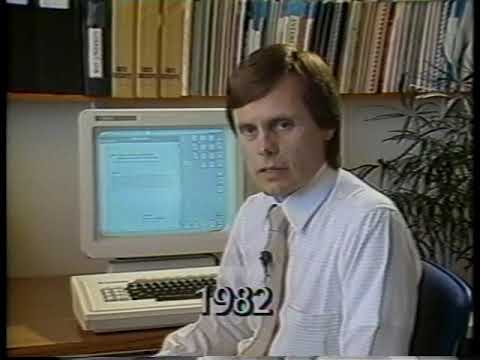
It wasn’t until 1981 that Xerox introduced a commercial version known as the Star, which cost a whopping $16,000 ($58,781 today) and arrived after cheaper machines had already appeared on the market. Sales were poor, but the people who built the Alto had moved on to start new companies.
[Source]
You must be logged in to post a comment Login