The Xiaomi Redmi Note 15 Pro Plus 5G is a reasonable mid-range Android phone in terms of decently zippy performance, a large and sharp OLED screen and a detailed 200MP snapper. Battery life is a strong point, too, although you can get more power and a less cluttered operating system for similar money.
Excellent battery life
Reasonable price to performance
Vivid, detailed OLED screen
Ad-riddled OS leaves a sour taste
Much more expensive than its predecessor
SQUIRREL_PLAYLIST_10208272
Key Features
Review Price: £429
6.83-inch 120Hz OLED screen
The Redmi Note 15 Pro Plus 5G has a slightly larger OLED screen before that can get super bright.
Advertisement
6500mAh battery
It’s also got a huge battery inside that can keep it going for several days on a charge.
Very robust
This Xiaomi phone is drop-proof from up to 2.5m and has full water and dust resistance that’s more flagship quality than mid-ranger.
Advertisement
Introduction
Xiaomi has become synonymous with budget-centred phones that punch above their weight into the mid-range, and the Redmi Note 15 Pro Plus 5G is the brand’s latest and greatest for 2026.
This new model has seen upgrades over the previous Note 14 Pro Plus 5G, such as a bigger AMOLED screen, improved IP rating, a new Snapdragon SoC and a lighter frame that seeks to make it the most complete Xiaomi Note phone yet.
I’ve been putting the Redmi Note 15 Pro Plus 5G through its paces for the last few weeks to see if this is truly one of the best Android phones in its price class.
Design
Polycarbonate frame makes it lighter than the older model
Curved edges may date it a little
Excellent dust and water resistance
The Redmi Note 15 Pro Plus 5G builds on the previous model’s successes by making some small, but noteworthy changes, to make this the sleekest Pro Plus model Xiaomi has made.
For instance, the chassis has moved to a polycarbonate material to shave some weight, meaning this phone weighs just 207g in the black colourway I have. Opt for the faux leather-backed Mocha Brown model, and it adds an extra gram. Either way, it makes this Xiaomi handset one of the lightest at its price point.
The Redmi Note 15 Pro Plus 5G is available in other colours besides black and brown, with Xiaomi also offering Glacier Blue if you’d prefer a more defined splash of colour.
Advertisement
Advertisement
Image Credit (Trusted Reviews)
There are curved edges on the front and back, unlike the other models in the Note 15 lineup, which isn’t as on-trend as it used to be. Nonetheless, I’ve always liked curved edges from the point of comfort, and this Xiaomi phone isn’t tiresome to hold.
Ports are standard fare for a modern phone, with a USB-C port for charging and a SIM slot off to the left. Gone are the days of cheaper phones still coming with things such as a headphone jack or expandable storage.
Image Credit (Trusted Reviews)
Where the Redmi Note 15 Pro Plus 5G really punches above its weight is with its improved water and dust resistance over its predecessor, with full IP66/IP68/IP69/IP69K certification that’s up there with flagship devices.
There is also Corning Gorilla Glass Victus 2 for added durability on the display, a pre-applied plastic screen protector, and a TPU case in the box so you’re ready to go as soon as you get the phone.
Advertisement
Screen
6.83-inch 120Hz 1280×2772 OLED
Dolby Vision and HDR10+ support
3200 nits peak brightness
The screen size on the Redmi Note 15 Pro Plus 5G has been upped from 6.67 inches to 6.83 inches, making its 1280×2772 resolution AMOLED panel one of the largest Xiaomi has fitted to a handset yet. It seems to be the same screen that was present on the more premium Xiaomi 15T, proving some components can trickle down to more affordable models.
Xiaomi promises up to 1800 nits of panel-wide brightness and up to 3200 nits peak, which would be seriously impressive for a more mid-range device. In real-world use, I didn’t feel any reason to doubt the brand’s claims, as displayed images in video and games were sharp and vibrant, indoors and out. The panel also benefits from HDR10+ and Dolby Vision HDR support for increased vibrancy in supported content for even greater vibrancy.
Advertisement
Image Credit (Trusted Reviews)
It’s up to 120Hz of refresh rate here, which gives an added slickness against the 60Hz we were stuck at for a long time, although the screen here lacks the more advanced LTPO tech we see in dearer phones, meaning the variable refresh rate works in a blockier manner. For the most part, the Redmi Note 15 Pro Plus 5G’s panel sticks at 120Hz, which isn’t much of a hardship.
Xiaomi has also included an optical under-display fingerprint sensor for this phone, mounted quite low down on the panel. It’s fine to use, although not quite as good as the ultrasonic ones seen on higher-end devices.
Advertisement
Cameras
200MP main sensor provides natural images
No telephoto lens meaning zoom isn’t too brilliant
Good 4K video from rear camera
In spite of Xiaomi’s long-running partnership with Leica, tech from that collaboration hasn’t worked its way down to the brand’s more affordable handsets just yet. Instead, the Redmi Note 15 Pro Plus 5G is bestowed with a dual camera setup, with an 8MP ultrawide and a 200MP 1/1.4-inch main sensor doing most of the heavy lifting.
It’s a similar setup to the previous model, and the same advice applies – stick to the main 200MP snapper as much as possible. That’s because it resolves the most detail, provides the most natural colours and pleasing imagery for a mid-range camera.
Image Credit (Trusted Reviews)
General wide photography yields a natural image that doesn’t have the saturation cranked up for unrealistic, poppy colours, with sharp detail and great dynamic range in my walkabout in London a few weeks’ back. The larger sensor size helps with this, with a 1/1.4-inch size surprisingly large for a more modest handset.
The main sensor does reasonably well in the dark, although let things get too dark, such as in the case of the beef sandwich image, and things begin to look a little fuzzy in places as detail retention drops.
Advertisement
Advertisement
Image Credit (Trusted Reviews)
The lack of a dedicated telephoto lens means Xiaomi is left to crop in on the 200MP sensor to offer an artificial form of zoom via pixel binning, and a choice of focal lengths in the phone’s camera app. At anything up to 4x, detail is still reasonably sharp and well-preserved, although go fully into a digital zoom range of 10x or more and it falls off a cliff in terms of sharpness, detail preservation and more besides.
The 32MP front selfie snapper on the Redmi Note 15 Pro Plus 5G is reasonable, although there isn’t any autofocus here to make sure you remain the star of the show. It’s still reasonable for vain photos of yourself, and the dedicated Portrait mode can add some pleasant bokeh, but images can come out a little soft.
Image Credit (Trusted Reviews)
We’ve got up to 4K/30fps video supported on the rear camera with good detail and smooth zoom action, although the front camera’s 1080p/60fps feels comparably limiting in both general performance and overall sharpness.
Performance
Newer Snapdragon chip inside
Middling performance for the price
Decent for gaming, although there are limitations
Advertisement
As expected for the Redmi Note 15 Pro Plus 5G, Xiaomi has opted to use a newer version of the Qualcomm chip found in last year’s model. Here, we’ve got an eight-core Snapdragon 7S Gen 4 SoC, against the Gen 3 model found in the 14 Pro+, along with 12GB of RAM and 512GB of storage in my sample.
The performance in the Geekbench 6 benchmark isn’t groundbreaking by any means, with as much performance as a flagship from a few years ago, and a modest boost over its predecessor. It’s largely in line with rivals, such as the Motorola Edge 60 Neo, although the OnePlus Nord 5 remains the standout for pure power at this price.
Advertisement
General use proves the Redmi Note 15 Pro Plus 5G doesn’t feel sluggish, in spite of the middling numbers. Navigating around Android felt zippy, as did my general workflow of using my phone for using social media, streaming music from Tidal and playing the odd game.
Image Credit (Trusted Reviews)
More serious multi-tasking can lead to some minor lags or stutters, although that’s perhaps more due to the middling LPDDR4X RAM and UFS 2.2 storage arrangement than the outright raw grunt of the processor.
Gaming is possible with the Redmi Note 15 Pro Plus 5G, and with the Game Boost features that spring into life when you open one, it’s possible to optimise your experience as much as possible. It’s possible to clear RAM and enable a faster performance profile to eke out more oomph, and there’s a decently competent GPU inside to allow for 60fps in the likes of Call of Duty Mobile.
Advertisement
For more prolonged intensive loads, expect this Xiaomi phone to get a little on the warm side, although it seems the phone’s vapour chamber cooling solution does its job well to prevent things from getting too warm.
Advertisement
Software & AI
HyperOS isn’t as polished as its rivals
More ad-riddled than previous versions
Middling OS and security upgrade commitments
I’ve had a couple of run-ins with Xiaomi’s HyperOS skin of choice in the past, and to be truthful, it’s never been my favourite Android skin against the likes of One UI or the Stock Pixel Launcher due to a lack of polish and the presence of pre-installed guff I didn’t ask for.
It borrows a lot of cues from Apple’s iOS, which become particularly noticeable with the OS’ quick settings menu that’s accessed by swiping on the right side of the screen and has a very Apple feel in terms of brightness and volume control. It’s the same as Honor’s MagicOS, so I’ve been quite used to it, but if you’re moving from other Android variants, it can take some getting used to.
Image Credit (Trusted Reviews)
There are also Google’s latest AI additions, such as Circle to Search and utilising Gemini as an assistant. There are Xiaomi-specific AI gubbins here, which mostly feature in the gallery app when editing images, such as object removal and portrait blurring with an artificial bokeh effect. There are also a few more advanced options, like the ability to remove backgrounds, FOV expansion and AI-powered automatic video editing.
Advertisement
What I dislike about HyperOS is the amount of bloatware that comes pre-installed, such as Xiaomi’s own MI app store, as well as OneDrive, the Opera browser, and the Booking.com app. Honor is guilty of this, too, and I wish more brands would opt for a cleaner approach to their Android skins.
Image Credit (Trusted Reviews)
The big problem here is the prevalence of ads at virtually every turn – most of them are for Temu – and it majorly cheapens the feel of the operating system.
Xiaomi promises more modest updates and software longevity for the Redmi Note 15 Plus 5G, with four years of OS and six years of security updates. It’s okay, if not class-leading.
Advertisement
Battery Life
6500 mAh battery
100W wired charging
No charger in the box
The Redmi Note 15 Plus 5G comes with a hefty 6500mAh battery, which is one of the largest available on a phone at this price, and I could comfortably get through a working day without so much as even thinking about battery life. Only a small top-up was needed with a charger before I went to bed to keep it ticking over without worrying for a second day.
Advertisement
This phone supports up to 100W wired fast charging, but unfortunately the proprietary Xiaomi charger isn’t included in the box. For my testing, I used a more modest 66W 6A charger that wasn’t as brisk in its speeds, taking 75 minutes to get to 50 percent and well in excess of two and a half hours for a full charge. It isn’t the quickest to get back to full.
Moreover, this phone doesn’t support any form of wireless charging, which feels like quite a misstep in 2026, as many of its rivals do.
SQUIRREL_PLAYLIST_10208272
Advertisement
Should you buy it?
You want a dazzling screen
The Redmi Note 15 Pro Plus excels with its bright, large OLED screen that’s one of the sharpest you’ll find on a phone at its price.
Advertisement
The letdown with this phone is its ad-riddled version of Android that leaves quite the sour taste against rivals.
Advertisement
Final Thoughts
The Xiaomi Redmi Note 15 Pro Plus 5G is a reasonable mid-range Android phone in terms of decently zippy performance, a large and sharp OLED screen and a detailed 200MP snapper. Battery life is a strong point, too, although you can get more power and a less cluttered operating system for similar money.
The likes of the Google Pixel 9a and OnePlus Nord 5 can outperform Xiaomi’s choice in terms of grunt, for instance, while Google’s own version of Android is much cleaner and easier to live with, and its camera is also a strong performer. The Nord 5 isn’t as strong on battery life as Xiaomi’s choice, though, but its OxygenOS skin is much less in your face with AI or any ads compared to HyperOS.
With this in mind, there’s still a fair bit to like about the Redmi Note 15 Pro Plus 5G, and it’s a cromulent Android handset for the price. For more options, check out our list of the best Android phones we’ve tested.
How We Test
We test every mobile phone we review thoroughly. We use industry-standard tests to compare features properly and we use the phone as our main device over the review period. We’ll always tell you what we find and we never, ever, accept money to review a product.
Advertisement
Used as a main phone for over a week
Thorough camera testing in a variety of conditions
Tested and benchmarked using respected industry tests and real-world data
Advertisement
FAQs
Does the Xiaomi Redmi Note 15 Pro Plus 5G come with a charger?
No, the Xiaomi Redmi Note 15 Pro Plus 5G doesn’t come with its own charger, so you’ll need to supply your own.
Is the Xiaomi Redmi Note 15 Pro Plus 5G water-resistant?
Advertisement
Yes, the Xiaomi Redmi Note 15 Pro Plus 5G is fully dust and water-resistant and comes with full IP66/IP68/IP69/IP69K certification.
How many upgrades will the Xiaomi Redmi Note 15 Pro Plus 5G get?
Xiaomi has committed to four years of OS updates and six years of security updates with the Redmi Note 15 Pro Plus.
Looking for the most recent regular Connections answers? Click here for today’s Connections hints, as well as our daily answers and hints for The New York Times Mini Crossword, Wordle and Strands puzzles.
Today’s Connections: Sports Edition is a fun one. I started mentally connecting the purple category answers right away. Movie-goers and TV watchers, this is a good puzzle for you. If you’re struggling with today’s puzzle but still want to solve it, read on for hints and the answers.
Connections: Sports Edition is published by The Athletic, the subscription-based sports journalism site owned by The Times. It doesn’t appear in the NYT Games app, but it does in The Athletic’s own app. Or you can play it for free online.
Hints for today’s Connections: Sports Edition groups
Here are four hints for the groupings in today’s Connections: Sports Edition puzzle, ranked from the easiest yellow group to the tough (and sometimes bizarre) purple group.
Yellow group hint: Meet the new boss.
Advertisement
Green group hint: SNL star.
Blue group hint: WNBA player.
Purple group hint: They’re not real.
Answers for today’s Connections: Sports Edition groups
Way, way back in the days when men wore beards and wide-lapelled suits in exotic colors, only NASA had access to photovoltaics and ‘solar’ meant solar thermal. In those days of appropriate technology, it was thought that the ultimate in thermal mass was a phase-change material– a salt or wax that in melting and re-freezing could hold far more heat than plain rock or water, which were more often used. Well, now that it’s the 21st century, we’ve got something even better. As Ars Technica reports about a recent paper in Science Magazine, Molecular Solar Thermal (MOST) energy storage can blow that old stuff right out of the water.
Molecular energy storage? That’s where the sunburn comes in. A sunburn occurs because proteins in your skin are denatured– kinked, twisted, and knocked out of shape– by ultraviolet light. The researchers realized that those kinky proteins are pretty energetic: like a spring, they’re storing energy in their distorted structure. Even better, certain chemicals, like the pyrimidone in the study, don’t ‘relax’ the way a phase change material does. It’s not a matter of warming up and giving up the energy stored in the molecular structure when cooling down– the energy needs coaxed out, in this case by an acidic solution.
That poses problems for a closed-loop system, since you’d be continuously diluting the pyrimidone with heat-releasing acid and neutralizing base. On the other hand, 1.65 MJ/kg of energy storage is nothing to sneeze at, especially when you’re collecting it with nothing more technically advanced than a fluid running through clear tubing. Conveniently enough, researchers found a way to make this stuff liquid at room temperature.
Comparing the heat in this MOST storage material to electrical potential in a battery is a case of apples and oranges, but in terms of pure energy density the pyrimidone cooked up for the paper is in the same range as Li-Ion batteries. There is some self-discharge, in that the altered “dewar” state of the pyrimidone decays naturally, but with a half-life of upto 481 days, you could imagine storing up a tankful UV-altered pyrimidone all year round to provide your winter’s heat.
Advertisement
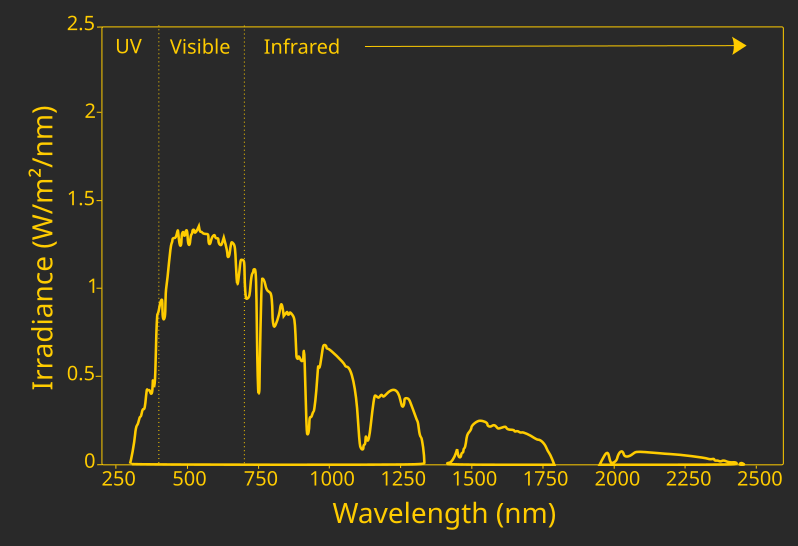
There’s not much power making it to surface in the UV, but lower energy photons cannot effect the transition.
It’s not perfect. Right now you get about 20 “charge cycles” before the molecules break down, but then, if you’re using this for seasonal load-spreading, a two-decade service life is nothing to shake a stick at. It’s only collecting energy from the UV range of the spectrum, which is a tiny fraction of the energy from our sun. The quantum efficiency of the molecule is rather poor as well– it takes a lot of photons to get a dewar transition.
With solar photovaltaics being as cheap as they are, thermal builds are few and far between– even solar water heaters are powered by PV these days. Of course if you’re somewhere that doesn’t get much sun, you could always go for wind power instead.
Thanks to [zit] for the tip! If you’ve seen a bright idea in the wild, or have one yourself, our tips line is open rain or shine.
Salesforce pulled out all the stops to convince investors that the AI revolution won’t be its death when it announced fourth-quarter earnings on Wednesday.
Salesforce reported a solid quarter of $10.7 billion in revenue, up 13% year-over-year. For the year, it reported $41.5 billion in revenue, up 10% over the previous year, with both results boosted by its $8 billion acquisition of data management company Informatica last May.
Net income landed at $7.46 billion, and the company offered strong guidance for the year ahead, projecting revenue of $45.8 billion to $46.2 billion — a 10% to 11% increase. It also said its “remaining performance obligation,” or RPO, is over $72 billion. That’s a figure that shows revenue under contact that has not yet been delivered or recognized as earned revenue.
The numbers, though, could only do so much. Software-as-a-service stocks, with Salesforce as their poster child, have been getting hammered lately. Investors fear the rise of AI agents will undermine these companies, making their per-employee-seat business models obsolete. The situation has been dubbed the “SaaSpocalypse.”
Advertisement
The concept hung so heavily in the air during the earnings call that CEO Marc Benioff mentioned the term at least six times.
“You’ve heard about the SaaSpocalypse? And it isn’t our first. We’ve had a few of them,” he said, later adding, “If there is a SaaSpocalypse, it may be eaten by the Sasquatch because there are a lot of companies using a lot of SaaS because it just got better with agents.”
In an attempt to convince the world of its continued health, Salesforce threw everything and the kitchen sink into this earnings report. The company increased its dividend by nearly 6% to $0.44 per share. It launched a new $50 billion share buyback program. That’s always a favorite with shareholders because it both creates a sturdy buyer of shares and reduces the number of shares in circulation (which can boost the stock price).
Techcrunch event
Advertisement
Boston, MA | June 9, 2026
The company also revamped the earnings call itself. It was part podcast, part infomercial, and part normal Q&A with a few questions from Wall Street analysts.
Advertisement
Instead of running through the numbers, Benioff interviewed three Salesforce customers on camera to testify to their love of its new agentic options: the CEO of home appliance company SharkNinja; the CEO of Wyndham Hotels and Resorts; and, just to hammer the point, the CEO of SaaStr, the software industry conference and media company. We’ll truncate the interviews to the shortest summary: They all love Salesforce’s AI agent products.
Salesforce also introduced a new metric for its agentic products: agentic work units (“AWU”). The idea here is that rather than simply counting “tokens” — the standard unit of AI processing volume — AWU attempts to measure something more meaningful: whether an agent actually completed a task, like writing to a record, rather than just generating text. (Salesforce logged 19 trillion tokens last quarter, which sounds like a lot but really is not in the AI world.)
“You can ask it a question and it can write you a poem, but that’s not really all that valuable in the enterprise world,” Salesforce president and CMO Patrick Stokes said on the call. So AWU is intended to measure when the agent writes to a record or does some other verifiable task.
On top of that, Salesforce also presented its own architectural vision of the coming world of agents. It shows SaaS software like itself owning most of the tech stack, with the AI model makers on the bottom as unseen, interchangeable, and commoditized work engines.
Advertisement
This was a direct counter to one of the causes of a SaaSpocalypse sell-off earlier this month, after OpenAI released its enterprise agent, Frontier. OpenAI’s architectural vision shows OpenAI owning most of the stack, with systems-of-record SaaS providers (the databases and business-software platforms where companies store their core data) on the bottom as the unseen engines.
And if all that wasn’t enough to influence investors: Benioff was dressed in a black leather jacket, echoing the signature look of the CEO clearly crushing it in the AI world: Nvidia’s Jensen Huang.
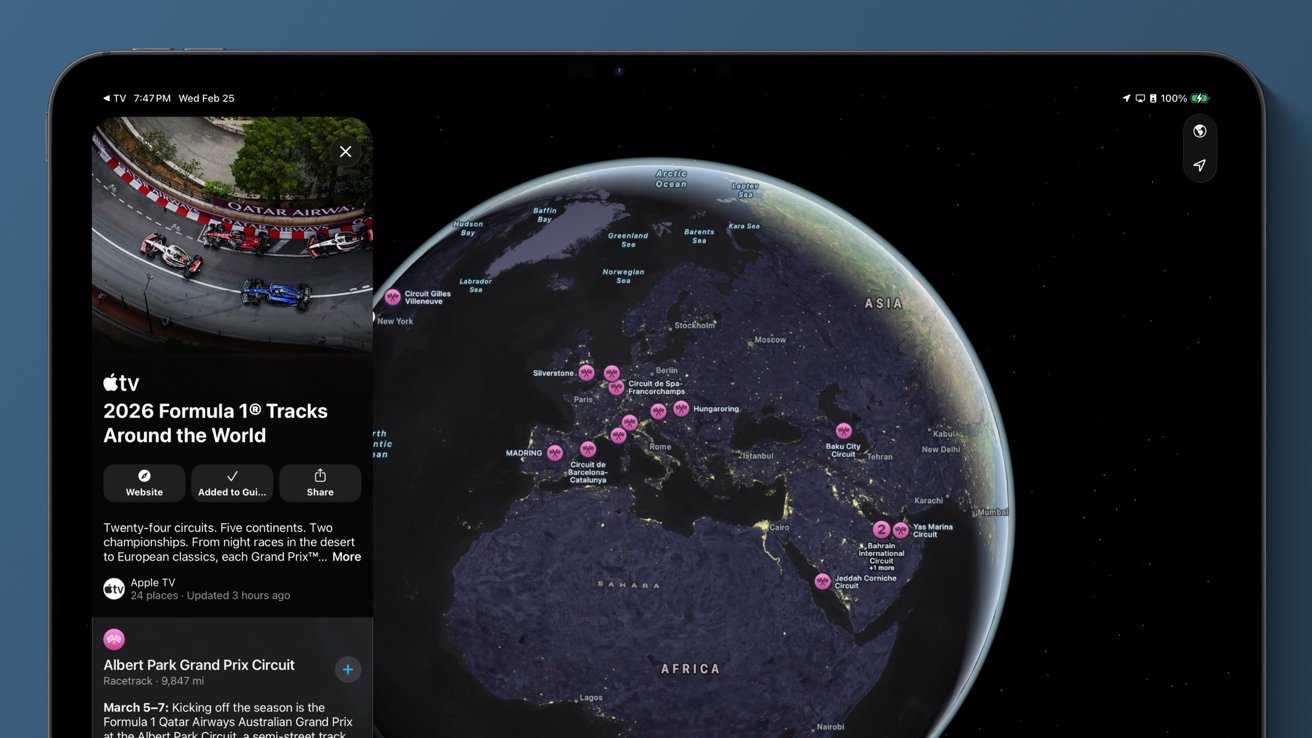
Apple Maps has been updated with a new “2026 Formula 1 Tracks Around the World” guide that showcases each racing location. Updated 3D art will be added throughout the season, starting now with Albert Park in Australia.
Looking for the most recent Mini Crossword answer? Click here for today’s Mini Crossword hints, as well as our daily answers and hints for The New York Times Wordle, Strands, Connections and Connections: Sports Edition puzzles.
Need some help with today’s Mini Crossword? Read on for all the answers. And if you could use some hints and guidance for daily solving, check out our Mini Crossword tips.
If you’re looking for today’s Wordle, Connections, Connections: Sports Edition and Strands answers, you can visit CNET’s NYT puzzle hints page.
The Galaxy S26 lineup runs on a customized version of Qualcomm’s latest Snapdragon 8 Elite Gen 5 SoC. Compared to last year’s Snapdragon 8 Gen 4, the new silicon delivers a 19% uplift in CPU performance, a 24% gain in GPU power, and a 39% boost in AI acceleration via… Read Entire Article Source link
Samsung‘s new Galaxy S26 lineup is by no means a reinvention of the popular smartphone brand. Instead, it’s a collection of design tweaks and some important, even one-of-a-kind, under-the-hood updates that could change the way you use your phone.
The best features, like the actually unique Privacy Display (a first for mobile phones), are confined to the Galaxy S26 Ultra. Not surprising when you consider it’s the true flagship, and the S26 and S26 Plus are more or less like bridesmaids carrying the bride’s lengthy train.
However, Samsung did something unusual this go around. It raised the prices of the Samsung Galaxy S26 and S26 Plus by $100 compared to the S25 versions. So instead of $799.99 to start, the S26 is now $899.99 / £879.00, and instead of $999.99, the S26 Plus is $1,099.99 / £1,099.00.
Advertisement
I sort of expected some price hikes, given the skyrocketing cost of RAM and the potential impact of persistent US tariffs on virtually all imported goods (Samsung is a South Korean company, after all).
What’s strange is that the Galaxy S26 Ultra, despite new features like brighter cameras, a new vapor chamber, and a thinner, lighter design, is the same price as it was last year: $1,299.99 / £1,279.00.
Advertisement
Tell me why
Look at what the S26 Ultra gives you (Image credit: Future)
Every Galaxy S26 model starts with 256GB of storage and 12GB of RAM (the Ultra pops up to 16GB with a terabyte of storage). So it’s not significant differences in storage or RAM that are making the difference.
I’m not saying the S26 Ultra is suddenly a cheap phone. It’s not, and I encourage anyone checking it out to look for solid trade-in offers (there are many). And it’s not like the S26 Ultra has fewer AI features. It boasts all the same Bixby (with Perplexity-enhanced), Gemini (with new Circle to Search), and emerging Agentic capabilities as the rest of the lineup. Now Brief, Now Nudge, Now – you get the idea – are all the same. You can chat with this phone’s various AI systems, just as you can on the S26 and S26 Plus.
Sign up for breaking news, reviews, opinion, top tech deals, and more.
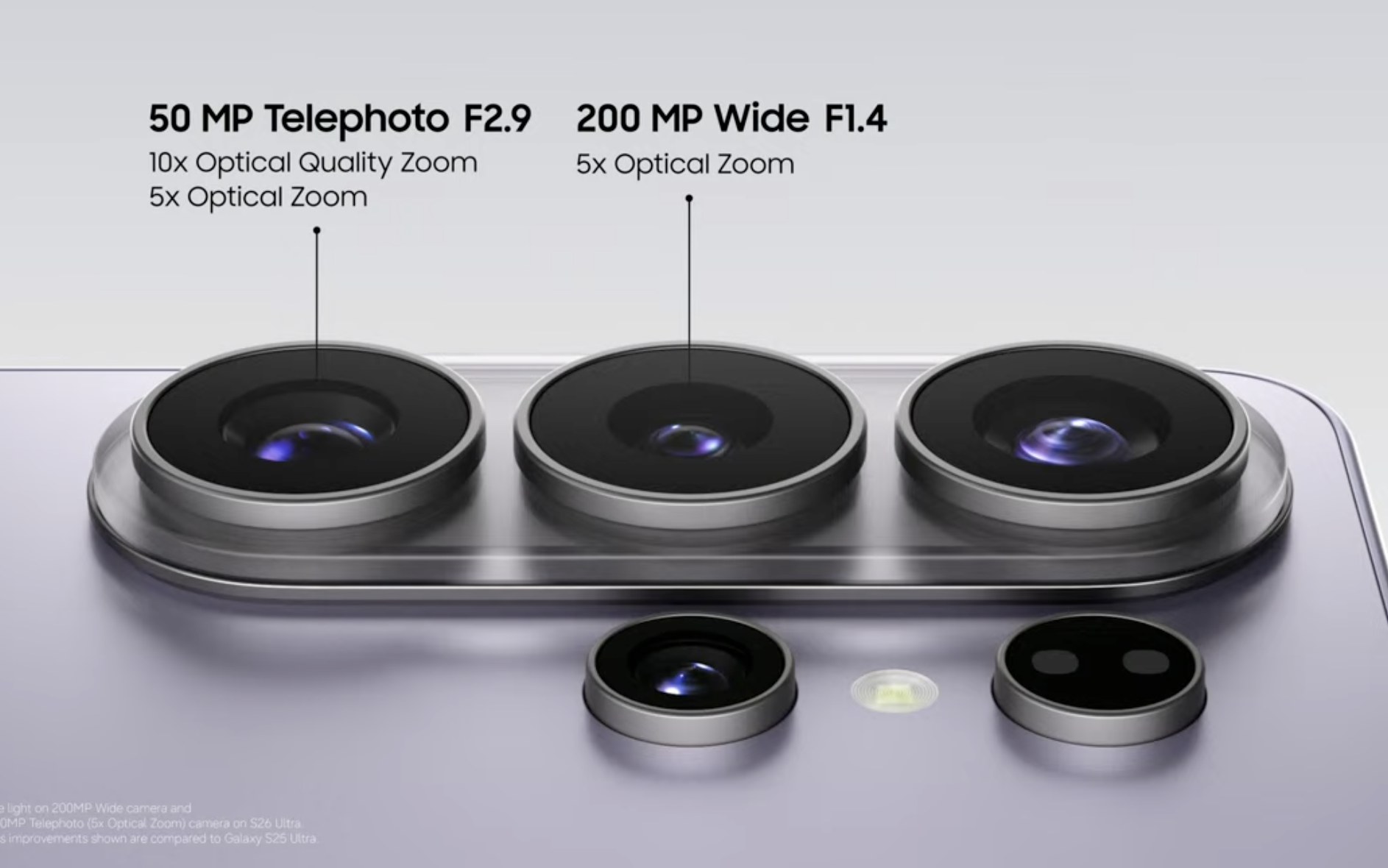
On the other hand, the S26 Ultra far exceeds the other phones in camera capabilities with two telephoto cameras and one 200MP main camera. The lenses even have wider apertures on some of them. The S26 and S26 Plus didn’t get any of that.
Advertisement
A nudge to the top
I think I know what’s going on here. In any given year, the base models for the Galaxy line tend to outsell the more expensive Ultra by a fairly significant margin. The S26 Ultra, though, is a showcase for everything that Samsung does well. The best cameras, most powerful video (8k, 30fps, a virtual gimbal), biggest screen, and don’t forget the S Pen.
People go for the more affordable phones because they’re good enough for most of their needs. However, by closing the gap just a bit between the S26, S26 Plus, and the S26 Ultra, I think Samsung is pushing (or gently squeezing) people toward the higher end. It makes the S26 Ultra seem like more of a bargain, especially with all you get for essentially spending $200 more than the S26 Plus. So you get the big screen (the Plus is 6.7 inches) and the best cameras.
I might be wrong, but there has to be a reason Samsung did not raise the price for the entire line, especially when all three phones have the same Qualcomm Snapdragon 8 Elite Gen 5 for Galaxy. Aside from dropping titanium, I don’t see where Samsung saved the money.
Perhaps it was the titanium. Apple, too, fell out of love with the material on its latest flagships. I have no idea how much titanium was costing Samsung. Was it $100 per unit? Maybe. Or perhaps Samsung would like you to consider a Galaxy S26 Ultra for your next Android purchase.
This post is brought to you in paid partnership with Petlibro
We spend a significant amount of time optimizing our own health: tracking our sleep, monitoring our heart rates, and dialing in our nutrition. But when it comes to our pets, we’re usually left guessing. Cats, in particular, are notorious for hiding pain or illness until a condition becomes severe.
Petlibro is shifting that dynamic with the Luma Smart Litter Box. Since its quiet launch late last year, it has quickly become a staple in thousands of modern households. It moves the concept of a self-cleaning litter box past mere convenience, turning an unpleasant daily chore into a sophisticated system for early health awareness.
AI waste analysis and health tracking
For the data-driven pet owner, the Luma Smart Litter Box provides a level of insight that was previously impossible to get without a vet visit. It’s equipped with an AI waste analysis system that differentiates between pee and poop, and can even identify the consistency of the waste.
Advertisement
Every time your cat uses the box, the system logs their weight and tracks their bathroom behavior. If your cat skips the box for 24 hours, or if there’s a sudden shift in their routine, the app sends a smart alert to your phone. For senior cats or those with sensitive stomachs or kidney issues, this continuous cat health monitoring gives you a critical head start on potential medical problems.
Multi-cat recognition and safety
If you have more than one cat, tracking who did what is usually a guessing game. Luma solves this with a built-in 1080p HD camera and advanced AI that recognizes up to 10 different cats from any angle, even from behind. You get individualized logs and video records for each pet, so you always know exactly whose health you are looking at.
Safety is also a non-negotiable factor with autonomous tech. Since hitting the market in November 2025, Luma has maintained a 100% safe-use record. It features a wide-open, spacious design rather than a cramped globe, and uses triple-check sensors with an anti-pinch system to ensure your cat is completely clear before the cleaning cycle begins.
Autonomous cleaning and odor control
Beyond the health metrics, this is still a highly engineered piece of smart home hardware designed to keep your space clean. It automatically sweeps waste into a sealed drawer after each visit, holding up to seven days of waste for two cats.
Advertisement
To ensure your home doesn’t smell like a pet sanctuary, it utilizes an active odor-control system. A built-in fan pulls air through carbon filters, filtering out 97% of odors, with adjustable fan speeds controlled directly from the app. It’s a quiet, seamless integration into a well-kept home.
The bottom line
The Petlibro Luma represents a maturation in pet technology. It is a smart litter box for cats that respects the aesthetics of your home while acting as a daily preventive care tool for your pets. It replaces guesswork with hard data, offering peace of mind that your cat’s health is always being monitored.
Looking for a new pair of earbuds to pair with your favorite iPhone or iPad? Right now, you can grab the Apple AirPods Pro 3 for just $229 on Amazon or Best Buy, a $20 break from their usual price. They’re our favorite wireless headphones for iPhone owners, with great noise-canceling, easy connectivity, and unique features like heart rate and live translation.
Review: Apple AirPods Pro 3
Review: Apple AirPods Pro 3
The active noise-canceling on the third generation AirPods Pro has improved a great deal, with our reviewer Parker Hall comparing them to the Bose QuietComfort Ultra 2 Earbuds when it comes to filtering out all but the highest frequency, loudest noises. The improved ear tips, now lined with foam, are more comfortable and fit better in smaller ears, with four different sizes to choose from. They also have better sound isolation, which improves the noise canceling and transparency mode performance noticeably.
While Android owners have a variety of choices when it comes to earbuds and headphones, iOS users will appreciate the extra features specifically built for anyone in the Apple ecosystem. If you’re into running with minimal devices, the AirPods Pro 3 can actually take your heart rate through your ears, a neat trick that we found surprisingly consistent with other fitness trackers. Another unique feature, live translation, will bring up the Translate app on iOS and relay what someone else is saying directly into your ears in your own language. Once again, we were impressed by how fast and accurate the system was, and as more languages are added it will become even more useful.
We really only had two minor complaints about the AirPods Pro 3, one of which was that the default EQ is a bit V-shaped, with a slightly overdone bass that’s either really appealing or slightly grating. Thankfully you can tweak your EQ in Spotify or Apple Music to dial in that experience. The other issue is that these have limited compatibility with Android devices, so if you’re on a Samsung or Pixel, you’ll want to check out our other favorite earbuds. For iPhone and iPad owners looking for the latest and greatest for their listening experience, the discounted AirPods Pro 3 are an excellent choice.
Photo credit: NASA/Chris Gunn The Cranium Nebula has piqued astronomers’ interest, due to some stunning new images from NASA’s James Webb Space Telescope. These photos reveal the layers of a faraway cloud of gas and dust wrapped tightly around a star as it begins to die. This planetary nebula, officially known as PMR 1 and informally known as the exposed Cranium due to its uncanny appearance to a brain tucked inside a phantom skull, sits quietly in a backwater area of space that has only recently gained attention.
Webb captured the entire scene with two of its most powerful tools, beginning with its Near-Infrared Camera, or NIRCam, which produces a crystal clear image with innumerable background stars and distant galaxies piercing the nebula’s veil like tiny needles. A prominent dark channel runs vertically down the center, plainly dividing the entire image into left and right parts that resemble cerebral hemispheres. The outer edge has a faint, almost white glow, while the middle is a deep orange, with clouds that appear to be pushed outwards from the center in a sequence of waves, as if they were colliding in midair.
PROJECT HAIL MARY SCI-FI MODEL – Launch into the world of cinematic science fiction with the LEGO Icons Project Hail Mary (11389) microscale…
WHAT’S IN THE BOX – Includes everything you need to build a microscale replica of the Hail Mary spacecraft, a functional display stand, plus a…
FUNCTIONAL SPACE MODEL – Turn the crank on the display stand to send the crew module into orbit, simulating the spaceship’s centrifugal gravity…
When you switch to the Mid-Infrared Instrument (MIRI), the entire picture changes. The cosmic dust blazes brightly in a variety of tones that can make you just feel the texture. The same center black lane remains visible, of course, but you can now see where all of the material being emitted by the central star is heading. Stuff is rushing out at the top and bottom, probably in two large opposing jets that chisel their way through the inner gas, providing intricacy to the nebula’s overall shape.
That level of information is a significant improvement over what the Spitzer Space Telescope was capable of more than a decade ago. Spitzer was the first to reveal the brain-like shape, but it was like gazing at the Cranium from a distance; all you could see was the overall outline. The Webb, on the other hand, allows you can see the fine features much more clearly and demonstrates how different wavelengths of light can highlight different parts of the nebula. The near-infrared shows the dust getting blown away, while in the mid-infrared, the dust itself is lit up like a stage.
With its rapid-fire bursts, this nebula tells the story of a star that is running out of fuel and beginning to shed its outer layers. The inner area is a jumble of heavier gases and more intriguing patterns, whereas the outside shell is primarily composed of hydrogen that was expelled early. Things are becoming quite crazy in there, as evidenced by the central dark channel, which is most likely the result of a big outburst or couple of jets. It could finish up as a tiny, slowly cooling white dwarf or explode as a supernova, depending on the star’s initial characteristics, size, and other factors.