Tech
Yeast Turns Sugar Into Liquid Power in a Paintball Bottle

Yeast spends its days chewing through sugar and splitting the leftovers into alcohol and carbon dioxide. Most people chasing homemade ethanol treat the second half of that reaction as pure waste and let the gas drift away. One maker decided the gas was too useful to ignore and set out to trap every molecule, dry it, chill it, and pack it into the same kind of high-pressure bottles that drive paintball markers and soda siphons.


The numbers appear almost too clean, since 4 kilograms of ordinary sugar dissolved in 14 liters of water already gives a solution that is nearly 22% sugar. If the yeast performs its job and converts everything, the process should result in little more than 2 kg of CO2. That’s enough liquid to fill nearly four 20-ounce paintball cylinders. The problem is that the gas comes out of the fermenter wet and diluted, making the first job (gathering it) difficult, as does maintaining the pressure up and preventing air from entering the system.
Sale


Airmoto Tire Inflator Portable Air Compressor for Cars, Bikes and Bicycles
- QUICK & ACCURATE: Built with the highest quality materials, Airmoto is a portable tire inflator for car, trucks, SUVs, motorcycles, and bicycles…
- AUTO SHUT OFF: Use the “+” and “-” control buttons on the Airmoto to easily select your desired pressure, simply connect the air hose to your…
- MAIN HIGHLIGHTS: Easily change between PSI, kPa, BAR, and KG/CM pressure units with a push of a button; Easy to read large LCD; Digital Tire Pressure…
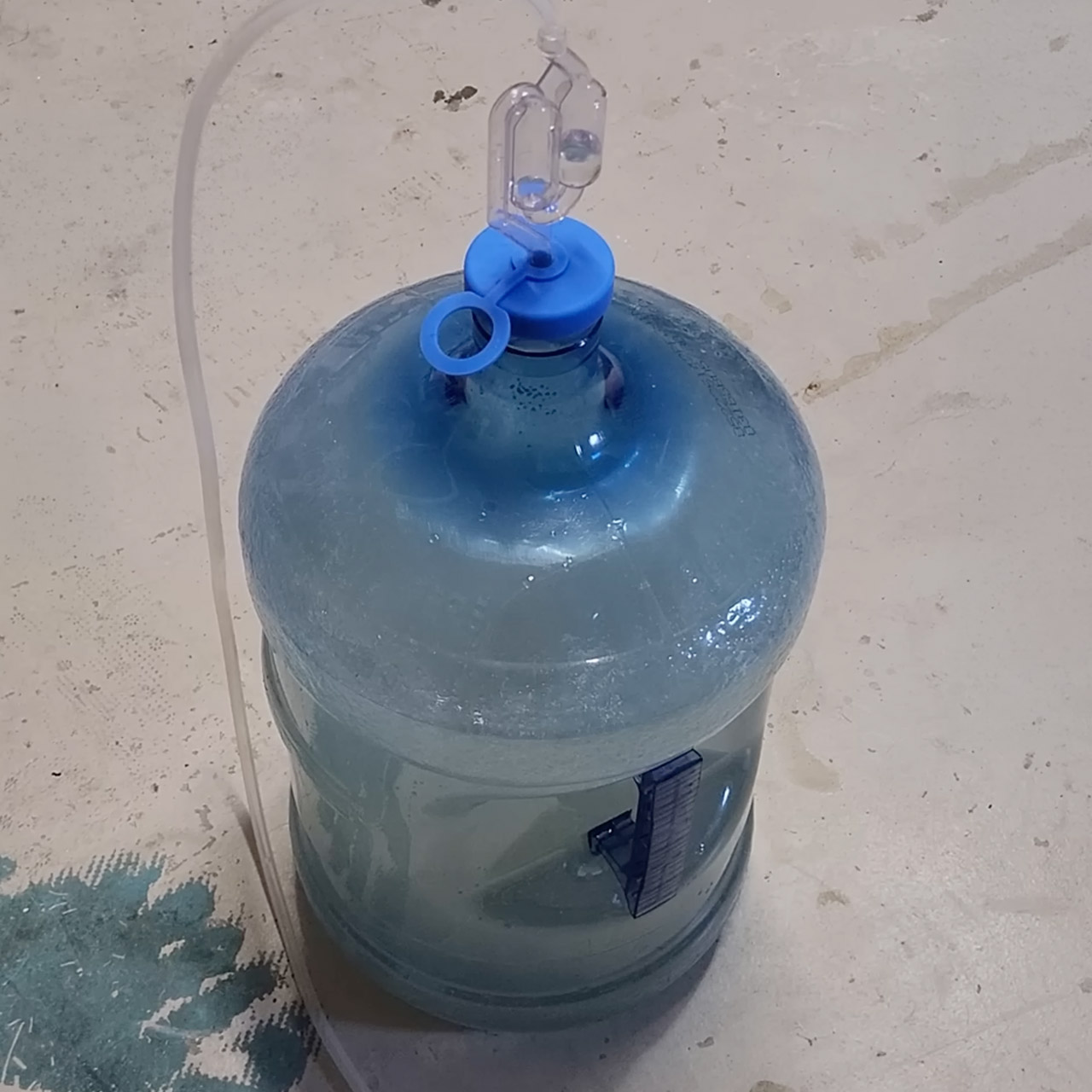
A 5-gallon water jug serves as a fermentation tank. The carbon dioxide is routed out via an airlock tube and into a recycled water-filter canister. The works is stuffed with silica-gel beads, which reduces moisture slightly, but we later discovered that the dew point remains too high, causing ice to form inside the valves. The next step is to transfer the gas to a beach ball. It takes a few days, but the ball eventually fills up with hundreds of gallons of CO2. It serves the purpose of providing some extra room to keep the pressure near the proper level while the yeast is still active.
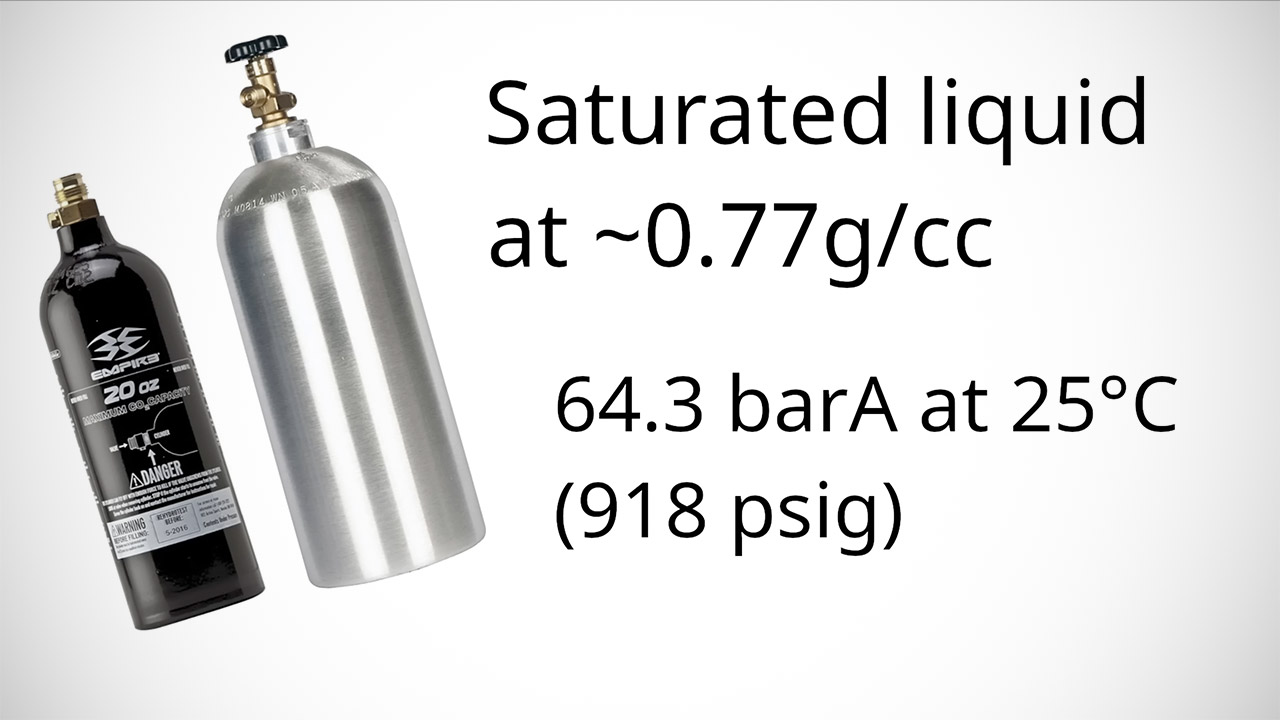
The major issue is turning the squishy substance into liquid. At room temperature, the CO2 must be compressed to roughly 64bar before it can condensate. The problem is that standard shop compressors can only reach a fraction of that capacity. The solution is to simply leave it in the air box. To cool a copper coil, a DIY system makes use of propylene as a refrigerant. This lowers the temperature to roughly -33 degrees Celsius and reduces the condensation pressure to about 13 bar absolute, which is well within the capabilities of a severely modified oil-less air compressor with its over-pressure cut-out switch disabled.

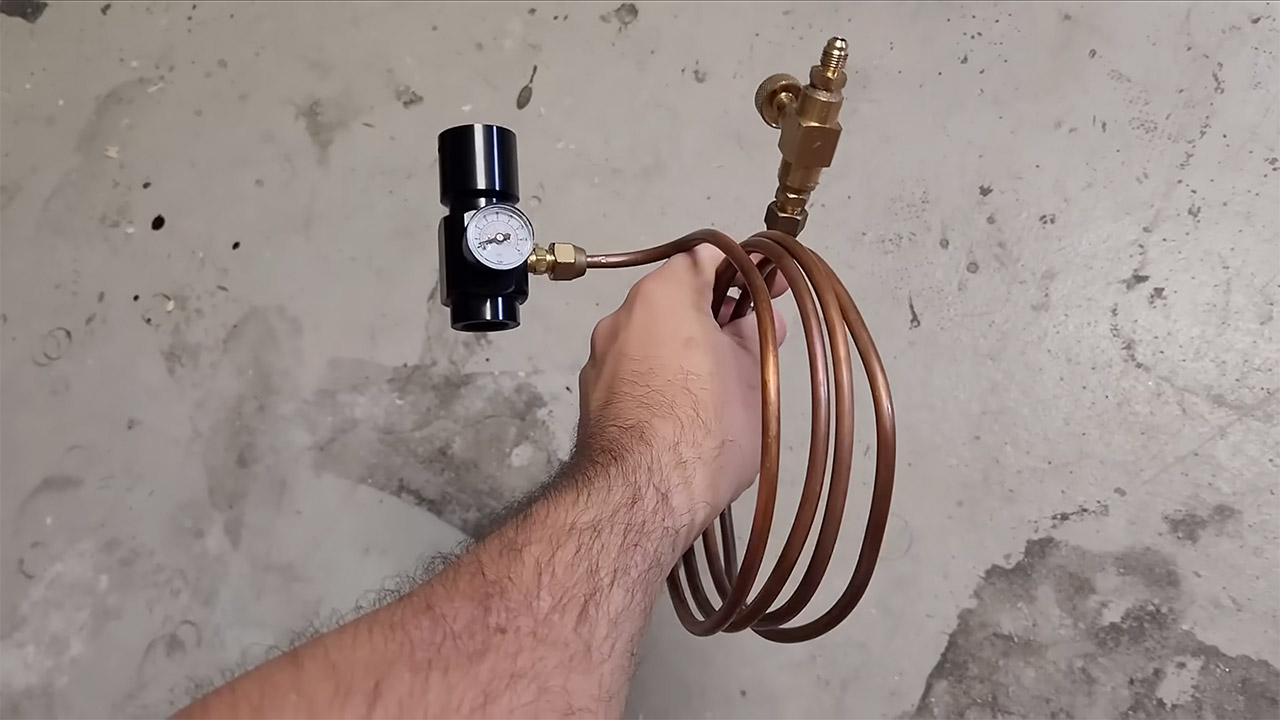
That copper coil is a 2-inch pipe, approximately 2 feet long, with a thinner copper coil within to convey the propylene. The CO2 from the beach ball enters at the top, meets the chilly surface, and condenses into a liquid that gathers at the bottom. A second coil (the same as the first) is housed in a 96% ethanol-lined thermos. A paintball tank sits in that bath, keeping the metal cool. Once some liquid has accumulated in the coil, a valve opens and the liquid flows into the chilled tank.
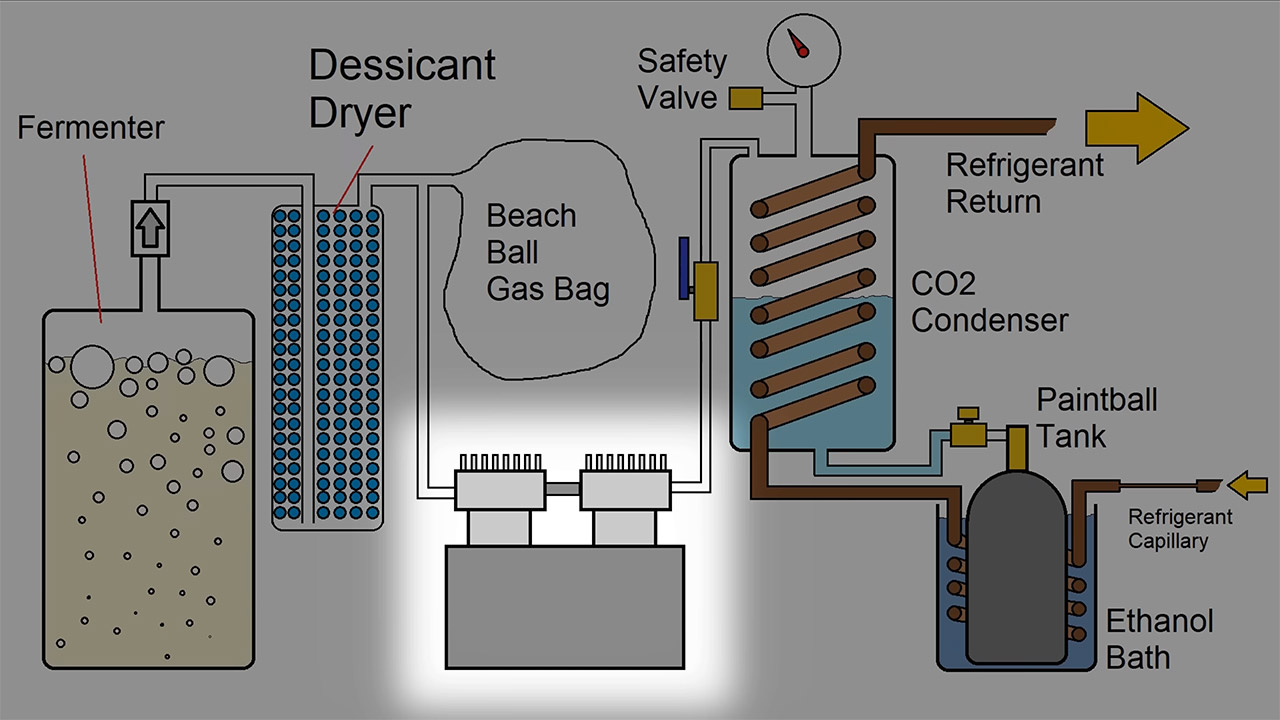
An typical oil-free compressor can move the gas, but only at a very sluggish rate; at 17 bar, it moves like a snail. Switching to a refrigerated compressor provides the necessary pressure, 400 psi or greater, and reduces fill time to 10 or 15 minutes. But now we have a new problem: oil separation. Any lubricant that gets into the tank degrades the purity. Then there’s water, which still freezes inside the tank valve while we pump it out, and this can jam the nozzle until the metal heats up again.
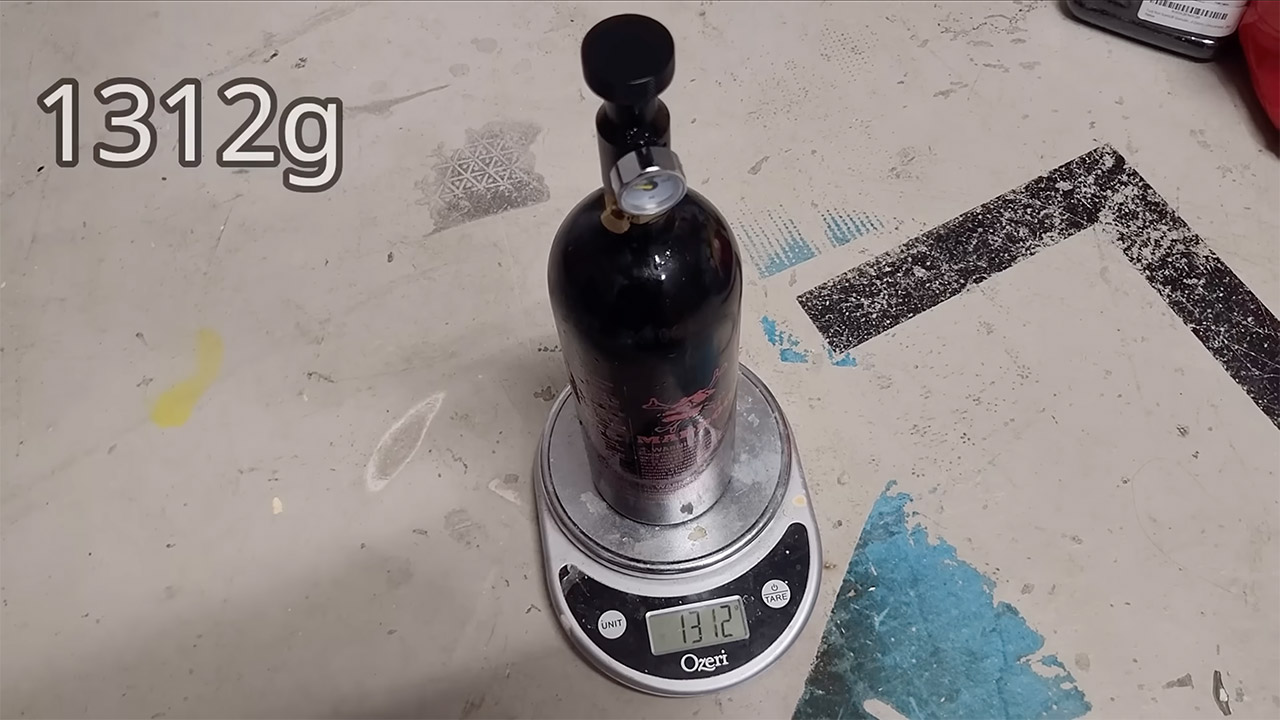
After filling the bottle to capacity, the scales read 1312 grams with the valve still connected. When the contents were drained, 974 grams remained, indicating that 338 grams of liquid carbon dioxide had been trapped inside. The container wasn’t even full to the brim, but that liquid was unmistakable, and when that valve was opened quickly, the temperature of the tank dropped to the point where it iced over. If you discharge it completely and quickly, you could bring it down to the temperature of dry ice.
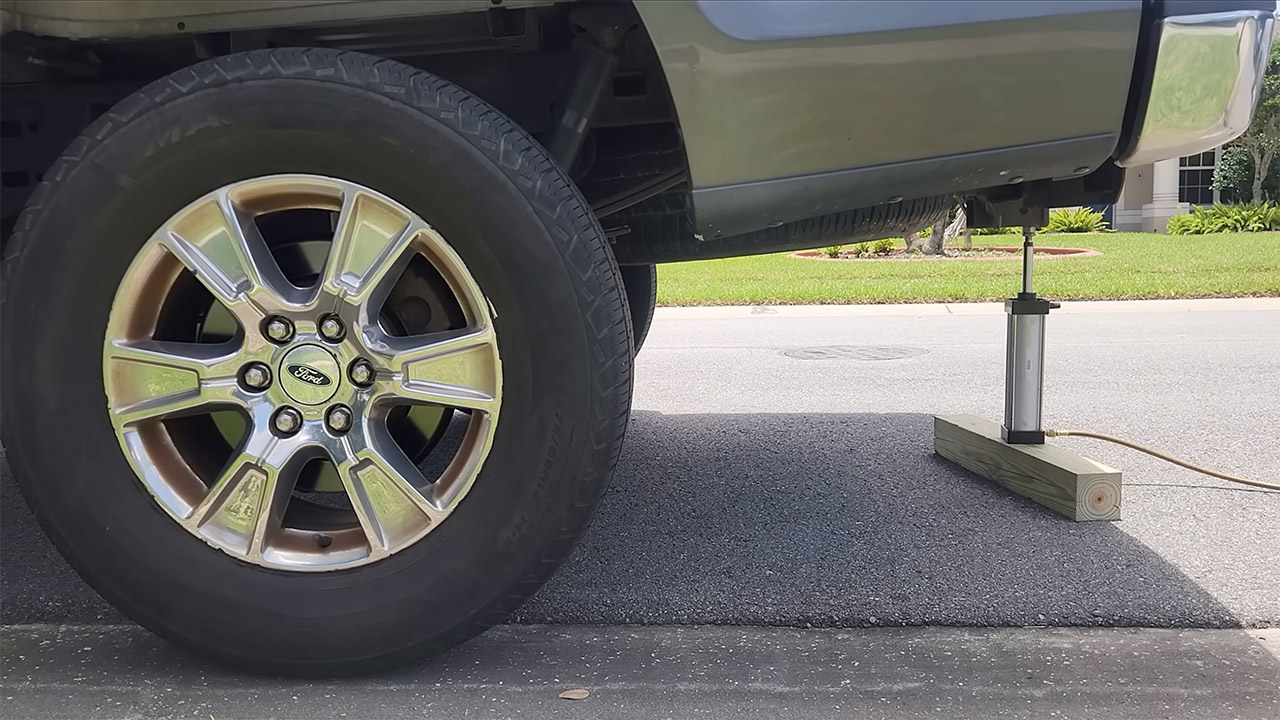
That small charge of ours already has some substantial practical power behind it. By connecting it to a short-stroke pneumatic actuator, he was able to elevate the back end of a full-size pickup approximately 200 millimeters off the ground. The same gas, linked to a vane motor, was able to power a small generator for a few minutes, but you can probably predict where this is going: the intense chill that comes in as the liquid boils away causes the pressure to drop and the motor to turn off.
[Source]
You must be logged in to post a comment Login