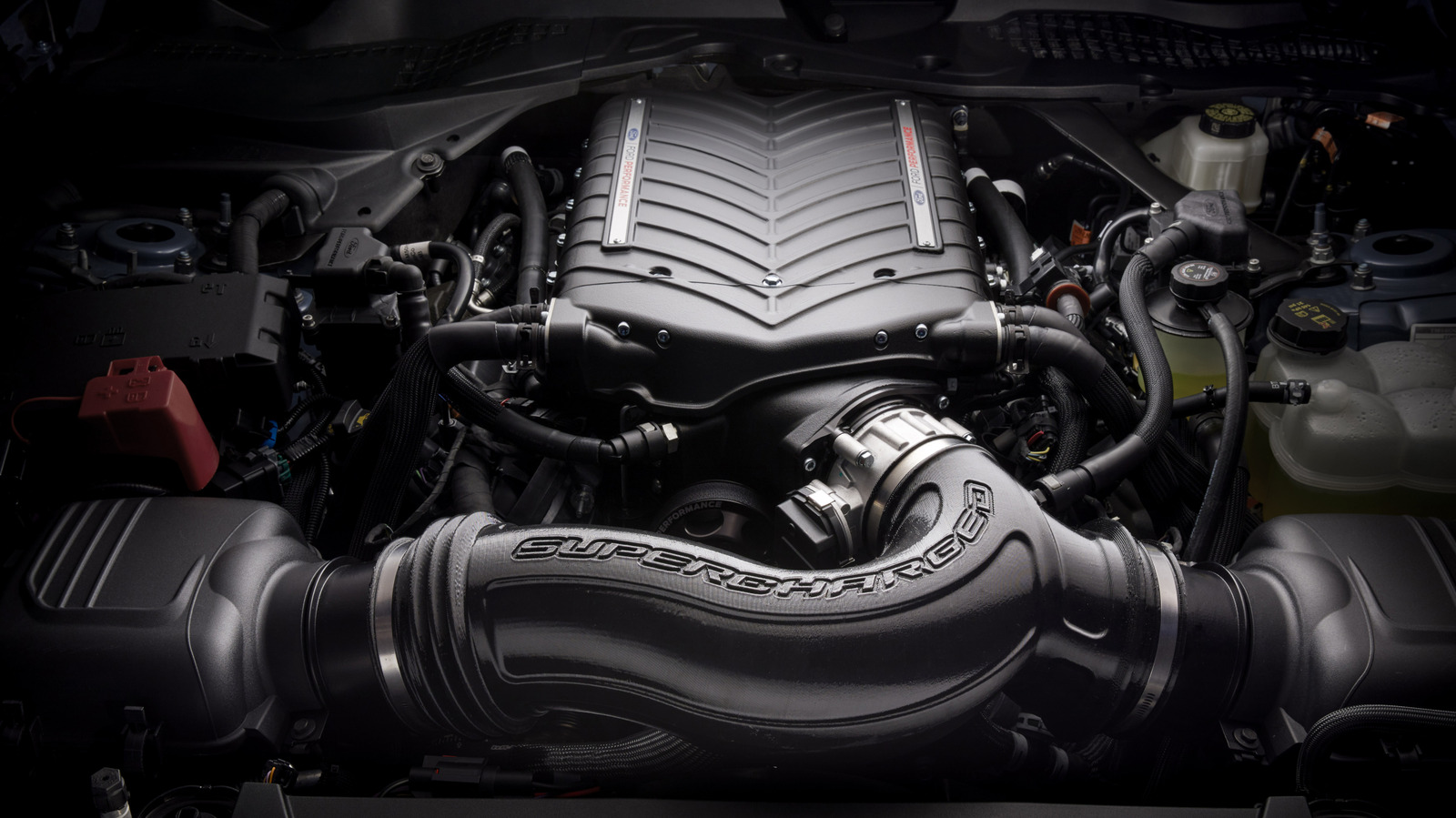
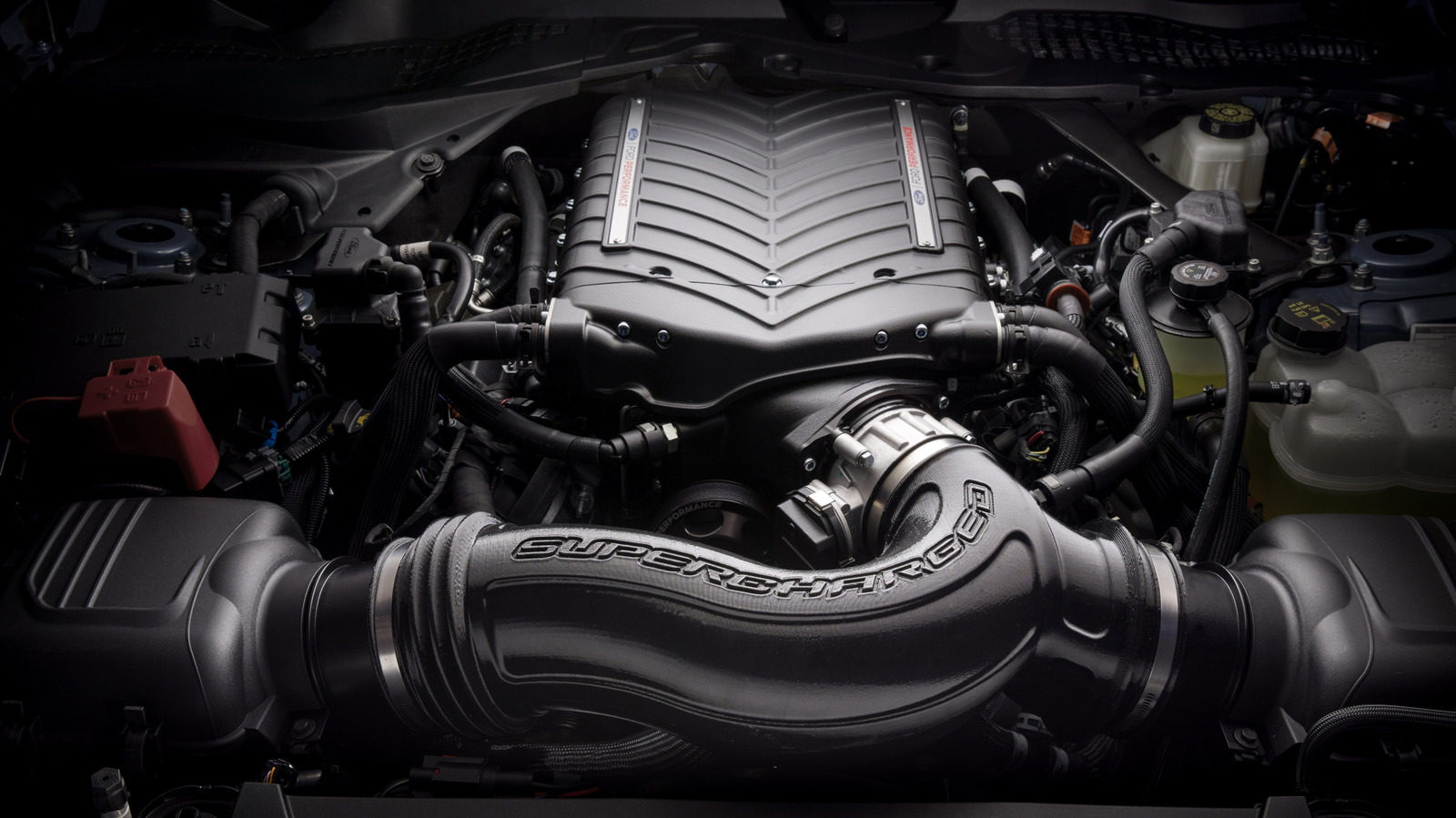
Have you ever sat in your Ford Mustang GT or better yet, your Mustang Dark Horse and thought: “I need a supercharger that has a bigger displacement than some entire car engines and gives my car more horsepower than some supercars.”
Well, Ford Racing Parts has just the kit for you. For $10,500, Ford will sell you a 3.0-liter Whipple supercharger kit for the 2024-2026 Ford Mustang GT and Dark Horse. You no longer have to worry about a sketchy build in your garage that might throw a rod through the side of the engine block or melt the intake, because this kit is also covered by a Ford Racing Parts three year/36,000-mile warranty (as long as the kit is installed by a certified technician or a Ford dealership).
Advertisement
With the kit, Ford says it will boost the horsepower to a pretty wild 810 and the torque to 615 pound-feet, if you use 93 octane fuel. Interestingly enough, the kit is not available in California.
Advertisement
Superchargers for everyone
Additionally, Ford offers a supercharger kit for 5.0-liter V8 equipped F-150s from the 2021 to 2026 model years. It is also a 3.0-liter Whipple supercharger. Ford notes that it will boost the power to “only” 700 horsepower and 590 pound-feet of torque. It’s $10,500 as well and carries the same warranty. You will have the fastest Ford truck that isn’t a Raptor and doesn’t say “Shelby” on it by a significant margin.
A turbocharger relies on exhaust gases to spin up what is essentially a compressor to dump air into the engine, a supercharger does the same thing, but instead uses a belt connected to the engine’s crankshaft to spin.
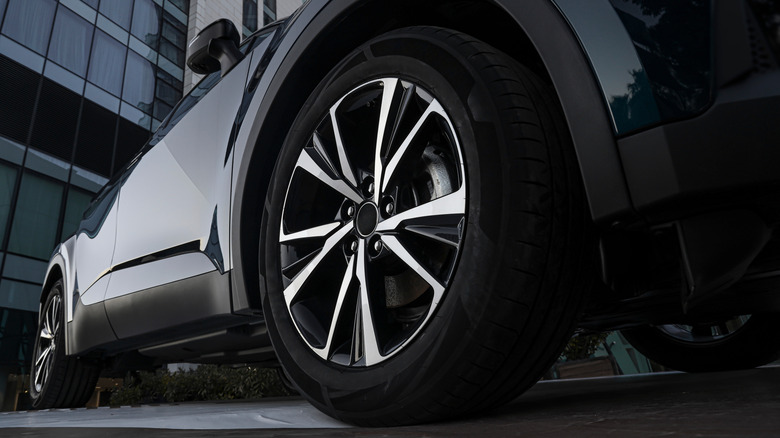
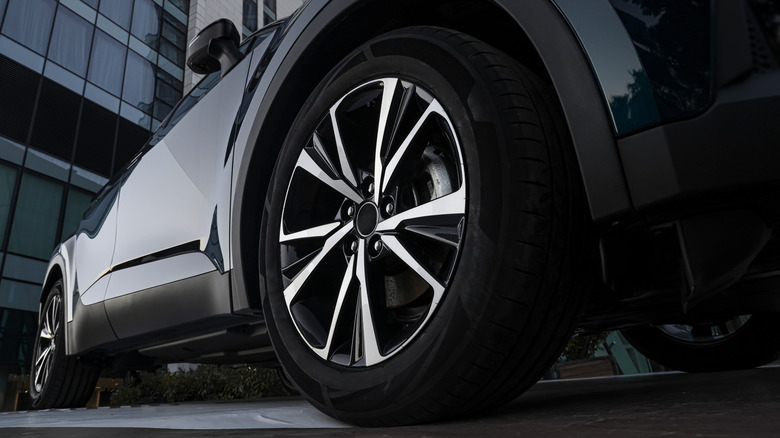
A key part of the appeal of any great luxury car is its comfortable, smooth ride, but making the most of that ride will require the right tires. A 2025 study by JD Power surveyed luxury car owners to see which manufacturer delivered the most consistently satisfactory luxury car tires, with three manufacturers achieving scores above the segment average. In third place was Pirelli, the historic Italian tire company that’s now partly owned by Chinese investors. The second-place spot went to Michelin, with first place in the survey awarded to Goodyear.
This marks a reversal of fortune for the top two brands compared to 2024, when JD Power ranked Goodyear second and Michelin at the top of the table. The 2025 survey didn’t elaborate on the potential reasons behind Goodyear’s new, higher ranking. However, JD Power’s director, Jason Norton, was quoted as saying that “the overall experience of tire traction and handling during poor weather conditions […] is one of the top customer concerns.” He added that “a greater focus on quality” improved the chance that customers would become repeat customers of a tire brand.
The survey asked owners how happy they were with their tire purchases, based on four criteria. According to JD Power, the two most important areas were tire ride and tire wear, but handling and appearance were also taken into account in the ranking.
Advertisement
Bridgestone scored worst overall in the luxury category
Andresr/Getty Images
At the other end of the luxury car tire rankings, JD Power’s least satisfactory brand was Bridgestone. It returned a score of 783, well below the segment average of 798 and significantly less than Goodyear’s score of 821. The Korean tire brand Hankook and Continental were joint second-least satisfying in the luxury category. Both scored 795 points, just below the segment average.
Goodyear’s score in the luxury tire category proved too high for its rivals to beat, but luxury car tires weren’t the only segment where the brand did well. It also took top spot in the passenger car tire category and achieved a second-place finish in the performance sport category. The only segment in which Goodyear didn’t perform well was the truck and utility category, where it received a score only marginally above the segment average. Thankfully, buyers looking for top-rated truck tires have a plethora of other options available, with JD Power ranking Hankook and Michelin as the most satisfactory brands in that category.
Meta AI should soon be better at surfacing international news content thanks to a set of new deals with publishers. The company announced new agreements with international outlets and offered additional details on its recent deal with News Corp.
The latest deals bring French newspaper Le Figaro, Spanish media company Prisa and German newspaper Süddeutsche Zeitung into the fold. Together, along with News Corp, which runs a number of outlets in the UK, these sources should give Meta AI better access to timely info about world events. Meta didn’t disclose terms of the deals — The Wall Street Journal previously reported the News Corp arrangement was worth up to $50 million a year — but it said that it intends to link out to the relevant news sources.
“These integrations will also facilitate easier access to information by linking out to articles, allowing you to visit these partners’ websites for more details while providing value to partners, enabling them to reach new audiences,” Meta wrote in an update. The company has a long and sometimes fraught history with publishers as its priorities have shifted over the years. In the past, Meta has struck deals to pay publishers to produce live video and “instant articles” only to change course as news content has become less of a priority for Facebook.
Now, with Meta struggling to compete with its AI rivals, it seems the social media company is once again interested in news content. As the company notes in its blog post, Meta AI isn’t always great at surfacing accurate and timely info. I noted this in 2024 when the company’s assistant was repeatedly unable to accurately answer seemingly simple questions like ” who is the Speaker of the House of Representatives.”
Advertisement
By striking a bunch of deals with publishers, the company should be better equipped to handle these kinds of queries (and hopefully more complex ones). How much benefit publishers will see from these arrangements, however, is an open question. While Meta says it will link out to the relevant news sources, there are lots of outside data points that raise serious questions about the effect AI search tools are having on web traffic.
Ford does sell an electric pickup, but not very many of them. We can’t say for sure, but it’s possible that if the F150 Lightning had the classic cool of [ScottenMotors] 1977 F150 SuperCab conversion they’d have better numbers.
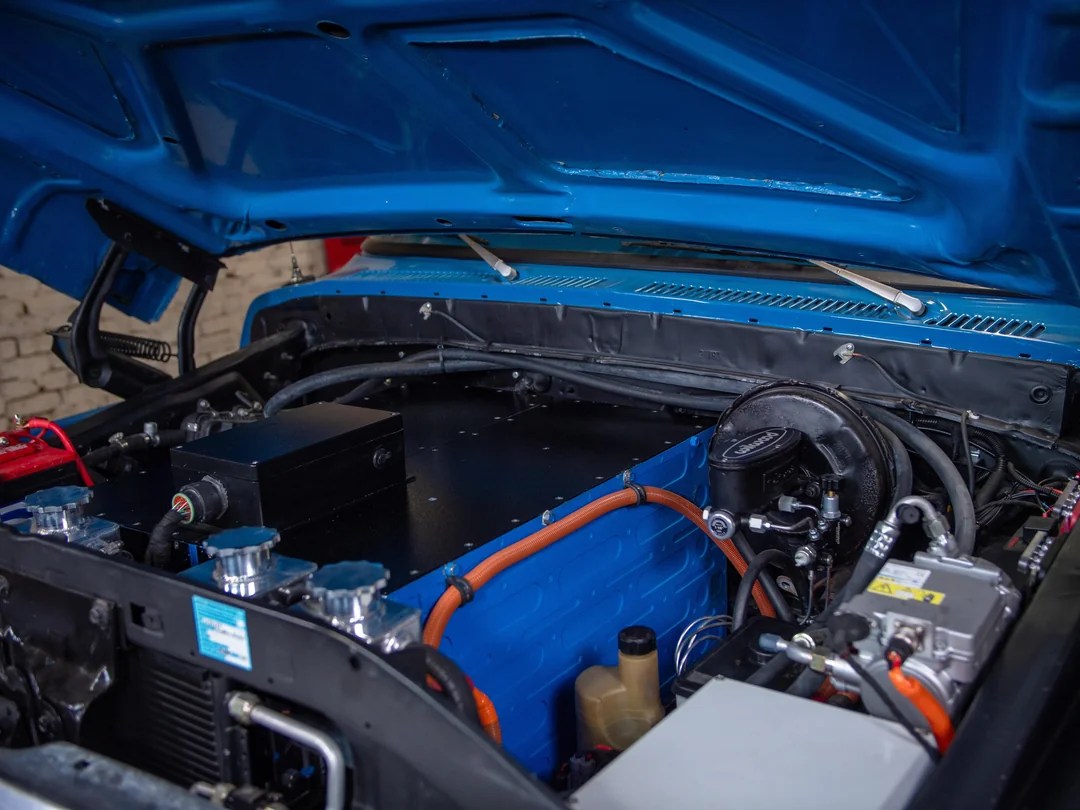
The battery box sits where a V8 used to choke on well-meaning emissions controls.
On Reddit, [Scotten] shares the takeaways from his conversion effort, which involved a custom Tesla-cell battery pack and a new rear axle assembly to house the Tesla SDU (Small Drive Unit). A Large Drive Unit (LDU) would probably fit, but the SDU already puts out 264 HP, which compares rather favourably to the 156 HP this truck’s malaise-era V8 put out stock. The old F-bodies were great trucks in a lot of respects, but even an die-hard ICE enthusiast is probably not going to be sad to see that motor go.
Choosing to put the integrated drive unit in the rear axle complicates the build compared to other conversions that re-use the
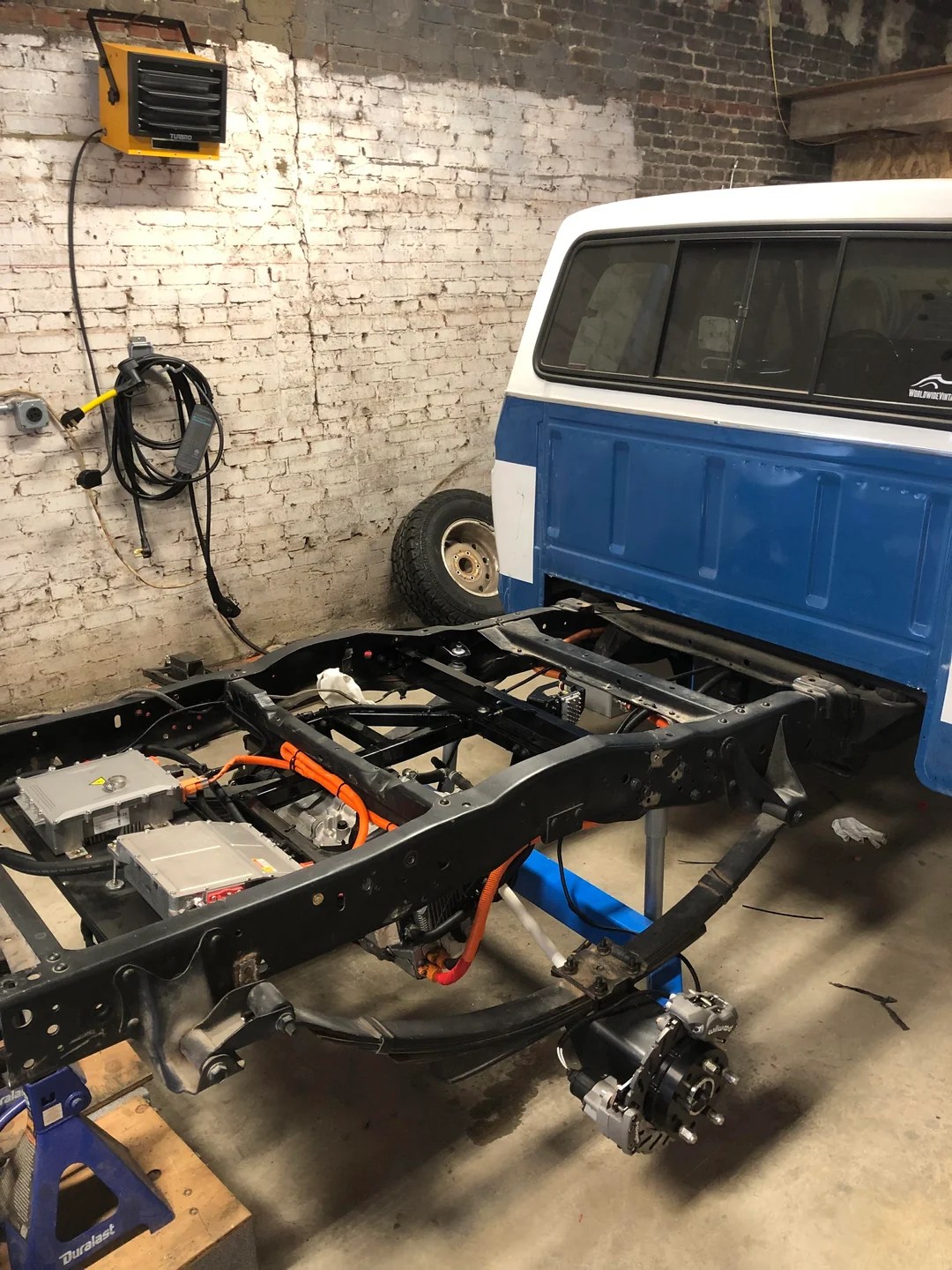
Before the bed goes on, you can see the new rear axle with the Tesla SPU. There might be room for another, smaller battery under there.
stock transmission and differential, but saves you all the losses associated with that frankly unnecessary powertrain hardware. The takeaway there is to figure out all the mechanical work on the chassis, because the EV stuff is actually the easy part. [Scotten] had the wheels turning a full year before he got the brakes figured out, because even if they’re just the rears and even if there’s regen– you want all the breaks to work on your test drive.
With the 100kW power pack, he’s getting about 220 miles of range. From the pictures, it looks like he’s filled up most of the hood space with that battery, but we can’t help but wonder if there’s room under the bed where the gas tank(s) lived to squeeze in more cells for those of us who need to go further.
OpenAI plans to add its Sora video generation model directly into ChatGPT, The Information reports . The standalone Sora app was seen as a smash hit when it launched alongside Sora 2 in September 2025, but interest in the video generation app has fallen in the time since as users ran into limits on the amount and kinds of videos they could create.
Adding Sora to the ChatGPT could give the model a second life, and ideally grow the ChatGPT app’s weekly active users from the 900 million OpenAI reported in February, to a billion or more. According to The Information, the standalone Sora app will stick around after the model is integrated, even though the app has fallen out of the App Store’s top 100 free apps and only a small number of users reportedly share their videos publicly in the app.
It’s hard to pin down an exact number for what generating a video costs OpenAI, but the company charges API customers $0.10 per second for a 720p video, and in 2025, it was willing to give away 30 free video generations per account per a day in the Sora app. When you consider the even larger audience that could use the model in the ChatGPT app, things could get expensive fast. That could be one reason The Information reports OpenAI has projected it could spend over $225 billion on inference — the cost of running the company’s models — between 2026 and 2030.
The company has attempted to monetize the Sora app by having users pay for credits to generate new videos, and could deploy something similar once the model comes to ChatGPT. Maybe giving customers the ability to generate videos with Disney characters could even get people to pay for more videos once they run out of free generations. Whether or not adding Sora to ChatGPT moves the needle for OpenAI, though, the company will likely be spending even more money than it was before.
And then there were two: Of the original 11 co-founders who kickstarted xAI with Elon Musk three years ago, only two remain as the deep learning lab continues a personnel overhaul to compete with Anthropic and OpenAI. That rebuilding, insists Musk, is by design.
“xAI was not built right first time around, so is being rebuilt from the foundations up,” Musk said Thursday on his social media platform, X. By most measures, it isn’t going all that smoothly.
The most immediate pressure is competitive. This week, xAI co-founders Zihang Dai and Guodong Zhang left the outfit after Musk complained that the company’s AI coding tools were not effectively competing with Claude Code or Codex, rival programming assistants made by Anthropic and OpenAI, respectively. Musk said the company held an all-hands meeting on Wednesday that focused on how to catch up, which he predicted would be possible by the middle of this year.
Coding tools matter so much because they’re where the money is. While an early-year surge of users was powered by xAI’s lax regulation of Grok’s ability to produce sexual and even abusive imagery, coding tools are seen as the key revenue-generating tech for AI labs. That makes xAI’s current lag in this area more than a perception issue; it’s a business problem.
Advertisement
The personnel overhaul extends well beyond this week. A month ago, 11 senior engineers at xAI, including two co-founders, left the company following changes Musk described as a reorganization to suit a larger business. That effort was apparently insufficient: The Financial Times reported that SpaceX and Tesla executives have parachuted into the company to evaluate employees and fire those who don’t make the grade.
The two remaining co-founders, Manuel Kroiss and Ross Nordeen, along with Musk, have their work cut out for them.
Musk is now casting a wider net for talent. On Thursday, he said on X that he and another colleage, Baris Akis, are currently reviewing rejected employment applications in the company, with an eye toward reaching out to promising candidates who should have had a chance to interview. “My apologies,” Musk added, addressing the pile of strangers he’d ghosted.
Techcrunch event
Advertisement
San Francisco, CA | October 13-15, 2026
For the sake of comparison, LinkedIn reports that xAI has just over 5,000 employees, compared to more than 7,500 at OpenAI and more than 4,700 at Anthropic.
Advertisement
On the hiring front, there’s at least one encouraging sign. Andrew Milich and Jason Ginsberg are joining xAI from the AI coding tool company Cursor, where the two held joint responsibility for product engineering. Unlike xAI, Cursor depends on frontier labs for access to the AI models it runs on. Their decision to join xAI may signal the importance of direct access to LLM and computing resources to run them — and suggest that xAI’s core asset, its own frontier model, is still an attractive draw.
Either way, the pressure to show results is as much external as it is internal. Now that xAI is part of SpaceX, and with a public offering of SpaceX shares anticipated, the cash-burning unit is under pressure to demonstrate real uptake on Grok, its LLM. (A stumbling AI division is not the story Musk needs investors to be reading.)
Longer term, Musk is betting on something bigger than coding tools. xAI’s Macrohard project — Musk is convinced the name is “a funny reference to Microsoft” — aims to create an AI agent capable of doing anything a white-collar worker can do on a computer. Toby Pohlen, chosen to lead the project in February, left within weeks, and this week, Business Insider reported that Macrohard was on pause.
Musk’s response has been to draft another of his companies into the project. He revealed for the first time that Macrohard is a joint effort with Tesla, which is also developing a complementary agent dubbed “Digital Optimus” — a reference to Tesla’s Optimus humanoid robot. In Musk’s description, the xAI language model would direct the Tesla agent as it performs tasks.
Advertisement
It’s ambitious; it’s also not unique. Instead, the vision is not far off from what Perplexity — an AI-powered search engine — is doing with its new “Everything is Computer” offering, which aims to offer enterprise users a dedicated “digital proxy” that can orchestrate their digital tasks. It also echoes what entrepreneur Peter Steinberger is now working on at OpenAI, after creating OpenClaw’s popular personal agents.
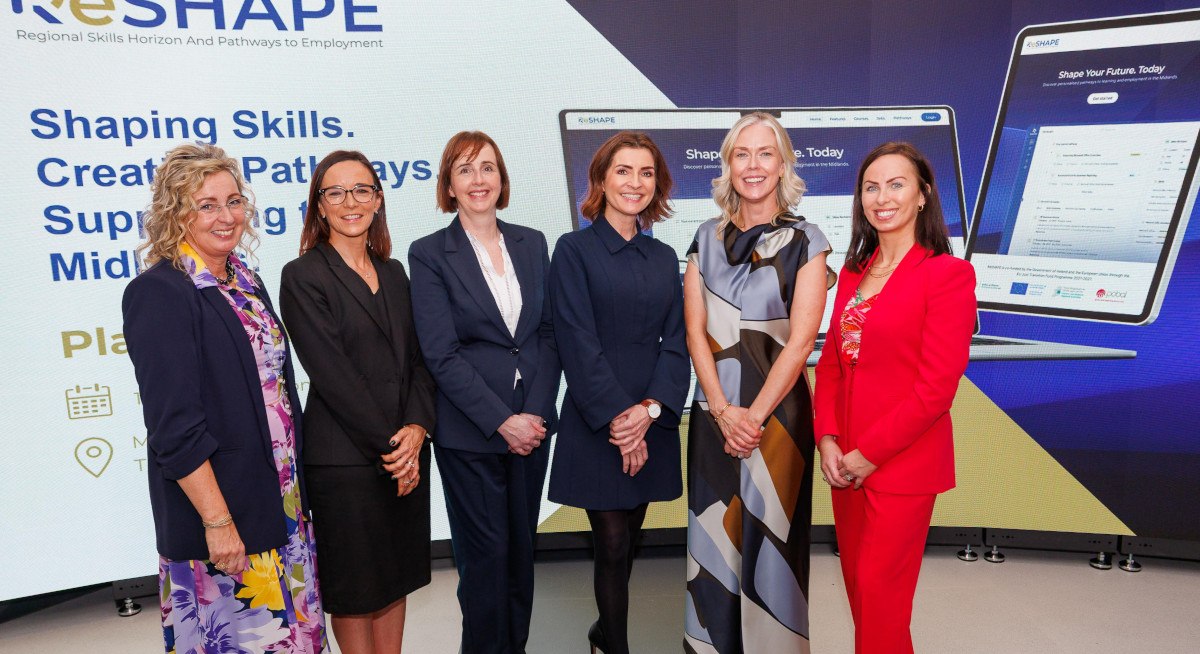
The ReSHAPE platform, using AI, enables professionals to retrain, upskill and ‘future-proof’ their careers.
The Technological University of Shannon (TUS) in Athlone has launched the Regional Skills Horizon and Pathways to Employment (ReSHAPE) platform, which is an AI-powered digital platform developed to support professionals based in Ireland’s midlands region, supporting economic development in regions such as Laois, Offaly, Longford and Westmeath.
ReSHAPE is a collaboration between Munster Technological University (MTU), TUS and the University of Limerick (UL) and is part of a strategic initiative aiming to deliver education, training and skills development opportunities.
Users of the platform will be able to undertake a skills audit, identify transferable skills and access funded training opportunities. Employers can use the platform to identify organisational skills gaps and create workforce development strategies. Reportedly, the programme is designed to support thousands of learners across the midlands.
Advertisement
Commenting on the launch, Prof Vincent Cunnane, the president of TUS, said: “The platform represents a transformative opportunity for workers and employers across the region. ReSHAPE provides a powerful new tool to help individuals understand their capabilities and connect with education pathways that support sustainable careers in a rapidly evolving economy.
“The midlands is entering a new phase of economic transformation and ensuring people have access to the right skills at the right time is critical.”
Prof Maggie Cusack, the president of MTU added: “The collaboration between universities and industry partners was key to ensuring the platform delivers meaningful impact. ReSHAPE brings together education providers, industry and communities to ensure skills development is aligned with real workforce needs.
“By combining data-driven insights with accessible training pathways, the platform will help thousands of people across the midlands build the skills needed for the jobs of the future. ReSHAPE is also demonstrating that collaboration across higher education, industry and government can support better, evidence-based skills planning at a national level.”
Advertisement
Also in the midlands, Danish drug-maker Novo Nordisk recently announced a €432m investment at its Athlone-based plant to advance its manufacturing capacity for GLP-1 drugs. The Minister for Enterprise, Tourism and Employment Peter Burke, TD called the news, “a vote of confidence in Athlone, the midlands and the skilled workforce we have worked hard to develop”.
He said: “It will help drive innovation, create highly skilled jobs and further strengthen Ireland’s pharmaceutical ecosystem.”
Don’t miss out on the knowledge you need to succeed. Sign up for the Daily Brief, Silicon Republic’s digest of need-to-know sci-tech news.
Whovians, rejoice. The BBC is about to unlock a piece of Doctor Who history that even the TARDIS might have forgotten. Two lost episodes of Doctor Who, the iconic sci-fi series, will broadcast in April, the showrunner for the current season confirmed.
The two 1965 episodes, The Nightmare Begins and Devil’s Planet, were donated to the charitable trust Film Is Fabulous by the estate of an anonymous collector.
“The collector did recognize what he had, but how he acquired them has been lost to time,” Professor Justin Smith Leicester of De Montfort University, who led the recovery effort, told the broadcaster.
Advertisement
The researchers said that while most of the donor’s private collection was destroyed by water damage, the Doctor Who episodes were intact.
Doctor Who showrunner, Russell T Davies, celebrated the news on Instagram and said the episodes would air in the UK in April, though no US air date has been announced yet.
“Lost for 61 years! Best of all, these will be made available for FREE on the BBC iPlayer in April,” Davies wrote.
Advertisement
He expressed gratitude to Film Is Fabulous for finding the lost episodes and encouraged people to donate to the registered charity. “Maybe they’ll find more! As the Doctor says… ‘Daleks!’”
The episodes feature the first incarnation of the Doctor, played by William Hartnell, and a typical Dalek plot to take over Earth and the galaxy.
In the 1960s and 1970s, the BBC had a policy of destroying film or reusing videotapes, leading to dozens of episodes of Doctor Who and other popular UK shows like Dad’s Army and Top of the Pops going missing.
Old Doctor Who episodes do surface occasionally, and in 2016, the newly discovered soundtrack for one storyline was turned into an animated series called The Power of the Daleks.
Advertisement
Meanwhile, Disney ended its working relationship with the BBC last year, and star Ncuti Gatwa left the show. However, the UK broadcaster says that Doctor Who will continue, and Russell T Davies is working on a new Christmas special.
Meta plans to remove end-to-end encryption (E2EE) from Instagram direct messages by May 8, 2026. “Very few people were opting in to end-to-end encrypted messaging in DMs, so we’re removing this option from Instagram in the coming months,” says Meta. “Anyone who wants to keep messaging with end-to-end encryption can easily do that on WhatsApp.” The Hacker News reports: The American company first began testing E2EE for Instagram direct messages in 2021 as part of CEO Mark Zuckerberg’s “privacy-focused vision for social networking.” The feature is currently “only available in some areas” and is not enabled by default. Weeks into the Russo-Ukrainian war in February 2022, the company made encrypted direct messaging available to all adult users in both countries. Last week, TikTok said it would not introduce E2EE, arguing it makes users less safe by preventing police and safety teams from being able to read direct messages if needed.
Microsoft is investigating a new issue affecting some Samsung laptops running Windows 11 after installing the February 2026 security updates, in which users lose access to their C:\ drive and are unable to launch applications.
The company says it is working with Samsung to determine whether the problem is related to the Windows updates or Samsung software installed on affected devices.
“Users might encounter the error, ‘C:\ is not accessible – Access denied’, which prevents access to files and blocks the launch of some applications including Outlook, Office apps, web browsers, system utilities and Quick Assist,” explains Microsoft.
Microsoft says these errors can appear during normal Windows usage on a Samsung device, such as when accessing files, launching applications, or performing administrative tasks. In some cases, the permission problems can prevent users from elevating privileges, uninstalling updates, or accessing logs.
Advertisement
The problem has been reported mostly in Brazil, Portugal, South Korea, and India, and is primarily impacting Samsung Galaxy Book 4 and other Samsung consumer devices.
Microsoft says its latest investigation suggests the issue may be related to the Samsung Share application, though the exact root cause has not yet been confirmed.
At this time, the issue only impacts systems running Windows 11 version 25H2 and 24H2.
While Microsoft has not shared a temporary solution, a Reddit user claiming to be a Samsung technician in Brazil has posted a workaround that some affected users say restores access to the C:\ drive.
Advertisement
However, the workaround requires changing the ownership of the entire C:\ drive and all subfolders to the “Everyone” group, including system directories and files that are normally owned by TrustedInstaller or SYSTEM.
Changing ownership of system files in this way weakens Windows’ built-in security protections. Therefore, users should avoid applying the workaround unless absolutely necessary and instead wait for a fix from Microsoft.
Malware is getting smarter. The Red Report 2026 reveals how new threats use math to detect sandboxes and hide in plain sight.
Download our analysis of 1.1 million malicious samples to uncover the top 10 techniques and see if your security stack is blinded.
Magico, the California-based loudspeaker manufacturer known for its obsessive focus on enclosure rigidity, advanced driver materials, and extremely tight build tolerances, will preview its new S7 2026 floorstanding loudspeaker at AXPONA (Audio Expo North America), taking place April 10 to 12, 2026 in Schaumburg, Illinois. The S7 enters a segment of the ultra high-end loudspeaker market that has become increasingly competitive, with companies such as Børresen, Estelon, and Wilson Audio all taking different approaches to cabinet construction, driver technology, and system tuning in the race to build reference level loudspeakers that now regularly push past the six figure mark.
Magico’s S Series has traditionally served as the company’s bridge between its flagship statement products and the rest of its lineup, and the S7 appears positioned to continue that role. Debuting the speaker at AXPONA places it in front of one of the largest gatherings of dealers, media, and serious audiophiles in North America, where comparisons to some of the most ambitious loudspeakers currently on the market are inevitable.
Magico S7 2026 Loudspeaker
A New Reference in the Company’s S Series Lineup
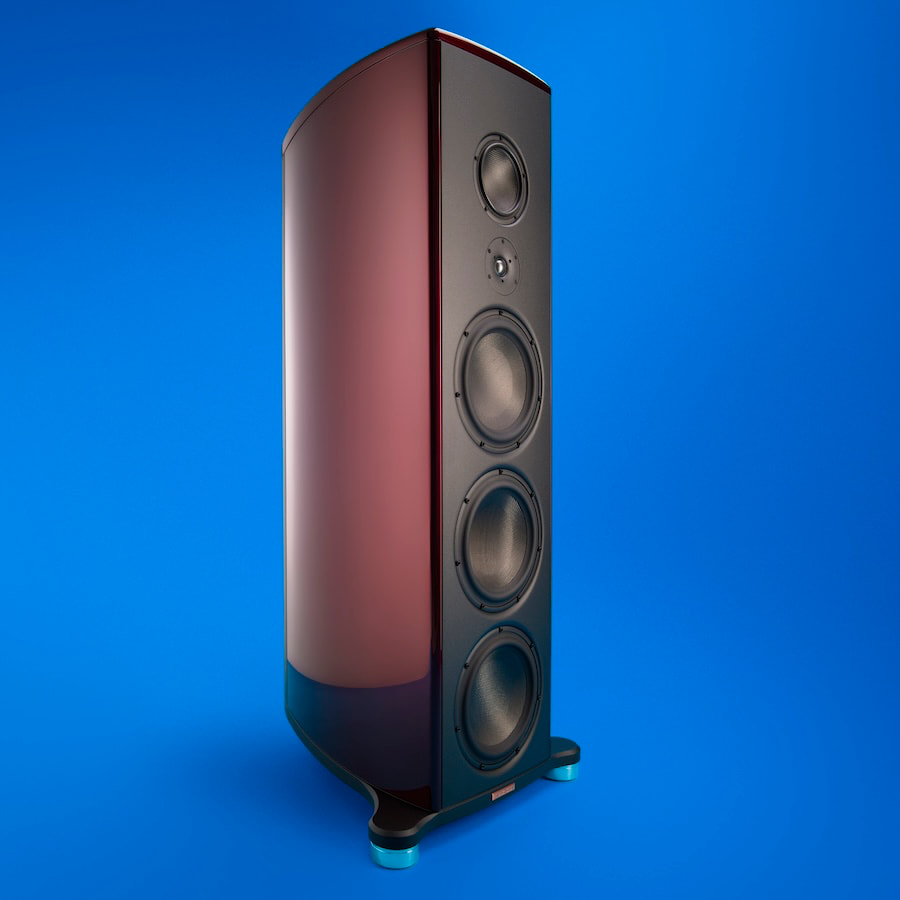
The S7 2026 is a 384 pound, five driver, three-way floorstanding loudspeaker designed as the flagship of Magico’s S-Series lineup.
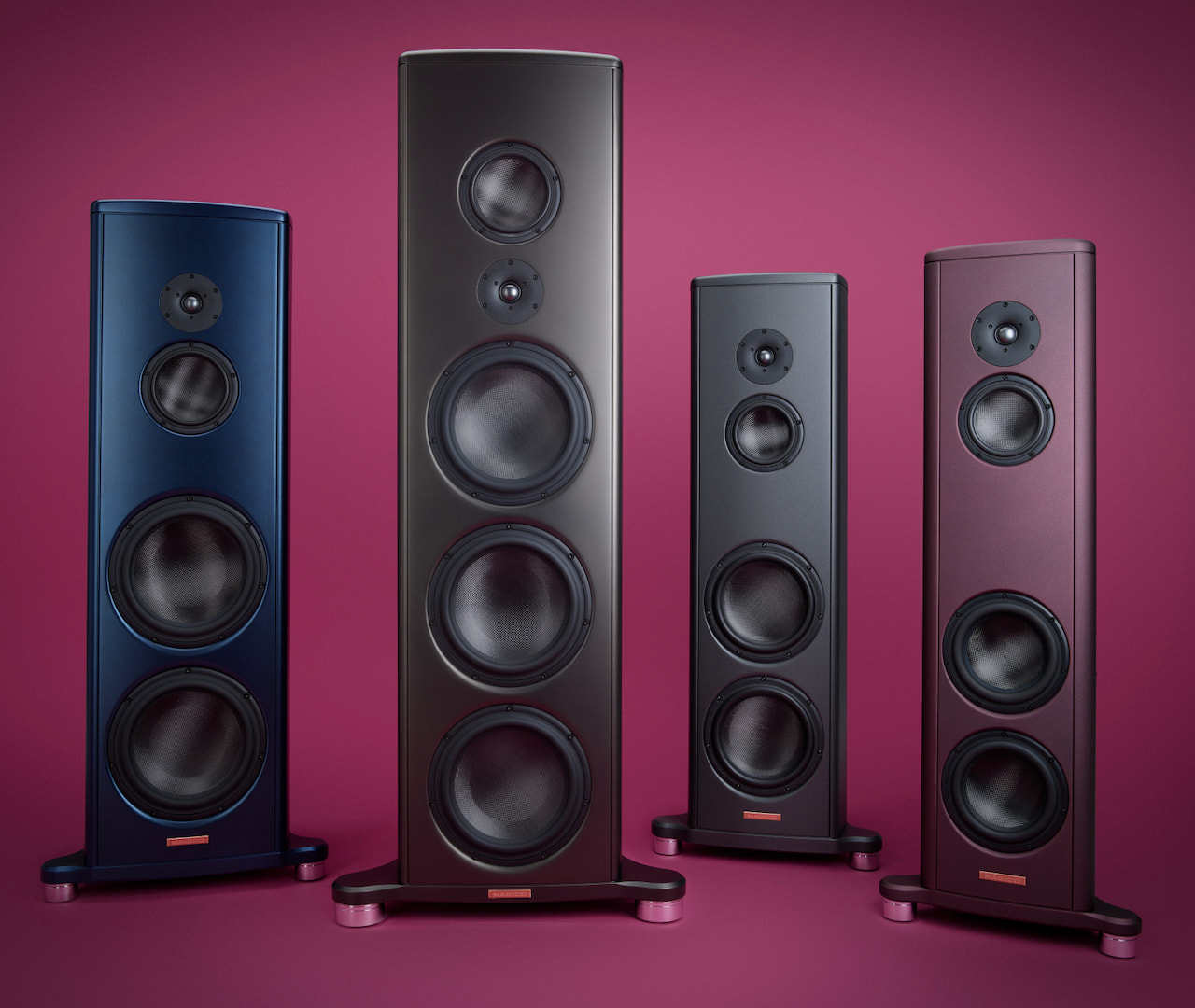
The current generation of the S Series began with the introduction of the S3 in 2023, a model that set a new performance benchmark for the line. It was followed by the larger and more ambitious S5 in 2024, which expanded the series with greater scale and output capability. Later that same year, Magico introduced the more compactS2, bringing much of the series’ core technology to a smaller form factor while maintaining the company’s focus on rigidity, driver control, and low coloration.
Advertisement
S7 Development: Advanced Measurement and Engineering from the M Series
The Magico S7 is the result of an extensive research and development program that incorporates engineering tools and methodologies first introduced in the company’s flagship Magico M Series loudspeakers.
During development, Magico used a Near Field Scanner (NFS) robotic measurement system to perform detailed acoustic analysis of the loudspeaker across the full three dimensional space surrounding it. This system allows engineers to capture both on axis and off axis behavior, generating a comprehensive acoustic map of the speaker’s performance.
According to Magico, the data gathered from these measurements was used to refine the S7’s driver integration, crossover behavior, and overall acoustic balance. The company states that the goal was to move the design closer to the theoretical ideal for a multi way loudspeaker while maintaining the accuracy, coherence, and low coloration that define the S-Series.
Enclosure
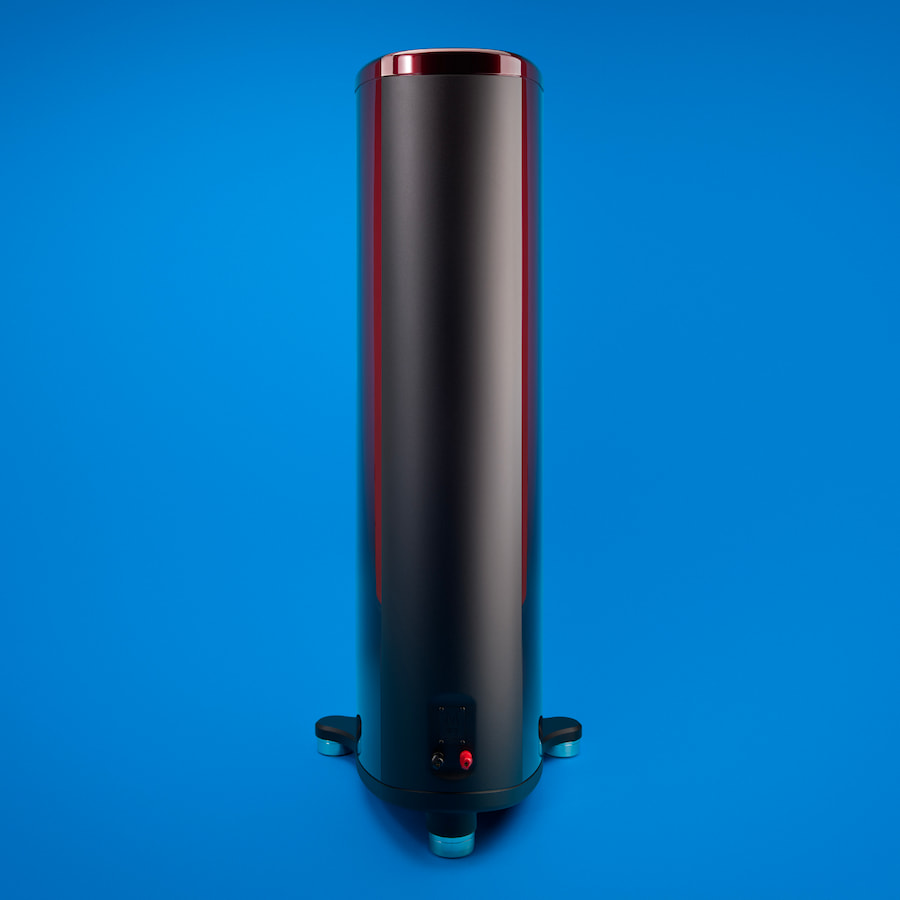
The S7’s aluminum enclosure features a curved, sculpted form refined through extensive 3D modeling and simulation to reduce internal resonances and improve overall structural rigidity. The cabinet design also allows Magico’s proprietary damping techniques to operate more effectively, while the curved front baffle helps minimize diffraction and improve acoustic consistency.
Advertisement
Magico engineers also employed a Laser Vibrometer to measure extremely small cabinet vibrations and the sound pressure they generated. This level of analysis made it possible to identify and address unwanted resonances early in the development process, with the goal of creating a cabinet that adds no audible coloration to the signal.
As part of the redesign, the S7’s internal volume has been increased from 135 liters to 180 liters compared to the previous S Series flagship. According to Magico, the larger enclosure extends bass response by approximately 5 Hz while maintaining the same overall speaker sensitivity, allowing the S7 to deliver deeper low frequency extension without sacrificing efficiency.
Driver Technology
Driver technology remains central to every Magico loudspeaker design, and the S7 incorporates the company’s latest work in materials and driver architecture.
Advertisement. Scroll to continue reading.
Advertisement
At the core of the S7 is Magico’s eighth generation Nano-Tec cone, which uses an aluminum honeycomb core sandwiched between graphene reinforced carbon fiber skins. The structure is designed to combine low mass with high rigidity and effective damping, allowing the driver to maintain control across a wide operating range while reducing distortion.
The cone is mounted in an all new third generation driver chassis developed over three years of research and refinement. The redesigned platform improves force distribution and suspension geometry, and uses a dual post architecture intended to balance dynamic wire tension. According to Magico, the design increases structural stiffness while reducing resonance and improving airflow around the motor structure.
The S7 also incorporates three vertically aligned woofers — a configuration derived from technology first used in the Magico M Project loudspeaker. This layout is intended to reduce floor bounce effects and help smooth in room frequency response contributing to more consistent midbass performance in typical listening environments.
Tweeter
For high frequency reproduction, the S7 uses a tweeter derived from those found in Magico’s M Series loudspeakers. Its 28 mm diamond coated pure beryllium diaphragm offers an extremely high stiffness to weight ratio and is driven by a powerful neodymium motor system designed to reduce distortion and improve power handling.
Advertisement
Magico also used extensive FEA modeling to optimize the tweeter’s rear chamber and acoustic loading. According to the company, this approach helps refine high frequency behavior while maintaining the level of detail, control, and transparency expected from its reference level designs.
Midrange
The S7 features a 6-inch midrange driver built around a 3-inch titanium voice coil housed in Magico’s third generation driver chassis. The driver uses the company’s Nano Tec Gen 8 cone along with a full copper cap and oversized neodymium magnet system designed to improve control and reduce distortion.
According to Magico, the combination is intended to deliver highly accurate midrange performance in both frequency response and time domain behavior, with the goal of preserving clarity and tonal realism across vocals and acoustic instruments.
Woofer
For low frequencies, the S7 incorporates three 10-inch woofers built around a 5-inch titanium voice coil and Magico’s Nano Tec-Gen 8 cone. Each woofer also employs a large copper cap and offers approximately half an inch of linear excursion to maintain control at higher output levels.
Advertisement
According to Magico, the design is intended to deliver deep and controlled bass response while maintaining low distortion and consistent performance across a wide dynamic range.
Crossover Design
The S7’s five drivers are integrated through Magico’s Elliptical Symmetry Crossover (ESXO), a three way network that uses acoustical target 24 dB Linkwitz-Riley slopes. This design approach is intended to maintain phase and frequency linearity while reducing intermodulation distortion, allowing the drivers to operate as a more cohesive system.
The ESXO crossover also incorporates high grade components from Mundorf in Germany. For the first time in an S-Series loudspeaker, the S7 also includes CAST PP Radial capacitors from Duelund Coherent Audio in Denmark, which Magico says contributes to improved coherence and stability across the audible frequency range.
Finish Options
The S7 will be offered in a range of premium finishes, including six Softec powder coat options designed to provide deep color, a smooth texture, and long term durability. Buyers will also be able to choose from six High Gloss automotive paint finishes that are polished to a mirror like surface and sealed with a protective clear coat.
Advertisement
Advertisement. Scroll to continue reading.
Support System
The S7 speaker enclosure incorporates a precision-engineered three-foot support system with constrained-layer damping, further enhancing mechanical stability and sonic performance.
Left to right: S5, S7,
Comparison
Magico Model
S7 (2026)
S5 (2024)
S3 (2023)
S2 (2024)
Product Type
Floorstanding Speaker
Floorstanding Speaker
Floorstanding Speaker
Floorstanding Speaker
Price (pair) matte finish
$211,000
$74,500
$45,500
$34,000-$37,400
Price (pair) high gloss
$237,000
$83,000
$52,500
$39,100-$43,000
Speaker Type
3-way, 5-driver
3-way, 4-driver
3-way, 4-driver
3-way, 4-driver
Tweeter
1 x 1.1” (28mm) Diamond-Coated pure-beryllium diaphragm
1 x 1 x 1.1″ (28mm) Diamond Coated Beryllium Dome
1 x 1.1″ MB5FP Diamond Coated Beryllium Dome (x1)
1 x 1.1” (28mm) pure-beryllium, diamond-coated diaphragm
Midrange
1 x 6” Nano-Tec Gen 8 driver
1 x 6″ (15.24cm) Graphene Nano-Tec Gen 8 Cone Midrange
5″ Gen 8 Midrange driver (x1)
1 x 5” midrange driver
Woofers
3 x 10” Nano-Tec Gen 8 bass drivers
2 x 10″ (25.4cm) Graphene Nano-Tec Gen 8 Cone
9″ Gen 8 Bass driver (x2)
2 x 7” bass driver
Impedance
4 ohms
4 ohms
4 ohms
4 ohms
Sensitivity
89dB
88dB
88dB
86.5dB
Frequency Response
20Hz – 50kHz
20Hz-50kHz (in-room)
24Hz – 50kHz
26Hz – 50kHz
Recommended Power
50W – 1000W
50W – 1000W
50W+
50W – 300W
Dimensions (WDH)
22.9 x 24.1 x 55.9 inches
58.17 x 61.21 x 141.99 cm
Advertisement
19 x 19.3 x 48 inches
49 x 48.5 x 122cm
12 (17″ outrigger) x 17 x 44 inches
30 x 43 x 112cm
Advertisement
15.56 (with outriggers) x 13.59 x 43.48 inches
39.5 x 34.5 x 110.4cm
Weight
384 lbs (174 kg)
262 lbs (118 kg)
222 lbs (101 kg)
132 lbs (60 kg)
The Bottom Line
The Magico S7 represents the most ambitious loudspeaker yet in the company’s S- Series, combining the enclosure engineering, driver technology, and crossover refinement developed over the past several product cycles. With a large aluminum cabinet, three woofer configuration, updated midrange and tweeter implementation, and Magico’s latest Elliptical Symmetry Crossover, the S7 is designed to deliver greater scale, deeper bass extension, and improved driver integration than previous models in the line.
At more than $200,000 per pair depending on finish, the S7 clearly sits in the ultra high end category. Loudspeakers at this level also demand serious supporting gear, and prospective owners will almost certainly need to invest well into six figures for amplification, source components, and cabling to extract their full potential.
Advertisement
Before anyone gets too dizzy looking at the price tag, it’s worth remembering that the top of the loudspeaker market has moved even further up the ladder. Compared to statement models like the Børresen M8 Gold Signature loudspeakers, which stretch past the one million dollar mark per pair, the Magico S7 almost starts to look…reasonable. Almost.
Price & Availability
The new 2026 Magico S7 floorstanding speakers are priced starting at approximately $211,000 per pair for the Softec finish and around $237,000 for the High Gloss finish, with shipping expected in Q3 2026.