Tech
Your TV Is Becoming the Center of Your Home Theater. Should AV Receivers Be Worried?

For decades, building a proper home theater required a fairly predictable piece of hardware sitting somewhere beneath the television. The AV receiver accepted all of your sources, decoded the soundtrack, powered the speakers, managed the subwoofer, corrected for the room and generally acted as traffic cop for everything involving sound. The television mostly knew its place.
That relationship is changing rather quickly. TV manufacturers are increasingly turning the display into something far more important than the final stop for the picture. Samsung, LG and TCL are moving speaker coordination, room optimization and immersive audio processing directly into their television ecosystems, while Sony has already turned compatible BRAVIA TVs into active participants in its home theater systems. Apple and Google are approaching the same problem from another direction, shifting much of the responsibility into their streaming platforms.
None of this means the AV receiver is about to disappear. Someone running an Anthem AVR with seven passive speakers and four ceiling channels isn’t unplugging it tomorrow. The family buying a 77-inch OLED who wants Dolby Atmos without speaker wire, an equipment rack and a Saturday afternoon spent deciphering channel assignment menus? That’s the customer the industry is coming for, and there are millions more of them.
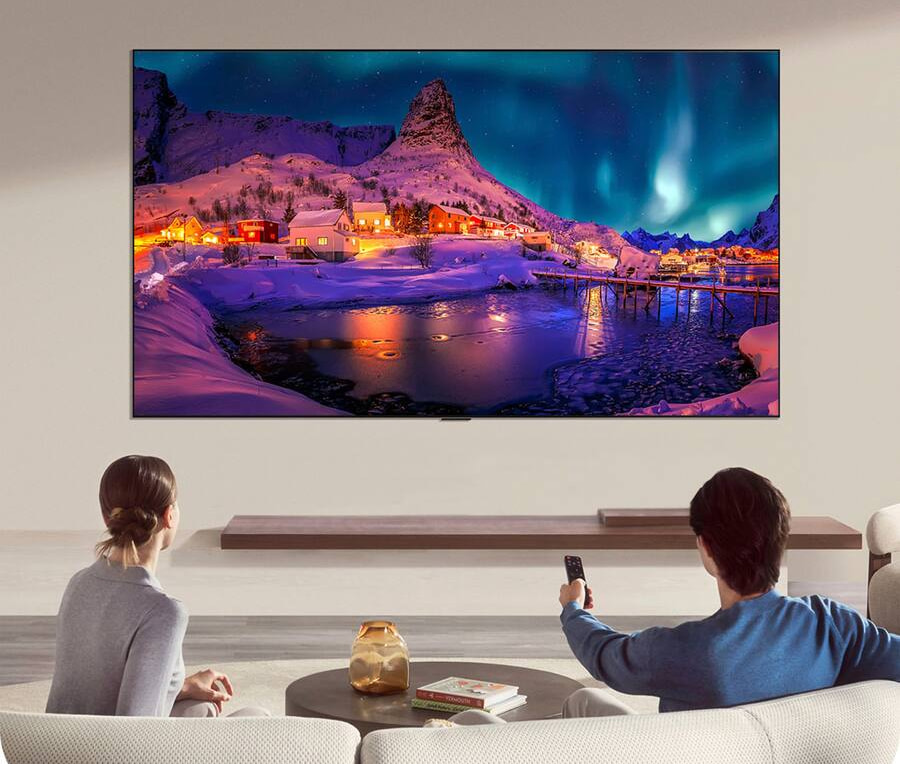

The TV Is No Longer Just Passing the Sound Along
The important distinction here is control. A television connected to an AVR through HDMI eARC is still largely handing audio responsibility to another component. The receiver determines how the soundtrack is decoded, how speakers are configured, where bass gets redirected and how the system interacts with the room.
The newer wireless ecosystems begin moving some of those decisions upstream. Compatible televisions can identify speakers, coordinate their output with the TV’s internal speakers, compensate for placement and distribute different parts of an immersive soundtrack around the room. Streaming apps are already inside the display, HDMI sources are connected directly to it, and increasingly the audio system is configured through the television’s interface or companion app.
The television isn’t becoming an AV receiver in the traditional hardware sense, but it is starting to perform some of the jobs that made the AV receiver necessary for mainstream users in the first place. That’s an important distinction because the disruption isn’t really about replacing a Denon, Marantz or Anthem feature for feature. It’s about removing enough complexity that millions of people decide they never needed one to begin with.
Samsung Has Been Quietly Building This for Years


Samsung’s Q Symphony originally looked like a clever way to stop customers from wasting the speakers already inside their expensive television whenever they added a soundbar. The 2026 version is considerably more ambitious.
Compatible Samsung TVs can now coordinate with as many as five Samsung audio devices through Q Symphony, including soundbars and Wi-Fi speakers, while automatically adjusting how the system behaves based on speaker placement. SmartThings provides another layer of system management for playback and audio settings. In other words, the television isn’t merely outputting Dolby Atmos to another box; it is becoming an active participant in the system.
Samsung’s Music Studio 7 can operate independently or become part of a larger Q Symphony installation with compatible Samsung televisions, soundbars and wireless speakers. The company’s 2026 Neo QLED and OLED televisions continue pushing Q Symphony deeper into the television lineup as well.
There is, however, a rather large Samsung shaped catch: it is still Samsung. Q Symphony remains a proprietary ecosystem. Buy the television and the appropriate Samsung audio products and the integration can be compelling. Decide two years later that you prefer speakers from somebody else and the doors to the clubhouse become considerably less welcoming. That isn’t necessarily a deal breaker, but consumers need to understand what they’re buying into.
Related Reviews:
Dolby Atmos FlexConnect Could Change the Rules


Dolby Atmos FlexConnect is potentially much more disruptive because the long term goal isn’t supposed to be another closed ecosystem. The technology allows a compatible television or soundbar to work with wireless speakers placed around a room and then automatically determines their locations, calibrates the system and adjusts how Dolby Atmos content is reproduced.
Precise symmetry is no longer mandatory, which matters in actual homes where one surround speaker ends up beside a bookcase, another gets moved because somebody objected to its presence next to the sofa, and the architect apparently designed the room without consulting Dolby Laboratories.
TCL was first out of the gate with commercial FlexConnect support. Its compatible TVs can integrate their own speakers with Z100 wireless speakers, using processing to compensate for imperfect placement and create immersive audio without conventional speaker wiring. We heard the technology at CEDIA Expo and found that it produced convincing positional effects even when the physical speaker arrangement wasn’t ideal.
TCL has continued the technology into its 2026 lineup. The QM8L, for example, supports FlexConnect configurations with the Z100 speakers and Z100 SW subwoofer, while the flagship X11L expands the same idea around its integrated Bang & Olufsen audio system. This is much closer to the television becoming the audio system’s conductor rather than merely feeding a signal to something else.
LG Takes the Idea Even Further


LG’s 2026 Sound Suite makes the same argument from another direction. The H7 soundbar, M5 and M7 wireless speakers and W7 subwoofer use Dolby Atmos FlexConnect to create a modular system that can grow from a relatively simple arrangement into something LG describes as a 13.1.7 channel configuration. More importantly for this discussion, FlexConnect is also being integrated into LG’s premium televisions.
At CES 2026, we heard the system progress from the television’s internal speakers to the TV combined with a pair of M7 wireless speakers, and finally to a much larger configuration incorporating the H7, subwoofer and additional M7 speakers. Automatic calibration compensated for the physical layout and created a genuinely immersive presentation without conventional speaker wiring.
That demonstration gets directly to the point: you don’t necessarily need a soundbar sitting beneath the television just to begin building the system anymore. You can start with the TV and add components around it, which represents a fairly profound change in architecture.
There is also an important caveat surrounding Dolby’s promise of interoperability. FlexConnect is designed to be brand agnostic, which theoretically opens the door to compatible televisions and wireless speakers from different manufacturers. We have not yet seen enough real world cross brand interoperability, however, to declare the walled gardens demolished.
Can an LG FlexConnect television eventually work seamlessly with a TCL speaker? Will another loudspeaker manufacturer be able to enter the ecosystem without requiring its own television platform? Those questions matter enormously, and until that actually happens, brand agnostic remains the destination rather than proof that we’ve arrived.
Sony Is Heading in the Same Direction but Isn’t There Yet


Sony presents another variation on the idea. Acoustic Center Sync allows compatible BRAVIA televisions to become the center channel in systems built around products such as the BRAVIA Theater Bar 9 or Theater Quad. Dialog originates at the screen while the external audio system handles the surrounding information.
We’ve found the implementation quite effective with the BRAVIA 8 II and Theater Bar 9. Dialog became better anchored to the image and the television behaved like another active component in the overall loudspeaker system.
This is not quite the same architecture as TCL or FlexConnect because the external Sony audio product remains essential, and the television isn’t taking over the entire processing and distribution role. Sony nevertheless reinforces the broader point: the television speaker is no longer something manufacturers necessarily expect you to turn off the moment you buy better audio hardware. It is becoming part of the home theater.
Apple and Google Move the Hub Into the Streamer


Apple and Google complicate the argument in a useful way because neither makes the television itself the center of the system. They make the streaming platform the center.
One or two Google Home Speakers can pair wirelessly with the Google TV Streamer. Two speakers create genuine physical stereo separation and Google’s Spatial Audio processing can simulate a broader surround presentation. There is an important limitation, however, that we’ve already highlighted in our coverage.
Google has not confirmed that the Home Speaker pair constitutes a Dolby Atmos playback system, even though the Google TV Streamer itself supports Dolby Atmos. Google describes the speaker implementation as Spatial Audio rather than confirmed Atmos reproduction. It also hasn’t documented an equivalent to Apple’s eARC arrangement for routing sound from external devices such as a game console or Blu ray player through the Google speakers.
Apple goes further. A full size HomePod or stereo pair connected to Apple TV 4K can reproduce Dolby Atmos, Dolby Digital 7.1 and Dolby Digital 5.1. Apple TV’s eARC support can also accept audio originating from other devices connected to the television and send it to the HomePods.
In Apple’s world, therefore, the Apple TV increasingly behaves like a miniature wireless home theater processor. It’s a different architecture, but the trajectory is the same: the dedicated box filled with speaker terminals is no longer mandatory for everyone.
Where the AV Receiver Still Wins and It Isn’t Close

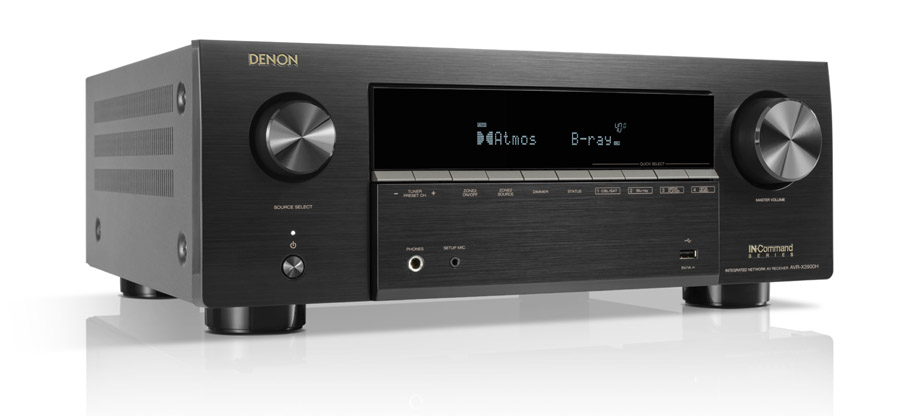
Before anybody starts boxing up their Denon, Marantz, Anthem, Yamaha or Onkyo, there are some rather substantial differences between these systems and a traditional AVR.
An AV receiver provides real amplification for passive loudspeakers and considerably greater flexibility for speaker selection, subwoofer integration, source connectivity, surround formats, bass management, channel assignment and system expansion. A conventional 7.1.4 Dolby Atmos installation also uses actual loudspeakers positioned around and above the listener.
No amount of spatial processing changes the physical reality that discrete speakers placed in the correct locations can create localization, scale and dynamics that a handful of wireless speakers attempting to generate phantom channels may struggle to equal.
We saw exactly that kind of compromise during our Sony BRAVIA Theater Bar 9 testing. The soundbar by itself delivered impressive spaciousness but lacked convincing deep bass and benefited substantially from adding the dedicated subwoofer and rear speakers. We also noted that a component based system at roughly the same total price could provide higher overall performance, albeit with greater complexity.
There is another distinction that marketing departments tend to whisper: wireless speakers are usually wireless for the audio signal. They still need electricity. You may have eliminated speaker cable running across the room, but four powered speakers and a subwoofer can still require five convenient AC outlets. David Copperfield has not joined the engineering department. The wires have not vanished entirely.
The Biggest Advantage Is Simplicity

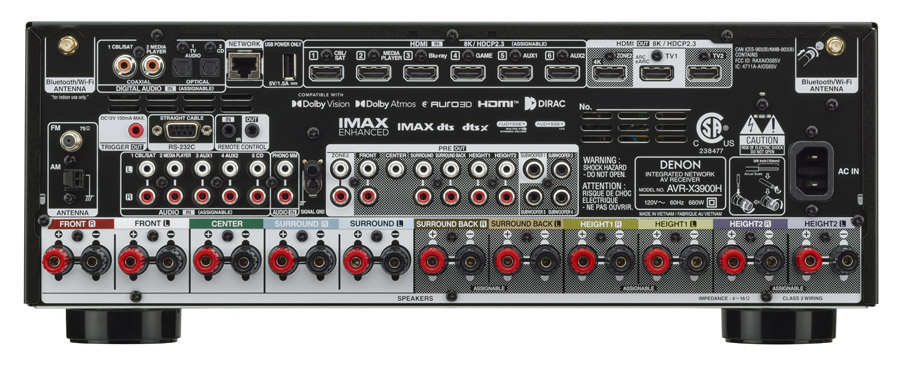
This is where the traditional home theater industry needs to pay attention. Most consumers don’t want to learn what an 11.2 channel receiver actually means, determine crossover frequencies, assign height channels, understand HDMI handshake problems or wonder why the streaming box suddenly produces sound but the PlayStation doesn’t. They want to turn on the television and have everything work.
If the TV detects two or four wireless speakers, measures where they are, determines what each one should reproduce and automatically configures an immersive soundtrack, that’s enormously attractive. FlexConnect also allows unconventional placement, which matters outside dedicated theater rooms. Apartments, open concept living spaces, bedrooms and multipurpose family rooms rarely permit the kind of symmetrical loudspeaker layout installers would choose if given a blank sheet of paper.
Software can compensate for some of that. Not perfectly, but possibly well enough, and well enough plus vastly easier has destroyed more than one consumer electronics category.
The Pros and Cons
For mainstream consumers, these TV centered and platform centered systems offer some very real advantages: far less speaker wiring, fewer components beneath the television, automatic speaker detection and room calibration, greater freedom with placement, easier expansion and tighter integration between the television and external speakers. They also make considerably more sense in apartments and multipurpose rooms where a traditional component system simply isn’t practical.
The tradeoffs are just as real. Many of today’s ecosystems remain proprietary, wireless speakers still require AC power, and ultimate output, bass extension and dynamics can trail a good component system. Virtual channels are not identical to correctly positioned physical speakers, input and codec support vary wildly between platforms, and network reliability suddenly becomes part of the audio chain.
There is also a longer term issue that deserves far more attention than it receives: software support. A pair of passive loudspeakers bought in 1996 can still work perfectly with an amplifier purchased this afternoon. Nobody has to maintain a cloud service so that your KEFs remember how to reproduce the left channel. Whether today’s networked wireless speaker ecosystems demonstrate that kind of longevity remains to be seen.
Who Is This Really For?
If you own a dedicated theater, care deeply about channel separation, use multiple subwoofers, want Dirac Live or similarly sophisticated room correction, own high quality passive speakers or regularly upgrade individual parts of your system, the AVR isn’t going anywhere. Keep it.
The new model makes far more sense for the much larger audience that wants better home theater audio without turning the living room into a rack of electronics. Buy the television, add two wireless speakers and decide six months later that you want surrounds and a subwoofer. Let the system find them, measure them and figure out what to do.
That’s a far easier proposition to sell at Best Buy than explaining why somebody needs eleven channels of amplification when they’re still trying to determine which HDMI port says eARC.
The Bottom Line
The AV receiver isn’t dying, but it is being pushed toward the enthusiast, performance and custom installation markets where its flexibility, amplification and upgradeability still matter enormously. What’s changing is everything underneath that market.
Samsung’s expanding Q Symphony ecosystem, TCL and LG’s embrace of Dolby Atmos FlexConnect, Sony’s integration of BRAVIA displays into the speaker system and the increasingly sophisticated Apple and Google streaming ecosystems all point toward the same destination: fewer boxes, fewer cables and more of the home theater being controlled by software.
The television doesn’t need to become a literal AV receiver to threaten the receiver’s position in the living room. It only needs to make millions of consumers ask a much more dangerous question: Do I still need one?
For an increasing number of people, the answer may soon be no.
You must be logged in to post a comment Login