The Europa and Conference Leagues have reached the last-16 stage and we will be focused on two English clubs in action tonight.
At the City Ground, Nottingham Forest host Midtjylland. When these teams met on this ground during the league phase, Midtjylland won 3-2 over Ange Postecoglou’s Forest in early October. Fast forward a couple of managers later and Forest head into this last-16 tie with Vitor Pereira at the helm. Forest are only outside of the relegation zone on goal difference but Pereira is not writing off Europe to solely focus on Premier League survival.
“For now, we try to be competitive in both, in the Europe League and try to get points and results in our league,” Pereira said. “I need to try to balance, but to be competitive in the next game and afterwards against Fulham. It is important for the players to be ready to help the team, we need to be ready to challenge and perform. We have quality in the squad, they are working hard, with good energy, trying to understand the tactical demands. We will be ready.”
Advertisement
Stefan Ortega, Dan Ndoye and Jair Cunha will all be missing for the hosts tonight.
Midtjylland finished third in the league phase of the Europa League, winning six of their eight games, and only finishing behind Lyon and Aston Villa. They currently sit second in the Danish top flight, four points off the top.
At Selhurst Park, Crystal Palace take on AEK Larnaca. These sides met during the group stages, with AEK Larnaca claiming a 1-0 win at Selhurst Park in late October.
Palace had to come through the play-off round to reach the last 16, beating Zrinjski. Palace were very active during the January transfer window, bringing in three attackers in Jorgen Strand Larsen, Brennan Johnson and Evann Guessand.
Advertisement
“That was the target of the winter transfer window: to strengthen our attack, because we were often short of numbers,” Oliver Glasner said. “I think the club did a great job regarding the strengthening our attack. The new players are really getting integrated [with the group] very well. It is not one-way, it is two-ways, but it is quite easy because the player who are here are great lads, and so are the new ones as well, so it is maybe easier.
“It just gives us more options and we need this now. We have a three-game week again, and are expecting a very physical and intense game against Leeds [in the Premier League on Sunday]. Therefore, we need all these options, and it is good to have them.”
Daniel Munoz is set to miss out with a shoulder problem but Maxence Lacroix is back available after his domestic suspension and Jean-Philippe Mateta could return after a knee injury that scuppered his move to AC Milan in January.
AEK Larnaca currently sit third in the Cyprus top flight, eight points off the top, and have had nearly a week to recover since a 3-0 home win over Akritas Chlorakas last Friday. They finished eighth during the group stages of the Conference League.
Advertisement
Team news from the City Ground and Selhurst Park to follow shortly.
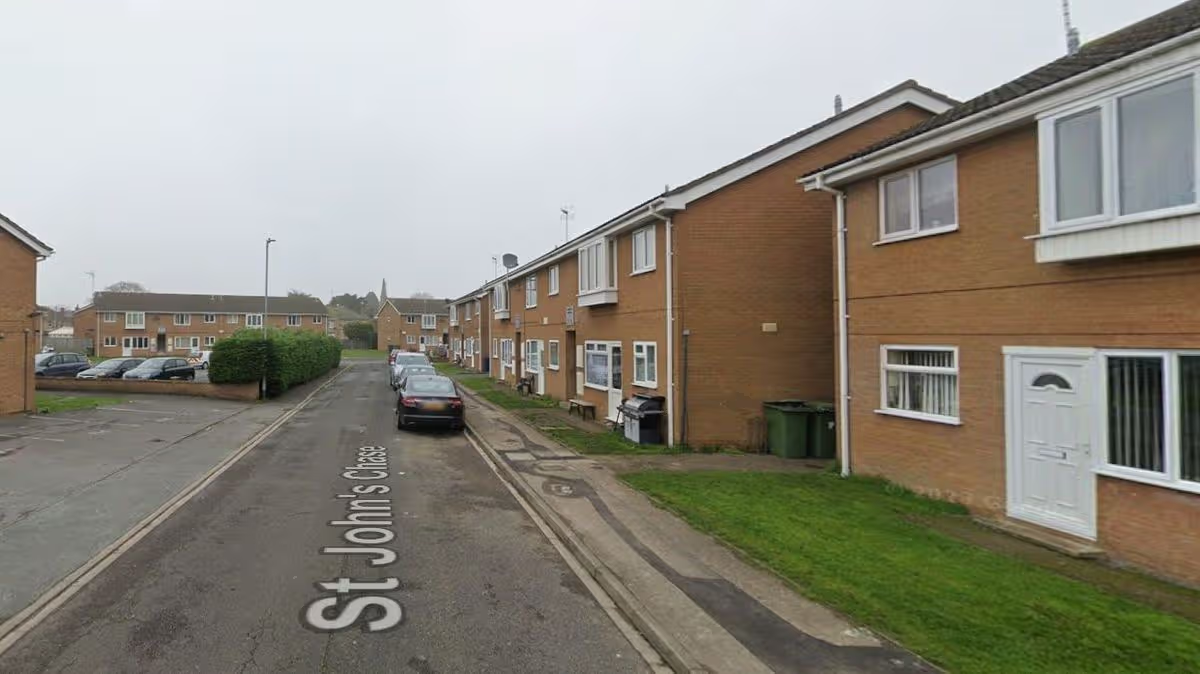
Paramedics were called to a property in March after the parents of a three-month-old baby found him not to be breathing, an inquest opening has heard. Cambridgeshire Police were called by the East of England Ambulance Service to a property on St John’s Chase in March at around 11am on January 3.
Atijus Elertaitis spent five days in hospital in a life-threatening condition before he died on January 8. The inquest into his death was opened by Coroner Elizabeth Gray at Vantage House on Thursday, March 12.
The inquest heard paramedics attended and carried out 90 minutes of resuscitation before transporting Atijus to Peterborough Hospital. Atijus was then transferred to Addenbrooke’s Hospital where he was found to have “a bleed on the brain” and “no brain activity”.
Advertisement
A woman, 25, and a man, 22, both from March, were arrested at the scene on suspicion of grievous bodily harm. They were both re-arrested on Thursday, January 8, on suspicion of murder.
The pair have been released on bail until April 4. An investigation into the incident is ongoing.
Ms Gray said that the cause of Atijus’ death is “currently pending”. The inquest has been suspended.
Attack at Michigan synagogue was ‘targeted act of violence against the Jewish community,’ says FBI
The FBI is investigating an attack on a synagogue in Michigan as an ‘act of targeted violence against the Jewish community.’ Chief Dale Young of the West Bloomfield Township Police confirmed that the attacker rammed his vehicle into the building and was killed by security guards on site.
The motive for the incident, which took place at Temple Israel in West Bloomfield, is still under investigation, according to local authorities. The major synagogue also operates a preschool, according toMLive. No kids or staff members were injured, Oakland County Sheriff Mike Bouchard told reporters earlier in the day.
“We have no victims other than one of the lead security people, who was hit by the car and was taken to the hospital for treatment. That individual should be OK,” he told reporters.
The suspect’s car had mortars inside, CNN reports, citing law enforcement sources.
Advertisement
Bouchard confirmed the suspect drove a vehicle into the building and that “security did engage the suspect with gunfire.” He did not confirm the suspect’s cause of death.
The Oakland County Sheriff’s Office and multiple other agencies are at the scene. FBI Director Kash Patel confirmed federal agents are also responding to the incident, which he described as an “apparent vehicle ramming and active shooter situation.”
On Thursday afternoon, President Donald Trump said he’s been “fully briefed” on the incident, which he described as “a terrible thing.”
Advertisement
WATCH: Michigan lawmaker: ‘We have to stand up to hate’ after 3 religious attacks
Dingell: ‘We have to stand up to hate’ after 3 religious attacks
Graig Graziosi13 March 2026 01:00
Michigan lawmaker who attends Temple Israel says she is ‘absolutely shaken’ following attack
Michigan state Representative Samantha Steckloff said the Thursday attack on her place of worship, Temple Israel, has left her “absolutely shaken.”
She told CNN that she lives approximately four miles from the synagogue, and said antisemitic attacks were on the rise.
Advertisement
“When you have so many people blaming the Jewish community across the world for a war that is being done in the Middle East, the divisiveness you have seen boil up for the past few years was just almost ripe for the picking,” Steckloff said.
Graig Graziosi13 March 2026 00:40
FBI Special Agent Jennifer Runyan said more than 100 bureau agents responded to the attack on the Temple Israel synagogue in Michigan on Thursday.
Advertisement
During a press briefing on Thursday evening, Runyan said that various agents — including bomb specialists and members of its evidence collection and weapons of mass destruction teams — were assigned to work on the attack.
She said the agents are “pursuing diligently and methodically every lead that we have.”
Graig Graziosi13 March 2026 00:20
Advertisement
Oakland County sheriff vows to protect Jewish community in Michigan
Oakland County Sheriff Mike Bouchard said during a Thursday night press conference that law enforcement entities in Michigan would work to protect Jewish institutions from further attacks.
“If you think you can target the Jewish community in this county or anywhere in this state, you’re wrong,” he said during the briefing. “We’re going to not only stand in front of them to protect them, we’re coming for you.”
Graig Graziosi13 March 2026 00:00
Advertisement
Michigan attorney general worries antisemitic attacks will scare people away from visiting synagogues and other Jewish institutions
Michigan Attorney General Dana Nessel told CNN’s Jake Tapper on Thursday that she fears antisemitic attacks like the one at Temple Israel will dissuade Americans from visiting Jewish synagogues and cultural institutions.
She also said she believes the Iran War influenced Thursday’s attack.
“I think we can absolutely draw a nexus between the war in Iran and the events of today,” Nessel said. “I don’t think it’s a coincidence that out of all the synagogues or temples that this individual could have picked, he picked the one that is named Temple Israel.”
Graig Graziosi12 March 2026 23:25
Advertisement
Report claims that vehicle used in synagogue attack allegedly registered to a man originally from Lebanon whose family members were killed in Israeli airstrikes
A CNN report, citing unnamed law enforcement officials, is claiming that the vehicle used in Thursday’s synagogue attack was registered to a man from Dearborn Heights, Michigan, who is originally from Lebanon.
According to the law enforcement sources who spoke to the network, the man had mentioned to others in the community that Israeli airstrikes had killed some of his family members in Lebanon since the start of the war in Iran.
This report is not confirmed, and the attacker has not been identified by law enforcement.
Advertisement
Lebanese authorities claim that more than 800,000 people have been displaced in Lebanon following Israeli airstrikes. Shortly after the war in Iran erupted, Hezbollah launched rockets into Israel.
Graig Graziosi12 March 2026 23:22
New York Mayor Zohran Mamdani calls attack ‘horrifying’ as NYPD ramps up patrols near Jewish religious and cultural sites
On Thursday, New York Mayor Zohran Mamdani denounced the attack on the Temple Israel synagogue in Michigan as “horrific,” saying that his “thoughts are with the congregation and all who are shaken by this act of antisemitic violence.”
Advertisement
The New York Police Department also announced it will dispatch “high-visibility patrols to Jewish religious and cultural institutions in the city.”
Graig Graziosi12 March 2026 23:10
Oakland County sheriff says attacker’s motive is still under investigation
Oakland County Sheriff Mike Bouchard said that the motive of the person who attacked the Temple Israel synagogue on Thursday is still under investigation, and acknowledged that there questions as to whether or not the attack is related to the U.S.-Israeli war in Iran.
Advertisement
“Obviously what happens around the world sometimes affects us,” he said during a Thursday evening briefing, but cautioned against anyone jumping to conclusions.
“What drove this person into action that has to be determined by the investigation,” Bouchard said. “We can presume, but we have to find those facts, and that’s going to happen over the next days in time.”
Graig Graziosi12 March 2026 22:51
Advertisement
FBI says attack is being investigated as a ‘targeted act of violence against the Jewish community’
FBI Special Agent in charge of the Detroit field office Jennifer Runyan said during a Thursday night press briefing that the bureau is investigating the Temple Israel attack as a “targeted act of violence against the Jewish community.”
The bureau is also asking for anyone with images or video of the attack to send it to them via a digital tip line.
Runyan did not provide identifying information about the attacker or their motive.
The FBI will provide another update sometime tomorrow.
Advertisement
Graig Graziosi12 March 2026 22:38
Oakland County Sheriff Mike Bouchard says 30 law enforcement officers in hospital for smoke inhalation
During a press briefing on Thursday, Oakland County Sheriff Mike Bouchard said that 30 law enforcement officers had to be treated for smoke inhalation caused by a fire during the attack at a synagogue in Michigan.
He said that a private security guard was injured and is being treated after being knocked down by the attacker’s vehicle.
At 28st Graham Baalham faced leg amputation and severe breathing problems at night before his incredible 17st weight loss transformation
At 5ft 4in and 17st heavier than he is now, Graham Baalham’s nights were once frightening. The 55 year old window cleaner would wake suddenly up to seven times each night, struggling for air, alarmed as his airway appeared to constrict.
Advertisement
Instead of enjoying proper rest, he would find himself leaning out of the bedroom window or sitting upright in a chair for hours. His wife, Belinda, grew so concerned by his loud snoring and repeated pauses in breathing that she became certain he was suffering from sleep apnoea.
Reflecting back, Graham, from Bury St Edmunds, says: “I can honestly say that if I hadn’t joined Slimming World, I don’t believe I’d have lived to see 60.” Prior to shedding the pounds, Graham describes himself as perpetually worn out, sluggish and scarcely capable of walking a mile.
He told the Mirror: “I avoided the doctor for years because I knew what they’d say: ‘You have to lose weight’. Even though I’ve always worked in physical jobs – I was a groundsman and now I’m a window cleaner – and I always told myself I was fit for a big bloke, the reality was very different. As I got older, it became harder and harder to work the weight off. I was tired all the time.
Advertisement
“The real turning point came when I was in hospital for more than two weeks with a serious leg infection. The doctor drew a pen line around the infection and he told me it couldn’t spread past that mark. He said if the antibiotics didn’t work within 48 hours, they’d have to amputate my leg. That was it – that was the moment, I knew I’d run out of chances.”
Graham’s experience mirrors Slimming World research that demonstrates the strong correlation between sleep and weight. Slimming World’s ‘Snooze More to Lose More’ survey asked its members about their sleep habits over a week.
The study, which involved more than 3,000 members, found that nearly half of those who lost 15% or more of their body weight reported improved sleep. The survey indicated that the more weight members shed, the more likely they were to report enhancements in their sleep.
Before joining his local group, Graham admits that each Saturday watching his beloved Ipswich Town would see him regularly consume 10 pints. He says: “I always worked hard, I was active, but food and drink was my downfall”.
“Every afternoon around 2.30pm I’d have six bags of crisps back-to-back, followed by five or six chocolate bars. Belinda would cook a healthy meal every evening, but once everyone had settled down, they’d hear me back in the kitchen rustling the packets – it was like I couldn’t stop myself.”
Graham recalls: “Walking into a Slimming World group felt terrifying, but Belinda encouraged me to go and as soon as I walked through the doors, Shani, the Consultant, clocked me straight away. She was brilliant and made me feel welcome, which gave me confidence.”
He says the transformation has been life-changing: “Now, Belinda and I plan our meals together using the app. Our favourites include chicken risotto, pasta dishes, curries and the Slimming World Free Food range at Iceland.
“We recently went on an all-inclusive long weekend and I stayed on plan without feeling deprived or like I was missing out. That’s when I knew this is my new normal. The plan has become part of my everyday routine, so I ate well but stayed mindful about what I chose.
“For breakfast, instead of going straight for a full English, I leaned more towards fruit and if I did have bacon, I removed the fat. Lunch was usually chicken or tuna salad with fruit and I chose healthier dinner choices like fish or lean steak. I also kept alcohol low and it all felt natural – and showed me how much my habits have changed.
“Slimming World didn’t just help me lose weight – it taught me how to eat properly. I tried pills, exercise, everything. This is what worked. It’s given me my life back.
Advertisement
“Nowadays I feel like a 20-year-old. I walk up to 10 miles a day with my dog. Before, I was lucky if I managed one mile. I sleep through the night. No more gasping for air. No more sitting upright in the dark, terrified. I wake up feeling rested.”
He shared that some changes were drastic, stating: “I’ve ditched crisps and chocolate completely. Once I put my mind to it, I knew I could do it. I’m so proud knowing that I’ve inspired other people locally to join after seeing my journey on Facebook.
“Belinda and I have been married for 35 years and we have three adult children – Sian, Matthew and Bethany – and three grandsons aged eight, five and just seven months. I realised I didn’t just want to lose weight. I wanted to be here for them.
Advertisement
“At 55, I’ve been given a second chance. I’m not just lighter – I’m alive, awake and present. And I fully intend to be here, watching my grandchildren grow up, for many, many years to come.”
Shani Yates is Graham’s Slimming World Consultant. Shani says: “Supporting Graham has been an absolute joy. His determination has inspired every single member in our group and he’s become a bit of a local legend. Seeing him lose an incredible 17st and finally enjoy a full night’s sleep after struggling for so long makes me so proud.
“Graham brings energy, ideas and kindness to every session and the support he gives others is extraordinary. He’s a much‐loved member of our Slimming World family and a real example of what’s possible when you believe in yourself.”
Graham attends Shani Yates’ Slimming World group in Stanton, Bury St Edmunds. For more information or to find your nearest group, visit slimmingworld.co.uk.
Advertisement
Graham Baalham
Start weight: 28st 12lbs
Weight at group finals: 11st 13lbs
Height: 5 ft 4 in
Weight lost 16st 13lbs in 92 weeks
Graham’s day on a plate
Before
Breakfast: Nothing / Coffee with sugar
Lunch: White bread sandwich, packet of crisps, two or three chocolate bars, full sugar cola drink
Dinner: Roast beef with vegetables and new potatoes, full sugar cola, two to three bottles of beer
Snacks: Six packets of crisps, six chocolate bars, cheese biscuits, cream crackers with cheese and lashings of margarine, half a packet of custard creams, salted peanuts with a pint of full fat milk, coffee and tea with sugar
Lunch: Wholemeal bread sandwich, fruit, salad, water or low-calorie fruit squash
Dinner: Slimming World chicken and mushroom risotto or Slimming World pasta dishes, or a meal from the Slimming World Free Food range at Iceland with salad or vegetables, diet cola or water
Advertisement
Snacks: Fruit, two high fibre snack bars, low fat yoghurts, coffee or tea with no sugar
The classic view of British countryside is of hilly green fields, stone walls and sheep dotted about in the distance.
But that scene could be disappearing as farmers move away from keeping sheep, or reduce their flocks, in many areas of the country.
The total number of sheep and lambs decreased by 3.8%, to 13.3 million in June 2025. Breeding flock numbers have also dropped from 6.8 million in 2021 to 6.4 million in 2025.
Meanwhile, the nation’s eating habits also appear to be shifting as mutton and lamb production has dropped from 400,000 tonnes per year in the early 1990s to 276,000 tonnes today.
Advertisement
The geographical distribution of sheep across the UK is changing too, with Scotland – long celebrated for its hill flocks – reporting marked declines of sheep numbers particularly in the northwest and the Highlands.
So has the UK reached “peak sheep”?
The largest fall in sheep numbers occurred after the 2001 foot and mouth outbreak, and in England this decline deepened when government subsidies related to numbers of sheep were replaced with subsidies for looking after the land in 2024/25. This reduced the incentive to keep large flocks and led farmers to retain fewer animals. Simultaneously, UK and global dietary habits have been changing. UK red meat consumption fell by 13.7g per day per head between 2008 and 2019.
Cost, health concerns and the difficulty of positioning lamb as a fast food option have reduced demand. In 2021 60% of lamb was purchased by shoppers aged 55 plus, with younger consumers increasingly preferring alternative protein sources such as chicken and processed meat.
Advertisement
Planning for the future on low-income hill farms is also problematic. In the UK, 84% of farmers are over 45 (and 38% over 65), with many young people reluctant to enter an uncertain industry. On upland and hill farms, the average farm profit was just £32,000 in 2023/24, 69% of which came from government payments due to be phased out by 2027.
However, sheep are adaptable to changing circumstances and their ability to select plants to sustain themselves might offer a route to securing their future as the national flock continues to shrink.
A Scottish sheep farmer talks about some of his challenges.
That fastidious eating, once essential for survival, is proving invaluable for conservation. Many native breeds excel at balancing shrub browsing with grazing in areas inaccessible to machinery. Conservation success stories include the restoration of violets vital for fritillary butterflies and the maintenance of biodiverse mosaic grasslands.
Advertisement
Sheep eat different plants to cattle, so they can be deployed as appropriate to eat selectively, tackling problem plants that cattle might not. They also have less impact on the soil, which in some instances is beneficial.
Some rewilding supporters worry that sheep can harm nature in certain situations, but when they’re carefully managed, sheep can actually help store carbon and are important for looking after landscapes such as fens, saltmarshes, moorland and meadows.
Poorly managed, they can hinder conservation efforts, grazing too close to the soil. But the rise of “flying flocks” – mobile groups shepherded across different sites – demonstrates how sheep can support flexible land use on both lowland and upland farms. Meanwhile, the UK’s commitment to net zero, and the expansion of solar energy have created another niche.
Sheep, conveniently sized and behaviourally suited, are ideal for grazing underneath solar panels, keeping vegetation under control.
Advertisement
So, where does this leave the UK’s sheep industry?
We may be witnessing a move to lower levels with new breeds, and other changes emerging. In lowland areas, you may already be seeing more sheep, as arable farmers turn to them to graze cover crops which are used to avoid soils laying bare over long periods of time. Cover crops enhance soil structure and biodiversity, providing nutrients to the soil.
Lowland sheep are heavier, better suited to meat production and can be stocked more densely than on upland terrain, boosting efficiency. A growing proportion of the UK’s lamb supply is likely to come from lowland flocks, with reducing reliance on the traditional flow of breeding ewes from the hills.
Beyond their ecological contributions, sheep produce a remarkable annual bonus. From carpets and jumpers to natural insulation and high-end suits, wool is natural, renewable, sustainable and biodegradable. As the clothing industry increases the use of natural fibres, demand and prices are rising, this could offer a more lucrative alternative product for sheep farmers to sell.
Advertisement
Sheep still have a vital place in the UK. The country may have reached “peak sheep”, but given their versatility, their capacity to thrive in tough environments, our growing commitment to sustainable land management and our deepening understanding of their grazing behaviour, sheep are well placed to help us be better custodians of our landscapes.
Villa’s decision to go for Emery four years ago was a sign of their ambition to make a mark on the European stage.
While they are still well placed in fourth position in the English top flight, as they aim to secure a Champions League berth next term, success in the Europa League would also deliver the same outcome.
However, on Thursday it was just about recapturing their rhythm and some confidence after a winless run of four games domestically that included defeats to Newcastle, Chelsea and bottom club Wolves.
Speaking to TNT Sports, returning captain John McGinn suggested that the result had provided Villa with a “building block” and the opportunity to “reset” after a difficult few weeks.
Advertisement
“We needed a reset. The past month has not been great,” he said.
“We can’t dwell on it. We can learn from it but what we need to do is build and this is a building block. We know we can do a lot better but it is a good result.
“We showed signs of getting back to our best but there’s still a long way to go. Sunday is a massive game in the league as well [at third-placed Manchester United] so it is a tough run of fixtures, but that was a good start.
Meanwhile, Emery said he used the struggles of their Premier League rivals in the Champions League as a motivational tool before kick-off.
Advertisement
He said: “We respect this competition because we know the difficulties of each match away from home in Europe.
“We know how it is for the English teams, like this week in the Champions League, how they were struggling.”
The recent Netflix hit series Adolescence crystallised growing public concern about the proliferation of male supremacist beliefs targeted at young men. So Inside the Manosphere, Louis Theroux’s new documentary for the same platform, arrives at a critical moment in the masculinity debate.
Inside the Manosphere sets out to explore a group of prominent “manfluencers” who promise young men status, wealth and sexual success through a worldview shaped by misogynistic and male-supremacist beliefs about gender and power.
By crafting a stylised storyline that focuses on the few people benefiting from this phenomenon, the documentary risks presenting an idealised portrait of the manosphere that downplays the insecurity, hostility and exploitation that sustains it.
Despite moments of scrutiny, this documentary’s glamorisation of its subjects (epitomised by a slow motion shot of one subject stepping out of a sports car) renders the interrogation superficial. In other words, the show presents performative, profit-driven masculinity through the same aspirational lens that fuels these figures online appeal.
Advertisement
In doing so, Inside the Manosphere simplifies the vast range of misogynistic and male-supremacist attitudes, beliefs and identities circulating online and downplays the sheer scale of the harm caused by it.
What the documentary reveals
While this documentary is limited in its portrayal, it does offer viewers a glimpse behind the curtain of a growing “manfluencer” economy.
In following around several notable figures, Theroux places a spotlight on how these influencers carefully curate online identities that project moral authority, financial success and masculine credibility. And all while functioning as lucrative personal brands built on selling solutions to the anxieties of their audience. In this way, Theroux exposes the commercial logic that is driving the rise in extreme misogyny, where provocation, controversy and algorithmic engagement translate directly into profit and visibility.
The film also introduces viewers to the notion of “the red pill”, a metaphor borrowed from The Matrix (1999). This is widely used in manosphere spaces to describe an awakening to what some believe are the hidden truths governing gender relations and social power.
Advertisement
Through his exploration of the red pill idea, Theroux repeatedly stumbles upon an idea at the crux of what makes this worldview so exploitable: that men need to earn their worth in society. The red pill worldview frames modern society as hostile and stacked against men, portraying mainstream institutions and feminism as forces that have obscured the “true” rules governing gender and status.
In response, the red pill philosophy reframes masculinity as a competitive hierarchy that must be continuously navigated and optimised. By casting masculine value as something that must continually be earned, followers are left striving to keep up with ever-shifting standards of status and success. Meanwhile, influencers profit from offering the supposed path to achieving them.
Although the documentary repeatedly brushes against this critical dynamic, it rarely pauses to interrogate its significance, nor the harms these masculine norms produce, including the mental health struggles of those who internalise them. As a result, it falls short of the kind of sustained scrutiny that Theroux himself has argued is what gives spotlighting such figures its social value.
Instead, this documentary portrays the manosphere through a stylised and aspirational aesthetic. Slow-motion shots of his subjects in the gym, driving high-performance sportscars, wearing expensive watches and living in luxury apartments frame these influencers’ lifestyles with a cinematic sheen.
Advertisement
This means the show echoes the same aspirational aesthetics that underpin much of these influencers’ own branding. Elsewhere, clips of manfluencer content appear against stylised backdrops of red and black binary code over-dubbed with synth-wave music. This has the effect of rendering the content closer to internet theatre than a harmful ideological phenomenon.
The result risks trivialising the gravity of the misogynistic and male-supremacist ideas being promoted. Rather than showing how this booming economy has contributed to the normalisation of misogynistic ideas that have inspired mass violent attacks, and violence against women and girls, this documentary risks misleading viewers that the manosphere is no more than an entertainment culture.
The narrative framing of this documentary becomes clear in the way Theroux himself describes the manosphere’s composition, origins and ideological epicentre. Far from being largely made up of “relatively uncontroversial comedians and podcasters”, the manosphere encompasses a far broader network of forums, content and communities united by an anti-feminist and male-supremacist worldview.
These include “men’s self-help” movements centred on reclaiming declining masculine identities and political men’s rights movements that predate the internet. Recognising these historical roots is important because their familiarity makes these ideas more resonant and persistent.
While Theroux’s characterisation appears intended to justify the documentary’s focus on manfluencers, it inadvertently falls into the very trap that allows manosphere content to proliferate online: its ability to hide in plain sight.
The attention economy
How this documentary portrays the manosphere matters, not just for how it informs viewers, but for how it interacts with the forces that feed the phenomenon itself. On the internet, attention functions as the most valuable currency. Content that is provocative and engaging spreads quickly, rewarded by social media algorithms and amplified by cycles of debate and outrage.
Advertisement
In attempting to place a spotlight on the manosphere, this documentary becomes entangled in the spectacle that sustains it. The danger is that viewers may come away with a clear understanding of the style and aspirations of the manosphere. But they are left in the dark as to its harmful effects both to young men and women – and how this harm occurs.
As a result, Inside the Manosphere further fuels the attention economy that allows these figures to thrive. In these spaces, visibility equals power: controversy attracts clicks, clicks drive engagement, and engagement extends the reach and legitimacy of the ideas themselves.
This article features references to books that have been included for editorial reasons, and may contain links to bookshop.org; if you click on one of the links and go on to buy something, The Conversation UK may earn a commission.
Shoppers watched on stunned while staff locked themselves in their shops and called the police
22:59, 12 Mar 2026Updated 22:59, 12 Mar 2026
Two men have been found guilty of affray following a mass brawl between rival barber shops on a busy high street, while a third man was cleared.
Omed Pirot, 31, and Shahab Husseini, 25, have been found guilty of affray when they were involved in an incident of violent disorder between two barber shops, Marmaris Barbers in Blackwood and Kurds Barbers in Newbridge, while Sardam Ebrahimi, 27, was found not guilty of affray by the jury at Newport Crown Court.
The trial heard how Pirot and Husseni took part in the melee along with 13 others in Blackwood High Street in front of innocent bystanders including children. Staff from Kurds Barbers in Newbridge, Caerphilly borough, had travelled to nearby Blackwood to confront employees of Marmaris Barbers.
Advertisement
Newport Crown Court heard that the brawl started after Pirot, from Marmaris Barbers, announced he was planning on opening a new shop in Newbridge. The news was “not received well” by staff at Kurds Barbers, the court heard.
At around 2.30pm on February 13 last year four cars were driven from Newbridge to Blackwood and pulled up outside Absolutely Fabulous hairdressers on High Street, prosecutor Nuhu Gobir told the court. “The two factions then meet up on the street and a large scale fight erupts,” he said.
After multiple 999 calls were made and reports that “five people had been stabbed”, police officers attended Marmaris Barbers and spoke to five people allegedly involved in the incident, three of which had visible injuries.
CCTV footage was obtained from Blackwood High Street as well as footage filmed by witnesses and posted on social media. Several pairs of scissors were also retrieved from the street.
Advertisement
Sardam Ebrahimi, 27, of Newport, Shabab Husseini, 26, of Pontypool, and Omed Pirot, 31, of Caerphilly, told the court they were acting in self-defence.
Pirot, represented in court by his barrister Harry Baker, was taken to hospital after the incident with a serious head injury and was found to have suffered a fractured skull.
Husseini told police officers his friend had bought a shop in Newbridge and had problems with people threatening him. He said he had just finished with a customer when his boss walked outside and when he next looked a brawl was taking place. The defendant said he was “fearful for his friends” and his actions were in self defence. He denied stabbing anyone.
Advertisement
On Thursday the jury found Husseini and Pirot guilty of affray, while Ebrahimi was acquitted. Five other men from the rival shops have already admitted affray.
CCTV footage showed multiple men punching and kicking each other on the pavement. The court heard how a witness driving past called 999, saying she saw the groups striking each other for about four minutes.
Off-duty detective sergeant Kelly Whistance, who was nearby at the salon Absolutely Fabulous, told staff to lock the doors and call the police, describing the salon staff as “frantic and scared” as the fight pressed against the windows.
Identifying the defendants’ involvement in the brawl, Mr Gobir said Husseini, represented in court by Kevin Seal, was seen taking a weapon to an unknown male and making “overhead slashing movements” at him.
Advertisement
Pirot was said to have been involved in fighting with another man before being hit to the head and falling to the floor. It was then said he threw a punch towards another man and took part in “brawling” across the street.
Judge Daniel Williams will sentence Husseini, Pirot, and the five other men who admitted affray on April 10.
Ensure our latest news and sport headlines always appear at the top of your Google Search by making us a Preferred Source. Click here to activate or add us as Preferred Source in your Google search settings.
The cases are said to include “serious allegations of sexual misconduct, sexual harassment affecting women and men”.
A survey of staff working at Holyrood has revealed 84 previously unreported cases of bullying, harassment and sexual harassment over the past five years.
Advertisement
The cases are said to include “serious allegations of sexual misconduct, sexual harassment affecting women and men” as well as “incidents linked to alcohol and behaviour described as intended to ‘keep women in their place’”. The allegations, which were not reported at the time, go back to 2021.
A new report from the Scottish Parliament said “these patterns indicate misuse of power by a small number of individuals and a gap between lived experience and official reporting volumes”. Details of the cases were shared for the first time as part of a review of the Parliament’s Dignity at Work policies and systems.
Staff working for MSPs and for the Scottish Parliamentary Corporate Body (SPCB) – which is responsible for running the Parliament – were surveyed as part of that.
Advertisement
Feedback given to the confidential independent support and advocacy service revealed “84 incidents of experiencing and/or witnessing bullying, harassment and sexual harassment, including allegations of sexual misconduct going back to 2021”.
The report told how “many individuals did not seek advice at the time of the incident due to fear of consequences, reputational harm or concern that reporting could damage political relationships or career prospects”. It also said that “proportionately, the highest number of anonymous disclosures related to MSPs”.
Scottish Parliament Presiding Officer Alison Johnstone and Holyrood chief executive David McGill said they were “deeply concerned by the findings on bullying, harassment and sexual harassment”.
They stated: “These incidents during this session only came to light through this review, making it clear that some colleagues did not previously feel safe or confident to share their experiences. Our foremost concern is for those affected. Coming forward is never easy and we are grateful to everyone who took part in this review.”
Advertisement
The report also highlighted what it described as a “persistent ‘two-tier culture’” at the Parliament where “staff perceive that poor behaviour by MSPs is less likely to be challenged or addressed effectively”. It added that “this perception is reinforced by power imbalances and inconsistent accountability”.
Advertisement
The SPCB considered the report when it met on Thursday and gave its full support to recommendations made in it. These include carrying out a review of the Parliament’s complaints process to “identify opportunities to create a single, accessible complaints and support hub”.
It also recommended a “Parliament-wide risk-assessment framework for bullying, harassment and sexual harassment”, saying this could help “provide practical tools for early identification of risks and proportionate intervention in higher risk settings”.
In addition, the report said work should take place to “embed a Parliament-wide speak up culture”, saying this could encourage early reporting of incidents.
Get more Daily Record exclusives by signing up for free to Google’s preferred sources. Click HERE.
Ensure our latest stories always appear at the top of your Google Search by making us a Preferred Source. Click here to activate or add us as your Preferred Source in your Google search settings.
The 15 year old boy, who cannot be identified due to legal restrictions, was apprehended and transported to Wymondham Police Investigation Centre for questioning.
He has subsequently been charged with attempted murder and possession of a knife on school grounds, according to Norfolk Police.
Advertisement
The boy has been held in custody and is scheduled to appear at Norwich Youth Court on Friday morning.
Norfolk Police have stated that officers will maintain reassurance patrols at the school and in the surrounding area over the next few days.
The teenage girl, who was rushed to hospital with minor injuries following the assault, has since been released.
Whether you’re exploring its historic roots, enjoying scenic walks, or relaxing on the village green, Tudhoe is a true hidden gem according to visitors on TripAdvisor.
A Brief History of Tudhoe Village
From Medieval Roots to a Mining Community
Tudhoe’s history stretches back to the 12th century, when it began as a small agricultural settlement. By the 19th century, it had evolved into a thriving mining village, playing an important role in County Durham’s coal industry.
Despite this industrial past, Tudhoe has managed to preserve its rural charm, with tree‑lined roads, stone cottages, and open green spaces that capture its timeless appeal.
Advertisement
Tudhoe Hall and Its Catholic Heritage
One of Tudhoe’s most significant landmarks is Tudhoe Hall, a grand manor house tied to the region’s Catholic history. During the 16th and 17th centuries, Tudhoe became a refuge for Catholic recusants, practising their faith in secret during times of persecution. This legacy still shapes the village’s identity, giving it a unique place in Durham’s religious history.
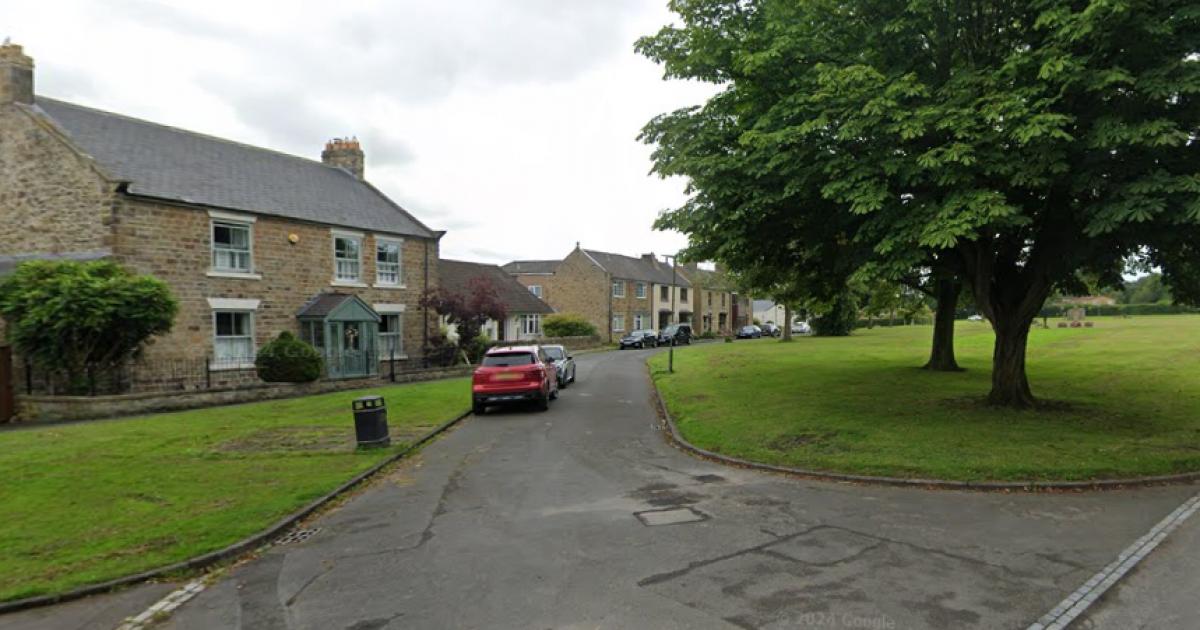
Tudhoe Village Green: A Peaceful Corner of County Durham
At the heart of the village lies Tudhoe Village Green — one of the largest in County Durham. Surrounded by historic cottages and mature trees, it offers a tranquil escape from modern life.
Visitors describe it as a perfect spot for a leisurely walk, a family picnic, or simply soaking in the unspoiled countryside views. Unlike many villages that have expanded with modern housing estates, Tudhoe retains its traditional layout and rural character.
Things to Do in Tudhoe
Enjoy Scenic Walks and Countryside Trails
Tudhoe is surrounded by rolling countryside and picturesque walking routes. Explore riverside walks through the Wear Valley or take trails towards Croxdale and Sunderland Bridge for breathtaking views.
Advertisement
Explore Historic Churches and Architecture
History fans will enjoy St. Charles’ Church, reflecting the village’s Catholic heritage, and other historic buildings that showcase classic Durham architecture.
Relax in a Classic English Village Setting
With its peaceful atmosphere, cosy village pubs, and friendly locals, Tudhoe is an ideal retreat for those seeking a quiet getaway near Durham.
Nearby Attractions Worth Visiting
Durham City & Durham Cathedral – Just 10 minutes away, this UNESCO World Heritage Site features Durham Castle, riverside walks, and historic charm.
Brancepeth Castle & Golf Club – A short drive from Tudhoe, this medieval fortress and golf course are favourites with history lovers.
Auckland Castle & Bishop Auckland – Explore the beautifully restored former palace of the Prince Bishops of Durham and its gardens.
Hardwick Park, Sedgefield – An 18th‑century landscaped park with woodlands, lakes and scenic picnic spots.
Why Visit Tudhoe?
With its unique mix of history, natural beauty, and tranquillity, Tudhoe stands out as one of the most charming villages in County Durham. Whether you’re a history enthusiast, a countryside walker, or simply in need of a quiet escape, Tudhoe offers the perfect setting to unwind and explore.