Connect with us
DAPA Banner

Tech

What Does $500 Buy You From DeWalt Vs. Harbor Freight?

Published

on


We may receive a commission on purchases made from links.

DeWalt has a hard-earned reputation for making quality tools and a keen following among both enthusiasts and professionals. The brand produces a constant stream of all-new tools and updated versions of old favorites, with plenty of new DeWalt products set to launch through 2026. However, it’s far from the cheapest tool brand on the market, and some rival brands from discount chain Harbor Freight offer comparable performance and better warranties for a lower price.

The price difference between Harbor Freight and DeWalt is significant, with the latter being more expensive, no matter whether you’re looking to buy corded or cordless power tools. If you have a $500 budget and are looking for a set of cordless home improvement tools, you’ll need to buy a suitable battery from both brands before you build out your tool arsenal. Starting with DeWalt, you could grab a tool, a battery, and a charger in one bundle with the 20V Max ½ inch drill/driver kit. It retails for $179 from Home Depot and includes a pair of 1.3Ah batteries, plus a handy carry bag.

Advertisement

If you then decide to pick up a 20V Max jigsaw for $129 and a 20V Max 6-½-inch circular saw for $159, you’ll have spent $467. That should leave you with enough to cover any taxes — although we’re excluding taxes in our price comparison here — but it won’t be enough to buy another DeWalt tool. In contrast, buying from Harbor Freight nets you a larger set of tools for the same money.

Advertisement

Harbor Freight’s cordless tools are cheaper than DeWalt

While Harbor Freight’s Bauer and Warrior power tool brands are aimed primarily at DIYers, its Hercules brand is higher quality and aimed at professional users. As such, it’s the closest comparison to DeWalt. If you head to Harbor Freight and pick up a Hercules 20V ½ inch drill/driver kit with a charger and 2Ah battery, you’ll need to pay $97.99. Add a 20V jigsaw and a 20V 6-½-inch circular saw to your cart, and your total will rise to $267.97.

With the equivalent DeWalt tools, you’d have already run out of budget, but with Hercules, you’ll still have $232.03 left for additional tools. You could purchase a 20V orbit sander, a 20V reciprocating saw, and a 20V oscillating multi-tool with that additional cash, and you’d still end up with $50 to spare. If you wanted additional freedom to run multiple tools at once without needing to constantly swap battery packs, you could use that last $50 to buy a spare 2Ah Hercules 20V battery. If the price difference wasn’t enough, Hercules’ 20V cordless tools are also covered by a five-year warranty, while DeWalt’s tools get only three years of warranty as standard.

While buyers looking for home improvement tools should find that Hercules has most of the essentials, the brand does not offer outdoor power tools. Other Harbor Freight brands, such as Bauer, offer tools like leaf blowers and pole saws, but buyers will need to purchase those brands’ battery packs and chargers separately. In contrast, DeWalt’s 20V Max line includes both home improvement and outdoor tools.

Advertisement

Corded tools are cheaper at Harbor Freight too

Cordless tools are portable and convenient, but any buyers who want to do away with the hassle of working out which battery ecosystem is best could simply stick with corded tools instead. However, if you do that, you’ll still get more for your money at Harbor Freight.

Let’s start by comparing DeWalt and Hercules’ corded power tools. With a retail price of $169, DeWalt’s 15-amp 7-¼-inch circular saw is $70 costlier than Hercules’ 15-amp 7-¼-inch circular saw. Buying a three-amp, five-inch orbital sander from DeWalt will set you back $99, while the equivalent sander from Hercules costs $54.99. If you’re looking for a 12-inch miter saw, DeWalt’s version of the tool will cost $509 from Home Depot, while Hercules’ version retails for $349.99. Consistently, Hercules is the cheaper brand here.

Advertisement

Some DeWalt corded power tools are closer matched to corded tools from other Harbor Freight brands, but the result is the same. For example, DeWalt’s 12-amp 7-inch/9-inch variable speed polisher can reach speeds between 600 and 3,500 rpm, and is therefore closest in performance to Harbor Freight’s Bauer 12-amp polisher. While the DeWalt tool retails for $153.99 at Home Depot, the Bauer tool is available for $99.99. While their performance is very similar, one key area where the two tools differ is their warranty. DeWalt’s tool ships with a three-year warranty, while the Bauer tool offers only 90 days of coverage. Harbor Freight customers wanting additional peace of mind could opt for an extended warranty, but it’ll cost more.


Advertisement

Source link

Continue Reading
Click to comment

You must be logged in to post a comment Login

Leave a Reply

Tech

Sony teases its next-gen ‘True RGB’ Mini LED TV technology

Published

on

This year at CES 2026 everybody was pretty confused about the new “Micro RGB” and “RGB Mini LED” TVs that use similar technology but carry different names. Now, Sony has come up with another label for its own Mini LED TVs with RGB backlighting: True RGB. The idea is to emphasize that the individual red, green and blue LED backlights allow for “purer color, greater brightness, and the largest color volume ever achieved in Sony’s home TV history,” the company said.

To be clear, this is not some new technology that Sony just came up with — it’s the same Micro RGB tech we saw earlier this year from Samsung, LG, HiSense and others. These TVs use pure red, green and blue LED backlights along with an LCD layer (rather than solid blue LEDs and quantum dots like Mini LED TVs) to produce the final picture. This display tech is supposed to deliver better color accuracy and more brightness than regular Mini LED TVs. (It’s not the same as OLED tech, in which each pixel acts as a light source.)

Sony rebrands its RGB Mini LED TVs as 'True RGB'

Sony’s True RGB backlight tech (right) compared to current Mini LED TVs (Sony)

However, Sony says that the way it processes the image makes its True RGB TVs stand out from rivals. To control the LEDs more precisely, it borrowed algorithms from its wildly expensive professional reference monitors. That supposedly allows for more precise color control and higher brightness that allow movies and series to look more like the creators intended. It also reduces the “blooming” that occurs when light leaks into neighboring pixels, while improving color accuracy when viewing the TVs from an angle.

Every TV maker claims to have the best technology, but Sony has a lot of credibility due to its history with cinema cameras, Hollywood productions and reference monitors. We’ll have to wait until spring this year to see the new Bravia True RGB TVs for ourselves, but prior to that, the company has promised to release “additional details” about them in the near future.

Advertisement

Source link

Continue Reading

Tech

Men Are Buying Hacking Tools to Use Against Their Wives and Friends

Published

on

Thousands of men are members of Telegram groups and channels that advertise and sell hacking and surveillance services that can be used to harass friends, wives and girlfriends, and former partners, new research has uncovered. The findings, from a European nonprofit group, also say that the communities are involved in extensive trading, selling, and promotion of a huge variety of abusive content, including nonconsensual intimate images of women, so-called nudifying services, plus folders of images that sellers claim include child sexual abuse material and depictions of incest and rape.

Over six weeks earlier this year, researchers at the algorithmic auditing group AI Forensics analyzed nearly 2.8 million messages sent across 16 Italian and Spanish Telegram communities that are regularly posting abusive content targeting women and girls. More than 24,000 members of the Telegram groups and channels took part in posting 82,723 images, videos, and audio files over the course of the study, the analysis says. Many posts target celebrities and influencers, but men in the groups also frequently victimize women they know.

“We tend to forget that most victims are ordinary women who sometimes don’t even know that their pictures are shared or manipulated in these types of channels,” says Silvia Semenzin, a researcher at AI Forensics who previously exposed Italian Telegram channels engaging in similar behavior as far back as 2019. “The majority of this violence is directed towards people who the perpetrators know,” she says, suggesting that Telegram, which has over 1 billion monthly active users, according to company founder Pavel Durov, should be subject to stricter regulation and classed as a “very large online platform” under Europe’s online safety rules.

The findings come as Durov is fighting back against Russia’s efforts to block the messaging app in that country, which has long positioned itself as a messaging app that allows free speech but has simultaneously been used by some to share terrorist, sexual abuse, and cybercrime materials. Durov is under criminal investigation in France relating to alleged criminal activity taking place on Telegram, although he has consistently denied the allegations.

Advertisement

A Telegram spokesperson tells WIRED that the company removes “millions” of pieces of content per day using “custom AI tools” and has policies in Europe that do not allow the promotion of violence, illegal sexual content including nonconsensual imagery, and other content such as doxing and selling illegal goods and services.

Among the extensive types of abusive content and services observed by the AI Forensics researchers were frequent references to the access, publishing, and doxing of women’s private information, sharing their Instagram or TikTok content, as well as references to spying or hacking. “Victims are often named, tagged, and locatable via shared profile links,” the group’s report says.

One translated post on Telegram titled “Professional hacking on commission” claimed to be able to give customers “access to phone gallery and extraction of photos and videos,” as well as “anonymous social media hacking.” Another message says: “I hack and recover any type of social media service. I can spy on your partner’s account. Send me a private message.”

Across the dataset there were more than 18,000 references to spying or spy content. One post reads: “Hi, do you have the desire to spy on a girl’s gallery? We sell a bot that does it for info DM.” Meanwhile, users were observed asking if people could find phone numbers connected to Instagram accounts and other requests, “who exchanges spy photos and videos?”

Advertisement

Source link

Continue Reading

Tech

Google's AI search is producing millions of wrong answers every day

Published

on


According to The New York Times, testing suggests that approximately one in 10 Google AI search overviews contains false information. Given that the search engine processes roughly 5 trillion queries per year, users could be exposed to more than 57 million inaccurate answers each hour – nearly 1 million per minute.
Read Entire Article
Source link

Continue Reading

Tech

A History On The “Impossible” VLIW Computing

Published

on

A computer does one thing at a time, even if it feels like it’s doing multiple things at once. In reality, it’s just switching between tasks very quickly. But a VLIW (Very Long Instruction Word) computer is different. Today, [Asianometry] tells us about VLIW computing and its history.

Processors have multiple functional units; for example, you might have separate units each for addition, multiplication and division. But because it runs one instruction at a time, these units tend to spend a large amount of time idle. VLIW aims to address this inefficiency by reinventing what an instruction means. Instead of telling the whole processor what to do, a VLIW instruction tells each functional unit what to do at once. Sounds good, right? Well, that was the easy part.

The hard part? How to compile a program for a VLIW computer, that can actually make use of all the functional units at once; after all, the efficiency promise is that the higher activity makes up for larger instruction words to fetch. That is the compiler’s job; VLIW compilers try to reschedule the operations in the program to convert sequential code into more parallel operations then compiled into the titular very long instruction words.

Advertisement

[Asianometry] goes into detail about this, the history, and more in the video after the break.

P.S.: For the sake of the video and article, we’re ignoring the existence of modern concept of out-of-order CPUs; they did not exist in the time period which [Asianometry] is talking about.

Advertisement

Source link

Continue Reading

Tech

Intel 486 Support Likely To Be Removed In Linux 7.1

Published

on

Although everyone’s favorite Linux overlord [Linus Torvalds] has been musing on dropping Intel 486 support for a while now, it would seem that this time now has finally come. In a Linux patch submitted by [Ingo Molnar] the first concrete step is taken by removing support for i486 in the build system. With this patch now accepted into the ‘tip’ branch, this means that no i486-compatible image can be built any more as it works its way into the release branches, starting with kernel 7.1.

No mainstream Linux distribution currently supports the 486 CPU, so the impact should be minimal, and there has been plenty of warning. We covered the topic back in 2022 when [Linus] first floated the idea, as well as in 2025 when more mutterings from the side of [Linus] were heard, but no exact date was offered until now.

It remains to be seen whether 2026 is really the year when Linux says farewell to the Intel 486 after doing so for the Intel 386 back in 2012. We cannot really imagine that there’s a lot of interest in running modern Linux kernels on CPUs that are probably older than the average Hackaday reader, but we could be mistaken.

Advertisement

Meanwhile, we got people modding Windows XP to be able to run on the Intel 486, opening the prospect that modern Windows might make it onto these systems instead of Linux in the ultimate twist of irony.

Source link

Advertisement
Continue Reading

Tech

Microsoft flags China-based hackers using vicious new ‘rapid attack’ zero-days to launch ransomware at targets across the world

Published

on


  • Storm-1175 rapidly moves from access to ransomware deployment
  • Exploits zero-days and n-days across multiple products
  • Targets healthcare, finance, education, and professional services

Chinese-speaking hacking collective Storm-1175 is moving fast, going from initial access to full system compromise and data exfiltration in weeks, and sometimes in less than 24 hours, experts have warned.

A new report from Microsoft claims the group was seen leveraging multiple flaws, both zero-days and n-days, in their activities. In some cases, they would even chain various flaws together for better outcomes.

Source link

Advertisement
Continue Reading

Tech

Block introduces Managerbot, a proactive Square AI agent and the clearest proof point yet for Jack Dorsey’s AI bet

Published

on

Block today unveiled Managerbot, a new AI agent embedded in the Square platform that proactively monitors a seller’s business, identifies emerging problems, and proposes actionable solutions — without the seller ever having to ask a question. The product marks the most tangible manifestation of CEO Jack Dorsey’s controversial bet that artificial intelligence can fundamentally reshape how his company operates, builds products, and serves the millions of small businesses that depend on Square to run day-to-day commerce.

In an exclusive interview with VentureBeat, Willem Avé, Block’s head of product at Square, described Managerbot as a decisive break from the company’s earlier Square AI assistant, which functioned as a reactive chatbot that answered seller questions about sales, employees, and business performance.

“The big shift from Square AI to Managerbot is really from reactive to proactive,” Avé said. “What that means is the primary interface is not a question box. You assign tasks to Managerbot, and that could be based on data, an insight, or a signal from your business.”

The product is beginning to roll out now, with full availability to Square sellers expected over the coming months. Block declined to say whether Managerbot would carry an additional fee or be bundled into existing Square subscriptions.

Advertisement

How Managerbot predicts inventory shortages, optimizes schedules, and writes marketing campaigns on its own

Avé outlined three core domains where Managerbot operates today: inventory forecasting, employee shift scheduling, and automated marketing campaign creation. In every case, the agent acts before the seller does — watching over the business, detecting patterns, and surfacing recommendations with proposed actions attached.

In the inventory domain, Managerbot continuously monitors a seller’s stock levels, sales velocity, and external signals such as weather patterns and local events, then alerts the seller when an item is about to run out — or when it should stock up ahead of anticipated demand. “In warmer weather, we can see that you sell more of a certain good,” Avé explained. “That’s the forecasting capability, combined with local data — weather, events — so we can help sellers manage both their inventory and cash flows.”

For shift scheduling — a task that Avé described as “one of those interesting, very hard computer science problems” that consumes hours of a small business owner’s week — Managerbot analyzes forecasted sales data and then generates optimized employee schedules that balance worker preferences with coverage needs. “It turns out that frontier models are actually pretty good at it,” Avé said.

The third capability tackles what Avé called “the whole bucket of things that sellers could do if they had more time” — principally marketing. Managerbot identifies sales trends across a seller’s catalog and automatically drafts win-back campaigns and promotional outreach targeted at a store’s best customer segments. Avé said Block is seeing “very meaningful lift” from Managerbot-generated campaigns compared to what some sellers create manually, though he declined to share specific performance figures publicly.

Advertisement

Block built Managerbot on frontier AI models from OpenAI and Anthropic — but says the real innovation is underneath

Managerbot runs on third-party frontier models — Avé specifically referenced Anthropic’s Sonnet and OpenAI’s GPT family — but Block’s competitive advantage, he argued, lies in the “agent harness” the company has built around those models. That harness draws heavily on Goose, Block’s open-source agent framework, and incorporates learnings from its consumer-facing Money Bot on Cash App.

The challenge specific to Square is scale and complexity. A seller running a small business might interact with hundreds of different tools across invoicing, inventory, customer management, marketing, payroll, and scheduling. Managerbot must navigate all of them coherently within a single agentic loop. “This isn’t like, you know, you load a skill and call it a day — think about hundreds of skills,” Avé said. “Actually, managing the context and managing the way that we progressively disclose tools, and some of the other innovation that we have at the harness layer, is I think some of the secret sauce.”

A critical design decision shapes every interaction: Managerbot does not autonomously execute changes to a seller’s business. Every write action — whether adjusting a shift schedule, publishing a marketing campaign, or modifying inventory — requires explicit seller approval. To facilitate that approval, Managerbot generates visual UI previews showing exactly what will change before the seller clicks “yes.” “We want to earn trust with sellers, so any write action is prompted to the user to approve,” Avé said. “The seller needs a visual representation of what the change is. You can’t just describe in words all the time what you’re going to go do.”

An $80 million fine and chatbot blunders hang over Block’s push to automate financial recommendations

That human-in-the-loop caution reflects a sensitivity that gains additional weight given Block’s recent history. In January 2025, 48 state financial regulators imposed an $80 million fine on Block for violations of Bank Secrecy Act and anti-money laundering laws related to Cash App. The Connecticut Department of Banking stated in announcing the settlement that regulators “found Block was not in compliance with certain requirements, creating the potential that its services could be used to support money laundering, terrorism financing, or other illegal activities.” The Illinois Department of Financial and Professional Regulation simultaneously joined the coordinated enforcement action.

Advertisement

Separately, reporting from The Guardian has documented instances of Block’s customer-facing chatbots making serious errors, including telling customers to cancel or close their accounts. When VentureBeat raised this concern during the interview, Avé acknowledged the stakes but redirected to Managerbot’s specific safeguards.

“Financial accuracy and financial data — the value of these products really come from recommendations,” Avé said. “We need to be better than whatever you can feed to ChatGPT. If you take a CSV of your sales and put it in ChatGPT or Claude, we need our product to be better and answer that question either more accurately or better than what’s available in the market.” He pointed to the harness layer’s role in reducing hallucinations through tuning, prompt engineering, and optimized tool-call loops, while acknowledging the inherent limitations of probabilistic systems: “It’s never going to be zero. Obviously, these are probabilistic systems, and we have guidance and call-outs in the tool to provide that.” On regulated domains like lending and payments, Avé was more definitive: “In any sort of regulated domains — banking, lending, payments — there are strict guardrails on what we can and can’t say to sellers. Those are just part of the product and business.”

Dorsey cut 4,000 jobs in the name of AI — Managerbot is the first answer to what those tools are actually building

It is impossible to evaluate Managerbot outside the context of the radical organizational surgery Block performed just weeks ago. In late February, Dorsey announced that Block would cut more than 4,000 of its roughly 10,000 employees — nearly half the workforce — explicitly citing AI as the driving rationale. As the BBC reported, Dorsey wrote that “AI fundamentally changes what it means to build and run a company.” Block’s stock surged more than 20 percent on the news, according to ABC7.

The company’s Q4 2025 earnings report, released alongside the layoff announcement, showed gross profit of $2.87 billion — up 24 percent year over year — and raised 2026 guidance to $12.2 billion in gross profit, according to AlphaSense’s earnings analysis. Block also reported a greater than 40 percent increase in production code shipped per engineer since September 2025 through the use of agentic coding tools. As CNBC commentator Steve Sedgwick wrote in an opinion piece following the announcement, “I keep getting told on CNBC that AI will create new jobs to replace those being lost. I’ve been asking the same question for years now.” The Observer’s Mark Minevich was more pointed, calling Block’s layoffs “probably the first legitimate mass layoff driven by A.I. as the actual operating thesis.”

Advertisement

Managerbot, then, is the product answer to the obvious follow-up question: if Block shed 4,000 workers in the name of intelligence tools, what exactly are those intelligence tools building? Avé framed the product as proof of concept for Block’s entire strategic thesis. “Block has been in the press recently about rebuilding as an intelligence company, and it’s like, a lot of people are asking, ‘What does that mean for us?’” Avé said. “What I like to do is show, not tell. We’re building Managerbot, which I think is one of the more advanced, maybe the most advanced, small business agent out there today.”

Sellers who use Managerbot are consolidating their businesses onto Square — and that may be the real strategic payoff

Perhaps the most consequential signal Avé shared was an early behavioral pattern: sellers who begin using Managerbot are voluntarily migrating more of their business operations onto the Square platform, consolidating payroll, time cards, and shift scheduling into Block’s ecosystem to feed the agent more data. “When they start interacting with Managerbot, they want to move more of their business onto Square because they see the value,” Avé said. “They’re like, ‘I should put my payroll here. I should get time cards here. I should get my shift schedules here,’ because once all that data is in one place, they can make better decisions and manage their business better.”

This dynamic could prove to be Managerbot’s most significant long-term effect — not as a standalone feature, but as a gravitational force pulling sellers deeper into Block’s integrated commerce stack. Block’s Q4 earnings already showed Square’s new volume added grew 29 percent year over year, with sales-led NVA surging 62 percent. Avé also argued that Square’s first-party architecture — built organically rather than through acquisitions — gives it a structural advantage over competitors in the AI era. “We’ve kind of harmonized and canonicalized this data at a sensible layer,” he said. “It’s not super hard to create more skills for these data domains.”

When VentureBeat pressed Avé on the tension between helping sellers and upselling them on Block’s own financial products — lending, payments processing, and other services that generate revenue for the company — he acknowledged the concern but framed Managerbot’s mission in terms of decision-making quality. “The goal for Managerbot is to help sellers increase their decision-making correctness,” Avé said. “If we can make sellers better at running their business by making better decisions and giving time back, I think that’s a good thing.”

Advertisement

Block says Managerbot isn’t a chatbot — it’s a business protector that compounds the company’s entire AI strategy

Avé was insistent that Managerbot represents something categorically different from the chatbot-as-advisor model that has proliferated across enterprise software. “A lot of people are building chatbots as advisors — it can answer a question for you,” he said. “What we really want Managerbot to be is a protector of your business. This is identifying trends. This is spotting things that you might have missed. This is helping you run your business and take actions.”

He also argued that the agent model compounds Block’s development velocity in ways that traditional software cannot match. “It’s much more straightforward to add a capability to Managerbot than it is to build a big Web 2.0 UI,” Avé said. “If we can deliver more capabilities, more features, more value to our sellers, the whole system compounds.”

Whether that compounding materializes — and whether sellers ultimately experience Managerbot as a trusted protector or a sophisticated upsell engine — will determine much about Block’s future. The company has staked its corporate identity, its headcount, and its Wall Street narrative on the conviction that AI agents can deliver more value with fewer humans in the loop. Managerbot is the first product to carry the full weight of that promise. And the small business owners who keep their shops open with Square terminals, who juggle shift schedules on napkins and skip marketing because there aren’t enough hours in the day — they didn’t ask to be the test case for Silicon Valley’s boldest AI thesis. But as of today, they are.

Source link

Advertisement
Continue Reading

Tech

Tech Moves: Microsoft leader jumps to Anthropic; Tagboard gets new CEO; Expedia names tech VP

Published

on

Eric Boyd. (LinkedIn Photo)

— Longtime Microsoft leader Eric Boyd announced today that he has joined Anthropic to lead its infrastructure team.

“I’ve been privileged to have a front row seat to the explosion of LLMs, and the team at Anthropic is truly special,” Boyd said on LinkedIn. “The combination of the absolute leading models with a culture that is committed to their mission is inspiring and I can’t wait to lean in to help.”

Boyd left Microsoft after nearly 17 years, GeekWire reported last week. He originally joined the Redmond, Wash., company as a manager leading BingAds development, then became president of the AI Platform in 2015. A few years later, CEO Satya Nadella tapped him to lead the Azure AI team.

Nathan Peterson. (LinkedIn Photo)

Nathan Peterson is stepping down as CEO of Tagboard, a Redmond, Wash., company that helps sports, news, entertainment and other brands produce live broadcasts. Peterson joined Tagboard in 2017 as senior vice president of revenue and partnerships, ascending the ranks until becoming CEO four years ago. He succeeded founder Josh Decker.

The company called out Peterson’s accomplishments in a LinkedIn post: “Over more than a decade, he built a product category, grew a team of people who care deeply about the craft of live production and forged relationships across sports, news, and entertainment that put Tagboard on the biggest screens in the world.”

Peterson shared his own thoughts on LinkedIn, writing: “Many came and went as we built, added, subtracted, reflected, fought & grinded our asses off to meet the multiple shifts that the media industry has tossed everyone’s way.” He did not indicate his next move, saying he was taking the opportunity “to pursue a lifelong dream.”

Advertisement
Marty Roberts. (LinkedIn Photo)

Marty Roberts will take over as Tagboard‘s CEO, having previously served as the startup’s chief operating officer since 2024. He previously co-founded and led Wicket Labs, a Seattle-area startup that provided audience data to online video providers and was acquired in 2022.

“[Roberts] has founded. He has scaled. He has led teams through the hard work of turning a product vision into a lasting business. That experience is now fully focused on Tagboard and the clients we serve,” the company said on LinkedIn.

Ryan Desjardins. (LinkedIn Photo)

Ryan Desjardins was promoted to vice president of technology at Expedia Group. Dejardins has been with the Seattle travel company for more than 13 years and is based in Austin.

“I’m thankful for my amazing teams who I get to work with every day – your hard work, creativity, and dedication to our travelers make this possible,” Desjardins said on LinkedIn.

Expedia earlier this year highlighted its efforts to build more AI capabilities directly into its products and said it was working to ensure its brands appear prominently in generative AI searches and function effectively with agentic browsers.

Ian Vensel is now general manager for 9Zero Seattle, a hub supporting Pacific Northwest climate tech entrepreneurs. Vensel was previously with Empire Strategists for more than eight years, leaving the role of business development manager.

Advertisement

Walid Abu-Hadba is now CEO of Precisely, a data management company in Burlington, Mass. Earlier in his career, Abu-Hadba spent more than 21 years at Microsoft, leaving in 2013 as corporate VP, where he led the company’s developer business across sales, technical evangelism and marketing.

Puget Sound Emergency Radio Network named Jeremy Hurd as its new executive director, effective April 20. Hurd succeeds Mike Webb, who is retiring from the Kent, Wash., organization. The network is an emergency radio system used for 911 dispatches and other communications by fire departments, law enforcement agencies, emergency medical services and other public service agencies.

Hurd previously served as senior communications and remote sensing manager at Marine Spill Response Corporation, where he had a 21-year tenure.

Source link

Advertisement
Continue Reading

Tech

Today’s NYT Connections: Sports Edition Hints, Answers for April 8 #562

Published

on

Looking for the most recent regular Connections answers? Click here for today’s Connections hints, as well as our daily answers and hints for The New York Times Mini Crossword, Wordle and Strands puzzles.


Today’s Connections: Sports Edition is a tough one. If you’re struggling with today’s puzzle but still want to solve it, read on for hints and the answers.

Connections: Sports Edition is published by The Athletic, the subscription-based sports journalism site owned by The Times. It doesn’t appear in the NYT Games app, but it does in The Athletic’s own app. Or you can play it for free online.

Advertisement

Read more: NYT Connections: Sports Edition Puzzle Comes Out of Beta

Hints for today’s Connections: Sports Edition groups

Here are four hints for the groupings in today’s Connections: Sports Edition puzzle, ranked from the easiest yellow group to the tough (and sometimes bizarre) purple group.

Yellow group hint: Working out.

Advertisement

Green group hint: Cover your face.

Blue group hint: NFL players.

Purple group hint: Leap.

Answers for today’s Connections: Sports Edition groups

Yellow group: Exercises in singular form.

Advertisement

Green group: Sporting jobs that require masks.

Blue group: Hall of Fame defensive ends.

Purple group: ____ jump.

Read more: Wordle Cheat Sheet: Here Are the Most Popular Letters Used in English Words

Advertisement

What are today’s Connections: Sports Edition answers?

completed NYT Connections: Sports Edition puzzle for April 8, 2026

The completed NYT Connections: Sports Edition puzzle for April 8, 2026.

NYT/Screenshot by CNET

The yellow words in today’s Connections

The theme is exercises in singular form. The four answers are crunch, plank, situp and squat.

The green words in today’s Connections

The theme is sporting jobs that require masks. The four answers are catcher, fencer, football player and goaltender.

Advertisement

The blue words in today’s Connections

The theme is Hall of Fame defensive ends. The four answers are Dent, Peppers, Strahan and Youngblood.

The purple words in today’s Connections

The theme is ____ jump. The four answers are broad, high, long and triple.

Source link

Advertisement
Continue Reading

Tech

How Do The Two Pickup Truck Engines Compare?

Published

on


When you think of a turbodiesel-powered pickup truck, at least one that’s sold in the North American market, the first thing that comes to mind is surely a big, heavy duty truck. It is, after all, in these big Chevy Silverado HDs, Ford Super Dutys, and RAM 2500s and 3500s where their respective Duramax, Power Stroke, and Cummins diesel engines are the most popular.

However, at different times over the last decade, smaller versions of these turbodiesel engines have been offered in smaller, half-ton pickup trucks with varying degrees of success and popularity. For example, while it’s less than half the size of the Silverado HD’s Duramax V8, the Duramax 3.0 inline-six is considered one of the best truck engines out there today.

Advertisement

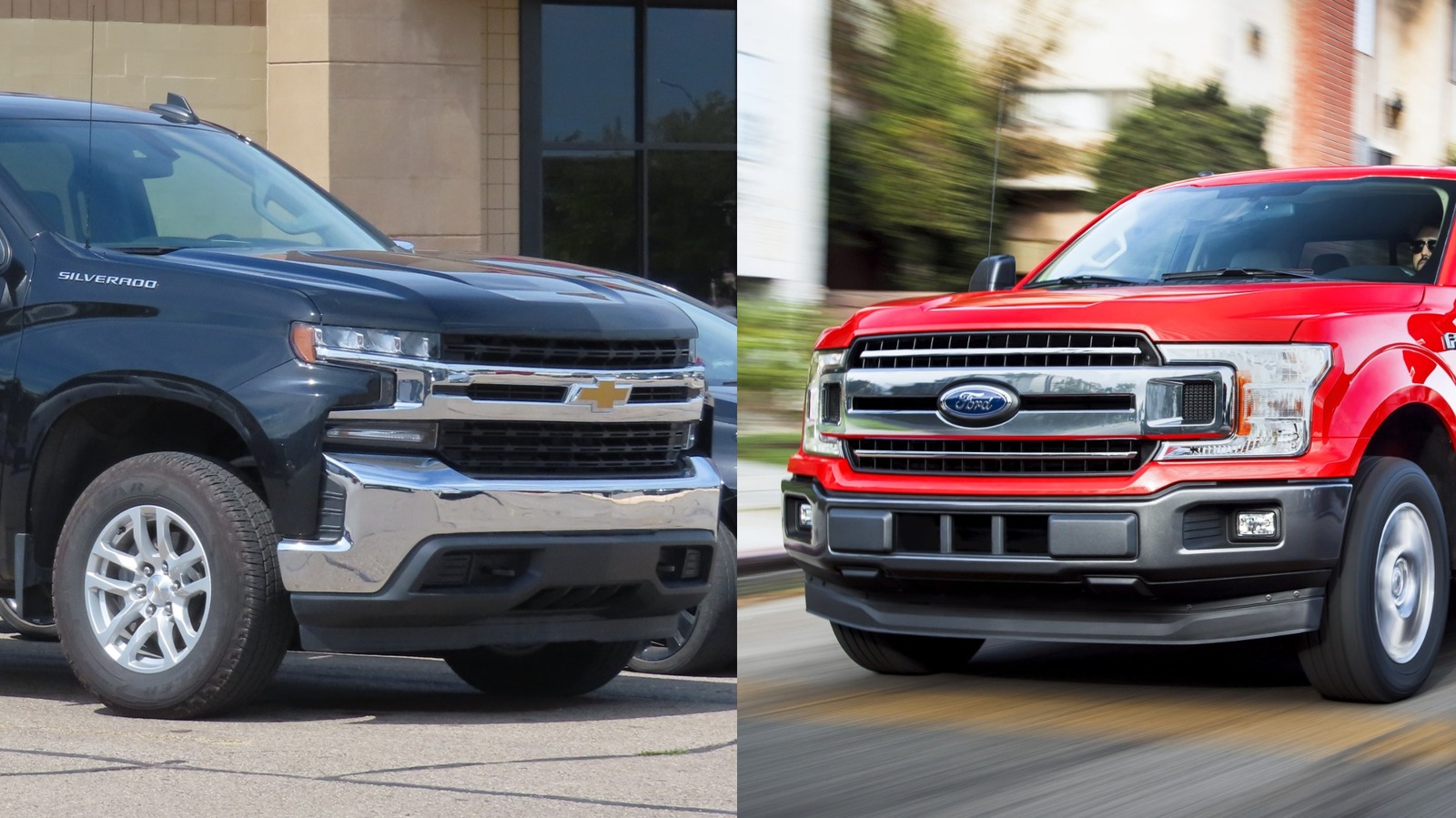
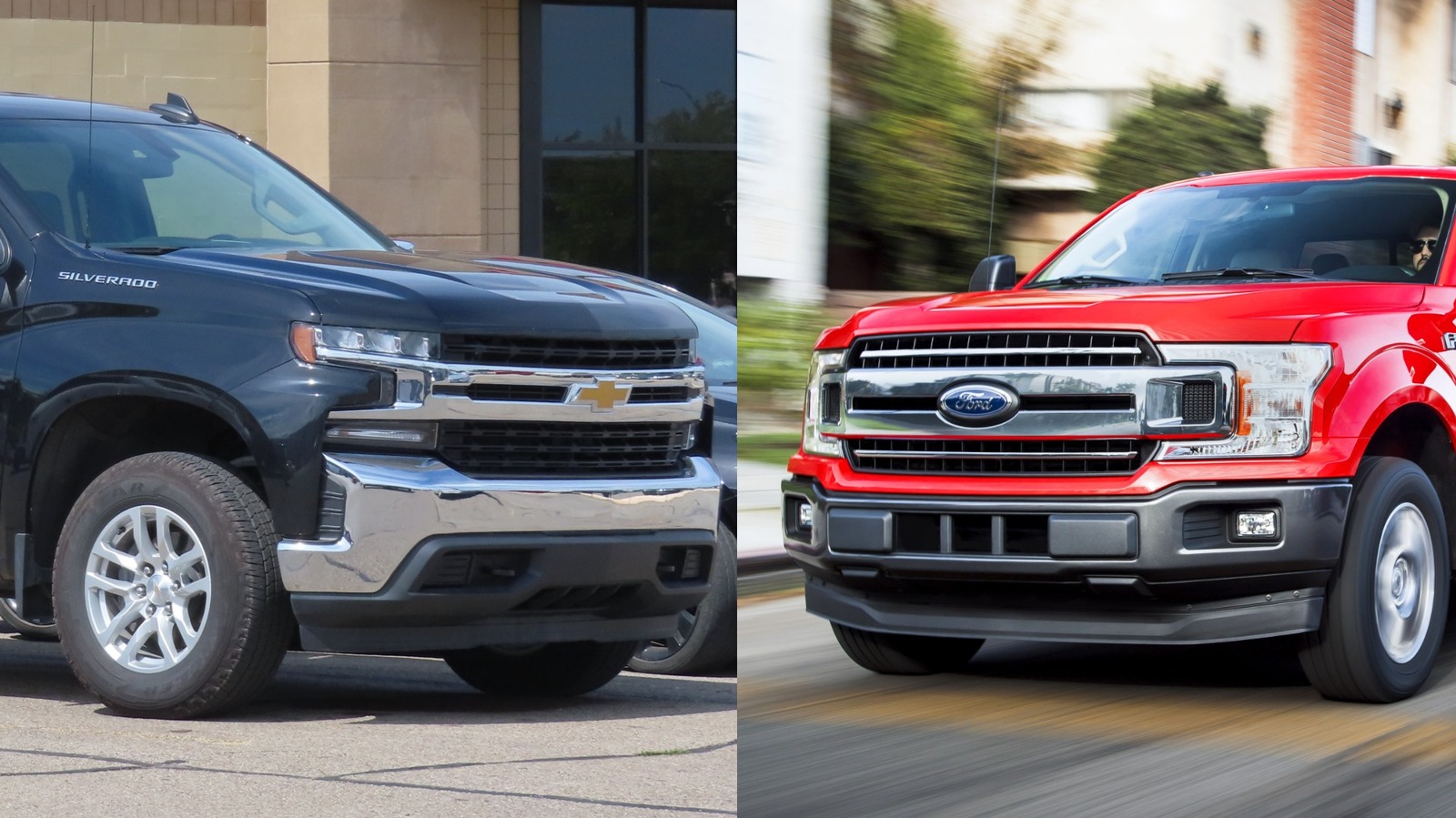
Just before GM debuted the 3.0-liter Duramax for the 2019 Chevy Silverado 1500 and GMC Sierra 1500 trucks, Ford introduced its own 3.0-liter Power Stroke V6 for the 2018 model year as an option for the best-selling F-150 pickup. While these two 3.0-liter engines differ in very substantial ways — different layout, different power outputs, different availability and so on — the goal for both trucks was the same: Bringing the same diesel torque and fuel economy from their heavy-duty siblings into the smaller half-ton package. So let’s take a look at how that worked out and how these two half-ton diesel truck engines compare.

Advertisement

Inline-six vs V6 battle

Before looking at the engines head-to-head, it’s important to point out the elephant in the room — the 3.0 Power Stroke engine is no longer available in a new pickup, and it hasn’t been for a while. Ford discontinued the F-150’s diesel engine option back in 2021, meaning it was only on the market for a few short years. Even so, the short-lived Ford 3.0 Power Stroke makes for an interesting comparison to both the LM2 3.0 Duramax it competed against at the time, and the updated LZ0 version of the engine that GM offers today.

We can start with the biggest difference between the two engines, that being the fact that the Power Stroke 3.0 is a V6 engine while the Duramax is an inline-six. Additionally, while the F-150 might be considered the quintessential all-American pickup truck, the 3.0 Power Stroke actually had its roots in Europe, as it came from the Lion diesel engine family used by both Ford of Europe and other European brands. Likewise, the 3.0 Duramax has a hint of European DNA as well, as GM co-developed the engine with the FEV Group of Germany.

While the Power Stroke’s 250 horsepower rating wasn’t particularly impressive, diesel buyers were likely much more interested in the engine’s 440 lb-ft of torque. The Ford engine, however, was outgunned by the Duramax at the time, with the Chevy engine making 277 horsepower and 460 pound-feet of torque.

Advertisement

Differing priorities

Thanks in large part to the Duramax’s advantage in power and torque, the Silverado got the nod over the F-150 in diesel-powered half-ton truck comparisons at the time. Then, the 3.0 Duramax was  made even better with a 2023 update that gave it a substantial power bump to 305 horsepower and 495 pound-feet of torque. However, even if Ford’s 3.0 Power Stroke experiment was short-lived, and diesel F-150s are rare sights on the road, that doesn’t necessarily mean the engine was a failure on its own merits. 

Some still praise the 3.0 Power Stroke for its excellent fuel economy and smoothness, with a feeling that Ford pulled the plug before the engine’s potential was fully realized. Ford, however, decided to place its priorities on the F-150’s EcoBoost gasoline engines and hybrid powertrain options rather than sticking with the diesel. 

Advertisement

GM’s venture into smaller displacement diesel engine truck engines has proven more successful and longer lasting than Ford’s, with Chevy and GMC not just keeping the Duramax 3.0 on the market after Ford pulled out, but also giving the engine substantial updates as well. Today, when compared against the traditional Chevy 5.3 gasoline V8, the Silverado 1500’s 3.0 Duramax continues to hold its own with its impressive low-end torque delivery and fuel efficiency — albeit at a higher price.


Advertisement

Source link

Continue Reading

Trending

Copyright © 2025