
Crypto World
BONKfun Recovers from Domain Hijacking Attack, Promises 110% Reimbursement to Affected Users


TLDR:
- BONKfun’s domain was hijacked via social engineering on March 11, targeting its domain registrar directly.
- The attack deployed a wallet drainer, causing approximately $30,000 in total user losses over one week.
- The domain was fully recovered on March 18, with the platform securely relaunching on March 19.
- BONKfun will reimburse all affected users at 110% of their losses to cover opportunity costs incurred.
BONKfun, the Solana-based memecoin launchpad, is back online following a domain hijacking incident on March 11. Attackers used social engineering to target the platform’s domain registrar, gaining unauthorized access and deploying a wallet drainer.
The breach remained external to BONKfun’s internal systems throughout. Over roughly one week, users suffered approximately $30,000 in losses.
The team has since recovered the domain and relaunched the site, pledging to reimburse all affected users at 110% of their losses.
How the Social Engineering Attack Unfolded
The breach began when a malicious actor manipulated BONKfun’s domain service provider through social engineering.
This allowed the attacker to transfer the domain to an external registrar without authorization. The move effectively cut the team off from quick recovery options. It also enabled the deployment of a wallet drainer on the hijacked site.
Once the team identified the breach, they moved quickly to disable the site entirely. They coordinated with major wallet providers, including Phantom, Solflare, and MetaMask, to flag the domain as malicious.
Security organization @_SEAL_Org also assisted in spreading awareness rapidly. These combined efforts helped contain further damage to users.
BONKfun confirmed the incident did not compromise its internal systems, codebase, or team accounts. The domain service provider accepted responsibility for the unauthorized transfer.
This acknowledgment helped clarify where the vulnerability originated. It also reassured users that the platform’s core infrastructure remained intact.
The team released a detailed post on X, stating that the domain transfer “greatly inhibited” their ability to relaunch quickly and securely.
The statement outlined each step taken to address the breach. It also confirmed that security partners played a key role in early containment. Transparency remained central to the team’s communication throughout the incident.
Recovery Process and User Reimbursement Plan
The domain and its registration were fully transferred back around 5:00 PM Eastern Time on March 18. Full wallet provider functionality was then restored late on March 19.
This allowed BONKfun to safely relaunch the site with security measures in place. The recovery took approximately one week from the date of the initial attack.
Following the relaunch, several antivirus software providers continued to flag the main BONKfun domain. As a result, the team activated an alternative URL, letsBONK.fun, for affected users.
Both sites carry the same full functionality as the primary platform. The team is actively working to remove the remaining antivirus flags.
To address user losses, BONKfun announced a reimbursement plan at 110% of confirmed losses. The additional 10% accounts for opportunity costs incurred during the downtime period.
Total estimated losses across all affected users stand at approximately $30,000. This approach reflects the team’s commitment to accountability after the attack.
The incident serves as a reminder that social engineering remains a persistent threat in the crypto space. Domain registrar-level attacks can bypass even the most secure internal systems.
Platforms in decentralized finance must maintain strong communication with their infrastructure providers. BONKfun’s response offers a clear example of structured and transparent crisis management.




Nasdaq and Talos are expanding their work in digital assets with a new integration aimed at improving how institutions manage tokenized collateral.
Summary
- Nasdaq and Talos joined systems to improve tokenized collateral workflows for institutional market participants.
- The partnership targets about $35 billion in collateral tied up in inefficient measures.
- Nasdaq surveillance tools will help Talos clients monitor wash trading, spoofing, and layering risks.
Meanwhile, the plan links Nasdaq’s Calypso risk and collateral platform and its trade surveillance tools with Talos’s digital asset trading system, as firms look for smoother ways to handle tokenized assets across crypto and traditional markets.
Nasdaq and Talos said the new setup is designed to give institutional clients a more unified workflow. The integration connects execution, collateral management, risk controls and market monitoring in one structure for firms active in both traditional finance and digital assets.
On Monday, the companies said the partnership is aimed at tokenized collateral use cases that have so far faced operational barriers. Nasdaq said these barriers include the difficulty of fitting digital assets into existing collateral and risk systems used by large institutions.
Nasdaq said internal research points to about $35 billion in collateral being tied up in “corrective and non-interest-bearing measures.” The new integration is meant to reduce that friction by helping firms manage tokenized collateral more efficiently across different asset classes.
Talos chief executive Anton Katz said,
”The evolution toward tokenized collateral is a natural progression for institutional capital markets.”
He added that bringing Talos together with Nasdaq’s systems could reduce friction across onchain and offchain assets.
In addition, the integration also adds Nasdaq’s trade surveillance tools to Talos’s client workflow. That means users will be able to monitor trading activity for patterns linked to wash trading, spoofing and layering across the venues they access.
That focus comes as digital asset markets continue to face questions around market integrity. Nasdaq said the combined system is intended to bring “institutional-grade” compliance standards into workflows used for tokenized collateral and digital asset trading.
Tokenization push continues across large firms
The Nasdaq-Talos move comes as larger financial groups keep building tokenization tools for institutions. In BlackRock’s 2026 chairman’s letter, Larry Fink wrote that tokenization could help modernize market infrastructure by making investments easier to issue, trade and access.
Other firms are also building collateral programs around tokenized assets. Franklin Templeton said in February that eligible institutions can use tokenized money market fund shares as off-exchange collateral in digital markets, showing that large firms are moving beyond pilots into live institutional products.
Crypto World
Fund services giant Apex to tokenize Omnes’ Bitcoin mining note on layer-2 blockchain Base
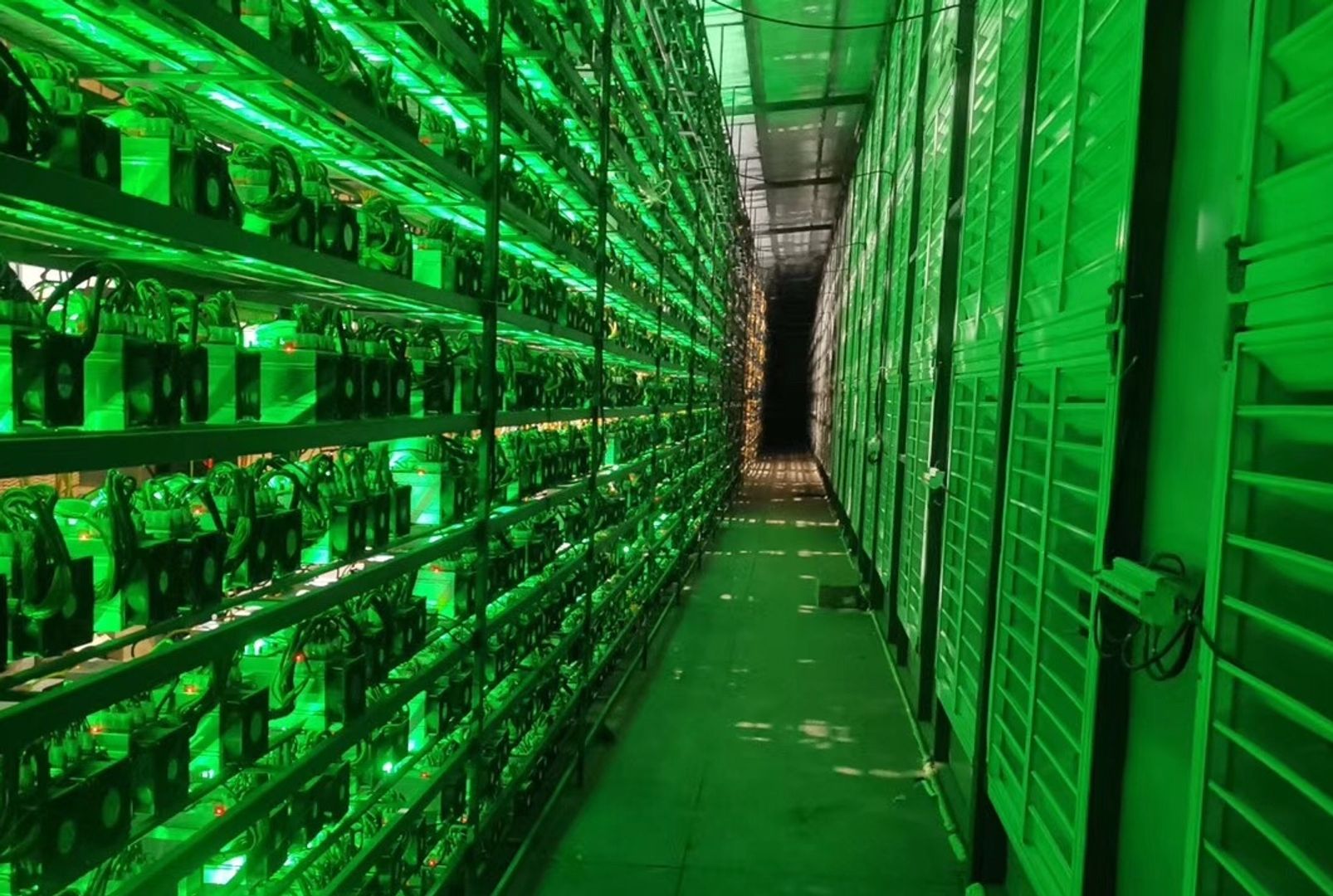
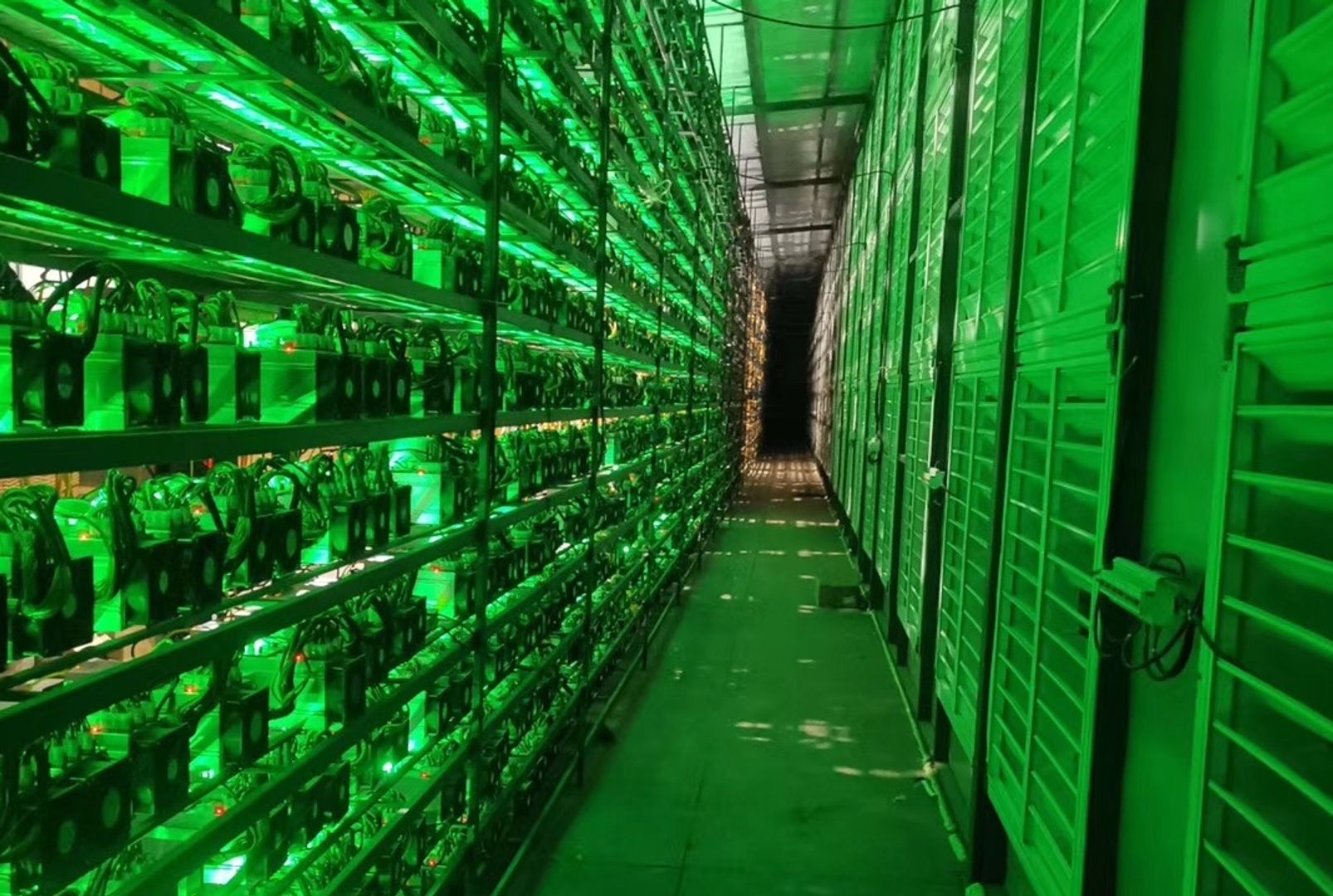
Apex Group, the fund services giant with over $3.5 trillion in assets under administrative care, extended its tokenization range with a structured product offering institutions exposure to bitcoin mining, to be issued and managed on U.S. exchange Coinbase’s Ethereum overlay platform, Base.
Since buying real-world asset (RWA) specialist Tokeny last May, Apex has been steamrolling into the tokenization industry, and on Tuesday said it will tokenize the Omnes Mining Note, OMN, an institutional-grade structured note backed by bitcoin hashrate.
The OMN provides professional non-U.S. investors with direct economic exposure to new bitcoin production measured in hashrate, which is the computational power used to validate transactions and produce the largest cryptocurrency, without the operational complexities of managing mining infrastructure, hardware, energy or regulatory hurdles, according to a release.
Each OMN is backed by a fixed 1 petahash per second (1 PH/s) of Bitcoin hashrate for the duration of the 36-month tenor. Ownership is recorded in book-entry form and mirrored onchain under the ERC-3643 standard, according to the Omnes website. ERC-3643 is an Ethereum-based protocol for tokenizing RWAs developed by Tokeny.
“Tokenization gives investors mobility and utility that traditional notes cannot,” said Peter Hughes, founder and CEO of Apex Group, in the statement. “Qualified investors can transfer OMN onchain and, over time, potentially use it as a form of collateral in permissioned lending without selling the asset. This enhances liquidity while giving Omnes a more scalable and globally distributable structure.”
Apex said last week that its partnership on the Coinbase Bitcoin Yield Fund, which it handles as a transfer agent and record keeper of the funds net asset value, would be available to investors on the Base network.
“Bringing a regulated debt product backed by mining onto Base is a huge win. It proves that onchain finance isn’t just for crypto-native assets – it’s for real-world industrial infrastructure too,” said Jesse Pollak, head of Base.
“Bitcoin mining is the only mechanism that creates new Bitcoin through protocol issuance. This is economically distinct from yield strategies that rely on redistributing existing Bitcoin,” said Emmanuel Montero, Omnes’ CEO.


The European Central Bank has renewed its push for tokenized central bank money as Europe works to build a larger tokenized financial market. ECB Executive Board member Piero Cipollone said tokenized deposits and stablecoins will need a public settlement base in central bank money if the market is to grow across the region.
Summary
- ECB says tokenized deposits and stablecoins need central bank money to scale in Europe.
- Pontes will connect DLT platforms with TARGET Services for settlement in central bank money.
- Cipollone said Europe still needs clearer tokenization laws and stronger public-private coordination efforts.
Cipollone made the case during a speech in Brussels on March 23. He said tokenized central bank money is needed as a settlement anchor for tokenized securities, deposits and stablecoins. He warned that without it, market participants may receive payment in assets they do not want to hold because of price swings or credit concerns. He said,
“Without tokenised central bank money, a seller of a tokenised security may receive payment in an asset they are not comfortable holding – one exposed to price volatility or credit risk – which limits the market’s ability to scale.”
His remarks place public money at the center of the ECB’s tokenization plan. The ECB has been building that plan through Pontes, the Eurosystem’s distributed ledger settlement project. Pontes is designed to connect DLT-based market platforms with the Eurosystem’s TARGET Services so transactions can settle in central bank money.
The ECB said Pontes is due for an initial launch in the third quarter of 2026. That first phase is meant to meet immediate market demand and let participants settle DLT-based transactions in central bank money.
Pontes is part of a broader two-track plan. The shorter-term track focuses on practical settlement tools, while the longer-term track is Appia, which is meant to help shape a wider European tokenized financial system by 2028.
The ECB said Appia will be built with market input. It is meant to map out how tokenized finance can develop in Europe while keeping central bank money as the base layer for trust and settlement.
Cipollone calls for legal clarity across the bloc
Cipollone also said settlement alone will not be enough. He called for closer work between public institutions and private firms, along with legal rules that fit tokenized finance across the European Union.
One part of Appia focuses on interoperability. The goal is to make tokenized assets transferable across different DLT platforms through shared data formats and compatible smart contract standards.
He said the European Commission’s plan to extend and improve the DLT Pilot Regime is “important and welcome.” At the same time, he warned that Europe may still need a dedicated legal framework so tokenized assets can be issued, held and transferred more smoothly across the bloc.
In addition, the debate has also drawn comments from private sector firms. Circle said in feedback submitted on March 20 that the Commission should widen the DLT Pilot Regime and allow authorized crypto-asset service providers to offer e-money token cash account services.
That feedback came just days before Cipollone’s speech. Together, the comments show that both public institutions and private firms are pushing for clearer rules as Europe tries to build tokenized markets that can work at scale.


Bitmine Immersion Technologies has increased its Ether holdings again as chairman Tom Lee said the token’s recent weakness may be nearing an end. The company disclosed a fresh purchase of 65,341 ETH worth about $139 million, lifting its total holdings to more than 4.6 million Ether.
Summary
- Bitmine bought 65,341 ETH, lifting total holdings above 4.6 million tokens this week.
- Tom Lee said Ether’s mini-crypto winter may be nearing its final stage now.
- Bitmine is nearing its goal of owning 5% of Ether’s circulating supply.
Bitmine said it has raised its buying pace over the past three weeks. Lee said the company’s base case is that Ether is in the final stages of a “mini-crypto winter” after several months of pressure across digital asset markets.
The latest purchase added 65,341 ETH to the company’s balance sheet. That brought Bitmine’s holdings to about 4.661 million Ether as of March 23, according to the company’s update.
Lee also pointed to policy and market signals that he said support a better outlook for crypto. In the company statement, he linked that view to progress on the CLARITY Act and to the way Ether and other digital assets have held up during recent geopolitical stress.
Bitmine’s total Ether position now equals about 3.86% of the circulating supply, based on Ethereum’s circulating supply of about 120.69 million tokens. The company has said it wants to accumulate 5% of the circulating supply over time.
To reach that goal at the current supply level, Bitmine would still need roughly 1.37 million more ETH. At prices near $2,156, that would require close to $3 billion in additional purchases.
Ether’s supply is not fixed. The total can rise or fall depending on issuance and token burning, so the amount needed to reach 5% can change over time.
Staking remains part of the strategy
Bitmine said more than 3 million of its Ether is now staked. That means the company is not only building a treasury position but also using the assets within Ethereum’s proof-of-stake system.
The company also reported other holdings on its balance sheet. These include about $1.1 billion in cash, 196 Bitcoin, a $200 million stake in Beast Industries, and a $95 million stake in Eightco Holdings.
Moreover, Bitmine is now one of the largest corporate Ether holders in the market. Strategic ETH Reserve data cited in public reports shows Bitmine ahead of other treasury firms, with SharpLink Gaming and Ether Machine trailing by a wide margin.
The company’s latest move also reflects a wider trend that grew across 2025 as more firms shifted capital into crypto treasury strategies.

Fraud networks work by using X accounts
ZachXBT determined that there was a group of X accounts on the network that shared updates related to war to gain some credibility and an audience. Most of these accounts would frequently post about the political happenings to become known to active users, and they also had the benefit of reposting similar content that would assist in increasing their reach as well as ensuring constant exposure.
The accounts later started to promote fraud involving crypto after gaining a following. They involved bogus giveaways and organized pump-and-dump operations on unsuspecting participants. As a result, the users, who interacted with content about the war, were exposed to false promises of easy returns with the help of digital assets.
The research revealed that operators used to switch usernames and account identities to minimize chances of detection. They also purchased older accounts that were already followed to sound more believable. In addition to that, the network employed the same message being sent repeatedly on a number of profiles, which enabled them to push scam campaigns within a short period and successfully.
Major Profits on Organized Plans
According to on-chain data, such synchronized operations brought a lot of money to the operators. One instance was the report by ZachXBT that a campaign generated six-figure profits during short-term token promotions. There was also one case where multiple accounts promoted the token known as ORAMAMA in a single day and then never promoted it again.
The emergence of the scams is a part of a bigger story with scammers exploiting major international events to target online audiences to trick them. The presence of fear and uncertainty in the current conflict has empowered purported scammers to integrate misinformation into financial frauds, although the social media platforms continue to be at the center of the operation plans. The results mention how scammers can use geopolitical tension to organize coordinated campaigns of financial frauds, whereas the social media platforms remain central to their operational strategies.
Bitcoin is experiencing a sharp sell-off, even as the U.S.-Iran war de-escalates, trading at the $71,000 level, and still is 4% lower than a week ago. The broader crypto market has underperformed significantly this week despite a bullish Bitcoin price prediction.
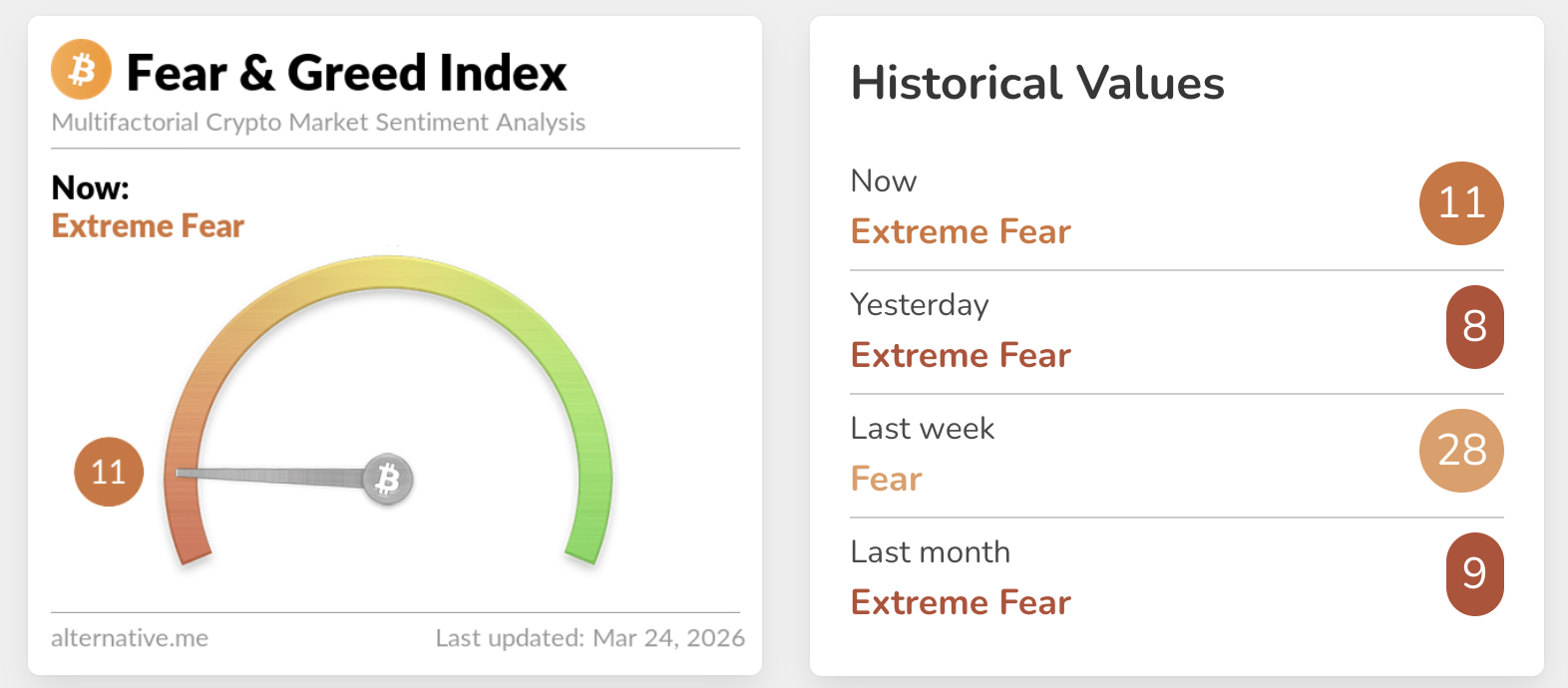
This retreat places BTC below its critical 20-day EMA of $70,515, signaling renewed bearish momentum in the short term. Amid the volatility, macro factors are heavily influencing price discovery, pushing the Fear & Greed Index down to a reading of 11, or extreme fear.

While the immediate outlook appears grim, a major catalyst looms: the SEC decision on 91 crypto ETF applications due by March 27. Market participants are bracing for extreme volatility; an approval could trigger a swift rebound, while rejection may force a deeper capitulation.
Can Bitcoin Price Reclaim $73,000 Before the Weekly Close? Here’s Our Prediction.
Bitcoin’s failure to hold the $69,000–$71,000 consolidation zone has exposed lower support levels. Currently, BTC is struggling against resistance at $71,500, blocked by the falling 20-day and 50-day EMAs.
The MACD histogram remains positive but is trading below the signal line, indicating that while selling pressure has eased slightly, bullish momentum is nonexistent. A critical defense line sits at $65,500; losing this level could validate a prolonged correction. Conversely, a successful breakout above immediate upper resistance at $73,600 could invalidate the bearish thesis.

For now, we should watch the $73,600 level closely; a clean break here is required to shift the 14-day RSI from its neutral 50.20 stance into bullish territory. This cycle, Bitcoin price prediction focuses more on sentiment than chart structures.
Discover: The best pre-launch token sales
LiquidChain Targets Early Mover Upside as Bitcoin Consolidates
While Bitcoin struggles to maintain the $67,000 floor, capital is beginning to rotate into infrastructure plays that solve the market’s fragmentation issues. The current bearish sentiment provides a pivotal moment for “pick-and-shovel” assets, or projects that gain utility regardless of whether the market trends up or down. As BTC dominates headlines, smart money often hunts for asymmetric returns in presale markets.
Enter LiquidChain ($LIQUID), a Layer 3 (L3) infrastructure project designed to fuse Bitcoin, Ethereum, and Solana liquidity into a single execution environment. The project has raised more than $600K in its ongoing presale, with tokens priced at $0.0143 at a very early stage.
LiquidChain’s “Deploy-Once Architecture” allows developers to write code once and access users across three major chains, eliminating the friction of bridging while giving more than 1700% APY on staking rewards.
It acts as “The Cross-Chain Liquidity Layer,” offering sub-second unified settlement. However, early-stage infrastructure carries development risk; the roadmap must be executed flawlessly to compete with established L2s. Investors looking for a hedge against BTC stagnation can research the presale below.
Disclaimer: Crypto is a high-risk asset class. This article is provided for informational purposes and does not constitute investment advice. You could lose all of your capital.
The post Bitcoin Price Prediction: War De-escalates, But Still Underperforming appeared first on Cryptonews.

Key Highlights
- Alibaba introduced the XuanTie C950, a cutting-edge 5nm RISC-V processor developed by its DAMO Academy division
- The processor operates at 3.2 GHz with performance exceeding its predecessor, the XuanTie C920, by over 300%
- Target applications include cloud infrastructure, AI inference operations, and agentic AI systems
- The company plans a separate public listing for T-Head, its semiconductor division
- BABA shares gained 2.98%, finishing at $126.06 on March 23
Alibaba’s semiconductor ambitions took center stage this week. During an internal DAMO Academy conference held Tuesday, the tech giant revealed its XuanTie C950 processor, claiming it represents “the highest performing RISC-V CPU in the world.”
The processor features 5-nanometer manufacturing technology and operates at 3.2 GHz, utilizing the open-source RISC-V architecture. This open framework enables chip developers to adapt instruction sets for specialized AI applications without incurring licensing costs — a strategic benefit for organizations deploying AI agents across large-scale operations.
Alibaba Group Holding Limited, BABA
Performance metrics show the C950 delivering over three times the speed of the earlier XuanTie C920 model. The company has not disclosed which manufacturing partner produced the silicon.
According to Alibaba’s announcement, the processor targets cloud computing environments and AI inference tasks. End users will have the flexibility to configure the chip for specialized inference requirements.
Building a Complete AI Ecosystem
CEO Eddie Wu articulated his strategy last year: positioning Alibaba as an end-to-end AI technology company spanning both hardware and software layers. That vision is now materializing.
During last week’s quarterly earnings discussion, Wu confirmed that Alibaba’s custom AI accelerators have transitioned into volume production. The T-Head semiconductor division is now competing directly with Nvidia and Huawei in China’s domestic marketplace.
T-Head has already onboarded significant enterprise clients, and Alibaba continues advancing preparations for the unit’s independent stock market debut. That initiative remains in progress.
The company maintains two distinct chip product families. The Zhenwu 810E lineup focuses on AI model training and inference capabilities. Meanwhile, the XuanTie portfolio, now including the C950, targets high-performance cloud environments and agentic AI deployments.
RISC-V Emerges as Strategic Architecture
RISC-V has gained substantial traction among Chinese technology firms as geopolitical friction restricts access to Western semiconductor intellectual property. Alibaba ranks among the architecture’s earliest and most committed advocates domestically.
The standard directly challenges offerings from Arm Holdings and Intel. When Arm encountered limitations conducting business with Huawei following US export restrictions, RISC-V partially addressed that market void.
The C950 debut caps an active period for Alibaba’s artificial intelligence product portfolio. Last week witnessed the introduction of Wukong, an enterprise-grade platform engineered for AI agent orchestration.
Monday brought the global launch of Accio Work, the international edition of that platform. Targeting small and mid-market enterprises, it promises autonomous execution of sophisticated operational workflows.
Earlier this month, Alibaba consolidated certain AI development teams into a newly formed division called Alibaba Token Hub, concentrating on enterprise-focused AI workplace solutions.
The competitive landscape: Token pricing for Chinese AI models has plummeted amid intense domestic rivalry, compelling firms like Alibaba to pursue margin protection and competitive differentiation through hardware and infrastructure innovation.
BABA finished trading at $126.06 on March 23, advancing $3.65 or 2.98% for the session. Pre-market activity on March 24 showed shares retreating to $124.94, declining 0.90%.

Nasdaq will integrate its Calypso risk and collateral platform and trade surveillance system with digital asset infrastructure firm Talos’s institutional trading tools.
The integration announced Monday aims to offer institutional clients a “unified” workflow for managing tokenized collateral and monitoring crypto and traditional assets for market abuse. It aims to ease a bottleneck in institutional tokenization, with Nasdaq citing internal research that roughly $35 billion in collateral sits tied up in “corrective and non-interest-bearing measures.”
Nasdaq’s integration of its trade surveillance tools means that Talos clients will be able to run alerts for opaque tactics such as wash trading, spoofing and layering across the venues they access.
The companies said the partnership is intended to bring “institutional-grade” compliance standards to digital asset markets.
Crypto’s recent history offers reasons for caution
Crypto’s history is laced with examples of the practices Nasdaq and Talos seek to address, despite previous claims of institutional-grade compliance and tooling.
In 2020, Canada’s Coinsquare exchange admitted to running artificial wash trades that accounted for more than 90% of its reported volume, leading to a settlement with the Ontario Securities Commission and the ouster of senior executives.
In 2022, the collapse of US-based crypto exchange FTX revealed how an exchange touting sophisticated risk management gave a company associated with it what regulators described as an unlimited line of credit and exemptions from key controls.
In January 2025, blockchain analytics firm Chainalysis found that suspected wash trading and pump-and-dump schemes still accounted for significant volumes across decentralized finance pools, and illicit crypto volumes reached almost $51 billion in 2024.
Part of a broader tokenization push
Talos, whose clients range from hedge funds to brokers, extended its Series B round by $45 million in January to a total of $150 million at a roughly $1.5 billion valuation, with backers including Robinhood Markets and BNY.

The Nasdaq deal comes as BlackRock CEO Larry Fink told shareholders in his 2026 annual letter that tokenization is “updating the plumbing of the financial system” and may be at a similar stage to the internet in 1996, arguing that blockchain‑based representations of assets could broaden access and cut costs across markets.
Nasdaq and Talos are not alone in chasing that opportunity, with the New York Stock Exchange (NYSE) owner Intercontinental Exchange developing a blockchain‑based platform for 24/7 trading of tokenized stocks and ETFs, and global asset manager Franklin Templeton expanding tokenized US government money market funds and collateral programs for institutions.
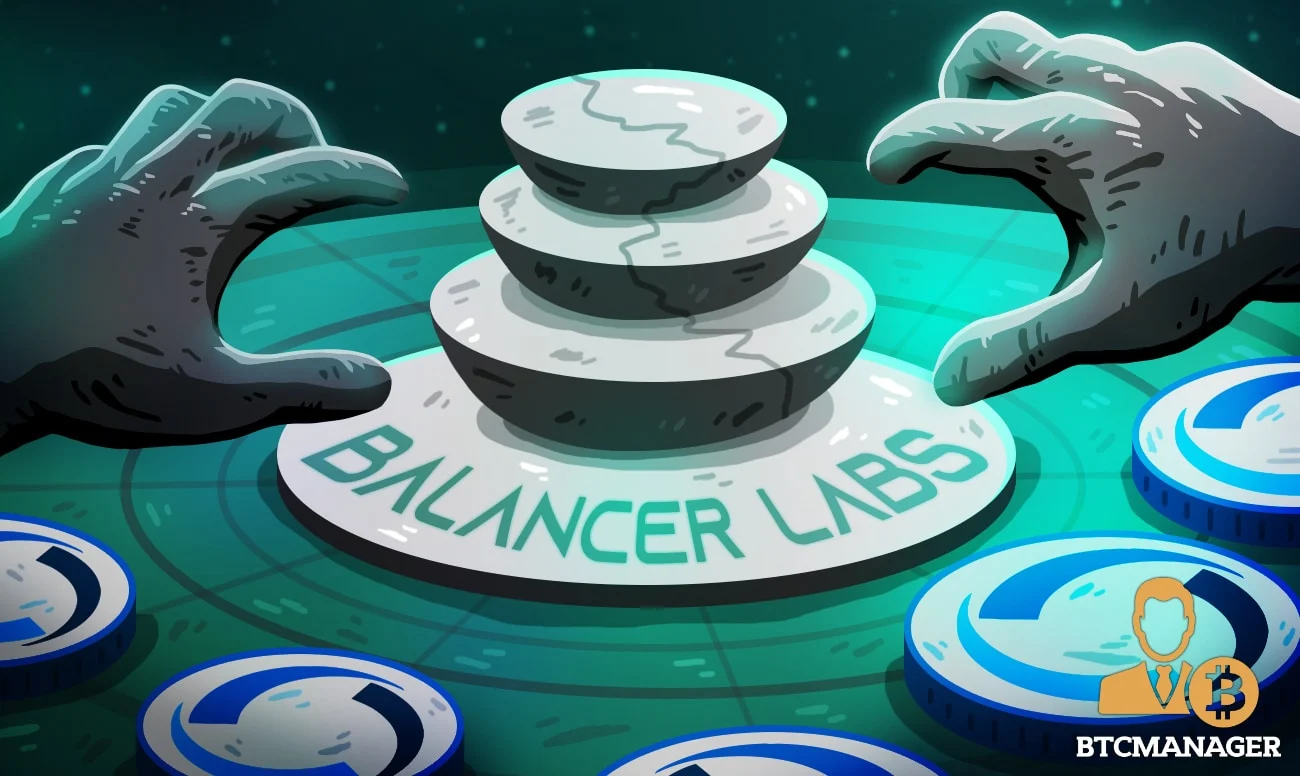

Balancer Labs is preparing to shut down as the team behind the DeFi protocol moves to cut costs after months of financial strain. The plan would leave the protocol running under a leaner structure led by the Balancer Foundation and the DAO while the corporate entity winds down.
Summary
- Balancer Labs will shut down as the protocol shifts toward DAO and foundation management.
- The November hack and falling TVL increased financial pressure across the Balancer ecosystem.
- Executives want lower costs, zero BAL emissions, and more revenue flowing to the DAO.
Balancer co-founder Fernando Martinelli said he had decided to wind down Balancer Labs after reviewing the project’s position. He said the company had become a “liability rather than an asset to the protocol” and linked that decision to legal exposure tied to the November 2025 exploit.
Balancer Labs chief executive Marcus Hardt also said the business was spending too much to attract liquidity compared with the revenue the protocol was generating. He said that approach came with dilution for BAL token holders and could not continue in its current form.
Balancer was one of the better-known DeFi protocols during the 2020 and 2021 market cycle. Its total value locked reached about $3.3 billion in November 2021 before falling sharply over the following years.
The pressure increased after the November 2025 exploit, which reports said totaled more than $100 million. Balancer’s TVL had already dropped to about $800 million by October 2025, then fell by another $500 million in thetwo weeks after the hack. Recent reporting placed the protocol’s TVL near $158 million.
Furthermore, Hardt and Martinelli said they want the Balancer Foundation and the DAO to guide the protocol from here. Their plan calls for a lean continuation model with lower operating costs and fewer people involved in day-to-day work.
Martinelli also backed changes to tokenomics and treasury flow. Those include cutting BAL emissions to zero and adjusting fees so the DAO can keep more of the revenue generated by the protocol. DAO members have been asked to vote on proposals tied to the restructuring and BAL token design.
Protocol revenue remains part of the case
Even with the current pressure, Martinelli said Balancer is still producing revenue. He said the protocol brought in more than $1 million over the past three months and described it as a working system weighed down by weak economics and a heavy cost base.
That position now forms the core of the restructuring push. The protocol is expected to continue operating, but under a smaller and less expensive setup built around the DAO and foundation rather than Balancer Labs.

Ethereum price is trading at $2,160, caught in a high-stakes consolidation zone with a neutral prediction behind it. While recent price action marks a 55% recovery from cycle lows, on-chain data signals caution: whale wallets distributed heavily into the March peak of $2,370.
Volatility is the only certainty this week. Despite persistent energy-driven inflation data keeping pressure on risk assets, institutional interest remains sticky, evidenced by ongoing inflows into BlackRock’s staked ETH ETF. However, the distribution pattern suggests smart money is de-risking ahead of the Glamesterdam hard fork. A break in either direction seems imminent.
— BSCN (@BSCNews) March 21, 2026
 MARKETS: BLACKROCK'S $ETH STAKING ETF IS ON FIRE!
Launched last week, @Blackrock's $ETHB staking ETF has already reached an AUM of more than $250 million.
Blackrock is not the first to launch an @Ethereum staking ETF but the weight carried by the firm puts it on a fast-track… pic.twitter.com/3OgLtTc513
The technical posture is mixed. While the Layer-2 ecosystem boasts more than $30 billion TVL, the immediate price action on the daily chart is testing trader resolve. Can the bulls defend the $2,000 level?
Ethereum Price Prediction: Can ETH Hold Support at $2,000?
As of this morning, Ethereum (ETH) sits at $2,160, posting a healthy +4.5% gain over the last 24 hours. The asset is currently respecting the 52-week range midpoint, utilizing the DEMA 9 at approximately $2,100 as dynamic support. This level is critical; a daily close below could trigger a slide toward the next major liquidity pool at $2,000.
Momentum indicators are flashing warning signs while the RSI hovers in neutral territory at 52 on the daily. This structure often precedes a volatility contraction before a violent expansion. Analysts note that a decisive reclaiming of $2,350 is required to invalidate the bearish distribution thesis.

Should broader market sentiment improve, perhaps tailored by a dovish FOMC dot plot, ETH could target the psychological $2,500 barrier. Conversely, if the projected +10.88% monthly forecast fails to materialize, the 50-EMA near $2,050 acts as the ultimate line in the sand for the bulls.
Discover: The best crypto to diversify your portfolio with
Bitcoin Hyper Targets Early Mover Upside as Ethereum Stalls
While Ethereum battles localized resistance and macroeconomic headwinds, capital is beginning to rotate (as it often does during consolidation phases) into high-beta infrastructure plays. Sophisticated traders are eyeing the emerging Bitcoin Layer 2 narrative, which promises to unlock trillions in dormant BTC capital.
Leading this charge is Bitcoin Hyper ($HYPER), the first-ever Bitcoin Layer 2 solution to integrate the Solana Virtual Machine (SVM). While Ethereum struggles with gas revenue issues, Bitcoin Hyper claims to deliver transaction speeds faster than Solana itself, directly on the Bitcoin network.
The market appetite for this utility is quantifiable. The project has already raised an amount of more than $32 million in its ongoing presale. Priced currently at just $0.0136, the token offers an entry point significantly lower than established L2s with 36% APY rewards.
The protocol features a Decentralized Canonical Bridge for seamless BTC transfers and supports high-speed smart contracts that break Bitcoin’s historical limitation of non-programmability.
Disclaimer: Crypto is a high-risk asset class. This article is provided for informational purposes and does not constitute investment advice. You could lose all of your capital.
The post Ethereum Price Prediction: Will Critical Support Break? appeared first on Cryptonews.

The heavyweight Tyson Fury tipped to be the next ruler vows to ‘take everything’

Air Canada pilot killed in LaGuardia fire truck crash had been flying since he was 16, family say

B&Q and Screwfix sales grow as owner battles decline abroad


![BITCOIN: 24 HOURS LEFT!!!! [I WENT LONG]](https://wordupnews.com/wp-content/uploads/2026/03/1774346399_maxresdefault-80x80.jpg)
-
 Crypto World3 days ago
NIO (NIO) Stock Plunges 6.5% as Shelf Registration Sparks Dilution Worries
-

 Fashion4 days ago
Weekend Open Thread: Adidas – Corporette.com
-

 Politics4 days ago
Jenni Murray, Long-Serving Woman’s Hour Presenter, Dies Aged 75
-
 Tech7 days ago
Are Split Spacebars the Next Big Gaming Keyboard Trend?
-

 Crypto World2 days ago
Best Crypto to Buy Now: Strategy Just Spent $1.57 Billion on Bitcoin During Fear While Early Investors Quietly Enter Pepeto for 150x Potential
-

 News Videos6 days ago
RBA board divided on rate cut, unusually buoyant share market | Finance Report | ABC NEWS
-

 Crypto World3 days ago
Bitcoin Price News: Bhutan Sells $72 Million in BTC Under Fiscal Pressure, but the Smart Money Entering Pepeto Sees What the Market Does Not
-

 Politics6 days ago
The House | The new register to protect children from their abusers shows Parliament at its best
-

 Tech4 days ago
inKONBINI Lets You Spend Summer Days Behind the Register
-
 Politics7 days ago
Real-time pollution monitoring calls after boy nearly dies
-

 Crypto World6 days ago
Canada’s FINTRAC revokes registrations of 23 crypto MSBs in AML crackdown
-

 Sports23 hours ago
Remo Stars and Kano Pillars Strengthen Survival Hopes in NPFL
-
 NewsBeat6 days ago
Residents in North Lanarkshire reminded to register to vote in Scottish Parliament Election
-

 News Videos6 days ago
PARLIAMENT OF MALAWI – PAC MEETING WITH REGISTRAR OF FINANCIAL ON AMARYLLIS HOTEL – INQUIRY LIVE
-

 Politics5 days ago
Gender equality discussions at UN face pushbacks and US resistance
-

 Business2 days ago
No Winner in March 21 Drawing as Prize Rolls to $133 Million for Next
-

 Business6 days ago
Who Was Alex Pretti? 5 Key Facts About the ICU Nurse Killed by Federal Agents in Minneapolis
-

 Sports22 hours ago
Gary Kirsten Accuses Pakistan Cricket Board Of ‘Interference’, Mohsin Naqvi Responds
-

 Tech2 days ago
Give Your Phone a Huge (and Free) Upgrade by Switching to Another Keyboard
-

 Sports4 days ago
2026 Kentucky Derby horses, odds, futures, preview, date: Expert who nailed 12 Derby-Oaks Doubles enters picks
You must be logged in to post a comment Login