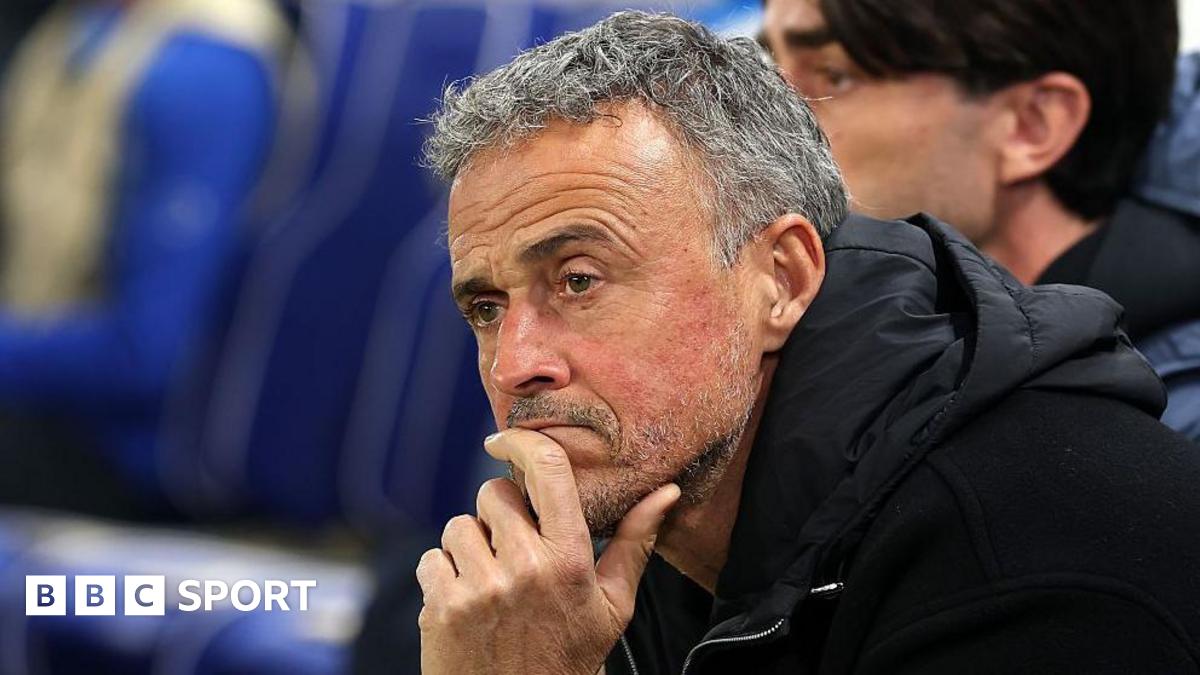
Paris St-Germain have asked to postpone their Ligue 1 game against title rivals Lens which is sandwiched between the two legs of their Champions League quarter-final against Liverpool.
PSG are scheduled to visit Lens in a top-of-the-table encounter on Saturday, 11 April – three days after hosting Arne Slot’s side and three days before the second leg at Anfield.
Liverpool are set to host Fulham in the Premier League on 11 April.
In response to PSG’s postponement request to France’s Ligue de Football Professionel (LFP), Lens – who are chasing a first league title since 1998 – issued a statement saying they are strongly against the “troubling sentiment” if the fixture was moved to a later date.
Advertisement
Lens added that their domestic league risks being “gradually relegated to the status of an adjustment variable at the whim of the European imperatives of some”.
“Beyond this specific case, the question raised is a more fundamental one: that of the respect due to the competition itself,” a club statement said.
“For one is entitled to wonder when, on its own soil, the league sometimes seems to be relegated to second place behind other ambitions, however legitimate they may be.”
Second-placed Lens currently trail leaders PSG by one point – and Lens head coach Pierre Sage said after Sunday’s 5-1 win over Angers that his side did not agree with a postponement.
Advertisement
In PSG’s previous Champions League tie against Chelsea, Luis Enrique’s side had the weekend off in between the two legs because their game against Nantes was postponed after a similar request. The European champions won 8-2 on aggregate.
Ultimately, the final call is with the LFP, and their stance is they will look to assist French clubs that are playing in Europe.
The LFP also confirmed Strasbourg have requested their league game at Brest on that same weekend to be postponed as it comes in between their Conference League games against Mainz.
Richard’s family said he “spent his whole working life on the railway, where he was a mentor to many”
14:58, 11 May 2026Updated 15:09, 11 May 2026
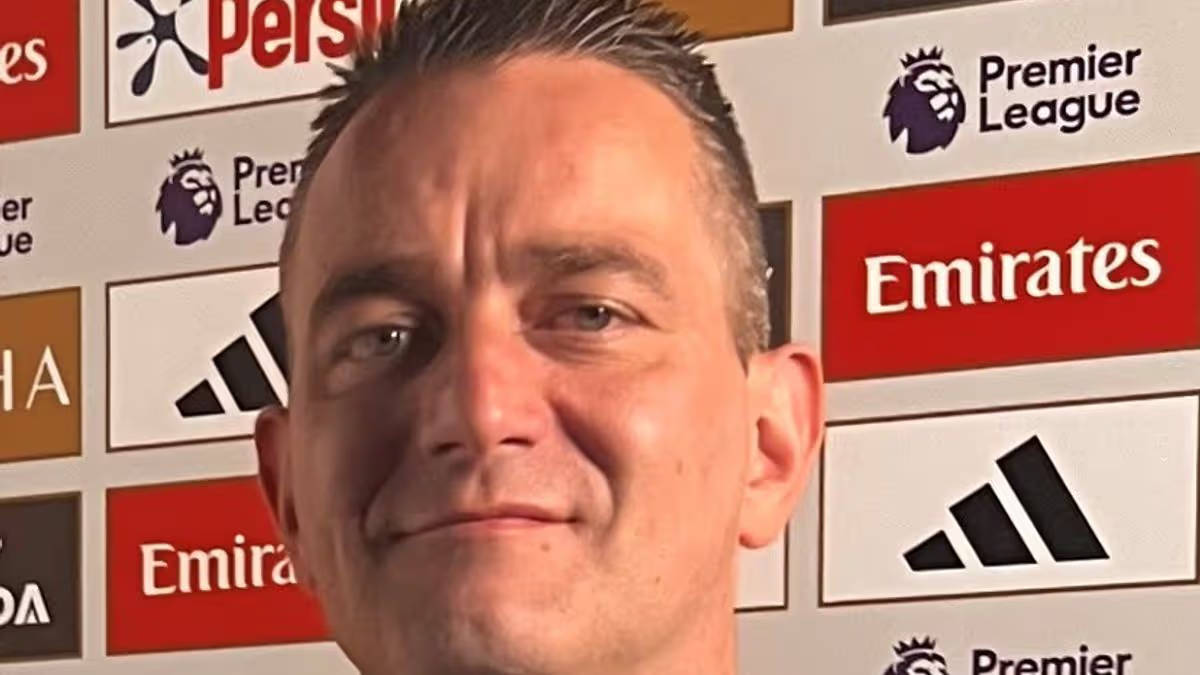
The family of a man who died in a crash between a car and a lorry has paid tribute to him. Richard King, 45, died when a white Xpeng G6 he was driving was involved in a crash with an HGV at about 11.50am on Wednesday, May 6.
It happened on the eastbound carriageway of the A1139 Fletton Parkway in Peterborough, near the exit from the A1(M). Richard, who was from Fletton was pronounced dead at the scene. His family has described him as “loving father, son, brother, and friend to many” who was loved “so much”.
His family has released the following tribute to him: ” “Richard was a loving father, son, brother, and friend to many. He spent his whole working life on the railway, where he was a mentor to many.
Advertisement
“He was, however, at his happiest watching his beloved Arsenal with his two sons, Jack and Thomas. We will miss Richard more than words can do justice. His kindness, patience and strength left a lasting impression on everyone he encountered. We loved him so much and losing him will hurt forever.”
Police are appealing for information and dashcam footage from anyone who may have witnessed the crash or the vehicles in the moments leading up to it. Anyone with information should contact police online at www.cambs.police.uk/report quoting Operation Braddock. Those without internet access are asked to call 101.
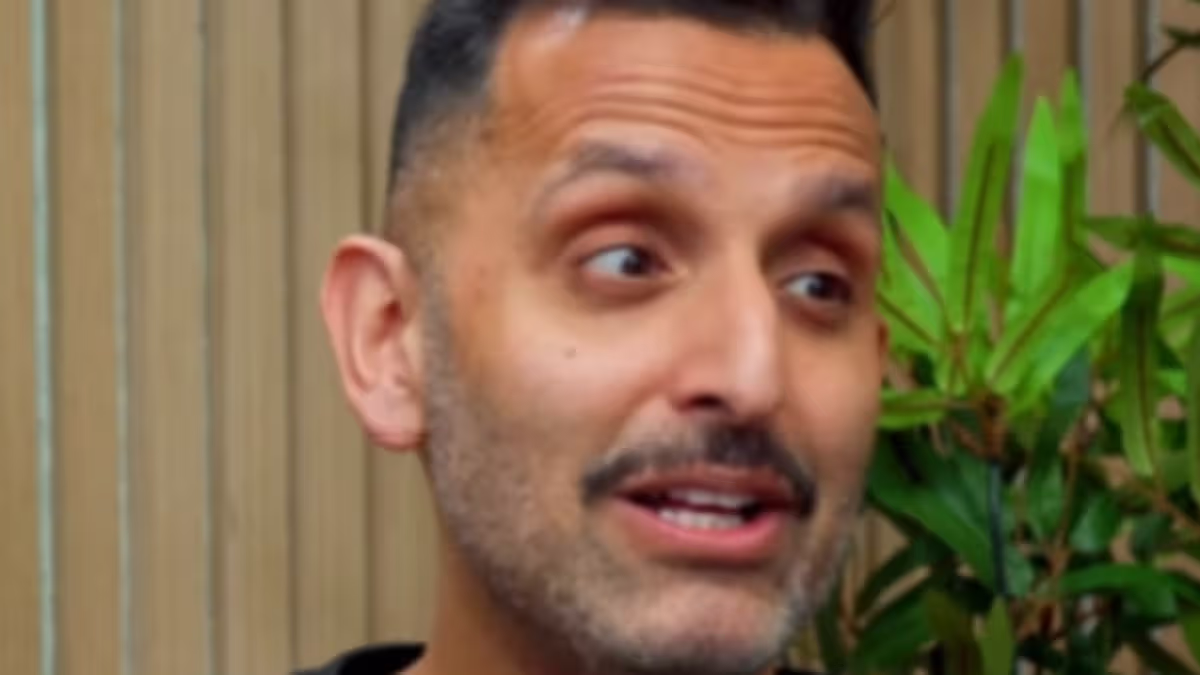
ITV’s Dr Amir Khan has shared his shift work health advice
A GP has issued a stark warning about working patterns, claiming humans are “not designed” for a particular type of schedule. According to the medical professional, shift work can have serious consequences for both physical wellbeing.
Advertisement
During a recent episode of his podcast No Appointment Necessary, Doctor Amir Khan offered guidance for those working shifts. Dr Amir, who is widely recognised from his appearances on ITV, stated: “Our bodies are not evolved to do shift work.
“Shift work is a modern thing that’s been thrust upon us – part of capitalism that has been thrust upon us that sees us more as functional units, rather than actual human beings.” He outlined how the human body isn’t built to cope with the irregular nature of shift patterns.
Content cannot be displayed without consent
“So there is no easy answer to shift work, your body’s not designed to do shift work, your body’s not designed to stay up all night one week and then work days the next week,” he added. “You know I did a year and a half of A&E and I was doing shift work and I was trying to get sleep where I can but it is hard.”
Among his recommendations was getting rest “when you can”. He explained: “And I genuinely do not have the answer to that apart from sleeping when you can. It is always better to get into a rhythm and some people really like working nights and then sleeping through the day and having the day to do the stuff that they might want to do as well later on.” He ideally suggested maintaining consistent shift patterns.
Advertisement
Dr Amir explained: “If you can work consistently one shift for a period of time where your body can get into a rhythm that is better than switching and changing all the time but natural daylight, if you’re missing that that has its benefits as well.
“So it’s pros and cons, the long and short of it is, we’re not designed to do shift work.” The video’s caption on the podcast’s Instagram post stated: “Shift work might be normal… but it’s not natural.
“Dr Amir Khan explains why constantly switching between nights and days can seriously affect your body, sleep and health.”
Advertisement
The health dangers
His guidance is backed up by experts at UCLA Health in the United States. On its website, the organisation highlighted that shift work can have a “long-term” effect on health and wellbeing.
They stated: “The biggest health challenge facing shift workers is the interruption of circadian rhythm – your body’s physical, mental and behavioural processes that follow a 24-hour cycle. Circadian rhythms are influenced mainly by light and darkness.
“Shift work – especially at night – often disturbs the body’s systems regulated by circadian rhythm, including the sleep/wake cycle. The more years you work a shift schedule, the higher your risk of chronic health issues.”
These health problems include:
Cancer
Cardiovascular disease
Gastrointestinal disorders
Mental health disorders
Metabolic disorders such as obesity, metabolic syndrome and type 2 diabetes
UCLA stated: “According to research, night-shift workers are three times more likely to suffer from a shift-related sleep disorder than people who work a day shift. Recognising the signs and getting treatment for a sleep disorder may help you avoid associated physical and mental health issues.”
What action to take
The UCLA team suggested that shift workers should concentrate on the following:
Eating habits: consume high-quality, whole food wherever possible, and avoid eating between midnight and 6am to maintain typical eating patterns.
Sleeping better: implement sleep strategies tailored for shift workers that suit your personal needs, work schedule and home circumstances
Maintaining relationships: Share at least one meal with your family each day. Set aside time every week to connect with friends, either face-to-face or through video chat
“With filming just underway on season four of The White Lotus, it had become apparent that the character which [White Lotus showrunner] Mike White created for Helena Bonham Carter did not align once on set,” a spokesperson said at the time.
“The role has subsequently been rethought, is being rewritten and will be recast in the coming weeks.”
Asked if he had any insight about his co-star and fellow Brit’s exit on the TV Baftas red carpet, Steve told Deadline: “That was… I mean… that was… it sort of like… it just went in a different direction.”
“Sometimes you find that something isn’t working the way you want it to, in terms of, like, the character, and the sort of dynamic of the whole story,” he continued. “So that was just a mutual decision.”
Advertisement
He added that the “whole part was rewritten from scratch” when Oscar winner Laura Dern joined the cast.
Last week, Variety published a piece claiming that Mike White had originally intended for Helena to play a “washed-out star who is chasing a comeback”.
Citing undisclosed “sources”, Variety’s article alleged that the Harry Potter star left The White Lotus due to “creative differences”, notably Mike White wanting her to play the character in a more “boisterous” way.
West Ham vs Arsenal VAR fallout as new referee verdict given and ‘so wrong’ claim made – Manchester Evening News
Need to know
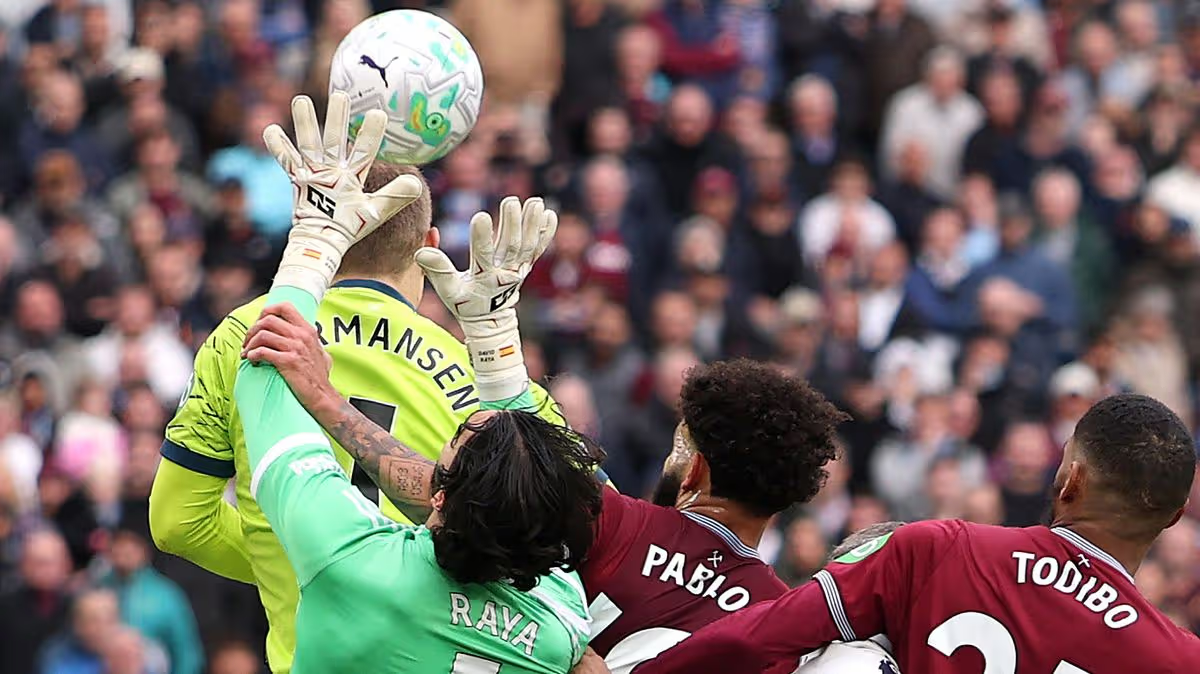
West Ham were denied a late equaliser against Arsenal after David Raya was adjudged to have been fouled in the build-up
Arsenal goalkeeper David Raya is adjudged to have been fouled shortly before Callum Wilson equalises for West Ham(Image: Alex Pantling/Getty Images)
Everything you need to know about the Arsenal VAR drama
What happened: With Arsenal’s leading 1-0, Callum Wilson looked to have equalised when his fierce strike squeezed over the line. However, a VAR review ensued after the Gunners claimed David Raya had been fouled in the build-up by Pablo.
Referee decision: After going to his monitor, Chris Kavanagh confirmed the goal would be disallowed. He announced to the crowd: “After review, No.19 commits a foul on the goalkeeper. Final decision is a direct free kick.”
What the law says: According to the FA’s Law 12: Fouls and Misconduct, a direct free kick is awarded if a player commits any of the following offences against an opponent in a manner considered by the referee to be careless, reckless or using excessive force: Charges, jumps at, kicks or attempts to kick, pushes, strikes or attempts to strike (including head-butt), tackles or challenges, trips or attempts to trip, holds an opponent, impedes an opponent with contact, bites or spits at someone on the team lists or a match official, throws an object at the ball, opponent or match official, or makes contact with the ball with a held object.
What West Ham head coach Nuno Espirito Santo said: “They have to solve it. They have to come to the clubs and explain and show why sometimes it is, sometimes it’s not. Sometimes it’s a goal, sometimes not a goal. Everybody feels confused. Today we are upset, we are sad. It’s the lack of consistency with the decisions. These previous recent seasons have been having a lot of blocking, grappling, holding. Almost like a wrestling situation that all of us don’t even understand what is a foul, what is not a foul. I think even the referees confuse themselves. I have the same view of everybody. Sometimes I think it is, sometimes I think not because then you look at every corner in the Premier League. What’s happening? It’s something like this. Not only today but in all the pitches. Everybody, us included, are trying. But what is the barrier, what is the frontier of what is a foul and what is not a foul? It is tough.”
What Arsenal head coach Mikel Arteta said: “It’s very brave but very consistent with what they’ve been talking about all season. When I have to be critical I have been. Today I have to praise them at least for giving the option for the referee to decide away from the lights and the chaos, to give clarity for him to make the right call. When you look at the action in that way, it is an obvious error. The goal has to be disallowed.”
Ex-referee’s opinion: Speaking on Sky Sports’ Ref Watch, Dermot Gallagher said: “Between the officials, they came to the right decision. When you watch it, there is so much going on and to look at and what happens is you have to go in chronological order. If you look at it, Pablo puts his arm across Raya, he holds him, there is no doubt about that. Behind that, Declan Rice is engaged with [Konstantinos] Mavropanos, is that a penalty? Well, if you look at it in that order, definitely Pablo goes first, his arm is across Raya and at that point, Rice is reaching, he does get hold of him, there is no doubt about that. And if there is not a foul on the goalkeeper, that is definitely a penalty as Mavropanos is running towards the ball. But the first foul is definitely by Pablo.”
Pundit reaction: Former Man City and Manchester United goalkeeper Peter Schmeichel was adamant the goal should have stood. He told ViaPlay: “What really makes me angry is that Arsenal would never be top of the league if that’s a free kick. That’s how they have scored so many goals – by blocking people, holding people – doing all kinds of things. And then we get to this point, it takes VAR five minutes and he [Darren England] starts it over again. That in itself puts so much doubt into that decision. It cannot be a free kick. It cannot. It is so wrong. I just don’t understand why all of a sudden that’s a free kick because it’s not been for any teams all the way throughout the season. All this is just crazy. That decision today… It’s just so wrong on so many levels.”
What this means: Arsenal’s win means they remain five points clear of City in the Premier League. Pep Guardiola’s side face Crystal Palace on Wednesday night and, if they win, will move two points behind the Gunners.
But if you don’t like the dried plums or are looking for a little variety, here are some other foods to get the show back on the road:
Advertisement
1) Chewing gum
In a remarkable opening line, health myth buster, GP, and surgeon Dr Karan Rajan said in a video that “chewing gum could help you in your quest to churn out fresh colon sausage”.
That’s for two reasons. Firstly, it tricks your body into thinking you’re eating, which kick-starts the motion of the digestive ocean.
And secondly, sugar-free gum often contains that helpful ingredient, sorbitol.
Advertisement
2) Popcorn
Popcorn is surprisingly high in fibre. And the type of fibre it contains, insoluble fibre, provides “roughage,” Johns Hopkins Medicine said.
The former Strictly host and Radio 2 DJ – who have two daughters – admitted it had not been an “easy choice” to part ways.
“After much consideration, and with a deep sense of care and respect for one another, we have made the decision to separate amicably,” they said in a joint statement.
“This has not been an easy choice, but it comes from a place of mutual understanding and a shared desire of what is best for both of us.
“We remain great friends and, most importantly, fully committed to our roles as loving and supportive parents, which will always be our priority. There are no other parties involved in this decision.
Advertisement
Vernon Kay and Tess Daly announced their split on Friday
PA Archive
And it hasn’t always been plain sailing in their romance, with Kay previously being embroiled in a sexting scandal that plagued the couple for years.
2001 – Vernon and Tess meet
The pair met while working for rival channels in 2001, crossing paths at a BBC Christmas party.
Advertisement
“It was all quite immediate, really, because we instantly had such a blast together,” Daly told The Sun’s Fabulous magazine.
“I couldn’t imagine having more fun with anyone else. It was pretty explosive, I tell you.”
They married in 2003
PA Archive
Kay recalled their outfits, telling Scott Mills on Radio 2: “Strictly Come Dancing’s Tess and I, recreated the video for Britney Spears’ Hit Me Baby One More Time. That’s how we first met.
Advertisement
“She was dressed as Geri Halliwell in the Spice Girls Union Jack dress; I was dressed as Britney Spears in the Hit Me Baby One More Time video school uniform. It was in a charity shop on Shepherd’s Green, Shepherd’s Bush Green.”
He claimed Mills helped the pair get together.
“I think you teed it up. I think you set it up as, ‘Why don’t you and our new presenter, Tess Daly, go and do this?’” Kay recounted.
2003 – The couple get married
Advertisement
Daly and Kay tied the knot after two years of dating, marrying on 12 September 2003.
They exchanged vows at St Mary’s Church in Kay’s hometown Horwich and held their reception at Rivington Hall Barn.
The couple travelled in a VW camper van, which had the words “Just Married” written on the back window.
2004 – Their first daughter Phoebe is born
Advertisement
The couple welcomed their first child, Phoebe, at a London hospital onOctober 17, 2004.
Daly recalled that after a long wait, holding Phoebe in her arms was “the most natural thing in the world”.
Tess Daly with Vernon Kay and their daughter Phoebe
PA Wire
She admitted that Phoebe was not planned and that she wasn’t “the maternal type” until she became pregnant, at which point her priorities shifted entirely.
Advertisement
The presenter opened up about the difficulty of returning to work on Strictly Come Dancing for the show’s first series just six weeks after having a C-section.
She described this time as a “daunting” period of “burnout” where she was trying to manage being a new mum while filming.
2009 – Their second daughter Amber arrives
Daly gave birth to their second child, Amber, on Saturday, 30 May 2009.
Advertisement
Speaking about how the couple like to raise them, Kay told Daily Mail: “We let them be independent when it comes to their futures because it’s important that you allow them to find themselves, which is character building and personality development.”
2010 – Vernon’s sexting scandal
Kay was caught sending flirty messages back and forth with UK glamour model Rhian Sugden in 2010.
The Family Fortunes host made a public apology, saying: “Tess is extremely upset about this and we’re working through it.
Advertisement
Rhian Sugden
Nat Jag/Getty Images
“But in some ways, I’m glad this story has come out. It feels like a weight has been lifted from my shoulders.”
He later told The Sun he had been “stupid and daft” but he was “not a sex pest”.
2013 – Vernon and Tess renew their vows
The couple renewed their vows on their 10th wedding anniversary during a surprise weekend trip to their favourite hotel in the South of France.
Advertisement
Kay arranged for a Catholic priest, their parents, and their two daughters, Phoebe and Amber, to be there.
He coordinated with Tess’s stylist to have three white dresses delivered so she could choose one for the ceremony.
Kay famously kept the vow renewal a secret for almost a decade, before revealing the details during his 2020 stint on I’m A Celebrity.
2016 – Vernon is hit with more sexting rumours
Advertisement
He addressed a report in The Sun that said he and Sugden had reconnected before Christmas and had planned a hotel meet-up.
They faced further sexting rumours in 2016
Instagram
Kay said Daly was aware of his messages with Sugden and “there was never any inappropriate intent to our communication”.
He claimed he was seeking answers from the model over the pair’s previous contact in 2010.
Advertisement
February 2026 – they are seen together for the last time
Daly and Kay were last seen together publicly in February when they co-hosted The One Show.
Daly shared a photo of her and Kay smiling with Bridgerton stars Luke Thompson and Yerin Ha, as well as Oscar winner Jessie Buckley and Maggie Gyllenhaal.
“An evening at @bbctheoneshow with some incredible guests,” she captioned it.
Advertisement
April 2016 – they go on a family holiday
Last month the couple were away together in the Caribbean with their daughter, Phoebe.
Despite not posing for photos together, Daly posted one of her eldest and Kay sat on a swing on the beach.
Kay posted a reel modelling Daly’s trunks from her swimwear brand Naia Beach.
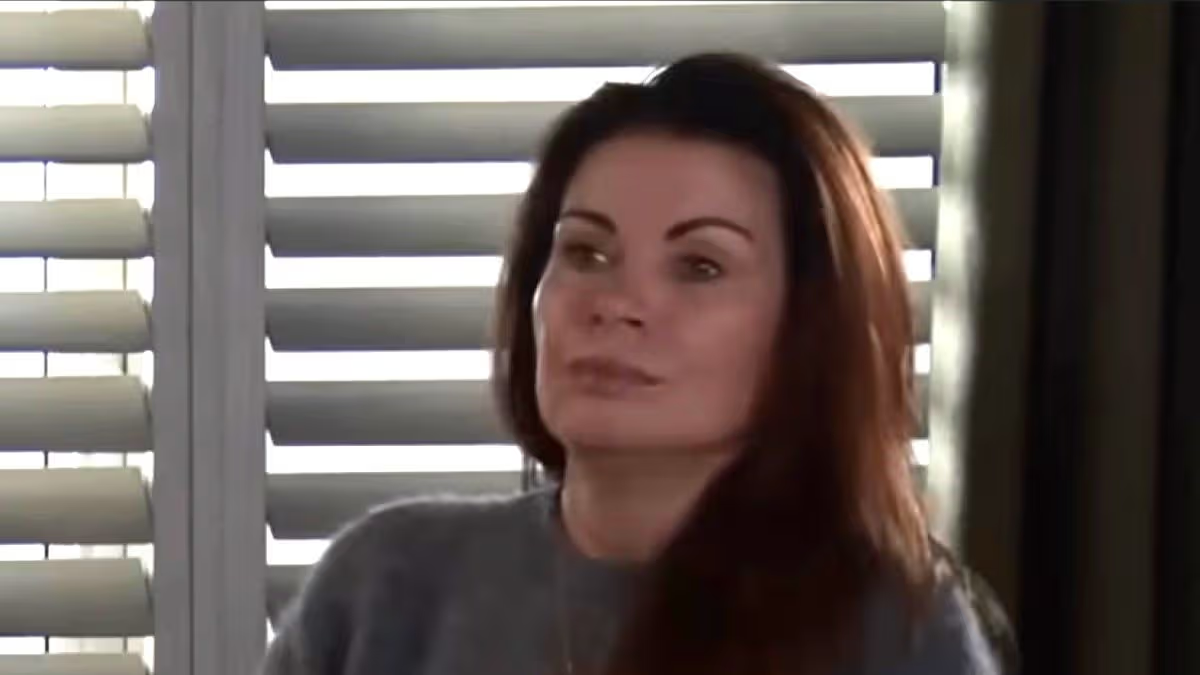
The fan-favourite character, played by Alison King, has been notably absent following her wedding to new wife, Lisa Connor-Swain
Coronation Street fans have issued a demand around Carla Connor-Swain following her ‘disappearance’ after her latest wedding in the long-running show.
Advertisement
The fan-favourite character, played by Alison King, will officially mark 20 years since she arrived in Weatherfield later this year, and it would be fair to say that Carla hasn’t had much luck over those two decades when it comes to matters of the heart.
That being said, things have been looking up as last month in the ITV soap, Carla was seen marrying DS Lisa Swain. But pointed out on-screen, this isn’t Carla’s first rodeo as the Underworld factory boss had been married five times before, twice of those times to the same person – we’re looking at you, Peter Barlow!
Click here to sign up for more Coronation Street updates in our newsletter
But as Corrie viewers know, there was almost a hitch, as at first, the nuptials appeared to be off due to a flood, caused by Carl Webster, at the Chariot Square Hotel. But after some words of encouragement from Ryan Connor, Lisa formed a plan.
Advertisement
After convincing a disappointed Carla to ditch her duvet day, they headed to the hotel, and upon their arrival, Lisa surprised her wife-to-be by revealing that their wedding was going ahead, with Lisa’s daughter, Betsy, Carla’s nephew, Ryan, and her father-figure, Roy Cropper, as their witnesses.
Once pronounced as wives, there was another surprise waiting as Sally Metcalfe activated the Underworld security alarm, forcing Carla to head into work, despite getting married, but upon her entry, everyone was waiting, having come together for a wedding reception, which even took Lisa by surprise, and the newlyweds were able to celebrate.
The big day made Corrie history, as it’s the first time two women have successfully tied the knot in Weatherfield. But it seems Corrie fans are slightly disappointed to see Mrs Carla Connor-Swain absent from screens, while DS Lisa Connor-Swain is busy trying to pin down Theo Silverton’s killer.
Advertisement
@TheConnorSwains said: “Carla marrying Lisa & becoming Carla Connor-Swain only to immediately disappear from our screens! What #Corrie giveth with one hand they snatched away with the other. Bring back Carla Connor-Swain, I wanna see her ‘Ooo damn I have a wife era’. #Swarla.” @carlasmayhem cried: “Please I thought we got Carla back this week.”
@swoosh286 shared: “Where’s wifey? Yet another day with no sighting of Carla Connor-Swain! Yeah Lise, I’m fed up too! #swarla.” @MrsGodwin1993 added: “Can’t wait to see Carla back but now as Carla Connor-Swain #Swarla #Corrie #carlaconnor.”
The hit travel competition show returned to screens last month, seeing new pairs travelling more than 12,000km across Europe and Asia.
So far, the pairs have travelled across countries, including Italy, Greece, Turkey, Kazakhstan, Uzbekistan and Kyrgyzstan.
The final destination brings them to the shores of Lake Khovsgol in northern Mongolia, where the first to cross the finish line will snap up the £20,000 reward.
Advertisement
However, viewers of Race Across The World are facing a slight shift in schedule this week, as the BBC makes room for Eurovision.
Race Across The World faces a major schedule change this week
Since it started last month, Race Across The World has been airing episodes every Thursday at 8pm.
However, this week, the BBC has brought the show forward by a day, with the penultimate episode now airing on Wednesday, May 13th at 8pm.
The move comes as the BBC prepares to air the second round of the semi-finals at the Eurovision Song Contest.
Advertisement
The upcoming episode of Race Across The World will see the pairs take on their eighth and final country, Mongolia.
It’s not just Race Across The World that is being moved to its usual spot, as MasterChef will not air on its normal Thursday spot.
Instead, the cooking show will air on Friday, May 15 this week, to also make way for Eurovision.
Recommended Reading
When is Eurovision 2026?
The Eurovision 2026 semi-finals will be broadcast on May 12 and 14, with the grand final taking place on May 16 at Vienna’s Wiener Stadthalle.
Advertisement
UK viewers can watch all shows live on BBC One and iPlayer, or listen on BBC Radio 2 and BBC Sounds, with the coverage beginning on TV at 8pm.
Have you been watching Race Across The World? Let us know who you want to see win in the comments.
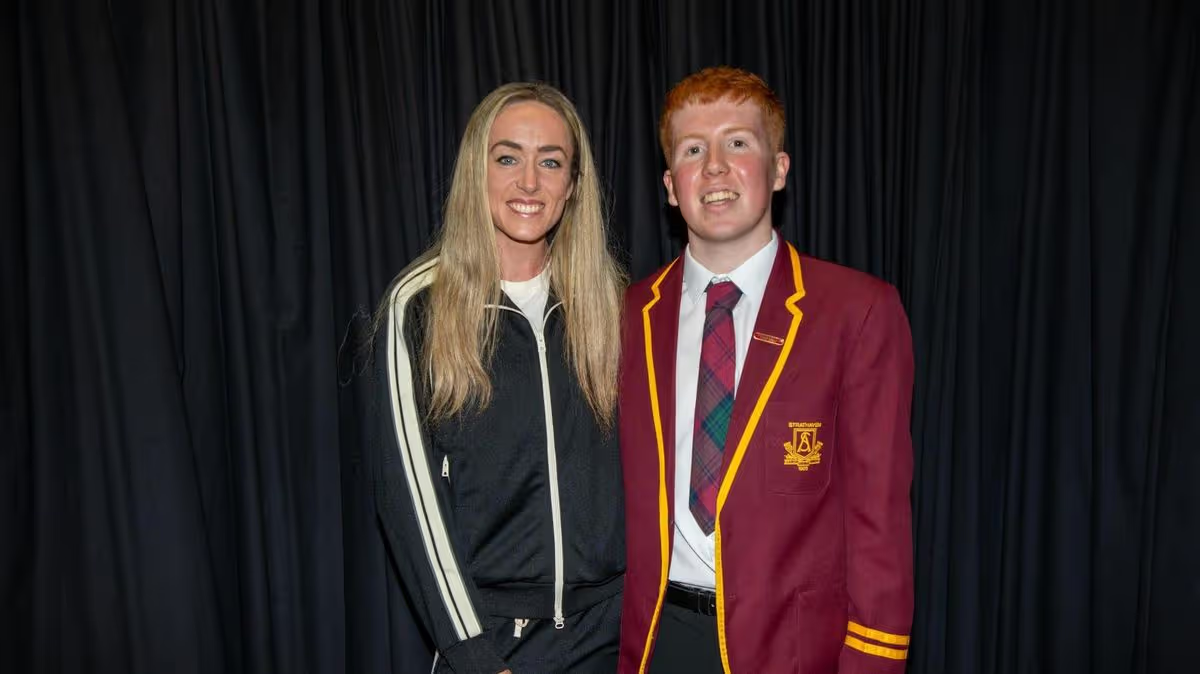
Fresh from finishing as the top British woman at the 2026 London Marathon, Eilish took part in a panel session with youngsters.
Lanarkshire school pupils were put through their paces by four-time Olympian and Commonwealth champion Eilish McColgan during a sport science outreach visit organised by University of the West of Scotland (UWS) last week.
Advertisement
The event, which took place at Strathaven Academy on Friday, May 8, aimed to inspire youngsters, teachers and the wider public by showcasing the breadth and impact of sport and exercise science.
Arranged in collaboration with the Chartered Association of Sport and Exercise Sciences (CASES), the UK professional body for sport and exercise sciences, Eilish’s visit was part of a prize won by sixth-year pupil Ross Munro for his successful poster competition entry on inclusion in disability sport last year.
Ross is a keen runner and is a member of local running club Strathaven Striders. As part of his prize, Ross was given the opportunity to select an athlete to visit his school and deliver a specialist athlete-development workshop, with Ross choosing Eilish.
Fresh from finishing as the top British woman at the 2026 London Marathon, Eilish took part in a panel session with pupils, who were given the chance to ask the record-breaking Scottish long-distance runner questions relating to her life and her sport. She was asked about how she juggled sport with her studies, who inspires her, how often she trains and how to get started in sport.
Advertisement
The visit also included practical sessions, with Eilish leading pupils through her own go-to warm up, as well as challenging the students to try out different running paces measured by UWS’s sport science equipment.
Pupils also had the chance to try boccia – a target ball sport similar to bowls, which is often played by athletes with various physical disabilities affecting motor skills. The sport had inspired Ross’s winning poster when he got to experience boccia during a visit to UWS last year, so he wanted his fellow pupils to learn more about it.
Discussing her time at the school, Eilish said: “It’s been fantastic to be here. The pupils asked great questions, and it’s been a lot of fun – I can tell the school is very engaged in sport. I was asked my best piece of advice for young people who are interested in pursuing a career in sport and that would be to join a local club. The qualities and values you learn from sport are so valuable through many stages of life.”
University of the West of Scotland is the only Scottish University to be part of CASES’ national Outreach Hub initiative. The Hub network enables higher education institutions to engage local communities through events like these, as well as school visits, public talks, webinars, and hands-on learning experiences.
Dr Hayley McEwan, CASES, senior lecturer in psychology of sport and co-lead of the UWS Outreach Hub, said: “Being able to offer a taste of sport science to school pupils has been a rewarding experience for everyone involved over the past few years, and now for one of the pupils to win the national poster competition as part of the visit and bring a world class athlete to Strathaven is remarkable. I particularly love that Ross chose a female role model in Eilish McColgan – she is relatable and inspiring to all.”
Chris Love, principal teacher of physical education at Strathaven Academy, said: “We are incredibly proud of Ross for his outstanding achievement, which has brought the inspiring presence of Eilish McColgan to Strathaven Academy. This is a momentous occasion for our entire school community, and we extend our sincere thanks, not only to Eilish but to the University of the West of Scotland for their partnership and dedication to fostering these connections, providing our young people with a firsthand look at what can be achieved through perseverance and talent.”
Competition winner Ross Munro said: “Inclusion in sport is extremely important me and I want to see it become more accessible for all, which is what inspired my winning poster. It’s incredible to host this event today at my school and I want to thank everyone who helped make it happen, including Eilish for coming all this way.
“Sport is important to me and I have always been involved in some way. I run, play golf and I was golf captain at my club. For me, I want to build on that in the local community and I’m passionate about getting as many people involved in sport as possible. I start university soon and look forward to joining sports clubs and societies there – it was interesting to listen to Eilish talk about the importance and benefits of being part of a sports club.”
You can find out more about the sports courses available at University of the West of Scotland here. Find out more about CASES here.
* Don’t miss the latest headlines from around Lanarkshire. Sign up to our newsletters here.
Advertisement
And did you know Lanarkshire Live is on Facebook? Head on over and give us a like and share!
Researchers at MIT have suggested that rice seeds can hear the sound of rain, according to a new study. MIT calls it “the first direct evidence that plant seeds and seedlings can sense sounds in nature”. Perhaps surprisingly, the effects reported in this new study are not as radical as they may appear.
Playing music to your plants may sound eccentric, but a few previous studies have found it has some effect. For example, a 2024 study found bok choi grew better to classical music but less well to rock and roll. Nor is this an isolated phenomenon. Sound can have a range of effects on plant behaviour.
For example, some flowers use the pitch of an insect’s buzz to determine whether they will release their pollen. Both arabidopsis (thale cress) and tobacco plants produce higher levels of toxins, such as nicotine, in response to the sound of caterpillars chewing on neighbouring plants. There have also been reports that notes from a synthesiser can increase seed germination and seedling growth in mung beans, cucumber and rice.
Advertisement
Many people think of plants as nice-looking greens. Essential for clean air, yes, but simple organisms. A step change in research is shaking up the way scientists think about plants: they are far more complex and more like us than you might imagine. This blossoming field of science is too delightful to do it justice in one or two stories. This article is part of a series, Plant Curious, exploring scientific studies that challenge the way you view plantlife.
In contrast to previous experiments using electronic tones from a speaker, the MIT researchers instead tested the effect of a natural sound upon rice germination: the fall of rain. Rice can grow in soil or under water, and the researchers started by measuring the sound made by raindrops falling onto shallow puddles similar to the paddies they sowed seed in. The volume of sound waves created by drops landing on water was incredibly loud, equivalent to someone shouting straight into your ear, but mostly at frequencies too low or too high for a human to hear.
They then poured simulated rain on some of the pools containing rice and compared their rate of sprouting with seeds in still water. They found that although water droplets imitating light rain had little effect, heavier rain increased germination, and the heaviest by more than 30%.
They also picked up on an important clue from a previous study about how the rice might be detecting the sound. A 2002 study found that mutant arabidopsis plants which can’t make starch didn’t respond to vibration in the same way that normal arabidopsis do.
Sound waves are just vibrating energy travelling through a gas, liquid or solid that make objects, such as the eardrum membranes we use to hear, shake as they pass. Sound is one way we detect vibrations. The MIT researchers theorised that perhaps plants needed to be able to make starch to detect sound.
Advertisement
This drew their attention to structures called statoliths, from the Greek for “standing stone”. Plant cells that can detect gravity each contain several statoliths filled with highly dense starch which sink through the cell. As they fall, the statoliths brush against other structures in the cell and come to rest pressing on its bottom, telling the plant which way is down.
To test their theory, the researchers modelled the effect of the recorded sound upon statoliths in the rice seeds. They found that the rain sounds could make the statoliths bounce up from the bottom of the cell like beads on a drum. Light rain would have little effect, but as the rain sound got heavier the statoliths jumped higher and faster, matching the stimulation of germination.
It also seemed that the layer of statoliths in the bottom of the cell would behave almost like a liquid, similar to the balls in a children’s ball pit, and that the sound energy would stir this “liquid” and help spread chemical messages to the rest of the plant.
The mutant arabidopsis from the previous study probably couldn’t sense vibrations because they can’t make the starch that their statoliths need to work. This suggests that that statoliths may be one way that plants “hear”.
Advertisement
Although there is now little doubt among scientists that plants can detect and respond to sounds, is this really hearing or is a mind needed to perceive the signal? Plants don’t have a nervous system and centralised brain like humans and most other animals. There has, however, been a lively debate amongst scientists about whether plants demonstrate some type of intelligence or not.
Observations of plant behaviour that appears intelligent include a 2017 study in which pea roots seemed to follow the sound of water through a simple maze, and 2016 research that claimed pea shoots learned that they would find light if they followed the direction of wind from a fan.
Scientists have observed electrical signals in plants of a similar type to those in our nerves, even if they are not carried by specialised structures like our nervous system. In many cases we don’t know what they do, but this may be because plants often respond in ways that aren’t obvious to us.
And there may be other factors at play. Hearing may require an organism that is conscious to sound. There are many definitions of consciousness. But mother and daughter scientists Lynn Margulis and Dorian Sagan have argued that at its most fundamental, consciousness is simply an awareness of the world outside the organism. If so, this is surely something that all species must possess if they are to respond to their environment and survive, even if it varies in complexity and nature.
Maybe the world of a rice seedling is too different to ours for us to understand, but it may not be too much of a stretch to say that they hear the sound or rain.
















































You must be logged in to post a comment Login