

Business
BlackRock CEO Larry Fink warns $150 oil price could spark global recession


The head of the world’s largest asset manager has warned that a sustained surge in oil prices to $150 a barrel could push the global economy into a sharp recession, as geopolitical tensions continue to destabilise energy markets.
Larry Fink, chief executive of BlackRock, said the trajectory of the Middle East conflict, particularly the role of Iran, will determine whether the world faces a temporary disruption or a prolonged economic shock.
“If oil prices stay elevated and Iran remains a threat, that will have profound implications,” he said, warning that a scenario of sustained high prices could lead to “a probably stark and steep recession”.
Fink outlined two contrasting outcomes for global markets.
In a more optimistic scenario, a resolution to the conflict and a stabilisation of relations could see oil prices fall back below pre-war levels, easing inflationary pressures and supporting growth.
However, in the more pessimistic case, prolonged instability could drive oil prices above $100, and potentially towards $150, for several years. That would significantly increase costs for businesses and consumers, acting as a drag on economic activity worldwide.
Energy prices have already surged in recent weeks, with Brent crude climbing sharply amid disruptions to supply routes and heightened uncertainty over future production.
Fink emphasised that rising energy prices disproportionately affect lower-income households, describing them as a “very regressive tax”.
“Higher energy costs hit the poorest the hardest,” he said, noting that sustained increases would not only dampen consumer spending but also exacerbate inequality.
The warning comes as governments, including the UK, face growing pressure to shield households and businesses from rising costs, even as public finances remain stretched.
The BlackRock chief urged policymakers to adopt a pragmatic approach to energy policy, combining existing fossil fuel resources with accelerated investment in renewables.
“Use what you have, unquestionably, but also aggressively move towards alternative sources,” he said.
He argued that high oil prices could ultimately accelerate the global transition to cleaner energy, as countries seek to reduce dependence on volatile fossil fuel markets. Solar and wind power, in particular, could see rapid expansion if energy costs remain elevated.
However, he warned that progress has been uneven. While China is investing heavily in solar and nuclear capacity, Europe risks falling behind due to slow implementation and regulatory inertia.
Despite market volatility, Fink dismissed comparisons with the 2007–08 financial crisis, insisting that today’s financial system is far more resilient.
“I don’t see any similarities at all, zero,” he said, arguing that while some stress is emerging in areas such as private credit funds, it represents a small portion of the overall market.
Fink also addressed concerns about a potential bubble in artificial intelligence, rejecting the idea that investment in the sector is overinflated.
“I do not believe we have a bubble at all,” he said, although he acknowledged that some companies may fail as the technology evolves.
He argued that AI is part of a broader race for technological dominance, particularly between the US and China, and that continued investment is essential to remain competitive.
At the same time, he highlighted the transformative impact AI is likely to have on the labour market. While some traditional office roles may decline, he expects significant job creation in skilled trades.
“There will be enormous demand for electricians, welders and plumbers,” he said, suggesting that societies will need to rethink their approach to education and career pathways.
With BlackRock overseeing around $14 trillion in assets, Fink’s outlook carries significant weight among policymakers and investors.
His warning underscores the fragile state of the global economy, where energy markets, geopolitical tensions and technological change are converging to reshape growth prospects.
For now, the key variable remains oil. If prices continue to climb towards the $150 threshold, the risk of recession will rise sharply, forcing governments and central banks to navigate an increasingly complex and volatile economic environment.

Jamie Young
Jamie is Senior Reporter at Business Matters, bringing over a decade of experience in UK SME business reporting.
Jamie holds a degree in Business Administration and regularly participates in industry conferences and workshops.
When not reporting on the latest business developments, Jamie is passionate about mentoring up-and-coming journalists and entrepreneurs to inspire the next generation of business leaders.



The Asada line features marinades, barbecue sauces and taco seasonings.

ASEAN offers Australian companies expansion opportunities, but strategic market selection depends on goals such as sales, manufacturing, supply chain, or tax efficiency, considering regional differences.
ASEAN: A Key Growth Region for Australian Businesses
ASEAN is increasingly vital for Australian companies aiming to expand markets, enhance supply chain resilience, and access Southeast Asia’s growing consumer and industrial markets. With over 680 million people and a combined economy surpassing US$3.8 trillion, the region offers significant scale and opportunity. However, its diversity necessitates strategic planning to maximize benefits and mitigate risks.
Strategic Approach to ASEAN Expansion
Expansion into ASEAN should be viewed as a phased, strategic process rather than a simple entry. The initial market choice depends on the company’s goals—whether it’s boosting sales, expanding manufacturing capacity, diversifying supply chains, managing regional operations, or optimizing tax. Firms need to prioritize their primary commercial function to determine the most suitable early markets within the region.
Priorities for Australian Companies
Australian firms should first identify whether their focus is manufacturing, procurement, regional coordination, or consumer access. Countries like Malaysia and Thailand remain attractive for industrial infrastructure and manufacturing integration. Many companies adopt a hub-and-spoke model, using Singapore for regional oversight and distributing operations across other ASEAN nations based on sector suitability and operational needs.
Read the original article : Expanding Across ASEAN: Market Entry and Regional Structuring Strategies for Australian Firms
Other People are Reading
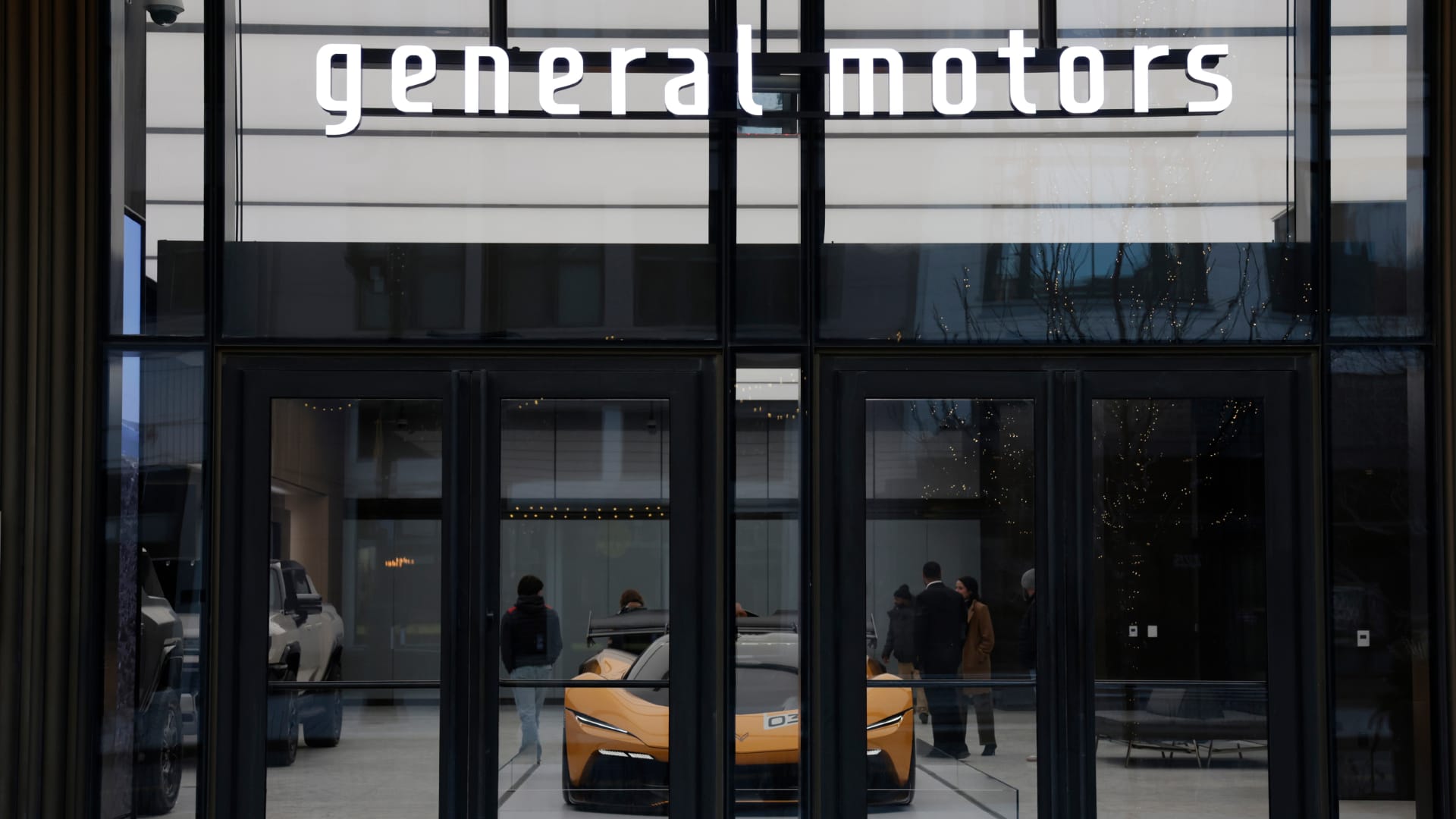
The General Motors global headquarters in Detroit, Jan. 12, 2026.
Jeff Kowalsky | Bloomberg | Getty Images
DETROIT – General Motors is laying off hundreds of salaried employees in its information technology operations as the automaker reevaluates its workforce needs and cuts costs, CNBC has learned.
The global reductions began Monday and will impact about 500 to 600 employees, largely in Austin, Texas, and Warren, Michigan, according to a person familiar with the plans who was not authorized to speak publicly about the reductions.
GM confirmed the cuts, which were first reported by Bloomberg News, but declined to give specific details about the actions.
“GM is transforming its Information Technology organization to better position the company for the future. As part of that work, we have made the difficult decision to eliminate certain roles globally. We are grateful for the contributions of the employees affected and are committed to supporting them through this transition,” the automaker said in an emailed statement.
GM reported employing about 68,000 salaried workers globally as of the end of last year, including 47,000 white-collar employees in the U.S.
Despite Monday’s cuts, GM still is still hiring IT workers. The company has 82 open IT positions that include positions working in artificial intelligence, motorsports and autonomous vehicles, according to the automaker’s careers website.
The Detroit automaker in recent years has routinely re-evaluated its salaried workforce, based on expected needs and skill sets. In October, GM laid off more than 200 Computer-Aided Design, or CAD, engineers due to “business conditions.”
Gatestone Institute senior fellow Gordon Chang joins ‘Mornings with Maria’ to break down President Donald Trump’s Beijing trip, Iran tensions, and rising concerns over China’s economy and surveillance-linked EVs.
President Donald Trump’s upcoming meeting with Chinese President Xi Jinping is drawing renewed attention to concerns that Chinese electric vehicles entering North America through Canada could pose national security risks inside the United States.
Gatestone Institute senior fellow Gordon Chang joined FOX Business’ Maria Bartiromo on “Mornings with Maria” to discuss tensions surrounding China’s trade practices, energy policy and Beijing’s growing EV footprint ahead of the high-stakes Beijing meeting.
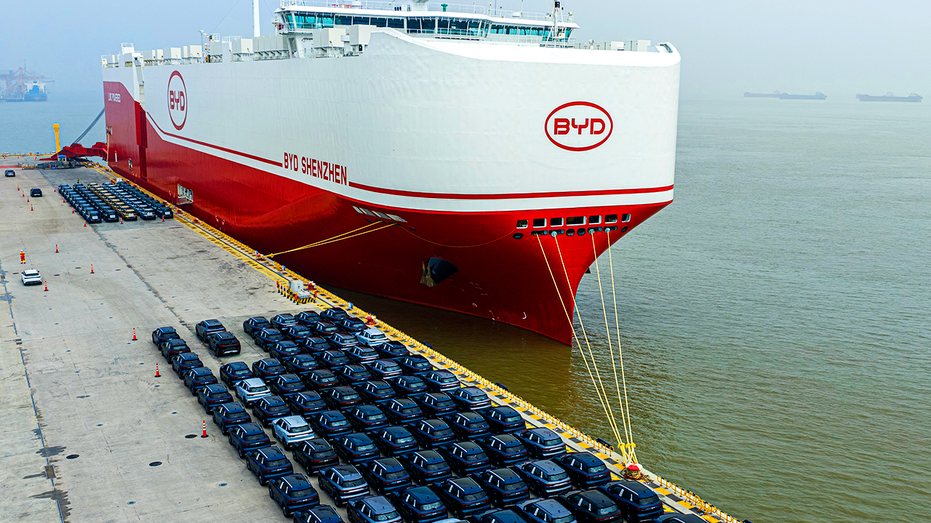
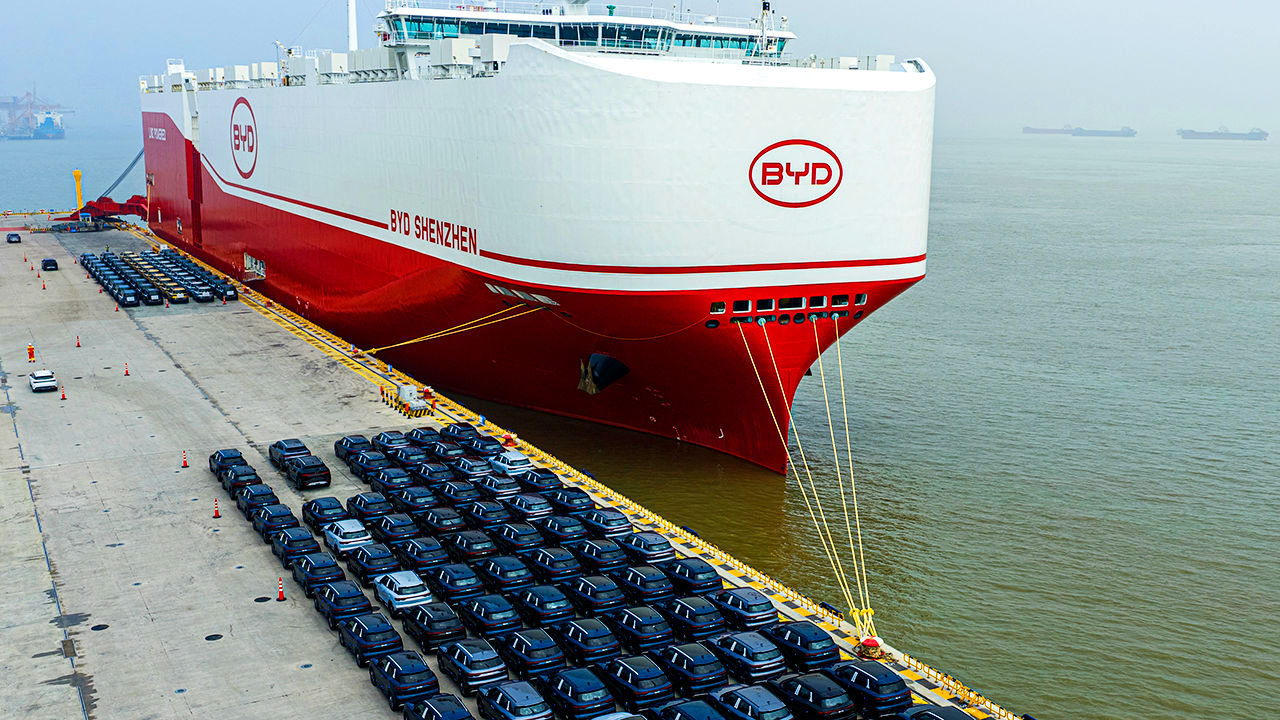
China’s BYD Shenzhen car carrier docked to load electric vehicles for export. (CN-STR / AFP / Getty Images)
The discussion comes as lawmakers push legislation aimed at blocking Chinese electric vehicles from entering the U.S. market, citing concerns over surveillance technology and connected-vehicle systems capable of collecting sensitive data.
Rep. Roger Williams, R-Texas, discusses GOP lawmakers urging a ban on Chinese vehicles and battery plants in the United States due to national security concerns on ‘The Bottom Line.’
Sen. Bernie Moreno, R-Ohio, warned that the vehicles function as “little Trojan horses” because of the amount of information they can collect and transmit.
“These cars have lots of cameras. They send back data to the Communist Party and can be remotely controlled by the Communist Party,” Moreno said during a recent appearance on “Sunday Morning Futures.”
AI EXPOSES HIDDEN RISKS IN US MILITARY SUPPLY CHAIN TIED TO CHINA
Chang expanded on those concerns, warning that Canada’s decision to lower tariffs on some Chinese EV imports could create another pathway for the vehicles to reach the United States.
U.S. Trade Representative Jamieson Greer joins ‘Mornings with Maria’ to discuss President Donald Trump’s China talks, Iran tensions in the Strait of Hormuz, and efforts to rebalance trade while countering Beijing’s AI and energy ambitions.
“We should not allow Canadians to drive their Chinese EV across our border into our country because China will be able to surveil the United States with the Canadian cars,” Chang said.
GORDON CHANG: US SHOULD EXPAND SANCTIONS ON CHINA-LINKED NETWORKS TO HIT IRAN OIL REVENUE
Chang also described Chinese EVs as “rolling spy machines,” arguing that the issue underscores broader tensions between Washington and Beijing ahead of Trump’s expected meeting with Xi later this week.
A total of 17 US executives are set to join the president on his visit, where he will meet his Chinese counterpart Xi Jinping.


The dip is expected to roll out later this year.
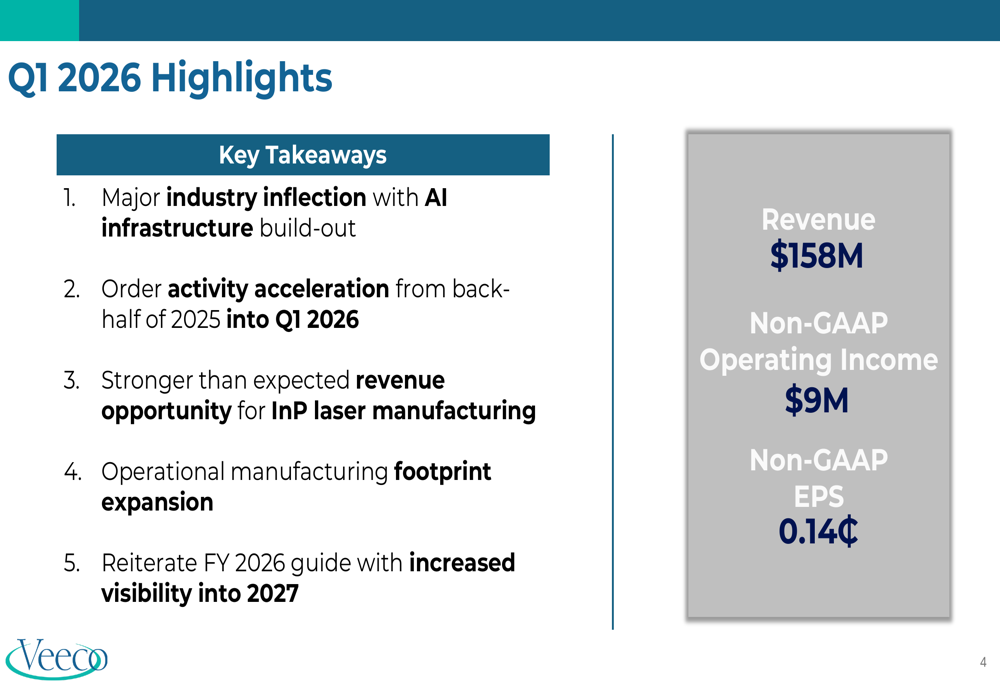
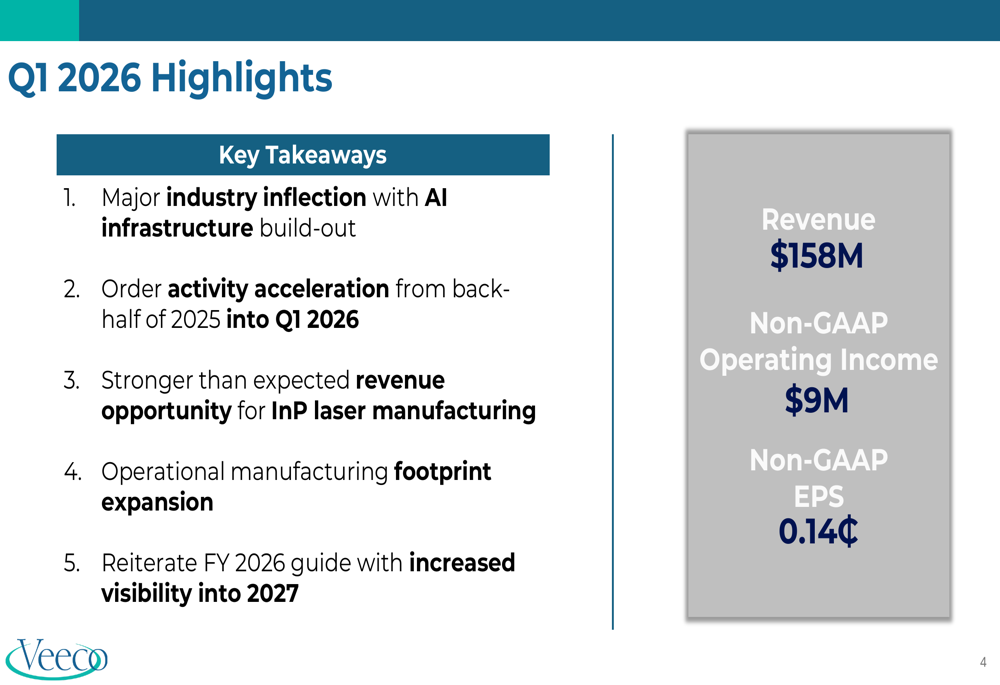
Veeco Q1 2026 slides: AI demand fuels growth outlook despite earnings miss
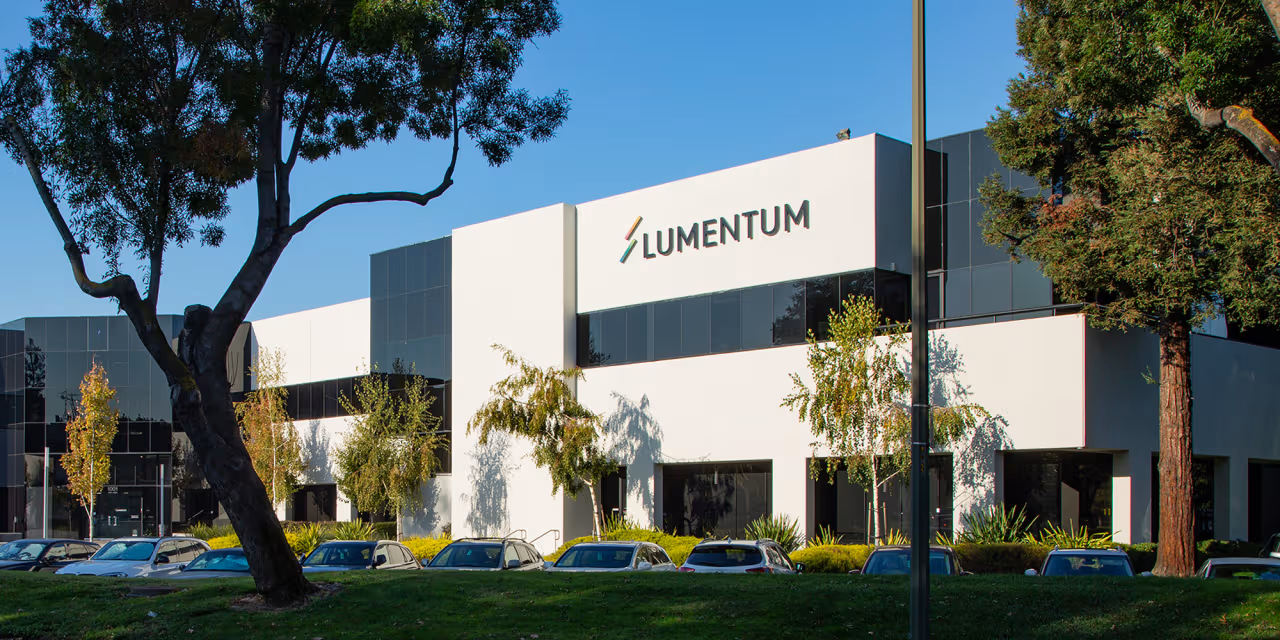
Lumentum Stock Soars as AI Optical Networking Rally Resumes
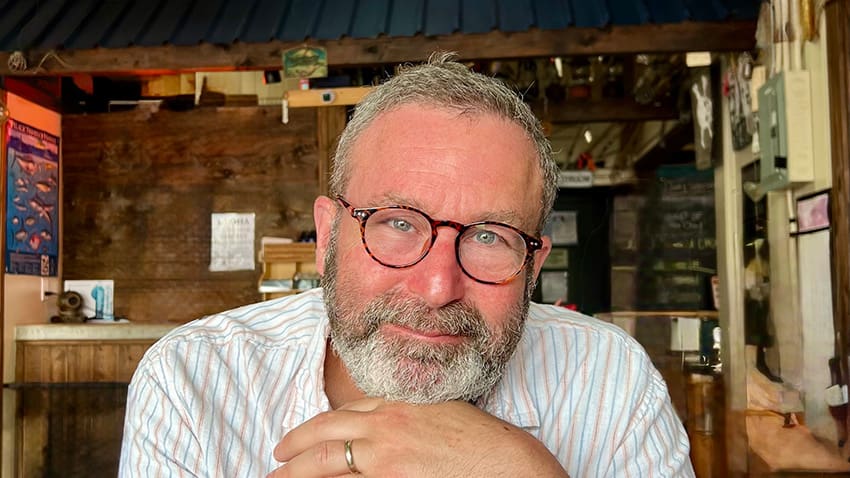
How a First-Generation Student Became a Higher Ed Leader
David Shein did not start his college journey with a clear plan.
“I was a first-generation college student before we knew what that meant,” he says. “I didn’t have a roadmap.”
That early experience shaped his career. It gave him a clear focus. He wanted to make college easier to navigate for others.
Over the next 30 years, Shein became a leader in higher education. He built systems that helped students succeed. He also helped colleges rethink how they support them.
Early Life and Education: Building Work Ethic Early
Shein started working young. He split a newspaper route with his brother. Later, he worked in stores, libraries, and even a cemetery.
These jobs taught him discipline and independence.
In school, he joined debate and theater. He then attended SUNY Oswego. He studied Philosophy and Political Science and graduated magna cum laude.
He continued his studies at Bowling Green State University before moving to the CUNY Graduate Center. There, he earned his PhD in Philosophy..
His academic focus shaped how he thinks about systems and ideas.
Early Career: Learning How Colleges Really Work
While in graduate school, Shein began working at Lehman College.
He served as Coordinator of the Core Curriculum and led the tutoring center. This gave him direct insight into student needs.
“I worked closely with faculty and administrators to build connective tissue across academic and student affairs,” he says.
That idea of “connective tissue” became central to his work.
He saw that many students struggled not because of ability, but because systems were disconnected.
Bard College Career: Building Systems That Scale
In 1999, Shein joined Bard College. He was hired to create a writing and tutoring center. He also became the college’s first disability support provider.
From the start, he focused on building structures, not just programs.
Over time, he took on leadership roles, including Vice President for Student Success and Network Integration.
He also taught in the Philosophy department and First-Year Seminar.
But his biggest impact came from what he built.
He founded the Learning Commons. He launched Disability Support Services. He helped create the Center for Student Life and Advising.
Each of these programs addressed a real gap.
“At the core of this work is a commitment to making the full college experience accessible,” he says.
Program Development and Innovation in Higher Education
Shein’s work went beyond campus services.
He helped secure accreditation for new programs and partnerships.
He played a role in extending the Clemente Course in the Humanities to new communities, bringing college-level learning to underserved populations.
These projects reflect a clear pattern.
He identifies problems. Then he builds systems that last.
“It’s about helping students connect with their college experiences in ways that impact their lives beyond their time in university,” he says.
Global Education and Fulbright Recognition
Shein’s work extended into international education.
He supported dual-degree partnerships and global programs across Bard’s network.
He also worked on Bard’s online Global Degree program. This expanded access to students around the world.
His efforts helped connect students across countries and cultures.
In 2019, he received a Fulbright scholarship for his work in international education.
This recognition highlighted his long-term impact in the field.
Mentorship and Student Success Outcomes
Throughout his career, Shein advised hundreds of students.
Many of them went on to earn major awards, including Fulbright scholarships.
But for Shein, outcomes are not just about recognition.
“It’s about helping students participate in meaningful ways in what can feel like an alien environment,” he says.
His focus has always been on engagement and belonging.
Life Beyond Work: Staying Grounded
Outside of his professional life, Shein stayed active in his community.
He coached youth soccer and supported Model UN programs when his children were younger.
Today, he spends time fishing, traveling, and writing. He also volunteers at his local public library.
He participates in the Watershed Community Amphibian Migration Project, helping protect local wildlife.
These activities reflect his broader approach. Stay involved. Stay connected.
What David Shein Is Doing Now
Upon retiring from Bard College, Shein retired from Bard College, he began working as an independent educational consultant.
His work now focuses on helping institutions improve advising systems, program design, and student support.
“I’ve spent my career helping students navigate environments that can feel unfamiliar,” he says.
That mission continues in his current work.
Why David Shein’s Work Matters in Higher Education
Higher education is still evolving. Many students continue to face barriers.
Shein’s career offers a practical model.
He focused on building systems, not just ideas. He connected academic and student services. He expanded access through new programs.
Most importantly, he kept the student experience at the center.
For someone who started without a roadmap, he has helped create one for others.


Trump says Iran ceasefire on ’life support’ after rejecting Tehran’s response

Kate Middleton Wore This Sweater Top Style for Family Photos

Starmer’s Job Is Hanging In The Balance. What Might Happen Next?

What is the release date for Half Man episode 4 on HBO Max and BBC iPlayer?

Manchester United reach agreement with Casemiro over contract clause amid transfer speculation

US brings back mandatory military draft registration

Steven Gerrard disagrees with Gary Neville over ‘shock’ Chelsea and Arsenal claim | Football


-
 Crypto World3 days ago
HarrisX Poll Found 52% of Registered Voters Support the CLARITY Act
-

 Fashion3 days ago
Weekend Open Thread: Marianne Dress
-

 Crypto World4 days ago
Upbit adds B3 Korean won pair as Base token gains Korea access
-

 Tech7 days ago
Image AI models now drive app growth, beating chatbot upgrades
-
 NewsBeat4 days ago
NCP car park operator enters administration putting 340 UK sites at risk of closure
-

 Tech2 days ago
Auto Enthusiast Carves Functional Two-Stroke Engine from Solid Metal
-

 Politics2 days ago
Politics Home Article | Starmer Enters The Danger Zone
-
 Business2 days ago
Ignore market noise, India’s long-term story intact, say D-Street bulls Ramesh Damani and Sunil Singhania
-

 Crypto World6 days ago
UAE Free Zone Deploys Blockchain IDs to Verify Registered Firms
-

 Tech11 hours ago
GM Agrees To Pay $12.75 Million To Settle California Lawsuit Over Misuse Of Customers’ Driving Data
-

 Crypto World5 days ago
Robinhood says Wall Street is building onchain
-

 Crypto World5 days ago
BlackRock CEO Larry Fink Discusses a New Asset Class
-
Entertainment7 days ago
Serena Williams hits Met Gala in metallic dress after GLP-1 reveal
-

 Tech6 days ago
Apple and Samsung are dominating smartphone sales so thoroughly that only one other company makes the top 10
-

 Tech6 days ago
I tested the Xiaomi 17 Ultra’s camera and I don’t think I’ll ever go back to an iPhone
-

 Fashion5 days ago
The Best Work Pants for Women in 2026
-
 Tech4 days ago
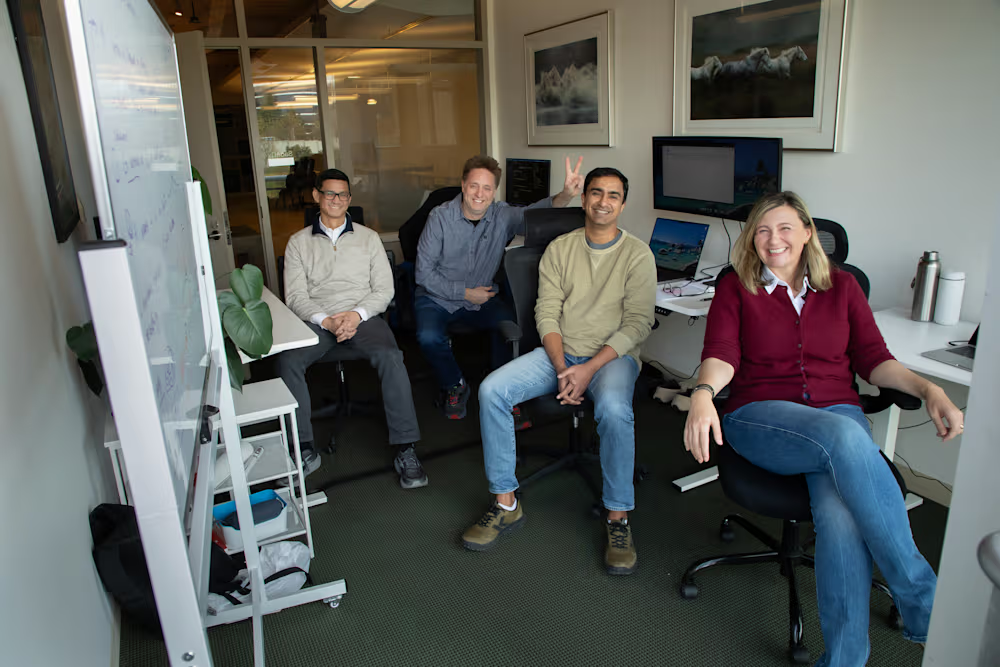
AI agents are missing all the discussions your team is having. SageOX has an answer: agentic context infrastructure
-

 Entertainment5 days ago
Sarah Paulson Called Out For Met Gala ‘Hypocrisy’
-
 Sports7 days ago
Everton v Man City LIVE: Haaland’s two-word response as visitors collapse to hand Arsenal advantage in Premier League title race
-

 Politics6 days ago
Met Gala 2026: Madonna’s Dramatic Red Carpet Look Steals The Show
You must be logged in to post a comment Login