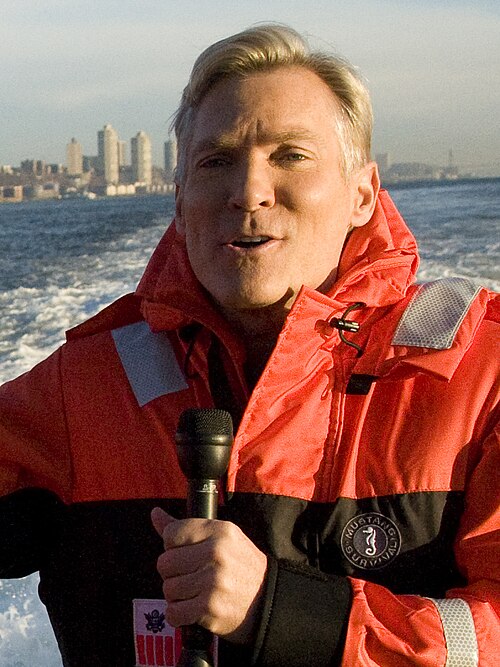


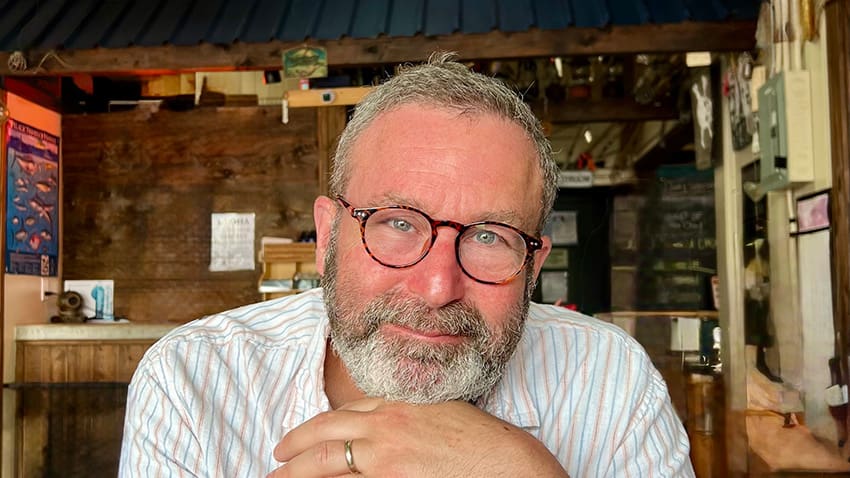

Sam Champion, the longtime weatherman for “Good Morning America,” offered a reassuring health update from his hospital bed Sunday after undergoing a cardiac catheterization procedure at Mount Sinai Fuster Heart Hospital in New York City. The 64-year-old television personality said doctors addressed issues discovered during a routine nuclear stress test and that he expects a full recovery.
Sam Champion
In an Instagram post shared March 22, Champion smiled and waved from his hospital bed while expressing gratitude to his medical team. “Thank you Dr. Stam Lerakis and Dr. Sharma and the WONDERFUL team of nurses at @mountsinaimedicalcenter Fuster Heart Hospital!” he wrote. “Many of you know I had a nuclear stress test last Thursday. And we found some things that needed to be taken care of so today I went into the cardiac catheterization laboratory…..and we took care of it. Thanks to these procedures, I am well and expected to make a full recovery.❤️”
The post quickly drew supportive comments from colleagues and fans. “Good Morning America” co-anchor Robin Roberts, a longtime friend of Champion’s, sent well wishes, as did correspondent Rebecca Jarvis and other ABC personalities. Champion has been a familiar face on morning television for decades, serving as chief meteorologist on “GMA” from 2006 to 2013 before returning in recent years while also anchoring weather on WABC-TV in New York.
Champion first mentioned the upcoming nuclear stress test in an Instagram video posted March 19. Appearing slightly tired, he told followers, “I’m more tired than normal this morning because I have a stress test exam. They’re gonna make me run on a treadmill and watch how my heart functions today. It’s one of those old people things that you have to do.” The test, which uses radioactive dye and imaging to assess blood flow to the heart during rest and exercise, revealed abnormalities that prompted further intervention.
Cardiac catheterization is a common minimally invasive procedure in which a thin tube is threaded through a blood vessel to the heart. Doctors can use it to diagnose blockages or perform interventions such as inserting a stent to open narrowed arteries or conducting balloon angioplasty. While some media outlets initially described the intervention as “emergency heart surgery,” medical experts note that catheterization with possible stenting is typically classified as a procedure rather than open-heart surgery.
Advertisement
Mount Sinai Fuster Heart Hospital is part of the Mount Sinai Health System and ranks among the nation’s top cardiac care centers. Named after renowned cardiologist Dr. Valentin Fuster, the facility specializes in advanced treatments for heart disease, prevention and research. Champion’s choice of the hospital underscores the seriousness with which he and his physicians approached the findings from the stress test.
Champion has been open about health matters in the past. In October 2024, he took time away from “GMA” to treat basal cell carcinoma, a common form of skin cancer, and shared photos of the scar on his back upon returning to air. His transparency about medical issues has resonated with viewers, many of whom praised his positive attitude in the latest update.
“GMA” executive producers and anchors expressed relief at the news. The program has featured Champion delivering weather segments from various locations, including during major storms and live events. Colleagues described him as energetic and dedicated, often arriving early to prepare detailed forecasts that blend science with approachable storytelling.
At 64, Champion remains an active figure in broadcast meteorology. He holds the American Meteorological Society’s Certified Broadcast Meteorologist designation and has earned multiple Emmy Awards for his work. Before joining ABC, he built his career at stations in Atlanta and New York, earning a reputation for accurate, enthusiastic reporting on everything from hurricanes to winter nor’easters.
Advertisement
The timing of the procedure came during a relatively quiet news period for “GMA,” allowing Champion a brief recovery window. Sources close to the show indicated he is expected to return to air in the coming days or weeks, depending on his doctor’s clearance. No official timeline has been announced, but his optimistic message suggested a swift rebound.
Medical professionals emphasize that routine stress tests are crucial for early detection of coronary artery disease, especially in individuals over 60 or with risk factors such as family history, high blood pressure or previous health concerns. When abnormalities are found, prompt catheterization can prevent more serious events like heart attacks.
Champion’s update arrived amid broader public conversations about heart health, preventive screenings and the importance of listening to one’s body. Cardiologists not involved in his care noted that nuclear stress tests are highly effective at identifying reduced blood flow, and catheterization allows immediate treatment in the same session when appropriate.
Fans flooded social media with messages of support, sharing stories of their own experiences with similar procedures and praising Champion’s candor. Many noted his sunny disposition even while hooked up to monitors, calling it typical of the weatherman known for bright forecasts and upbeat delivery.
Advertisement
Champion’s personal life has also drawn public interest over the years. He married his husband, Rubem Robierb, in 2020 in a ceremony that blended Brazilian and American traditions. Robierb, an artist, has been by Champion’s side during previous health challenges, and the couple frequently shares glimpses of their life in New York and travels.
The Mount Sinai Fuster Heart Hospital has treated numerous high-profile patients and conducts cutting-edge research into cardiovascular disease. Its multidisciplinary teams include interventional cardiologists, imaging specialists and rehabilitation experts who guide patients from procedure through recovery.
As of Tuesday, no further updates had been posted by Champion, but representatives for “GMA” confirmed he is resting comfortably and in good spirits. Colleagues have stepped in to cover weather duties, maintaining the show’s seamless morning format.
Champion’s experience serves as a reminder that even seemingly routine check-ups can uncover treatable conditions. Health organizations recommend regular screenings for adults, particularly those in high-stress professions or with demanding schedules like broadcast journalists.
Advertisement
For now, the veteran meteorologist appears focused on healing. His Instagram post ended on a hopeful note, reinforcing the message that timely medical intervention can lead to positive outcomes. Fans and colleagues alike await his return to the “GMA” desk, where his familiar smile and accurate forecasts have become morning staples for millions.
In a statement, an ABC spokesperson said, “We are grateful for the excellent care Sam received and look forward to welcoming him back when he is ready.” The network has a long tradition of supporting on-air talent through health challenges, as seen with anchors like Robin Roberts, who has shared her own journeys with breast cancer and a bone marrow transplant.
Champion’s latest health chapter appears headed toward a successful close, thanks to modern cardiac care and his proactive approach. As he recovers at one of the country’s premier heart hospitals, the weatherman who has spent decades forecasting storms is now navigating his own path back to full strength with characteristic optimism.
JLL has a major footprint in the Middle East, managing and leasing properties in Dubai and Abu Dhabi in the United Arab Emirates and in Riyadh, Saudi Arabia.
CEO Christian Ulbrich said the business impacts of the Iran war depended on how long the conflict lasted.
“It’s a tragedy from a point that the region was on a really strong growth trajectory, and this is, at the moment at least, interrupted for the time being,” said Ulbrich.
A version of this article first appeared in the CNBC Property Play newsletter with Diana Olick. Property Play covers new and evolving opportunities for the real estate investor, from individuals to venture capitalists, private equity funds, family offices, institutional investors and large public companies. Sign up to receive future editions, straight to your inbox. In the first weeks of the war with Iran, the expectation was that the impact on the global economy would be short-lived, but as it has dragged on that is no longer the case. Two weeks ago, Christian Ulbrich, CEO of JLL, said he was not “overly concerned” about interest rates, because he thought the end of the war would be coming soon. “If it doesn’t,” he told the Property Play podcast, “We have a different situation.” JLL has a major footprint in the Middle East, managing and leasing properties in Dubai and Abu Dhabi in the United Arab Emirates and in Riyadh, Saudi Arabia. It also provides project and investment management for large-scale infrastructure and investment projects. Ulbrich said his concern first and foremost was for his employees in the region, and that he had been in close touch with managers there monitoring their safety. The business impacts, he said, depended on how long the conflict lasted. “It’s a tragedy from a point that the region was on a really strong growth trajectory, and this is, at the moment at least, interrupted for the time being,” said Ulbrich. Residential real estate transactions in the UAE were down 38% in the second week of March compared with the same period in 2025, and the value of transactions was down 42%, according to analysts at Goldman Sachs in a recent report. And it’s not just the Middle East. “We entered this conflict with a very strong outlook for 2026. The economy was doing really well globally and particularly well here in the U.S.,” Ulbrich said. “Inflation was coming down, still a bit sticky, but directly coming down in the U.S. [and] very much, coming down in Europe.” Now, he said, a strong outlook has given way to a new period of uncertainty. Residential buildings as well as hotels have been struck by Iranian drones in Dubai, an area that has seen arguably unprecedented urban growth in just the last decade. “What worries me the most is literally the amount of conflict and disruption in the world,” said Ulbrich. “Those existing conflicts are not solved. We add new ones, and so uncertainty is not great for the economy. As you know, the economy has a lot to do with sentiment, and we were just kind of getting to terms with the existing challenges in the world, and were off to a very good start, and now we have a new conflict, which is sizable, and therefore this adds now additional uncertainty, and that is not good for the economy.”
It’s first restaurant in Wales in the centre of Cardiff has been supported with debt funding from the £130m Investment Fund for Wales
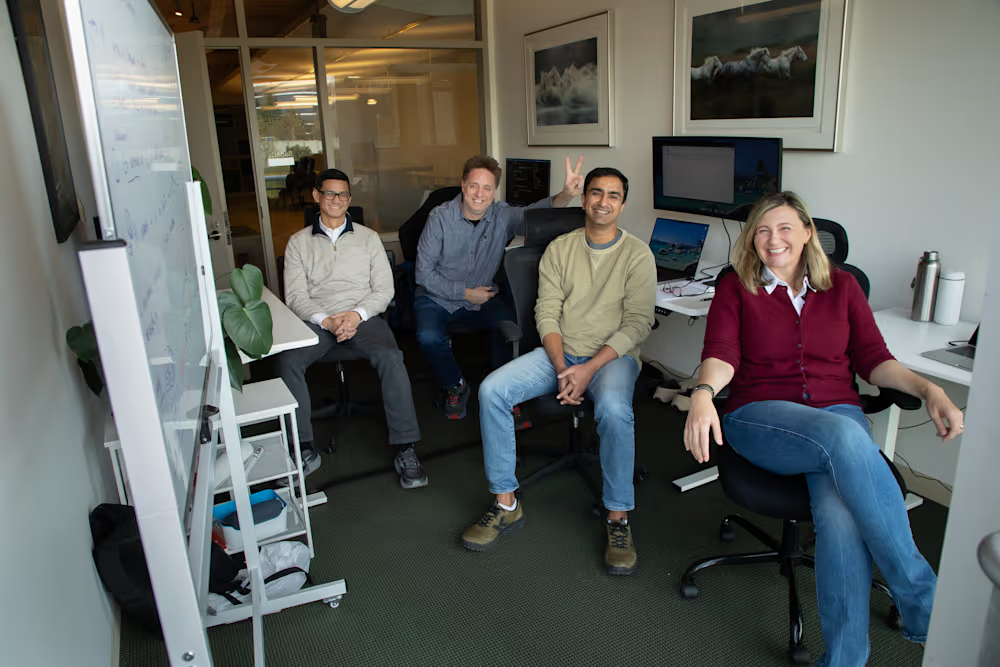
Left to right Bethan Bannister, British Business Bank; Joe Cook, Bosco; John Babalola, FW Capital.
Italian restaurant venture Bosco has opened its first Welsh restaurant with plans for further venues.
Its latest venue, in the centre of Cardiff, has been supported with a £350,000 loan from the £130m Investment Fund for Wales (IFW),The first Bosco opened in Bristol in 2014, with it now operating four restaurants in the south-west of England.
With the successful launch of its Cardiff restaurant the business is looking to add further Welsh locations over the next 18-months.
Funding support for its Cardiff venue, has come from the large loans element of the British Business Bank’s IFW. It is managed by Development Bank of Wales, subsidiary business FW Capital. Bosco has deployed the funding to refit premises on High Street, as well as providing working capital. The loan also unlocked a further seven-figure co-investment from private investors
Joe Cook, managing director at Bosco, said: “The new restaurant at Cardiff has already exceeded our expectations. That part of the city has an impressive buzz and busy atmosphere, and we’ve been welcomed with open arms.
“It’s always been our intention to grow as a business, and this loan allowed us to put our stamp on the new site, and refit it at scale in line with our brand. Thanks to the success of the Cardiff restaurant, we’re know confident in what we can accomplish in Wales, and certainly want to grow further in Wales in the next year-and-a-half.”
Advertisement
John Babalola, investment executive at FW Capital, said: “Bosco have a fantastic brand. Their expansion to one of Cardiff’s most popular areas for bars and restaurants was an obvious next step for them. We’re glad that our support has helped them to get the Cardiff restaurant set up at speed, and it’s good to see that it’s already in high demand.”

Bethan Bannister, senior investment manager, nations and regions investment funds at the British Business Bank, said: “We’re pleased to see the Investment Fund for Wales supporting Bosco, bringing a popular brand to Cardiff. This investment highlights how the fund can provide the right finance at the right time to help ambitious businesses expand into new markets, create jobs and contribute to the vibrancy of our towns and city centres.”
The large debt element of the IFW can makes loans from £100,000 to £2m.
Value stocks led U.S. markets higher in the fourth quarter, with large-cap value broadly outperforming growth counterparts. Artificial intelligence (AI) remained a dominant performance driver. Yet, significant multiple expansion across the AI trade helped to prompt emerging signs of
A project to map the entire ocean floor by 2030, which is supported by Japan’s largest charitable organisation, has inked a deal with a Perth maritime autonomy software developer.
Airfares could soon rise sharply as United Airlines warns that high oil prices may force ticket increases of up to 20%, putting pressure on travelers and the broader airline industry.
Speaking in a recent interview, CEO Scott Kirby said the company is preparing for fuel costs to stay high for a long time, especially as global tensions continue to push oil prices upward.
If that happens, airlines may have no choice but to pass those costs on to customers.
“That would require prices to be up 20%, to break even to cover that cost,” Kirby said, pointing to the growing financial strain from fuel expenses, NY Post reported.

Advertisement
Jet fuel is one of the biggest costs for airlines. When oil prices rise, it becomes much more expensive to operate flights. Kirby warned that if fares increase, fewer people may choose to travel.
“There will be less demand. There’ll be fewer people traveling as prices go up,” he said.
For now, travel demand remains strong. Kirby noted, “Demand is incredibly strong right now,” but added that the airline is planning ahead in case conditions change.
United Airlines CEO Scott Kirby said ticket prices may have to go up by 20% if jet fuel prices remain elevated for longer https://t.co/WPmNuUmZ0R
United has already cut about 5% of its flight capacity, removing routes that are not making enough money to cover rising fuel costs.
“There’s just no point in flying flights that are gonna lose money,” Kirby explained, emphasizing that the airline is focusing on efficiency.
According to FoxBusiness, the company expects oil prices could remain above $100 per barrel through next year and may even climb as high as $175 in a worst-case scenario.
If that happens, Kirby described it as a “stress event” for the airline industry, though still not as severe as the impact seen during the COVID-19 pandemic.
Advertisement
Unlike some airlines, United does not rely heavily on fuel hedging. Kirby said the company’s size makes it difficult to hedge without affecting the market. Instead, United has built up its cash reserves to handle unexpected cost increases.
The airline estimates that current fuel prices could add about $11 billion in expenses. To offset that, ticket prices would need to rise significantly, which could change how people plan trips.
Experts say higher fares may push families to rethink vacations or choose closer destinations. While business travel may continue, everyday travelers could feel the biggest impact.
You must be logged in to post a comment Login